
uBO Lite (uBOL) is an efficient content blocker based on the MV3 API.........
GitHub - uBlockOrigin/uBOL-home: uBO Lite home (MV3)
GitHub - uBlockOrigin/uBOL-home: uBO Lite home (MV3)


Open MalwareTips from your Home Screen or desktop. Follow discussions, find answers and pick up where you left off.
If you cannot find an install option, update your browser or use its bookmark option to keep MalwareTips close.
After installation, open the app and sign in. Enable push notifications in Preferences if you want alerts. On iPhone and iPad, push requires a Home Screen web app and iOS or iPadOS 16.4 or later.
Sign in to manage notificationsInstallation is optional. Your notification settings stay under your control.


Hey @Nunzio_77,@Bot
Can you give me a detailed description of the three uBOL profiles:
Basic;
Optimal;
Complete
Which of the three do you suggest activating?
Nice post by the Bot here, in breaking down the 3 profiles:
Serious Discussion Post in thread 'AdGuard Browser Extension - General Discussions'
Hey @Nunzio_77,@Bot
Can you give me a detailed description of the three uBOL profiles:
Basic;
Optimal;
Complete
Which of the three do you suggest activating?
Sure thing—happy to break down the three profiles (or "modes") in uBlock Origin Lite (uBOL). These are essentially pre-configured sets of filter lists and rules that determine how aggressively it blocks ads, trackers, and other annoyances. They're designed to let you choose based on your needs: lighter for performance, heavier for max protection. uBOL keeps things efficient under Manifest V3, so even the...
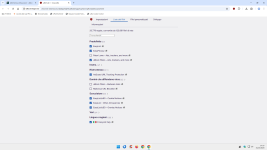

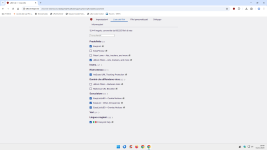
Otherwise, could it detect false positives?The filter lists that I have enabled:
View attachment 292547
Why enable anti-malware filters if the extension updates roughly every week?
It's better to use a DNS that does this job better.
The filter lists that I have enabled:
View attachment 292547
Why enable anti-malware filters if the extension updates roughly every week?
It's better to use a DNS that does this job better.
But in my case, I don't go to enough sites for this to be an issueIn a week, so many links to phishing/malware content are created that would not be blocked.
And, of course, just as many disappear.

But in my case, I don't go to enough sites for this to be an issue

Yes, in general you're right, that's why I like to be informed, but is also why I use what I use, to help simplify things, and let blockers and AV extensions do more of the work for me so I'm not doing a lot of filtering, settings, adding into rules etc. etc. I am not IT tech, but a curious normal Joe so I try to keep things to what I know and understand and can more easily resolve if an issue comes upHowever, I assume this topic is a little too complicated for you.
P.S.
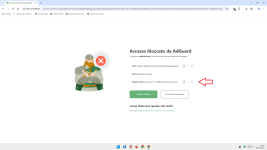
Speaking of strict, if you want to try strict blocking:
uBlockOrigin/uBOL-home
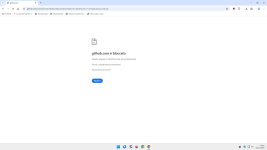
Just enter contentabc.com.
Unfortunately, the strict blocking page for a custom DNR rule applied is not very explanatory.
But I will not notify Gorhill about this issue.
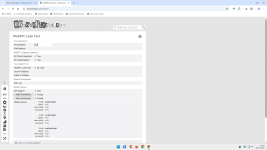
Hi,AdGuard is definitely a very nice and comprehensive extension, but it's just a shame that it uses a lot of RAM compared to uBOL and Ghostery.
If it weren't for the excessive RAM usage, I'd use AdGuard with both hands.
@Sampei.Nihira what do you think of Ghostery?
Ok. Thanks!CIAO,
Dato che non uso Ghostery , la tua domanda riguarderebbe specificamente il browser utilizzato .
Ad esempio, se mi chiedi di
[UTENTE=59691]@Kongo[/UTENTE]
chi usa Ghostery in Firefox, direi che sta facendo la cosa giusta perché il suo browser garantisce la privacy/sicurezza necessaria senza estensioni.
E prima di usare AG, ovviamente la scelta migliore in Firefox sarebbe stata uBo.
Qualsiasi altro utente che utilizzi Ghostery in un browser basato su Chromium, a parte Brave, sta quasi certamente rinunciando a una privacy/sicurezza inferiore a quella ottenibile anche con uBoL.

The reason for the resource usage is all of the hacks and MV3 workarounds that Adguard developers need for some of its features.AdGuard is definitely a very nice and comprehensive extension, but it's just a shame that it uses a lot of RAM compared to uBOL and Ghostery.
If it weren't for the excessive RAM usage, I'd use AdGuard with both hands.
I believe you're splitting hairs with your testing and claims about privacy with your extension comparisons. Tracking methods across the web far outweigh the limited means of any 'privacy' extension.Any other user who uses Ghostery in a Chromium-based browser, other than Brave, is almost certainly giving up privacy/security that is lower than what can be achieved even with uBoL.
Members who viewed this thread in the last 5 minutes


