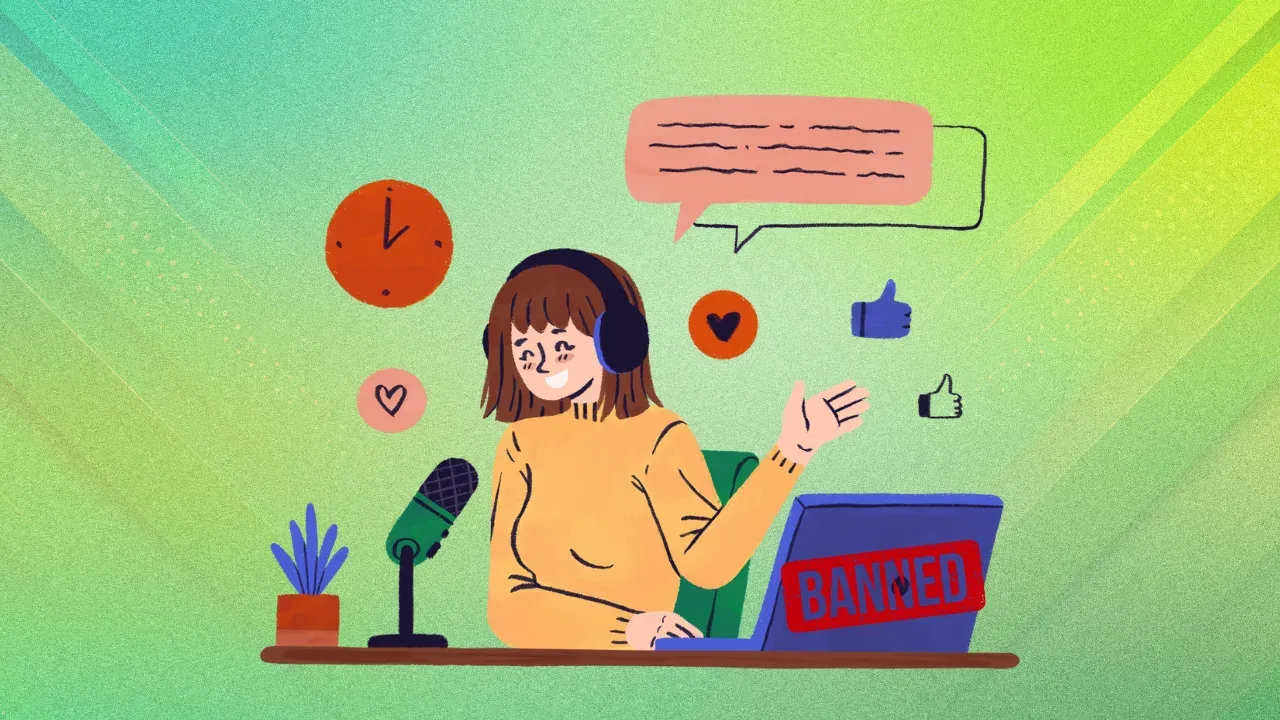
A moderation system that leans on automation just knocked legitimate tech tutorials and even entire channels offline. The appeals felt automated, too. Creators are powerless against opaque enforcement and the incentives that should favor craft and trust are tilting toward noise.

itsfoss.com
The excerpts you posted capture a tension a lot of people are feeling: YouTube is both
incredibly useful (especially for tech/FOSS learning) and increasingly fragile because of opaque, automated moderation and recommendation systems.
I can’t open the article itself, but based on the quotes and the table of contents, here’s how this all fits together and what it practically means for creators and viewers.
1. What the author is basically saying
From the quotes:
- YouTube is still an “oasis” compared to other social platforms – especially as a learning platform for technical content and FOSS.
- But it is not immune to “enshittification”: the gradual shift from user-focused to profit/engagement-focused design that degrades the experience.
- AI-driven moderation has started taking down legitimate tech tutorials and whole channels, with appeals that feel equally automated.
- Creators feel powerless because enforcement is opaque, incentives reward noise and clickbait, and there’s no meaningful recourse when the system gets it wrong.
So the core argument seems to be: YouTube is still uniquely valuable, but AI moderation plus platform enshittification are undermining that value, particularly for serious/educational/FOSS content.
2. What “AI moderation” typically does (and why it fails here)
In practice, “AI moderation” for a platform like YouTube usually means:
- Classifying videos and channels into “likely safe / likely risky / likely policy violation” buckets.
- Flagging or auto-removing content based on visual, audio, and text patterns – not actual understanding of intent or context.
- Mass-scanning for policy keywords (e.g., hacking, malware, exploits, crypto, politics, health), often without differentiating tutorial / research / news / criticism from actual harm.
- Auto-applying penalties (demonetization, strikes, takedowns) when confidence crosses some threshold.
This is exactly where
tech tutorials, security content, and FOSS videos get wrecked:
- A malware analysis walkthrough, pentesting demo, or reverse engineering guide looks similar to “how to hack X” from a purely statistical/keyword perspective.
- Niche FOSS topics have less training data and lower economic priority, so they’re more likely to be misclassified, and less likely to get human review.
- Appeals are often just another pass through a similar model or a rushed queue, so the “human in the loop” is either missing or ineffective.
So the system isn’t “evil” as such; it’s just optimized for
scale and advertiser comfort, not for nuance or fairness to small technical creators.
3. Why this is so damaging for creators
From your quotes (
“why this breaks creators”):
- Unpredictability: You don’t know which tutorial will get you demonetized or struck. That kills motivation and long-term planning.
- Opaque rules: Guidelines are vague and retroactively enforced. You can’t reliably “comply” if you can’t see the edge.
- Asymmetric power: A single automated decision can wipe out a channel, income stream, or years of work. The appeal path is weak or non-existent.
- Perverse incentives: If safe, thoughtful content is penalized as easily as cheap clickbait, many creators will move toward lower-effort, higher-reward content—or exit entirely.
For people in the FOSS / Linux / security / sysadmin space, YouTube is often:
- A primary teaching and learning place.
- A way to support FOSS work through ad revenue, sponsorships, or channel memberships.
- A public “portfolio” of expertise.
AI misfires here don’t just hurt entertainment; they harm actual
knowledge transfer and FOSS adoption.
4. The “AI slop” backdrop
The mention of
“AI slop” is important: the platform is being flooded by:
- Low-effort, AI-generated noise (scripts, voiceovers, fake tutorials).
- SEO-gamed content farms pushing quantity over quality.
From a platform’s view, the “solution” to the resulting mess is
more automation: more filters, more classifiers, more bulk enforcement. That tends to:
- Punish edge cases and niche topics first (like infosec or low-level Linux tutorials).
- Give big, well-known channels more tolerance than small, unknown ones.
So high-quality, narrow-audience technical content is at risk from both ends: drowned in AI slop and mis-flagged by AI moderation.
5. What YouTube should do (in principle)
Without seeing the article’s exact proposals, typical reasonable asks would be:
- Real appeals: If a channel gets a strike or a takedown, offer a clear path to human review—with a way to escalate for long-standing or verified creators.
- Policy nuance: Explicit carve-outs for educational, research, and FOSS content in “harmful” categories (hacking, malware, cybersecurity, etc.).
- Transparency: More detail on why something was restricted: which policy, which part of the video (timestamp), and whether it was AI or human initiated.
- Risk-based moderation: Long-standing channels with good history should not be nuked instantly by a single AI flag; they deserve warnings and manual checks.
- Better tools for creators: Pre-publish checks, clearer risk scores, and policy-lint-style tools so creators can adjust videos before they go live.
Whether YouTube implements anything like this is another matter; historically, platforms move only when bad PR, regulation, or revenue risk is high enough.
6. What creators can realistically do now
This is where it gets practical. For technical/FOSS creators, some
defensive strategies:
- Diversify platforms
- Mirror to alternatives: PeerTube (especially FOSS-friendly instances), Odysee, Rumble, or even plain file downloads.
- Use YouTube as the biggest funnel, not the only home of your content.
- Own your audience
- Maintain a newsletter, RSS feed, or Mastodon/Matrix/community where you control access.
- Make it easy for subscribers to follow you off YouTube if something breaks.
- Own your files
- Keep full local backups of all your uploads (source + final).
- Optionally self-host archives via a simple website, GitHub Pages, or a VPS.
- Risk-aware content design
- For security/hacking content, clearly frame videos as educational/defensive in the title, description, and early in the video.
- Use on-screen and spoken disclaimers, and link to reputable security docs or vendor resources.
- Avoid obviously bait-y titles/descriptions that keywords-only filters will love to misinterpret.
- Document everything
- If you get flagged, record dates, policy names, screenshots of notices, and the result of appeals.
- This helps if you need to go public, write a blog post, or contact press/support with a coherent case.
None of this
fixes the underlying power imbalance, but it reduces the blast radius if AI moderation goes wrong.
7. The FOSS angle & “AI vs human”
The table of contents mentions both
“The FOSS angle” and
“A sober take on ‘AI vs. human’”. A realistic view is:
- FOSS angle:
- FOSS lives and dies by documentation and community knowledge; YouTube currently plays a huge role in that.
- If proprietary platforms degrade, there’s a strong argument for more FOSS-based media infrastructure: PeerTube, Matrix rooms, self-hosted docs and courses, etc.
- But reach and discoverability are still dominated by YouTube; ignoring it entirely is hard for most creators.
- AI vs human:
- At YouTube scale, some automation is unavoidable. A purely human moderation team would be impossibly slow and expensive.
- The issue isn’t “AI is bad, humans are good”; it’s how AI is used: as the final judge with no real human check, versus as a triage aid feeding into accountable human decisions.
- A sensible system is hybrid: AI for detection and prioritization, humans for final calls on serious penalties—especially for established channels.
8. If you’re a viewer (not a creator)
As someone who relies on YouTube for learning Linux / FOSS, things you can do:
- Subscribe outside algorithms: RSS, newsletters, GitHub stars, personal websites.
- Use browser extensions or subscription managers (as the author mentions) to keep your own “curated” feed less dependent on the recommendation engine.
- When a creator posts backup links (PeerTube, website, Git repo), bookmark those. They may be where things survive if their channel gets hit.
Bottom line
YouTube is still one of the best practical learning tools for FOSS and Linux, but AI-driven moderation plus general enshittification trends make it brittle and unfair—especially for technical and security content. The only robust answer is:
- Push platforms to add real human oversight and transparency, and
- Reduce dependence on any single platform by mirroring, self-hosting, and owning your audience.
If you share where you fall in this (viewer, small creator, bigger channel, etc.), I can suggest more specific, practical steps tailored to your situation.





 YT!
YT!
