

Imagine scrolling through your feed and stumbling across a shocking headline: “100 Foot Megalodon Shark Spotted in South Africa!” The video shows an enormous shark-like creature rising from the depths of the ocean, dwarfing the surrounding waves. It looks straight out of a Hollywood blockbuster. For a moment, it’s enough to make anyone stop and wonder: Could the legendary Megalodon still be alive today?
But when the initial awe fades, questions quickly surface. How could such a gigantic predator go unnoticed by marine biologists, oceanographers, and global fishing industries? Why is this video popping up on anonymous accounts instead of being reported by credible news outlets or scientific organizations?
In this article, we’ll break down the viral Megalodon video that claims to show a 100-foot shark off the coast of South Africa. We’ll analyze it step by step, compare it with fossil evidence, and explore how AI tools like Veo3 and 3D modeling are being used to create hyper-realistic but fake “ocean monster” clips.
By the end, you’ll have a clear answer: the video is not proof of a prehistoric predator returning, but rather another AI-generated illusion designed for clicks and shares.
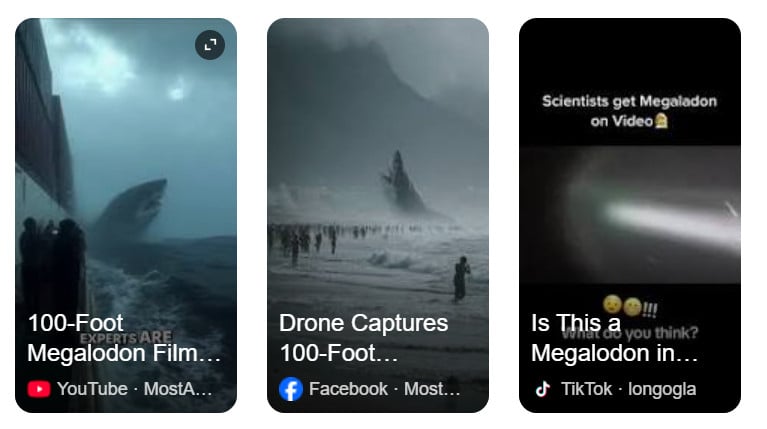
Overview of the Viral Megalodon Video
How the Clip Went Viral
The alleged “Megalodon sighting” began circulating on platforms like YouTube, TikTok, and Facebook. The description usually read something dramatic, such as:
- “Unbelievable footage of a 100 ft Megalodon shark near South Africa!”
- “Proof that prehistoric predators still roam our oceans!”
- “Scientists can’t explain this shocking discovery!”
The video shows waves crashing against the shore as the camera pans over the water. Suddenly, a massive shadowy figure emerges, its dorsal fin cutting through the surface. The narrator or background text implies this is a 100-foot Megalodon, a predator believed to have gone extinct millions of years ago.
For unsuspecting viewers, the video feels authentic. The ocean setting looks real, the creature’s movements are smooth, and the scale seems terrifying. However, upon closer inspection, there are several red flags that give away its artificial origins.
Visual Clues That Reveal the Hoax
- Unnatural Water Movements
- When a real object interacts with the ocean, waves, ripples, and shadows should react accordingly.
- In the viral video, waves seem to pass through the shark’s body without any physical displacement. This is a telltale sign of poor CGI or AI compositing.
- Plastic-Like Skin Texture
- At first glance, the shark’s skin looks hyper-detailed, but too perfect. It has a polished, almost plastic look common in 3D renders.
- In reality, marine animals display imperfections—scars, algae growth, uneven skin tones—which are missing here.
- Shadow and Light Inconsistencies
- The lighting on the shark doesn’t match the sun’s position on the ocean.
- Shadows are either missing or fall in the wrong direction. This is a classic issue with AI-generated visuals.
- Suspicious Source Accounts
- The video is not uploaded by marine research institutes, universities, or even major news networks.
- Instead, it comes from anonymous or entertainment accounts with no history of scientific credibility.
Why South Africa?
South Africa is a popular setting for fake shark content for two reasons:
- Real Great White Population
- South African waters are home to some of the largest Great White Sharks in the world, making the setting believable.
- Previous Viral Hoaxes
- From “sharks in flooded streets” to fake “super shark” videos, South Africa has often been used as the backdrop for exaggerated wildlife claims.
By anchoring the story in a real shark hotspot, the hoax gains an extra layer of plausibility.
How AI Tools Create Fake Megalodon Videos
The Role of AI Generators
Modern AI video tools like Veo3, Runway Gen-2, and Pika Labs are capable of producing highly realistic ocean scenes. Combined with 3D shark models, these tools can generate clips that look authentic at first glance.
The creators of these viral shark videos typically:
- Take a Stock Ocean Clip
- They start with footage of waves or an empty sea.
- Add a 3D Shark Model
- Using programs like Blender or Cinema 4D, they render a shark, often re-scaling existing models of Great Whites.
- Enhance with AI Tools
- AI generators add textures, lighting, and movement to make the shark blend into the footage.
- Insert Dramatic Narration
- A voiceover or text overlay boosts the “shock value,” making it shareable.
Why Do These Hoaxes Work?
- Fear + Curiosity
- Sharks already spark primal fear. Add “prehistoric” to the mix, and the story practically writes itself.
- Limited Public Knowledge
- Most people don’t know the exact fossil record of Megalodon, making exaggerated claims harder to fact-check.
- Entertainment Value
- Even if viewers suspect it’s fake, they share it for fun, fueling virality.
What Science Says About Megalodon
The Real Size of Megalodon
The Megalodon (Otodus megalodon) lived approximately 23 to 3.6 million years ago. Fossil evidence—mostly teeth and vertebrae—suggests it was the largest shark to ever exist.
- Average Size: 40 to 50 feet (12–15 meters)
- Maximum Estimates: Up to 60 feet (18 meters)
- Weight: 50–70 tons
The viral video’s claim of 100 feet is nearly double the maximum scientific estimate.
Why a Living Megalodon Is Impossible
- Food Requirements
- A 100-foot predator would need enormous amounts of food daily, likely hundreds of pounds of prey.
- Modern oceans couldn’t support such a giant without leaving obvious ecological traces.
- Lack of Sightings
- The ocean is vast, but it’s also heavily monitored by satellites, sonar, and fishing industries.
- A predator that large couldn’t remain hidden in the 21st century.
- Fossil Record
- The most recent Megalodon fossils date back 3.6 million years. No credible evidence suggests survival into modern times.
- Competition with Modern Sharks
- Great Whites and Orcas dominate today’s seas. The Megalodon’s extinction is partly attributed to food scarcity and competition.
How to Spot Fake Ocean Monster Videos
If you encounter another clip claiming to show massive sea creatures, here’s a checklist to evaluate its authenticity:
- Check the Source – Is it from a scientific organization or a random TikTok account?
- Look at Water Interaction – Does the ocean move naturally around the creature?
- Examine the Texture – Does the skin look overly smooth or plastic-like?
- Pause the Video – Do shadows and lighting remain consistent?
- Search for Scientific Reports – Major discoveries are always reported by marine biologists, not just viral accounts.
Why These Videos Keep Going Viral
- Social Media Algorithms
- Platforms push dramatic, emotional content because it generates clicks, comments, and shares.
- AI Accessibility
- With tools like Veo3, anyone can create convincing “monster footage” in minutes.
- Pop Culture Influence
- Movies like The Meg and Jaws fuel fascination with giant sharks.
- Low Barrier to Entry
- You don’t need expensive cameras or diving gear—just AI software and imagination.
What to Do If You Fell for the Hoax
- Don’t Share Without Fact-Checking
- Before spreading such videos, check credible science websites.
- Educate Others
- If friends or family believe the video, explain the scientific facts.
- Follow Reliable Sources
- Stick to marine research institutes, National Geographic, or peer-reviewed studies for accurate ocean news.
- Report Misleading Content
- On platforms like TikTok or YouTube, report hoaxes as “misleading” to prevent further spread.
Conclusion: The Truth Behind the 100 Foot Megalodon Video
The viral “100 Foot Megalodon spotted in South Africa” video may look jaw-dropping, but it falls apart under scrutiny. From AI-generated water glitches and plastic-like skin textures to scientific impossibilities of survival, every clue points to one truth: this is not real footage of a prehistoric predator.
Instead, it’s the latest in a long line of AI-generated ocean monster hoaxes, designed for entertainment and virality. While fun to watch, these videos highlight the importance of skepticism in the age of AI.
So, the next time you see a headline screaming “Megalodon returns,” remember: if it looks like a Hollywood movie, it probably is.

Join the discussion
0 commentsShare your experience or ask a question about this article.
Discussion
Start the conversation
Have a question or something useful to share? Add the first comment.