

The first time you see it, it feels almost harmless.
A headline screams “urgent,” a video invites you to “tap to listen,” and the story promises something that sounds unbelievably simple: a “17-second vegetable trick” or a home gelatin recipe that can “erase” type 2 diabetes.
If you or someone you love has struggled with blood sugar, it is easy to understand the pull. The pitch is designed to feel like hope.
But what many people are running into is not a real health breakthrough. It is a scripted sales engine.
It hooks you with a shocking claim, delays the promised “kitchen hack,” and then quietly swaps the supposed solution for an overpriced supplement, often a dropper bottle, sold through a funnel built to rush you, confuse you, and keep you from verifying anything.
This article breaks down what is really going on, how these campaigns operate, and what to do if you already clicked, ordered, or were charged.
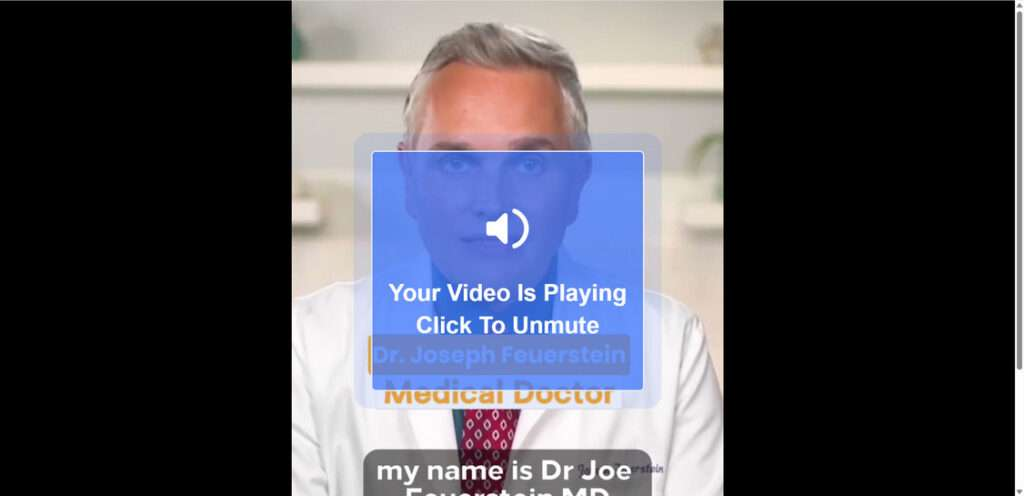
Scam Overview
The “17-second vegetable trick” scam is not a single product.
It is a repeatable advertising template used to sell different supplements, usually marketed as “blood sugar support,” “diabetes drops,” “glucose gummies,” or “pancreas support.”
The product name changes constantly. The story changes slightly. The voiceover changes. The funnel stays the same.
If you have seen pages that say things like:
- “URGENT: Scientists discover a natural for type 2 diabetes that can be made at home”
- “Hundreds of people watching”
- “Tap to listen”
- “Doctors are stunned”
- “This video will be taken down”
You have seen the template.
Why this scam format works so well
These campaigns target a real pain point.
Type 2 diabetes is common, expensive, stressful, and exhausting. Many people feel judged. Many feel stuck. Many feel overwhelmed by conflicting advice.
The scam takes those emotions and turns them into a storyline that feels personal.
It usually does four things immediately:
- It creates urgency: “This is time-sensitive. Watch now.”
- It creates exclusivity: “You are about to learn what others do not know.”
- It creates distrust in the medical system: “Doctors won’t tell you this.”
- It creates simplicity: “It takes 17 seconds.”
That combination is powerful.
It makes people feel like they have finally found a shortcut that explains why nothing else worked.
The “17-second” claim is a psychological trick, not a medical one
A real medical breakthrough does not need a countdown timer.
It does not need to be hidden behind a vague video.
And it certainly does not need a gimmick like “17 seconds” to be believable.
The “17-second” detail is not there because it is scientifically meaningful.
It is there because it creates a sticky mental loop.
You think:
- “What could I do in 17 seconds?”
- “Why has no one told me this?”
- “If it is that easy, I have to know.”
It is a hook designed to keep you watching and reduce your skepticism.
The “vegetable trick” and “gelatin recipe” are bait
These funnels often promise a simple kitchen hack, such as:
- a specific vegetable you prepare a certain way
- a tea or tonic that you make at home
- a gelatin recipe framed as “bariatric” or “doctor-approved”
- a bedtime ritual that “resets” the body
But the moment you lean in for the practical steps, the story shifts.
Instead of a clear recipe with exact measurements and instructions you can follow, you get:
- a long explanation about hidden causes
- vague references to “one ingredient”
- more teasing and delaying
- more “watch until the end”
Then, the big reveal is not a recipe.
It is a product.
The real product is the funnel, not the supplement
The supplement is often generic.
The operation is not.
What makes this scam effective is not a magical formula. It is the structure of the marketing.
These pages are built to do one thing: convert emotion into a purchase before the viewer slows down.
To accomplish that, they use tactics that are common in high-pressure affiliate funnels:
- fake urgency
- fake social proof
- fake authority
- recycled medical buzzwords
- staged testimonials
- misleading checkout flows
The goal is not informed consent.
The goal is impulsive action.
Why “type 2 diabetes cure” claims are a major red flag
Type 2 diabetes is a medical condition that requires real management.
Lifestyle changes can help many people. Weight loss can improve insulin sensitivity in some cases. Some people can bring their A1C down with sustained changes.
But none of that is the same as a universal cure.
Whenever you see a funnel imply that:
- type 2 diabetes can be “erased”
- medications are unnecessary
- doctors are hiding the truth
- a simple trick replaces real treatment
You should treat it as a serious warning sign.
Not because people should lose hope, but because these claims prey on vulnerable people and can lead to dangerous decisions.
Common themes you will recognize across these scam campaigns
Even if the product name changes, the story usually repeats the same beats.
Here are the most common patterns:
1) “Scientists discovered” with no verifiable source
The page claims that researchers found a natural solution.
But it provides no real:
- study title
- journal link
- author list
- institution confirmation
- independent coverage
Instead, it offers vague authority.
“Scientists,” “Harvard,” “top doctors,” “leading research.”
It sounds legitimate until you ask one basic question:
Where is the proof outside this sales page?
2) A “tap to listen” video that keeps you passive
The video format is intentional.
It lowers critical thinking.
You are not reading. You are not comparing sources. You are listening to a narrative.
The pacing is designed to create momentum, especially for people watching on mobile.
You stay because it feels like you are about to receive the secret.
3) Fake urgency and “people watching” counters
You might see:
- “793 people watching”
- live popups like “John from Texas just ordered”
- timers counting down a “discount”
- warnings that “supplies are limited”
These are not proof of popularity or legitimacy.
They are conversion tools.
They exist to make you feel like waiting is risky.
4) Recycled villains: “Big Pharma,” “doctors,” and “the system”
The scam often frames the viewer as a victim of a corrupt system.
This does two things:
- It creates anger, which increases impulsive action.
- It isolates you from trusted sources, which prevents fact-checking.
Instead of encouraging you to consult a clinician, it pushes you to distrust them.
That is not empowerment. It is manipulation.
5) A “root cause” explanation that sounds scientific
These funnels often claim the real problem is something hidden, like:
- a toxin
- inflammation
- a blocked pancreas pathway
- a rare deficiency
- “fat in the pancreas”
- “parasites” or “fungus”
The explanation often mixes real medical terms with dramatic leaps.
It is designed to sound like science, not behave like science.
6) Testimonials that feel emotional but are impossible to verify
You will hear stories like:
- “I threw away my meds”
- “My doctor was shocked”
- “My numbers normalized in days”
- “My family cried”
- “I feel 20 years younger”
These stories are persuasive because they are emotional.
But the funnel rarely provides verifiable identity, real documentation, or typical-results disclaimers that actually match the tone of the pitch.
Why this scam keeps coming back under new names
The “17-second vegetable trick” format is reusable.
If one domain gets flagged, the operators can:
- launch a new domain in hours
- rename the product
- reshoot the voiceover
- swap the images and labels
- rerun the ads
This is why people see nearly identical videos with different bottles.
It is the same machine wearing a new costume.
The most important mindset shift
Do not get stuck debating whether the vegetable is real.
That is what the funnel wants.
The real question is simpler:
If the promised solution keeps getting delayed and replaced by a product pitch, you are not watching health education. You are watching a sales script.
How The Scam Works
The “17-second vegetable trick” scam typically follows a predictable, step-by-step funnel.
Once you see the structure clearly, it becomes much harder to fall for it, even when the product name changes.
Step 1: You see a scroll-stopping ad designed to hit fear and hope
The first contact is usually a paid ad on social media or ad networks.
The ad focuses on emotional triggers, such as:
- fear of complications
- frustration with stubborn blood sugar
- shame about weight or eating habits
- anxiety about medication costs
- dread about the future
The ad often uses words like:
- “urgent”
- “breakthrough”
- “doctor reveals”
- “watch now”
- “before it’s removed”
This is not medical framing.
It is attention engineering.
Step 2: You click and land on a “news-style” page that imitates authority
After the click, you are often taken to a page that looks like an article.
It may resemble a health news site or a mainstream outlet layout.
Common features include:
- a bold headline in all caps
- a date stamp to look current
- a byline that sounds credible
- navigation links that do not go anywhere meaningful
- medical imagery, lab shots, doctors in coats
This is called an advertorial.
It is advertising disguised as editorial content.
The purpose is to make you lower your guard.
Step 3: The page introduces the “secret” but refuses to give it quickly
This is where the bait begins.
You are promised:
- the “17-second vegetable trick”
- a home recipe
- a “bedtime ritual”
- a simple drink
But the page does not deliver.
Instead, it says:
- “First, you need to understand why nothing worked”
- “This will shock you”
- “Watch the presentation”
- “Doctors don’t want you to know”
This delay is intentional.
It creates commitment.
You have already invested time, curiosity, and emotion.
You are more likely to keep going.
Step 4: The video starts with a story, not evidence
The long-form video is often presented as:
- a special report
- a medical presentation
- a leaked discovery
- an urgent update
It often uses:
- slow dramatic music
- authoritative narration
- animated organs and blood sugar graphics
- “scientific” diagrams
- before-and-after montages
The viewer feels like they are learning.
But the structure is not built like education.
It is built like persuasion.
Step 5: The script reframes your situation so the product becomes the only “answer”
This part is subtle.
The funnel often tells you that:
- diet and exercise are not enough
- your doctor is treating symptoms, not causes
- medications are a trap
- the real cause is hidden inside your body
Then it introduces a new concept:
- a “switch”
- a “signal”
- a “pathway”
- a “root cause”
The viewer starts thinking:
“Maybe I am not failing. Maybe I was sabotaged.”
That emotional relief makes the next step easier.
Step 6: The “kitchen trick” becomes vague, symbolic, or incomplete
At this stage, the funnel pretends it is about the vegetable trick.
But it avoids giving clear instructions.
You might hear:
- “This vegetable is the key”
- “It activates a process”
- “It restores balance”
But you do not get:
- exact amounts
- timing
- preparation instructions
- limitations or warnings
- realistic outcomes
Instead, the funnel pivots:
“This is why the supplement works.”
This is the bait-and-switch.
The promised free solution is turned into a lead-in for the product.
Step 7: The product appears as a “simple daily protocol”
Now you meet the bottle.
Often a dropper bottle. Sometimes gummies. Sometimes capsules.
The funnel claims it is:
- natural
- fast-acting
- backed by science
- made in a high-quality facility
- tested
It may use phrases like:
- “clinically proven”
- “doctor recommended”
- “supports healthy glucose”
- “balances blood sugar”
But these claims are rarely backed by independent evidence on the exact product.
Step 8: Authority badges are stacked to reduce doubt
Next, the page shows:
- certifications
- seals
- quality claims
- stock lab images
- official-looking icons
This is a trust shortcut.
Most people do not verify seals.
The funnel counts on that.
If you cannot verify the certification through a real, traceable source, treat it as a design element, not proof.
Step 9: Urgency and social proof intensify to force the purchase
Now the pressure ramps up.
You might see:
- a countdown timer
- “limited supply”
- “only today”
- “discount ending soon”
- “people watching”
- purchase notifications
This stage is designed to create one feeling:
“If I do not buy now, I will miss my chance.”
That feeling is the opposite of what a legitimate health decision should be based on.
Step 10: The pricing structure pushes you into bundles
The offer usually has three tiers:
- 1 bottle: expensive
- 3 bottles: “recommended”
- 6 bottles: “best value”
Sometimes there is an even larger package framed as a “complete protocol.”
This is a classic tactic.
It makes the cheapest option feel like you are sabotaging yourself.
Step 11: Checkout flows can be confusing on purpose
This is where many people get burned.
Common issues include:
- pre-selected quantities
- add-ons that appear “recommended” but feel mandatory
- upsells that look like confirmation pages
- fine print that includes subscriptions or continuity billing
- unclear merchant names on bank statements
You may think you are buying one bottle.
Later, you might discover:
- multiple charges
- a different total than expected
- recurring billing
Step 12: Customer support becomes slow, unclear, or hard to reach
Once money is collected, many scam-style funnels rely on friction.
You may encounter:
- email-only support
- slow replies
- vague return instructions
- strict conditions
- long delays
Some buyers report being asked to jump through steps that feel designed to make them give up.
What makes this a scam-style operation, even if a bottle arrives
Some people receive a product.
That does not automatically make the operation legitimate.
The scam-like behavior is in the marketing and billing structure, such as:
- deception in how the offer is presented
- impersonation of news credibility
- manipulative urgency
- vague or misleading medical claims
- billing tactics that buyers do not understand until after
A legitimate supplement company can still be criticized.
A scam-style funnel is built to exploit.
Why the “17-second trick” keeps showing up in different forms
Because it is not about the vegetable.
It is about attention.
“17 seconds” is simply a catchy frame that makes people click and keep watching.
Tomorrow it might be:
- “11-second spice trick”
- “bedtime tea ritual”
- “morning lemon method”
The numbers and ingredients are interchangeable.
The funnel is the product.
What To Do If You Have Fallen Victim to This Scam
If you clicked, ordered, or were charged and now feel uneasy, you are not alone.
These funnels are designed to feel believable.
Here is a calm, practical checklist to help you protect your money and your peace of mind.
1) Save your evidence right now
Create a folder and save:
- screenshots of the ad (if you can still access it)
- the landing page URL
- screenshots of the offer, pricing, and totals
- your confirmation email
- your receipt and order number
- screenshots of your bank or card statement
This documentation is important if you need a dispute.
2) Look for signs of recurring billing
Check for any mention of:
- autoship
- membership
- continuity program
- monthly shipments
- subscription
Then monitor your statement for:
- a second charge days later
- a charge around the same date the next month
- multiple charges with similar merchant names
If you suspect recurring billing, treat it as urgent.
3) Contact the seller in writing and make your message unambiguous
Send an email that includes:
- your full name
- the email used to purchase
- your order number
- a direct request to cancel and stop all future charges
- a request for written confirmation
Keep the message simple.
Save their reply, or save proof that you sent it.
4) If charges look unauthorized, contact your bank or card provider quickly
Ask your bank or card provider:
- whether you can dispute the charge
- how to block future charges from the same merchant
- whether replacing the card is recommended
If you see repeat charges you did not agree to, a card replacement can stop future billing.
5) Do not stop diabetes medication because of an ad
This is critical.
If you have type 2 diabetes, do not change or stop prescribed medication based on a sales video.
If you want to adjust medication, do it with a qualified clinician.
Ads do not monitor your blood sugar. Your body does not care about their script.
6) If you feel unwell after taking anything, stop and get medical guidance
If you took the supplement and experienced symptoms, stop using it and seek guidance from a qualified healthcare professional.
This matters especially if you take medications that affect blood sugar, blood pressure, or heart function.
7) Monitor your statements for at least 60 days
Many buyers stop checking after the first week.
Do not.
Watch for:
- delayed charges
- shipping fees
- “membership” fees
- charges under unfamiliar merchant names
Set a reminder to check your transactions weekly for 60 days.
8) Report the ad where you saw it
Reporting helps platforms identify patterns, even if it feels small.
Report the ad on:
- Facebook and Instagram
- YouTube
- TikTok
- any ad network or site that served it
Use categories like misleading claims, scams, fake endorsements, or impersonation.
9) If you shared personal info, tighten your account security
If you entered personal information into a questionable checkout, consider:
- changing passwords if you reused them anywhere else
- enabling 2-factor authentication on your email
- watching for phishing emails pretending to be “support”
- being cautious with follow-up calls or texts
10) If the product shows up and you want a refund, document everything
If you received a bottle and it does not match what was promised:
- take photos of the packaging and label
- keep the shipping materials
- save any inserts that reference policies
- ask for a refund in writing and keep a record
If the seller stalls or refuses, your documentation supports escalation through your payment provider.
The Bottom Line
The “17-second vegetable trick” scam supplements are not a real breakthrough. They are a recycled funnel that uses urgency, fake authority, and a promised kitchen hack to hook you, then swaps the “secret” for a pricey bottle.
If you already bought, focus on practical protection: save evidence, watch for recurring charges, cancel in writing, and escalate through your bank if billing looks deceptive.
Most importantly, do not blame yourself.
These campaigns are engineered to feel credible on a small phone screen, in a tired moment, when you want relief.
Once you learn the pattern, it becomes much easier to spot the next version before it takes your time, your money, or your trust.








