The phone number 877-683-5342 has been linked to a variety of fraudulent schemes and scams targeting unsuspecting victims across the United States. This comprehensive guide will provide an in-depth look at how the 877-683-5342 scam operates, how to identify signs of the scam, and most importantly, what steps to take if you or someone you know has fallen prey to the 877-683-5342 scam.
The 877-683-5342 phone scam refers to illegal and deceptive acts carried out by scammers using the 877-683-5342 number to defraud victims. This number disguises itself as a legitimate customer support or billing contact number for major corporations and government agencies in order to gain the trust of recipients.
Once a potential victim calls the number or responds to fraudulent communications referencing the number, the scammers pose as representatives and attempt to trick them into revealing personal information or sending money. The end goal is identity theft or stealing funds from the victim’s accounts.
Some of the most common tactics utilized through the 877-683-5342 phone scam include:
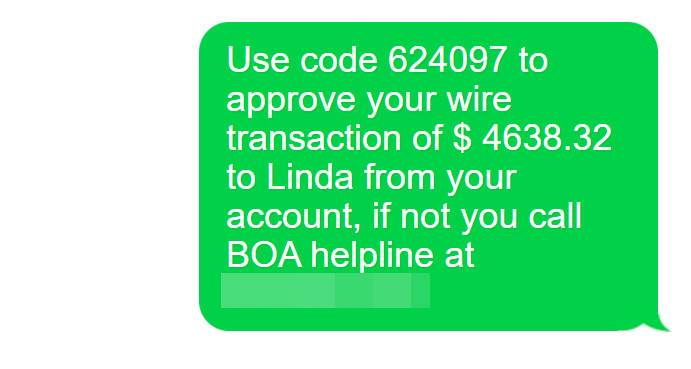
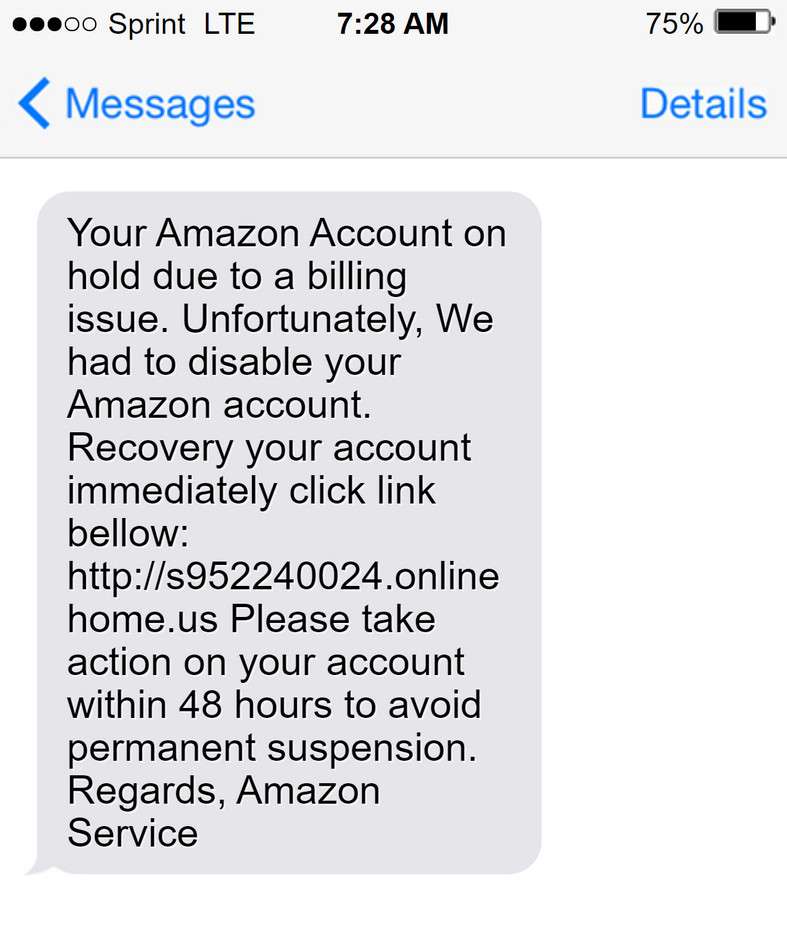
Fake customer support calls/messages: Scam messages that masquerade as customer service calls or inquiries from companies like Apple, Microsoft, Amazon, or the Social Security Administration. The messages insist that there is an issue with your account that requires immediate attention by calling 877-683-5342.
Phishing tax calls: Fraudulent calls impersonating IRS or treasury agents claiming you owe back taxes or fees and demanding payment through threatening legal action if 877-683-5342 is not called.
Impersonation of government officials: Scammers pretending to be government employees or law enforcement officials claiming your SSN or benefits are compromised and your identity is at risk if you do not call 877-683-5342.
Billing and utility scam calls/messages: Scam calls or voicemails threatening to suspend your electricity, water service, or other bills if you do not call 877-683-5342 and make an immediate payment.
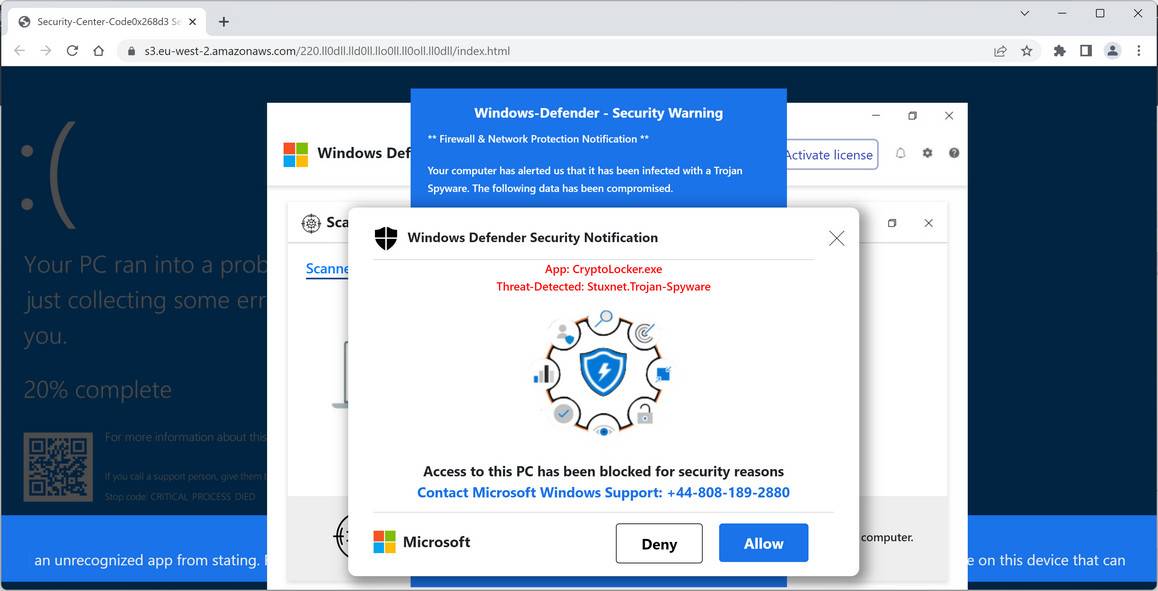
Tech support scam messages/websites: Fraudulent tech support websites and pop-up messages that say your computer is infected with a virus or compromised in order to get you to call 877-683-5342 for expensive, unnecessary “support”.
Loan and credit report scams: Scammers promise loans, credit card rate reductions, or amazing credit scores if you pay an upfront fee via 877-683-5342 first.
Romance scams: Fraudsters posing as romantic interests they met online tell victims they need money urgently and provide 877-683-5342 as a contact to wire money.
Prize and lottery scams: Victims get calls saying they won a contest/lottery prize, but must first use 877-683-5342 to pay fees before they can collect it.
These are just a few examples of the endless variations of fraudulent schemes utilizing 877-683-5342 to lure innocent consumers into traps. Keep reading to learn how to protect yourself from this scam.
How the 877-683-5342 Phone Scam Works
Now that you know the premise behind the 877-683-5342 scam, it is crucial to understand the nitty gritty details of how scammers manipulate and deceive people through this harmful scam.
Here is a step-by-step breakdown of the inner workings of the 877-683-5342 scam:
Step 1: Scammers Obtain Your Personal Information
The scammers first gain access to names, phone numbers, emails, addresses and sometimes other private data of potential victims. This can happen through:
Data breaches and hacking into accounts
Buying bulk data from the dark web
Malware infections on devices
Retrieving information from public records
Randomly cold contacting numbers
Step 2: The Scammers Contact You Posing as a Trusted Source
Armed with some personal information, the fraudsters contact victims while impersonating:
Well-known companies like Apple or Amazon
Government agencies like Social Security Administration
Utility companies
Law enforcement or other officials
They communicate urgent messages via:
Telephone calls
Emails
Text/SMS messages
Pop-up alerts on websites
Mailed letters
Their messages are intended to instill fear and urgency so you call 877-683-5342 immediately.
Step 3: Scammers Pressure You to Provide Confidential Information
Once contacted, the scammers pressure and manipulate victims to divulge private details. They may:
Threaten account suspension or legal consequences
Offer enticing rewards or too-good-to-be-true offers
Generate a sense of urgency to call 877-683-5342 ASAP
Request sensitive info to “verify account ownership”
Data they commonly phish for includes:
Full name, birthdate, SSN, IDs
Login usernames & passwords
Bank account and routing numbers
Credit/debit card numbers and CVV codes
Answers to security questions
Remote access to devices
Step 4: Scammers Monetize Your Information
In the final stage, scammers monetize your information and payments in various forms, including:
Emptying bank accounts and stealing money
Committing credit card and identity fraud
Selling your information on the dark web
Using accounts to file fake tax returns and benefits claims
Charging exorbitant fees for fake tech support services
Unfortunately by this point, the scammers already have your data and payments, leaving you with limited recourse.
Warning Signs of the 877-683-5342 Scam
Now that you understand how the mechanics of the scam work, here are some big red flag warnings to help you detect the 877-683-5342 scam:
They contact you first out of the blue: Real customer support only reaches out if you contact them first.
They request immediate action: Scammers always insist the issue is urgent and you must call 877-683-5342 right now. Legitimate businesses give you time to review the situation.
Odd timing of contact: Be wary of calls/messages claiming there’s an issue with your account that happen at weird hours outside normal business times.
Aggressive insistence on only calling: Pressuring you to immediately call 877-683-5342 and rejecting any other contact method is a huge red flag.
Threats and consequences: Real customer service does not threaten account suspension or legal action if you don’t call a number.
Promises of guaranteed rewards: Claims you can get large cash sums, jackpot prizes or outstanding loans by first calling a number are always scams. Legitimate giveaways don’t require an upfront fee.
Requests for unusual forms of payment: Government and utilities do not demand payment solely via gift cards, cryptocurrency, wire transfers, prepaid debit cards or other hard to trace forms.
Poor grammar/spelling errors: Carefully crafted scam messages often have typos, grammar issues and awkward phrasing.
You don’t have an account with the company: Scammers randomly contact numbers claiming issues with accounts at companies you don’t even do business with.
No record of the issue claimed: Log into your real account to verify any claims of unusual charges, account deactivation or other problems before calling any number.
Weird or inconsistent call back numbers: Scammers spoofing legitimate businesses use non-working callback numbers or numbers that don’t match any official company contacts when you research.
Trust your gut. If anything seems suspicious or too good to be true, avoid calling 877-683-5342 or providing personal details.
What to Do If You Already Fell For the 877-683-5342 Scam
If you or someone you know unfortunately already fell victim to the 877-683-5342 scam, stay calm. Here are the most important steps to take in order to minimize damages and regain control:
1. Immediately Contact Your Bank and Credit Card Companies
Alert your bank and credit/debit card companies that your account information is compromised. Request that:
They flag your accounts and monitor for fraudulent charges.
Issue new account and card numbers to replace compromised ones.
Reverse any fraudulent charges already made if possible.
Increase security protocols for online/phone transactions.
Remain vigilant and review statements frequently for any suspicious activity.
2. Change All Account Passwords
Assume the scammers have gained access to any accounts for which you revealed usernames and passwords. Change logins and security credentials for:
Email, social media and financial accounts
Utility and phone accounts
Retail sites, Amazon, eBay etc.
Routing numbers for automatic payments/deposits
Use updated passwords that are complex and unique for each account.
3. Freeze Credit Reports
Request that Equifax, Experian and TransUnion freeze your credit reports. This stops scammers from fraudulently opening new credit or loans in your name. Expect fees up to $10 per bureau.
4. Monitor Your Credit Reports and Scores
Keep close watch over your credit reports from all three bureaus for any signs of false accounts or charges. Inspect your credit score frequently as damages lower it quickly.
Dispute any fraudulent activity immediately with credit bureaus to reduce lasting harm to your finances. Sign up for credit monitoring if possible.
5. File Reports With Law Enforcement
File reports about the scam with the following agencies so investigations can potentially catch the criminals:
Your local police department
FBI Cybercrime Division at www.ic3.gov
FTC Complaint Assistant at www.ftccomplaintassistant.gov
Phone number abuse reports to Federal Communications Commission
Unfortunately, recovery of lost funds is very rare. But reporting aids prevention of ongoing harm.
6. Learn From This Experience
Scammers are experts at psychological manipulation tactics that work on many victims. Don’t blame yourself.
Use this as a teaching moment to be more vigilant against future scams. Share your experience to warn family and friends too.
Review the techniques in this article to recognize the 877-683-5342 scam in the future before you become a victim again.
Staying informed on the latest scam tactics and threats is the best defense. Search for “common online scams” to find more guides that can help protect you.
Is Your Device Infected? Scan for Malware
If your computer or phone is slow, showing unwanted pop-ups, or acting strangely, malware could be the cause. Running a scan with Malwarebytes Anti-Malware Free is one of the most reliable ways to detect and remove harmful software. The free version can identify and clean common infections such as adware, browser hijackers, trojans, and other unwanted programs.
Malwarebytes works on Windows, Mac, and Android devices. Choose your operating system below and follow the steps to scan your device and remove any malware that might be slowing it down.
Malwarebytes for WindowsMalwarebytes for MacMalwarebytes for Android
Run a Malware Scan with Malwarebytes for Windows
Malwarebytes stands out as one of the leading and widely-used anti-malware solutions for Windows, and for good reason. It effectively eradicates various types of malware that other programs often overlook, all at no cost to you. When it comes to disinfecting an infected device, Malwarebytes has consistently been a free and indispensable tool in the battle against malware. We highly recommend it for maintaining a clean and secure system.
Download Malwarebytes
Download the latest version of Malwarebytes for Windows using the official link below. Malwarebytes will scan your computer and remove adware, browser hijackers, and other malicious software for free.
(The above link will open a new page from where you can download Malwarebytes)
Install Malwarebytes
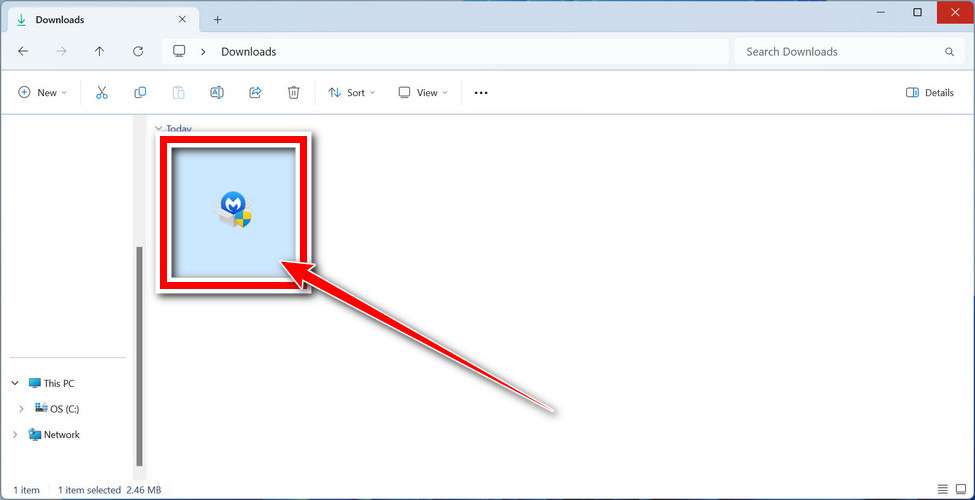
After the download is complete, locate the MBSetup file, typically found in your Downloads folder. Double-click on the MBSetup file to begin the installation of Malwarebytes on your computer. If a User Account Control pop-up appears, click “Yes” to continue the Malwarebytes installation.
Follow the On-Screen Prompts to Install Malwarebytes
When the Malwarebytes installation begins, the setup wizard will guide you through the process.
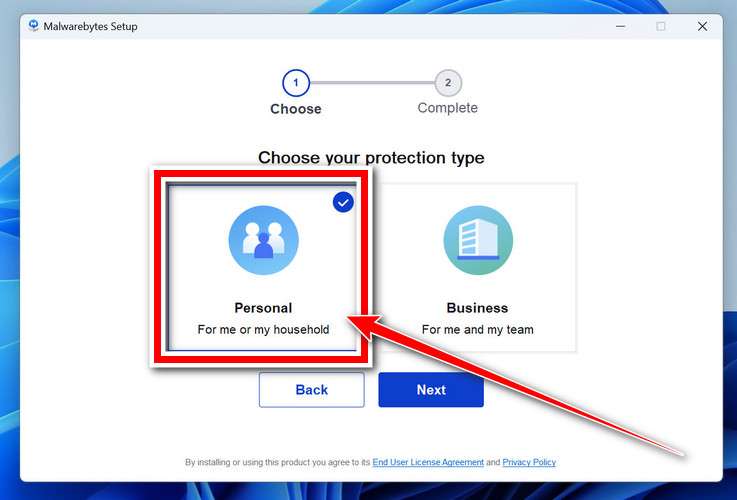
You’ll first be prompted to choose the type of computer you’re installing the program on—select either “Personal Computer” or “Work Computer” as appropriate, then click on Next.
Malwarebytes will now begin the installation process on your device.
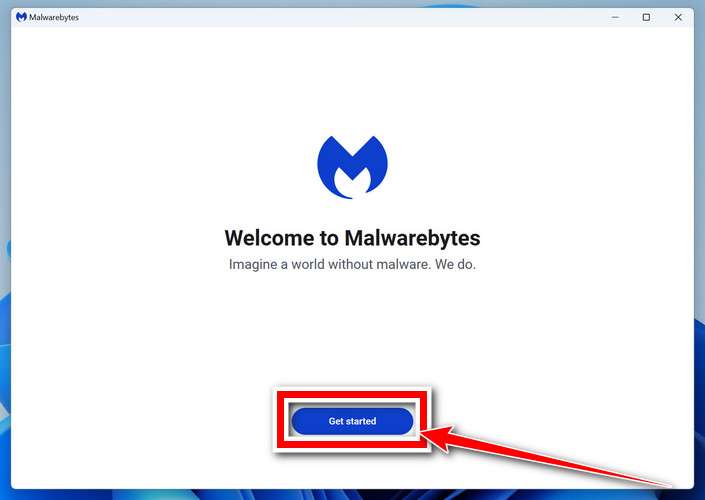
When the Malwarebytes installation is complete, the program will automatically open to the “Welcome to Malwarebytes” screen.
On the final screen, simply click on the Open Malwarebytes option to start the program.
Enable “Rootkit scanning”.
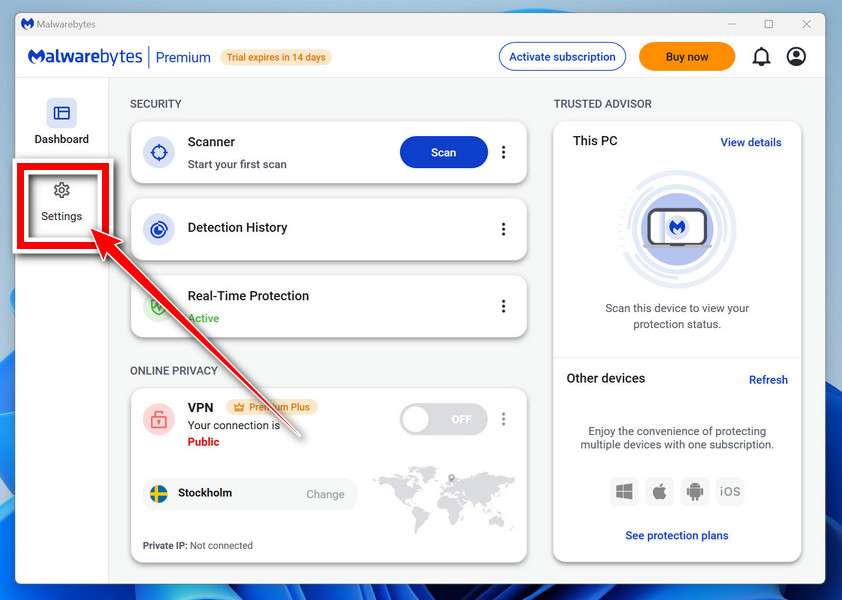
Malwarebytes Anti-Malware will now start, and you will see the main screen as shown below. To maximize Malwarebytes’ ability to detect malware and unwanted programs, we need to enable rootkit scanning. Click on the “Settings” gear icon located on the left of the screen to access the general settings section.
In the settings menu, enable the “Scan for rootkits” option by clicking the toggle switch until it turns blue.
Now that you have enabled rootkit scanning, click on the “Dashboard” button in the left pane to get back to the main screen.
Perform a Scan with Malwarebytes.
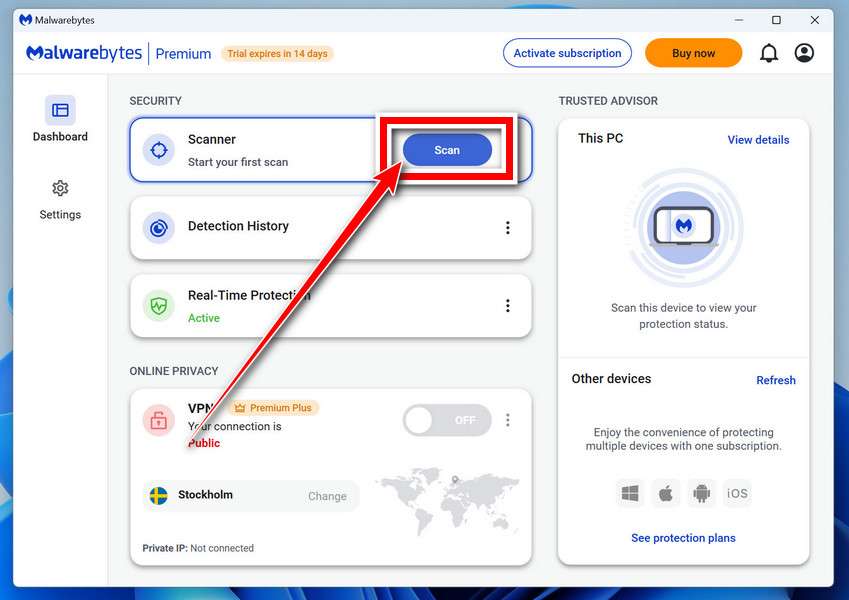
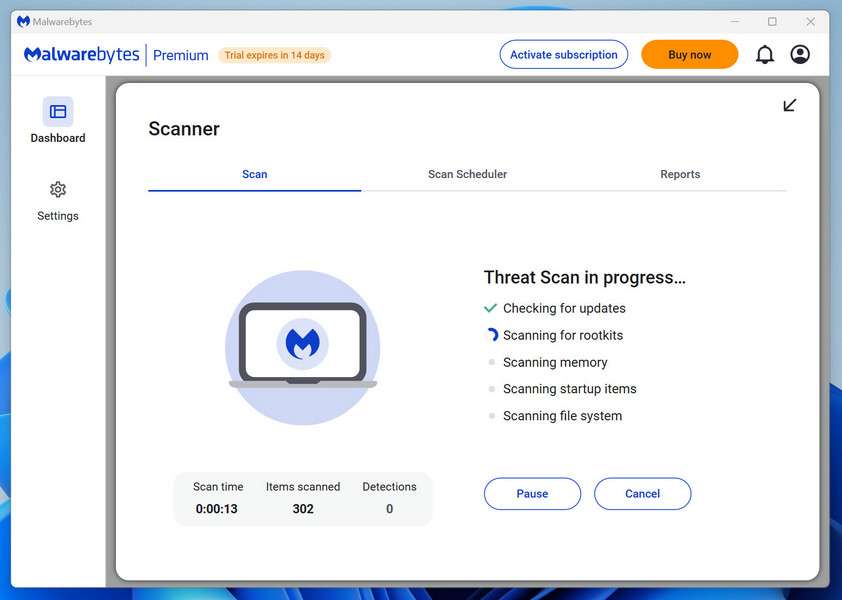
To start a scan, click the Scan button. Malwarebytes will automatically update its antivirus database and begin scanning your computer for malicious programs.
Wait for the Malwarebytes scan to complete.
Malwarebytes will now scan your computer for browser hijackers and other malicious programs. This process can take a few minutes, so we suggest you do something else and periodically check the status of the scan to see when it is finished.
Quarantine detected malware
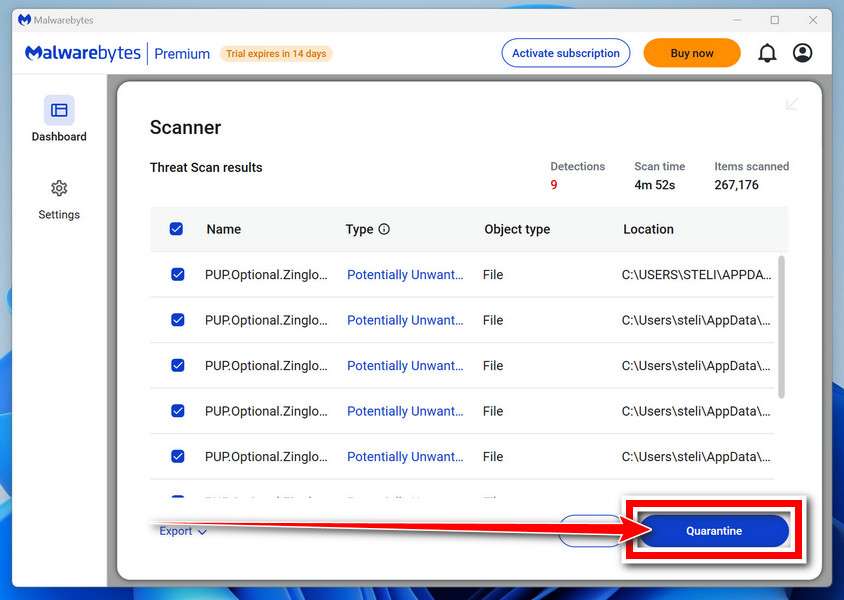
Once the Malwarebytes scan is complete, it will display a list of detected malware, adware, and potentially unwanted programs. To effectively remove these threats, click the “Quarantine” button.
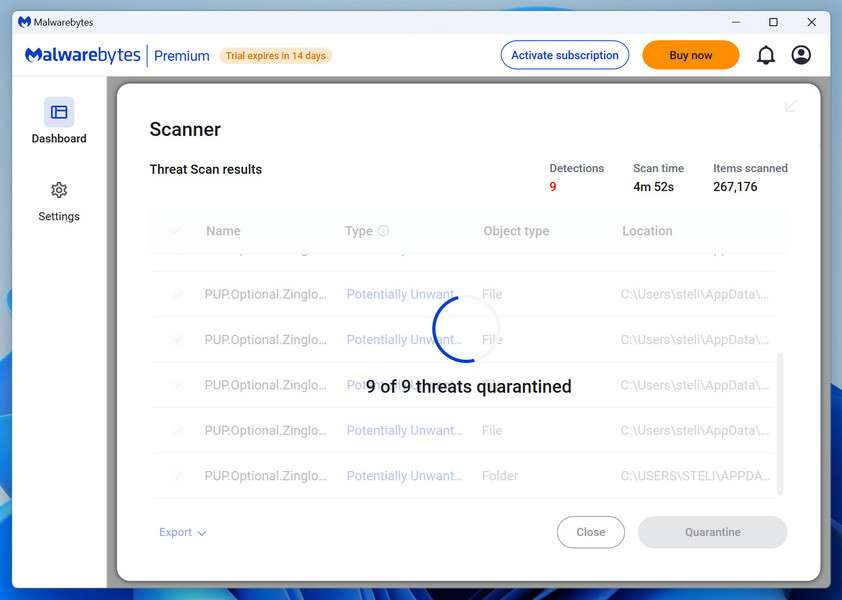
Malwarebytes will now delete all of the files and registry keys and add them to the program’s quarantine.
Restart your computer.
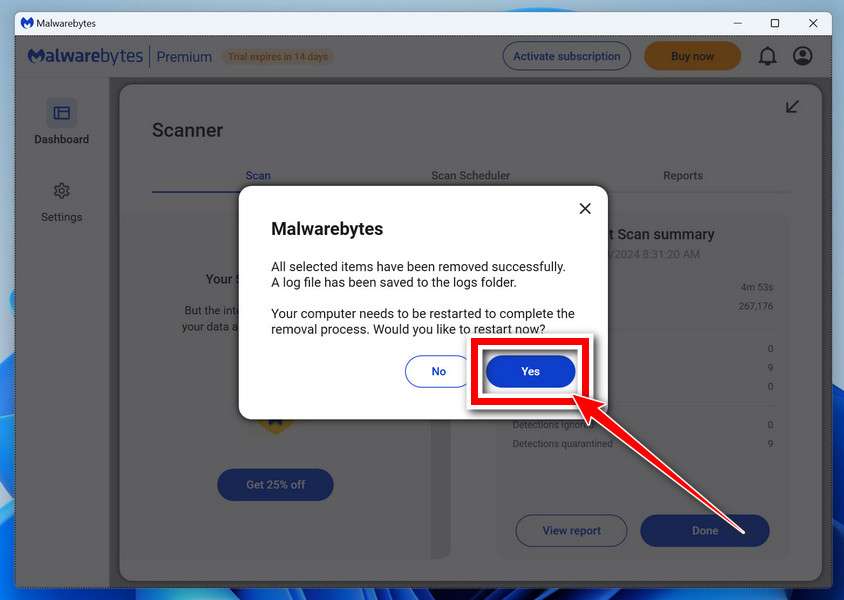
When removing files, Malwarebytes may require a reboot to fully eliminate some threats. If you see a message indicating that a reboot is needed, please allow it. Once your computer has restarted and you are logged back in, you can continue with the remaining steps.
Once the scan completes, remove all detected threats. Your Windows computer should now be clean and running smoothly again, free of trojans, adware, and other malware.
If your current antivirus allowed this malicious program on your computer, you may want to consider purchasing Malwarebytes Premium to protect against these types of threats in the future. If you are still having problems with your computer after completing these instructions, then please follow one of the steps:
Malwarebytes for Mac is an on-demand scanner that can destroy many types of malware that other software tends to miss without costing you absolutely anything. When it comes to cleaning up an infected device, Malwarebytes has always been free, and we recommend it as an essential tool in the fight against malware.
Download Malwarebytes for Mac.
You can download Malwarebytes for Mac by clicking the link below.
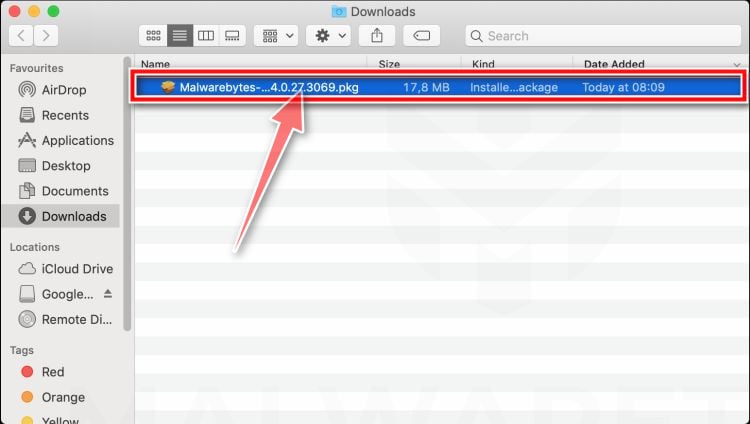
When Malwarebytes has finished downloading, double-click on the setup file to install Malwarebytes on your computer. In most cases, downloaded files are saved to the Downloads folder.
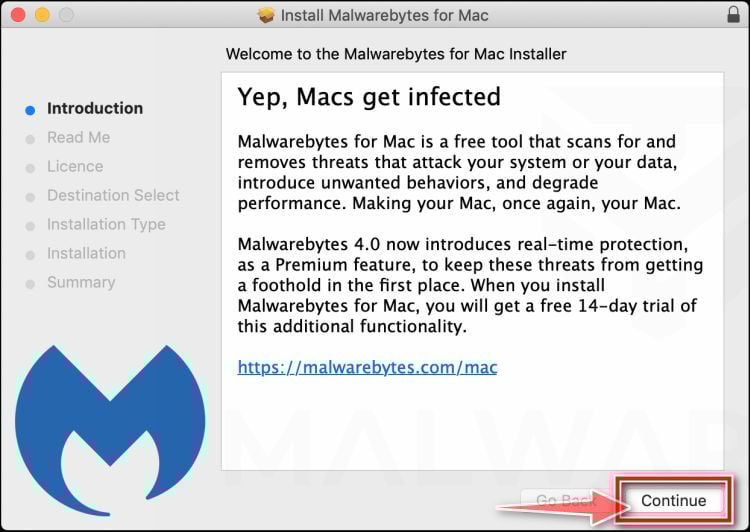
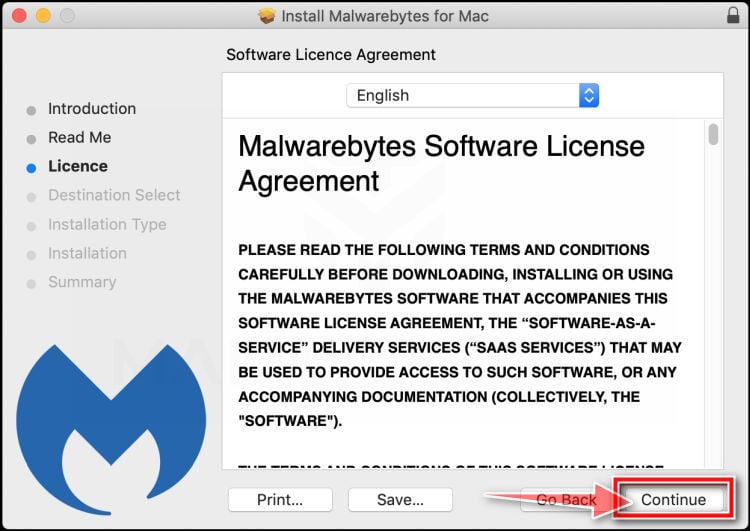
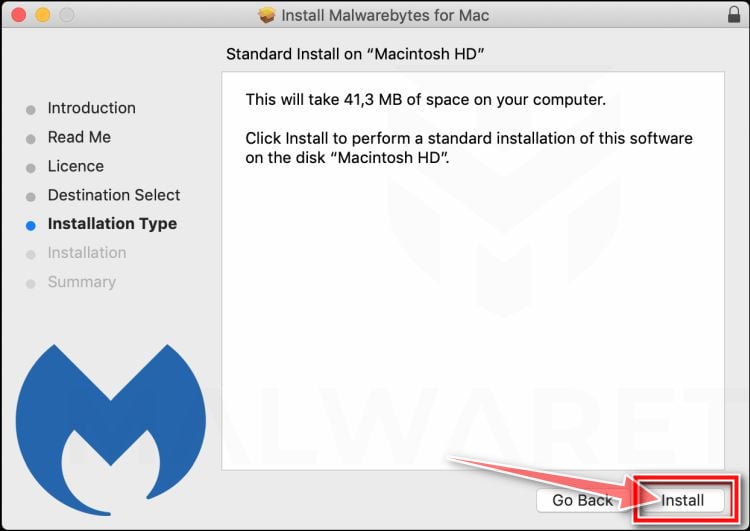
Follow the on-screen prompts to install Malwarebytes.
When the Malwarebytes installation begins, you will see the Malwarebytes for Mac Installer which will guide you through the installation process. Click “Continue“, then keep following the prompts to continue with the installation process.
When your Malwarebytes installation completes, the program opens to the Welcome to Malwarebytes screen. Click the “Get started” button.
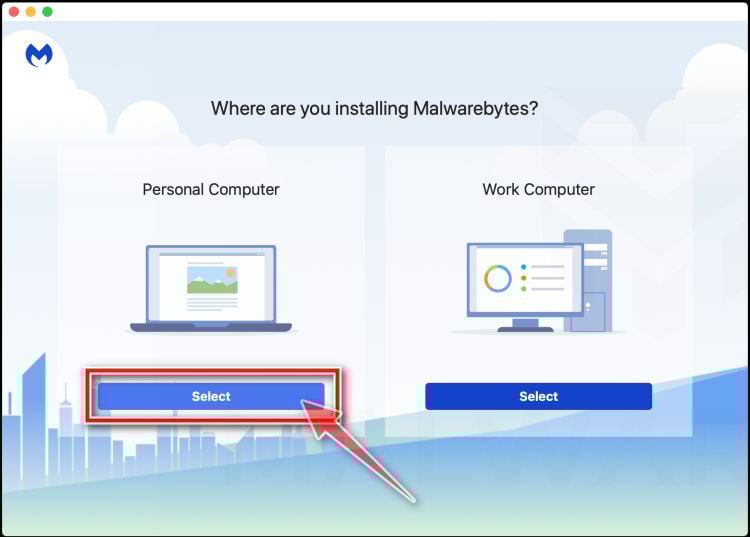
Select “Personal Computer” or “Work Computer”.
The Malwarebytes Welcome screen will first ask you what type of computer are you installing this program, click either Personal Computer or Work Computer.
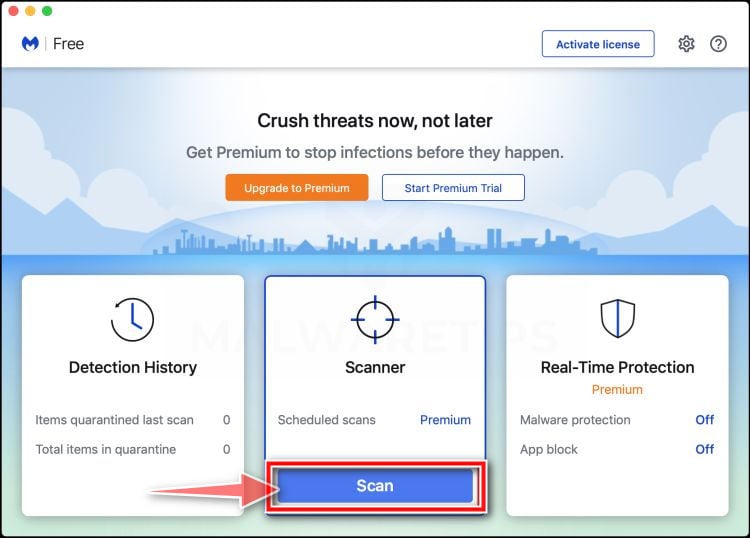
Click on “Scan”.
To scan your computer with Malwarebytes, click on the “Scan” button. Malwarebytes for Mac will automatically update the antivirus database and start scanning your computer for malware.
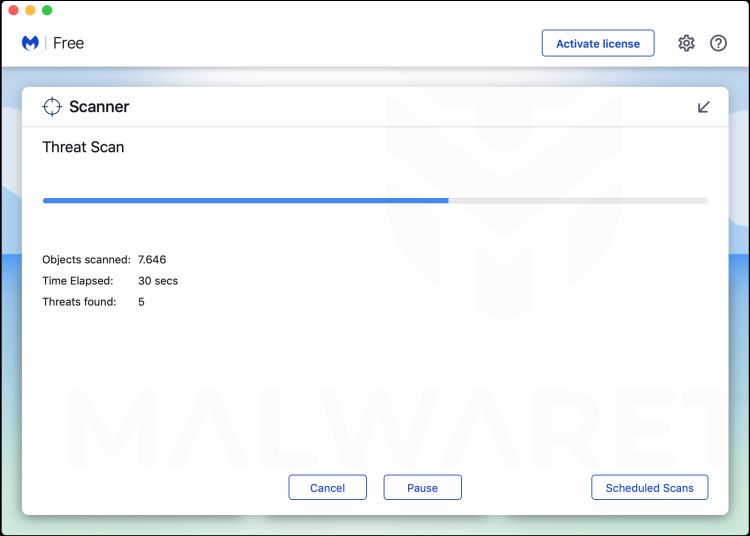
Wait for the Malwarebytes scan to complete.
Malwarebytes will scan your computer for adware, browser hijackers, and other malicious programs. This process can take a few minutes, so we suggest you do something else and periodically check on the status of the scan to see when it is finished.
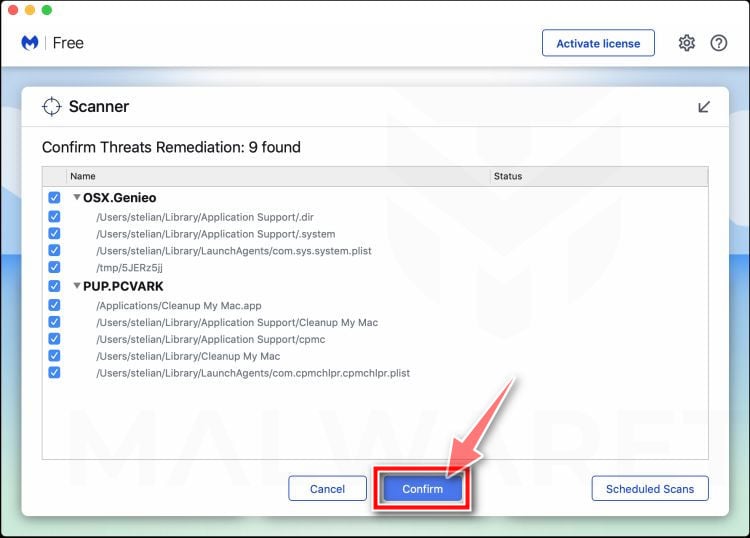
Click on “Quarantine”.
When the scan has been completed, you will be presented with a screen showing the malware infections that Malwarebytes has detected. To remove the malware that Malwarebytes has found, click on the “Quarantine” button.
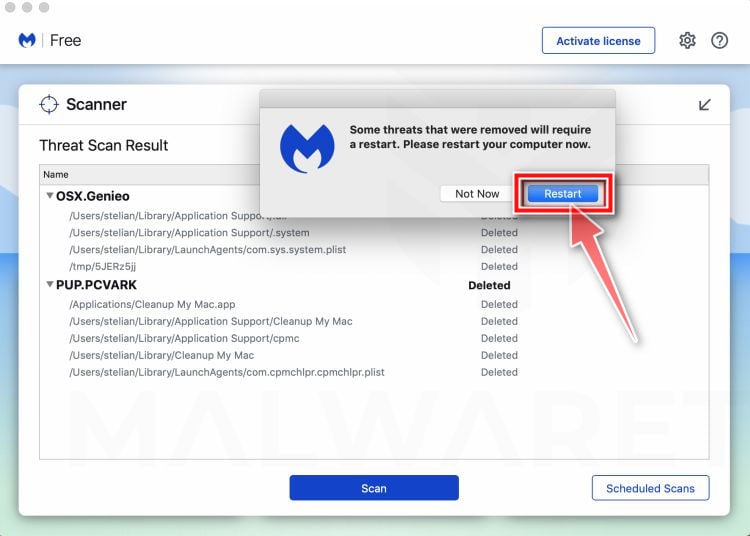
Restart computer.
Malwarebytes will now remove all the malicious files that it has found. To complete the malware removal process, Malwarebytes may ask you to restart your computer.
After scanning, delete any detected threats. Your Mac should now be free from adware, unwanted extensions, and other potentially harmful software.
If your current antivirus allowed a malicious program on your computer, you might want to consider purchasing the full-featured version of Malwarebytes Anti-Malware to protect against these types of threats in the future. If you are still experiencing problems while trying to remove a malicious program from your computer, please ask for help in our Mac Malware Removal Help & Support forum.
Run a Malware Scan with Malwarebytes for Android
Malwarebytes for Android automatically detects and removes dangerous threats like malware and ransomware so you don’t have to worry about your most-used device being compromised. Aggressive detection of adware and potentially unwanted programs keeps your Android phone or tablet running smooth.
Download Malwarebytes for Android.
You can download Malwarebytes for Android by clicking the link below.
In the Google Play Store, tap “Install” to install Malwarebytes for Android on your device.
When the installation process has finished, tap “Open” to begin using Malwarebytes for Android. You can also open Malwarebytes by tapping on its icon in your phone menu or home screen.
Follow the on-screen prompts to complete the setup process
When Malwarebytes will open, you will see the Malwarebytes Setup Wizard which will guide you through a series of permissions and other setup options. This is the first of two screens that explain the difference between the Premium and Free versions. Swipe this screen to continue. Tap on “Got it” to proceed to the next step. Malwarebytes for Android will now ask for a set of permissions that are required to scan your device and protect it from malware. Tap on “Give permission” to continue. Tap on “Allow” to permit Malwarebytes to access the files on your phone.
Update database and run a scan with Malwarebytes for Android
You will now be prompted to update the Malwarebytes database and run a full system scan.
Click on “Update database” to update the Malwarebytes for Android definitions to the latest version, then click on “Run full scan” to perform a system scan.
Wait for the Malwarebytes scan to complete.
Malwarebytes will now start scanning your phone for adware and other malicious apps. This process can take a few minutes, so we suggest you do something else and periodically check on the status of the scan to see when it is finished.
Click on “Remove Selected”.
When the scan has been completed, you will be presented with a screen showing the malware infections that Malwarebytes for Android has detected. To remove the malicious apps that Malwarebytes has found, tap on the “Remove Selected” button.
Restart your phone.
Malwarebytes for Android will now remove all the malicious apps that it has found. To complete the malware removal process, Malwarebytes may ask you to restart your device.
When the scan is finished, remove all detected threats. Your Android phone should now be free of malicious apps, adware, and unwanted browser redirects.
If your current antivirus allowed a malicious app on your phone, you may want to consider purchasing the full-featured version of Malwarebytes to protect against these types of threats in the future. If you are still having problems with your phone after completing these instructions, then please follow one of the steps:
Restore your phone to factory settings by going to Settings > General management > Reset > Factory data reset.
After cleaning your device, it’s important to protect it from future infections and annoying pop-ups. We recommend installing an ad blocker such as AdGuard. AdGuard blocks malicious ads, prevents phishing attempts, and stops dangerous redirects, helping you stay safe while browsing online.
In Conclusion
The 877-683-5342 phone scam is a dangerous threat that everyone should be aware of in order to avoid falling victim and suffering financial damages. But with knowledge of how this scam operates, the warning signs to look for, and steps to take if compromised, you can reduce chances of getting defrauded and minimize harm if targeted. Bookmark this page as an easy reference to refresh your memory on 877-683-5342 scam defense tactics. Share with your social circle as well to help others prevent their own victimization through education and vigilance.
Frequently Asked Questions
1. What happens if I call the 877-683-5342 number?
Calling the number connects you to scammers impersonating a trusted entity claiming you have an urgent issue to resolve. They will pressure and manipulate you into providing private account details or sending money that allows them to steal your identity and funds or sell your information.
2. What if I already called 877-683-5342 and gave them my information?
Immediately contact banks, credit bureaus, and any companies compromised to report unauthorized access before the scammers can capitalize. Freeze credit reports, monitor your credit and accounts diligently, and change all passwords. You may have to close accounts completely if fraud already occurred.
3. Why is providing my social security number to 877-683-5342 dangerous?
Armed with your full SSN, name, and address the scammers can open fraudulent credit accounts, file fake tax returns, steal government benefits, take out payday loans, and commit other identity theft in your name. Protect it at all costs.
4. Can the police find who is behind 877-683-5342?
Unfortunately, tracking down the scammers is very difficult since they use spoofing technology to mask their true locations and identities. But reporting assists authorities in building cases against larger criminal rings. Having documentation if you lost money also helps if prosecutions occur to potentially recover damages.
5 You mentioned credit freezes. How does that work?
Freezing your credit reports prevents new accounts being opened in your name without approval of a unique PIN only you know. This blocks scammers who gained your info from abusing it further. Expect fees up to $10 per bureau. You can easily lift the freeze whenever you need credit checks run.
Key Takeaways
The 877-683-5342 phone number is used by scammers impersonating trusted companies or agencies to deceive victims into providing private information and money. Do not call it or provide data if contacted.
Look for urgent demands, threats, unusual payment methods, and other red flags to detect the scam.
Contact banks and companies affected if you already fell victim. Freeze credit reports, monitor your credit, and change all account passwords immediately.
Share knowledge of this scam with family and friends to prevent them from being victimized.
Thomas is an expert at uncovering scams and providing in-depth reporting on cyber threats and online fraud. As an editor, he is dedicated to keeping readers informed on the latest developments in cybersecurity and tech.