

A viral Instagram video has taken the internet by storm, showing what appear to be “Tata Float Shoes” — futuristic sneakers that let you float a few inches above the ground. The clip, allegedly filmed at a buzzing tech expo, shows a man gliding effortlessly across a stage while a bright blue TATA logo glows in the background. Viewers are calling it “India’s Iron Man moment” and “the future of walking.”
But are these anti-gravity sneakers actually real, or just another AI-generated illusion made to go viral? Let’s break down the evidence.
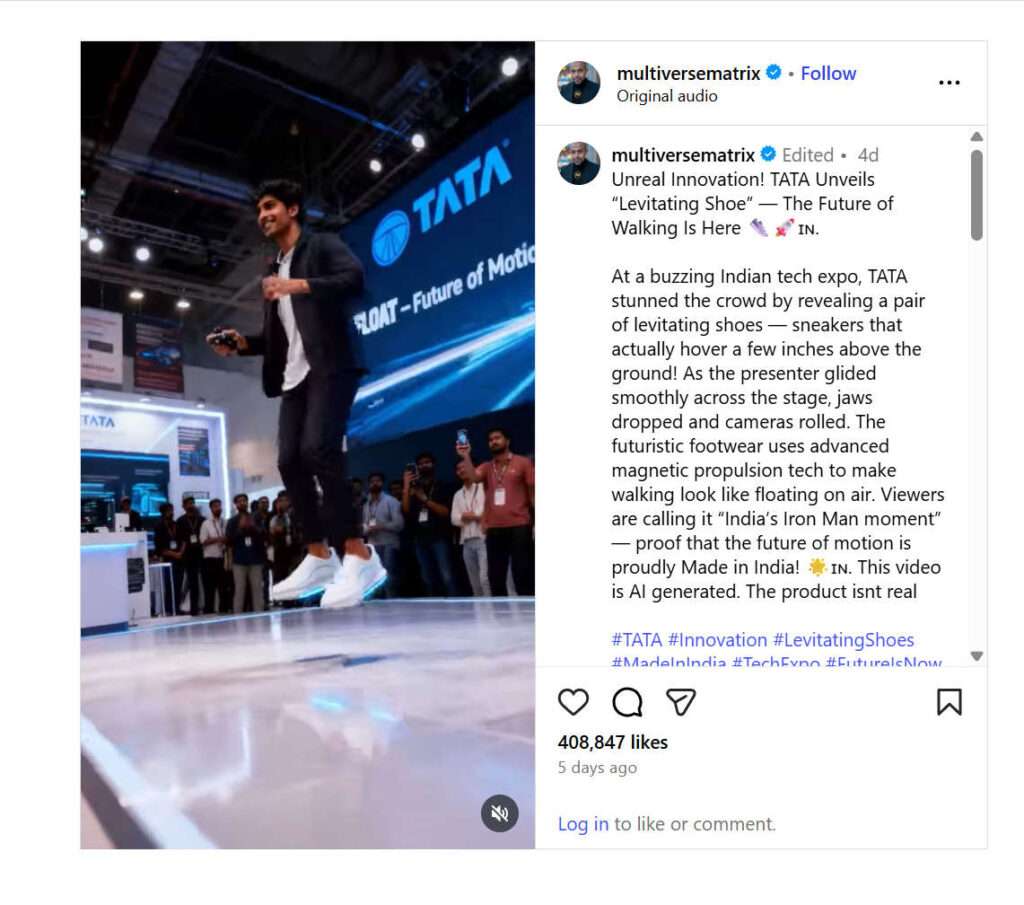
The Viral Video: Hovering Shoes That Defy Gravity
In the viral clip, a presenter appears to float smoothly across the stage wearing sleek white sneakers with glowing blue soles. The crowd watches in awe as he moves as if gliding on invisible air jets.
The video’s caption — shared by the Instagram account @multiversematrix — claims that TATA unveiled the “FLOAT” shoes, featuring magnetic propulsion technology to simulate walking on air.
The post received hundreds of thousands of likes, with viewers commenting things like “I need these now!” and “Finally, hover shoes are here!”
At first glance, it’s almost believable. The lighting looks cinematic, the stage branding appears professional, and the performance feels like a genuine tech demo. But the truth is far more digital than physical.
Closer Look: AI Footage, Not a Real Product
After investigation, it turns out the Tata Float Shoes are not real.
There’s no mention of such footwear on the Tata Group or Tata Motors websites, no official press releases, no patents, and no credible tech publication reporting on “levitating shoes.”
Even more telling — the creator of the viral clip, Ajin Joseph, confirmed that the video is AI-generated.
Ajin runs the social media page @multiversematrix, which regularly posts futuristic concept videos made with artificial intelligence and 3D animation. At the end of his caption, he clarified:
“This video is AI-generated. The product isn’t real.”
Still, many viewers missed that disclaimer and shared the video as if it depicted an actual Tata product.
How the Illusion Was Created
The viral “Float Shoes” video is a masterclass in digital design.
Experts who analyzed the footage noticed several giveaways:
- Inconsistent reflections and lighting – The glow beneath the shoes doesn’t match the lighting on the floor or the man’s legs.
- Smooth, unnatural movement – The presenter’s feet glide too perfectly, with no natural bounce or muscle motion.
- Lack of physical interaction – His clothes and shadows show no realistic response to hovering or contact with the floor.
- Unrealistic crowd reactions – Despite the supposed shock of a gravity-defying demo, the audience barely reacts — suggesting AI or composited background footage.
The effect is visually stunning but unmistakably synthetic — a blend of AI rendering and motion compositing designed to mimic a futuristic tech presentation.
Who Is Behind the Viral Video
The creator, Ajin Joseph, is a Singapore-based extended reality (XR) designer and the mind behind the Multiverse Matrix brand.
According to his LinkedIn and media profiles:
- He has over a decade of experience in digital media, VR/AR, and interactive technologies.
- Holds a Fine Arts degree in Animation and Interactive Technology from Nanyang Technological University.
- Worked as a senior interactive designer at Fraunhofer Singapore.
- Currently teaches immersive media at Republic Polytechnic in Singapore.
Ajin’s work focuses on pushing visual storytelling through emerging technologies. He previously went viral for similar AI-generated concepts — including a “levitating car” and floating architecture — both later confirmed to be digital art pieces.
Why People Believed the Shoes Were Real
The combination of branding, realism, and social proof made the illusion incredibly convincing.
Several psychological and visual factors contributed:
- Familiar brand trust: Using “TATA,” a respected Indian conglomerate, added instant credibility.
- Professional staging: The setting looked like a real tech expo, complete with banners and lighting.
- Cinematic AI realism: Modern AI tools like Runway, Sora, and Unreal Engine can simulate photorealistic human motion and reflections.
- Social virality: Once thousands of people share something, it gains perceived legitimacy.
It’s a perfect case study of how AI-generated marketing concepts can fool even tech-savvy viewers.
No Official Tata Involvement
To be absolutely clear, Tata Motors and Tata Group have no connection to this video. The company’s official website and verified social media accounts have never announced or hinted at a product called “Tata Float” or “levitating shoes.”
Fact-checking outlets confirmed that the entire presentation was fabricated using AI, with Tata’s logo and branding digitally added for realism.
So while the video may celebrate innovation, it’s fan-made fiction, not corporate reality.
The Broader Trend: AI-Generated “Future Tech” Hoaxes
The “Tata Float Shoes” clip joins a long list of viral AI-generated tech hoaxes, including:
- Beer Jackets filled with liquid,
- Jelly Beds that look like giant gummies,
- Floating houses and self-charging drones that never existed.
These videos exploit viewers’ fascination with futuristic inventions, blending believable design with AI-powered realism. The creators often gain millions of views — and later use their popularity to promote tutorials, courses, or merchandise.
In this case, Ajin Joseph invited followers to join his $200 AI masterclass, teaching how such viral visuals are made.
Could Levitating Shoes Ever Become Real?
While “Tata Float Shoes” are fiction, the concept of levitating footwear isn’t entirely impossible. Scientists and engineers have experimented with:
- Magnetic repulsion systems, like those used in maglev trains.
- Superconducting hoverboards, which can float over magnetic tracks.
However, creating compact, wearable versions would require immense power, precise balance, and magnetic infrastructure on the ground — making it impractical for everyday use.
So, while it’s an exciting vision of the future, true floating sneakers remain science fiction for now.
The Bottom Line
The viral Tata Float Shoes video is not real. It’s an AI-generated concept created by visual artist Ajin Joseph (Multiverse Matrix) to showcase the possibilities of digital design.
There’s no evidence, patent, or product behind the claim — only a fascinating look at how powerful and believable AI-generated media has become.
Still, the clip serves as a reminder: in the age of artificial intelligence, seeing is no longer believing.
Frequently Asked Questions (FAQ)
Are Tata Float Shoes real?
No. Tata Float Shoes are not real. The viral video showing sneakers that hover above the ground was AI-generated and not an actual product demonstration. There is no record of Tata Motors or Tata Group announcing or manufacturing such footwear.
Who created the Tata Float Shoes video?
The video was created by Ajin Joseph, a Singapore-based digital artist and extended reality designer. He runs the social media brand Multiverse Matrix, known for producing AI-generated concept videos. Joseph confirmed that the Tata Float Shoes clip was entirely created with AI tools for creative purposes.
Did Tata Motors announce levitating shoes?
No. Tata Motors has never announced or patented any product related to levitating or “float” shoes. The company’s official website and verified social channels contain no mention of such a product. The Tata logo seen in the viral video was digitally inserted as part of the AI design.
How do we know the video was AI-generated?
Several clues give it away:
- Unrealistic lighting and reflections around the shoes.
- Smooth, gliding motion that doesn’t match human movement.
- No visible reaction from clothing or shadows as the person “floats.”
- A clear disclaimer in the caption by the creator stating the clip is AI-generated.
Independent fact-checkers also confirmed that no real event or tech expo featured such a presentation.
Is Ajin Joseph associated with Tata?
No. Ajin Joseph has no affiliation with Tata Motors or any Tata Group company. His work under Multiverse Matrix focuses on AI concept art, digital storytelling, and immersive design, not corporate product development.
Can I buy Tata Float Shoes anywhere
No. Since the shoes don’t exist, there are no legitimate listings, patents, or sales pages. Any website claiming to sell “Tata Float Shoes” should be considered fake or misleading. Always verify with official brand channels before purchasing tech products seen in viral videos.
Why did people believe the Tata Float Shoes were real?
The video was extremely convincing because it used:
- A trusted brand name (Tata)
- Realistic CGI and AI visuals
- A professional expo backdrop
- And a sense of futuristic storytelling
These elements created the illusion of authenticity and led many to think it was a genuine technology reveal.
What technology would real floating shoes require?
To make shoes hover, engineers would need powerful magnetic repulsion systems or superconducting components — technologies currently impractical for portable consumer footwear. Even with strong magnets, the shoes would only float above specific magnetic surfaces, not regular floors.
Has Tata commented on the viral video?
As of now, Tata Motors has not issued an official statement, likely because the video was quickly identified as fan-made AI content unrelated to their business. The company remains focused on automotive and mobility innovations, not wearable levitation devices.
What is the lesson from the Tata Float Shoes hoax?
The viral clip is a reminder of how easily AI-generated videos can blur reality. As visual realism improves, audiences must double-check sources, verify brand statements, and remain skeptical of sensational tech claims that lack credible proof.








