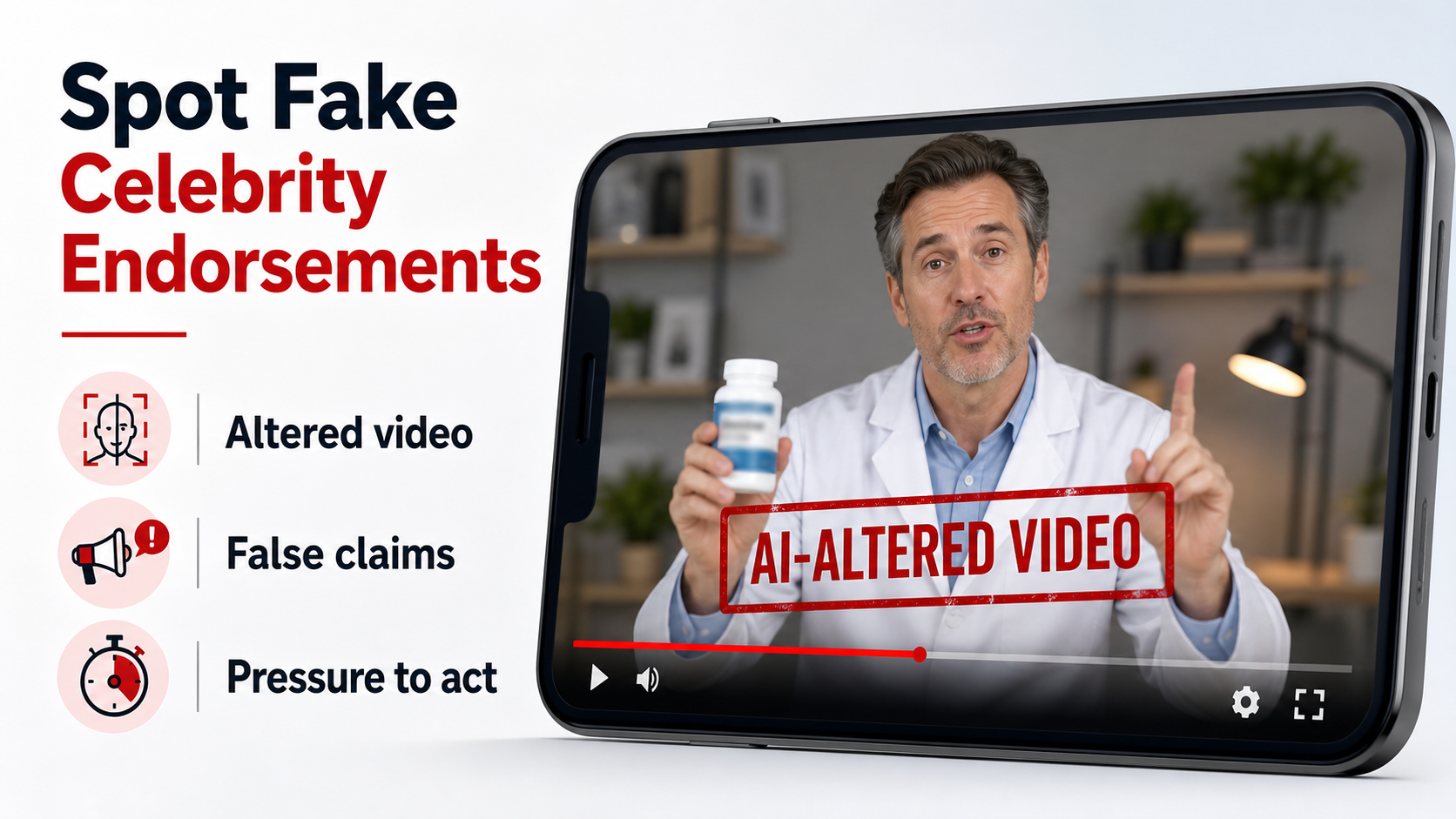
Fake Tom Green Diabetes Doctor Scam Exposed: AI Cure Ads Fully Investigated
Written by: Lapain Epuran
Published on:
The presenter speaks like a specialist who has finally identified why ordinary diabetes care fails. A laboratory, university name, and dramatic pancreas graphic complete the scene.
Yet the expert’s identity becomes harder to verify with every specific claim. The trail eventually leads somewhere very different from a medical breakthrough.
Overview
Tom Green is presented as an expert, not independently verified
The sales video introduces a man called Tom Green as a diabetes authority. His white coat and confident explanation do most of the credibility work.
No reliable evidence establishes that this persona is a licensed specialist who developed or endorsed the Sugar Defender drops sold at the end.
The name may also confuse viewers familiar with unrelated people named Tom Green. Similar names do not connect those individuals to this campaign.
A university story supplies scientific theater
The pitch refers to cellular experts at the University of Düsseldorf and an examination involving 260 people with diabetes. Those details sound precise and research-based.
The script claims a toxic blanket of zombie cells smothers the pancreas. That vivid phrase is marketing language, not a transparent citation to product-specific research.
No complete paper, authors, methods, ethics approval, outcomes, or university announcement is presented to connect that story with Sugar Defender.
Sugar Defender arrives after the cure narrative
The video promises to reveal a natural discovery capable of reversing type 2 diabetes and balancing blood sugar. Viewers are encouraged to distrust ordinary explanations.
Only after the long presentation does the page reveal Sugar Defender liquid drops. The bottle’s general support language cannot substantiate a disease reversal promise.
The concern is broader than disappointment. Diabetes requires individualized medical management, and relying on unproven drops can delay effective treatment.
Persona: an unverified diabetes expert named Tom Green
Claimed institution: a cellular research team at the University of Düsseldorf
Story device: a toxic blanket of zombie cells around the pancreas
Claimed sample: 260 people with diabetes
Product revealed: Sugar Defender liquid drops
Main risks: unsupported cure claims, treatment delay, payment exposure, and recurring billing
Safer action: verify with a licensed clinician and official medical sources
How The Scam Works
Step 1: The ad begins with frustration about blood sugar
People who struggle with readings, medication costs, or side effects are shown a message promising that the real cause was hidden from them.
The presenter frames skepticism as proof that powerful interests fear the discovery. That makes outside criticism look like part of the alleged cover-up.
Medical-looking graphics appear before the seller, ingredients, dosage, and safety information. The order encourages belief before informed evaluation.
The ad then sends viewers to a long page or video where navigation is limited and the sales story controls every answer.
Step 2: A fake expert provides authority
The man identified as Tom Green speaks with the certainty of a clinician. The campaign does not provide verifiable licensing, employment, publications, or official contact details.
A white coat is a costume, not a credential. A professional title should be checked through licensing boards and the named institution.
The voice may be acted or synthetic, while supporting visuals may be generated, recycled, or unrelated to the product.
Real experts describe who they are, where they practice, what evidence supports the claim, and which patients should not use a product.
Step 3: The University of Düsseldorf is used as borrowed proof
The script names a respected institution because viewers may not pause to check whether the university published the claimed study.
Precise numbers such as 260 participants make invented research feel documented. Precision alone does not reveal recruitment, controls, measurements, or statistical significance.
Search the university’s official website and scientific databases for the exact product and study. A missing independent record is a serious warning.
Never contact unrelated departments angrily based only on an advertisement. Preserve the claim and report it through the institution’s official channel.
Step 4: The zombie-cell explanation creates a simple villain
Type 2 diabetes involves complex interactions among insulin resistance, pancreatic function, genetics, behavior, medications, and other health factors.
The video compresses that complexity into a toxic blanket that one formula supposedly clears. The metaphor is memorable because it makes one bottle sound decisive.
Animated cells and falling glucose charts demonstrate what the narrator wants viewers to imagine. They are not measurements from the person watching.
A genuine treatment claim requires regulated evidence, defined outcomes, safety monitoring, and qualified medical supervision.
Step 5: A promised natural solution becomes Sugar Defender
The product reveal is delayed until the viewer accepts the problem story. Sugar Defender then appears as the only convenient way to address the alleged cause.
Drops can look gentler than tablets or prescriptions, but format does not prove effectiveness. Natural ingredients can interact with diabetes medicines and cause harm.
A complete label should disclose exact amounts, warnings, lot details, manufacturer, and responsible distributor. Marketing adjectives cannot replace that information.
Do not reduce or stop prescribed treatment because a sales video predicts rapid improvement. Discuss any supplement with the clinician managing diabetes.
Step 6: Fake reviews and guarantees reduce hesitation
The page may display dramatic testimonials, star ratings, limited stock, and a long refund promise. The seller controls every element inside its own funnel.
Verify whether reviewers exist outside the sales network and describe consistent, documented experiences. Stock photography and generic names prove nothing.
Read refund exclusions, return postage, opened-bottle rules, and deadlines. A guarantee is weak when support does not answer or the legal seller remains unclear.
Capture the complete checkout before payment, including quantities, add-ons, renewal language, and the card statement descriptor.
Step 7: The first order can create continuing risks
Buyers may receive multiple bottles, repeat offers, or future charges they did not expect. Merchant names may differ from Sugar Defender.
Customer data can also feed new campaigns for blood pressure, neuropathy, weight loss, or memory products using similar presenters and scripts.
Medical harm can occur if the product replaces monitoring or prescribed treatment. Financial harm can continue through refills and difficult cancellation.
Contact the bank quickly, preserve the bottle and evidence, and tell a clinician what was taken if any doses were used.
What the Evidence Actually Shows
The expert identity is not established
The observed campaign offers no verifiable professional record connecting its Tom Green persona to Sugar Defender or a recognized diabetes research program.
A name spoken inside a video is not authentication. Licensing boards, institutional profiles, peer-reviewed work, and official contact channels provide stronger checks.
Do not confuse this persona with unrelated people who share the name. The responsibility lies with the seller and advertiser using it.
The research story lacks essential documentation
A legitimate study involving 260 patients would identify investigators, methods, oversight, inclusion criteria, outcomes, limitations, and publication details.
The campaign supplies a memorable zombie-cell narrative instead. It does not demonstrate that University of Düsseldorf researchers tested the exact Sugar Defender formula.
An institution’s reputation cannot be transferred to a product simply by mentioning the institution during a sales presentation.
The FDA treats diabetes cure claims seriously
FDA guidance warns that illegally marketed diabetes products can be ineffective, contain hidden ingredients, and delay proper treatment, increasing the risk of serious complications.
Products marketed to diagnose, cure, treat, mitigate, or prevent disease are subject to drug requirements even when labeled as dietary supplements.
No online testimonial should replace glucose monitoring, prescribed medication, or professional care tailored to the individual.
The checkout evidence deserves separate scrutiny
Even if a bottle arrives, buyers must evaluate the seller, refund process, billing authorization, and card descriptor separately from the health claims.
A processor may handle payment without endorsing the advertising. Likewise, a fulfillment warehouse may ship bottles without owning the brand or manufacturing them.
Save the label, receipt, policy pages, and communications. Those records matter if charges repeat or the product causes an adverse reaction.
Company, Address, and Fulfillment Checks
Sugar Defender does not identify the medical authority
A product name and white-coated presenter can create the appearance of a clinical organization without naming one.
Locate the legal seller on the order form, not inside the video script. It should match the receipt and charge descriptor.
If the responsible company changes between pages, buyers cannot know who made the diabetes promises or who must honor the refund.
A return address is not a research laboratory
Search any address printed on Sugar Defender packaging or policies. Determine whether it is an office, mailbox, warehouse, residence, or registered-agent location.
Fulfillment staff can pick and ship bottles while knowing nothing about formulation, clinical evidence, or the supposed Düsseldorf research.
Ask for the actual manufacturer and testing facility. A parcel origin does not establish where the liquid was blended or quality checked.
Support must answer diabetes-specific questions
Before buying, ask whether representatives are qualified to discuss medication interactions, hypoglycemia risk, adverse events, and the claimed disease reversal.
Request the full subscription schedule, cancellation method, refund deductions, and company name that will appear on the bank statement.
Unanswered emails and scripted calls are especially alarming when the advertisement encourages people to change how they manage a chronic illness.
Private-label drops can hide a distant supply chain
Liquid supplements can be mass produced, relabeled for many storefronts, and routed through fulfillment hubs far from the marketer.
Unknown sourcing raises questions about ingredient identity, concentration, microbes, contaminants, storage temperatures, and consistency between batches.
Do not assume the product was made in Germany because the story mentions a German university. Marketing geography is not manufacturing evidence.
What to Do if You Have Fallen Victim to This Scam
Keep taking prescribed diabetes treatment
Do not stop insulin or other prescribed medicine because the Tom Green video promised that drops address a hidden root cause.
Contact the clinician managing your diabetes and explain what the advertisement claimed, what you ordered, and whether you consumed it.
Record glucose readings and symptoms as instructed. Urgent help may be needed for severe highs, lows, confusion, vomiting, or breathing changes.
Set the Sugar Defender bottle aside
Preserve the container, dropper, Supplement Facts panel, lot code, shipping label, and receipt instead of discarding them.
A pharmacist can compare the ingredients with current medicines and identify substances that could alter glucose or create other risks.
Do not send the only bottle back until health concerns, evidence needs, and the authorized return procedure are clear.
Describe the deception to your bank
Call through the official banking application or card number. Give the merchant descriptor, amount, date, and promised cure language.
Ask about disputing the sale and preventing repeat debits. Mention any bundle quantity that differed from what you believed you selected.
Continue checking statements because the operation may use another descriptor for an upsell, refill, or related product.
Revoke future shipment authorization
Write to the seller using contacts verified on the receipt and governing terms. State clearly that all continuity enrollment is cancelled.
Ask for a case number and itemized explanation of any refund. Save replies, voicemail, chat transcripts, and call times.
If support delays until a refund period expires, provide that timeline to the issuer as part of the dispute.
Archive the fabricated medical story
Save the Tom Green identity, University of Düsseldorf references, 260-person claim, zombie-cell animation, product reveal, and checkout.
Note whether the presenter told viewers that doctors, drug companies, or regulators concealed the supposed discovery.
Precise records show why the purchase involved alleged research and disease reversal, not simply ordinary supplement advertising.
Clean any device used for the order
Use Malwarebytes after installing a file, coupon extension, health application, or remote-support utility from the campaign.
Review browser notification permissions and remove unfamiliar entries. Change reused passwords after the device scan finishes clean.
Pay particular attention to email security because receipts and password resets can expose additional financial information.
Reduce contact with cloned cure funnels
AdGuard can block many malicious advertising routes and tracking domains that retarget buyers with renamed blood-sugar products.
Delete suspicious notification subscriptions and avoid clicking unsubscribe links inside unexpected health promotions. Mark them as spam instead.
Future videos may swap the doctor and bottle while repeating the same pancreas story. Verify the evidence, not the new packaging.
Notify health and consumer authorities
Report deceptive diabetes treatment claims and adverse events to the FDA. Report the commercial scheme to the FTC and advertising platform.
Provide screenshots, web addresses, the product lot, seller names, and transaction records. Remove personal health identifiers from public reports.
Warn relatives privately if the advertisement targeted your household, since similar ads may be shown to people with matching interests.
Is Your Device Infected? Run a Free Malware Scan
Slow performance, constant pop-ups, or strange behavior? These are classic signs of a malware infection. The fastest way to find out is to scan your device with Malwarebytes Anti-Malware Free — one of the most trusted malware removal tools available.
The free version detects and removes the most common threats, including:
Adware — the cause of those annoying pop-ups
Browser hijackers — unwanted redirects and changed homepages
Trojans and spyware — hidden programs stealing your data
Potentially unwanted programs (PUPs) — software you never asked for
👉 Select your device below — Windows, Mac, or Android — then follow the simple steps to download Malwarebytes, scan your system, and remove any threats it finds. The whole process takes about 5 minutes.
Malwarebytes for WindowsMalwarebytes for MacMalwarebytes for Android
Run a Malware Scan with Malwarebytes for Windows
Malwarebytes is one of the most popular and trusted anti-malware tools for Windows — and it’s completely free for removing infections. It catches threats that many antivirus programs miss, including adware, browser hijackers, and trojans. Follow the steps below to scan and clean your PC in just a few minutes.
Download Malwarebytes
Click the button below to download the latest version of Malwarebytes for Windows from the official source. The free version is all you need — it will scan your computer and remove adware, browser hijackers, and other malicious software at no cost.
(The link opens in a new page where your download will start)
Install Malwarebytes
When the download finishes, open your Downloads folder and double-click the MBSetup file. If Windows shows a User Account Control pop-up, click “Yes” to allow the installation.
Follow the On-Screen Prompts to Install Malwarebytes
The setup wizard will walk you through a few quick screens:
Choose where you’re installing the program — “Personal Computer” or “Work Computer” — then click Next.
Malwarebytes will now install on your device. This usually takes under a minute.
When installation is complete, the “Welcome to Malwarebytes” screen will open automatically.
On the final screen, click Open Malwarebytes to launch the program.
Enable “Scan for Rootkits”
Before scanning, turn on rootkit detection so Malwarebytes can find even the most hidden threats. Click the Settings gear icon on the left side of the screen.
In the settings menu, find “Scan for rootkits” and click the toggle so it turns blue.
Done? Click “Dashboard” in the left pane to return to the main screen.
Start the Scan
Click the blue Scan button. Malwarebytes will automatically update its virus database and start checking your computer for malware.
Wait for the Scan to Finish
The scan checks your entire system for browser hijackers and other malicious programs, so it can take several minutes. Feel free to do something else — just check back occasionally to see the progress.
Quarantine the Detected Threats
When the scan is done, you’ll see a list of everything Malwarebytes found — malware, adware, and potentially unwanted programs. Click the “Quarantine” button to remove all of them at once.
Malwarebytes will now remove the malicious files and registry entries and move them safely into quarantine.
Restart Your Computer
Some threats can only be fully removed after a reboot. If Malwarebytes asks you to restart, click Yes. Once you’re logged back in, your PC is clean and you can continue with the next steps in this guide.
When the scan finishes, click Quarantine to remove everything Malwarebytes found. That’s it — your Windows PC is now clean of trojans, adware, and other malware, and should be back to running smoothly.
If your current antivirus allowed this malicious program on your computer, you may want to consider purchasing Malwarebytes Premium to protect against these types of threats in the future. If you are still having problems with your computer after completing these instructions, then please follow one of the steps:
Malwarebytes for Mac is a free on-demand scanner that removes the malware other security software tends to miss — adware, browser hijackers, and unwanted programs included. Cleaning an infected Mac with Malwarebytes has always been completely free, and it’s our go-to recommendation. Follow the steps below to scan and clean your Mac in just a few minutes.
Download Malwarebytes for Mac
Click the button below to download the latest version of Malwarebytes for Mac.
When the download finishes, open your Downloads folder and double-click the setup file to begin the installation.
Follow the On-Screen Prompts to Install Malwarebytes
The Malwarebytes for Mac Installer will guide you through a few quick screens. Click “Continue” and keep following the prompts until the installation completes.
When the installation is complete, Malwarebytes opens to the Welcome to Malwarebytes screen. Click “Get started“.
Select “Personal Computer” or “Work Computer”
Malwarebytes will ask what type of computer you’re installing it on. Click either Personal Computer or Work Computer, whichever applies.
Start the Scan
Click the “Scan” button. Malwarebytes will automatically update its detection database and begin checking your Mac for malware.
Wait for the Scan to Finish
Malwarebytes will scan your Mac for adware, browser hijackers, and other malicious programs. This can take a few minutes, so feel free to do something else — just check back occasionally to see the progress.
Quarantine the Detected Threats
When the scan is done, you’ll see a list of everything Malwarebytes found. Click the “Quarantine” button to remove all the threats at once.
Restart Your Mac
Malwarebytes will now remove all the malicious files it found. Some threats can only be fully removed after a reboot — if Malwarebytes asks you to restart, allow it. Once you’re logged back in, your Mac is clean.
Once the scan is done, remove every threat it detected. Your Mac is now free of adware, rogue browser extensions, and other potentially harmful software.
If your current antivirus allowed a malicious program on your computer, you might want to consider purchasing the full-featured version of Malwarebytes Anti-Malware to protect against these types of threats in the future. If you are still experiencing problems while trying to remove a malicious program from your computer, please ask for help in our Mac Malware Removal Help & Support forum.
Run a Malware Scan with Malwarebytes for Android
Malwarebytes for Android automatically detects and removes dangerous threats like malware and ransomware so you don’t have to worry about your most-used device being compromised. Aggressive detection of adware and potentially unwanted programs keeps your Android phone or tablet running smooth.
Download Malwarebytes for Android.
You can download Malwarebytes for Android by clicking the link below.
In the Google Play Store, tap “Install” to install Malwarebytes for Android on your device.
When the installation process has finished, tap “Open” to begin using Malwarebytes for Android. You can also open Malwarebytes by tapping on its icon in your phone menu or home screen.
Follow the on-screen prompts to complete the setup process
When Malwarebytes will open, you will see the Malwarebytes Setup Wizard which will guide you through a series of permissions and other setup options. This is the first of two screens that explain the difference between the Premium and Free versions. Swipe this screen to continue. Tap on “Got it” to proceed to the next step. Malwarebytes for Android will now ask for a set of permissions that are required to scan your device and protect it from malware. Tap on “Give permission” to continue. Tap on “Allow” to permit Malwarebytes to access the files on your phone.
Update database and run a scan with Malwarebytes for Android
You will now be prompted to update the Malwarebytes database and run a full system scan.
Click on “Update database” to update the Malwarebytes for Android definitions to the latest version, then click on “Run full scan” to perform a system scan.
Wait for the Malwarebytes scan to complete.
Malwarebytes will now start scanning your phone for adware and other malicious apps. This process can take a few minutes, so we suggest you do something else and periodically check on the status of the scan to see when it is finished.
Click on “Remove Selected”.
When the scan has been completed, you will be presented with a screen showing the malware infections that Malwarebytes for Android has detected. To remove the malicious apps that Malwarebytes has found, tap on the “Remove Selected” button.
Restart your phone.
Malwarebytes for Android will now remove all the malicious apps that it has found. To complete the malware removal process, Malwarebytes may ask you to restart your device.
After the scan, tap Remove Selected to delete all detected threats. Your Android phone is now clean — no more malicious apps, adware, or browser redirects.
If your current antivirus allowed a malicious app on your phone, you may want to consider purchasing the full-featured version of Malwarebytes to protect against these types of threats in the future. If you are still having problems with your phone after completing these instructions, then please follow one of the steps:
Restore your phone to factory settings by going to Settings > General management > Reset > Factory data reset.
Now that your device is clean, keep it that way. Most infections start with a malicious ad or a fake download button — so blocking them at the source is your best defense.
We recommend AdGuard, which blocks malicious ads, phishing pages, and dangerous redirects before they can reach you.
The campaign did not provide reliable licensing, employment, publications, or an institutional profile proving the presenter’s claimed role.
A white coat and confident narration establish appearance, not identity or medical authority.
Did the University of Düsseldorf test Sugar Defender?
No complete study linking that institution, the described 260 participants, and the exact Sugar Defender formula was presented.
A legitimate trial should identify authors, methods, dates, outcomes, limitations, ethics oversight, and the tested formulation.
Are zombie cells the proven cause of type 2 diabetes?
The phrase toxic blanket of zombie cells is a sales-friendly simplification, not a product-specific medical finding supplied with transparent evidence.
Type 2 diabetes is complex and requires individualized care based on real measurements, history, medicines, nutrition, and other factors.
Can blood-sugar drops replace prescribed medicine?
No advertisement should be used to discontinue treatment. Abrupt changes can lead to dangerous glucose levels or other complications.
Only the clinician managing the condition should recommend changes after reviewing readings, laboratory results, and the full supplement label.
How can recurring Sugar Defender charges be stopped?
Cancel in writing, save proof, and call the bank about both the merchant and possible account-updater billing.
A replacement card may not stop every authorized recurrence, so request the issuer’s specific merchant-blocking options.
Why do these campaigns change doctor or product names?
Rotating identities helps advertisers escape negative search results while preserving the same emotional script and checkout mechanics.
Search the disease promise and story details, not only the newest bottle name, before considering a purchase.
The Bottom Line
The fake Tom Green story uses medical clothing, a university name, and vivid biology to make Sugar Defender feel like the result of serious research.
The campaign does not provide the credentials, study records, or regulated evidence needed to support its type 2 diabetes reversal claims.
Do not replace medical care with the drops. Preserve the evidence, speak with a clinician, and challenge unexpected charges promptly.
10 Rules to Avoid Online Scams
Here are 10 practical safety rules to help you avoid malware, online shopping scams, crypto scams, and other online fraud. Each tip includes a quick “if you already got hit” action.
Stop and verify before you click, log in, download, or pay.
Most scams win by creating urgency. Verify using a trusted method: type the website address yourself, use the official app, or call a known number (not the one in the message).
If you already clicked: close the page, do not enter passwords, and run a malware scan.
Keep your operating system, browser, and apps updated.
Updates patch security holes used by malware and malicious ads. Turn on automatic updates where possible.
If you saw a scary “update now” pop-up: close it and update only through your device settings or the official app store.
Use layered protection: antivirus plus an ad blocker.
Antivirus helps block malware. An ad blocker reduces scam redirects, phishing pages, and malvertising.
If your browser is acting weird: remove unknown extensions, reset the browser, then run a full scan.
Install apps, software, and extensions only from official sources.
Avoid cracked software, “keygens,” and random downloads. During installs, choose Custom/Advanced and decline bundled offers you do not recognize.
If you already installed something suspicious: uninstall it, restart, and scan again.
Treat links and attachments as untrusted by default.
Phishing often impersonates delivery services, banks, and popular brands. If it is unexpected, do not open attachments or log in through the message.
If you entered credentials: change the password immediately and enable 2FA.
Shop safely: research the store, then pay with protection.
Be cautious with brand-new stores, “closing sale” stories, and prices that make no sense. Prefer credit cards or PayPal for dispute options. Avoid wire transfers, gift cards, and crypto payments.
If you already paid: contact your card issuer or PayPal quickly to dispute the transaction.
Crypto rule: never pay a “fee” to withdraw or recover money.
Common patterns include fake profits, then “tax,” “gas,” or “verification” fees. Another is a “recovery agent” who demands upfront crypto.
If you already sent crypto: stop paying, save evidence (wallet addresses, TXIDs, chats), and report the scam to the platform used.
Secure your accounts with unique passwords and 2FA (start with email).
Use a password manager and unique passwords for every account. Enable 2FA using an authenticator app when possible.
If you suspect an account takeover: change passwords, sign out of all devices, and review recent logins and recovery settings.
Back up important files and keep one backup offline.
Backups protect you from ransomware and device failure. Keep at least one backup on an external drive that is not always connected.
If you suspect infection: do not connect backup drives until the system is clean.
If you think you are a victim: stop losses, document evidence, and escalate fast.
Move quickly. Speed matters for disputes, account recovery, and limiting damage.
Stop payments and contact: do not send more money or respond to the scammer.
Call your bank or card issuer: block transactions, replace the card if needed, and start a dispute or chargeback.
Secure your email first: change the email password, enable 2FA, and remove unfamiliar recovery options.
Secure other accounts: change passwords, enable 2FA, and log out of all sessions.
Scan your device: remove suspicious apps or extensions, then run a full malware scan.
Save evidence: screenshots, emails, order pages, tracking pages, wallet addresses, TXIDs, and chat logs.
Report it: to the payment provider, marketplace, social platform, exchange, or wallet service involved.
These rules are intentionally simple. Most online losses happen when decisions are rushed. Slow down, verify independently, and use payment methods and account controls that give you recourse.
Hello! I'm Lapain Epuran, your go-to source for detailed and honest product reviews. From tech gadgets to miracle cures, I provide insights to help you make informed choices. Join me as we discover what's truly worth your time and money.