

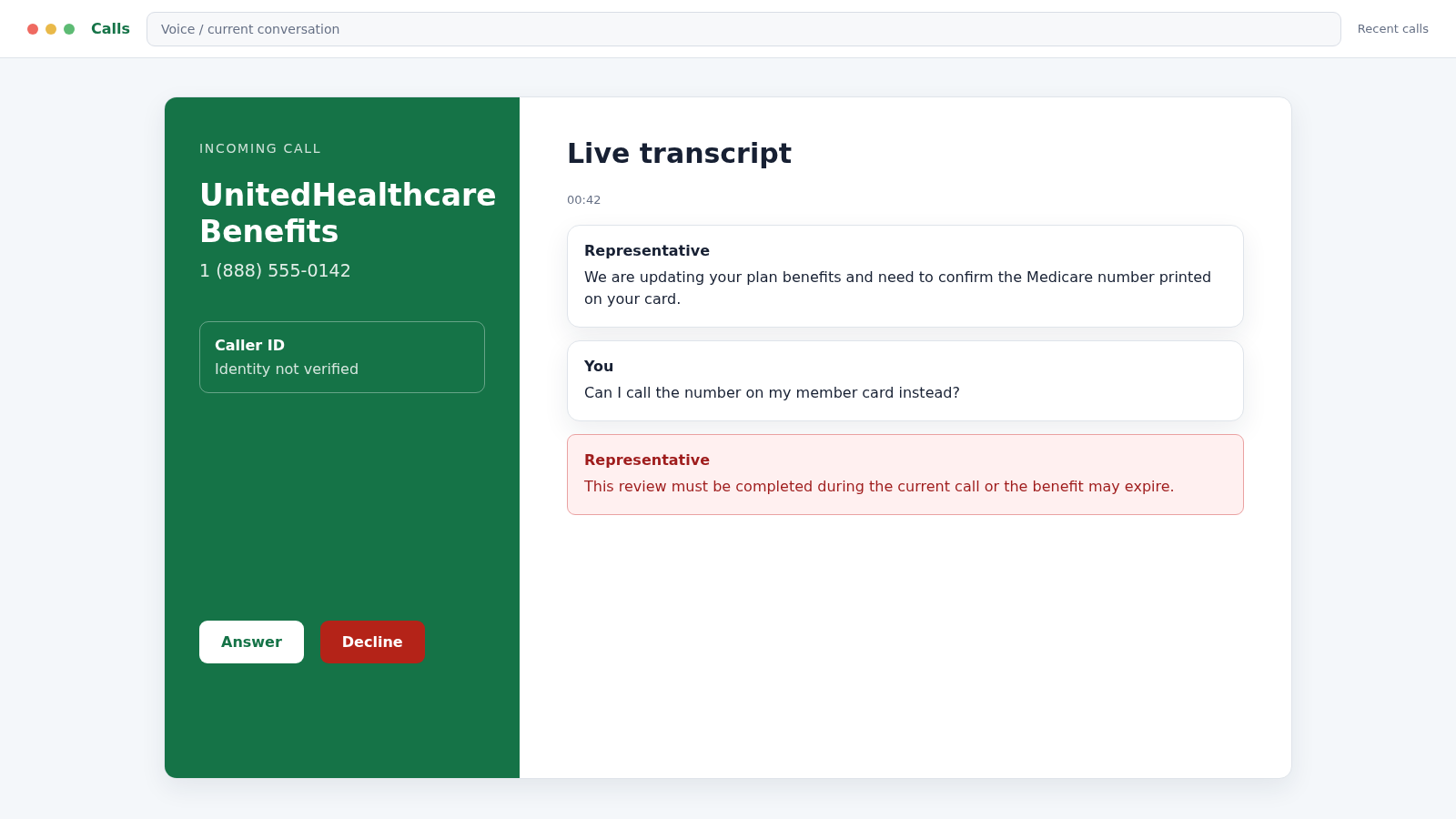
The call sounds routine at first. A friendly representative says there is a question about your UnitedHealthcare benefits, a new Medicare card, or a free medical item waiting for approval.
UnitedHealthcare scam calls become dangerous when the questions turn strangely personal. Before sharing a member number, Social Security number, or banking detail, it is worth understanding what the caller is really trying to do.
Overview
The caller borrows trust from a familiar insurer
UnitedHealthcare scam calls are impersonation attempts. The criminals use the name of a real insurer, Medicare language, and caller ID spoofing to make an unexpected call feel like ordinary plan administration.
Some callers mention updated benefits, a replacement member card, a health survey, a prescription allowance, or free medical equipment. Others claim there is a billing error, unpaid balance, or suspicious claim that must be corrected immediately.
The requested information can unlock several kinds of fraud
A Medicare or insurance member number is valuable because it can support fraudulent claims. Social Security numbers, dates of birth, addresses, card details, and banking information can also be combined for identity theft or account takeover.
The caller may already know your name, age range, provider, or neighborhood. That information can come from public records, data brokers, previous breaches, or lead lists. Familiar details do not prove that the call is genuine.
Hanging up and calling back independently is the safest test
UnitedHealthcare acknowledges that legitimate representatives may call members about their plans. That means the mere existence of a call is not proof of fraud. The decisive issue is whether the identity and request can be verified outside the incoming call.
End the conversation, then call the number printed on your member card or open the official plan app yourself. Medicare members can also contact 1-800-MEDICARE. Never use a callback number supplied by a suspicious caller.
- Do not confirm a Medicare, member, or Social Security number
- Do not read a one-time code sent during the call
- Do not pay for a supposedly free benefit
- Do not install an app or allow remote access
- Do not trust caller ID as proof of identity
- Verify the request through your member card or official account
Why Health Insurance Calls Create Immediate Pressure
Health coverage is personal, complicated, and time-sensitive. A caller who mentions a deadline, prescription, claim, or expiring benefit can make a member worry that ignoring the call will interrupt care or cost money.
Scammers exploit that uncertainty. They speak confidently, use insurance terms, and move through a scripted identity check. A question such as “Can you confirm the number on your card?” can feel normal when it arrives after several harmless details.
Older adults are frequent targets because Medicare numbers and medical identities can be monetized. However, employer-plan members, caregivers, and family members can receive the same calls. The script changes to match whatever coverage story sounds plausible.
The safest response is not to debate the caller. A real organization will allow you to end the call and reconnect through a verified channel. A scammer often becomes more urgent when control of the conversation begins to slip.
How the UnitedHealthcare Scam Calls Work
Step 1: A lead list identifies likely plan members
Criminal call centers obtain names and telephone numbers from marketing lists, public records, breaches, online forms, or previous scams. Age and location data help them choose a Medicare, health plan, or medical equipment script.
The list may be imperfect. Scammers do not need to know your actual insurer before calling. They choose a large, recognizable company and rely on the odds that some recipients will have a connection to it.
Step 2: Caller ID is made to look local or familiar
The displayed number may resemble a local clinic, insurer, pharmacy, or toll-free service line. Caller ID can be spoofed, so the name and number on the screen cannot authenticate the person speaking.
If the call goes unanswered, a voicemail may say that a benefit review is incomplete. The message supplies a case number and callback line operated by the same scam group.
Step 3: The caller introduces a believable benefit problem
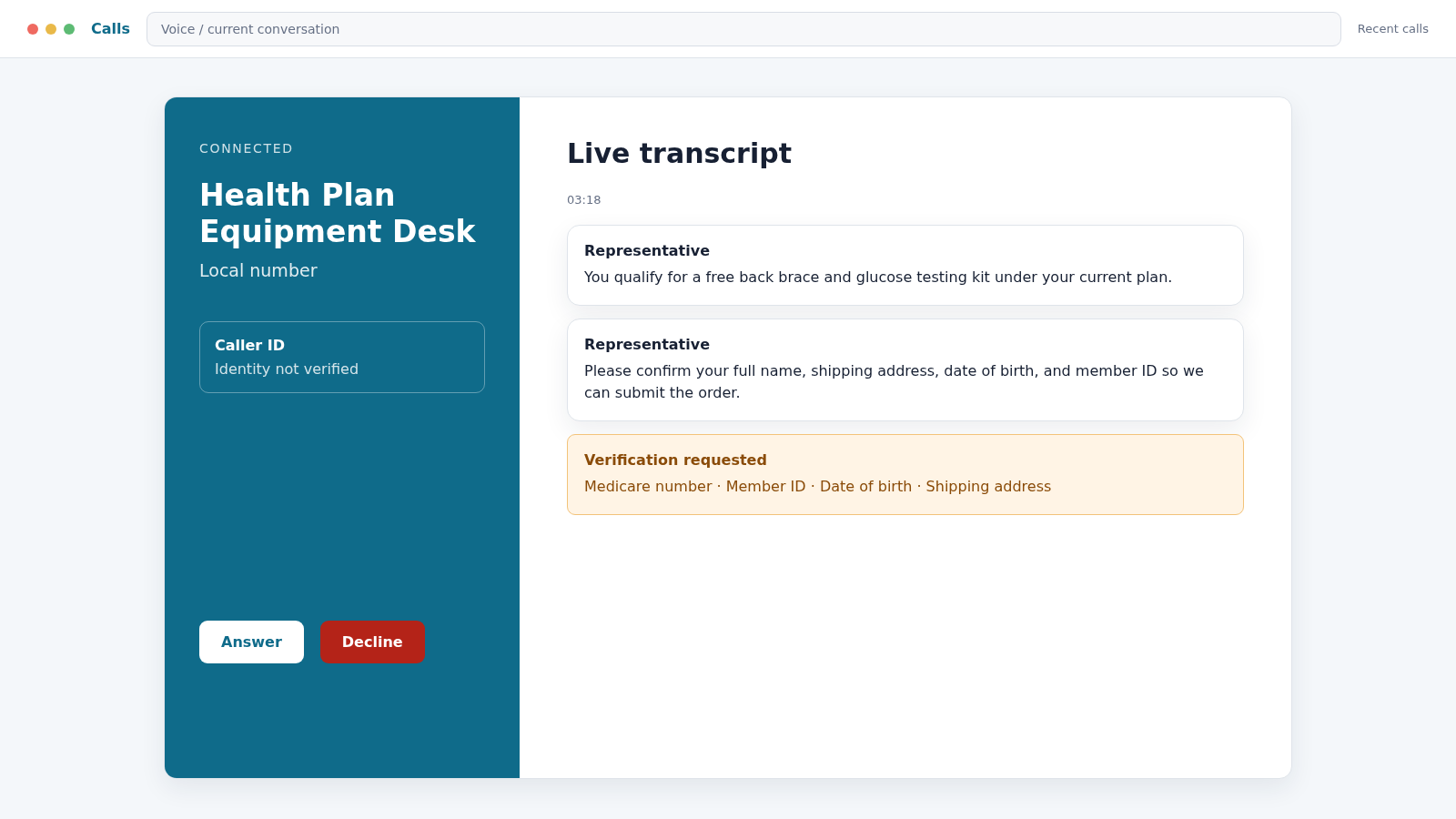
Common hooks include a new Medicare card, expanded dental or grocery benefits, a prescription review, a health survey, a claim investigation, or free braces and glucose supplies. Each story creates a reason to verify identity.
The offer is often framed as something already included in the plan. That reduces resistance because the target believes no purchase is taking place.
Step 4: Harmless questions establish rhythm
The caller may confirm your first name, ZIP code, doctor, or date of a recent appointment. Some details are guesses, while others may come from purchased data. The gradual sequence makes the conversation resemble a normal service call.
Once you answer several questions, refusing the next one can feel awkward. The script relies on that momentum.
Step 5: Sensitive numbers and codes are collected
The caller asks for a member ID, Medicare number, date of birth, Social Security number, card information, or bank account. A one-time code may be requested under the pretense of completing enrollment or confirming eligibility.
A verification code can allow a criminal to reset a password or enter an account in real time. No legitimate representative needs you to read a code that says not to share it.
Step 6: The information is used for claims or identity theft
Stolen insurance details may be used to bill for equipment, tests, or services never provided. Financial and identity data can support new accounts, unauthorized charges, tax fraud, or targeted phishing.
Victims may not notice immediately. A suspicious explanation of benefits or unexpected medical package can be the first visible sign.
Step 7: A second payment or support story follows
Some callers demand shipping, activation, copay, or processing money for the supposed benefit. Others transfer the victim to a billing specialist who requests card details or tells them to move funds for protection.
If remote access is introduced, the risk expands quickly. The caller can view email, saved passwords, financial accounts, and documents while pretending to fix an insurance portal.
Step 8: The victim is targeted again
A person who answered and shared information may receive more calls from different names. The next caller may pose as Medicare fraud prevention, an investigator, a bank, or a recovery service.
These follow-ups use details from the first conversation to sound informed. They are another attempt to obtain money, codes, or access.
Company, Address, and Fulfillment Checks
The name on caller ID is not the caller’s identity
UnitedHealthcare is a real insurer, but its name can be copied. Compare the request with your authenticated member account and call the number on your card rather than trusting a display name or incoming number.
A local number may hide a distant call center
Number spoofing can make a caller appear to be nearby or inside a trusted organization. An address, department, or badge number spoken during the call is not useful unless it can be confirmed independently.
Real support does not resist independent verification
A legitimate representative should understand when a member wants to call back through an official line. Threats, irritation, repeated transfers, secrecy, or insistence that the call cannot be disconnected are serious warning signs.
A free item still needs a traceable provider
Ask which licensed supplier will provide the equipment, what a claim will show, and whether your doctor ordered it. An unexplained package is not harmless if someone used your insurance identity to bill for it.
What Legitimate UnitedHealthcare and Medicare Guidance Says
UnitedHealthcare’s Medicare fraud guidance says to keep member, Medicare, and Social Security numbers private and to be cautious with unsolicited requests for personal or banking information.
The company also explains that members may receive genuine plan-related calls. If an offer or request feels uncertain, hang up and call the number on the UCard or another independently verified channel.
The Centers for Medicare and Medicaid Services lists 1-800-MEDICARE for member questions and 1-800-HHS-TIPS for suspected Medicare fraud. Those official routes avoid numbers supplied by the caller.
The practical rule is simple: an unexpected caller does not get sensitive information. Verification happens after you end the call, using a number or account you already trust.
Warning Signs of a Fake Health Plan Call
- The call was unexpected and immediately requests identity details
- A free brace, test, card, allowance, or prescription is offered
- The caller needs your complete Medicare or member number
- You are asked to read a one-time security code
- A benefit will supposedly vanish if you hang up
- The caller asks for gift cards, cryptocurrency, or a bank transfer
- A remote-control application is introduced
- The caller refuses independent verification
One sign may have an innocent explanation, but several together should end the conversation. Do not let politeness keep you on a call that no longer feels safe.
How to Review Your Insurance Activity After a Suspicious Call
Sign in to the official member portal or app without using a link from the caller. Review recent claims, prior authorizations, messages, profile changes, and explanation-of-benefits records for activity you do not recognize.
Pay close attention to durable medical equipment. Braces, testing supplies, pain products, and other items may generate claims even when the member never requested or received them. Record the provider, date, code, and amount before reporting.
If a package arrives unexpectedly, do not assume the matter is harmless because the item exists. Photograph the label and contents, keep the paperwork, and ask the insurer whether a claim was submitted and how the item should be handled.
Check the profile itself. A changed address, telephone number, email, pharmacy, or communication preference may indicate that someone tried to redirect notices or prepare the account for further misuse.
- Unfamiliar provider or supplier names
- Claims for appointments you never attended
- Equipment your doctor did not order
- Prescription activity outside your normal pharmacy
- New contact details or authorized representatives
- Security messages sent during or after the call
Ask the plan to place a note on the account and explain its process for disputed claims. Keep the reference number, representative’s name, and date of every legitimate follow-up conversation.
Continue reviewing records for several months. Insurance fraud can appear later, and the same stolen identity information may be tested against pharmacies, providers, financial accounts, and other benefit programs.
What to Do if You Have Fallen Victim to This Scam
- End the call. Stop sharing information, do not make another payment, and do not follow a transfer to another supposed department.
- Call UnitedHealthcare independently. Use the number printed on your member card. Explain which details were disclosed and ask whether your account, contact information, or claims require review.
- Contact Medicare when relevant. Call 1-800-MEDICARE and report suspected misuse of your Medicare number. Ask how to review claims and replace a compromised card.
- Review explanation-of-benefits records. Look for unfamiliar equipment, tests, providers, prescriptions, or appointments. Report each questionable entry through the official plan process.
- Secure online accounts. Change affected passwords from a trusted device, enable multi-factor authentication, revoke unknown sessions, and update recovery information.
- Contact banks and card issuers. Report disclosed account information and unauthorized transactions immediately. Ask whether accounts or cards should be restricted or replaced.
- Protect your identity. If a Social Security number or substantial personal information was exposed, create a recovery plan through IdentityTheft.gov and consider credit freezes.
- Remove remote-access software. Disconnect the affected device from the internet, uninstall tools the caller requested, and change sensitive credentials from another clean device.
- Scan the device. Run a full scan with Malwarebytes to check for malicious software or unwanted remote-control components left behind.
- Block malicious destinations. Report any links and consider AdGuard to reduce known phishing pages and harmful advertising. It cannot undo information already shared.
- Preserve evidence. Save the displayed number, voicemail, date, time, caller name, case number, requested information, payment records, and any texts or emails.
- Report follow-up approaches. Notify the FTC and appropriate health-fraud authorities. Ignore anyone promising to erase fraudulent claims or recover money for an upfront fee.
Frequently Asked Questions
Does UnitedHealthcare ever call its members?
Yes, legitimate representatives may call about plans or care. That is why you should end an uncertain call and reconnect using the number on your card. A genuine request can be verified through official channels.
Can caller ID show a real UnitedHealthcare number?
Yes. Scammers can spoof a familiar number or company name. Caller ID is a clue, not authentication, and should never be the reason you disclose sensitive information.
Is a free medical equipment offer always fraudulent?
No, some members qualify for legitimate equipment. An unsolicited caller asking for Medicare details without a verified provider or doctor order is unsafe. Confirm coverage and the supplier independently.
What can someone do with my Medicare number?
It may be used to submit false claims, order equipment, or support identity fraud. Monitor plan records and report unfamiliar services quickly.
Should I read a verification code to a plan representative?
Do not share a code from an unexpected request. Read the full message containing the code. If it says not to share it, the caller may be attempting account access.
What if I only confirmed my name and address?
The immediate risk is lower than disclosing account numbers, but the caller now knows the number is active. Expect follow-up phishing and avoid confirming additional details.
The Bottom Line
UnitedHealthcare scam calls turn a familiar insurance name into a reason to surrender medical, identity, and financial information. A professional voice and accurate personal detail do not authenticate the caller.
Hang up, call the number on your member card, and review claims through your real account. That brief pause breaks the script and keeps control of your information where it belongs.








