

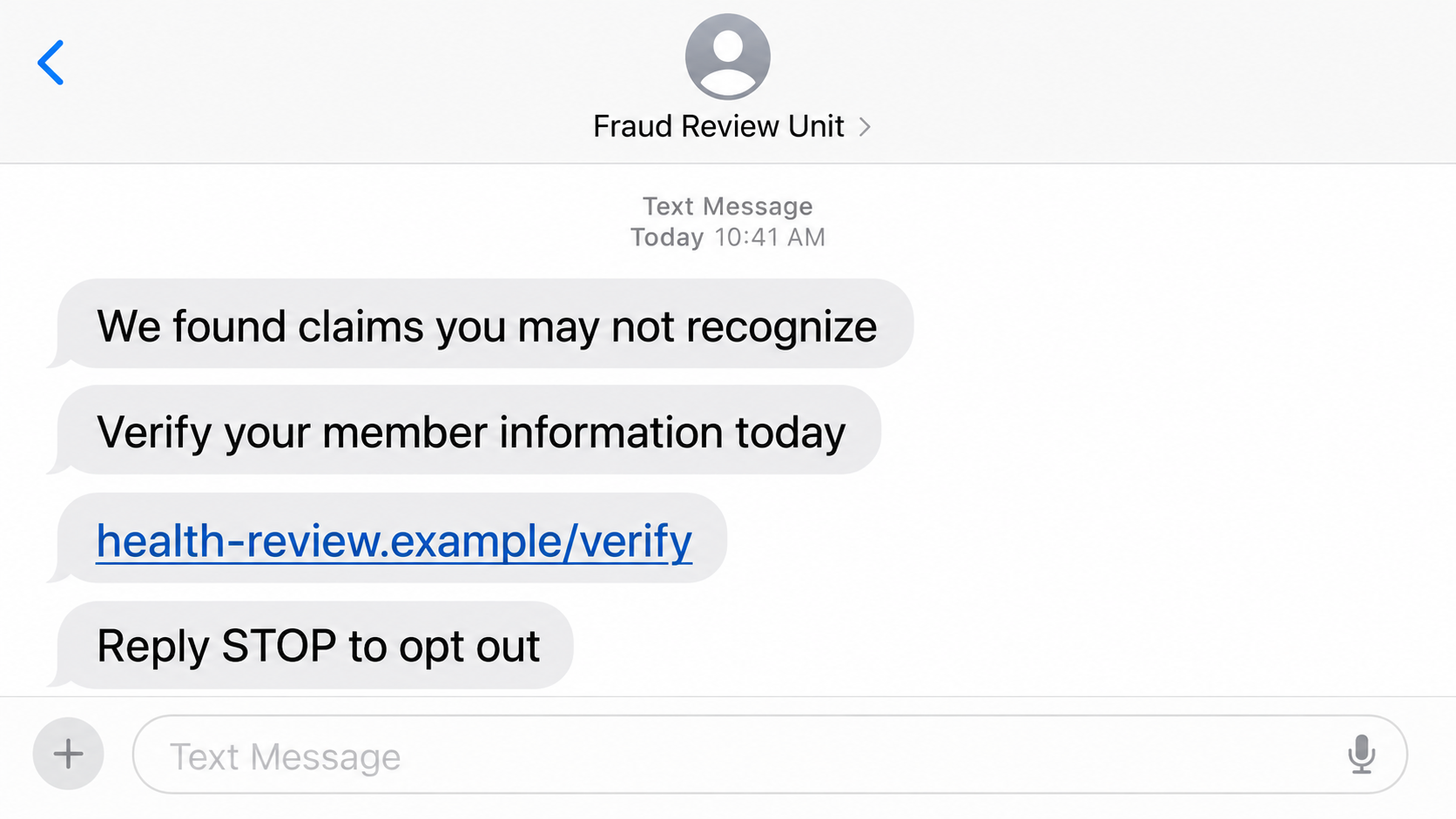
The fake health insurer scam often opens with a message about a claim, frozen benefits, or an urgent review of your member account.
It sounds protective and may mention information that feels personal. Before responding, it helps to understand why that apparent concern deserves a second look.
Overview
The message impersonates an insurer or fraud investigator
The sender may pose as a health-plan fraud unit, claims investigator, compliance team, or provider-audit department.
Emails and texts are designed to look like routine communications from institutions patients already trust.
The story can accuse a clinic of overbilling, say a suspicious claim used your member number, or ask whether you received a particular service.
A real concern makes the request feel urgent and confidential.
These messages do not need to diagnose an illness or sell a miracle product.
They borrow the authority of a health insurer and the fear that someone has used your benefits.
The next step may be a link, attachment, phone call, or demand for reimbursement.
The scammer wants protected health information, medical records, financial details, or a payment for services that supposedly were overpaid or not covered.
A convincing portal can collect everything in one visit.
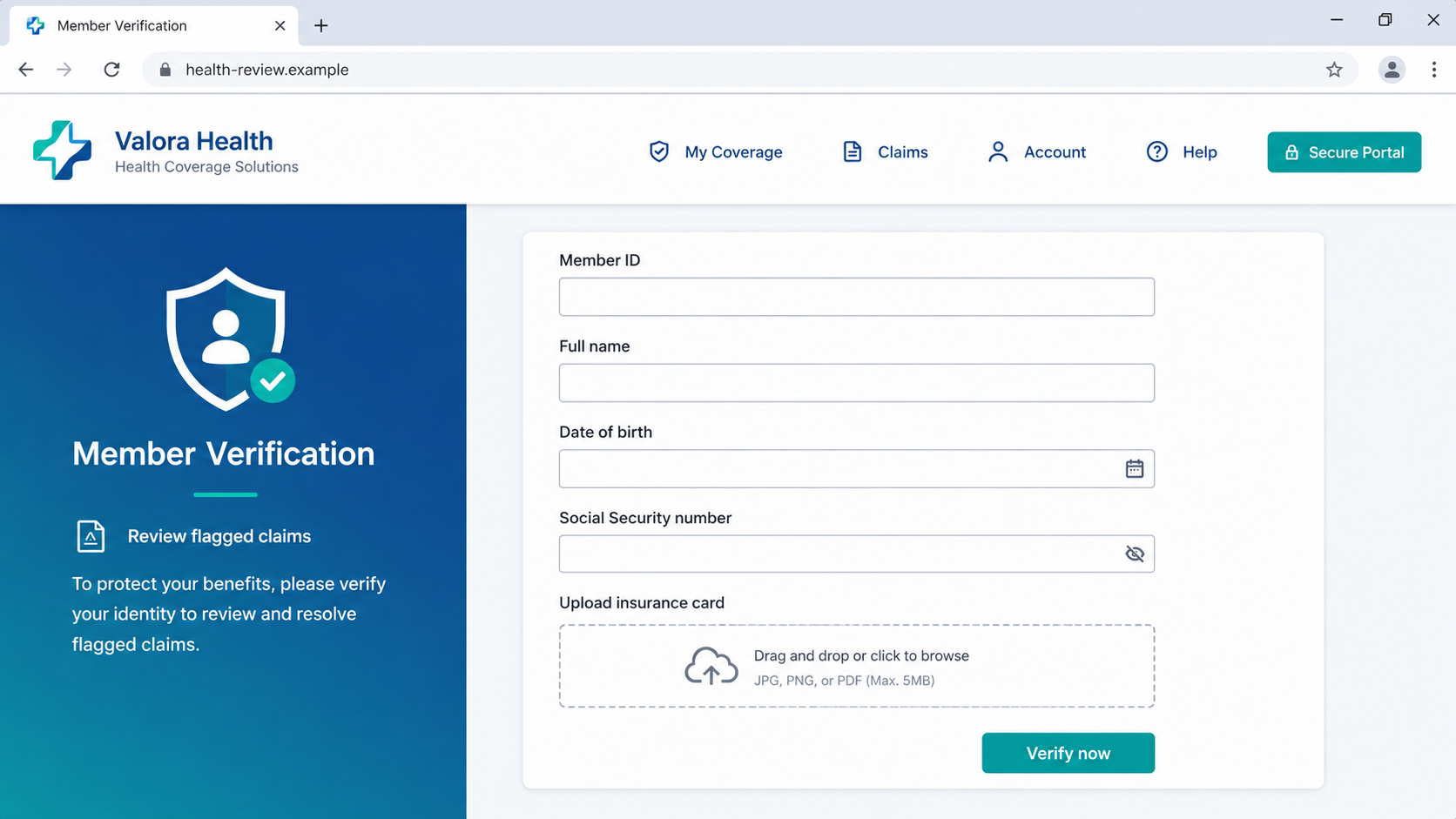
The information requested can unlock several kinds of fraud
Medical and insurance data is useful because it combines identity, coverage, and health history. The scammer may request:
- member or policy numbers;
- full name, address, and date of birth;
- a Social Security or Medicare number;
- photographs of an insurance card or identity document;
- medical records, diagnoses, prescriptions, or provider details;
- bank or card information for a supposed reimbursement;
- money to repay an alleged overpayment or uncovered service.
The campaign is confirmed, but the copied insurers are victims too
In June 2025, the FBI warned about criminals posing as legitimate health insurers and investigators.
The agency said emails and texts were being sent to patients and health care providers to obtain health information, medical records, financial data, or reimbursement payments.
The presence of a real insurer’s name does not make that insurer responsible for the message. Impersonation works by borrowing a trusted identity without permission.
Why the Fraud-Investigator Story Works
Most people want to help stop misuse of their insurance. A message that appears to protect the account activates cooperation before suspicion.
Health billing is also difficult to evaluate quickly. Claims can use provider names a patient does not recognize. Dates of service and billing dates may differ.
A laboratory, radiologist, anesthesiologist, or equipment supplier can appear separately from the facility the patient remembers.
Scammers exploit that complexity. A claim that sounds unfamiliar is not automatically fraudulent, but the uncertainty makes a callback or link feel reasonable.
Privacy language adds another layer. Words such as protected, confidential, HIPAA, and verification sound official.
They can also discourage the recipient from asking a family member, employer, provider, or real insurer for help.
The victim may also fear being blamed for the claim. That embarrassment keeps the conversation private, exactly where an impersonator wants it.
Urgency then narrows the decision. The message may threaten suspended benefits, denied prescriptions, referral to collections, or a deadline for disputing charges.
A legitimate insurer can explain a claim through the number on your member card or its official app.
It does not need you to trust the contact details inside an unsolicited message.
How the Fake Health Insurer Scam Works
Step 1: The criminal chooses a believable health event
The lure may be broad, such as suspicious claims detected, or tailored with a provider or insurer name.
Data breaches, public records, lead lists, and earlier phishing can supply personal context.
The scam does not need a complete medical record. One correct detail can make the recipient explain everything else.
Step 2: A text or email creates a private emergency
The message says an investigator needs immediate confirmation. It may mention fraud prevention, benefits protection, overpayment, non-covered care, or a compliance review.
A link and callback number are provided as the fastest route. Both belong to the scammer.
Step 3: The victim is moved to a controlled channel
A fake portal copies the visual language of a health plan. A telephone operator uses a script and may spoof caller ID.
An attached form asks for records and a signature.
The channel feels specialized, but it has no independent connection to the insurer. The criminal can answer every verification question with another piece of the same story.
Step 4: Verification becomes data collection
The victim is asked to confirm a member ID, Social Security number, birth date, address, providers, prescriptions, or recent care.
The caller may request a photograph of the insurance card, including the numbers on both sides.
The page may say that bank details are needed to return an overpayment. A supposed refund is a common reason to collect financial data without asking for money immediately.
Step 5: The scam may demand reimbursement
Another version says the patient or provider received money for a service that was not covered. Immediate repayment is required to avoid cancellation, collections, or legal action.
The requested method may be a card, bank transfer, peer-to-peer app, or another hard-to-reverse channel.
Never pay until the claim appears in the real insurer account and is confirmed through the number on the card.
Step 6: Stolen data supports new claims and impersonation
Insurance identifiers can be used in attempts to obtain services, equipment, prescriptions, or reimbursement. Identity details may also support account takeover, credit fraud, or tax fraud.
Medical information makes future scams more precise. A criminal who knows a diagnosis or provider can craft a convincing call about medication, testing, billing, or coverage.
Step 7: A second caller offers to repair the damage
After the victim questions the first interaction, another person may pose as a supervisor, government investigator, lawyer, or recovery specialist.
The new caller confirms the original story and asks for another payment or more identity data.
Real reporting agencies do not need an upfront recovery fee to accept a complaint.
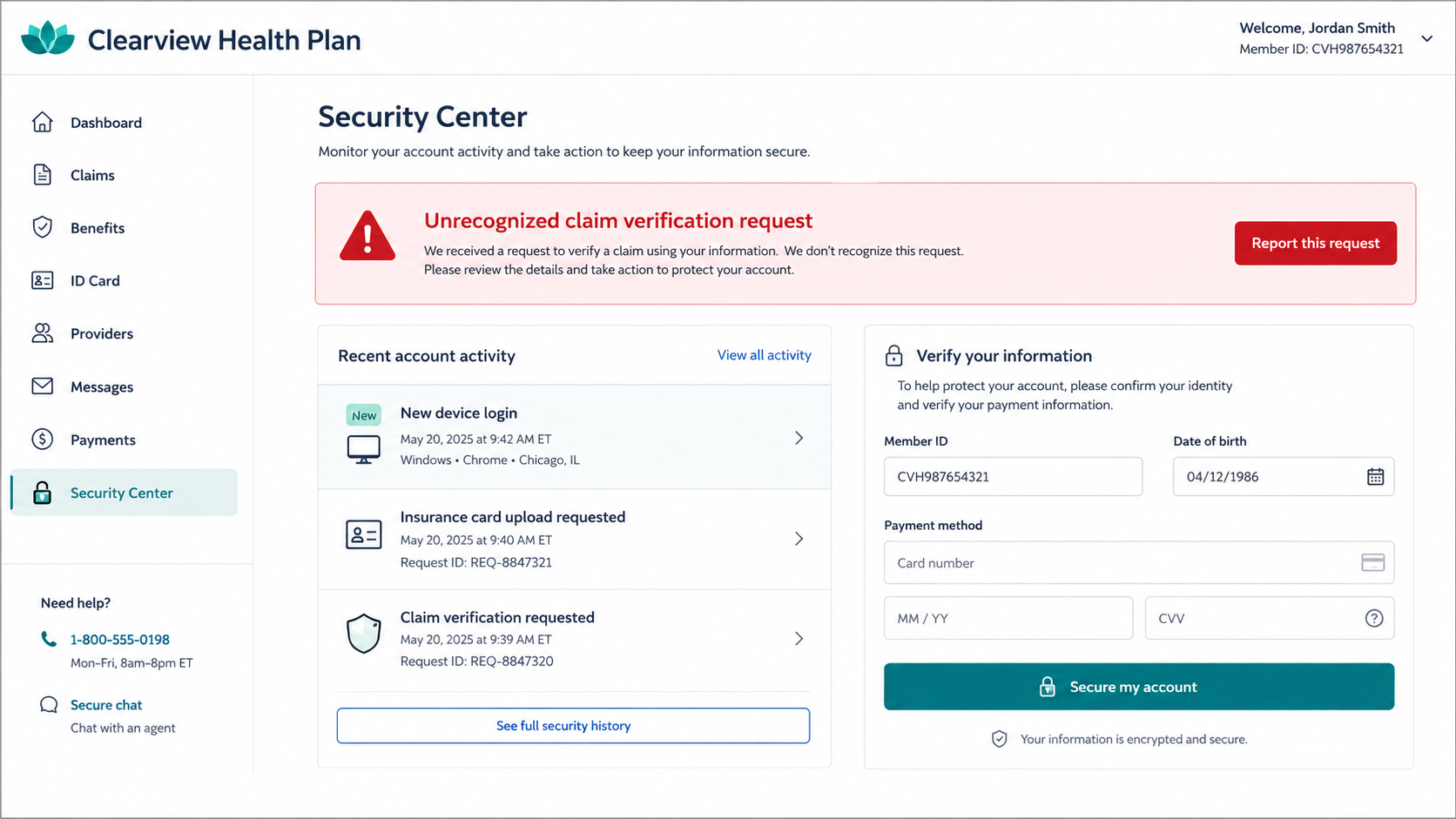
The account history may tell a different story from the caller. New devices, upload requests, and payment changes can reveal activity the member never approved.
Save those details before changing anything. They can help the insurer separate a stolen member profile from an ordinary billing dispute.
Insurers can also flag the member number and watch for claims submitted after the incident.
Company, Address, and Fulfillment Checks
The displayed insurer name is not caller authentication
Caller ID, email display names, logos, and plan colors can be copied. Compare the full email domain and callback information with your member card and official account.
Do not answer personal questions to prove who you are until the other party has proved who they are.
The portal address must match the plan you use
Open the insurer’s app or type its known address yourself. A page reached through the message should not be trusted because it contains the same logo.
Check for the claim, message, or case inside the official account. If it is absent, call the insurer using the number printed on the card.
Real support will discuss the case through official channels
Ask the verified representative whether a fraud unit contacted you, whether the reference number exists, and what information is actually needed.
If the inquiry involves a provider, call that provider through a number from a statement or its official website. Do not use a number supplied by the suspicious investigator.
The claim and payment trail must exist independently
A real claim should have a date, provider, service description, amount, and explanation of benefits. A real overpayment should be documented in the insurer or provider’s records.
Do not send reimbursement to a new account because an email says the audit trail is confidential. Confirm the obligation and payment method separately.
Warning Signs in the Message or Call
- The contact was unexpected and immediately asks for private data.
- The link does not use the insurer’s known domain.
- The caller asks you to read the entire insurance card aloud.
- A full Social Security number is required to discuss a vague claim.
- The person discourages you from calling member services.
- Benefits will supposedly end within hours unless you cooperate.
- A refund requires bank credentials or remote access to your device.
- An overpayment must be returned through a payment app, gift card, or crypto.
- The case does not appear in your official account or explanation of benefits.
- The investigator becomes threatening when you ask to verify independently.
A real fraud department may contact members and may ask questions. The safe distinction is that you can end the call and reach the same department through the official number.
Medical Identity Theft Can Affect More Than Money
Financial fraud is serious, but false medical activity can also contaminate records. Services, diagnoses, allergies, or prescriptions belonging to another person may be attached to the victim’s identity.
That can create billing disputes and insurance limits. More importantly, incorrect information in a clinical record can confuse future care.
Review explanations of benefits and provider portals for unfamiliar activity. Ask the insurer how to dispute a claim and request an accounting of benefits used under the member ID.
If a provider record contains incorrect information, ask the provider’s privacy or health-information office about its correction process. Keep copies of the request and response.
Do not delay necessary medical care because you are embarrassed about the scam. Tell the provider and insurer what happened so they can use the correct identity and records.
Identity monitoring alone will not reveal every medical claim. Credit reports, insurer statements, Medicare summaries, pharmacy histories, and provider records each show a different part of the picture.
What to Do if You Have Fallen Victim to This Scam
- Stop contact and do not pay. End the call, close the page, and avoid the message’s link and callback number.
- Call the real insurer. Use the number on your member card or official app. Ask whether the contact and claim are genuine and place a fraud alert on the account if available.
- Tell affected providers. If records or provider details were shared, contact their billing and privacy offices through verified numbers.
- List the exposed information. Record whether you shared a member ID, Social Security number, medical records, card details, bank information, password, or verification code.
- Secure online accounts. Change reused or exposed passwords, sign out other sessions, enable MFA, and remove unfamiliar recovery methods.
- Contact financial institutions. Report card or bank exposure and challenge unauthorized payments promptly. Ask about replacement account numbers when necessary.
- Review health records and claims. Check explanations of benefits, Medicare summaries, pharmacy activity, and provider portals for unfamiliar entries.
- Protect your broader identity. Review credit reports and consider a credit freeze if a Social Security number or identity document was exposed.
- Preserve evidence. Save texts, emails with headers, portal addresses, uploaded forms, call times, phone numbers, names used, payment records, and screenshots.
- Scan after downloads. If you opened an attachment or installed software, Malwarebytes can check for malicious files and unwanted remote-access tools. It cannot remove stolen medical data from criminal hands.
- Block malicious pages. AdGuard can reduce exposure to known phishing sites and malicious ads, but always verify insurer communications through the card or official app.
- Report the scheme. File with the FBI Internet Crime Complaint Center, the FTC, and the insurer’s fraud unit. Medicare beneficiaries can also use official Medicare fraud-reporting channels.
- Decline recovery pitches. Do not pay a stranger who claims they can erase records, restore benefits, or recover money with a special insider process.
Frequently Asked Questions
Do health insurers ever send fraud-review messages?
They can contact members about claims. Do not continue through an unsolicited link or number.
Call member services using the number on your card and ask to be connected to the real unit.
Is the text genuine if it knows my insurer?
Not necessarily. Insurer relationships can be guessed, purchased, exposed in breaches, or learned through earlier scams. Verify inside your official account.
Should I send a photo of my insurance card?
Only through a verified process you deliberately reached. Both sides of a card can contain identifiers and contact information useful to criminals.
What if the claim mentioned in the message is real?
A real claim can be used as bait. Review it through the insurer’s official app or member-service number and contact the provider independently.
Can stolen insurance information affect medical records?
Yes. Fraudulent care, prescriptions, equipment, or claims may create entries that do not belong to the victim. Review and dispute unfamiliar records promptly.
Will antivirus fix this scam?
Antivirus can remove malicious downloads, but it cannot cancel a payment or change information already submitted. Account, insurer, provider, bank, and identity steps are still required.
The Bottom Line
The fake health insurer scam uses fraud-prevention language to obtain the information needed for fraud. A knowledgeable caller and polished portal still prove nothing.
End the contact, then call the number on your insurance card. Confirm the claim, investigator, and payment request through an account you opened independently.
If you shared information, secure your financial identity and inspect your medical record. Both can be harmed, and each requires prompt, documented follow-up.

Join the discussion
0 commentsShare your experience or ask a question about this article.
Discussion
Start the conversation
Have a question or something useful to share? Add the first comment.