

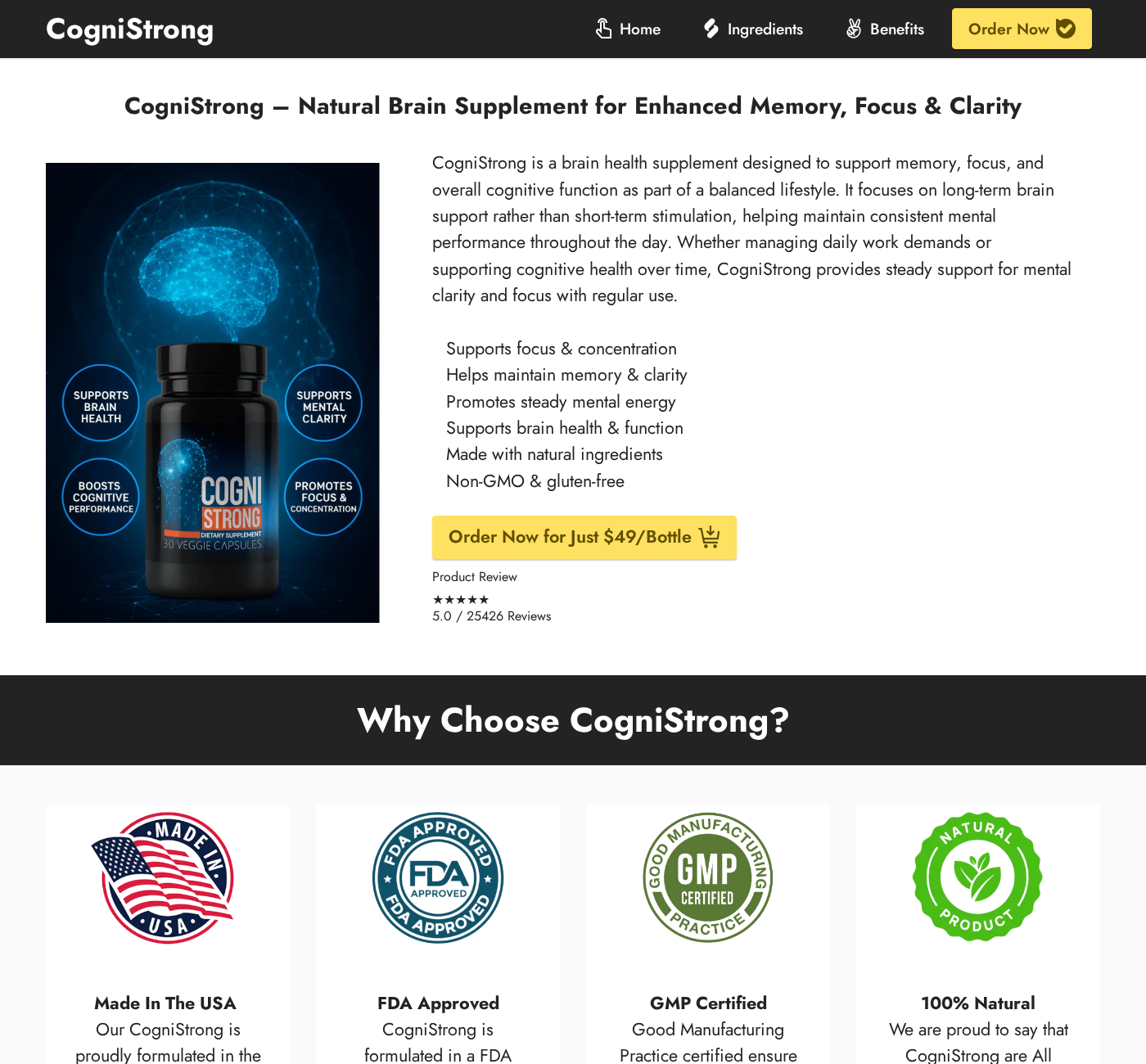
CogniStrong looks like a confident, modern brain supplement page, complete with badges, a large review count, and a bright order button.
When the supporting pages are compared, the presentation becomes harder to trust. Several details point to a reused and hurried sales system.
Overview
What the CogniStrong page promises
CogniStrong is advertised as a natural capsule for memory, focus, mental clarity, and general brain health.
The homepage lists a $49 bottle price and displays a 5.0 rating based on 25,426 reviews.
It also shows badges labeled Made in the USA, FDA Approved, GMP Certified, and 100% Natural.
Those badges create an immediate impression of official oversight and manufacturing confidence.
Why the evidence does not match the confidence
The reviewed domain uses a double-g spelling, coggnistrong.com, which can be easy to miss in an advertisement.
The terms and refund links returned the homepage instead of dedicated policy documents.
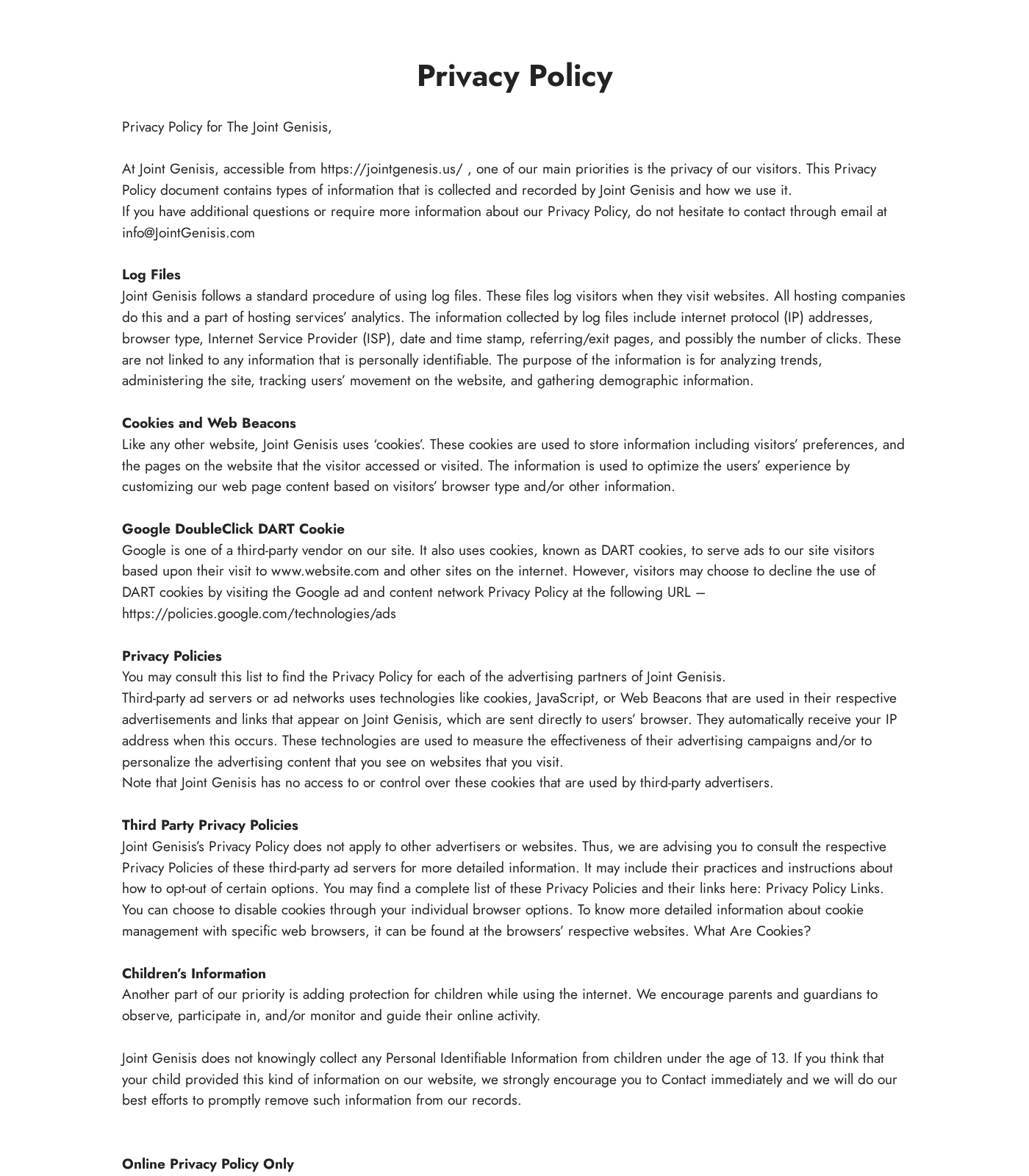
A privacy page identified an entirely different product called Joint Genesis.
The order route also uses a Harvard-style toxin story that is not supported by the main product page.
What our investigation found
CogniStrong may produce a shipment, but the website has enough contradictions to make the offer high risk.
- Coggnistrong.com was registered on December 12, 2025.
- The homepage claims 25,426 reviews without a public independent archive.
- The site displays an FDA Approved badge for a dietary supplement.
- Terms and refund links returned homepage content.
- The privacy policy names Joint Genesis and jointgenesis.us.
- The order page uses a fabricated television-style Harvard narrative.
- The six-bottle graphic advertises $49 per bottle and a $294 total.
These are direct website inconsistencies, not guesses about what every capsule contains.
They are enough to justify keeping payment details away until the seller explains the errors.
Is CogniStrong Legit or a Scam?
We could not verify CogniStrong as a transparent, accountable supplement business.
The product image and checkout may represent a real private-label item, but the supporting evidence is unreliable.
An FDA badge on a sales page does not prove that the FDA approved the finished capsule.
A privacy policy for Joint Genesis is a serious template-contamination warning.
Until the seller publishes correct legal, privacy, refund, and manufacturing information, we recommend avoiding the offer.
The Review Count and Badges Need Verification
Twenty-five thousand reviews is a powerful claim
The homepage uses 25,426 reviews to suggest a large and established customer base.
Visitors cannot inspect an independent review archive, purchase dates, or a verification process.
Seller-controlled numbers should not carry the same weight as traceable customer records.
FDA approval language is misleading
The badge says FDA Approved, which can lead readers to believe the product passed a medicine-style evaluation.
Dietary supplements are generally not preapproved by the FDA for effectiveness before sale.
Consumers should ask whether the badge refers to a facility, a logo, or nothing verifiable at all.
GMP language has a limited meaning
Good manufacturing practice concerns production controls and documentation.
It does not validate a memory claim, verify a review total, or prove that each bottle contains the advertised amount.
A current lot certificate is more useful than a generic badge.
The product page does not show a clinical bridge
The copy uses broad language about cognition, but it does not identify a trial on the exact finished formula.
Ingredient research, if any, must be tied to the actual extract, dose, and population.
Without those details, the promise remains marketing rather than medical evidence.
How the CogniStrong Offer Works
Step 1: A familiar brain concern starts the pitch
The page speaks to people who feel distracted, mentally tired, or less sharp than before.
That broad audience makes the product feel relevant to almost anyone.
Step 2: A television-style story supplies authority
The order page uses a Harvard-themed warning about a common household toxin.
The style resembles a news report, but the page does not establish a legitimate broadcast, presenter, or university study.
Presentation can create authority without adding evidence.
Step 3: Badges reinforce the impression
FDA, GMP, USA, and natural seals appear beside the bottle.
Multiple badges encourage a quick conclusion that the product is officially tested.
Read the legal language rather than relying on the graphic.
Step 4: A large rating removes hesitation
The 25,426-review figure supplies the social reassurance that a new buyer may want.
No independent archive confirms whether the testimonials belong to CogniStrong.
Step 5: A low unit price rewards the six-pack
The offer shows six bottles, a 180-day supply, and $49 per bottle.
The graphic states a $294 total, which is much larger than the first headline price.
Step 6: The checkout may use a different operator
Order pages often involve an affiliate or payment processor separate from the brand domain.
Buyers should confirm the merchant name and return authority before entering card details.
Step 7: Broken policies complicate after-sale help
When terms and refund links return the homepage, the customer cannot verify the governing conditions before payment.
The wrong privacy policy adds another layer of uncertainty.
Pricing and the Missing Policy Trail
The $49 headline belongs to a six-bottle commitment
The graphic presents $49 per bottle, but the displayed total is $294.
That distinction should be obvious before a visitor reaches checkout.
Save the final amount and merchant descriptor.
The refund promise is not independently visible
The homepage mentions a 60-day money-back promise.
The dedicated refund link did not provide a readable policy during our review.
A promise without instructions is difficult to use.
The wrong privacy page is more than a spelling error
Privacy documents should identify the website collecting customer information.
CogniStrong’s page names Joint Genesis, jointgenesis.us, and a Joint Genesis email address.
That suggests a copied template was published without a basic final check.
Medical urgency increases the risk of rushed payment
The Harvard-style narrative encourages readers to act before investigating.
Do not let a dramatic toxin story replace a doctor, pharmacist, or clear seller identity.
Company, Address, and Fulfillment Checks
The legal company is not clearly presented
The homepage foregrounds CogniStrong but does not clearly name the legal entity responsible for the sale.
A brand name alone is not enough for a meaningful complaint or refund trail.
The privacy page points somewhere else
The policy describes Joint Genesis instead of CogniStrong.
That mismatch leaves customers unsure which entity controls order data and email communications.
Do not submit sensitive information until the policy is corrected.
Fulfillment information is not easy to verify
The public pages reviewed did not clearly identify a return warehouse, manufacturer, or quality contact.
Ask for the exact return address and lot certificate before paying.
The product could be private label, but that is not the issue
Private-label supplements can be legitimate when the seller is transparent and testing is documented.
The problem here is the collection of copied, overstated, and incomplete pages.
Website Errors That Matter Before Checkout
The double-g address can confuse buyers
The brand appears as CogniStrong, while the live domain is spelled coggnistrong.com.
That extra letter can be overlooked when a social-media advertisement opens inside an embedded browser.
It also makes word-of-mouth verification less reliable because people may search the single-g spelling.
Save the full address rather than trusting the logo.
Broken policy routes remove informed consent
A customer should be able to read refund terms before submitting card data.
When the refund link loops back to the sales page, essential information remains unavailable.
The customer cannot check deadlines, bottle requirements, authorization, or return postage.
That failure should stop the purchase.
The Joint Genesis copy shows weak quality control
A privacy policy is not decorative text. It explains who collects data and how that information is used.
Naming a different business means the page cannot be safely relied upon for CogniStrong.
The error may be careless rather than malicious, but carelessness matters when health and payment information are involved.
It also raises questions about other copied claims.
The Harvard framing deserves direct proof
A real university connection should be supported by a named study, authors, journal, and accessible publication.
A headline using the Harvard name is not enough.
Consumers can search the quoted claim and see whether the institution published it.
If the trail ends at an affiliate video, the authority is manufactured.
The six-bottle image reveals the actual commitment
The package graphic is more informative than the $49 headline because it shows a $294 total.
A buyer must risk that complete amount before learning whether support answers or the product is tolerable.
Bulk purchasing also creates more bottles to return if the guarantee is used.
Do not let the unit price hide the transaction size.
Quality evidence should match the claim
A brain-health product should provide a readable label, ingredient amounts, warnings, manufacturer, and current certificate of analysis.
CogniStrong’s promotional pages emphasize icons and outcomes instead.
That imbalance favors persuasion over informed comparison.
Until complete documents appear, the safer assumption is that the marketing has not been independently verified.
What a corrected site should show
A corrected CogniStrong site would identify one legal seller across the homepage, receipt, privacy policy, and refund page.
It would state whether a separate payment processor appears on the card statement.
It would publish a readable Supplement Facts panel with ingredient amounts and warnings.
It would remove the FDA Approved badge unless the precise claim could be documented.
It would replace the Joint Genesis privacy text with a CogniStrong-specific policy.
It would explain where returns go, who pays postage, and how long a refund takes.
It would link the Harvard story to an authentic study rather than a sales video.
It would also explain how the 25,426-review count was collected and moderated.
These are basic publishing controls, not demanding requests for a small seller.
Why site age cannot answer the central questions
The domain dates to December 2025, but a registration date does not reveal product quality.
Websites can remain online while changing operators, formulas, warehouses, and affiliates.
Review the current page and current receipt rather than assuming old domain history protects a new transaction.
Check that the legal name on the latest documents is still consistent.
Do not treat badges as a substitute for the label
A USA badge does not show that every ingredient came from the United States.
A GMP badge does not reveal the current lot’s potency or contaminant results.
A natural seal does not identify interaction warnings or contraindications.
Consumers need the actual label and test documentation before drawing conclusions.
Use the order path as evidence
Follow every link in a private browser and note when the domain, merchant, or product name changes.
Confirm that the final total matches the graphic and the first price shown.
Do not submit a second card form after a payment error until the first charge is checked.
Duplicate authorization can happen even when a page says the attempt failed.
These simple checks protect consumers from both ordinary website errors and deceptive sales design.
Until those checks are possible, the polished layout should be treated as presentation, not proof.
That distinction protects readers from confusing a graphic, badge, or testimonial with independent verification.

What to Do if You Bought CogniStrong
- Save the complete funnel. Keep the advertorial, order page, badge claims, price graphic, confirmation, and policy links.
- Check the merchant name. Compare the receipt with the card statement and watch for a different descriptor.
- Request the correct refund policy. Ask for the legal seller, return address, deadline, and authorization procedure in writing.
- Do not rely on the Joint Genesis page. Treat it as a site error and request a CogniStrong-specific privacy and refund document.
- Document the package. Photograph bottles, labels, tracking, and any unexpected quantity or fee.
- Contact the card issuer if necessary. Explain misleading badges, missing terms, wrong quantities, or an unprocessed refund.
- Ask a clinician before use. Stop if you experience a reaction or if the supplement conflicts with treatment.
- Secure the device. Run Malwarebytes after suspicious redirects, and use AdGuard against aggressive ads and popups.
Frequently Asked Questions
Is CogniStrong FDA approved?
We found a badge making that claim, but no verified product approval evidence. Dietary supplements are not generally preapproved for effectiveness.
Are the 25,426 reviews independently verified?
The site provides no public archive or verification method that would let readers confirm the number.
Why does the privacy policy mention Joint Genesis?
It appears to be copied template content or a publishing error. Either way, it undermines confidence in the site’s care.
Does the six-bottle offer cost $49?
The image shows $49 per bottle and a $294 total for six bottles, before any additional checkout charges.
Is there a clear refund process?
The homepage mentions a guarantee, but the reviewed refund link did not provide a dedicated readable policy.
Should I trust the Harvard-style video?
No. A news-like presentation is not proof of a Harvard study, medical endorsement, or finished-product evidence.
The Bottom Line
CogniStrong relies on badges, review totals, a Harvard-style story, and a six-bottle price graphic to create rapid confidence.
The wrong privacy policy and missing dedicated terms are basic accountability failures.
Until the seller corrects those errors and supplies verifiable documentation, keeping your money is the safer choice.








