

A tiny daily ritual sounds much easier than changing meals, monitoring glucose, or discussing medication. That hope is exactly what makes dramatic diabetes advertisements so persuasive.
SugarWise enters this crowded market with polished health language, urgent discounts, and sweeping promises. The important details only emerge when the entire offer is examined together.
Overview
The advertisement sells a breakthrough story
Promotions connected with SugarWise have used sensational diabetes themes, including a supposed 15-second urine trick and claims that a hidden parasite causes the condition.
Some versions borrow recognizable news styling or imply that a famous technology executive revealed information doctors supposedly concealed.
Those narratives are not ordinary supplement descriptions. They create fear, distrust, and urgency before sending viewers toward a commercial bottle offer.
The current product page uses softer language
The store describes SugarWise as a dietary supplement that supports healthy blood sugar levels, metabolic balance, energy, circulation, and weight management.
It also says the formula works best alongside healthy eating, physical activity, and regular medical checkups. That is more restrained than the viral advertisements.
This gap matters. The dramatic ad captures attention, while the sales page steps back to legally safer words such as “support” and “may.”
The evidence does not match the certainty
The page discusses ingredients including berberine, cinnamon, alpha lipoic acid, and chromium. It does not publish a finished-product clinical trial proving the advertised transformation.
Our principal findings are:
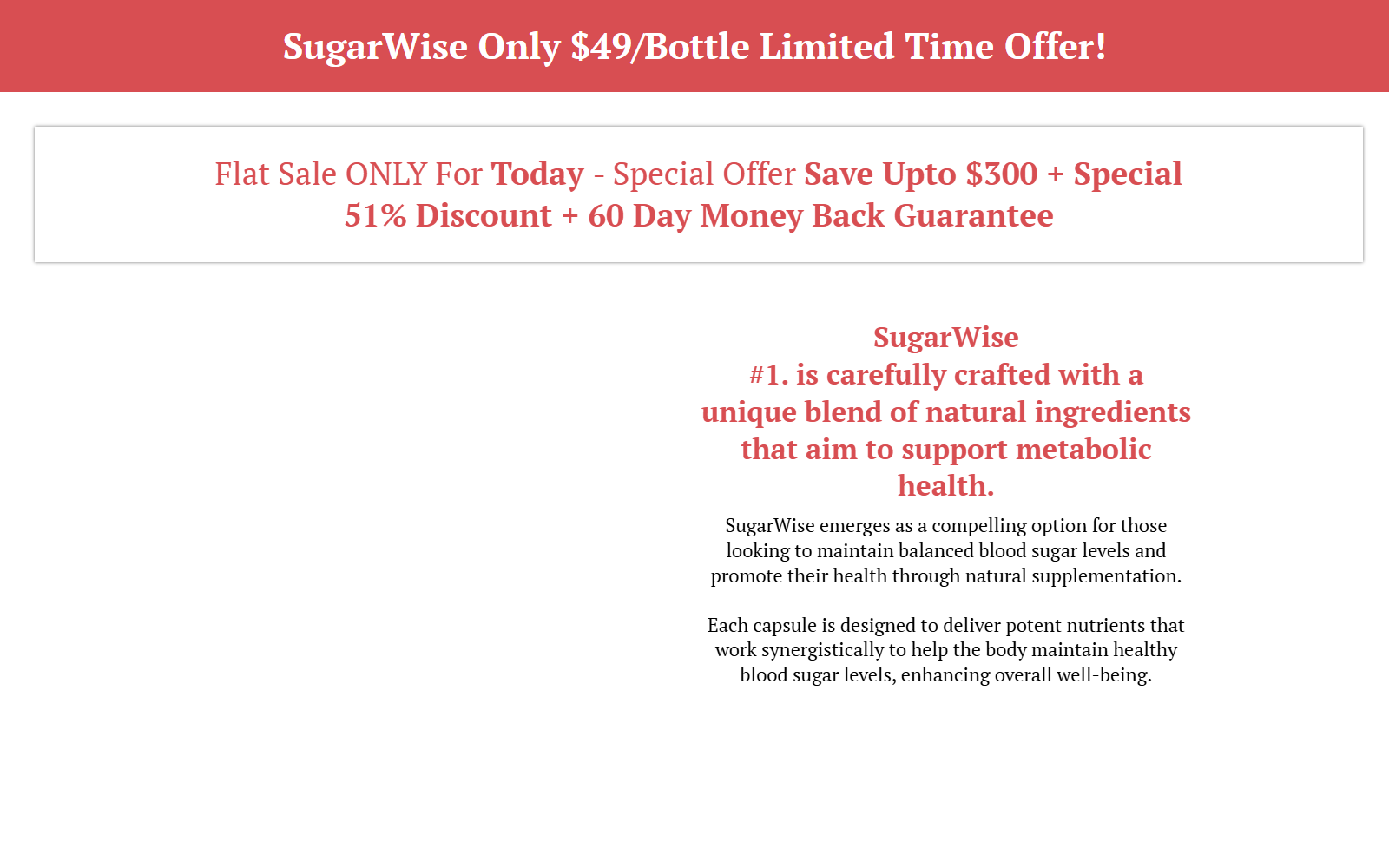
- The offer uses a today-only message, a 51% discount, and savings up to $300
- The bottle is promoted at $49 in the captured offer
- A 60-day money-back guarantee appears prominently
- The official copy describes support, not a cure for diabetes
- Viral promotions use a much more dramatic “secret trick” narrative
- No published trial verifies SugarWise as a diabetes treatment
SugarWise should not replace prescribed medication, glucose testing, or professional care. Anyone considering it should show the full label to a qualified clinician first.
The Story Behind the 15-Second Diabetes Trick
The advertisement often begins like a suppressed discovery. A narrator claims that type 2 diabetes is misunderstood and that one overlooked cause changes everything.
Instead of presenting a verifiable medical paper, the video moves through emotion. It describes frustration with medication, difficult diets, and doctors who allegedly treat symptoms.
A simple household ritual then becomes the turning point. Viewers may hear about urine, parasites, a morning mixture, or an ingredient available in a supplement.
The exact story can change without changing the funnel. A new spokesperson, celebrity, university, or secret ingredient can be inserted into the same script.
This flexibility is a warning. Legitimate medical findings remain traceable to named researchers, journals, study methods, limitations, and independent replication.
A sales video that hides those basics behind a long personal story prevents viewers from checking the claim before emotion takes over.
Diabetes is not caused by a single universal parasite. Type 2 diabetes involves insulin resistance, genetics, body composition, age, activity, sleep, medications, and other factors.
Some infections can affect health, but that does not validate a commercial claim that one cleanse or supplement removes the cause of diabetes.
The 15-second wording is another persuasion device. It turns complex disease management into a quick action that feels effortless, private, and immediately available.
When a claim sounds that simple, ask why endocrinology clinics, diabetes organizations, and peer-reviewed guidelines have not adopted it.
What the SugarWise Website Actually Claims
The current website does not plainly promise to cure diabetes. It repeatedly says SugarWise is formulated to support blood sugar and metabolic health.
That distinction is easy to miss after watching an aggressive advertisement. A viewer arrives expecting reversal, then encounters softer wording without noticing the change.
The page gives broad descriptions of individual ingredients. Berberine, for example, has been studied for metabolic effects, but supplement quality and dosage vary.
Evidence about an ingredient cannot automatically prove that a branded blend delivers a particular result. The finished formula, amounts, absorption, purity, and user health all matter.
Cinnamon also appears in research, yet study findings are mixed and do not make cinnamon a substitute for prescribed diabetes care.
Chromium is an essential nutrient, but adding it does not guarantee glucose control. Excess intake can also be inappropriate for some people.
Alpha lipoic acid has medical research around certain complications and oxidative stress. That is different from proving broad reversal claims in an advertisement.
Potential interactions deserve attention. Blood sugar supplements may add to the effects of insulin or glucose-lowering medication and contribute to hypoglycemia.
Kidney disease, liver disease, pregnancy, surgery, and multiple prescriptions can change the risk. “Natural” does not mean universally safe.
A trustworthy decision requires the complete Supplement Facts panel, exact serving amounts, warnings, manufacturer identity, lot information, and independent quality testing.
How the SugarWise Diabetes Trick Scam Works
Step 1: A frightening health claim stops the scroll
The campaign opens with diabetes complications, a supposed hidden cause, or a claim that common treatment has failed millions of people.
Fear makes the viewer listen. Relief then arrives through a simple ritual that appears safer and easier than long-term medical care.
Step 2: Borrowed authority makes the story feel credible
The presentation may resemble a television segment, news report, interview, or documentary. Logos, captions, studio graphics, and familiar names create borrowed trust.
Appearance is not authentication. Viewers should locate the original interview through the celebrity, broadcaster, university, or physician’s verified website.
Step 3: A long advertorial delays the commercial reveal
The next page tells a recovery story and attacks conventional explanations. It may describe a spouse, researcher, or chance discovery in vivid detail.
For much of the presentation, the product name remains hidden. This keeps viewers engaged before they realize the “report” is a sales funnel.
Step 4: The miracle becomes a supplement order
Near the end, the promised ritual is linked to SugarWise or another bottle. The campaign can swap brands while preserving the same medical narrative.
That is why investigating the story matters more than memorizing one label. A renamed supplement does not repair a false celebrity endorsement or fake cure claim.
Step 5: Urgency encourages a larger package
The captured page advertises a flat sale for today, 51% off, and savings up to $300. Packages can make the largest order appear cheapest.
Countdowns and scarcity reduce comparison time. A buyer may focus on the per-bottle figure while overlooking the total charge, shipping, or return requirements.
Step 6: The guarantee absorbs final objections
A 60-day guarantee makes the purchase feel reversible. Yet a headline promise does not explain return authorization, used bottles, postage, deadlines, or processing delays.
Before ordering, obtain the complete policy and return destination. Save it with the checkout page because online terms can change.
Why the Health Claims Need More Proof
A supplement may contain real ingredients and still be marketed through misleading claims. Product existence and advertising honesty are separate questions.
Clinical proof for a finished formula should identify the exact product, dose, participant group, comparison treatment, study duration, outcomes, adverse events, and funding.
Testimonials cannot provide that certainty. Glucose levels fluctuate with meals, medication adherence, illness, sleep, hydration, activity, and timing of measurement.
A positive story also cannot reveal people who saw no benefit, stopped because of side effects, or never received a refund.
The website says individual outcomes vary and advises a broader health strategy. Those qualifications conflict with advertisements presenting a quick, hidden answer.
People with diabetes face immediate harm if they delay effective treatment. Persistently high glucose can damage nerves, kidneys, vision, blood vessels, and the heart.
Stopping medication suddenly can also cause dangerous deterioration. Any adjustment should be made with the clinician managing the condition.
Even when glucose improves, the cause must be understood. Weight changes, altered meals, increased activity, medication, or measurement timing may explain the difference.
No supplement seller should diagnose a parasite through an advertisement. Testing and treatment for an infection require appropriate medical evaluation.
A Safer Way to Evaluate Blood Sugar Supplements
Begin with the diagnosis, not the advertisement. Prediabetes, type 1 diabetes, type 2 diabetes, medication effects, and other conditions require different care.
Bring the complete label to a physician or pharmacist. A product name and front-bottle slogan do not reveal dose, interactions, or duplicated ingredients.
Ask what measurable outcome the supplement is supposed to change. Useful questions include fasting glucose, post-meal glucose, A1C, side effects, and treatment burden.
Decide the measurement period with a clinician. Random readings taken at convenient moments can create a false impression of improvement.
Keep prescribed treatment stable unless medical advice says otherwise. Changing several variables together makes it impossible to know what caused a result.
Record meals, activity, sleep, illness, medication, and readings. This context is more useful than a testimonial promising universal success.
Check whether the seller publishes recent independent testing for identity, purity, heavy metals, microbes, and dosage accuracy.
A certificate should identify the finished batch, laboratory, test date, methods, and results. A generic badge cannot replace that document.
Search the responsible company and product in FDA warning records. Absence from a warning list is not approval or proof of effectiveness.
Set a spending limit that assumes no benefit and difficult returns. Large multi-bottle packages increase exposure before tolerance is known.
Stop and seek advice if readings worsen, hypoglycemia occurs, or new symptoms appear. Do not push through problems because a guarantee requires extended use.
Most importantly, separate hope from evidence. A supplement can be considered cautiously without accepting the false story used to sell it.
Company, Address, and Fulfillment Checks
The brand name is not enough
A bottle name does not identify the legal entity responsible for payment, manufacturing, and refunds. Confirm the company on the checkout, receipt, and card statement.
If those names differ, request a written explanation before ordering. A customer should not have to investigate an unfamiliar billing descriptor after a dispute begins.
A real return destination must be confirmed
The sales page emphasizes a 60-day guarantee. Buyers should ask where returns go, whether opened bottles qualify, and who pays tracked postage.
A warehouse can receive packages without being the headquarters or manufacturer. Verify that the address belongs to the seller named in the terms.
Support should answer product-specific questions
Ask support for the full label, exact ingredient amounts, contraindications, manufacturer, country of manufacture, lot testing, and certificate of analysis.
Vague replies about proprietary science are not a substitute. Silence before purchase predicts how difficult communication may become after a refund request.
Fulfillment cannot prove medical effectiveness
Receiving a package only proves that something was shipped. It does not verify ingredient purity, dosage accuracy, safety, or the diabetes claims used in advertising.
Inspect seals, lot codes, expiration, warnings, and responsible-party details. Do not consume a bottle with damaged packaging or an incomplete label.
What to Do if You Have Fallen Victim to This Scam
- Do not stop diabetes treatment. Continue prescribed care and contact your clinician before changing medication, insulin, monitoring, or diet.
- Check your glucose safely. Follow your medical plan. Seek urgent help for severe symptoms, confusion, vomiting, breathing difficulty, or dangerously abnormal readings.
- Preserve the entire funnel. Save the advertisement, video, web addresses, celebrity claim, order page, receipt, guarantee, emails, and package label.
- Request cancellation promptly. Ask the seller in writing to cancel unshipped orders and confirm whether any recurring billing or future shipment exists.
- Demand precise return instructions. Obtain authorization, the destination, acceptable condition, deadline, postage responsibility, tracking requirements, and expected refund date.
- Contact the card issuer. Dispute unauthorized, recurring, undelivered, or materially misrepresented charges within the provider’s deadline. Supply your screenshots and correspondence.
- Monitor future statements. Watch the payment method for unfamiliar descriptors or repeat charges. Replace the card only if your issuer recommends it.
- Secure the device. If the ad triggered a download or suspicious browser prompt, scan with Malwarebytes and remove unknown extensions or applications.
- Block dangerous advertising. AdGuard can reduce malicious ads and trackers. Revoke notification permission from unfamiliar sites and clear unwanted browser subscriptions.
- Report the medical deception. Notify the advertising platform, FTC, FDA complaint channel, and relevant state consumer authority with preserved evidence.
Frequently Asked Questions
Is SugarWise proven to cure diabetes?
No finished-product clinical evidence on the reviewed website proves that SugarWise cures diabetes. The official copy generally describes support for healthy blood sugar.
Is the 15-second urine trick medically recognized?
No recognized diabetes guideline treats a brief urine ritual as a cure. Such claims require evidence and medical verification, not an anonymous sales video.
Does a celebrity really endorse SugarWise?
Do not trust the advertisement alone. Confirm any endorsement through the celebrity’s verified channels and an original, complete recording from a reputable publisher.
Can SugarWise interact with medication?
Yes, blood sugar supplements may interact with insulin, glucose-lowering drugs, or other treatment. Ask a clinician or pharmacist to review the complete formula.
Does the 60-day guarantee remove the risk?
No. Buyers may still face return postage, eligibility rules, missing instructions, or delays. Obtain the detailed policy and destination before paying.
What is the safest response to the advertisement?
Close it, save evidence if necessary, and discuss the claim with your healthcare professional. Never replace established care because of a social-media video.
The Bottom Line
The SugarWise funnel turns a complicated medical condition into a dramatic hidden-cause story, then offers a supplement as the practical answer.
The current website uses milder support language, but that does not validate fake news styling, celebrity implications, parasite claims, or a 15-second cure narrative.
Treat the advertisement as deceptive, protect ongoing medical care, and demand complete company, product, and refund information before considering any purchase.








