

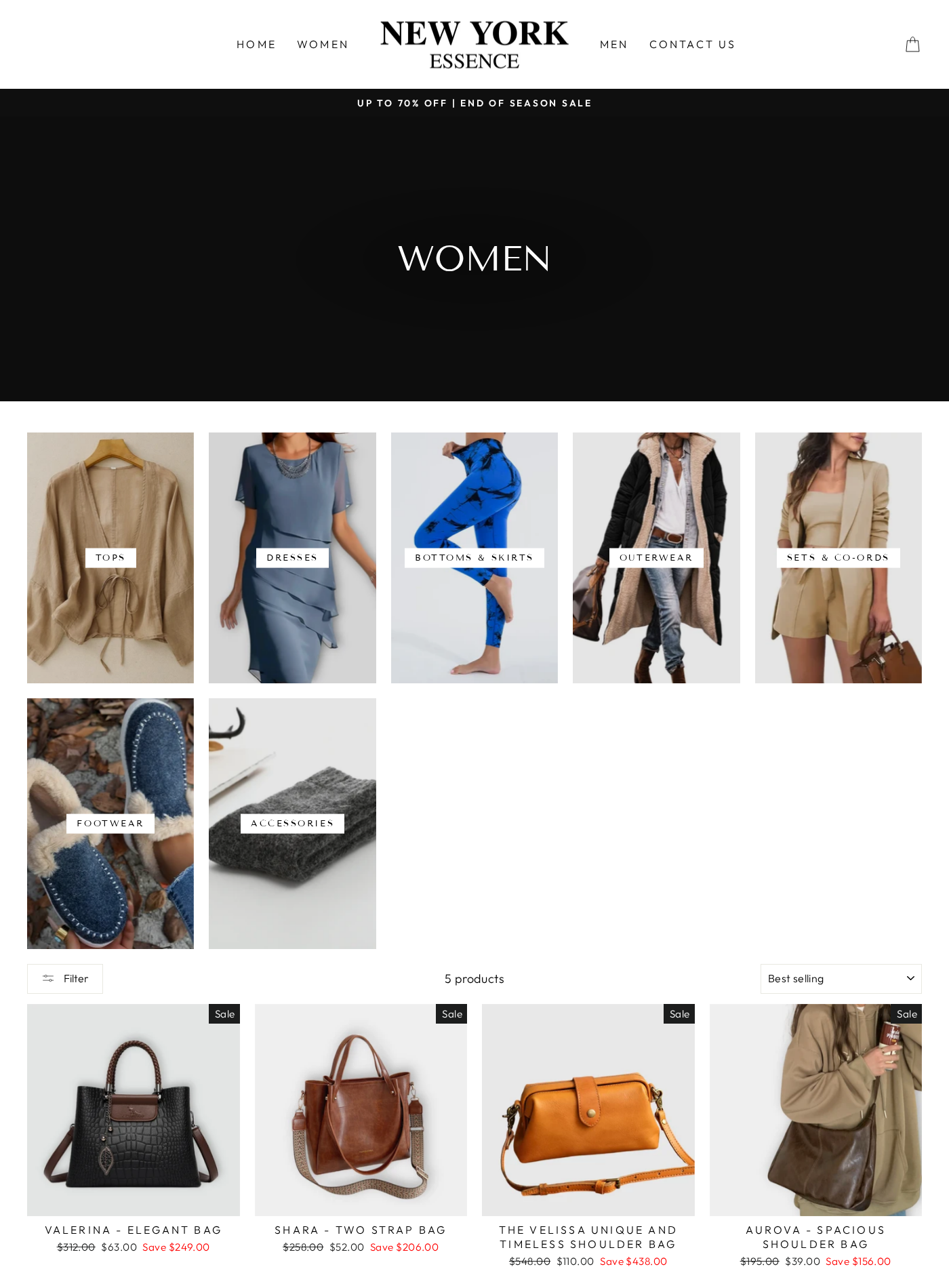
New York Essence wraps inexpensive fashion in the visual language of a polished city boutique, complete with restrained typography and dramatic markdowns.
The presentation feels familiar enough to lower a shopper’s guard. Its less visible conditions deserve the same attention as the sale prices.
Overview
The New York identity is branding, not proof of local fulfillment
The name, design, and United States pricing encourage an impression of a fashion business rooted in New York retail culture.
The privacy policy instead names Jason Hearns at a Rockford, Illinois address as the available contact identity.
Most importantly, the refund policy says approved returns must reach the seller’s main warehouse in Asia before reimbursement begins.
A brand can operate internationally, and an Asian warehouse is not inherently improper. The problem is that this route is easy to miss before purchase.
Return location determines postage, customs forms, transit time, tracking reliability, and whether sending back a low-cost item makes financial sense.
The 70% sale leads into unusually narrow refund eligibility
New York Essence advertises an end-of-season sale with reductions up to 70%, placing urgency and apparent value at the center of the experience.
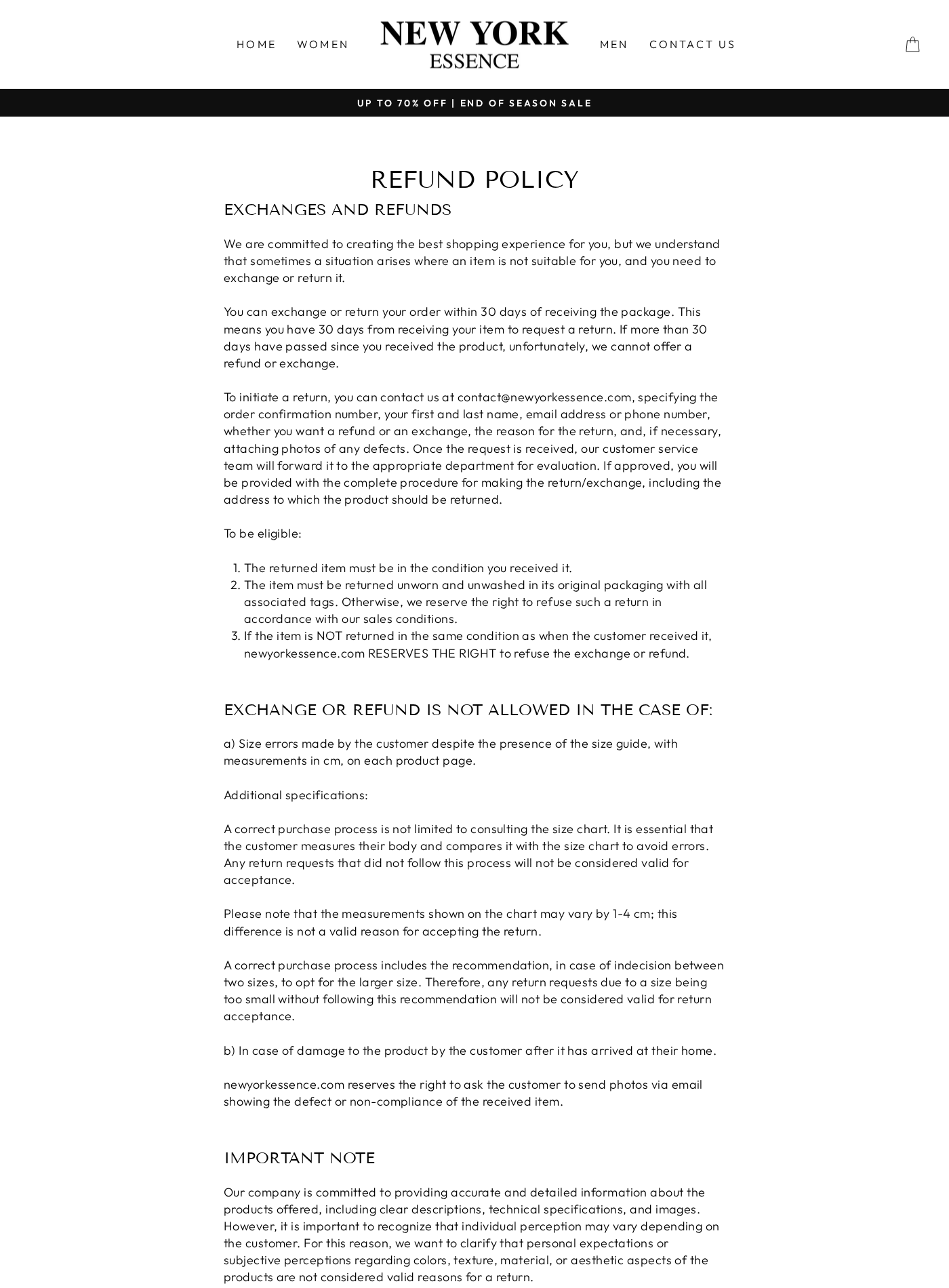
Its detailed policy can reject returns based on sizing choices, small measurement differences, color perception, material expectations, or general aesthetic dissatisfaction.
Customers pay return shipping, must obtain approval, and need to send a receipt photograph within five days or risk cancellation.
Sale merchandise can therefore be inexpensive to purchase but costly, slow, or impossible to return under the store’s interpretation.
The promise shoppers notice first should be evaluated beside these exclusions, not as a separate piece of marketing.
The public business information is too thin for a cross-border fashion seller
We found a name, Illinois address, and contact@newyorkessence.com, but no prominent customer-service telephone number in the reviewed policies.
The pages do not clearly identify a registered company number, warehouse operator, importer, or Asian country handling returns.
Shipping is estimated at seven to fifteen days, while failed delivery or uncollected parcels can trigger deductions or lost refund rights.
A customer must therefore manage a long international chain without knowing much about the parties responsible at each stage.
That imbalance does not prove every order fails, but it places a disproportionate burden on the buyer when something goes wrong.
- NewYorkEssence.com was registered on July 26, 2025.
- The storefront advertises discounts reaching 70%.
- The privacy policy names Jason Hearns at a Rockford, Illinois address.
- The refund policy says returns go to a main warehouse in Asia.
- Customers generally pay the return postage.
- The policy excludes several common fit, measurement, color, material, and preference complaints.
- A missing receipt photograph within five days can cancel an approved return.
- Failed delivery or noncollection may produce only a 70% refund, while refusing delivery can eliminate a refund.
How the New York Essence Fashion Funnel Works
Step 1: A boutique-style advertisement sells an identity before a garment
The journey often begins with a flattering dress, coat, handbag, or comfort-focused shoe presented as a sophisticated seasonal discovery.
New York language supplies instant fashion context, while the clean layout resembles independent boutiques that curate limited collections.
The customer imagines how the item will look and feel before asking who manufactured it or where it will ship from.
Social advertisements can reinforce that impression through model imagery, elegant music, and captions about closing stock or seasonal clearance.
Save the original creative because the product title, discount, fabric description, and photographs may change after the campaign ends.
Step 2: Large crossed-out prices create a reference point for quality
A bag displayed at $63 beside a crossed-out $312 price appears to offer luxury-adjacent value at an unusually accessible cost.
The higher number influences expectations even when shoppers cannot verify whether the item was routinely sold at that price.
Deep markdowns also turn hesitation into fear of missing a temporary opportunity, particularly during an announced end-of-season event.
Search identical photographs and descriptions to learn whether the merchandise appears on marketplaces under other names and lower ordinary prices.
Compare construction, dimensions, closure, lining, materials, and buyer photographs rather than comparing only the displayed percentage reduction.
Step 3: The product page cannot communicate fit and material accurately enough
Fashion photographs can conceal fabric weight, stretch, transparency, stitching, hardware, lining, sole construction, odor, and actual color under normal lighting.
Generic size labels may not correspond with familiar regional sizing, especially when garments come from multiple suppliers.
A model’s height, measurements, garment size, and pinned styling are necessary context, yet these details are often incomplete.
The buyer assumes ordinary online-return rights will cover uncertainty that photographs cannot resolve.
New York Essence’s policy later treats several of these same uncertainties as insufficient reasons for return.
Step 4: Checkout hides the real cost of reversing the purchase
The visible total includes merchandise and perhaps shipping, but not tracked postage to an undisclosed Asian warehouse.
Because the country and address appear only during the approved return process, shoppers cannot price that obligation beforehand.
Customs documentation, carrier restrictions, long transit, and lost-parcel risk can make a return expensive relative to the discounted item.
The seller requires the customer to begin through support, so posting an item to the Illinois contact would not necessarily satisfy the policy.
The practical refund value may be much lower than the amount shown in the cart.
Step 5: Delivery problems activate additional deductions and deadlines
The store estimates seven to fifteen days, but international parcels can be delayed by processing, customs, transfers, and last-mile carriers.
Customers must follow tracking and respond quickly to attempted delivery, address questions, or collection notices.
The shipping terms indicate failed delivery or uncollected parcels may receive only a 70% refund after return handling.
Refusing a package during delivery can result in no refund under the published policy.
A buyer who assumes refusal automatically cancels an unwanted order may therefore make the dispute harder rather than easier.
Step 6: The return is judged against subjective exclusions controlled by the seller
A sizing request can be denied when the customer did not measure carefully or choose a larger size, according to the policy.
Differences of one to four centimeters are treated as normal rather than a valid defect.
Color, texture, material, and appearance complaints may be dismissed as subjective expectations if the seller considers the product consistent with photographs.
Even approved customers must submit proof, follow instructions, pay postage, and later photograph the return receipt within five days.
The merchant retains several decision points while the buyer carries most of the cost, timing, and evidence burden.
The New York Essence Return Policy, Explained Clearly
Fit complaints may be treated as the buyer’s responsibility
Online clothing always involves fit risk, yet the policy expects customers to measure themselves and account for potentially small-cut products before ordering.
If a garment does not fit, support may decide the buyer selected incorrectly rather than recognizing a returnable dissatisfaction.
That approach is especially consequential when measurements, regional conversions, stretch, cut, and fit notes are incomplete or supplier-dependent.
Before paying, save the exact size chart and ask which garment measurements apply to the selected variant.
Measure a similar item that fits comfortably instead of relying only on body measurements or usual letter size.
Visual differences are given a wide tolerance
New York Essence warns that screen settings and photographic lighting can create color differences that do not qualify for return.
The policy also limits complaints concerning material, texture, and aesthetic expectations when the seller believes images were representative.
That language gives the merchant broad discretion over common reasons people regret buying inexpensive fashion online.
Record side-by-side comparisons under neutral light if the received item differs materially from the listing.
Describe objective discrepancies such as fiber label, missing lining, wrong closure, incorrect dimensions, or substituted design rather than vague disappointment.
The refund depends on proof from two different journeys
First, the customer documents the problem and receives permission to return the item to the provided Asian warehouse.
Second, the customer ships it with tracking and sends a clear photograph of the postage receipt within five days.
The seller then waits for warehouse arrival and inspection before beginning the refund process, which can extend another fourteen days.
A lost parcel or missing receipt image may leave the buyer without merchandise and without reimbursement.
Use tracked service, preserve the customs declaration, and photograph the sealed package on a scale before handing it to the carrier.
Red Flags That Matter More Than the Storefront Design
The brand geography and return geography point in different directions
Nothing prevents a New York-themed retailer from manufacturing or fulfilling products overseas, but shoppers deserve that information before checkout.
A United States contact address does not shorten an Asian return or establish that domestic staff will inspect the parcel.
Prominent disclosure would let buyers compare the real transaction with local stores offering prepaid returns and established customer service.
Instead, the most expensive operational detail sits inside a long policy most impulse buyers will never read.
That mismatch is central to the risk assessment, even if an ordered item ultimately arrives.
The enormous sale may be the normal sales model
A permanent or frequently renewed end-of-season event can function as routine pricing rather than a genuine temporary clearance.
Shoppers should ask whether the crossed-out amount reflects actual recent sales or merely a reference value selected for comparison.
Search archives and identical listings to see whether urgency, stock messages, and discounts persist across time.
If the bargain remains available every day, there is no reason to skip identity, quality, shipping, and return checks.
Pressure is a selling technique, not evidence that the product will disappear.
The IBAN correction fee looks out of place for a US-facing shop
The refund policy mentions a £5 re-transaction fee when a customer supplies an incorrect IBAN for reimbursement.
That banking language does not fit naturally with a storefront primarily presenting prices in $ and card-based ecommerce purchases.
It may reflect a generic policy adapted from another market rather than a procedure regularly used for this store.
Template inheritance is not proof of deception, but operational policies should accurately describe the payment methods customers actually use.
Never send bank credentials by email unless the reimbursement method genuinely requires them and the merchant identity is independently verified.
Company, Address, and Fulfillment Checks
The privacy policy names a person rather than a clearly registered retailer
New York Essence identifies Jason Hearns at 5656 Highfield Terrace, Rockford, Illinois within its privacy disclosures.
A personal name and street address can create accountability, but they do not automatically reveal the contracting company or commercial registration.
The site should explain whether this person owns the store, acts as a privacy contact, or represents another legal operator.
Compare the checkout receipt and card descriptor with that disclosure before assuming they identify the same party.
The Illinois address should not be mistaken for the return warehouse
The published refund process explicitly directs approved returns toward a main warehouse in Asia, not the Rockford address.
Sending clothing to the privacy contact without authorization can create a delivered parcel that the refund team refuses to recognize.
Ask support for the full return location and determine whether the carrier offers affordable tracked service there.
Only ship after receiving written instructions tied to the order number and eligible items.
Email-only support increases the value of precise documentation
We found contact@newyorkessence.com but no prominent customer-service telephone number in the key pages reviewed.
Email can produce an excellent evidence trail, yet it also leaves customers waiting when deadlines depend on approval.
Use a clear subject line, order number, delivery date, requested remedy, and attachments small enough to arrive reliably.
If no meaningful answer comes, escalate through the payment provider instead of sending repeated messages until deadlines expire.
International fulfillment changes the true cost of a low-priced order
The seller may use overseas suppliers and logistics partners that never appear in the polished New York branding.
Longer routing increases opportunities for sizing substitutions, tracking gaps, customs questions, and expensive returns.
Inspect the package before discarding it, because sender details, weight, customs data, and origin can support a later dispute.
A fulfillment label is not necessarily the legal seller, so keep the original invoice as well.
What to Do if You Have Fallen Victim to This Scam
- Preserve the listing immediately. Save product images, fabric claims, size chart, selected variant, 70% sale message, price, delivery promise, guarantee, checkout, and current policies.
- Photograph the unopened parcel. Capture every label, origin, sender, dimensions, weight, and visible damage before making a continuous unboxing video.
- Measure objective differences. Place the garment flat with a measuring tape, photograph labels and stitching, and compare each discrepancy with the saved product page.
- Contact support within the shortest possible window. Give the order number, delivery date, specific mismatch, photographs, and the exact refund or replacement requested.
- Obtain approval before returning anything. Demand the complete Asian address, recipient, RMA, customs wording, deadline, required carrier service, and written eligibility decision.
- Send proof of postage promptly. Keep the original receipt, upload the requested photograph within five days, and retain tracking through final warehouse delivery.
- Open a payment dispute when necessary. Explain whether goods were materially different, defective, missing, undelivered, or refused a policy-compliant return, then provide organized evidence.
- Watch for additional charges. Monitor the card, enable alerts, and notify the issuer immediately if the merchant descriptor or amount differs from the authorized purchase.
- Protect the device used for checkout. Run Malwarebytes after suspicious redirects or downloads, and use AdGuard to reduce exposure to deceptive fashion advertisements.
How to Evaluate a Fashion Store Before Buying
Reverse-search the merchandise photographs
Use several images, including close-ups, model shots, and unusual angles, because sellers can crop or mirror catalog photographs.
Look for the earliest listing, manufacturer information, marketplace reviews, buyer photos, and a realistic price range.
Identical pictures do not prove identical materials or quality, but they can reveal generic sourcing and inflated reference prices.
Prefer listings with garment-specific measurements and original photography showing seams, labels, fabric, and interior construction.
Price the return before pricing the item
Ask which country receives returns and obtain a carrier quote for a tracked package matching the likely weight.
Add nonrefundable delivery charges, customs paperwork, insurance, currency conversion, and any seller deductions.
A $39 item can become a poor bargain when recovery requires $25 postage and several weeks of uncertainty.
If support will not disclose the destination before purchase, assume the refund may be difficult to use.
Read exclusions as carefully as eligibility promises
Search the policy for sale items, sizing, hygiene, color, texture, measurements, approval, tracking, inspection, and refund deductions.
Check whether the deadline runs from order date, purchase date, shipment, or delivery because those periods are not equivalent.
Save a dated copy so later edits do not replace the terms that influenced the purchase.
When exclusions cover the most likely reasons for disappointment, choose a seller with simpler protections.
Frequently Asked Questions
Is New York Essence a real New York boutique?
The branding invokes New York, but the reviewed policies name an Illinois contact and an Asian return warehouse.
We found insufficient evidence to describe it as a traditional locally stocked New York boutique.
Is New York Essence definitely a scam?
We did not test every order, and the evidence does not justify claiming every transaction is fraudulent.
The restrictive returns, limited operator details, deep-sale tactics, and overseas return route create serious buyer risk.
Where do New York Essence returns go?
The policy says approved returns must reach its main warehouse in Asia.
The exact address is supplied through the approval process, so customers cannot calculate postage from the public policy alone.
Can I return a New York Essence item that does not fit?
Possibly, but the policy can reject sizing complaints when the customer did not measure or account for the store’s sizing guidance.
Ask for written eligibility before shipping.
What happens if I refuse the package?
The published terms warn that refusing delivery may eliminate refund eligibility.
Contact the payment provider and merchant before refusing unless safety or carrier circumstances require immediate action.
Are the 70% discounts genuine?
The storefront displays substantial crossed-out prices, but a displayed comparison alone does not prove frequent sales at the higher amount.
Compare identical items and archived pricing before judging the bargain.
The Bottom Line
New York Essence sells a convincing boutique mood, not the straightforward local transaction its name may suggest.
The Asian return warehouse, customer-paid postage, broad exclusions, receipt deadline, limited operator detail, and severe delivery deductions can make a cheap order difficult to unwind.
Approach the store as a cross-border purchase with restrictive remedies. If the true return cost or seller identity remains unclear, the 70% banner is not worth the uncertainty.








