

Rovenxa looks polished at first glance, with confident promises, steep discounts, and an enormous mix of products that seems designed for quick discovery.
The important details sit deeper than the storefront. Comparing its own pages reveals a story shoppers should understand before entering payment information.
Overview
Rovenxa names two different companies as its operator
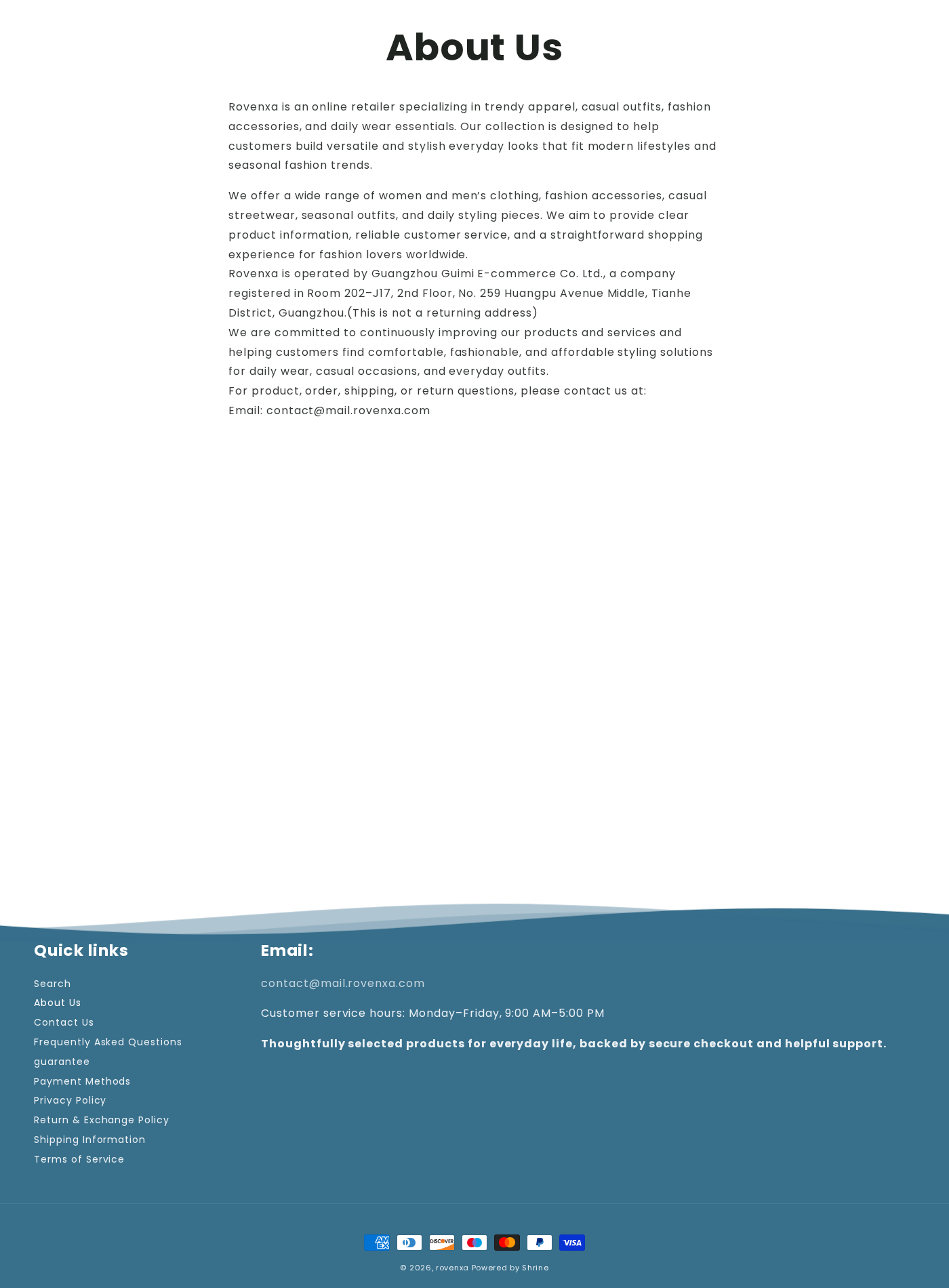
The Rovenxa About Us page says Guangzhou Guimi E-commerce Co. Ltd. operates the store from an address in Guangzhou, China.
Its Terms of Service instead identify MICROS INNOVATION TECHNOLOGY LTD and say English and Welsh law governs the purchase relationship.
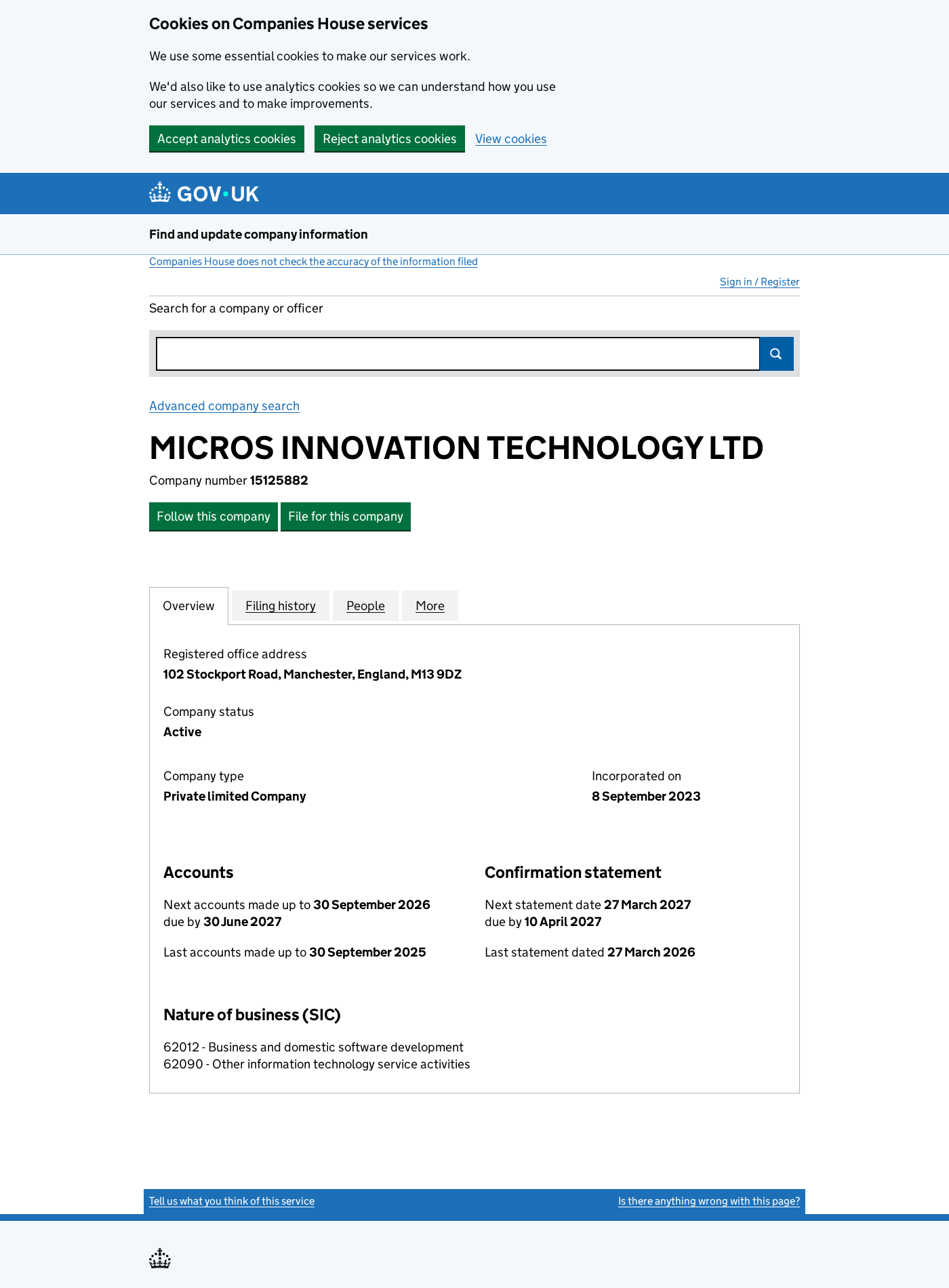
That second company is active in the United Kingdom, according to its public Companies House record.
A registered company is meaningful evidence, but two operator names leave buyers unsure which entity accepts orders, holds data, and owes refunds.
The contradiction is not hidden in an outside accusation. It appears across legal and descriptive pages controlled by the store itself.
The catalog stretches far beyond the fashion identity described by the store
Rovenxa describes itself as an apparel retailer offering clothing, accessories, streetwear, and seasonal outfits for men and women.
Yet indexed listings include a 32TB solid-state drive, portable routers, blood-pressure monitors, autofocus glasses, garden molds, and car-coating spray.
Several listings attach extraordinary technical or medical-sounding benefits to inexpensive, unfamiliar products without supplying convincing documentation.
A broad catalog does not prove fraud, but it resembles a rotating direct-response store more than the focused fashion business described on its About page.
Buyers should judge each listing independently and never transfer trust from a dress page to an electronic or health-related device.
The return promise depends on an address customers cannot see before ordering
Product pages promote worry-free returns and a 30-day, no-questions-asked policy that sounds simple and reassuring.
The detailed policy requires prior approval and says customers must not use the website, package, or manufacturer address without written confirmation.
Customers pay return postage for changes of mind, sizing mistakes, style dissatisfaction, and other issues not accepted as seller error.
Neither the Guangzhou address nor the Manchester address is presented as a return destination, making the actual cost impossible to estimate beforehand.
That gap matters because tracked international postage can consume much of a refund for low-value merchandise.
- Rovenxa.com was registered on July 27, 2026, providing only a short public trading history.
- The About page names Guangzhou Guimi E-commerce Co. Ltd. as operator.
- The Terms name MICROS INNOVATION TECHNOLOGY LTD and invoke English and Welsh law.
- Companies House classifies that UK company under software and information-technology activities, not retail fashion.
- The catalog mixes apparel with electronics, medical-style devices, garden products, and automotive items.
- Return approval is required, and the usable return address is supplied only after contact.
- The public business addresses are explicitly described as unsuitable for returns.
- Extreme product claims deserve independent verification before any purchase.
How the Rovenxa High-Risk Shopping Funnel Works
Step 1: A dramatic product advertisement creates a single urgent problem
A shopper usually meets one Rovenxa product through an advertisement rather than by browsing the store from its homepage.
The ad may promise free mobile internet, remarkable storage capacity, effortless vision correction, quick health readings, or a dramatic household improvement.
Each message isolates a frustrating cost or inconvenience, then presents one unfamiliar item as a surprisingly simple answer.
The product name can feel proprietary even when the underlying item resembles generic merchandise sold across many marketplaces.
Save the full advertisement because claims, prices, domain names, and product names can change faster than a card dispute develops.
Step 2: The landing page replaces verification with urgency and social proof
Rovenxa pages use crossed-out prices, low-stock prompts, bulk offers, review totals, satisfaction claims, and immediate-buy buttons.
Those elements encourage a visitor to decide while emotionally focused on savings, scarcity, or a promised transformation.
A five-star graphic belongs to the seller until an independent platform confirms the reviewer, purchase, date, and complete distribution.
Technical claims should link to certification records, manuals, test methods, model numbers, and named manufacturers rather than marketing badges.
When those materials are absent, the attractive page demonstrates sales skill, not product performance.
Step 3: Bundle selectors can turn one experiment into a larger order
Several product pages place one-unit, two-unit, and three-unit offers together, with the larger bundle labeled as popular or economical.
A customer testing an unknown seller has little practical reason to multiply risk before receiving and examining the first item.
Quantity widgets, preselected options, and add-on offers should be checked again immediately before the final payment button.
The receipt must state the exact number of units, variants, shipping fee, taxes, and any protection charge.
If the confirmation differs, contact support and the payment provider immediately rather than waiting for shipment.
Step 4: The order enters a supply chain the storefront does not clearly map
Rovenxa says it offers worldwide fashion and identifies a Chinese ecommerce operator, while its terms point to a UK technology company.
Neither disclosure explains where each product is stored, which entity exports it, or who inspects electronics and health-related goods.
The shipping page estimates processing and transit, but delivery windows do not identify the actual factory or fulfillment partner.
A parcel sender can be a logistics consolidator with no authority over refunds, warranties, or advertising claims.
Retain the invoice, tracking history, customs label, packaging, and card descriptor because the box alone may not identify the merchant.
Step 5: The delivered item must compete with an unusually ambitious sales story
A generic device may function in a basic sense while failing the specific performance promised by its advertisement.
A router can create a local Wi-Fi network without providing free internet, and storage labels can overstate actual memory capacity.
Fashion can differ in fabric, color, sizing, construction, or finish from polished studio images and digital mockups.
Medical-looking products require model-specific validation, instructions, regulatory status, and safe-use information that a glossy badge cannot replace.
Test products carefully, record unboxing continuously, and avoid relying on an unfamiliar device for important health or safety decisions.
Step 6: A refund request exposes the hidden destination and cost
Rovenxa asks customers to email first, provide order evidence, and wait for a return decision and the correct destination.
The visible Chinese and British addresses are specifically not return addresses, so shoppers cannot price postage before buying.
Opened, worn, washed, altered, damaged, unauthorized, or incompletely packaged items may lose eligibility under the detailed terms.
Original shipping is generally nonrefundable, and customer-funded tracked postage adds another unrecoverable cost for preference-based returns.
A prominent money-back message therefore offers less certainty than the phrase suggests when the operational details remain undisclosed.
The Company Identity Conflict Explained
The About page points to Guangzhou Guimi E-commerce
Rovenxa explicitly says the store is operated by Guangzhou Guimi E-commerce Co. Ltd. from Tianhe District in Guangzhou.
The page gives a room-style registration address and immediately states that this location cannot receive returns.
It provides one domain-based email but no visible company registration number, public registry link, or named responsible officer.
That does not prove the Chinese company is fictitious, but it limits independent verification for an overseas customer.
A buyer needs to know whether this company is seller, exporter, service provider, or merely an operational partner.
The Terms place MICROS INNOVATION TECHNOLOGY LTD in the contract
The Terms identify a different company and say the agreement is governed by the laws of England and Wales.
Companies House lists MICROS INNOVATION TECHNOLOGY LTD as active at 102 Stockport Road, Manchester, with company number 15125882.
Its registered activities are software development and other information-technology services rather than clothing, electronics, or general retail.
Business classifications can be broad or outdated, so that mismatch is not proof of wrongdoing by itself.
Combined with the Guangzhou operator statement, however, it leaves the contracting role insufficiently explained.
A buyer should not have to guess which company appears on the receipt
The legal seller should be consistent across the terms, privacy notice, invoice, checkout, card statement, and returns correspondence.
If a processor or fulfillment partner appears instead, the relationship should be described clearly enough to trace responsibility.
Ask Rovenxa to identify the contracting seller and provide its complete registration details before ordering anything expensive or safety-sensitive.
Keep the written reply because website text can be edited after a purchase or dispute begins.
Unresolved identity conflicts are a valid reason to choose a retailer with simpler accountability.
Products and Claims That Need Extra Scrutiny
The free-internet router claim omits the service behind connectivity
A Wi-Fi router distributes an available connection; it does not create unrestricted carrier or satellite service without infrastructure and authorization.
Rovenxa has indexed products promising lifetime free high-speed internet, no SIM, no contract, and broad coverage after one purchase.
Such claims require exact network partners, coverage maps, usage limits, activation rules, radio certifications, and a plausible funding model.
Without those details, customers risk receiving an ordinary hotspot or repeater that still needs a paid internet source.
Never cancel an existing service until an alternative has been tested independently throughout the locations where it is needed.
Storage and vision claims should be verified before trusting the label
Rovenxa has indexed a supposed 32TB drive promising extremely high transfer speeds at an implausibly simple bargain narrative.
Counterfeit storage devices can report a false capacity to a computer while silently overwriting or corrupting files beyond their real memory.
Its autofocus glasses listings also promise sweeping correction ranges without the individualized examination expected for complex vision needs.
Buyers should seek model numbers, manufacturer documentation, regulator records, independent testing, and realistic specifications before relying on either category.
Critical files require verified storage and backups, while changing vision symptoms require a qualified eye-care professional.
Health-device language needs model-specific regulatory evidence
One indexed blood-pressure monitor page uses phrases such as FDA cleared and 99.9% accurate beside an AI-sensor story.
A legitimate clearance claim should identify the exact legal manufacturer, device model, submission number, and matching public regulator record.
Wrist measurements can also depend heavily on posture, cuff placement, fit, movement, and comparison with validated upper-arm readings.
Do not adjust medication or delay care because an unfamiliar device produces reassuring numbers.
A generic disclaimer cannot compensate for unsupported precision or regulatory language on the sales page.
Company, Address, and Fulfillment Checks
The store presents two legal identities without explaining their roles
Guangzhou Guimi E-commerce appears on the About page, while MICROS INNOVATION TECHNOLOGY LTD appears in the governing Terms.
Both could participate in one supply chain, but Rovenxa does not clearly assign seller, controller, exporter, importer, or refund responsibilities.
The buyer should request one definitive contracting entity and confirm that name on the invoice before paying.
If support provides a third name, ask for the complete relationship rather than accepting a generic assurance.
Accountability becomes much harder when every document points somewhere different.
The Manchester address belongs to an active company, but not a return center
Companies House confirms the company exists and shows 102 Stockport Road as its registered office.
A registered office is a legal correspondence point and does not establish a warehouse, shop, testing laboratory, or customer-service department.
Rovenxa itself says the address is not suitable for product returns.
Do not mail goods there unless support authorizes it in writing for the exact order.
An unsolicited parcel can be refused, misplaced, or disconnected from the refund case.
The Guangzhou address is also excluded from the return process
The About page labels the Guangzhou registration location as unsuitable for returns before customers encounter any refund problem.
That wording suggests fulfillment and business registration occur through separate locations, a common ecommerce arrangement requiring clear procedures.
The problem is not overseas production alone. It is the inability to estimate destination, postage, customs declarations, and delivery time beforehand.
Request the return country and full cost allocation in writing while the product is still sealed.
If the merchant refuses, preserve that reply for the payment dispute.
One email channel carries nearly every practical responsibility
Rovenxa lists contact@mail.rovenxa.com for product questions, orders, cancellations, returns, and disputes, with weekday service hours.
We did not find a prominently disclosed support telephone number paired with the operator details reviewed.
Email is useful because it creates a record, but responsiveness and enforcement remain untested until a problem occurs.
Ask precise questions before purchase and judge whether the answer addresses the exact product, entity, destination, and guarantee.
Vague reassurance is not a substitute for a usable return process.
What to Do if You Have Fallen Victim to This Scam
- Freeze the evidence. Save the advertisement, product page, cart, quantity, checkout total, order confirmation, tracking, company pages, return promise, and card descriptor.
- Check the delivered item safely. Record one continuous unboxing video and photograph labels, manuals, model numbers, seals, damage, specifications, and any mismatch with the offer.
- Do not rely on questionable equipment. Stop using overheating electronics, inaccurate health devices, irritating products, or storage hardware that corrupts data.
- Contact Rovenxa in writing. Give the order number, delivery date, objective defect, advertised claim, requested solution, and deadline for a substantive response.
- Demand the approved return route. Obtain the recipient, country, full address, authorization number, carrier requirement, postage responsibility, customs instructions, and refund timetable.
- Avoid unauthorized returns. Do not ship to the Manchester office, Guangzhou registration address, package sender, or manufacturer unless Rovenxa confirms that destination.
- Challenge the transaction promptly. If goods are missing, materially misrepresented, unsafe, counterfeit, or refused contrary to written terms, contact the payment provider.
- Monitor the card. Enable alerts and report duplicate, inflated, recurring, or otherwise unauthorized charges without waiting for the merchant to answer.
- Report serious claims. Send documented medical-device, counterfeit-storage, product-safety, or false-certification concerns to the relevant regulator and payment platform.
- Secure the ordering device. Run Malwarebytes after suspicious downloads or redirects, and use AdGuard to reduce malicious advertising and repeat exposure.
How to Vet a Rotating General Store Before Paying
Reverse-search the exact product, not only the brand name
Use the main photograph, a distinctive sentence, model number, and unusual specification to locate identical listings across established marketplaces.
Compare dimensions, included accessories, manufacturer, packaging, manuals, reviews, and ordinary price ranges rather than trusting one crossed-out reference price.
A matching generic item does not automatically make Rovenxa dishonest, but it exposes whether proprietary language is merely rebranding.
It also gives buyers a realistic performance baseline and a seller with clearer return options.
Search again using any model number visible on the delivered item, because the sales title may be invented.
Test the company story across every customer document
Write down the operator named in About, Terms, Privacy, Contact, checkout, invoice, payment statement, and parcel paperwork.
A transparent international store may involve several companies, yet it should explain each role consistently.
Confirm registration through the appropriate official registry and compare address, business activity, and company status.
Registration proves existence, not product quality or honest advertising, so keep those questions separate.
Walk away when basic identity questions produce shifting answers or unexplained entities.
Price the worst-case return before accepting the best-case discount
Ask for the return country, likely tracked-postage cost, restocking deduction, original-shipping treatment, and opened-product rule before checkout.
Compare that total with the item’s price and the amount you could recover under the strictest policy interpretation.
For heavy, fragile, or low-value goods, the return may be economically useless even when technically allowed.
Use a payment method with meaningful buyer protection, and avoid bank transfers, cryptocurrency, gift cards, or payment outside checkout.
A genuine bargain remains attractive after the refund math is understood.
Frequently Asked Questions
Is Rovenxa definitely a scam?
The evidence supports a high-risk assessment, not a claim that every order fails.
Its conflicting operators, hidden return destination, short domain history, and extreme listings justify substantial caution.
Who owns Rovenxa?
The About page names Guangzhou Guimi E-commerce Co. Ltd.
The Terms instead name MICROS INNOVATION TECHNOLOGY LTD, and the relationship between them is not clearly explained.
Is MICROS INNOVATION TECHNOLOGY LTD a real company?
Yes. Companies House lists company 15125882 as active at a Manchester registered office.
That fact does not verify Rovenxa products, claims, fulfillment, or refunds.
Where do Rovenxa returns go?
The policy says support supplies the correct address after approving a request.
Both public company addresses are described as unsuitable for returns, so the destination is unknown before ordering.
Does Rovenxa offer a 30-day refund?
The store advertises 30-day returns, subject to condition, packaging, authorization, and other restrictions.
Customers usually pay postage for preference-based returns, and original shipping may remain nonrefundable.
Are Rovenxa product reviews independently verified?
The review totals shown on Rovenxa are seller-controlled displays.
Treat them as marketing unless an independent platform verifies buyers, dates, moderation, and the complete rating distribution.
The Bottom Line
Rovenxa is not merely a new fashion store with a thin review history. Its own pages disagree about the company operating the business.
The catalog also mixes ordinary apparel with extraordinary electronics and health-device claims, while the real return destination remains hidden until approval.
Those facts make the transaction unnecessarily difficult to verify. Compare the product elsewhere, resolve the company identity, and obtain return terms before paying.








