

You finally find a weight-loss routine that helps. Then your shower drain starts catching more hair, and a bottle called Delorien seems to understand exactly why.
Its Recovery Foundation pitch speaks directly to women using GLP-1 medication. Before that reassuring story becomes another monthly expense, there are important details worth unpacking.
Overview
A hair-loss explanation attached to a supplement
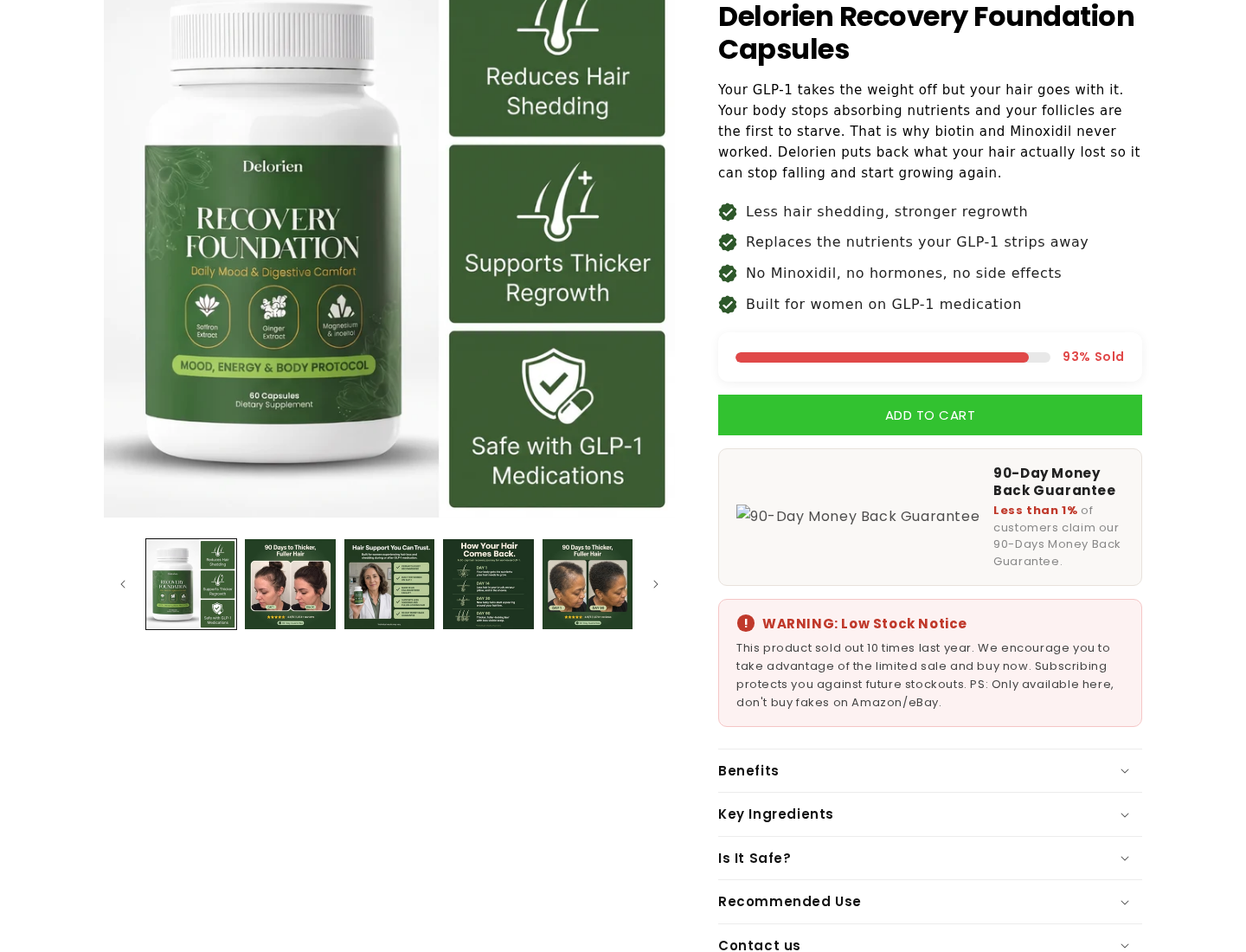
Delorien Recovery Foundation is marketed to women taking medicines such as Ozempic and Wegovy. Its green-label bottle contains 60 capsules, described as a month’s supply.
The promotion says medication blocks nutrients, starves hair follicles, and explains why other treatments failed. Recovery Foundation supposedly supplies what the body has lost.
That explanation turns an upsetting symptom into an apparently simple purchase. But a person’s hair loss cannot be diagnosed from the medication name alone.
The guarantee changes when you read the policy
The sales page invites customers to try the capsules for 90 days and return them if dissatisfied. The linked refund policy says something substantially less reassuring.
It excludes supplements and wellness products from refunds once delivered, including unopened products. A limited shipping-damage exception is not a satisfaction trial.
- The headline encourages trying the product before deciding.
- The detailed policy excludes the very product category being sold.
- Subscription renewals become final when charged, even before shipment.
- The capsules’ advertised benefits still need evidence specific to their formula.
A buying warning, not a diagnosis of the bottle
Do not order through this offer expecting a risk-free experiment. The refund contradiction is enough to reject that proposition without inventing a contamination claim.
The current pages establish a commercial-risk case involving health marketing and restrictive recurring-order terms. They do not establish that every purchaser was secretly subscribed.
Hair Shedding Deserves More Than a Sales-Page Diagnosis
Finding hair on your pillow can feel much more urgent than a number on a scale. It is understandable to want something practical immediately.
Delorien’s explanation is emotionally effective because it removes uncertainty: the medicine caused nutrient starvation, and these capsules repair the damage. Real assessment is less tidy.
The NHS identifies weight loss, illness, stress, and iron deficiency among possible causes of temporary shedding. Different causes can require different responses.
A review of nutritional deficiencies associated with GLP-1 therapy reports meaningful concerns, while noting that observational findings do not definitively establish causation.
That supports individual nutritional assessment. It does not show that every GLP-1 user stops absorbing nutrients or needs this exact mixture.
Reduced food intake and a particular deficiency are not interchangeable findings. Neither can be established by a testimonial about another woman’s hairline.
Tell the prescriber when shedding began, how quickly weight changed, what you can comfortably eat, and whether nausea or vomiting is limiting meals.
Those details make an appointment useful. A generic explanation about starving follicles can hide the questions that actually help identify what is happening.
What the Formula Information Actually Tells You
The ingredient presentation names vitamins B12, C, and D3, magnesium, zinc, copper, myo-inositol, L-theanine, ginger extract, and saffron extract.
It also lists capsule and manufacturing ingredients, including hypromellose, microcrystalline cellulose, silicon dioxide, and magnesium stearate.
A heading describes 14 clinically studied compounds. That count includes four excipients, not 14 demonstrated hair-regrowth treatments.
Vitamin D3 is shown as 2,000 IU. The accessible ingredient narrative does not give equivalent quantities for most other actives.
Without serving amounts, a shopper cannot compare the complete formula with research, an existing multivitamin, or a clinician’s recommendation.
Do not fill those gaps using a similarly named Recovery Foundation bottle from another seller. Matching ingredient names do not establish identical doses or manufacturing.
The same distinction applies to testing. A third-party-tested badge should lead to an identifiable laboratory, batch, test scope, and report relevant to the delivered capsules.
A study involving one botanical cannot validate the combined product’s promised timeline. Ask specifically whether the finished Delorien formula was tested in comparable GLP-1 users.
The 4:1 figure beside saffron is an extraction ratio, not the amount swallowed. It cannot replace a milligram quantity on the serving label.
Likewise, naming magnesium glycinate does not state how much elemental magnesium a serving supplies. The distinction matters when comparing products or adding them to an existing regimen.
A clinician reviewing your intake needs those quantities, not simply reassurance that the ingredients are bioavailable. Ask for a readable complete panel before considering use.
If the seller sends a generic ingredient graphic instead, request the actual label for the batch being supplied. Keep that answer with the order record.
How the Delorien Recovery Foundation Sales Funnel Works
Step 1: Start with the symptom you are already worried about
The page opens with hair shedding during weight loss, then describes follicles being starved by medication. It presents the supplement as a missing part of your routine.
This is not simply a list of vitamins. The story also dismisses alternatives, suggesting biotin and minoxidil failed because they addressed the wrong problem.
Someone who has already spent money on hair products may find that especially convincing. Previous disappointment becomes another reason to buy rather than seek a diagnosis.
Step 2: Make regrowth feel predictable
Before-and-after stories, customer percentages, and a week-by-week timeline describe less shedding followed by thicker hair and visible regrowth.
Those are seller-presented results. They do not tell you whether participants were independently assessed, changed other treatments, or would have improved without the capsules.
Hair photographs also need consistent lighting, styling, camera position, and follow-up. A persuasive comparison is not automatically a controlled measurement.
Step 3: Turn a health concern into an ongoing routine
A stock warning says the product repeatedly sold out and suggests subscribing to protect against future shortages. That introduces repeat purchasing as reassurance.
The published subscription policy describes recurring plans selected at checkout. Billing continues until the customer cancels, pauses, or skips before the next billing date.
The exact price, interval, and initial selection must be checked on the particular order. Policy wording alone cannot establish what an individual customer authorized.
Step 4: Use the trial promise to soften the decision
The page repeatedly highlights 90 days and a satisfaction refund. That makes a bottle sound less risky, particularly when results supposedly take weeks.
However, the linked category exclusion is triggered by delivery, not by completing that trial. Even leaving the bottle sealed does not remove the written exclusion.
A purchaser could therefore follow the sales narrative and discover that the refund policy never permitted the advertised experiment.
Step 5: Make renewal timing the customer’s responsibility
Once a renewal payment processes, the subscription terms call the order final, noncancelable, and nonrefundable. They apply that rule even while the parcel remains unshipped.
Support aims to answer within 24 to 48 hours. Waiting until renewal morning leaves little room to resolve an account problem before another charge.
Cancel well ahead of the displayed date and keep confirmation. Stopping future deliveries and challenging an already processed payment are separate requests.
Why the 90-Day Trial Is Not a Small-Print Detail
A genuine satisfaction trial lets someone evaluate a product under clear conditions. A policy excluding that product after delivery describes a different transaction.
Here, the disagreement concerns the central reason a hesitant customer might pay. It is not merely a different estimate for refund processing.
The policy also applies a per-product processing charge to eligible returns, along with customer-paid postage. For a US-priced eligible return, the stated fee is $10.
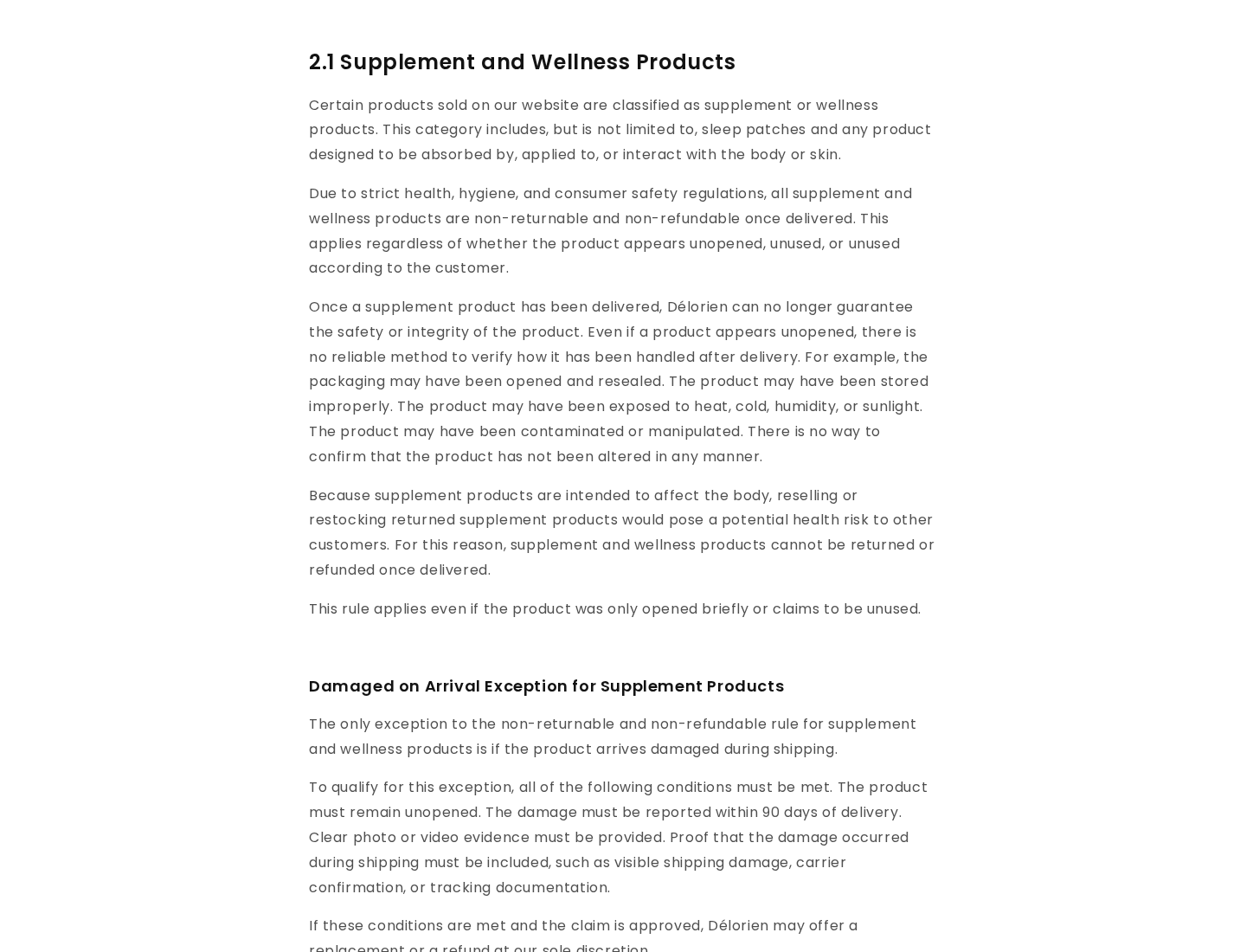
The supplement exclusion comes before those general return arrangements become useful. Paying postage does not automatically make an excluded capsule order eligible.
Ask for a written explanation applying the advertised satisfaction guarantee to your exact order. A generic link back to the policy does not resolve the conflict.
These are the seller’s published conditions, not a ruling on every customer’s legal rights. Consumer remedies depend on location, payment method, and the actual transaction.
Operator Details, Subscription Support, and Capsule Traceability
Wyne Group LLC appears in the terms
The terms identify the operator as Wyne Group LLC. Later clauses use Delorien WorldWide, while the storefront uses the Delorien brand.
Keep those names with your receipt and card descriptor. The terms’ declaration does not independently authenticate a particular company registration or identify the capsule manufacturer.
A Paris-style name does not locate the factory
The domain’s Paris wording is branding, not proof of French manufacture. The terms also contain a Hong Kong governing-law clause.
A governing-law clause does not establish the shipment origin or a usable return depot. Request the authorized destination before paying to send anything back.
The subscription portal and email serve different jobs
The storefront links a subscription-management area and publishes support@delorien-paris.com. The contact channel is available, but its actual response performance was not tested.
Save a portal cancellation screenshot as well as the email acknowledgment. An unanswered message and an account showing another scheduled renewal should be escalated promptly.
The physical label should identify the responsible supplier
Before swallowing anything, compare the sealed bottle’s Supplement Facts, serving size, warnings, lot, and responsible business with the order description.
For a multi-ingredient supplement marketed around prescription therapy, an unexplained formula or missing traceability is a reason to pause, not guess from a promotional graphic.
Medication Compatibility Cannot Be Settled by a Badge
The current product image says it is safe with GLP-1 medications. The page also uses broad reassurance about side effects and everyday use.
Your medication list may include much more than the GLP-1 prescription. An assurance aimed at that drug class does not check everything else you take.
NIH guidance documents interactions involving magnesium and certain antibiotics or osteoporosis medicines. Dose and timing can matter.
Bring the actual label to a pharmacist. Do not stop prescribed treatment or change supplement timing based on a sales-page comparison with minoxidil.
Nor should you combine several hair supplements because each promises a different benefit. Their vitamin and mineral quantities can overlap without being obvious from the brand names.
What to Do If You Ordered Delorien Recovery Foundation
-
Check whether the purchase repeats. Open the original confirmation through your known customer account and locate the plan, next billing date, quantity, and renewal amount.
Do not assume a single parcel means a one-time purchase. Equally, do not report a subscription as unauthorized until you have checked the actual receipt.
-
End unwanted future renewals now. Use the account controls and send support a dated cancellation request. Ask for written confirmation that no further payment is scheduled.
Allow for the stated 24-to-48-hour response target. If the next payment is close, document any failed portal action immediately.
-
Preserve the conflicting refund promises. Save the 90-day satisfaction wording, the delivered-supplement exclusion, your confirmation, and every reply in one folder.
Include the page addresses and the date saved. That lets someone handling a dispute understand the contradiction without reconstructing your browsing history.
-
Ask for the remedy you actually want. State whether you seek cancellation before shipment, an advertised-guarantee refund, or help with a damaged delivery.
If damage is involved, photograph the unopened packaging and carrier label. Do not mail capsules to an unconfirmed address while waiting for authorization.
-
Review the capsules with your healthcare team. Show the prescriber or pharmacist the ingredient amounts, your weight-loss timeline, and any symptoms you are experiencing.
If you have already taken them, explain when you started. Unexpected symptoms deserve medical advice rather than another bottle sold as part of a recovery phase.
-
Escalate unresolved charges through the payment provider. Explain the precise issue, provide the saved promises, and ask which dispute category and deadline apply.
A refund is not guaranteed. Do not let repeated requests to wait consume the time available to raise a genuine billing or merchandise dispute.
Frequently Asked Questions
Is Delorien Recovery Foundation a proven GLP-1 hair-loss treatment?
The promotion does not supply finished-product evidence establishing its hair-regrowth promises. Nutritional problems deserve individual assessment rather than an automatic diagnosis from the advertisement.
Does the 90-day guarantee cover trying the capsules?
The sales message suggests that, but the linked policy excludes supplements once delivered. Obtain a written order-specific answer rather than assuming the headline wins.
Will every Delorien order create a subscription?
That has not been established. Recurring plans exist, and their terms are strict. The receipt and checkout selection determine what a particular purchaser accepted.
Can I cancel a renewal after it has been charged?
The published subscription policy says no, even before shipment. Still request help promptly, preserve your cancellation evidence, and discuss disputed payments with your provider.
Are the listed ingredients automatically unsafe?
No. The concern is unsupported reassurance, incomplete dose information, and suitability for your medication list. A pharmacist can review the actual bottle rather than the marketing summary.
Should I stop Ozempic or Wegovy because of the hair-loss pitch?
No. Raise shedding and nutritional concerns with your prescriber. A supplement advertisement is not a reason to stop or alter prescribed medication on your own.
The Bottom Line
Do not buy Delorien Recovery Foundation through this offer. A promised 90-day trial is not trustworthy when the linked policy denies supplement refunds after delivery.
If you already ordered, check renewals, cancel unwanted future billing, and preserve the guarantee. Take the hair-loss concern and the capsule label to your healthcare team.

Join the discussion
0 commentsShare your experience or ask a question about this article.
Discussion
Start the conversation
Have a question or something useful to share? Add the first comment.