


A computer can still feel like your own while someone else has a route into it. Ordinary windows and working applications do not settle that question.
If a security alert names Monoxide RAT, the useful response starts with access, not appearances. Here is how to assess the warning and recover safely.
Overview
A Windows remote-access trojan with surveillance capabilities
Monoxide RAT is reported as malicious Windows software that gives an operator remote control of an affected computer. RAT stands for remote-access trojan.
The described features include desktop interaction, file management, remote command execution, and webcam or audio access. These are capabilities, not a record of what happened on your machine.
A reliable detection or incident finding deserves prompt attention. A slow computer, unusual sound, or black screen alone cannot identify this particular malware.
Some activity may happen outside the desktop you are watching
The reported toolkit includes hidden-desktop functionality, often called HVNC. It can let an operator interact with applications outside the ordinary visible session.
That distinction matters because watching your mouse is not a dependable security check. Lack of visible movement does not establish that unauthorized control is absent.
Conversely, an unfamiliar remote-support application is not automatically Monoxide. Establish what was detected, where it was found, and whether access was authorized.
Containment, Windows cleanup, and account recovery serve different purposes
Disconnecting a suspect machine limits an active network route. Removing malware addresses software. Recovering an online account addresses access that may already exist elsewhere.
- Confirm the alert through a security product or administrator you trust.
- Stop sensitive activity on the affected Windows installation.
- Retain detection details before making major changes.
- Use appropriate remediation or a clean rebuild when necessary.
- Review relevant accounts from another trusted device.
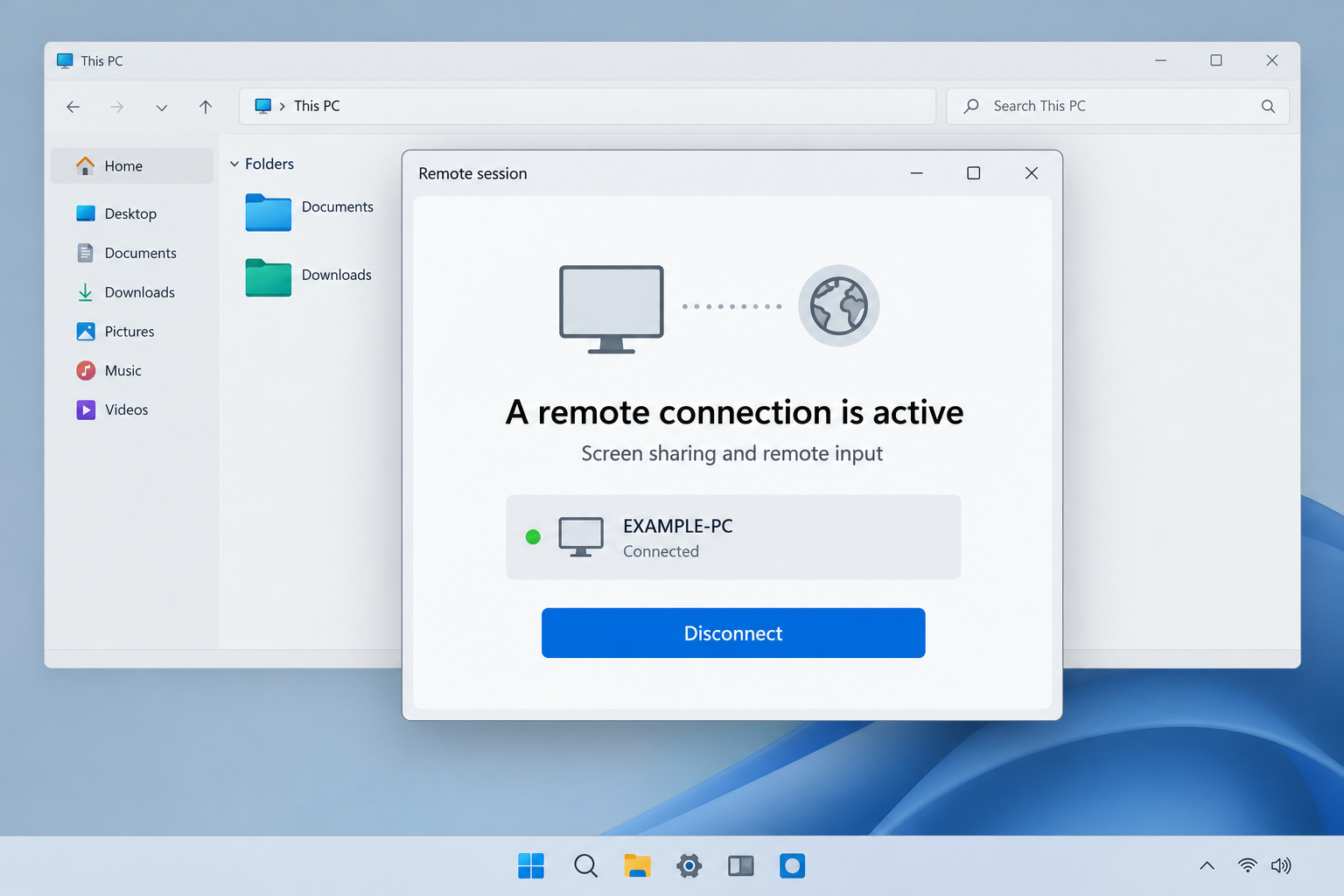
The remote-session illustration is fictional. Monoxide need not display that notification, and a visible Disconnect button is not an indicator required for infection.
What the Reported Monoxide Features Mean for a User
Remote input can turn an open session into an opportunity
Desktop control means more than seeing a screenshot. An operator may interact with applications under the permissions available in the compromised environment.
Consider an account already signed in through a browser. Its immediate risk is not limited to whether the attacker knows the password.
That does not mean every open account was used. It means responders should consider actual session activity, not only search for evidence of a password change.
For a shared or business computer, explain which identities were signed in. Different users can have different permissions even on the same workstation.
File access can expose documents or introduce another threat
The reported file manager supports movement of files, while additional execution features can run other software. The initial alert may therefore require a wider investigation.
Do not assume the malware is limited to the file first detected. Equally, do not claim every available document was copied without supporting records.
Identify sensitive folders, shared drives, and business resources the machine could reach. Let the responsible team determine which deserve closer review.
Private files should not be uploaded publicly to obtain help. A responder can often begin with detection names, timestamps, and paths that do not reveal their contents.
Surveillance and disruptive features can create confusing symptoms
The description includes webcam and audio capabilities, along with options that interfere with the visible desktop. Their availability does not prove they were activated.
Hardware faults, accessibility settings, legitimate support sessions, and application errors can also change screen behavior. Symptoms should be investigated in context.
A microphone or camera indicator may be useful to record, but its absence cannot establish the complete history of device access.
A camera cover does not stop someone browsing your files. Disconnect the suspect computer and arrange proper cleanup even if the camera is physically blocked.
Confirm the Warning Before Following Its Instructions
A browser page announcing a remote-access infection is not equivalent to a detection inside your installed security software. Scammers also use frightening malware names as bait.
Open the security application through your normal Windows route. Check its history for the exact detection, time, affected location, and action taken.
If the only evidence is a webpage demanding a phone call or payment, stop interacting with it. Verify independently before installing anything it recommends.
For a workplace computer, contact the existing IT team. An internal alert may come from a managed product whose detailed findings are not visible to the employee.
Record whether the product blocked a file before execution or found a running component. Those are different starting points for assessing exposure.
Do not reopen a quarantined item to find out what it does. Quarantine is not a temporary folder for convenient experimentation.
The available Monoxide description does not establish one universal delivery route. A detection should not be blamed on a particular email or download without evidence.
Preserve relevant recent activity for the responder, but separate what you remember from what system records confirm. A clear timeline is more useful than a confident guess.
What to Do After a Monoxide RAT Detection
Disconnect the affected computer from networks. Unplug Ethernet and turn off its Wi-Fi connection. Stop using it for sensitive accounts or payments.
In a business environment, tell the response team before changing other systems. One workstation alert does not authorize disrupting unrelated services.
Save the detection and incident details. Record the security product, threat label, affected file path, discovery time, and action already taken.
Keep passwords, private documents, and full account numbers out of public support requests. Use an appropriate private channel for sensitive evidence.
Notify whoever manages the device. Explain whether anyone recently installed software, granted remote support, or used privileged accounts on it.
Authorized support and malicious access must be distinguished. Do not remove an employer’s management tools simply because they can control a screen.
Protect accounts from a different trusted device. Review relevant access and replace exposed credentials through the genuine service.
Check account sessions and recovery settings too. Cleaning Windows does not invalidate an unauthorized session that already exists on another computer.
Arrange Windows remediation. Malwarebytes can help detect and quarantine unwanted software. Follow the tailored steps below or the organization’s existing incident plan.
A scanner result cannot prove that no information was copied. Preserve findings and ask about rebuilding when the machine’s integrity cannot be established.
Report actual financial or business misuse promptly. Contact the relevant institution or internal team through a known route when records show suspicious activity.
Explain the affected computer and account context. Do not delay reporting a real transfer while waiting to learn every technical detail about the malware.
Reject unsolicited recovery offers. Do not allow another stranger remote access because they claim to remove Monoxide or recover losses immediately.
Choose help independently and keep a written record of its scope. No provider should promise to make previously exposed information private again.
Is Your Device Infected? Run a Free Malware Scan
Slow performance, constant pop-ups, or strange behavior? These are classic signs of a malware infection. The fastest way to find out is to scan your device with Malwarebytes Free — one of the most trusted malware removal tools available.
The free version detects and removes the most common threats, including:
- Adware — the cause of those annoying pop-ups
- Browser hijackers — unwanted redirects and changed homepages
- Trojans and spyware — hidden programs stealing your data
- Potentially unwanted programs (PUPs) — software you never asked for
👉 Select your device below — Windows, Mac, or Android — then follow the simple steps to download Malwarebytes, scan your system, and remove any threats it finds. The scan usually takes 5 to 20 minutes.
Run a Malware Scan with Malwarebytes for Windows
Malwarebytes is one of the most popular and trusted anti-malware tools for Windows — and it’s completely free for removing infections. It catches threats that many antivirus programs miss, including adware, browser hijackers, and trojans. Follow the steps below to scan and clean your PC in just a few minutes.
Download Malwarebytes
Click the button below to download the latest version of Malwarebytes for Windows from the official source. The free version is all you need — it will scan your computer and remove adware, browser hijackers, and other malicious software at no cost.
Download MalwarebytesOfficial installer for Windows 11 and 10. Your download starts right away.Want real-time protection? See Malwarebytes Premium Malwarebytes Free for WindowsScans and removes malware at no cost
-
Install Malwarebytes
When the download finishes, open your Downloads folder and double-click the MBSetup file. If Windows shows a User Account Control pop-up, click “Yes” to allow the installation.

Follow the On-Screen Prompts to Install Malwarebytes
The setup wizard will walk you through a few quick screens:
-
Choose where you’re installing the program — “Personal Computer” or “Work Computer” — then click Next.

-
Malwarebytes will now install on your device. This usually takes under a minute.

-
When installation is complete, the “Welcome to Malwarebytes” screen will open automatically.

-
On the final screen, click Open Malwarebytes to launch the program.

-
Enable “Scan for Rootkits”
Before scanning, turn on rootkit detection so Malwarebytes can find even the most hidden threats. Click the Settings gear icon on the left side of the screen.
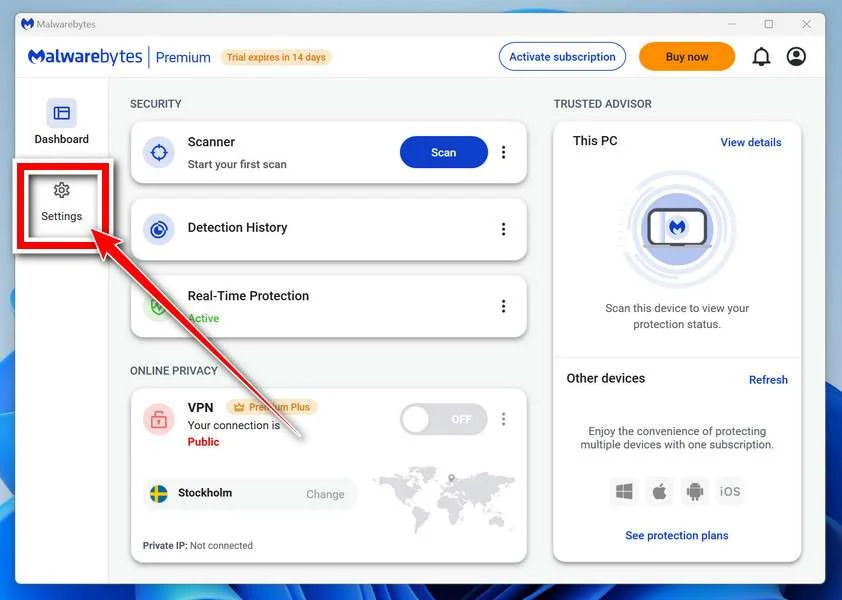
In the settings menu, find “Scan for rootkits” and click the toggle so it turns blue.
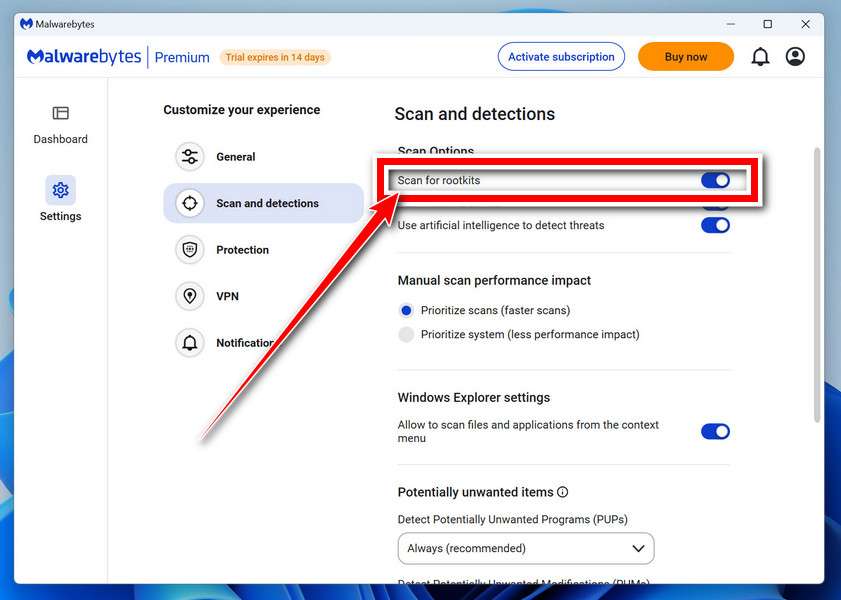
Done? Click “Dashboard” in the left pane to return to the main screen.
Start the Scan
Click the blue Scan button. Malwarebytes will automatically update its virus database and start checking your computer for malware.

-
Wait for the Scan to Finish
The scan checks your entire system for browser hijackers and other malicious programs, so it can take 5 to 20 minutes depending on your computer. Feel free to do something else — just check back occasionally to see the progress.

-
Quarantine the Detected Threats
When the scan is done, you’ll see a list of everything Malwarebytes found — malware, adware, and potentially unwanted programs. Click the “Quarantine” button to remove all of them at once.

Malwarebytes will now remove the malicious files and registry entries and move them safely into quarantine.

-
Restart Your Computer
Some threats can only be fully removed after a reboot. If Malwarebytes asks you to restart, click Yes. Once you’re logged back in, Malwarebytes has finished removing the threats it found.

That’s it — your Windows PC is now clean of trojans, adware, and other malware, and should be back to running smoothly.
If you are still having problems with your computer after completing these instructions, then please follow one of the steps:
- Run a computer scan with ESET Online Scanner
- Ask for help in our Windows Malware Removal Help & Support forum.
Run a Malware Scan with Malwarebytes for Mac
Malwarebytes for Mac is a free on-demand scanner that removes the malware other security software tends to miss — adware, browser hijackers, and unwanted programs included. Cleaning an infected Mac with Malwarebytes has always been completely free, and it’s our go-to recommendation. Follow the steps below to scan and clean your Mac in just a few minutes.
-
Download Malwarebytes for Mac
Click the button below to download the latest version of Malwarebytes for Mac.
Download MalwarebytesOfficial installer for macOS. Your download starts right away.Want real-time protection? See Malwarebytes PremiumMalwarebytes Free for MacScans and removes malware at no cost -
Open the Malwarebytes setup file
When the download finishes, open your Downloads folder and double-click the setup file to begin the installation.

-
Follow the On-Screen Prompts to Install Malwarebytes
The Malwarebytes for Mac Installer will guide you through a few quick screens. Click “Continue” and keep following the prompts until the installation completes.



When the installation is complete, Malwarebytes opens to the Welcome to Malwarebytes screen. Click “Get started“.
-
Select “Personal Computer” or “Work Computer”
Malwarebytes will ask what type of computer you’re installing it on. Click either Personal Computer or Work Computer, whichever applies.

-
Start the Scan
Click the “Scan” button. Malwarebytes will automatically update its detection database and begin checking your Mac for malware.

-
Wait for the Scan to Finish
Malwarebytes will scan your Mac for adware, browser hijackers, and other malicious programs. This can take a few minutes, so feel free to do something else — just check back occasionally to see the progress.

-
Quarantine the Detected Threats
When the scan is done, you’ll see a list of everything Malwarebytes found. Click the “Quarantine” button to remove all the threats at once.

-
Restart Your Mac
Malwarebytes will now remove all the malicious files it found. Some threats can only be fully removed after a reboot — if Malwarebytes asks you to restart, allow it. Once you’re logged back in, your Mac is clean.

That’s it — your Mac is now free of adware, rogue browser extensions, and other potentially harmful software.
If you are still experiencing problems while trying to remove a malicious program from your computer, please ask for help in our Mac Malware Removal Help & Support forum.
Run a Malware Scan with Malwarebytes for Android
Malwarebytes for Android automatically detects and removes dangerous threats like malware and ransomware so you don’t have to worry about your most-used device being compromised. Aggressive detection of adware and potentially unwanted programs keeps your Android phone or tablet running smooth.
-
Download Malwarebytes for Android.
You can download Malwarebytes for Android by clicking the link below.
Get Malwarebytes for AndroidOpens Google Play in a new tab.Want real-time protection? See Malwarebytes Premium for AndroidMalwarebytes for AndroidScans your phone and removes malware at no cost -
Install Malwarebytes for Android on your phone.
In the Google Play Store, tap “Install” to install Malwarebytes for Android on your device.

When the installation process has finished, tap “Open” to begin using Malwarebytes for Android. You can also open Malwarebytes by tapping on its icon in your phone menu or home screen.

-
Follow the on-screen prompts to complete the setup process
When Malwarebytes will open, you will see the Malwarebytes Setup Wizard which will guide you through a series of permissions and other setup options.
This is the first of two screens that explain the difference between the Premium and Free versions. Swipe this screen to continue.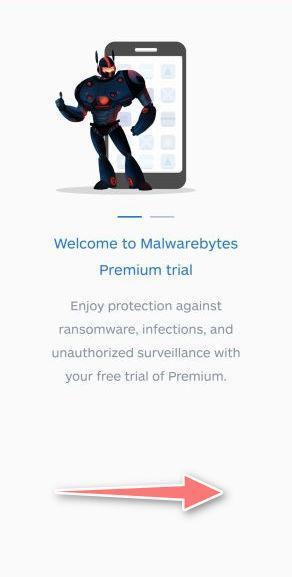
Tap on “Got it” to proceed to the next step.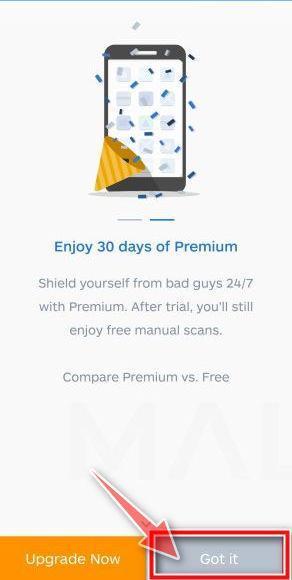
Malwarebytes for Android will now ask for a set of permissions that are required to scan your device and protect it from malware. Tap on “Give permission” to continue.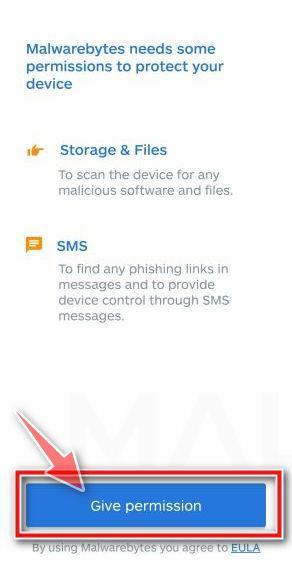
Tap on “Allow” to permit Malwarebytes to access the files on your phone.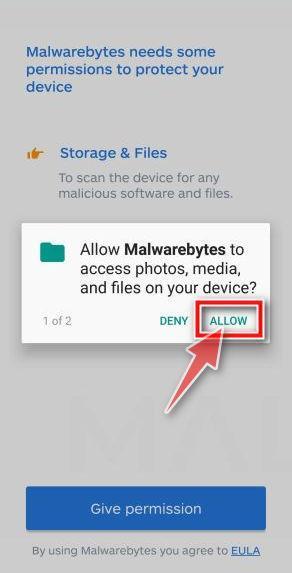
-
Update database and run a scan with Malwarebytes for Android
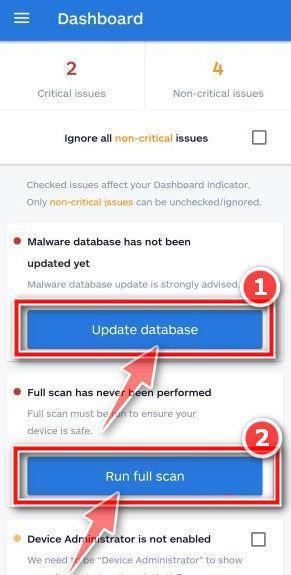
You will now be prompted to update the Malwarebytes database and run a full system scan.
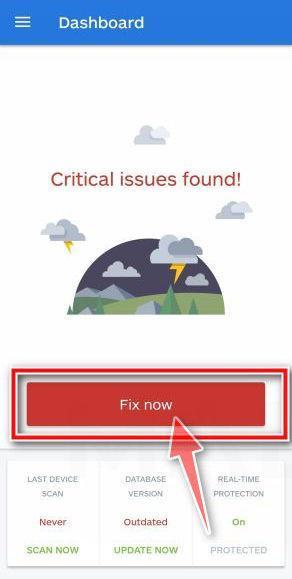
Click on “Update database” to update the Malwarebytes for Android definitions to the latest version, then click on “Run full scan” to perform a system scan.
-
Wait for the Malwarebytes scan to complete.
Malwarebytes will now start scanning your phone for adware and other malicious apps. This process can take a few minutes, so we suggest you do something else and periodically check on the status of the scan to see when it is finished.

-
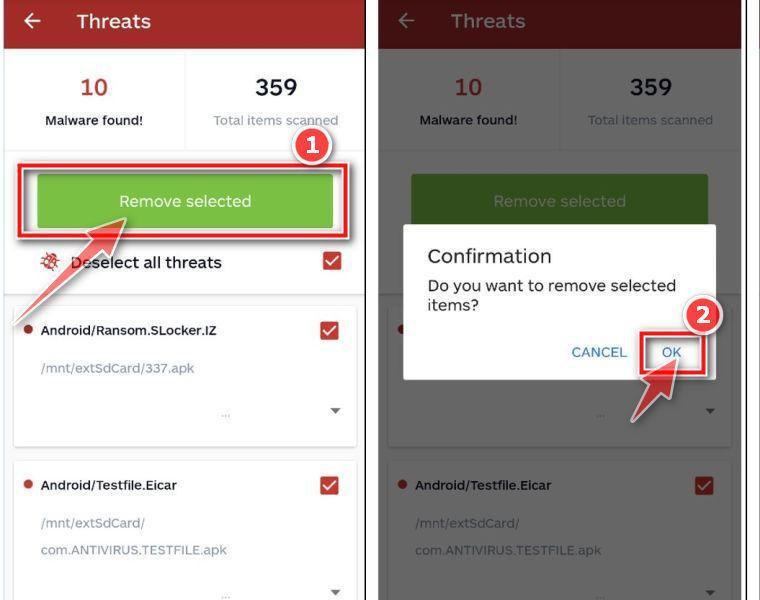
Click on “Remove Selected”.
When the scan has been completed, you will be presented with a screen showing the malware infections that Malwarebytes for Android has detected. To remove the malicious apps that Malwarebytes has found, tap on the “Remove Selected” button.
-
Restart your phone.
Malwarebytes for Android will now remove all the malicious apps that it has found. To complete the malware removal process, Malwarebytes may ask you to restart your device.
That’s it — your Android phone is now clean — no more malicious apps, adware, or browser redirects.
If you are still having problems with your phone after completing these instructions, then please follow one of the steps:
- Restore your phone to factory settings by going to Settings > General management > Reset > Factory data reset.
- Ask for help in our Mobile Malware Removal Help & Support forum.
Stay Protected: Block Ads and Malicious Sites
Now that your device is clean, keep it that way. Most infections start with a malicious ad or a fake download button — so blocking them at the source is your best defense.
We recommend AdGuard, which blocks malicious ads, phishing pages, and dangerous redirects before they can reach you.
👉 Download AdGuard and browse safely
Monoxide RAT Removal and Windows Recovery
Step 1: Preserve a useful starting point
Leave the machine isolated while deciding whether evidence collection is needed. A business incident may require more than running a consumer scanner immediately.
For personal devices, retain the alert details and a timeline. Avoid deleting logs, clearing every browser record, or manually removing unfamiliar system files.
When important records exist only on that disk, seek advice before rebuilding. Recovery should not destroy the only copy of data you still need.
Do not connect your normal backup drive casually. Discuss a safe backup or evidence-preservation method with the person handling the affected installation.
Step 2: Select a trusted Windows scanning route
Use a reputable product obtained independently of any alarming webpage. If Windows is centrally managed, let the administrator choose how tools are deployed and updated.
Our Malwarebytes Premium link leads to optional paid protection. It is not a fee for unlocking the computer or retrieving stolen files.
The vendor’s free-versus-paid comparison identifies manual Custom Scan as free. Review offers during installation rather than assuming every feature requires a purchase.
If the installer or scanner is blocked, do not disable Windows protections indiscriminately. Preserve the error and obtain qualified help instead of trying unverified repair utilities.
Step 3: Scan, review findings, and assess persistence
Open Malwarebytes and select Custom Scan through the Scanner tile’s Advanced Scan menu. Choose the system areas appropriate to the investigation, then run it.
Consult the current Custom Scan instructions if controls differ. Review results carefully and quarantine confirmed threats rather than adding broad exclusions.
Save the scan report and coordinate any requested restart. If detections return, report that behavior instead of repeatedly declaring the machine clean between scans.
Windows Security also provides supported scanning options. Microsoft’s Virus and Threat Protection guidance explains its built-in controls.
An offline scan restarts the computer, so save work and coordinate evidence preservation first. Follow the supported product workflow rather than commands copied from an unknown forum.
Step 4: Decide whether the installation can be trusted again
A remote-control trojan may permit additional changes beyond its initial file. Remediation should consider the actual findings, privileges involved, and any other software delivered.
A clean rebuild can be appropriate when the system’s integrity remains uncertain. Have an administrator or qualified technician explain the plan and its data consequences.
Reinstalling Windows can erase applications, settings, and files depending on the method. Confirm backups and recovery access before approving a destructive procedure.
Do not restore the original suspicious installer with your documents. Separate essential data from downloaded programs, scripts, and old configuration that may recreate the problem.
Step 5: Reconnect only after device and account checks
Apply supported updates and confirm security protections are working before returning the computer to normal use. Review necessary remote-access software with its owner.
From a trusted device, finish replacing affected secrets and reviewing account sessions. Prioritize email, financial services, workplace identities, and administrative access actually exposed.
For developer or administrator workstations, tell the responsible team about accessible keys and service credentials. Their replacement needs coordination with the systems using them.
Keep a recovery record showing what was removed, rebuilt, or replaced. That helps distinguish a returning problem from an old alert being rediscovered.
Questions to Resolve During Account Recovery
Start with what the computer could legitimately access. A personal browser profile and a privileged business workstation present different opportunities to an unauthorized operator.
For each important service, establish whether a password was stored, a session was open, or a recovery method was available. Those facts guide priorities.
Ask whether other people used the same browser profile. A shared session can expose an account even when its owner never opened the suspicious file.
Do not change an unfamiliar business credential without coordination. An administrator may need to rotate it safely and identify other systems that rely on it.
If a provider offers sign-in history, retain relevant entries before dismissing them. Location estimates can be imperfect, so review device and timing details too.
Where an account sent unauthorized requests, warn affected recipients through a separate established channel. A password replacement does not retract messages already delivered.
Protect shared documents and financial workflows according to their actual exposure. Avoid telling everyone that all data was stolen when the investigation has not established that.
Getting Help When the Result Is Unclear
MalwareTips’ Windows malware-removal support forum can help with unresolved findings. Follow its preparation process and keep private information out of public posts.
Include the exact alert and previous actions rather than a list of unrelated symptoms. State whether the file was blocked before execution if you know.
A workplace incident involving sensitive records, administrative access, or ongoing unauthorized activity may need professional response. A public forum is not a replacement for that responsibility.
Do not run commands from unsolicited private messages claiming to finish the cleanup. Keep assistance within the verified support process you deliberately selected.
Frequently Asked Questions
Does Monoxide RAT always move the mouse visibly?
No. Reported hidden-desktop functionality means visible movement is not a reliable requirement. Establish the infection through actual security findings and investigation.
Is a black screen enough to identify this malware?
No. Many ordinary problems can cause screen changes. Check reliable detection details and seek technical assessment instead of diagnosing a specific trojan from one symptom.
Is every remote-support tool a RAT infection?
No. Authorized administration is legitimate. The concern is malicious software or unauthorized control, not the mere existence of a remote-access feature.
Will a password change remove Monoxide?
No. An online password change does not remediate Windows software. Address the device and affected account access as separate parts of recovery.
Does a clean scan prove no documents were copied?
No. A current scan cannot establish the complete history of an intrusion. Assess sensitive-file exposure using incident evidence and appropriate professional advice.
Should I reinstall Windows immediately?
Not before considering evidence and essential data. Rebuilding may be appropriate, but plan backups, account recovery, and the consequences of the chosen method first.
The Bottom Line
Take a credible Monoxide RAT detection seriously. Isolate the computer, stop sensitive use, preserve findings, and arrange appropriate Windows cleanup or rebuilding.
Recover relevant accounts from a trusted device and investigate actual misuse. Neither normal-looking applications nor one successful scan settles every part of the incident.

Join the discussion
0 commentsShare your experience or ask a question about this article.
Your progress
Did these steps help?
Let us know how the guide worked for you.
Describe what you see and the step you reached. Keep passwords and other private information out.
Discussion
Start the conversation
Have a question or something useful to share? Add the first comment.