

If you have been seeing ads for AI Profit Blueprint, you are not alone. The pitch is designed to stop your scroll and hit you right in the hope center of your brain. A simple method. A short daily routine. An “AI system” or “WiFi loophole” that supposedly turns ordinary people into daily earners with almost no effort.
It sounds like the kind of breakthrough everyone wishes existed. It also follows the same playbook as many recycled online money scams: big promises up front, vague explanations, a long video that never gets specific, and a checkout page that turns curiosity into a fast payment.
This article breaks down what AI Profit Blueprint claims, the red flags to watch for, how the scam typically operates behind the scenes, and what to do if you already paid.
Overview
AI Profit Blueprint is marketed as an easy money system promoted through social media ads on Facebook, TikTok and Instagram. The ads usually claim something like:
- “No experience needed”
- “No tech skills”
- “No selling”
- “No audience”
- “Just follow a few steps and the system does the work”
The branding may mention AI, WiFi, automation, or “The System.” Sometimes it hints that this method is hidden, exclusive, or only recently released to the public. It may also use dramatic language like “limited access,” “spots are filling,” or “this video may be taken down.”
Here is the key problem: the offer rarely explains what you are actually buying in a clear, verifiable way. Instead of a direct product description, you typically get hype, storytelling, and soft pressure to keep watching until the payment pitch appears.
The main claims you will likely see
Most versions of this scam make variations of these claims:
- You can earn $100 to $1,000+ per day with minimal daily effort
- The system works automatically once set up
- Anyone can do it, even beginners
- It is not like other online business models (but it never clearly says what it is)
- The creator is sharing it for a low one time fee
- You can start immediately and get fast results
If a money making method is truly reliable, repeatable, and produces significant daily income for beginners, it would not be sold like a late night infomercial funnel. Real businesses compete on transparency, proof, and customer support. Scam funnels compete on emotion, urgency, and confusion.
The long video format is not accidental
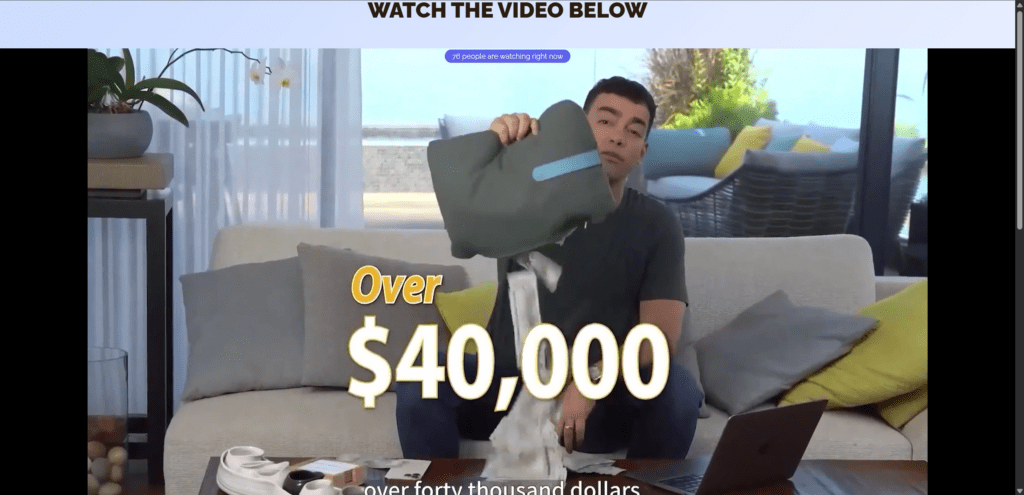
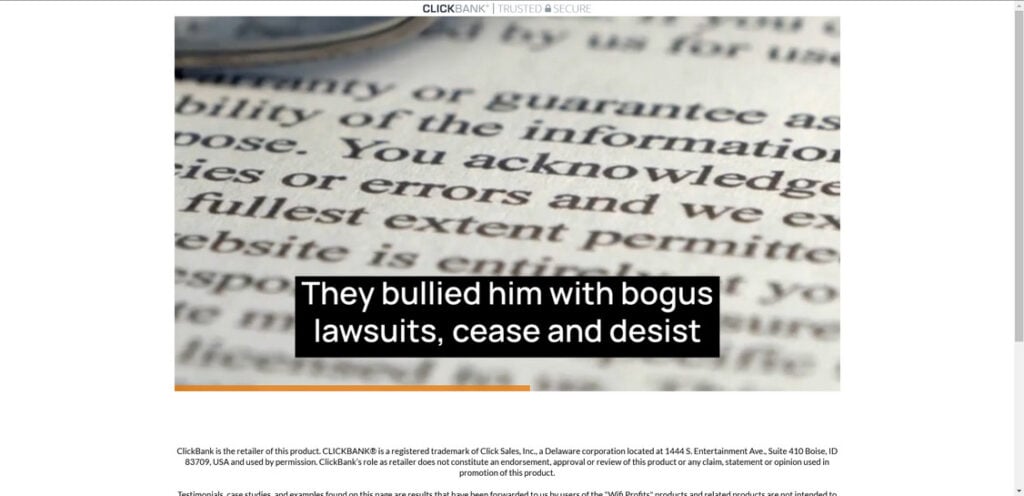
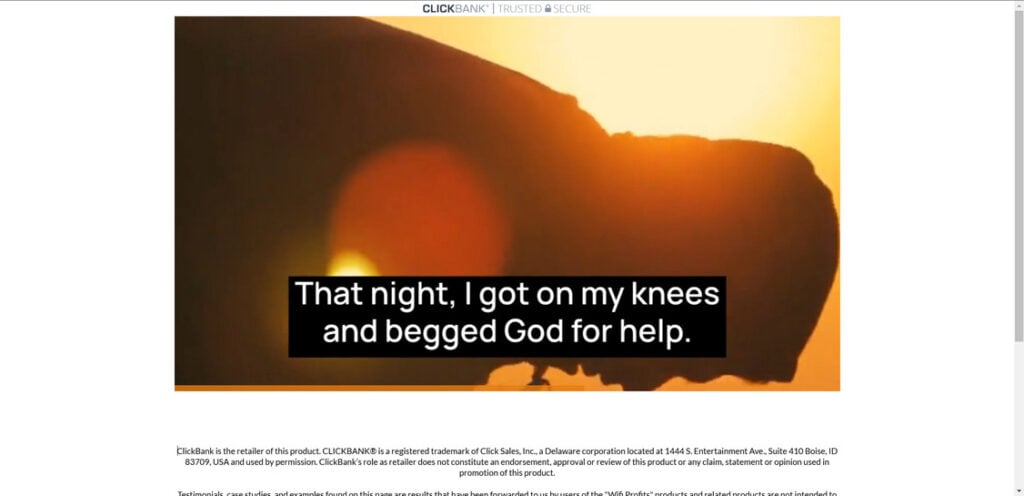
A big part of the AI Profit Blueprint model is the long form video, usually around 30 minutes or MORE. These videos often:
It opens with a personal “rags to relief” story, like a person who was behind on bills, stressed about rent, or struggling after a job loss, then claims they found a simple phone method that changed everything fast.
It uses paid actors, stock footage, or AI-generated narration instead of real verifiable founders. The “creator” is often just a voice and a face with no public background, no company record, and no credible proof they built anything.
It repeats the same promises multiple times using slightly different wording, such as:
- “No experience needed”
- “No tech skills”
- “No selling”
- “No audience”
- “Just follow these steps”
- “It works even if you’ve never made money online”
It adds fake “proof” visuals to create urgency and trust, including things like:
- A “current balance” screen showing money already credited
- “Incoming payment” animations or progress bars
- Fake PayPal or bank transfer screens
- Fake review counters like “1,114 verified reviews”
- Fake badges like “Best of 2026” or “Top rated system”
- Popups claiming other people are joining or cashing out in real time
It avoids specific details you could fact-check. Instead of clearly explaining what the business model is, it uses vague phrases like:
- “AI does the work”
- “WiFi loophole”
- “The system runs in the background”
- “Hidden commissions”
- “Digital cashflow”
- “A private system companies don’t want you to know about”
It ends with a small payment request, usually $47 or $67, framed as “activation,” “processing,” “verification,” or “instant access.” Then it often pushes upsells immediately after checkout, pitching “premium access,” “automation,” “traffic,” or “done-for-you setup” for even more money.
The video is designed to do one thing: keep you watching long enough to feel emotionally invested, then push you into paying before you step back and think.
Why the small entry price works
A common price point is $47 or $67. That number is not random.
It is low enough to feel “worth the risk,” especially for someone who is stressed about money. Scammers know most people will not spend hours investigating a $47 purchase. They will just try it.
But the low price is also a gate. Once you pay, your email and card data are in the funnel. That is when upsells, add ons, and additional offers often appear. Even when extra charges are “optional,” they are presented with heavy pressure, warnings, and fear based language.
What people often receive after paying
Instead of a real app, tool, or system that matches the ads, buyers commonly report getting:
- A basic PDF with generic advice
- Short videos repeating the same vague concepts
- Affiliate marketing instructions presented as a “system”
- A members area filled with low quality content
- A path that requires selling or promoting something, despite “no selling” claims
In other words, the product delivered does not match the promise.
Common red flags that show up on AI Profit Blueprint style sites
Even when the site looks polished, watch for these trust problems:
- No real company information (no address, no leadership team, no verifiable business registration)
- Broken links or placeholder policies
- A support email that goes unanswered
- Fake “verified reviews” displayed directly on the sales page
- Fake media logos or endorsements
- Disclaimers admitting typical results are low or none
- “Limited spots” indicators that never change
- Timers that restart when you reload the page
A legitimate business can still use marketing. The difference is that legitimate businesses do not need to hide what they are selling.
How the Operation Works
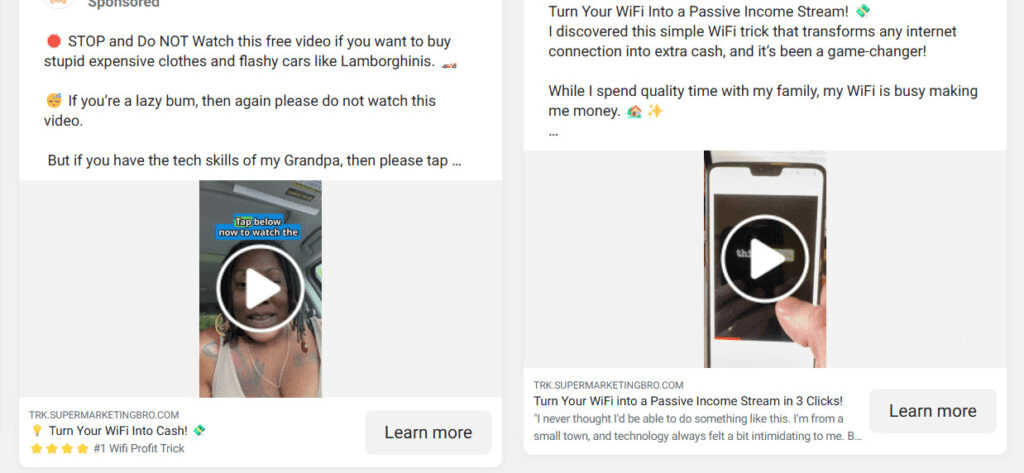
Step 1: The social media bait
The scam starts with targeted ads on social media. The ads often use:
- Short vertical videos that feel like a personal tip
- Captions highlighting quick wins and “proof”
- Fake dashboard visuals or payment notifications
- Lifestyle hooks like quitting a job or paying off debt
- Simple steps like “watch this video” or “tap to activate”
The ad’s goal is not to educate. It is to make you click.
Step 2: The bridge page and the “watch first” command
After clicking, you often land on a page that forces a video first. It may say:
- “Make sure your sound is on”
- “Do not close this page”
- “Your access is being held”
- “Almost there”
This language is meant to stop you from leaving to research reviews. It also creates the feeling that you are already in a process.
Step 3: The long video pitch with vague mechanics
The main video follows a familiar pattern:
- A hook story: struggle, breakthrough, transformation
- A villain: bosses, inflation, “the system,” the economy
- A hero: the presenter who discovered a loophole
- A promise: fast money with minimal effort
- A mystery: it is “simple,” but not explained clearly
- A tease: “I will show you in a moment” (repeated many times)
The key tactic is delay. Real details are always “coming next,” but they never truly arrive.
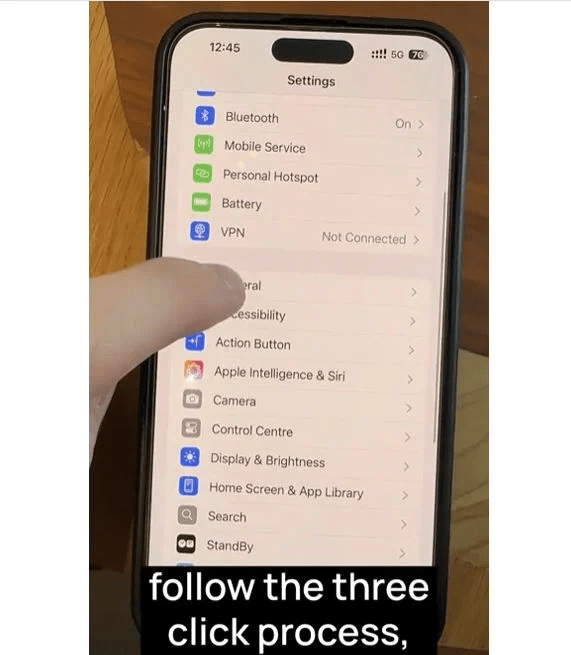
Step 4: Fake proof and manufactured trust
To push people over the edge, these pages frequently show:
- Balance screenshots
- “Incoming payment” animations
- “Current balance credited minutes ago” messages
- “Verified reviews” counters
- Badges and logos meant to imply security or legitimacy
None of this proves you will earn money. It proves the funnel is designed to look convincing.
Step 5: The payment ask, usually $47 or $67
At the end, the offer becomes “risk free.”
Pay $67 and you get instant access to the system.
This is where many people pay because they feel like they already invested time watching the video. That is a psychological trigger called sunk cost. The funnel is built to take advantage of it.
Step 6: The upsell ladder
After the initial checkout, many funnels present extra offers such as:
- “Upgrade to unlock the real system”
- “Coaching”
- “Automation add on”
- “Done for you setup”
- “Traffic package”
- “VIP access”
Even if the upsells are not required, the pitch implies you will fail without them. That pressure is intentional.
Step 7: The disappointing delivery
When users access the content, it often boils down to:
- Generic information you could find free
- Instructions that contradict the original claims
- A method that requires marketing, posting content, or promoting links
- No clear path to the promised results
At that point, many buyers try to request a refund, and that is where the next problem appears.
Step 8: Refund friction and support issues
Scam funnels often make refunds difficult by:
- Sending you in circles between pages
- Providing slow or non responsive support
- Requiring steps not clearly disclosed at purchase
- Letting the refund window expire while “processing”
- Claiming you accessed content, so you are not eligible
Some people end up disputing the charge with their bank because support does not resolve it.
We’ve Seen This Before Under Other Names
One of the clearest signs that this is a scam is that it’s not new. The people behind these “easy money” funnels recycle the same script, the same page layout, and the same promises, then swap out the name whenever the current version starts getting exposed online.
The branding changes, but the structure stays the same: a social media ad that promises effortless income, a long video that never explains the method clearly, fake testimonials and “proof” screens, then a small entry fee like $47 or $67 followed by upsells or surprise charges.
Over the past year, this same scam formula has shown up under names like:
- Dumb Money System
- 7-Minute Phone Trick
- 3-Minute Phone Habit
- 3-Click WiFi Trick
- WiFi Profits App and WiFi Profits System
- Automatic Cash Machine
- Pocket Sized ATM Machine
- Cash Loophole
- Mobile Profits System
- Pegasus Cash Button App and CashButton
- My Mobile Machine
- Income Team X
- AI Wealth Profit and AI Wealth System
- AI Wealth Machine App
- AI Commission System
- Cash Scroller App
- Cell Phone Profits and ProfitWithPhone
The reason these scam networks keep rebranding is simple: once people start searching “reviews” and “scam” for a specific name, the funnel stops converting as well. So the scammers launch the same thing again with a fresh domain and a new label, hoping to catch new victims before warnings spread.
What To Do If You Have Bought This
If you paid for AI Profit Blueprint, take a breath. You are not alone, and there are clear steps you can take right now.
- Save evidence immediately
Take screenshots of the sales page, the checkout page, the receipt, and any claims about refunds or earnings. Save emails and any login details you received. - Check your bank or card statement for extra charges
Look for additional charges in the days after purchase. Check both pending and posted transactions. Write down the merchant descriptor exactly as it appears. - Cancel any subscriptions you can find
Log into the members area and look for billing settings, subscription options, or “manage membership.” If you cancel, screenshot the confirmation. - Request a refund in writing
Email support and keep it simple. Include your order ID, the purchase date, and a direct request for a refund. Ask them to confirm cancellation and that no further charges will occur. - If support delays or refuses, contact your bank or card issuer
Explain that the product was misrepresented and request a dispute or chargeback. Provide the screenshots you collected. - Change passwords if you reused any logins
If you used the same password you use elsewhere, change it now. Use a unique password for every site. - Report the ad and the page
Report the ad on the platform you saw it on. Report the page to the payment processor if one is listed on your receipt. Reporting helps reduce how many new victims see the same funnel. - Watch for follow up scams
Once you buy one, you may be targeted again with “refund helpers,” “recovery services,” or “we can get your money back” offers. Many of those are scams too. Never pay a stranger to recover funds.
The Bottom Line
AI Profit Blueprint follows a familiar online scam pattern: big income promises, vague explanations, long sales videos, urgency tactics, and a low entry price like $47 or $67 that leads to low value content and refund frustration.
If you want to make money online, that is possible, but real methods are clear about what you will do, how money is generated, and what results realistically look like. Any offer that promises easy money from “AI,” “WiFi,” or “The System” with almost no work deserves serious skepticism.
If you already paid, focus on documenting everything, canceling any billing, and disputing charges if support does not help. The sooner you act, the better your chances of stopping additional charges and recovering your money.
FAQ
Is AI Profit Blueprint legit or a scam?
AI Profit Blueprint shows common red flags found in recycled money making scams, including unrealistic earnings claims, vague explanations, and sales pages built around urgency and emotional storytelling rather than verifiable details.
What does AI Profit Blueprint claim you can do?
It typically claims you can earn significant income with minimal daily effort using AI, WiFi, or a simple system. The pitch often implies the process is automatic, beginner friendly, and requires no skills.
How much does AI Profit Blueprint cost?
Most versions charge a small entry fee such as $47 or $67. The concern is not just the entry price, but what happens after purchase, including upsells or potential additional charges.
What do you get after paying?
Buyers often receive low quality PDFs, generic training, or a basic members area that does not match the marketing claims. The content may resemble freely available beginner marketing tips.
Why is there a long video instead of clear information?
Long sales videos are used to keep you watching, build emotional commitment, and delay critical details. This increases the likelihood of an impulse purchase.
Are the testimonials real?
Many funnels use testimonials that are not verifiable. Some use paid actors, stock images, or scripted stories. If you cannot confirm identities and results independently, treat testimonials as marketing, not proof.
Does AI or WiFi automatically generate income?
No. AI and WiFi are tools, not income sources. Any real income requires a legitimate business model such as selling products, providing services, affiliate commissions from real sales, or paid work.
Can AI Profit Blueprint charge more than $47 or $67?
It is possible through upsells, add ons, or subscriptions that may be presented after checkout. Always review your receipt and monitor your bank statement for additional charges.
What should I do if I see unexpected charges?
Document the charges, contact the seller to request cancellation and refund, and contact your card issuer if the issue is not resolved quickly.
Is the money back guarantee trustworthy?
A guarantee is only meaningful if support is responsive and the refund process is clear. Scam funnels often use refund language to reduce buyer fear, then create friction when you request it.
How can I spot the next version of this scam?
Watch for these repeating signals:
- “No experience” plus high daily income promises
- A mystery “system” with no clear explanation
- Long videos that avoid specifics
- Timers, limited spots, or warnings not to close the page
- Fake proof visuals like balances and incoming payments
- A low entry fee followed by upsells









thank you for posting this. you saved me.
That is the best thing we can hear – thank you for taking a moment to say so. If you still have the ad or the link, reporting it on the platform where you saw it helps the next person reach the same conclusion before paying rather than after.
How in the world are these scammers getting away with the cheating funds from people who are just trying to make their lives a tad more manageable. This sickens me to the core because a lot of people just want better, yes this happened to me!!! How is this problem going to get fixed.
Hi Cassandra, I understand the anger. These scams survive because they move fast, change names, advertise heavily, and exploit people who are hoping for something better. The best practical steps are disputes, reports to regulators, and public warnings like this so fewer people get caught.