


The Facebook post sounds like a tip from another shopper. Someone’s son works at Aldi, and apparently there’s a deal most people never hear about.
The meat box is under $10. To get it, you’re told to look in the comments.
Overview
The Facebook offer is not from Aldi
The Aldi meat box Facebook scam promises discounted groceries under the retailer’s name. One version offered a box for under $10 to people over 40.
Malwarebytes documented the promotion and followed it to a payment form outside Aldi’s website. It was not an Aldi checkout or an authorized deal.
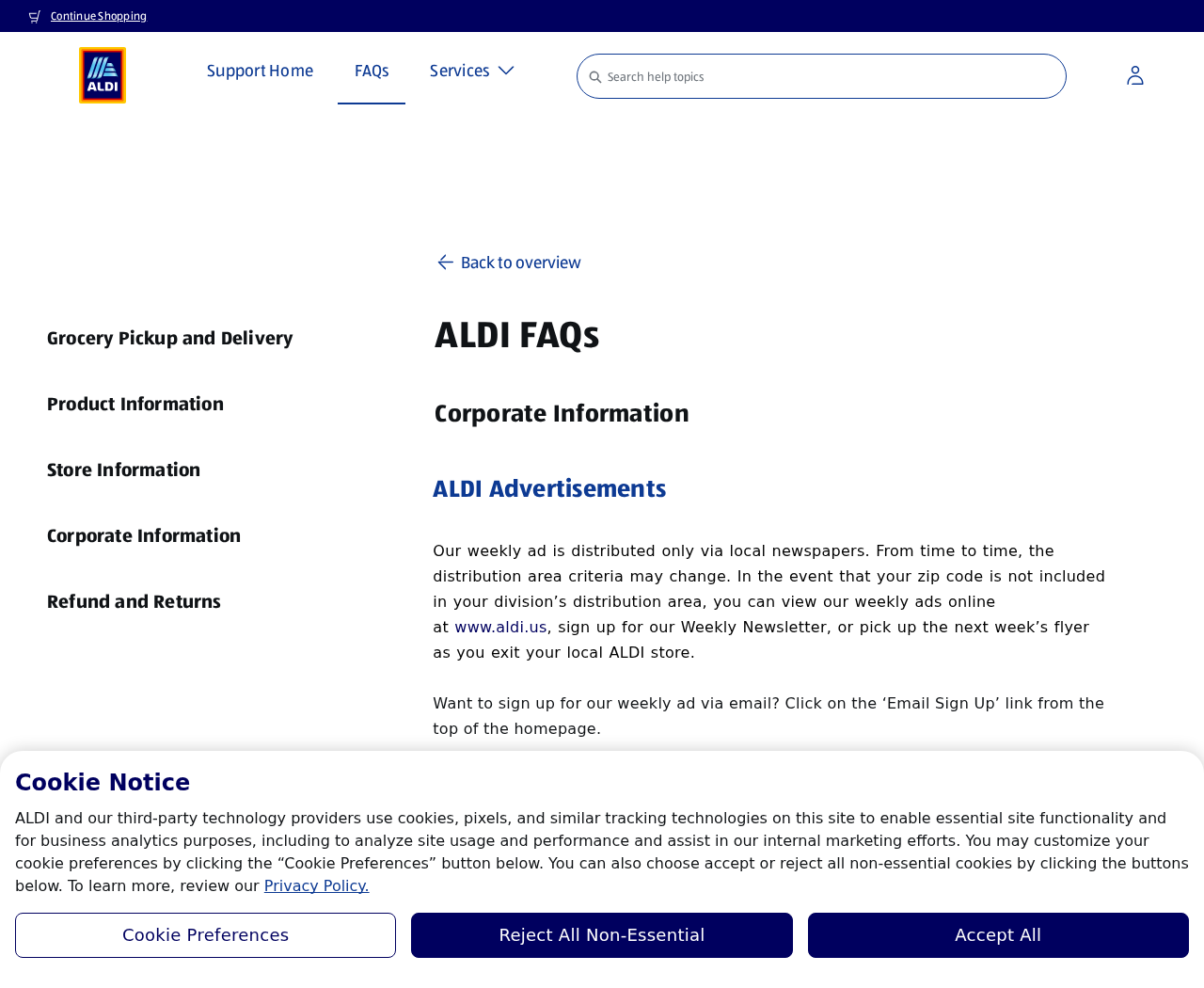
Aldi’s own advertising FAQ, shown above, tells shoppers where to find its weekly offers. You don’t need the Facebook link to check a real deal.
The story makes the price sound plausible
Aldi regularly advertises grocery bargains, so a discount doesn’t sound unusual. The post gives this particular price a reason: supposed excess stock that needs to go quickly.
It doesn’t ask for card details up front. It asks you to trust an employee connection and fill out a quick form, making the first decision feel small.
The meat is the bait. The most important thing the page wants at the end is information you would normally provide only to a known retailer.
Check the offer without opening the comments link
Give yourself one minute to verify the story somewhere else. Look for details the post can’t supply on its own:
- Is the deal listed in Aldi’s own weekly ads or official local channels?
- Does the post come from the retailer, or is it a personal story about somebody who works there?
- Does the claimed age requirement appear in terms Aldi actually published?
- Who is asking you to pay, and does the payment go through the retailer’s own checkout?
- Can you check any real order in the account or service you opened independently?
If those answers aren’t clear, the easiest option is to skip the link. There is no reason to complete the form to see whether the deal is real.
How the Aldi Meat Box Facebook Scam Works
Step 1: A personal story introduces an insider price
The reported post doesn’t start like a formal supermarket ad. It reads like one shopper telling another about something an employee revealed at home.
The author claims the box arrived and was better than expected. That anecdote does the work an order confirmation or a real product review normally would.
The age cutoff makes the offer feel targeted, especially when the story names an older relative who supposedly received the box. It isn’t evidence of eligibility.
If the offer were real, you should be able to check what it includes and where it is available without trusting the person’s connection to Aldi.
Step 2: The link sits away from the main post
Instead of giving a normal product page, the post points to the comments. The example documented by researchers used a shortened link.
A shortened link hides the destination until it’s opened. You don’t need to follow it to find out whether the retailer published the offer.
Comments may also contain enthusiastic replies, photos or claims that an order arrived. They still don’t identify who’s accepting payments.
You can report the suspicious post without forwarding it to other shoppers. If you warn a relative, send the warning, not the offer link.
Step 3: The survey makes the visitor feel selected
The reported route opened a page made to resemble Aldi and put a short survey between the visitor and the advertised reward.
Some prompts implied that only a small number of places were left or that time was about to run out. Neither came from a verified Aldi offer.
Questions can be harmless on their own. In this case, they made the path to payment feel like a selection process the shopper had already passed.
The researchers also saw a prize-box game. Winning a round on a promotional page does not establish that there is inventory or a real order waiting.
Step 4: The reward turns into a payment form
After the prize screen, the reported route sent visitors to a different site. It requested contact information, a delivery address and card details.
The fee looked small compared with what the groceries supposedly cost. An optional faster-delivery offer helped the form resemble a normal checkout.
Focus on the recipient, not the amount. A card form on a site unrelated to Aldi isn’t safer because it asks for less than $10.
The fact that your browser offers to fill your address is not an endorsement. Don’t let a familiar browser prompt do the job of verifying the merchant.
How to Tell a Real Grocery Promotion From This One
Start at the store you recognize
For a US offer, check Aldi’s weekly specials or start from the retailer’s main site. Select your location if the specials vary by store.
If the post claims to be for another country, go to Aldi’s site for that market instead. An offer from one country won’t authenticate another country’s link.
A store may genuinely run a limited promotion. It should still have an identifiable offer, location and purchase route that you can check without the Facebook comments.
Don’t assume a delivery platform listed in a random post is Aldi’s partner. Find any available ordering or delivery services through the official retailer.
Look at what the price includes
A real grocery listing can tell you the weight, cuts, quantity, price and any pickup or delivery conditions. You shouldn’t have to win a game to see those details.
The fake offer relies on a broad picture of abundance. It doesn’t give you an independently verifiable Aldi product whose contents you can compare with the claim.
If a similar-looking box exists at a real store, compare its exact name and price. Scammers can borrow photographs of genuine items without selling them.
Keep a separate warning for local butcher pages
Western Australia’s consumer protection authority has documented fake butcher profiles in social groups. Buyers in that warning were asked to transfer money for bulk orders that didn’t arrive.
That’s a related bargain-grocery scheme, not proof that those sellers ran the Aldi promotion. One borrows a national brand; the other can imitate a local business.
If you want to buy locally, use a shop’s known number or established storefront. A newly posted price list and a bank account in a message aren’t enough.
What to Do if You Have Fallen Victim to This Scam
- Close the page. If you only saw the post, don’t fill out the form to confirm anything. Report the post and keep the warning separate from the link.
- Contact your card issuer if you entered card details. Say where you entered them, whether you approved a charge and which payments you don’t recognize.
- Preserve the evidence. Keep the Facebook account name, post screenshot, payment amount and any receipts. Don’t include full card numbers in a platform report.
- Ask about disputes and future attempts. Your issuer can advise on replacing the card, monitoring charges and disputing a payment already posted.
- Secure any login you provided. If you entered a password, change it at the real site and check for unexpected recovery or account changes.
- Watch for delivery and refund follow-ups. A message about missing postage or a failed refund may be another attempt. Verify through your issuer or official retailer independently.
If you typed card details but backed out before confirming, tell your issuer exactly that. It can advise on exposure even if you don’t see a charge.
If you only shared your name and address, keep an eye out for convincing parcel messages. Don’t assume an email is real because it knows where you live.
If the link prompted you to download an app, don’t install it. If you already installed something unfamiliar, review it with the device maker’s official safety guidance.
A browser blocker such as AdGuard can reduce some risky ad exposure. Malwarebytes web protection can help block known bad destinations, but neither tool reverses a payment.
What to Save Before the Post Disappears
Save a screenshot of the offer with the date, account name and visible wording. A cropped image of a meat box won’t show who made the claim.
If you have a statement entry, keep the actual merchant descriptor. A payment may not be labeled Aldi even though the post used the Aldi name.
Write down whether the form asked for a one-time fee or mentioned anything recurring. Don’t assume a subscription existed if the terms you saw didn’t say so.
Report each unfamiliar later charge to the issuer. An original small payment and an unauthorized later transaction can require different descriptions.
Keep the records private. Someone offering to recover your money in a Facebook reply doesn’t need a copy of your bank statement or identification.
What the Card Issuer Needs to Know
You typed details but never saw a confirmation
Start with what you remember entering. An issuer can give more useful advice if it knows whether you shared a card number, security code or a verification code.
Tell it what happened after you entered those details. A spinning page, an error or a blank screen doesn’t tell you what information reached the destination.
Ask how the issuer wants you to watch for activity. Use alerts in your own banking app, not a monitoring link sent by somebody claiming to help.
You approved one charge but something else posted
Check the amount and merchant descriptor side by side. Tell the issuer which payment you intended and which one you didn’t recognize, instead of treating them as identical.
A pending entry can change before it posts. Keep the first record and ask when a dispute can be opened if the final entry doesn’t match.
If the issuer replaces your card, ask what happens to any merchant payment permissions associated with it. Follow its instructions rather than assuming replacement ends every issue.
Use your statement to make a list of legitimate recurring expenses that may need attention after replacement. Don’t put your new card details into the original offer.
You only answered the survey
If you didn’t share card or account information, there may be nothing to dispute. Save the post and report it, then watch for messages that use what you supplied.
If you gave a phone number, be ready for a supposed courier or refund team to call. They don’t become legitimate because they mention a survey you completed.
Tell other people in your household which offer you saw. If someone receives a delivery message, they can check it with the carrier before anyone pays.
If the post asks people to tag relatives, don’t use its comments to warn them. Send a separate message so you don’t increase the post’s reach.
When describing the scheme to someone else, include the retailer name, the age cutoff and the comments link. A familiar combination is easier to recognize than “watch out for scams.”
Frequently Asked Questions
Is the Aldi meat box for under $10 real?
The Facebook offer documented by Malwarebytes was not an official Aldi deal. It led shoppers away from the retailer to a page asking for payment details.
Verify any separate grocery promotion through Aldi’s official channels for your location. Don’t use the link in the comments.
Why does the post say you need to be over 40?
The age cutoff helps the offer feel like a benefit meant for a specific group. It was part of the reported Facebook pitch, not verified Aldi terms.
You don’t need to enter a birth date to find out whether you qualify. Check whether the retailer published the promotion at all.
Does a survey answer or prize win mean a box is reserved?
No. The survey and prize screen are part of the reported route to the payment form. They do not show a retailer holding groceries in your name.
Don’t pay to claim the result. Close the page and check real weekly offers independently if you’re still shopping.
What if the page looked like Aldi’s site?
A logo and familiar colors can be copied. What matters is who controls the page and whether the retailer points customers to it.
Start at Aldi’s official site rather than trying to decide from the copied page’s graphics. A secure connection alone does not establish affiliation.
Do I need to cancel my card if I only saw the ad?
Seeing the post isn’t the same as entering a card number. If you didn’t submit information or approve a payment, report the post and leave it alone.
If you entered details or aren’t sure what was sent, call your card issuer. It can tell you which steps fit your situation.
What if I paid and the page promised delivery?
Save the charge, receipt and exact promise. Contact the issuer promptly rather than waiting for a box from an offer you now know was impersonation.
Check any delivery message separately. Don’t pay a second charge to release a parcel or receive a refund.
The Bottom Line
Don’t claim the Aldi meat box through the Facebook comments link. The documented offer wasn’t from Aldi, and the delivery fee led to an unrelated payment form.
If you entered card details, call your issuer now and keep the charge and post records. For actual grocery deals, start with Aldi’s own weekly ad.

Join the discussion
0 commentsShare your experience or ask a question about this article.
Discussion
Start the conversation
Have a question or something useful to share? Add the first comment.