


An investment pitch promises high returns, regular payouts and quick access to your money. There’s even a physical office where you can meet the people selling it.
That was part of the Antares Trade pitch in Bishkek. The records that matter now are the ones authorities and former participants can trace.
Overview
The Kyrgyz case identifies a real meeting place and an unregistered operation
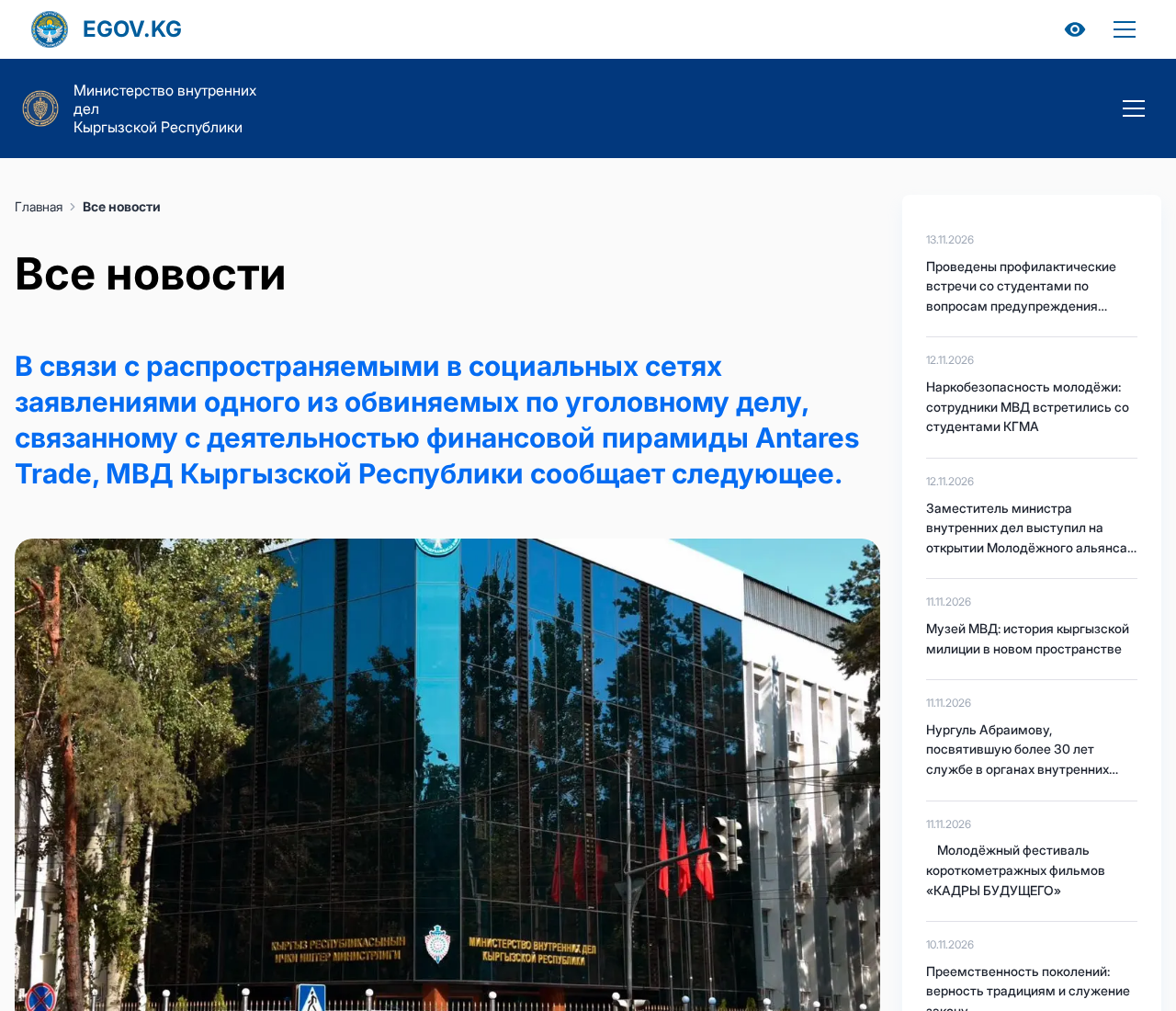
Kyrgyzstan’s Interior Ministry describes Antares Trade as a financial pyramid. Investigators say an organized group operated the scheme in the country between October 2020 and July 2021.
According to the ministry, a Bishkek shopping center housed a company office. Presentations promised high returns, dividends and fast withdrawals. The setting gave those claims a physical address.
The ministry says Antares Trade was not registered with Kyrgyz justice authorities and did not conduct genuine investment or business activity in the country.
The reported losses refer to one national case, not a global payout
Investigators combined 50 episodes in one proceeding and calculated losses of $1,061,198. That is a figure for the Kyrgyz criminal case, not a reimbursement fund.
The ministry says the investigation was completed and the case referred to court in December 2021. Its June 2026 statement says four defendants were wanted after missing hearings.
A warrant or a place on a wanted list does not decide guilt. The ministry says the court is where those defendants’ arguments and evidence belong.
Different regulators recorded different Antares Trade addresses
Spain’s securities regulator warned about antares.trade in 2021. The Québec regulator’s 2021 notice identifies Antares Trade and names antarestrade.world. Both concern authorization in their own jurisdictions.
If your receipt names another site, keep it. These regulator notices do not establish ownership of every address that has ever used the word Antares.
- A physical office is not proof that investment money was placed or protected.
- Save the original domain and payment recipient, not just the brand name.
- Treat a claim about easy withdrawals as a promise unless you can document an actual transfer.
- A criminal case is not an authorization for a stranger to charge you a recovery fee.
How the Antares Trade Scam Worked
Step 1: A local office made an online investment feel tangible
The Kyrgyz case didn’t start with an invisible website alone. The ministry says the group opened an office in a mall and held regular presentations.
Someone sitting across a table can describe an ordinary-looking business, pull up a price or answer questions. None of that tells you what happens after you pay.
The office is a clue about where people encountered the offer. It does not identify the legal company holding the money, even when its sign uses the brand.
Step 2: Promises made both earnings and the exit sound simple
The ministry describes guarantees of high profit, dividends and quick withdrawals. Those are three distinct claims: how much you earn, how you’re paid and when you can leave.
Think about how they work together. If it sounds easy to leave, you’re less likely to ask who will return the money if the investments fail.
A company cannot show that it can repay you by describing the speed of the promised process. Showy presentations supply confidence, not evidence of accessible reserves.
Step 3: Investigators found no genuine local investment activity
The ministry says what was marketed as an investment did not correspond to real investment or business activity by Antares Trade in Kyrgyzstan.
That finding is more serious than a bad investment losing value. The authorities say the advertised business activity was not there in the jurisdiction they investigated.
No public record reviewed establishes a single deposit method or exit outcome for all participants. Use your own receipts to describe what happened to your particular payment.
Who Was Supposed to Receive and Return the Money?
The name on the office door was not a local registration
The ministry’s statement distinguishes the Antares Trade presence in a shopping center from registration with the authorities. A place to meet was not a legal status.
For a former participant, the useful question is whether the agreement or receipt names the same company as the presentation. Save both names if they differ.
Don’t correct an unusual spelling in your original records. Investigators can use variations to compare materials collected from people recruited by different representatives.
Québec and Spain warned about specific identifiers
The Québec AMF notice says Antares Trade lacked authorization to solicit investors in Québec. It names the dot-world address.
Spain’s CNMV warning record instead identifies the dot-trade address. The difference is a reason to preserve exact records, not a reason to dismiss either warning.
Both checks ask the same practical question in different places: was the party offering the investment authorized to offer it there?
The person who recruited you may not be the recipient
A promoter can book a meeting or hand you an account name without owning or controlling the destination. When reporting, distinguish what each person did.
Write down who showed you the offer, who asked for payment, and the recipient on your actual transfer. If you don’t know whether they match, say so.
Keep invoices, paper receipts and bank records together. A screenshot of a dashboard won’t tell investigators where your bank sent the money.
A claim to handle refunds requires separate verification
The June ministry statement describes an investigation, proceedings and a search. It does not announce a claims administrator, a repayment schedule or a paid release mechanism.
If someone says they’re distributing seized money, ask for the public order or official notice identifying them. Verify through the issuing body, not the caller.
A person who knows the case amount or recognizes your account name does not automatically represent the court. Those details may be public or come from old records.
What the $1,061,198 Figure Does and Does Not Mean
The June 2026 Interior Ministry statement says investigators consolidated 50 episodes involving money solicited from citizens. The reported damage total belongs to that set of episodes.
Fifty episodes does not necessarily mean exactly 50 individuals. An episode is part of the case; a single person may have a more complicated payment history.
Damage reported by investigators, property actually recovered and money ordered returned to an individual are different numbers. Do not use one as a substitute for the others.
A person who paid outside Kyrgyzstan should not assume their transaction is among the 50 episodes. Report locally and keep any evidence that connects your offer to the case.
The ministry issued the notice in response to statements on social media by an accused person. It says disputes over the investigation should be resolved in court.
That update describes the case as of its own date. It is not a live status check on each defendant or proof that anyone has been convicted.
Reconstruct the Payment Before You Try to Reconstruct the Balance
Start with money you can document leaving your possession. Record the date, currency, amount and recipient from the payment provider’s record, not from the sales presentation.
Next, make a separate list of actual payouts you can see in a bank account or wallet you control. A pending request goes in a third list.
If you upgraded or used more than one payment route, keep each transaction as its own row. Do not combine currencies or round converted figures into one remembered total.
Save the materials that show what you were promised when you paid: the original website address, the messages, the slides you received or details of the local presentation.
If only a screenshot survives, preserve it without editing away the date, the address bar or the name of the contact. Keep a private original.
To share evidence publicly, make a separate copy with personal details covered. Give investigators the unaltered evidence through a channel you have verified.
A report that identifies which payments actually happened is more useful than a demand to pay the balance an old account once displayed.
Use the Evidence You Have, Even If It’s Incomplete
If a local introduction led to an online transfer
Write down where you met, when it happened and how the person asked you to register. Then record the actual name or address that received the payment.
If a friend introduced you to a group, their introduction is a fact you can report. That doesn’t prove the friend ran the group or received your money.
Give investigators the contact name as it appeared in messages, together with the number or account identifier if you still have it. A profile name alone can change.
If someone says you need a new account for an old claim
Do not assume a new login screen is part of the court process. Ask who authorized it, what case it belongs to, and why you need it.
Would a verified authority offer the same instruction through its own website or a known contact? Find that contact independently before uploading identification or reconnecting a wallet.
An old balance shown on a new site doesn’t make the new site legitimate. You can report the message without testing an account or submitting personal information.
If you paid in cash or can’t find a bank statement
Look for an enrollment form, a cash receipt, a text that confirms the amount, or a calendar entry that places you at the meeting. Preserve each separately.
Write down which details come from memory. If you remember the month but not the day, say that rather than entering a precise date you can’t support.
If you made a cash withdrawal near the meeting, keep that receipt too. It can help date the event, although it doesn’t identify who received the money.
Old screenshots that show an account balance are still worth saving. Put them alongside the payment evidence instead of expecting them to prove the exact amount of loss.
If your bank statements use a different currency, report the actual charged currency and amount. Let investigators decide whether and how to convert figures for a particular proceeding.
What to Do if You Have Fallen Victim to This Scam
- Keep the records you still have. Save the original payment, exact website address, referral messages, agreement, and evidence of any payout or failed request.
- Contact the bank, payment service or crypto exchange you used. Ask it to identify the recipient and explain what records, reporting or recovery options remain.
- Report the case to local police or your financial regulator. Explain where you were recruited and what you paid. Include the exact Antares address if known.
- If crypto moved, preserve the transaction hash, blockchain, date, token and the sending and receiving addresses. These identify the transfer without exposing your recovery phrase.
- If you already have a police report, add new information through that case number. Don’t open parallel conversations with anyone who claims to have access to your files.
- Don’t pay an unsolicited agent to release seized funds. Check their contact and authority against an official notice before giving them any evidence or money.
Years after a payment, records may be missing from an account dashboard. Ask the institution that moved the money about old statements before relying on estimates from memory.
Even if the payment can’t be reversed, the records may help investigators. No public notice can promise recovery for your specific transfer.
The FBI’s crypto recovery warning explains why an upfront tracing fee or a claim of police affiliation shouldn’t persuade you to pay a stranger.
If a recovery message includes your original amount, that still doesn’t authenticate it. Save the message alongside the old records and report it as a separate approach.
Frequently Asked Questions
What did Kyrgyz investigators find about Antares Trade?
The Interior Ministry said it was an investment scheme based on a financial pyramid and that Antares Trade conducted no genuine investment or business activity in Kyrgyzstan.
How much money did the ministry say people lost?
It reported $1,061,198 in damage across 50 episodes consolidated into the Kyrgyz proceeding. That figure is not a worldwide total or a pool ready for refund.
Did a court convict the four people named by initials?
The ministry’s statement said they were wanted after missing hearings. It did not report convictions. A search announcement must not be read as a verdict.
Which domains appear in the earlier regulator notices?
Québec’s AMF identifies antarestrade.world. Spain’s CNMV identifies antares.trade. If your documents show a different address, save it rather than assuming it is the same operator.
Can someone charge me to collect a share of the case losses?
Don’t pay an unsolicited person. The June 2026 public statement did not announce a reimbursement program. Ask the relevant authority through an independently verified channel.
What if my Antares Trade account or invoice is no longer available?
Start with statements, receipts, old messages and transaction identifiers from whoever handled your payment. Make clear which details are confirmed and which you remember.
The Bottom Line
Do not give money to anyone using the Antares Trade case to pitch a replacement investment or paid recovery. The official findings describe a financial pyramid, not a legitimate package.
If you paid, build a record from the actual transfers and report it through official channels. The losses in a criminal case are not a balance to unlock.

Join the discussion
0 commentsShare your experience or ask a question about this article.
Discussion
Start the conversation
Have a question or something useful to share? Add the first comment.