

The promise is seductive: spend just a few minutes a day tapping on your smartphone and start making over $1,000 daily, effortlessly. No selling. No crypto. No phone calls. Just a simple “phone trick” using Wi-Fi, and supposedly, your financial struggles disappear. Ads for “The Automatic Cash Machine” flood social media and YouTube, often labeled as a “2-minute money trick” or a “7-minute tapping hack.” But is there any truth to these promises? Or is this just another carefully crafted scam?
In this article, we dive deep into the Automatic Cash Machine scam. We’ll break down how it draws people in, how the scam is executed, what you actually receive after paying, and most importantly, what to do if you’ve already been scammed. Consider this your complete guide to understanding and avoiding one of the latest online income frauds.
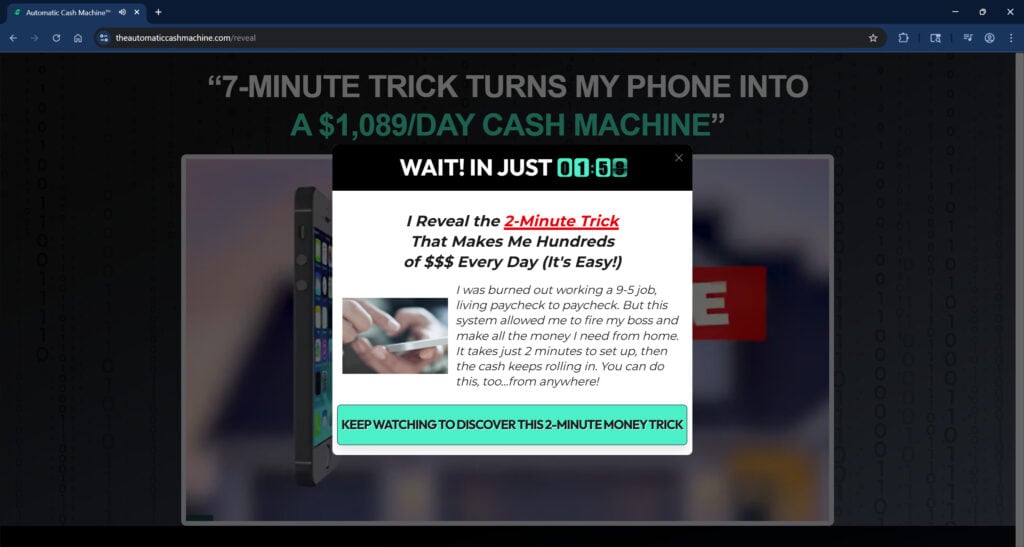
Scam Overview: The Face Behind the False Promise
The scam usually begins with an emotionally charged story. You might hear about a DoorDash driver who runs into an old co-worker that’s now living in luxury thanks to a phone-based income system. The co-worker supposedly ditched gig work and now earns $1,000 a day from a mysterious “cash machine.”
The website hosting this scheme, theautomaticcashmachine.com, is loaded with red flags:
- Bold earnings claims like $1,089 per day
- No selling or crypto required
- Takes just 7 minutes per day
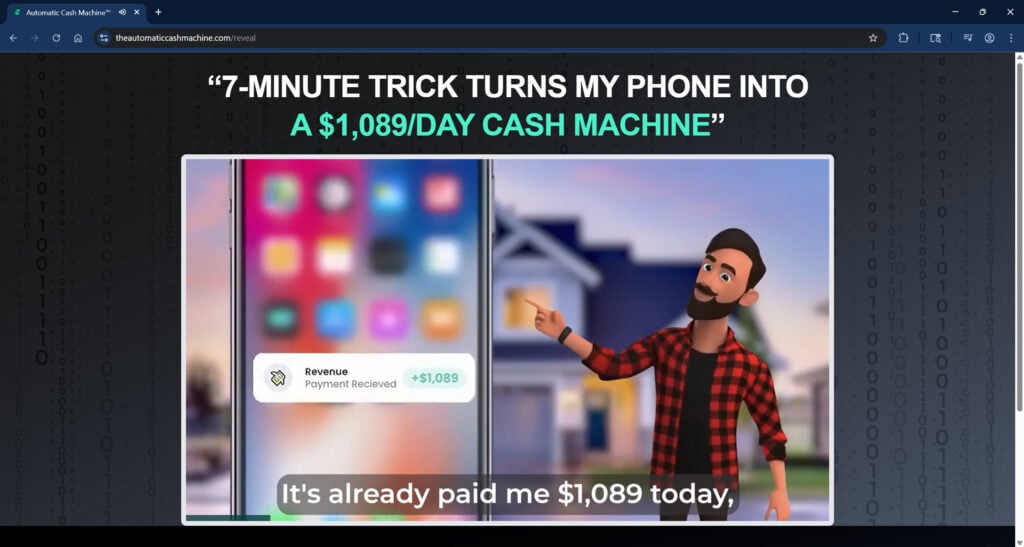
Why It Feels Convincing
These scams know how to hit the right psychological buttons. They use animated or stock-actor testimonials to mimic real success stories. The language is filled with urgency, simplicity, and relatability. The site mimics the structure of legitimate digital products—but offers nothing of substance.
Major Red Flags
- Zero Transparency: The site gives no real information on what the system actually does. It relies on emotional storytelling and vague buzzwords like “automated profits” and “digital cash engine.”
- Fake Proof of Earnings: Screenshots and payout notifications are often photoshopped or animated. There are no third-party reviews or payment verifications.
- Anonymous Ownership: No contact info, no about page, no names. You’re left completely in the dark about who runs the site.
- Upfront Payment Required: You’re asked to pay $47 upfront to even learn what the opportunity is. That’s a red flag.
- Scarcity Tactics: Limited-time offers, countdown timers, and “slots remaining” notifications all aim to pressure users into acting fast.
How The Scam Works
Step 1: The Attention-Grabbing Ad
You’re scrolling through Facebook or watching YouTube when you see an ad: “I turned my phone into a $1,000/day cash machine with one weird trick.” It often features emotional success stories and bold headlines that demand your curiosity.
Step 2: The Hook Story
The scam uses personal stories like “I was broke, then I tried this 2-minute trick, and now I’m debt-free.” These stories are carefully scripted to emotionally connect with struggling viewers. Often, they reference paying off credit cards, helping a family member, or buying groceries with ease.
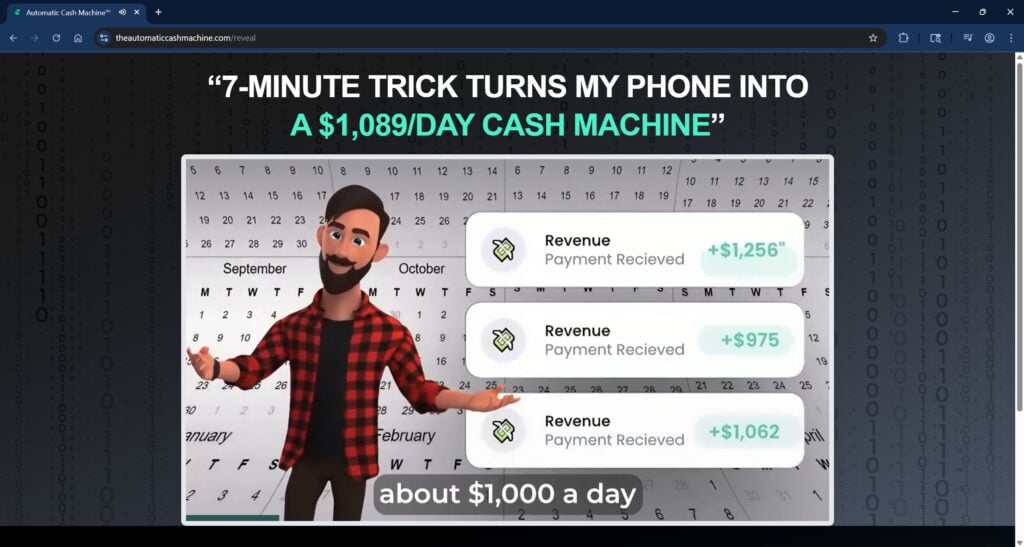
Step 3: The Sales Video
You’re taken to a long-form video hosted on theautomaticcashmachine.com. “Mike,” the fictional spokesperson, claims you’ll start earning in 30 minutes using his method. But he never actually explains what you’ll be doing. Instead, he uses terms like “digital leverage” and “automated income pipeline.”
Step 4: The Pay-to-Access Trap
Eventually, the video asks you to pay $47 to access “The Secret.” This is the first step into a web of upsells and false promises. They capitalize on your curiosity and emotional investment to get you to hand over your credit card info.
Step 5: Upsell Avalanche
Once you’ve paid the initial fee, more expensive options are offered:
- $197 for “Turbo Cash Add-Ons”
- $297 for “VIP Coaching Access”
- $49/month subscription for “AI Profit Tools”
Each promise gets more extravagant, but the actual material remains vague and low-quality.
Step 6: The Disappointing Delivery
After your purchase, you gain access to:
- Generic eBooks or PDFs
- Public YouTube videos
- Low-value affiliate marketing tips
There is no custom software. No automation. Nothing that delivers what was promised. In many cases, there is no actual “system”—just digital junk.
What to Do If You Fell for the Automatic Cash Machine Scam
1. Stop All Future Payments
Cancel any ongoing subscriptions tied to your card or payment method. If they charged you once, they might try again.
2. Contact Your Bank or Credit Card Company
Request a chargeback. Be honest and explain the situation. Mention deceptive advertising and failure to deliver a product or service.
3. Report the Scam
- FTC (U.S.): reportfraud.ftc.gov
- Internet Crime Complaint Center (IC3): ic3.gov
- Better Business Bureau: bbb.org
- Your Local Consumer Protection Office
4. Protect Your Info
If you gave them personal data, be cautious of identity theft. Monitor your email, phone, and financial accounts for suspicious activity.
5. Warn Others
Write reviews, post on forums, or create a video sharing your experience. Spread awareness so others don’t fall for the same trap.
Frequently Asked Questions About the Automatic Cash Machine Scam
Is the Automatic Cash Machine a legitimate way to make money?
No. Despite the bold claims, there is no real product or proven method behind this program. It uses deceptive marketing to convince people to pay for generic or worthless content.
What do you actually get after paying the $47 fee?
Most users receive vague digital files like PDFs, outdated affiliate marketing tips, or links to public YouTube videos. There’s no proprietary software, proven system, or actionable business model provided.
Why does the site claim you can make money in 7 minutes a day?
This is a classic psychological hook. It’s designed to make the program sound easy and irresistible. In reality, there’s no evidence that anyone is earning money using this system, let alone in minutes per day.
Are the testimonials real?
No. Many of the testimonials are fabricated or delivered by actors. Earnings screenshots are likely edited or animated. There is no independent verification of the claims made.
Is there a refund policy?
Some versions of the site claim to offer a 60-day money-back guarantee. However, many users report difficulties obtaining refunds or getting any response from support.
Can I report this scam?
Yes. Victims should report it to the FTC, the Internet Crime Complaint Center (IC3), and their local consumer protection agencies. This helps regulators take action against recurring scams.
What should I do if I already paid?
Immediately contact your bank or credit card provider to request a chargeback. Cancel any subscriptions tied to the payment and monitor your financial accounts closely.
Why is this type of scam allowed to advertise online?
Scam sites often use rotating domains and paid ads to stay ahead of detection. While platforms try to block misleading content, these schemes frequently change names and reappear elsewhere.
Is there any real way to earn money online?
Yes. Freelancing, content creation, affiliate marketing, digital product sales, and remote work are all legitimate ways to earn online. But they require time, skills, and effort—not secret shortcuts.
How can I avoid scams like this in the future?
Be skeptical of any offer that promises fast, easy money with no work. Research the company name, look for independent reviews, and never pay upfront for vague or unverifiable claims.
The Bottom Line
The Automatic Cash Machine isn’t a tool, platform, or app—it’s a cleverly marketed lie. It preys on financial vulnerability by offering hope in exchange for your money. Instead of receiving a “cash system,” victims end up with recycled content and a long chain of upsells.
There’s no such thing as a 7-minute phone trick that pays $1,000 a day while you sleep. If that kind of shortcut existed, it wouldn’t be advertised through shady websites and cartoon characters.
Real income takes real work—whether it’s freelancing, digital marketing, investing, or running a business. But those paths are real, sustainable, and don’t require you to pay someone just to learn what they are.
Stay informed. Ask questions. And never let desperation override your instinct to doubt bold, unverified promises.
Your best defense against scams like the Automatic Cash Machine is a skeptical mindset and the willingness to dig deeper before handing over your money.








