

The bank’s answer lands when you are already exhausted: your scam claim has been declined. The message may explain very little about what happened next.
Before sending another frustrated reply, take a breath. A few details in that decision can help you work out which questions to ask.
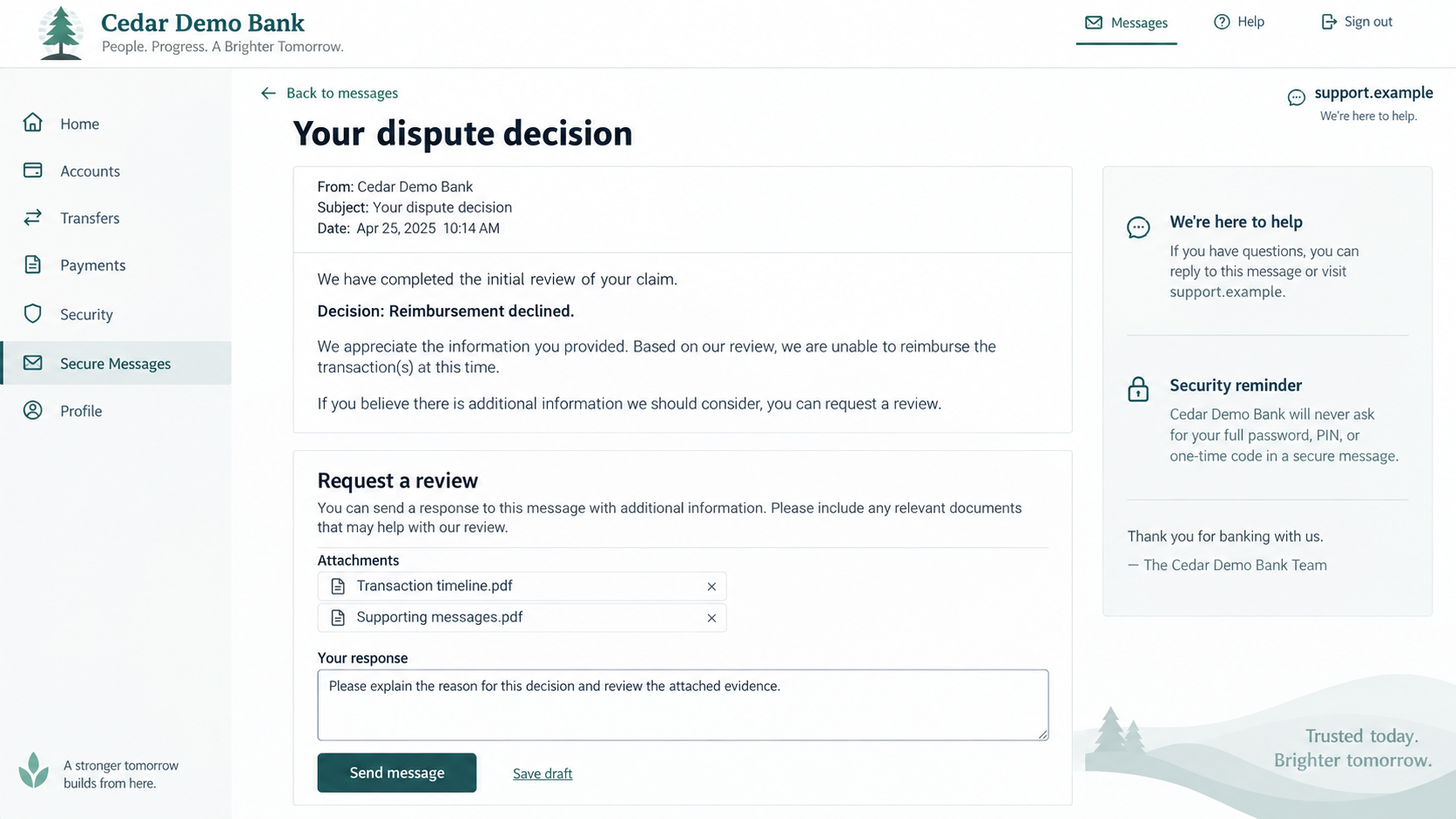
Overview
A rejected claim is a decision to examine, not proof of another scam
If your bank denied your scam refund, the useful next move is to understand its reason. A short rejection can hide a misunderstanding about the transaction.
It can also reflect a genuine limit on reimbursement. Losing money to deception does not automatically make every payment refundable through every bank or payment network.
This guide focuses on consumer accounts in the United States. Your country, account type, payment method, and role in initiating the transfer can change the answer.
The person who initiated the payment matters
There is an important difference between a criminal logging in and transferring your money, and you making a transfer after believing the criminal’s story.
Both situations involve victims. However, they can fall into different legal or policy categories, so describing both simply as a “scam payment” leaves important questions unanswered.
The CFPB’s electronic transfer guidance explains that fraudster-initiated transfers using credentials obtained through deception can qualify as unauthorized electronic fund transfers.
A useful challenge addresses the actual denial
Your complaint should connect the bank’s explanation with the facts it needs to reconsider. Start with these questions before assembling a large folder of screenshots:
- Which individual transactions did the bank review?
- Who entered and submitted each payment instruction?
- What does the bank say proves authorization?
- Did it consider the evidence you already supplied?
- Which complaint route and deadlines apply to your account?
Read the Denial Before Arguing With It
Save the complete decision, including attachments and the date it arrived. A notification preview can leave out the explanation, appeal instructions, or provisional-credit information.
Then separate what the bank actually says from what you understandably feel it means. “We found no error” is not a detailed description of its investigation.
If the letter identifies a transaction you never disputed, point that out first. The reviewer may be answering the wrong question rather than rejecting your evidence.
“Your credentials were used” needs context
A correct password does not explain who typed it. Ask how the bank distinguished your activity from someone using credentials stolen through impersonation or phishing.
Be equally precise about authentication prompts. Explain what appeared, what you believed you were approving, and whether you entered a payment or only supplied a code.
Do not change your account to fit a preferred outcome. A factual description of an embarrassing moment is more useful than an inaccurate claim of total unfamiliarity.
“You sent the money” may require a different argument
If you personally entered the recipient and submitted the transfer, say so. Then describe the impersonation, warnings, bank interactions, and timeline without concealing that action.
Ask whether the bank considered any applicable scam reimbursement policy or payment-network recovery process. Do not assume unauthorized-transfer rules automatically cover a payment you initiated.
A request to recall funds is also different from a reimbursement decision. Ask what recovery attempts occurred, but remember that an unsuccessful recall does not resolve every complaint.
“The merchant supplied the service” may concern a purchase dispute
A misleading subscription, undelivered purchase, and account takeover need different explanations. Identify whether your complaint concerns consent, delivery, recurring charges, or a stranger accessing your account.
For a subscription dispute, include the offer you accepted, the cancellation request, and later charges. A long description of unrelated scam calls will distract from those facts.
Build an Evidence Packet a Reviewer Can Actually Use
Think of the packet as a short route through the incident. The reviewer should not have to guess which screenshot explains which transaction.
Put a one-page summary first. State the amount disputed, what went wrong, your claim reference, and the specific correction or review you are requesting.
Make the timeline do the explaining
List the first contact, any login or code disclosure, each payment, your discovery, and your first report. Use approximate times only when you label them honestly.
For example, distinguish a morning call from the evening transfer you discovered later. That gap may matter if someone else maintained access after the conversation ended.
Include the bank’s own contact history. Note when you called, which department responded, and what you were told to do, without inventing missing employee names.
Match each attachment to a disputed fact
Number the files and describe their purpose. “Attachment 3: message asking me to disclose a login code” is clearer than uploading twenty images with camera-generated filenames.
Keep original messages and receipts as well as readable copies. Cropping a screenshot for clarity should not remove the sender, timing, or wording relevant to your account.
Do not put passwords, current security codes, or full identity documents into a general complaint attachment. Use the institution’s secure verification process when identification is genuinely required.
Separate known facts from unanswered questions
You may know your password was exposed without knowing how the criminal used it. Say that, then ask the bank to examine relevant access and payment records.
Likewise, a suspicious location is a clue, not a complete finding. Do not claim an unfamiliar internet address proves the account belonged to a particular criminal.
Clear limits make a complaint stronger. They show the reviewer which facts you can support and which information only the bank or investigators can supply.
What U.S. Error-Resolution Rules Can and Cannot Tell You
For covered consumer electronic transfers, Regulation E’s error-resolution procedures set notice and investigation requirements. They do not apply identically to every way money can leave an account.
The usual notice limit in this section is 60 days after the statement showing the error was sent. Report immediately; other liability rules can involve shorter periods.
Covered investigations generally start with a 10-business-day determination period. Longer investigations and provisional credit depend on conditions and exceptions, including rules for certain new accounts.
If the bank finds no error under this process, it must provide a written explanation and tell you about requesting the documents it relied on.
Ask which framework the institution applied to your payment. Avoid treating a deadline from an online example as a guarantee for a wire, credit-card purchase, or cryptocurrency transfer.
These are general guideposts, not a decision on your entitlement. For a substantial loss or disputed deadline, a qualified consumer-law adviser can assess your circumstances.
What to Do After Your Refund Claim Is Denied
-
Protect the account while the dispute continues. Tell the real bank about any exposed password, card, or device access. Ask which safeguards address the specific exposure.
Do not leave a compromised account usable while debating reimbursement. The money already lost and the risk of another transfer are separate problems.
-
Request the full decision through an official channel. Use your existing banking app, a verified statement number, or the bank’s website entered independently.
Ask for the reason, the transactions reviewed, supporting documents available to you, and the correct complaint address. Keep the response with your claim reference.
-
Correct the central factual error first. If you did not initiate the transfer, explain who did as accurately as you can. Describe any impersonation or stolen credentials.
If you did initiate it, explain the deception instead of denying your action. Ask the bank to consider the protections and policies that actually fit.
-
Submit a focused written complaint. Attach your summary, timeline, transaction list, and the few records that support your main points. Ask for a written response.
Save confirmation of submission. If you already complained by phone, record that earlier date rather than presenting the written follow-up as your first report.
-
Track deadlines and temporary credits. Ask the bank which response deadlines apply and whether any credit is provisional. Note dates mentioned in its notices.
Do not spend a temporary credit on the assumption it is final. Ask what happens to scheduled bills if the institution later removes it.
-
Escalate through the appropriate official route. For eligible U.S. financial-service complaints, the CFPB provides a complaint process. Follow your institution’s formal complaint procedure as well.
Explain the unresolved issue and include the bank’s response. A complaint should identify a missed fact or disputed decision, not simply repeat that the loss was upsetting.
-
Get help with serious or complex losses. Consider qualified legal assistance, a consumer adviser, or an appropriate local support organization if you cannot navigate the process alone.
If a trusted person helps, arrange any required authorization through the bank. Sharing your banking password is not a safe substitute for authorized assistance.
-
Refuse paid “release” or guaranteed-recovery offers. Anyone asking for a fee to unlock your stolen money introduces another risk. Do not share account access with them.
Continue through the bank and verified official channels. If you receive an unexpected recovery message, preserve it separately rather than adding its instructions to your complaint.
How to Write a Clear Review Request
You do not need threatening language or a page of legal quotations. A reviewer needs to understand what happened and why the existing answer does not address it.
Begin by identifying the case and transaction. Then summarize the mistake in the decision, followed by the evidence and the response you want.
For an account-takeover case, a useful opening might read: “I dispute the conclusion that I initiated this transfer. Please review the access and payment records.”
Follow that with your actual facts. Explain any disclosed credentials, the timing, and what you did or did not approve. Do not copy an example that contradicts events.
For a deception-induced payment, your opening could instead explain that you initiated it under impersonation and want the applicable reimbursement policy and recovery efforts reviewed.
Close with two or three concrete requests. For example, ask for the reason for refusal, the records supporting it, and a response to an overlooked attachment.
Keep a dated copy of every version you submit. If you discover a mistake in your own timeline, correct it explicitly rather than quietly replacing the earlier account.
Where to Escalate Without Paying for Recovery Promises
The CFPB complaint portal accepts complaints about covered financial products and services. Supply a complete account and the relevant documents, not just a screenshot of the denial.
Companies generally respond through that process within 15 days, with some final responses taking up to 60 days. Those response periods are not promises of reimbursement.
Keep your desired resolution specific. A fresh investigation, explanation of the evidence, correction of a transaction classification, and reimbursement are distinct requests that may need separate answers.
Continue monitoring the secure message center associated with your complaint. Missing a request for clarification can leave the reviewer working from an incomplete account.
If a response repeats an earlier mistake, identify that exact sentence and the attachment that contradicts it. Keep the disagreement focused on something the reviewer can check.
If a different regulator or dispute body is appropriate, use its official site. Verify the route independently before providing banking records or sensitive personal information.
Outside the United States, use local rules rather than borrowing American deadlines. In the United Kingdom, the Financial Ombudsman Service considers eligible complaints about financial firms’ handling of scams.
An ombudsman complaint about a firm’s response is not the same as a criminal investigation. You may need to pursue both processes, each through its proper channel.
Reporting the original fraud is still worthwhile. Follow the FTC’s payment-specific recovery guidance and contact the relevant payment provider promptly, even while a complaint is pending.
Frequently Asked Questions
Does a bank have to refund every scam payment?
No. The payment type, who initiated it, applicable law, reporting dates, and relevant policies matter. Being deceived does not create one universal reimbursement rule.
Can it still be unauthorized if I gave someone a code?
Potentially, yes. CFPB guidance recognizes certain fraudster-initiated transfers using credentials obtained by deception as unauthorized. Explain exactly what you disclosed and who initiated the transfer.
What if the bank only says it found no error?
Request the written reasoning and available supporting documents. For a covered Regulation E investigation, the no-error decision comes with specific explanation and document-request requirements.
Will filing a CFPB complaint guarantee a refund?
No. The process can obtain a company response and put an unresolved issue before the appropriate channel. It does not automatically decide that reimbursement is owed.
Should I call my payment authorized just because I was tricked?
Describe the actions rather than guessing the legal label. State who entered the recipient, submitted the transfer, accessed the account, and responded to any authentication prompts.
Is it worth challenging the decision if the money is already gone?
It can be, especially if the bank misunderstood the facts or omitted relevant evidence. Recovery from the recipient and your complaint about the bank are different questions.
The Bottom Line
Do not accept an unexplained denial without asking what it rests on. Request the reasoning, correct factual mistakes, and submit a focused complaint through the real bank.
If the response still misses the issue, use the appropriate official escalation route. Do not pay a stranger to “unlock” a refund or promise a guaranteed recovery.








