

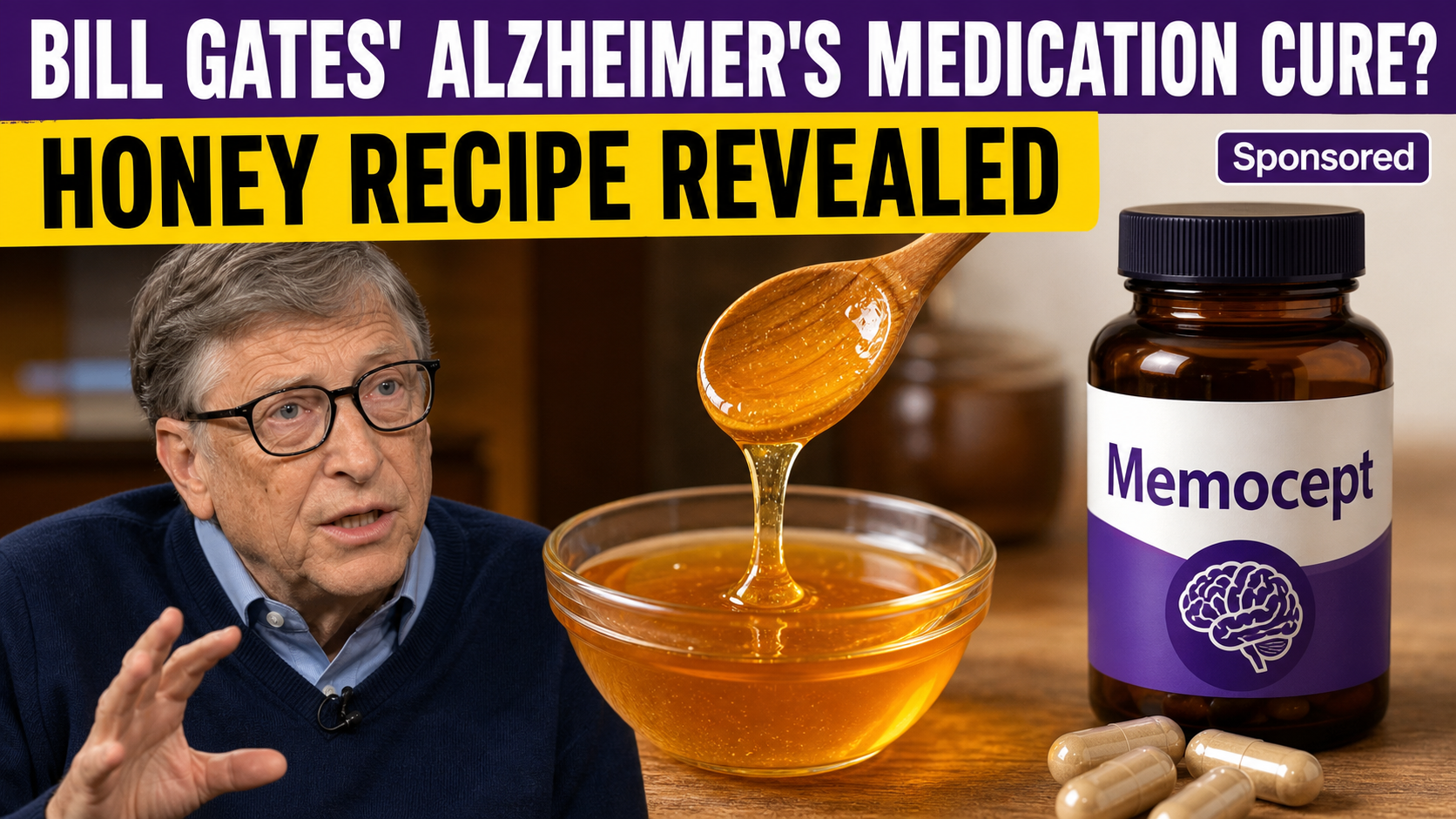
The advertisement begins with a story that feels both personal and urgent. Bill Gates has supposedly discovered an Alzheimer’s medication cure after watching the disease affect his own family. A television interview, honey recipe, or bottle of memory capsules appears to reveal what established medicine has missed.
That emotional connection is being exploited. Bill Gates has discussed Alzheimer’s research and his father’s diagnosis, but there is no credible evidence that he created or endorsed the medication cure sold through these ads.
Overview
A true family story is used to support a false cure
Bill Gates has openly written about his father’s Alzheimer’s disease and his support for research, diagnostics, and treatment development. Scammers take that real background and attach a fabricated ending: a secret medication, honey formula, breakfast method, or supplement that supposedly reverses memory loss.
The authentic details make the invented claim harder to spot. A viewer who remembers hearing about Gates and Alzheimer’s may incorrectly assume the entire advertisement is legitimate.
Fake television reporting gives the claim a public stage
Versions of the campaign imitate CNN, CBS, 60 Minutes, or other television coverage. Anderson Cooper, Steve Martin, a physician, or a fabricated presenter may appear beside Gates in edited clips or AI-generated conversations.
The page often includes a breaking-news banner, transcript, comments, medical reviewer, and video controls. The design suggests that a major newsroom verified the cure, even though the domain has no connection to the broadcaster shown.
The cure story can lead to different supplements
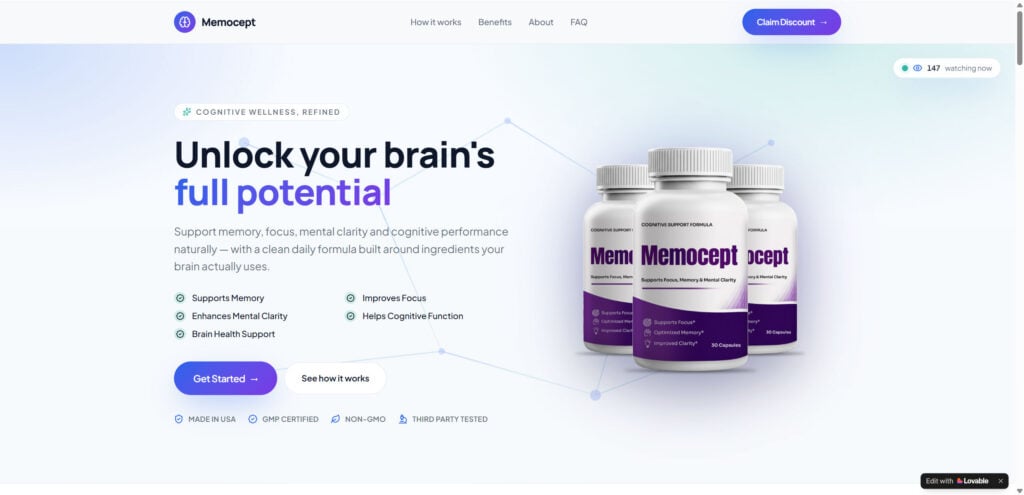
Memocept, memory drops, honey-based formulas, and other private-label supplements may appear at the end. The name is not the stable part of the campaign. Advertisers can replace the bottle while keeping the Bill Gates story, fake interview, and promise of restored memory.
This article investigates the narrative rather than endorsing any one product. The central deception is the false association with Gates and the unsupported claim that a commercial supplement cures Alzheimer’s disease.
- A real family history is turned into a fabricated personal cure story.
- Fake television reporting and AI-assisted video create a false endorsement.
- Honey, breakfast, or medication language eventually leads to a supplement.
- Rotating brands, bundles, and unclear merchant details complicate refunds.
What Bill Gates Actually Says About Alzheimer’s Disease
Gates’ public work focuses on accelerating scientific research, improving diagnosis, sharing data, and supporting the difficult process of developing treatments. His official writing does not announce a supplement, homemade honey cure, or consumer medication sold through a social media landing page.
That distinction matters. Funding research into a disease is not the same as inventing a retail product, and a personal family history is not permission for advertisers to attach his identity to a bottle.
There is no proven supplement cure for Alzheimer’s
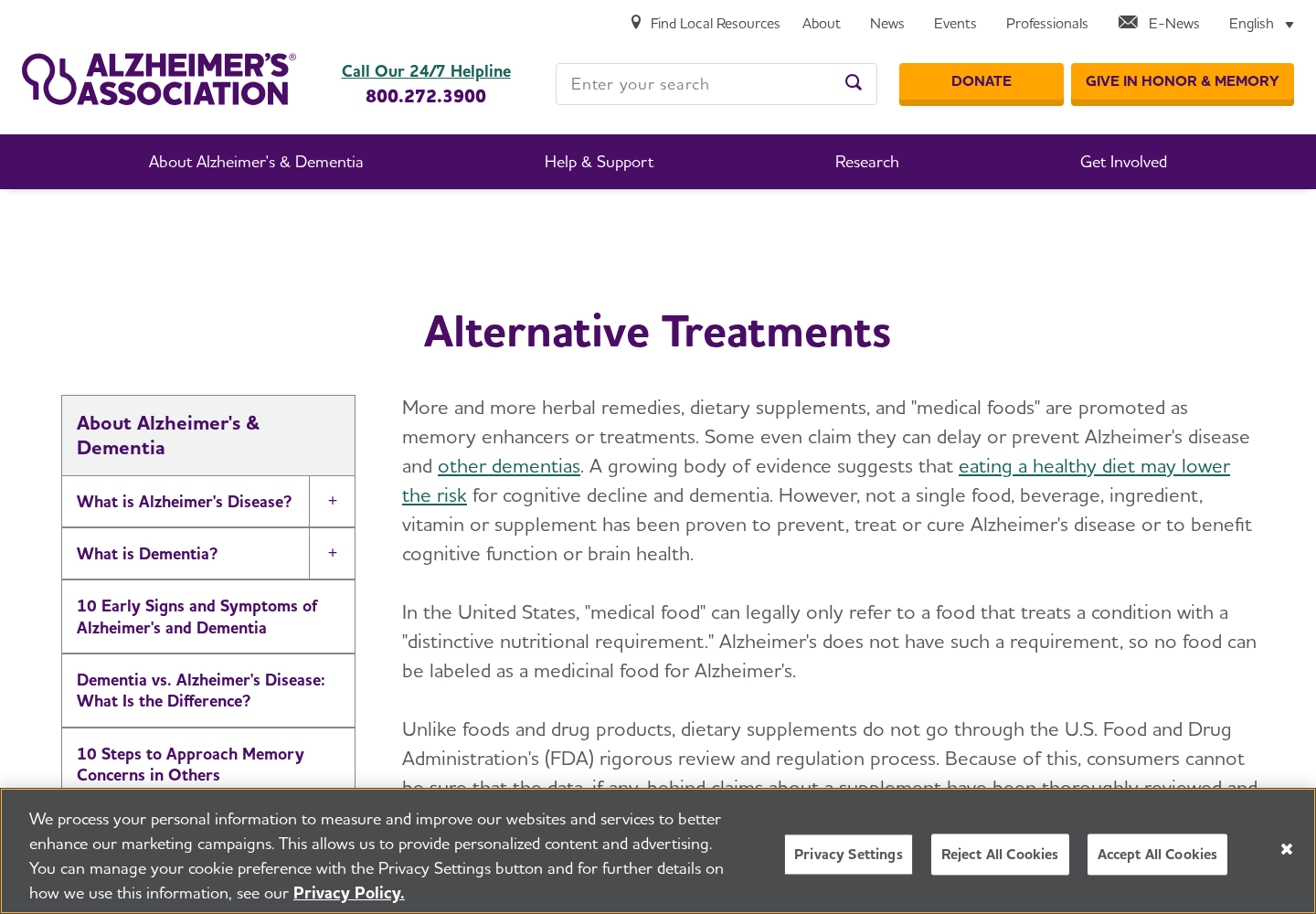
The Alzheimer’s Association states that no food, beverage, ingredient, vitamin, or supplement has been proven to prevent, treat, or cure Alzheimer’s disease. Some supplements can interact with prescribed medicines or create additional health risks.
The FDA has repeatedly warned companies that market unproven Alzheimer’s products. Claims that a supplement reverses dementia, restores memory, or works better than approved treatment are not made credible by words such as natural, breakthrough, doctor-formulated, or clinically inspired.
A real patient should never be rushed away from medical care
Memory problems can have many causes, including medication effects, vitamin deficiencies, depression, sleep disorders, infections, stroke, and neurodegenerative disease. A proper assessment matters because some causes may be treatable and others require careful planning.
A sales video cannot diagnose the viewer. Any page that encourages a family to replace professional evaluation with an undisclosed supplement is creating medical as well as financial risk.
How the Fake Bill Gates Cure Story Is Manufactured
The campaign does not need one completely synthetic video. Scammers can combine authentic conference footage, unrelated television clips, generated narration, altered subtitles, cloned audio, and a fake webpage.
A short social media clip may hide defects through compression and fast editing. A longer advertorial then supplies the missing context, telling viewers what the manipulated clip is supposed to mean.
Emotional details replace verifiable medical evidence
The narrator may claim Gates spent millions searching for a cure, tested the formula on a loved one, fought with pharmaceutical companies, or was forced to reveal the discovery after an interview leaked.
These stories are designed to feel more important than a clinical trial. Yet they provide no study registration, peer-reviewed results, transparent formula, treatment protocol, or confirmation from Gates’ official channels.
The product page creates the illusion of specificity
Once a bottle appears, ingredient graphics and scientific-sounding descriptions make the vague cure story feel tangible. A multi-bottle offer gives the impression that the visitor is purchasing a complete treatment program.
A polished label does not connect the product to Bill Gates, prove it was tested in people with Alzheimer’s disease, or establish that the manufacturer can safely make treatment claims.
How the Scam Works
Step 1: A sponsored video impersonates trusted public figures
The campaign begins on Facebook, Instagram, YouTube, or another ad platform. Bill Gates appears to discuss an Alzheimer’s medication, while a television presenter reacts as if the announcement is breaking news.
Other recognizable people may be added to the same story. Their presence is meant to transfer trust before the viewer has checked whether any of them published the clip.
Step 2: The click opens a fake news report
The destination may look like CNN, CBS, Fox News, a health magazine, or a respected university page. Logos, colors, author boxes, and comments are copied to make the sales content appear editorial.
Look at the full domain, not the page design. A broadcaster’s logo on an unrelated address does not make the page part of that broadcaster.
Step 3: A dramatic interview presents an unverified cure
The video claims that Alzheimer’s has a simple hidden cause and that an overlooked ingredient can reverse it. Honey, cinnamon, a breakfast ritual, or a proprietary nutrient may be described as the missing answer.
Complex medical reality is replaced with a villain-and-hero story. Doctors or drug companies supposedly suppress the discovery, while Gates is presented as the independent hero willing to reveal it.
Step 4: The story creates fear of waiting
Families are told that memory decline will accelerate unless they act now. Testimonials describe people recognizing loved ones again, returning to work, or regaining years of lost memories.
These extraordinary outcomes are not supported by verifiable patient records or clinical evidence. They are pressure points aimed at people facing an emotionally devastating diagnosis.
Step 5: A rotating supplement becomes the alleged treatment
Only after the viewer accepts the story does the product appear. Memocept or another memory supplement is presented as the ready-made form of the cure, sometimes with a claim that Gates, a doctor, or a television guest helped develop it.
Product names and formulas can change across campaigns. If the same cure supposedly works through different bottles, that is evidence of a reusable marketing narrative, not a stable medical discovery.
Step 6: The checkout pushes a multi-month order
Two, three, or six bottles are offered, with the largest package labeled as the best chance of success. A per-bottle figure may be more prominent than the total amount charged immediately.
Timers, low-stock notices, bonus bottles, and expiring discounts discourage policy checks. Buyers should record the final quantity, total, shipping charge, renewal language, and merchant identity before paying.
Step 7: Refunds and repeat charges expose the hidden structure
Some pages state that an order is one-time. Others may include autoship options, continuity plans, or follow-up refill offers. Do not assume that every page using the same story has identical billing terms.
If a customer later discovers an unexpected quantity or charge, support may route through a fulfillment company handling many brands. Return policies can require authorization, unopened bottles, tracked shipping, and strict deadlines.
A Real Victim Shows Why These Ads Are Dangerous
This is not a harmless internet rumor. In July 2026, Richmondside reported that an 82-year-old Richmond man lost more than $500 after encountering an Alzheimer’s deepfake campaign using public figures including Bill Gates, Steve Martin, and Anderson Cooper.
The man received 18 bottles of supplements. His experience illustrates how a believable endorsement can turn a vulnerable person’s hope into a large bundle order.
It also shows why families should respond calmly rather than blame the victim. These campaigns are engineered to imitate trusted television and exploit the urgency surrounding cognitive decline.
Problems Found Around Memocept-Branded Pages
Multiple websites using the Memocept name present conflicting business and product details. One page lists an Aurora, Colorado address and says purchases are one-time, while other pages identify entities or addresses in Utah, Washington, and the United Kingdom.
Visible formulas and guarantee periods also differ. One site presents a Bacopa and vitamin-based blend, while another lists ingredients such as arginine, citrulline, niacin, and beta-alanine. These pages may be separate sellers, affiliates, or lookalike operations, so consumers must verify the exact merchant shown on their own receipt.
The conflicts do not prove that every bottle is identical or that every seller uses a subscription. They do show why the brand name alone cannot establish who took the payment, made the product, or owes the refund.
Company, Address, and Fulfillment Checks
A rotating brand can conceal the legal seller
Find the company named at checkout and compare it with the terms, privacy policy, confirmation, package, and card statement. If the entities change from page to page, save all versions and deal with the merchant tied to your transaction.
The listed address may be only a package warehouse
The Aurora address shown on one Memocept page is also used as a return or fulfillment location by unrelated supplement offers. A shared warehouse can ship and receive bottles without being the headquarters, manufacturer, advertiser, or medical authority behind the claims.
Generic phone numbers and inboxes may not resolve a dispute
Call before ordering and ask the agent to identify the exact product, legal seller, total charge, refill status, return address, and refund deadline. A generic support inbox used across unrelated brands or a representative who cannot identify the merchant is a major warning.
Unknown production creates a health risk, not just a refund problem
Short-lived supplements may be mass-produced overseas, including in China, then relabeled for different campaigns. Origin alone does not prove that a bottle is dangerous, but unverifiable manufacturing, incomplete labels, missing batch testing, and unsupported disease claims remove essential safeguards.
Do not give an unknown supplement to a person with dementia without medical review. Older adults may take several medicines, have difficulty reporting side effects, or be especially vulnerable to interactions and dosing errors.
What to Do if You Have Fallen Victim to This Scam
- Preserve the complete funnel. Save the sponsored post, video, fake news page, product offer, checkout, terms, receipt, emails, package, label, and card descriptor. Record the date and amount of each charge.
- Stop additional billing. Contact the merchant in writing and cancel any order, autoship, refill program, or membership connected to the transaction. Request confirmation in writing.
- Contact the bank or card issuer. Explain the false endorsement, quantity expected, amount charged, and any repeat transactions. Ask about a dispute, merchant block, and card replacement when necessary.
- Arrange returns carefully. Obtain the proper authorization and address before shipping. Photograph the bottles, use tracking, keep proof of delivery, and do not rely on an address copied from a different Memocept website.
- Protect the affected person. Review statements for other unusual purchases, change reused passwords, enable multi-factor authentication, and consider placing trusted alerts on financial accounts with the person’s consent.
- Scan the device. If the page installed software, requested notification permissions, or opened suspicious downloads, scan with Malwarebytes. Use AdGuard to reduce malicious ads and tracking.
- Speak with the treating clinician. Do not replace prescribed care with the supplement. Bring the bottle, Supplement Facts panel, and lot information to a pharmacist or doctor, especially if any doses were taken.
- Report the fraud. Report the ad to the platform and submit details to the FTC. Significant losses, identity theft, or account compromise can also be reported to the FBI’s IC3.
Frequently Asked Questions
Did Bill Gates discover an Alzheimer’s medication cure?
No credible evidence supports that claim. His documented Alzheimer’s work involves research funding, diagnosis, data, and treatment development, not a retail supplement sold through social media.
Is the Bill Gates Alzheimer’s video real?
The promotional claim is not genuine. Campaigns can combine authentic footage with cloned voices, altered captions, generated scenes, and fake news pages to manufacture an endorsement.
Does honey reverse Alzheimer’s disease?
No food, drink, ingredient, vitamin, or supplement has been proven to cure Alzheimer’s disease. Honey imagery is an emotional and familiar prop in these sales stories, not evidence of an effective treatment.
Is Memocept proven to cure memory loss?
No reliable evidence shows that Memocept cures Alzheimer’s disease or reverses dementia. Supplement descriptions and customer testimonials are not substitutes for controlled clinical evidence.
Is Memocept always sold with a subscription?
No. One visible seller states that orders are one-time, while other funnels or follow-up offers may use different terms. Verify the exact checkout, receipt, policies, and subsequent statements for your purchase.
Why are there several different Memocept websites?
They may represent separate sellers, affiliates, or lookalike pages. Because their company details, guarantees, and formulas can conflict, use the domain, receipt, package, and card descriptor from the exact transaction when seeking help.
The Bottom Line
The Bill Gates Alzheimer’s medication cure is a fabricated story built from a real family history and false medical promises. Fake interviews, copied news pages, AI-assisted impersonation, and interchangeable supplements turn trust and fear into a pressured purchase.
Bill Gates’ support for Alzheimer’s research does not authenticate any bottle. Families should verify every endorsement through official channels, discuss treatment with qualified clinicians, and investigate the merchant before entering payment information.








