Beware of the Binance API Linked To Ledger Live Scam Texts
Written by: Thomas Orsolya
Published on:
Cryptocurrency scams are on the rise, and one of the latest tricks aims to steal your Binance account details by claiming your API has been linked to Ledger Live without authorization. This convincing scam leverages urgency and fear to trick victims into calling scammer-run numbers, potentially handing over sensitive information or even account access.
In this guide, we’ll break down exactly how the “Binance API Linked to Ledger Live” scam works, provide examples of the fraudulent messages, explain what to do if you receive one, and outline steps to take if you already fell victim.
Overview of the Binance API Linked to Ledger Live Scam
The Binance API Linked to Ledger Live scam is a form of social engineering attack that aims to steal cryptocurrency funds and personal information from Binance users. This scam starts with victims receiving a fake text message claiming their Binance API keys have been connected to Ledger Live without authorization.
The message is designed to create urgency and panic, tricking the recipient into calling a phone number provided to supposedly “remove” the unauthorized API linkage. However, in reality, the phone numbers route to criminal-run call centers controlled by the scammers themselves.
Once on the phone with the victim, scammers posing as Binance support agents use various manipulation tactics to gain login credentials, install remote access malware, or reset account passwords. This gives them control of the victim’s Binance account, allowing them to quickly drain funds from wallets and transfer to their own accounts.
Some specific examples of the tactics used include:
Asking for account email address and password to “confirm identity”
Instructing victims to download remote access apps like AnyDesk
Sending password reset links to steal access to accounts
Getting victims to reveal two-factor authentication codes
Extracting ID documents and selfies to facilitate identity theft
With the rise of decentralized finance and crypto adoption, scammers are honing in on new tactics to take advantage of inexperienced users. The Binance API Linked to Ledger Live scam demonstrates the lengths fraudsters will go to compromise accounts, including coordinating international criminal call centers.
Reports indicate that victims worldwide have received these scam texts, meaning this is a large-scale, well-organized effort targeting the millions of Binance users globally. The scam is also technically sophisticated, with scammers hacking phones to spoof legitimate Binance numbers on the texts they send.
How the Binance API Linked to Ledger Live Scam Works
The scammers behind this scam put a lot of thought into their process, maximizing urgency and believability. Here is exactly how this scam unfolds:
1. Victims Receive a Fraudulent Text
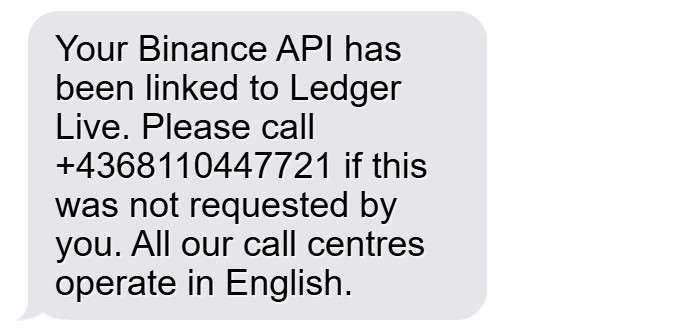
The scam begins with the victim receiving an unsolicited text message that appears to come from Binance. The message claims the recipient’s Binance API keys have been linked to Ledger Live without their authorization.
Here are some examples of the text message victims receive:
“Your Binance API has been linked to Ledger Live. Please call +1234567890 if this was not requested by you. All our call centers operate in English.”
“URGENT: Your Binance account’s API was recently linked to a Ledger Live device without your consent. Call +1 234-567-8910 immediately if you did not link the accounts.”
“ALERT: We have detected unauthorized activity linking your Binance API to a new Ledger Live account. If this was NOT you, call 234-555-9876 right away to secure your account.”
The messages create a sense of urgency by using attention-grabbing words like “URGENT”, “ALERT”, and “immediately”. Claims that “unauthorized activity” was detected makes the victim believe their funds are at risk.
2. The Text Instructs Recipients to Call a Number
After creating a panic that account access may be compromised, the text provides a phone number to call. This gives the illusion that calling will “resolve” the API linkage issue and protect their funds.
In reality, the phone numbers in these messages route to criminal-run call centers. The scammers who answer these calls are the ones who sent the fake texts in the first place.
3. Scammers Posing as Binance Support Answer the Calls
When the victim calls the number provided, the scammer pretends to be from Binance support. They reassure the victim that they reached the right place to address the “unauthorized” API-Ledger Live linkage.
The scammers often:
Speak English to sound more legit
Claim they need to “verify account ownership” before removing the API connection
Ask for personal info like your Binance login email
Instruct you to download remote access software to “diagnose the problem”
Pressure you to act quickly without thinking
4. Scammers Use the Call to Steal Personal Information and Funds
With the victim on the phone, scammers now have free reign to employ social engineering tactics to gain account access or steal personal information.
Common goals include:
Getting your Binance account password – They may straight up ask for your current password to “verify the account” and remove the API connection. But don’t fall for it!
Installing remote access software – The scammers will try convincing you to download software like AnyDesk that gives them control over your computer and accounts.
Resetting your account password – They may claim the only way to secure your account is resetting the password. But the reset link goes to the scammer, not you.
Gaining access to other accounts – With personal info obtained, they may compromise your email, bank account or other cryptocurrency exchanges.
Stealing your identity – Any personal details gathered can facilitate identity theft down the road.
Essentially, the scammers leverage the call to manipulate you into giving up login credentials, install malware, or reset your password to lock you out of your own accounts. Once they gain access, your cryptocurrency funds can be stolen quickly.
What to Do If You Receive a Binance API Linked to Ledger Live Scam Text
If you receive one of these scam texts claiming your Binance API is linked to Ledger Live, stay calm and avoid calling the number. Here are the steps to take:
Don’t panic – The message is fake and your funds are likely OK. Scammers are trying to alarm you into making a mistake.
Report the scam text – Forward the text message to your cell phone provider’s scam reporting number to help identify and block the sender.
Call Binance directly – Look up Binance’s real customer support phone number on their official website to verify if any unauthorized changes were made.
Review account activity – Log into your Binance account directly and thoroughly review recent activity for any signs of unauthorized access or changes.
Reset your password – As a precaution, reset your Binance account password directly through the real Binance website. Avoid password reset links in texts or emails.
Enable 2FA – If you haven’t already, enable two-factor authentication on your Binance account for extra protection.
Ignore instructions in the text – Do not call the number in the scam text or follow any instructions provided. The scammers are posing as Binance support.
Warn others – Let family, friends, and fellow crypto traders know about this scam so they don’t fall victim. Posting about it on social media can help spread awareness.
The bottom line is never call numbers or follow links provided in unsolicited texts, even if they sound very urgent or legitimate. Go directly to the real company’s website or app to verify any account changes.
What to Do If You Called the Scam Number and Provided Information
If you unfortunately called the number provided in the scam text and gave up any personal information or access, here are the steps to take immediately:
Contact Binance support – Call Binance’s real support line and explain you were scammed. They may be able to freeze the account if the scammer is actively transferring funds out.
Reset your password – If you did NOT provide your current Binance password, reset it immediately through the real Binance website to lock out the scammers.
Remove linked devices – Go to your Binance account settings and remove any newly linked devices, apps or API connections the scammers may have set up.
Audit account activity – Thoroughly review your entire Binance account history to identify any signs of unauthorized access, withdrawals, or API connections.
Monitor closely – Keep a close eye on your Binance account activity over the next few weeks to ensure the scammers do not regain access.
Enable account protections – Make sure you have all of Binance’s security features enabled, like 2FA, anti-phishing codes, and withdrawal address management.
Change passwords – As a precaution, change passwords for any other accounts for which you provided login credentials over the call.
Scan devices – Run comprehensive antivirus scans to remove any remote access malware the scammers had you download during the call.
Alert bank/credit cards – If you provided financial account details, contact your bank and credit card companies to monitor for fraudulent use.
Place fraud alert – Consider placing a fraud alert on your credit reports in case the scammers try opening new accounts in your name.
Report the scam – File a scam report with the FTC and Internet Crime Complaint Center to help authorities track these criminal operations.
The earlier you take action, the better your chances of securing accounts and limiting damage. But even if the scammers emptied your Binance account, reporting the unauthorized transactions can still help get those funds back.
Is Your Device Infected? Run a Free Malware Scan
Slow performance, constant pop-ups, or strange behavior? These are classic signs of a malware infection. The fastest way to find out is to scan your device with Malwarebytes Anti-Malware Free — one of the most trusted malware removal tools available.
The free version detects and removes the most common threats, including:
Adware — the cause of those annoying pop-ups
Browser hijackers — unwanted redirects and changed homepages
Trojans and spyware — hidden programs stealing your data
Potentially unwanted programs (PUPs) — software you never asked for
👉 Select your device below — Windows, Mac, or Android — then follow the simple steps to download Malwarebytes, scan your system, and remove any threats it finds. The whole process takes about 5 minutes.
Malwarebytes for WindowsMalwarebytes for MacMalwarebytes for Android
Run a Malware Scan with Malwarebytes for Windows
Malwarebytes is one of the most popular and trusted anti-malware tools for Windows — and it’s completely free for removing infections. It catches threats that many antivirus programs miss, including adware, browser hijackers, and trojans. Follow the steps below to scan and clean your PC in just a few minutes.
Download Malwarebytes
Click the button below to download the latest version of Malwarebytes for Windows from the official source. The free version is all you need — it will scan your computer and remove adware, browser hijackers, and other malicious software at no cost.
(The link opens in a new page where your download will start)
Install Malwarebytes
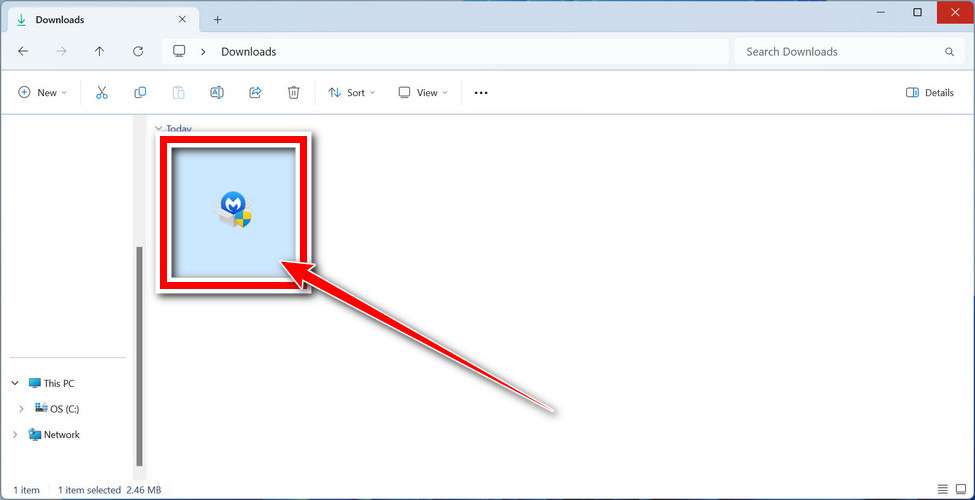
When the download finishes, open your Downloads folder and double-click the MBSetup file. If Windows shows a User Account Control pop-up, click “Yes” to allow the installation.
Follow the On-Screen Prompts to Install Malwarebytes
The setup wizard will walk you through a few quick screens:
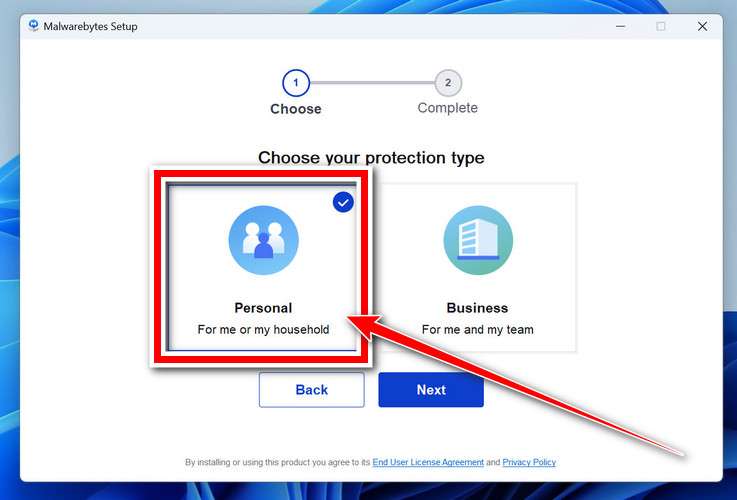
Choose where you’re installing the program — “Personal Computer” or “Work Computer” — then click Next.
Malwarebytes will now install on your device. This usually takes under a minute.
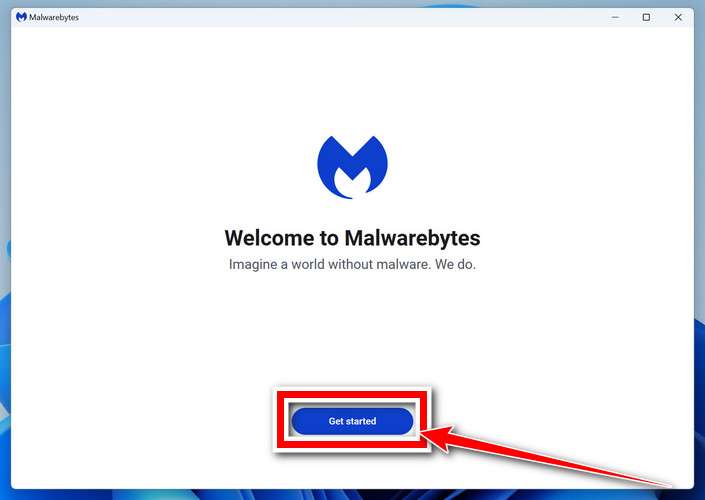
When installation is complete, the “Welcome to Malwarebytes” screen will open automatically.
On the final screen, click Open Malwarebytes to launch the program.
Enable “Scan for Rootkits”
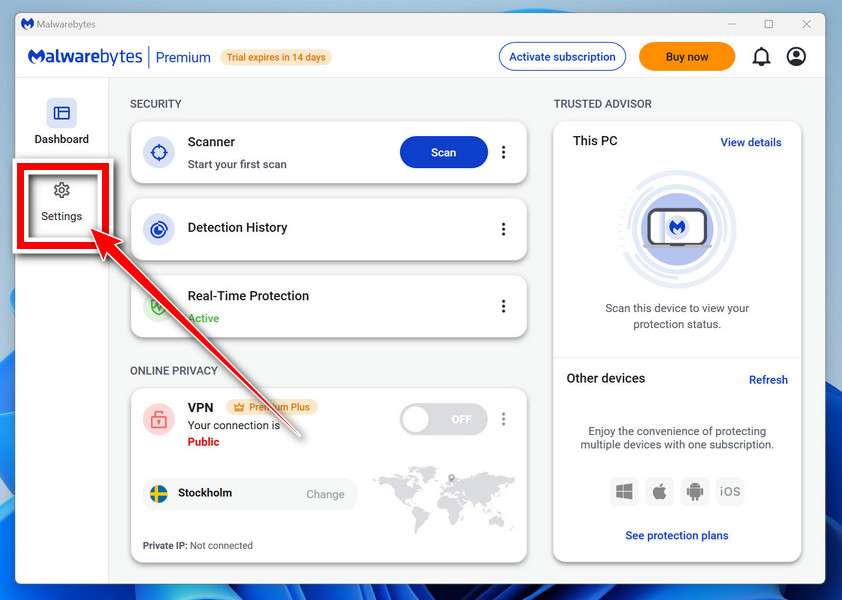
Before scanning, turn on rootkit detection so Malwarebytes can find even the most hidden threats. Click the Settings gear icon on the left side of the screen.
In the settings menu, find “Scan for rootkits” and click the toggle so it turns blue.
Done? Click “Dashboard” in the left pane to return to the main screen.
Start the Scan
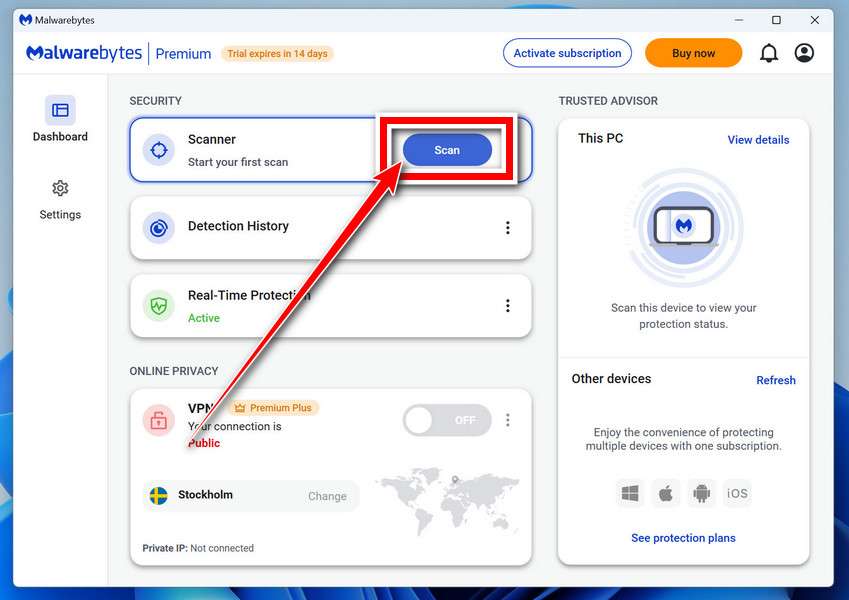
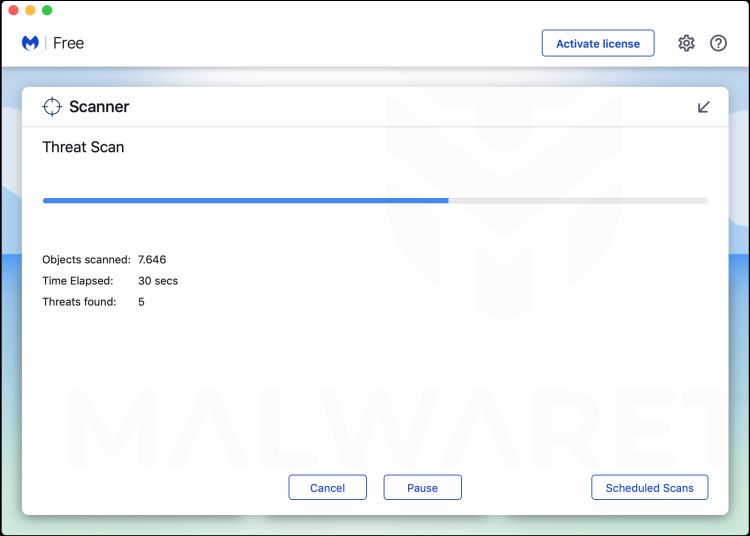
Click the blue Scan button. Malwarebytes will automatically update its virus database and start checking your computer for malware.
Wait for the Scan to Finish
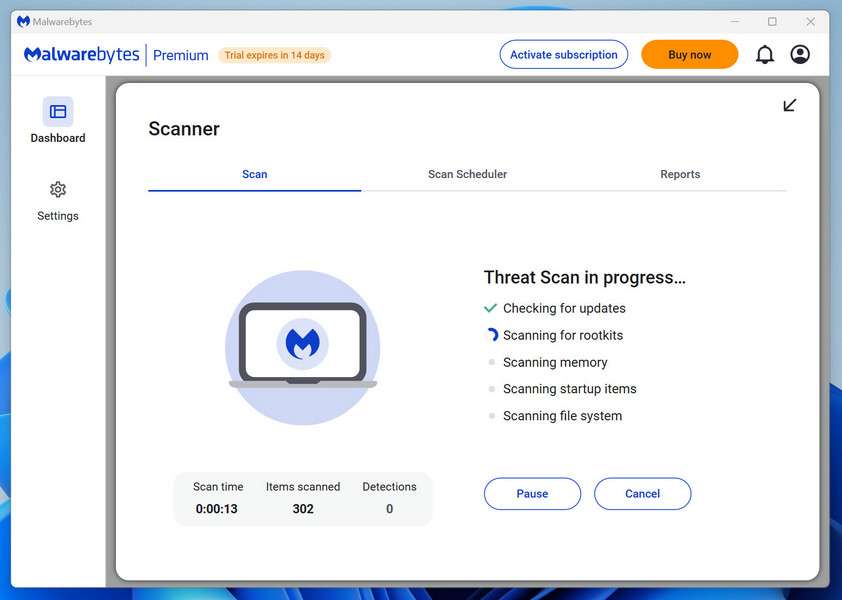
The scan checks your entire system for browser hijackers and other malicious programs, so it can take several minutes. Feel free to do something else — just check back occasionally to see the progress.
Quarantine the Detected Threats
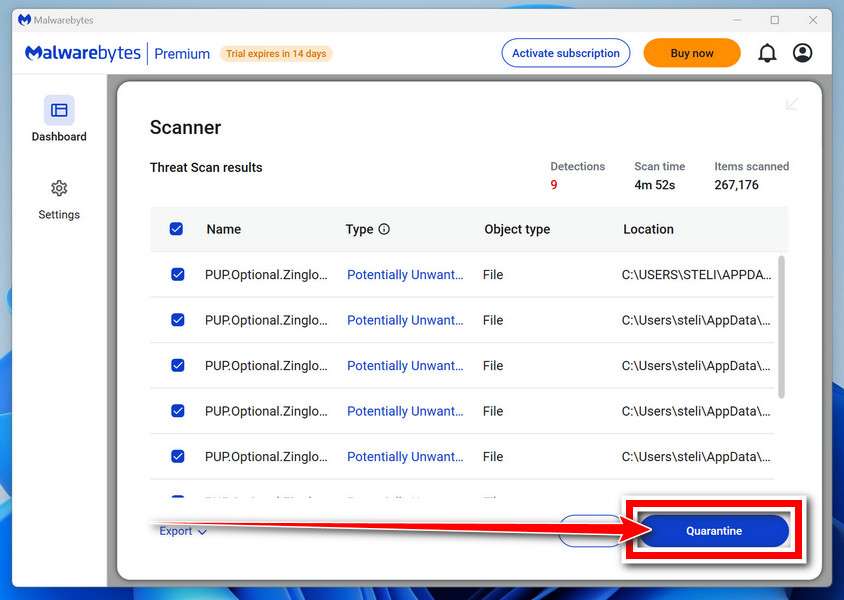
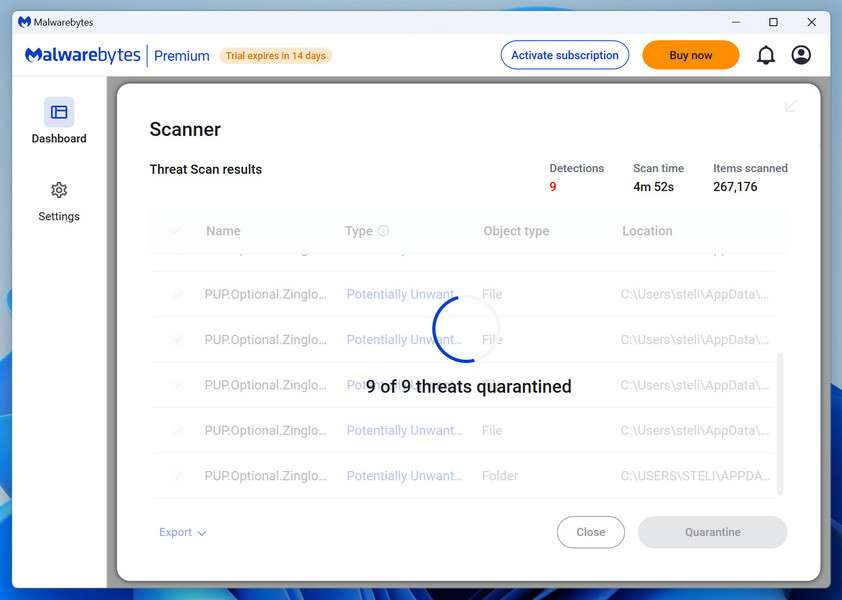
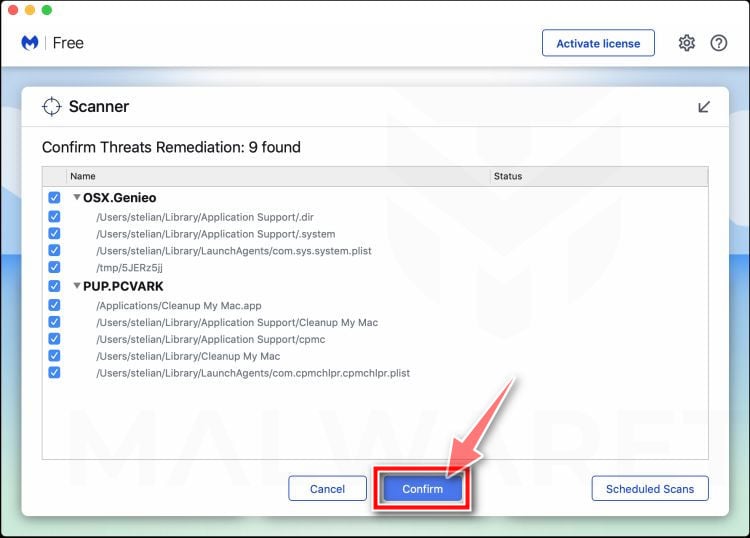
When the scan is done, you’ll see a list of everything Malwarebytes found — malware, adware, and potentially unwanted programs. Click the “Quarantine” button to remove all of them at once.
Malwarebytes will now remove the malicious files and registry entries and move them safely into quarantine.
Restart Your Computer
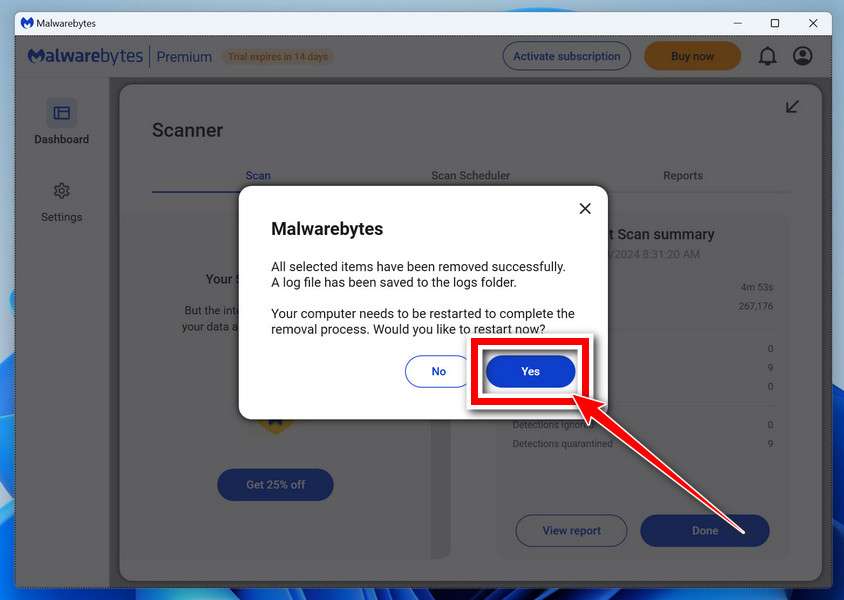
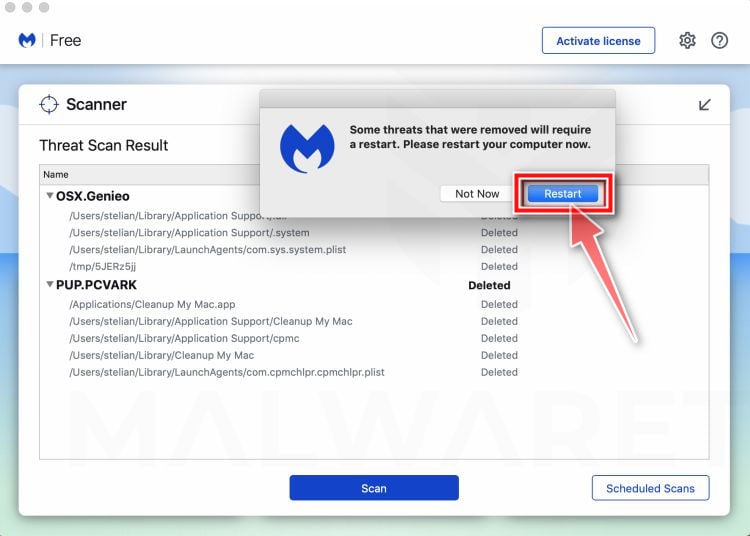
Some threats can only be fully removed after a reboot. If Malwarebytes asks you to restart, click Yes. Once you’re logged back in, your PC is clean and you can continue with the next steps in this guide.
When the scan finishes, click Quarantine to remove everything Malwarebytes found. That’s it — your Windows PC is now clean of trojans, adware, and other malware, and should be back to running smoothly.
If your current antivirus allowed this malicious program on your computer, you may want to consider purchasing Malwarebytes Premium to protect against these types of threats in the future. If you are still having problems with your computer after completing these instructions, then please follow one of the steps:
Malwarebytes for Mac is a free on-demand scanner that removes the malware other security software tends to miss — adware, browser hijackers, and unwanted programs included. Cleaning an infected Mac with Malwarebytes has always been completely free, and it’s our go-to recommendation. Follow the steps below to scan and clean your Mac in just a few minutes.
Download Malwarebytes for Mac
Click the button below to download the latest version of Malwarebytes for Mac.
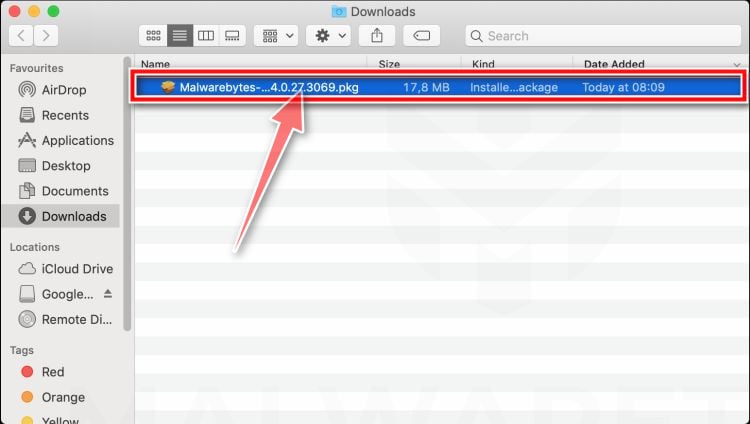
When the download finishes, open your Downloads folder and double-click the setup file to begin the installation.
Follow the On-Screen Prompts to Install Malwarebytes
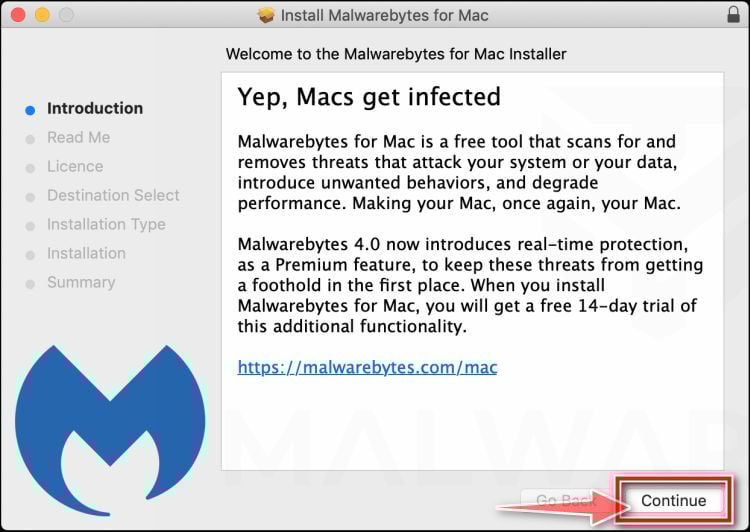
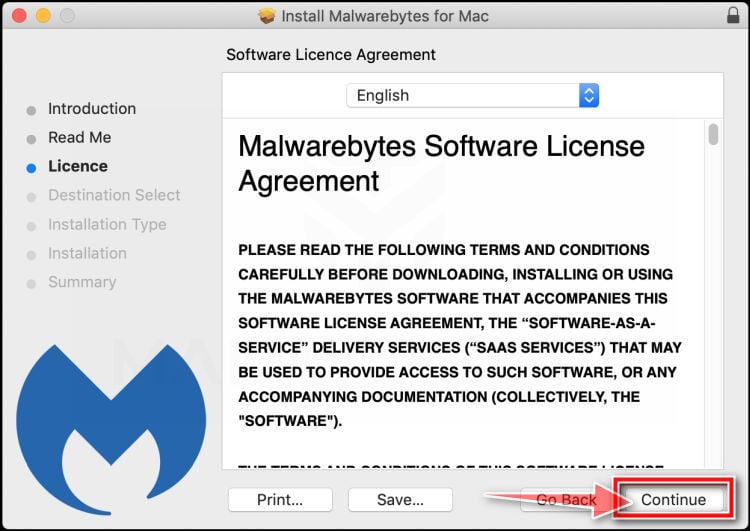
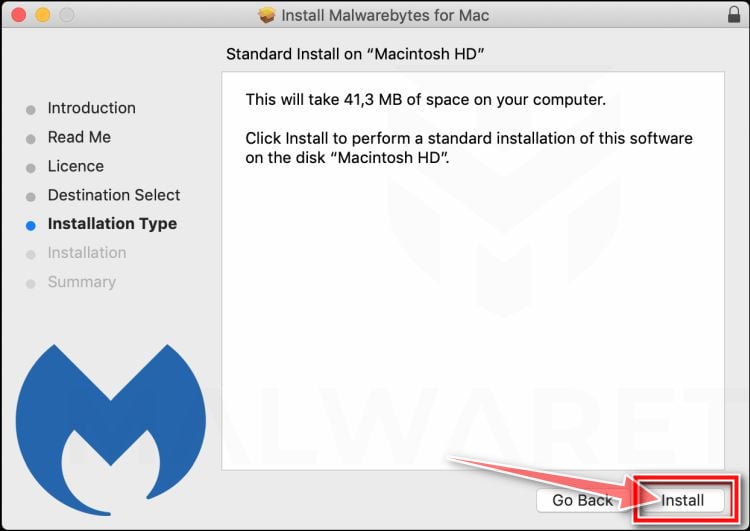
The Malwarebytes for Mac Installer will guide you through a few quick screens. Click “Continue” and keep following the prompts until the installation completes.
When the installation is complete, Malwarebytes opens to the Welcome to Malwarebytes screen. Click “Get started“.
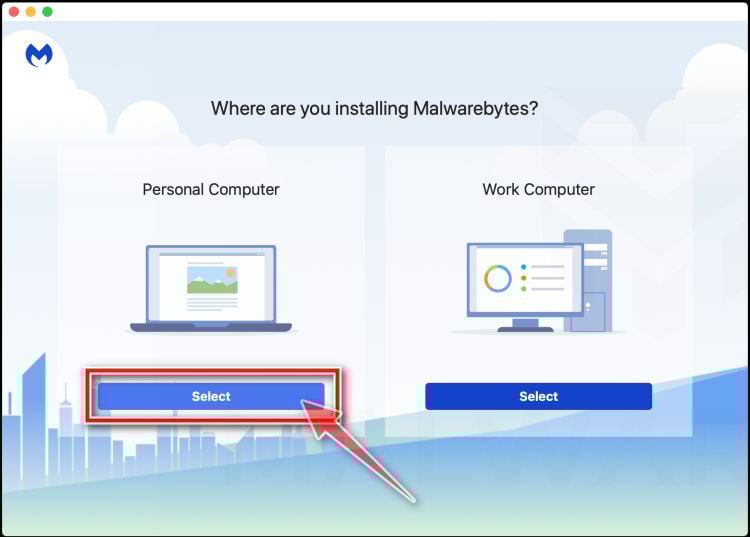
Select “Personal Computer” or “Work Computer”
Malwarebytes will ask what type of computer you’re installing it on. Click either Personal Computer or Work Computer, whichever applies.
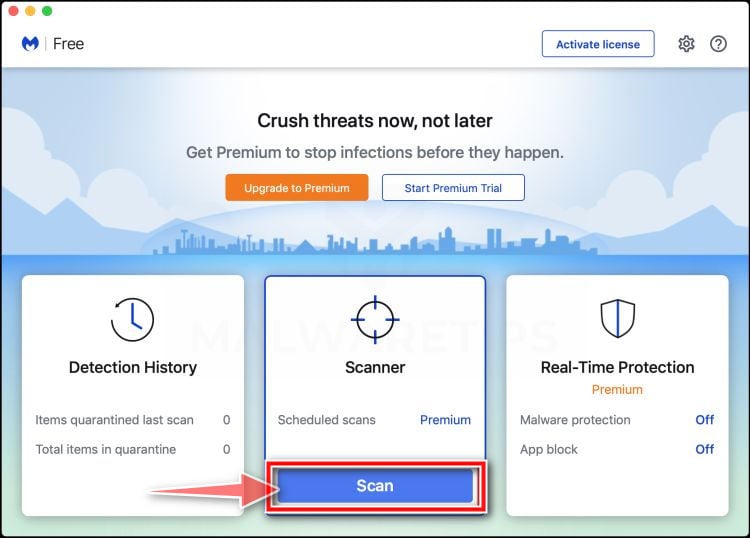
Start the Scan
Click the “Scan” button. Malwarebytes will automatically update its detection database and begin checking your Mac for malware.
Wait for the Scan to Finish
Malwarebytes will scan your Mac for adware, browser hijackers, and other malicious programs. This can take a few minutes, so feel free to do something else — just check back occasionally to see the progress.
Quarantine the Detected Threats
When the scan is done, you’ll see a list of everything Malwarebytes found. Click the “Quarantine” button to remove all the threats at once.
Restart Your Mac
Malwarebytes will now remove all the malicious files it found. Some threats can only be fully removed after a reboot — if Malwarebytes asks you to restart, allow it. Once you’re logged back in, your Mac is clean.
Once the scan is done, remove every threat it detected. Your Mac is now free of adware, rogue browser extensions, and other potentially harmful software.
If your current antivirus allowed a malicious program on your computer, you might want to consider purchasing the full-featured version of Malwarebytes Anti-Malware to protect against these types of threats in the future. If you are still experiencing problems while trying to remove a malicious program from your computer, please ask for help in our Mac Malware Removal Help & Support forum.
Run a Malware Scan with Malwarebytes for Android
Malwarebytes for Android automatically detects and removes dangerous threats like malware and ransomware so you don’t have to worry about your most-used device being compromised. Aggressive detection of adware and potentially unwanted programs keeps your Android phone or tablet running smooth.
Download Malwarebytes for Android.
You can download Malwarebytes for Android by clicking the link below.
In the Google Play Store, tap “Install” to install Malwarebytes for Android on your device.
When the installation process has finished, tap “Open” to begin using Malwarebytes for Android. You can also open Malwarebytes by tapping on its icon in your phone menu or home screen.
Follow the on-screen prompts to complete the setup process
When Malwarebytes will open, you will see the Malwarebytes Setup Wizard which will guide you through a series of permissions and other setup options. This is the first of two screens that explain the difference between the Premium and Free versions. Swipe this screen to continue. Tap on “Got it” to proceed to the next step. Malwarebytes for Android will now ask for a set of permissions that are required to scan your device and protect it from malware. Tap on “Give permission” to continue. Tap on “Allow” to permit Malwarebytes to access the files on your phone.
Update database and run a scan with Malwarebytes for Android
You will now be prompted to update the Malwarebytes database and run a full system scan.
Click on “Update database” to update the Malwarebytes for Android definitions to the latest version, then click on “Run full scan” to perform a system scan.
Wait for the Malwarebytes scan to complete.
Malwarebytes will now start scanning your phone for adware and other malicious apps. This process can take a few minutes, so we suggest you do something else and periodically check on the status of the scan to see when it is finished.
Click on “Remove Selected”.
When the scan has been completed, you will be presented with a screen showing the malware infections that Malwarebytes for Android has detected. To remove the malicious apps that Malwarebytes has found, tap on the “Remove Selected” button.
Restart your phone.
Malwarebytes for Android will now remove all the malicious apps that it has found. To complete the malware removal process, Malwarebytes may ask you to restart your device.
After the scan, tap Remove Selected to delete all detected threats. Your Android phone is now clean — no more malicious apps, adware, or browser redirects.
If your current antivirus allowed a malicious app on your phone, you may want to consider purchasing the full-featured version of Malwarebytes to protect against these types of threats in the future. If you are still having problems with your phone after completing these instructions, then please follow one of the steps:
Restore your phone to factory settings by going to Settings > General management > Reset > Factory data reset.
Now that your device is clean, keep it that way. Most infections start with a malicious ad or a fake download button — so blocking them at the source is your best defense.
We recommend AdGuard, which blocks malicious ads, phishing pages, and dangerous redirects before they can reach you.
The Bottom Line: How to Avoid Falling Victim to the Binance API Linked to Ledger Live Scam
The “Binance API Linked to Ledger Live” scam can be very convincing thanks to the urgency created and professional criminal call centers involved. But with the right knowledge, these fraudsters can be avoided.
Here are some final tips on steering clear of this scam:
Be skeptical of all unsolicited messages – Never call numbers or click links without verifying the source first. Real companies won’t threaten account access via text.
Go directly to the source – If you receive an alarming message about your accounts, open the real app or website to check activity.
Don’t panic – Scammers want you to panic and act without thinking. Stay calm and think before providing any info.
Enable security protections – Use all available account security features like 2FA, address whitelisting, and transaction signing to prevent unauthorized access.
Keep info private – Never provide sensitive account details, passwords or remote access to your devices to anyone who contacts you out of the blue.
Warn others – Share information about new scams targeting the crypto community so fewer people fall victim in the future.
Report scams – File reports about scam texts, emails and calls to help authorities identify and stop criminal organizations before they target more victims.
The Binance API Linked to Ledger Live scam can seem legitimate and urgent in the moment. But armed with knowledge of how these scams operate, crypto traders can keep their accounts and funds safe.
Being vigilant, verifying requests through official channels, and enabling account security protections will stop these fraudsters in their tracks. Spreading awareness is also key, so fewer innocent victims get caught up in the fear and urgency these scammers manufacture.
Stay safe out there by keeping calm, thinking critically, and using common sense when contacted about your accounts. Following security best practices will keep your cryptocurrency safe from even the most convincing and sophisticated scams.
Frequently Asked Questions About the Binance API Linked to Ledger Live Scam
1. How do I know if a text about my Binance API being linked to Ledger Live is a scam?
Any unsolicited text message claiming your Binance API was linked to Ledger Live without authorization should be treated as a scam attempt. Legitimate notifications from Binance would come through the official mobile app, not via text from an unknown number. If the message creates urgency and provides a number to call, it is definitely a scam.
2. What are the red flags of the Binance Ledger Live scam text?
Red flags include:
Originating from an unknown number, not the Binance app.
Claims of “unauthorized” API linkage or account activity.
Words creating urgency like “URGENT” or “Alert”.
A phone number to call to supposedly “remove” the linkage.
Threats that your funds are at risk if you don’t call.
3. What happens if I call the number in the Binance Ledger Live scam text?
The number routes to a scam call center run by fraudsters. They will pretend to be Binance support and use social engineering tactics to try and steal your account credentials, personal information, or get you to install remote access malware. Never call numbers provided in unsolicited texts.
4. Should I be concerned that my Binance account was actually compromised?
The texts are sent en masse to phone numbers. Your account has likely not been accessed unless you called the number and provided login details to the scammers. But do audit account activity directly through the real Binance app/site to be sure.
5. How can I report the scam text to help prevent others from falling victim?
Forward the text to 7726 (spells SPAM) or your provider’s scam reporting number. You can also report to the FTC and Internet Crime Complaint Center to aid law enforcement in tracking the scammers.
6. What should I do if I already called the number and provided information?
Immediately reset your account password on the real Binance site, remove linked devices, enable 2FA, monitor account activity closely, and contact Binance support. Also change other account passwords provided over the call as a precaution.
7. How can I protect my Binance account from this scam moving forward?
Never provide info or install software from unsolicited contacts. Enable all of Binance’s security features like 2FA, address whitelisting, and transaction signing. Be vigilant against phishing attempts and always go directly to the real Binance app/site.
8. How can I spot potentially fraudulent calls, texts, or emails in the future?
Verify the source directly with the company. Be skeptical of any urgency tactics, threats about account access being lost, or requests for sensitive information or passwords. Calls/texts with suspicious numbers are red flags.
9. Where can I learn more about cryptocurrency scams targeting Binance users?
Binance has educational resources warning users about different scam tactics to watch out for. You can also find the latest crypto scams news and alerts from reputable crypto security websites.
10 Rules to Avoid Online Scams
Here are 10 practical safety rules to help you avoid malware, online shopping scams, crypto scams, and other online fraud. Each tip includes a quick “if you already got hit” action.
Stop and verify before you click, log in, download, or pay.
Most scams win by creating urgency. Verify using a trusted method: type the website address yourself, use the official app, or call a known number (not the one in the message).
If you already clicked: close the page, do not enter passwords, and run a malware scan.
Keep your operating system, browser, and apps updated.
Updates patch security holes used by malware and malicious ads. Turn on automatic updates where possible.
If you saw a scary “update now” pop-up: close it and update only through your device settings or the official app store.
Use layered protection: antivirus plus an ad blocker.
Antivirus helps block malware. An ad blocker reduces scam redirects, phishing pages, and malvertising.
If your browser is acting weird: remove unknown extensions, reset the browser, then run a full scan.
Install apps, software, and extensions only from official sources.
Avoid cracked software, “keygens,” and random downloads. During installs, choose Custom/Advanced and decline bundled offers you do not recognize.
If you already installed something suspicious: uninstall it, restart, and scan again.
Treat links and attachments as untrusted by default.
Phishing often impersonates delivery services, banks, and popular brands. If it is unexpected, do not open attachments or log in through the message.
If you entered credentials: change the password immediately and enable 2FA.
Shop safely: research the store, then pay with protection.
Be cautious with brand-new stores, “closing sale” stories, and prices that make no sense. Prefer credit cards or PayPal for dispute options. Avoid wire transfers, gift cards, and crypto payments.
If you already paid: contact your card issuer or PayPal quickly to dispute the transaction.
Crypto rule: never pay a “fee” to withdraw or recover money.
Common patterns include fake profits, then “tax,” “gas,” or “verification” fees. Another is a “recovery agent” who demands upfront crypto.
If you already sent crypto: stop paying, save evidence (wallet addresses, TXIDs, chats), and report the scam to the platform used.
Secure your accounts with unique passwords and 2FA (start with email).
Use a password manager and unique passwords for every account. Enable 2FA using an authenticator app when possible.
If you suspect an account takeover: change passwords, sign out of all devices, and review recent logins and recovery settings.
Back up important files and keep one backup offline.
Backups protect you from ransomware and device failure. Keep at least one backup on an external drive that is not always connected.
If you suspect infection: do not connect backup drives until the system is clean.
If you think you are a victim: stop losses, document evidence, and escalate fast.
Move quickly. Speed matters for disputes, account recovery, and limiting damage.
Stop payments and contact: do not send more money or respond to the scammer.
Call your bank or card issuer: block transactions, replace the card if needed, and start a dispute or chargeback.
Secure your email first: change the email password, enable 2FA, and remove unfamiliar recovery options.
Secure other accounts: change passwords, enable 2FA, and log out of all sessions.
Scan your device: remove suspicious apps or extensions, then run a full malware scan.
Save evidence: screenshots, emails, order pages, tracking pages, wallet addresses, TXIDs, and chat logs.
Report it: to the payment provider, marketplace, social platform, exchange, or wallet service involved.
These rules are intentionally simple. Most online losses happen when decisions are rushed. Slow down, verify independently, and use payment methods and account controls that give you recourse.
Thomas is an expert at uncovering scams and providing in-depth reporting on cyber threats and online fraud. As an editor, he is dedicated to keeping readers informed on the latest developments in cybersecurity and tech.