

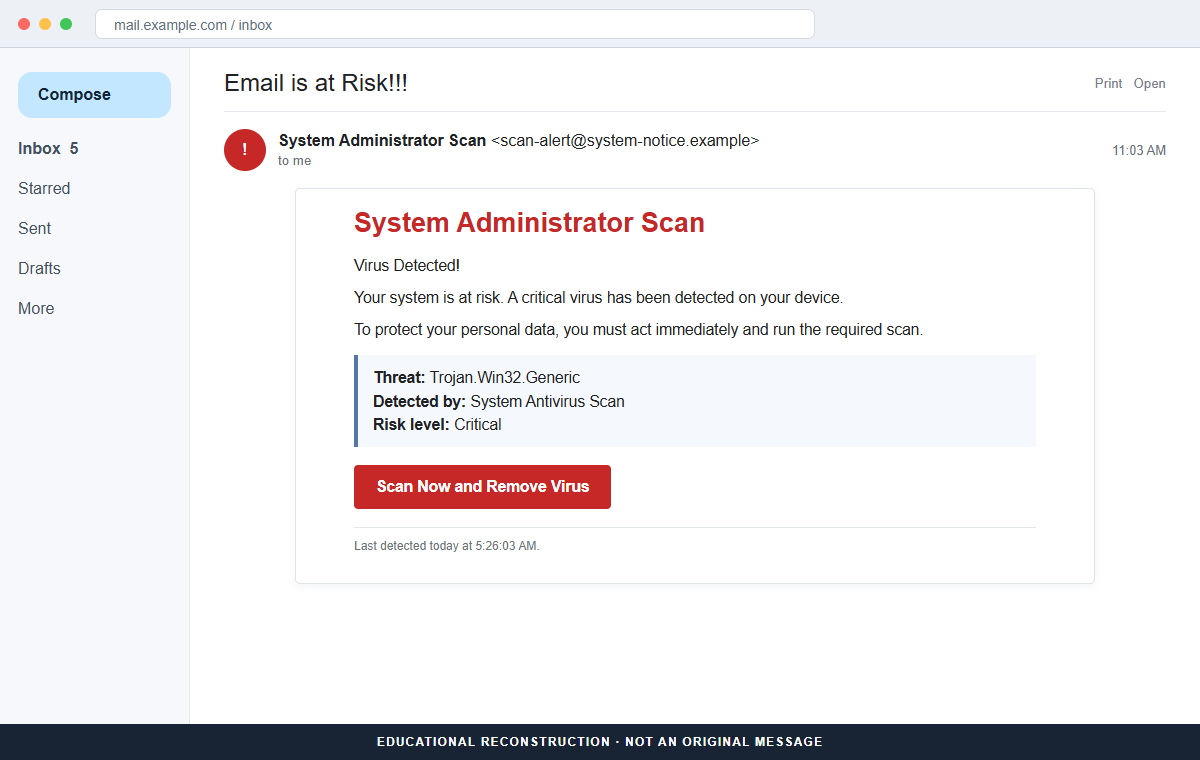
An email titled Email is at Risk!!! says Trojan.Win32.Generic was detected on your device. The risk is marked Critical, and a Scan Now button promises to remove the threat before personal data is stolen.
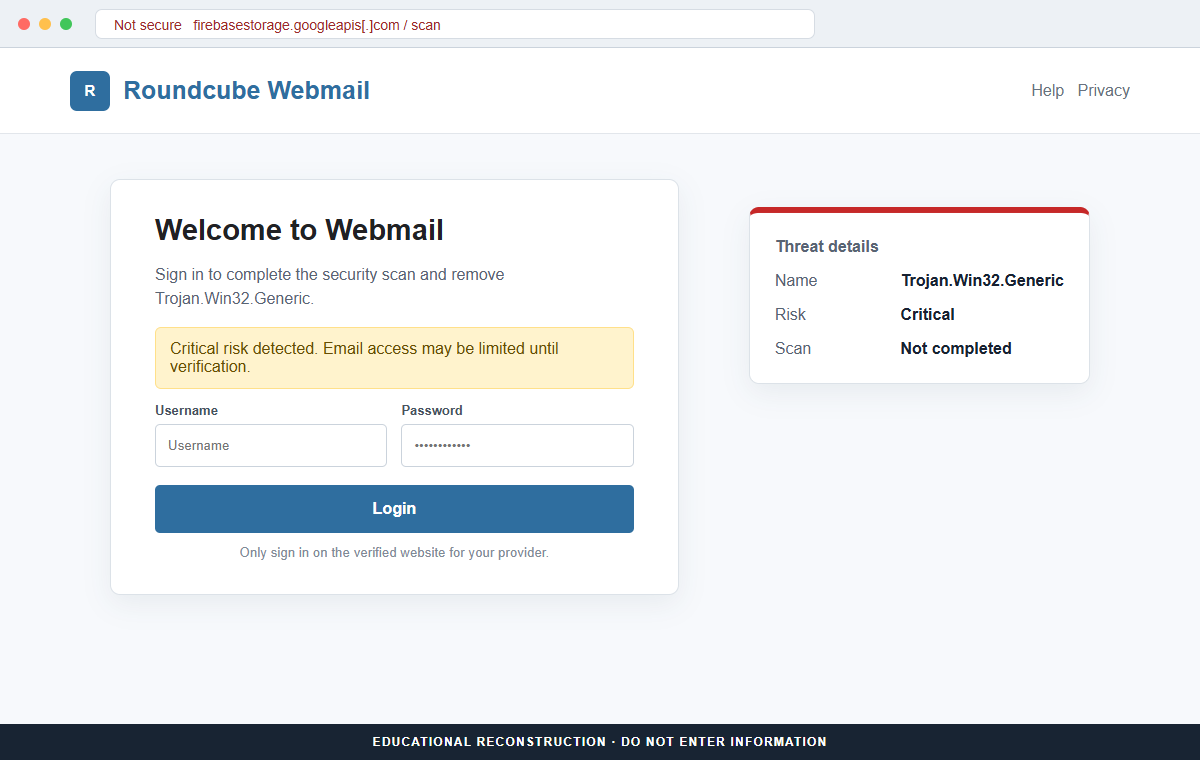
The Critical Virus Detected email scam does not scan the computer. Its button leads to a fake webmail sign-in where a Roundcube dialog is placed over a blurred provider page and asks for the mailbox password.
The page may be hosted on Google's Firebase storage, but that does not make it a Google security service. Attackers can abuse legitimate cloud infrastructure to publish content that the provider neither wrote nor endorsed.
No actual infection is demonstrated by the message. The confirmed danger is credential theft, although anyone who downloaded or installed something from the page should also check the device for malware.
Overview
The alert invents a named Trojan and scan result
The message claims a System Antivirus Scan detected Trojan.Win32.Generic. It lists a critical risk level and a timestamp to resemble the results panel of a security product.
The name is generic and the scan details are only HTML text inside an email. The sender cannot prove a device infection by placing a threat label and current date in the message.
Scan Now opens a login instead of an antivirus tool
The call-to-action says Scan Now and Remove Virus. Clicking it does not launch Windows Security, an installed antivirus program, or a verified vendor scanner.
It opens an adaptive phishing page on Firebase storage. A Roundcube Welcome to Webmail dialog requests a username and password over a provider-themed background.
The mailbox, not the Trojan, is the real target
The page cannot remove a Windows threat by collecting an email password. Credentials entered in the dialog can be delivered directly to the campaign operator.
A stolen inbox exposes messages, password resets, contacts, and connected services. The false malware story is simply the pressure used to make an unrelated webmail login feel necessary.
- The subject says Email is at Risk!!!
- A generic System Administrator Scan claims to be the sender.
- Trojan.Win32.Generic is presented as the detected threat.
- The risk level is marked Critical.
- A timestamp makes the alert look recent.
- Scan Now and Remove Virus opens a web page instead of antivirus software.
- A Roundcube login appears over blurred provider branding.
- The form collects webmail credentials and performs no scan.
Why a Named Virus Can Make a Fake Alert Feel Technical
Security products often display threat names that are unfamiliar to ordinary users. A label such as Trojan.Win32.Generic sounds plausible precisely because it is technical, broad, and difficult to verify from memory.
The word Critical creates a time penalty for skepticism. A recipient may fear that every second allows the supposed Trojan to steal files, passwords, or banking information.
A current timestamp adds another layer of false precision. It suggests a recent scan occurred in the background, even though an email sender has no automatic view of the recipient's device scan history.
The campaign connects device security to email security by claiming the mailbox is at risk. That bridge explains why a login appears after a virus warning, even though the password cannot disinfect the computer.
Cloud hosting further softens suspicion. A Firebase address contains a recognizable Google service name, but the page content can still belong to an unrelated customer or attacker.
How a Real Windows Malware Check Works
Microsoft directs Windows users to open the Windows Security app and use Virus & threat protection to review current threats and start scans. The results appear inside the trusted application, not in a random email login.
Windows Security can scan a specific file, run a full scan, or use Microsoft Defender Offline for a deeper check. None of those actions requires entering a mailbox password into Roundcube.
A legitimate third-party antivirus alert should also appear inside the installed product, its verified account, or an administrator console. The product name, affected file, action taken, and scan history can be checked there.
The Roundcube overlay remains a credential form regardless of the blurred provider in the background. That inconsistency reveals that the page is a generic phishing kit rather than a security tool tailored to the device.
The documented campaign did not confirm Trojan.Win32.Generic or any other infection. Treat the email as phishing, then run an independent scan only if reassurance is needed or the site caused a download.
How the Critical Virus Detected Email Scam Works
Step 1: An alarming security email reaches the victim
The subject uses multiple exclamation points and says the email or device is at risk. The sender may call itself System Administrator Scan without identifying a real security vendor.
A department-style display name is ordinary text. The user should expect a matching alert inside the installed security product before trusting it.
Step 2: Trojan.Win32.Generic supplies false evidence
The body lists a threat name, scan engine, critical rating, and detection time. Those fields mimic an antivirus result and make the warning appear measured rather than speculative.
No file path, process, quarantine event, device ID, scan log, or vendor case number can be verified. The entire result exists only in the email.
Step 3: Urgency pushes the user toward Scan Now
The recipient is told to act immediately to protect personal data. Fear narrows attention to the large removal button and discourages opening the real security application first.
A legitimate tool does not need an email link to discover threats it supposedly already detected. Its own interface is the source of truth.
Step 4: Firebase hosts the fraudulent destination
The button opens content on firebasestorage.googleapis[.]com or related cloud infrastructure. A Google-owned host can store files for many customers, including content uploaded by abusers.
The address is not accounts.google.com, Windows Security, Microsoft Defender, or the website of a named antivirus vendor. Hosting is not identity.
Step 5: A Roundcube login is layered over provider branding
The page displays a blurred Gmail or other email interface behind a Welcome to Webmail dialog. The generic Roundcube form asks for a username and password.
The mismatch is revealing. A device scanner would request permission to scan files or direct the user to installed software, not ask for unrelated webmail credentials.
Step 6: The form captures the password
Submitting the dialog can send the credential to the attacker. The page may report a scan error, request another attempt, or redirect to real email.
Nothing about a successful redirect proves the Trojan was removed. It merely returns the victim to a familiar service after the credential has been exposed.
Step 7: Criminals exploit the inbox
Attackers can read mail, steal recovery codes, reset other services, and add forwarding rules. They may use stored invoices or documents to plan more targeted fraud.
The compromised address can send new virus warnings to trusted contacts. That creates a self-reinforcing chain in which a fake infection alert leads to real account abuse.
Company and Checkout Checks
Open Windows Security directly
Search for Windows Security from the Start menu and review Virus & threat protection. Check current threats, protection history, security intelligence, and the last scan.
If another antivirus product is installed, open that application through the desktop or system tray. Do not launch a scan from an unsolicited email.
Run an independent scan
Update the trusted security product and run a full scan if the warning caused concern. A specific suspicious file can be scanned from Windows Explorer when appropriate.
For persistent concerns, Microsoft Defender Offline or a verified incident-response process can examine the device without giving a web page the mailbox password.
Check the email account separately
Open the provider through a saved bookmark and review recent activity, devices, recovery changes, forwarding, and filters. A genuine account issue should appear there.
Do not treat a Roundcube dialog on Firebase as a provider login. The registrable domain and normal identity flow must match the account.
Ask a known administrator
On a workplace device, contact IT through the company directory or ticketing system. Provide the message headers and screenshot without clicking the scan button.
A real administrator can identify the endpoint, product, alert ID, and remediation status. A generic sender that cannot supply those details is not a trusted scan result.
Warning Signs to Check Before You Act
- The subject says Email is at Risk!!! with excessive urgency.
- The sender is a generic System Administrator Scan.
- Trojan.Win32.Generic is named without an affected file or process.
- A critical rating and timestamp appear only inside the email.
- The alert does not identify a real antivirus product.
- Scan Now opens a website instead of installed security software.
- The destination uses cloud storage rather than a security-vendor domain.
- A Roundcube login appears during a supposed device scan.
- The page asks for an email username and password.
- No matching detection appears in Windows Security or the installed antivirus.
- The provider background and login dialog use inconsistent branding.
- The page claims a password is needed to remove malware.
The message asks the wrong system for the wrong information. A device infection is checked by trusted security software, while a mailbox password authenticates email. When Scan Now becomes a Roundcube login, the campaign reveals its real purpose.
What to Do if You Have Fallen Victim to This Scam
- Change the exposed password immediately. Open Windows Security or your installed antivirus application through a saved bookmark or its official application, not through the critical-virus warning message. Create a strong, unique password and replace it anywhere the same or a similar password was reused.
- Enable stronger multi-factor authentication. Prefer a passkey, hardware security key, or authenticator app when available. Review the methods already registered and remove telephone numbers, recovery addresses, app passwords, or security keys you do not recognize.
- Revoke active sessions and connected applications. Sign out other sessions and inspect OAuth access, browser sessions, mail clients, and third-party applications. A criminal may retain access through an issued token even after the primary password has changed.
- Inspect mailbox rules and forwarding settings. Remove unknown forwarding addresses, delegates, filters, automatic replies, and rules that hide security messages. Review sent mail, trash, deleted messages, and account-recovery notifications for activity you did not initiate.
- Secure accounts that use the mailbox for recovery. Prioritize banking, payment services, cloud storage, shopping, social media, workplace tools, and password managers. Change credentials wherever the compromised inbox could receive a reset link or approval request.
- Protect the service impersonated by the email. Review email sessions, security events, forwarding rules, and recovery settings through its official account and contact support through a verified channel. Remove unknown addresses, payment methods, documents, devices, or profile changes associated with the scam's story.
- Scan the device if anything was downloaded. Run a complete scan with Malwarebytes or another trusted security product if the page delivered a file, browser extension, or remote-support tool. Remove unfamiliar software and install operating-system and browser updates.
- Add a blocking layer for future attempts. AdGuard or another reputable DNS and content blocker can stop some known phishing pages and malicious advertising from loading. Continue checking addresses because new campaign domains may appear before blocklists update.
- Report the phishing message. Use the mail provider's Report Phishing control and notify your email provider, antivirus vendor, and workplace security team. Preserve the full message and headers first, especially if multiple employees or customers received the same lure.
- Warn contacts if the account was misused. Contact colleagues, customers, friends, and vendors through another channel. Ask them to ignore recent links, password requests, file shares, shipment notices, or payment instructions sent during the possible compromise window.
- Reject unsolicited recovery offers. A caller or email sender who promises to recover the account or lost money for an advance payment may be extending the fraud. Work only with the provider, financial institution, employer, police, or a verified incident-response professional.
Is Your Device Infected? Run a Free Malware Scan
Slow performance, constant pop-ups, or strange behavior? These are classic signs of a malware infection. The fastest way to find out is to scan your device with Malwarebytes Free — one of the most trusted malware removal tools available.
The free version detects and removes the most common threats, including:
- Adware — the cause of those annoying pop-ups
- Browser hijackers — unwanted redirects and changed homepages
- Trojans and spyware — hidden programs stealing your data
- Potentially unwanted programs (PUPs) — software you never asked for
👉 Select your device below — Windows, Mac, or Android — then follow the simple steps to download Malwarebytes, scan your system, and remove any threats it finds. The scan usually takes 5 to 20 minutes.
Run a Malware Scan with Malwarebytes for Windows
Malwarebytes is one of the most popular and trusted anti-malware tools for Windows — and it’s completely free for removing infections. It catches threats that many antivirus programs miss, including adware, browser hijackers, and trojans. Follow the steps below to scan and clean your PC in just a few minutes.
Download Malwarebytes
Click the button below to download the latest version of Malwarebytes for Windows from the official source. The free version is all you need — it will scan your computer and remove adware, browser hijackers, and other malicious software at no cost.
Download MalwarebytesOfficial installer for Windows 11 and 10. Your download starts right away.Want real-time protection? See Malwarebytes Premium Malwarebytes Free for WindowsScans and removes malware at no cost
-
Install Malwarebytes
When the download finishes, open your Downloads folder and double-click the MBSetup file. If Windows shows a User Account Control pop-up, click “Yes” to allow the installation.

Follow the On-Screen Prompts to Install Malwarebytes
The setup wizard will walk you through a few quick screens:
-
Choose where you’re installing the program — “Personal Computer” or “Work Computer” — then click Next.

-
Malwarebytes will now install on your device. This usually takes under a minute.

-
When installation is complete, the “Welcome to Malwarebytes” screen will open automatically.

-
On the final screen, click Open Malwarebytes to launch the program.

-
Enable “Scan for Rootkits”
Before scanning, turn on rootkit detection so Malwarebytes can find even the most hidden threats. Click the Settings gear icon on the left side of the screen.

In the settings menu, find “Scan for rootkits” and click the toggle so it turns blue.

Done? Click “Dashboard” in the left pane to return to the main screen.
Start the Scan
Click the blue Scan button. Malwarebytes will automatically update its virus database and start checking your computer for malware.

-
Wait for the Scan to Finish
The scan checks your entire system for browser hijackers and other malicious programs, so it can take 5 to 20 minutes depending on your computer. Feel free to do something else — just check back occasionally to see the progress.

-
Quarantine the Detected Threats
When the scan is done, you’ll see a list of everything Malwarebytes found — malware, adware, and potentially unwanted programs. Click the “Quarantine” button to remove all of them at once.

Malwarebytes will now remove the malicious files and registry entries and move them safely into quarantine.

-
Restart Your Computer
Some threats can only be fully removed after a reboot. If Malwarebytes asks you to restart, click Yes. Once you’re logged back in, Malwarebytes has finished removing the threats it found.

That’s it — your Windows PC is now clean of trojans, adware, and other malware, and should be back to running smoothly.
If you are still having problems with your computer after completing these instructions, then please follow one of the steps:
- Run a computer scan with ESET Online Scanner
- Ask for help in our Windows Malware Removal Help & Support forum.
Run a Malware Scan with Malwarebytes for Mac
Malwarebytes for Mac is a free on-demand scanner that removes the malware other security software tends to miss — adware, browser hijackers, and unwanted programs included. Cleaning an infected Mac with Malwarebytes has always been completely free, and it’s our go-to recommendation. Follow the steps below to scan and clean your Mac in just a few minutes.
-
Download Malwarebytes for Mac
Click the button below to download the latest version of Malwarebytes for Mac.
Download MalwarebytesOfficial installer for macOS. Your download starts right away.Want real-time protection? See Malwarebytes PremiumMalwarebytes Free for MacScans and removes malware at no cost -
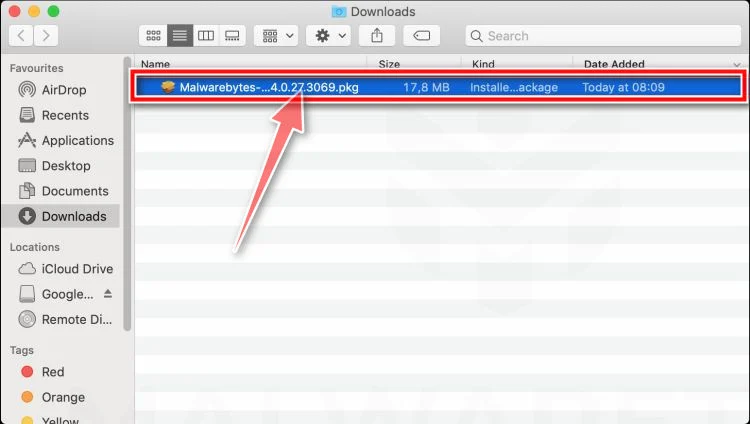
Open the Malwarebytes setup file
When the download finishes, open your Downloads folder and double-click the setup file to begin the installation.
-
Follow the On-Screen Prompts to Install Malwarebytes
The Malwarebytes for Mac Installer will guide you through a few quick screens. Click “Continue” and keep following the prompts until the installation completes.
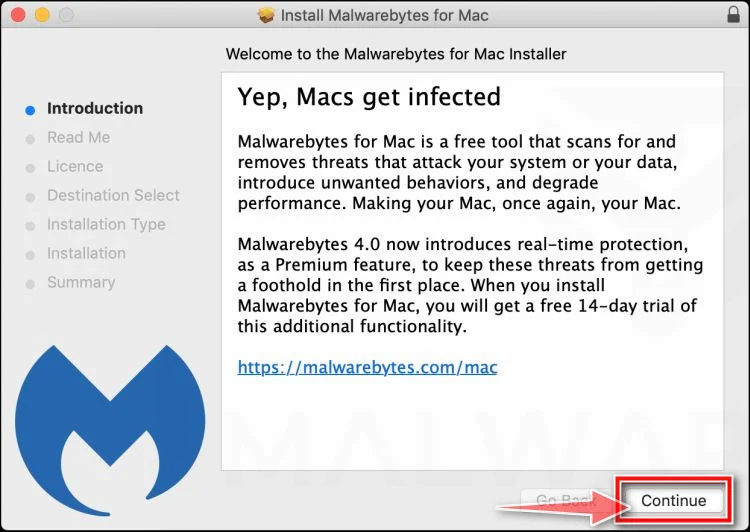
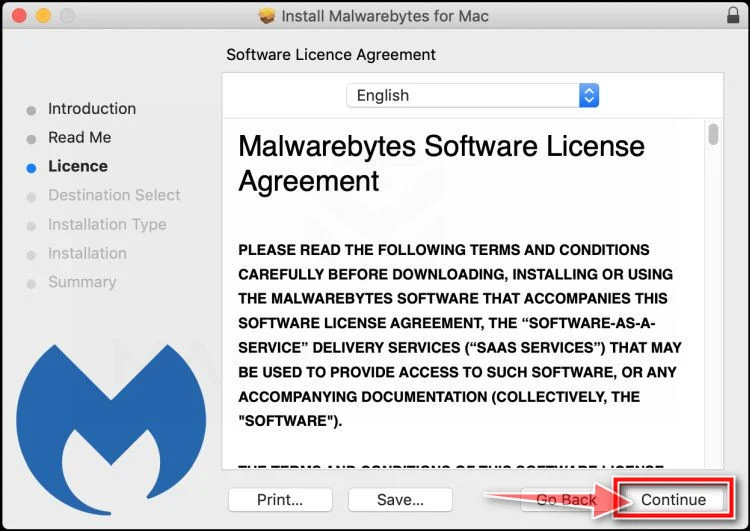
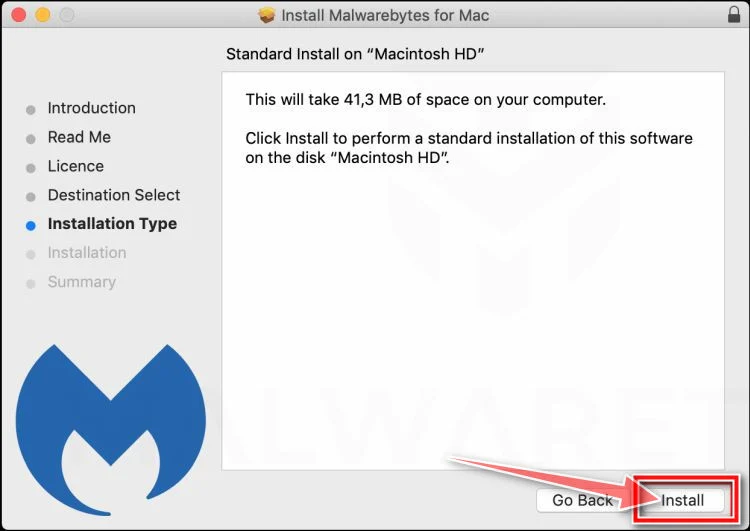
When the installation is complete, Malwarebytes opens to the Welcome to Malwarebytes screen. Click “Get started“.
-
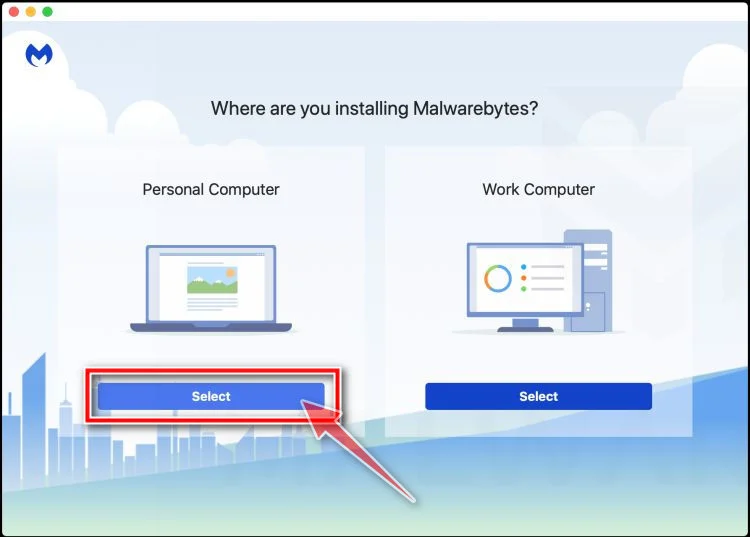
Select “Personal Computer” or “Work Computer”
Malwarebytes will ask what type of computer you’re installing it on. Click either Personal Computer or Work Computer, whichever applies.
-
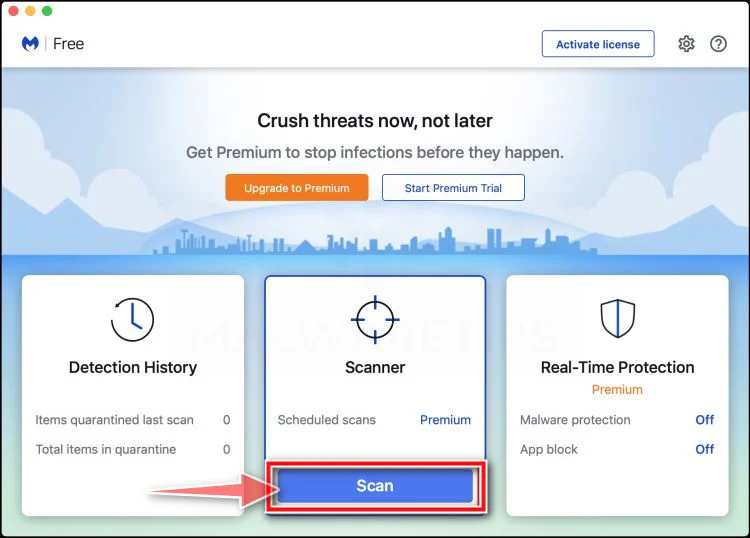
Start the Scan
Click the “Scan” button. Malwarebytes will automatically update its detection database and begin checking your Mac for malware.
-
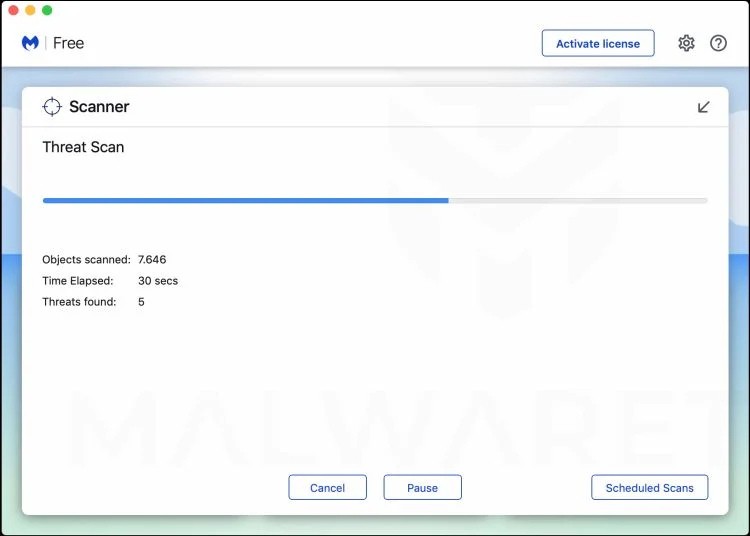
Wait for the Scan to Finish
Malwarebytes will scan your Mac for adware, browser hijackers, and other malicious programs. This can take a few minutes, so feel free to do something else — just check back occasionally to see the progress.
-
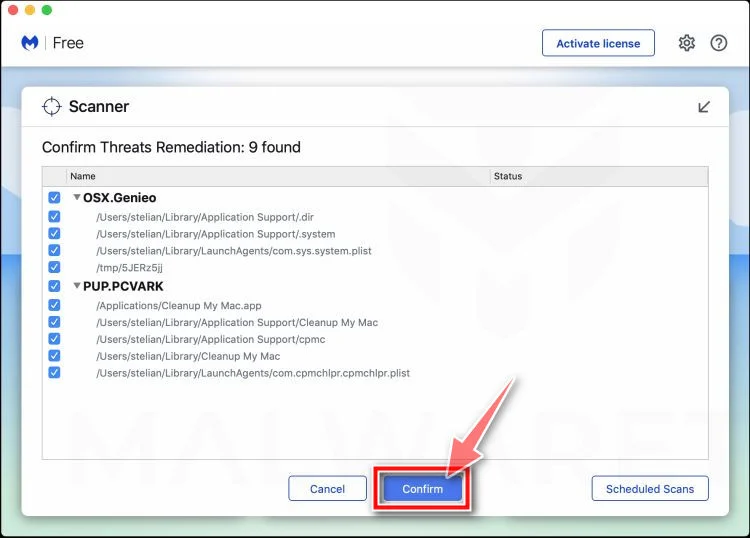
Quarantine the Detected Threats
When the scan is done, you’ll see a list of everything Malwarebytes found. Click the “Quarantine” button to remove all the threats at once.
-
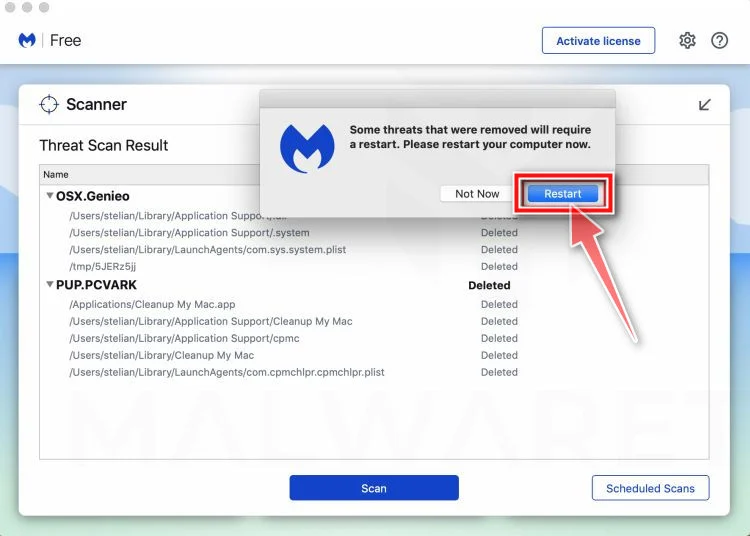
Restart Your Mac
Malwarebytes will now remove all the malicious files it found. Some threats can only be fully removed after a reboot — if Malwarebytes asks you to restart, allow it. Once you’re logged back in, your Mac is clean.
That’s it — your Mac is now free of adware, rogue browser extensions, and other potentially harmful software.
If you are still experiencing problems while trying to remove a malicious program from your computer, please ask for help in our Mac Malware Removal Help & Support forum.
Run a Malware Scan with Malwarebytes for Android
Malwarebytes for Android automatically detects and removes dangerous threats like malware and ransomware so you don’t have to worry about your most-used device being compromised. Aggressive detection of adware and potentially unwanted programs keeps your Android phone or tablet running smooth.
-
Download Malwarebytes for Android.
You can download Malwarebytes for Android by clicking the link below.
Get Malwarebytes for AndroidOpens Google Play in a new tab.Want real-time protection? See Malwarebytes Premium for AndroidMalwarebytes for AndroidScans your phone and removes malware at no cost -
Install Malwarebytes for Android on your phone.
In the Google Play Store, tap “Install” to install Malwarebytes for Android on your device.

When the installation process has finished, tap “Open” to begin using Malwarebytes for Android. You can also open Malwarebytes by tapping on its icon in your phone menu or home screen.

-
Follow the on-screen prompts to complete the setup process
When Malwarebytes will open, you will see the Malwarebytes Setup Wizard which will guide you through a series of permissions and other setup options.
This is the first of two screens that explain the difference between the Premium and Free versions. Swipe this screen to continue.
Tap on “Got it” to proceed to the next step.
Malwarebytes for Android will now ask for a set of permissions that are required to scan your device and protect it from malware. Tap on “Give permission” to continue.
Tap on “Allow” to permit Malwarebytes to access the files on your phone.
-
Update database and run a scan with Malwarebytes for Android
You will now be prompted to update the Malwarebytes database and run a full system scan.

Click on “Update database” to update the Malwarebytes for Android definitions to the latest version, then click on “Run full scan” to perform a system scan.

-
Wait for the Malwarebytes scan to complete.
Malwarebytes will now start scanning your phone for adware and other malicious apps. This process can take a few minutes, so we suggest you do something else and periodically check on the status of the scan to see when it is finished.

-
Click on “Remove Selected”.
When the scan has been completed, you will be presented with a screen showing the malware infections that Malwarebytes for Android has detected. To remove the malicious apps that Malwarebytes has found, tap on the “Remove Selected” button.

-
Restart your phone.
Malwarebytes for Android will now remove all the malicious apps that it has found. To complete the malware removal process, Malwarebytes may ask you to restart your device.
That’s it — your Android phone is now clean — no more malicious apps, adware, or browser redirects.
If you are still having problems with your phone after completing these instructions, then please follow one of the steps:
- Restore your phone to factory settings by going to Settings > General management > Reset > Factory data reset.
- Ask for help in our Mobile Malware Removal Help & Support forum.
Stay Protected: Block Ads and Malicious Sites
Now that your device is clean, keep it that way. Most infections start with a malicious ad or a fake download button — so blocking them at the source is your best defense.
We recommend AdGuard, which blocks malicious ads, phishing pages, and dangerous redirects before they can reach you.
👉 Download AdGuard and browse safely
Frequently Asked Questions
Is Trojan.Win32.Generic really on my device?
The email does not prove it. Open Windows Security or the installed antivirus directly and review its scan history. The documented message is credential phishing.
Why does the alert show a specific detection time?
A scam email can insert the current date and time as ordinary text. Precision is not proof that a scan occurred on the recipient's computer.
Is Firebase a Google security page?
Firebase is legitimate cloud infrastructure, but customer-controlled content hosted there is not automatically a Google login or antivirus service.
Why does a virus scan ask for my Roundcube password?
It should not. A mailbox password cannot remove a Windows Trojan. The Roundcube form is used to collect credentials.
What if I clicked but entered nothing?
Close the page, inspect browser downloads, and run a trusted scan if desired. If no credential was entered and nothing was installed, account theft is less likely.
What if I entered my webmail password?
Change it through the real provider, revoke sessions, inspect forwarding and filters, enable stronger authentication, and protect connected accounts immediately.
The Bottom Line
The Critical Virus Detected email scam uses a technical threat name and critical rating to create panic, then replaces the promised scan with a Roundcube password form. The alert does not establish that any Trojan exists.
Check the device through Windows Security or the installed antivirus and check email through the provider's real site. A Firebase-hosted login cannot perform either job safely.
If the password was submitted, secure the mailbox immediately. If a file was downloaded or installed, isolate and scan the device as a separate issue rather than trusting the email's invented cleanup.

Join the discussion
0 commentsShare your experience or ask a question about this article.
Discussion
Start the conversation
Have a question or something useful to share? Add the first comment.