

Looking for Blue Heeler puppies online? Pause before you send any money. BlueHeelerPuppies.us may appear legitimate with charming images and enticing offers—but it’s a scam. Scammers exploit pet lovers’ emotions to steal money, leaving victims empty-handed and heartbroken. This article reveals how the BlueHeelerPuppies.us scam operates, real warning signs, and exactly what to do if you’ve been tricked.
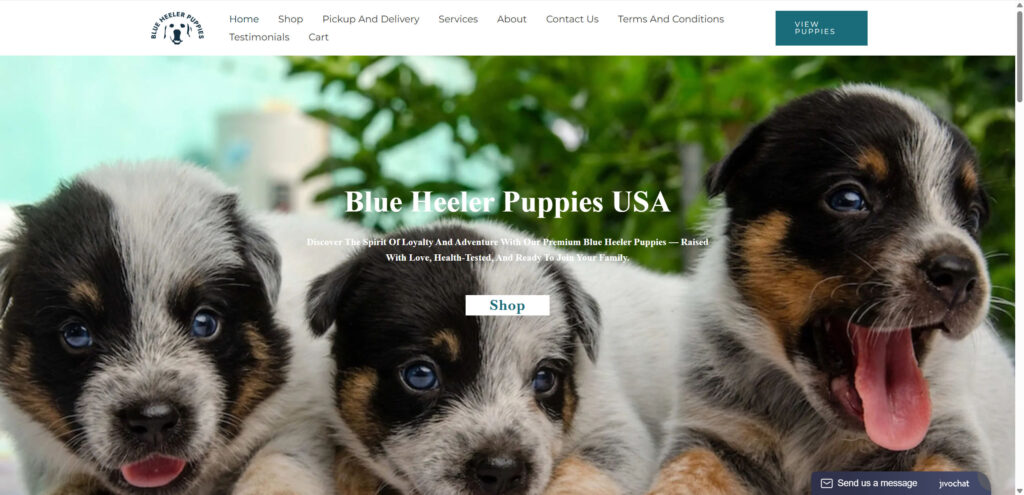
Scam Overview
BlueHeelerPuppies.us positions itself as a reputable breeder site specializing in Blue Heeler puppies. At first glance, it’s easy to be taken in by its polished look: adorable puppy photos, puppy profiles with names, and prices that seem reasonable. However, beneath that façade lies a sophisticated and emotionally manipulative scam.
How the Scam Appears Legitimate
- Professional design: The site mirrors genuine puppy sales pages with gallery-style layouts and pricing listings.
- Puppy names and profiles: Scammers may give each puppy a name to create emotional bonds, implying authenticity.
- Varied pricing across listings: Prices may range—some puppies listed as low as $550, others over $1,200—to appear realistic.
- Added fees and services: The site may include extras like “trained” or “show quality” labels, often at inflated costs.
What Makes It a Scam
- No real puppies available: Buyers never receive their Blue Heeler puppy, despite paying deposits or full amounts.
- Stolen or generic images: The site likely uses pictures taken from other breeders, stock image sites, or social media.
- No verifiable contact details: Listings lack physical addresses or real breeder credentials. Communication may be limited to email or chat.
- Lack of pedigree documentation: Legitimate breeders provide registration papers and vet clearances; scammers do not.
Real Complaints and Warnings
- Reddit skepticism: Users on forums like r/puppy101 question claims of being a “puppy match service” rather than an actual breeder—and it often is neither.
- Facebook alerts: Pet owners and adoption groups flag fake listings offering free or suspiciously cheap Blue Heeler puppies.
- AbuseIPDB listing: The scam’s associated ISP and email have been flagged for sending pet scam communications.
- Similar scams cataloged: Related scam sites such as royalblueheelers.com follow the same playbook, further warning buyers to research thoroughly.
How The Scam Works
Knowing the step-by-step process behind phishing schemes like BlueHeelerPuppies.us can help you avoid falling victim.
Step 1: Attraction
- Scammers use ads and search results to draw pet-loving visitors.
- They create eye-catching pages featuring adorable Blue Heeler puppies, affordable prices, and emotional appeal.
Step 2: Trust Building
- Each listing may portray a puppy as “trained,” “show-quality,” or “rare.”
- Testimonials and stories—likely fabricated—increase perceived credibility.
Step 3: Initial Contact
- Interested buyers email or chat via the website.
- Scammers respond quickly, appear helpful, and emphasize the puppy’s availability.
Step 4: Payment Request
- Buyers are asked to put down a deposit or make full payment upfront, often via wire transfers, gift cards, cryptocurrency, or other irreversible methods.
- A sense of urgency is created, suggesting the puppy may sell out quickly.
Step 5: Additional Fees
- Scammers fabricate reasons for more money:
- Shipping crate upgrades
- Special health inspections
- Pet travel insurance
- “Mandatory” quarantines or customs processing
- Buyers emotionally invested may comply, hoping to ensure a smooth delivery.
Step 6: Vanishing Act
- After enough money is collected, scammers cease communication.
- Requests and messages go unanswered.
- No puppy ever arrives.
Step 7: Repeat Cycle
- When exposed, the scammer decommissions the site and resurfaces under a new domain.
- The cycle continues with different puppy breeds, names, and branding.
What to Do if You Have Fallen Victim
If you suspect you’ve been scammed through BlueHeelerPuppies.us, act quickly. Follow these steps:
- Halt All Payments
Immediately stop any further transfers or financial communication. - Gather Evidence
Save emails, chat logs, receipts, screenshots of the website, and payment confirmations. - Contact Your Payment Provider
Reach out to your bank or service (e.g., PayPal, Zelle) to dispute the charges and request a refund. - Report to Law Enforcement
File a report with your local police and submit documentation of the scam. - File Federal Complaints
- FTC: Call 1‑877‑FTC‑HELP or file online at www.ftc.gov.
- FBI IC3: Submit a complaint at www.ic3.gov.
- Alert Scam Tracking Sites
Share your experience with platforms like ScamWatcher or PetScams to warn others and aid investigations. - Protect Your Identity
Monitor your financial accounts and consider credit monitoring to safeguard against fraud. - Share Your Experience
Post on social media, pet-related forums, and review sites to raise awareness. - Consult Legal Support if Needed
If you lost a significant amount, consider contacting an attorney about possible legal recourse.
The Bottom Line
BlueHeelerPuppies.us is a well-executed scam targeting caring pet seekers. With stolen images, persuasive messaging, and emotional manipulation, scammers take your money without delivering puppies. Awareness is your best defense. Always verify breeders via trustworthy sources, insist on secure payment and in-person visits, and don’t fall for too-good-to-be-true deals. Stay informed—and stay safe.
Frequently Asked Questions About the BlueHeelerPuppies.us Scam
Is BlueHeelerPuppies.us a legitimate puppy breeder?
No, BlueHeelerPuppies.us is not a legitimate breeder. It is a scam website designed to deceive pet lovers into paying for puppies that do not exist. The site uses fake photos, fabricated testimonials, and emotional tactics to appear trustworthy. Victims report paying for dogs they never receive.
How can I tell if a puppy website like BlueHeelerPuppies.us is a scam?
Common red flags include:
- Prices that are significantly lower than reputable breeders.
- Use of stock images or photos from other websites.
- No physical address or breeder credentials provided.
- Limited or scripted communication via email or chat only.
- Requests for payment via wire transfer, Zelle, Venmo, gift cards, or cryptocurrency.
- Claims that the puppy must be reserved immediately due to high demand.
Always research the site’s domain history, look for reviews, and contact breed-specific rescue groups or kennel clubs to verify legitimacy.
Why does the scam website list different prices for puppies?
Scammers list a wide price range (e.g., $550 to $2,000) to appeal to a broad audience. This strategy also makes the site appear more realistic. Puppies labeled “rescue,” “trained,” or “show quality” are priced higher to lure victims into paying more. In reality, none of the puppies exist.
What payment methods do scammers prefer?
Scammers prefer untraceable, irreversible payment methods. These include:
- Zelle
- CashApp
- Venmo
- Wire transfers
- Gift cards (Amazon, iTunes, etc.)
- Cryptocurrency
Legitimate breeders typically accept secure, verifiable payments and often use purchase agreements or contracts.
I already paid BlueHeelerPuppies.us. Can I get my money back?
If you paid through a credit card or PayPal, you may be able to file a dispute and request a chargeback. However, if you used wire transfer or gift cards, the money is almost impossible to recover. Contact your bank immediately and report the scam to the proper authorities listed in this article.
Are the puppy photos on BlueHeelerPuppies.us real?
The photos used on BlueHeelerPuppies.us are often stolen from real breeder sites, pet forums, or social media. Reverse image searches can help confirm whether a photo has been lifted from another source. If the same image appears on multiple websites with different breeder names, it’s a red flag.
What should I do if I suspect a puppy website is a scam?
- Do not send any money.
- Screenshot and document everything.
- Report the website to the Federal Trade Commission (FTC) at www.ftc.gov.
- File a complaint with the FBI’s Internet Crime Complaint Center (IC3) at www.ic3.gov.
- Warn others by sharing your experience on pet forums and review sites.
- Check pet scam databases like PetScams.com or ScamWatcher.com.
Are there legitimate places to buy or adopt a Blue Heeler puppy?
Yes, but it’s important to verify the source. Reputable options include:
- AKC-registered breeders with traceable histories.
- Breed-specific rescue groups and shelters.
- Local humane societies or animal shelters.
- Trusted breeder directories such as those on AKC.org or regional kennel clubs.
Always ask to visit in person, request veterinary records, and never pay for a puppy you haven’t seen physically or via real-time video.
What is the goal of BlueHeelerPuppies.us and similar scam websites?
The sole purpose is financial gain. Scammers exploit the emotions of animal lovers by advertising non-existent puppies. Once a victim pays, the scammer may demand more money for fabricated shipping, vet fees, or insurance, then disappear entirely after receiving the funds.
Can BlueHeelerPuppies.us be taken down?
Eventually, scam websites like BlueHeelerPuppies.us are reported and removed. However, scammers often launch new sites using similar designs and strategies under different domain names. Reporting these scams to relevant authorities helps expedite takedowns and prevents further victimization.

Reviews & discussion
0 commentsShare a firsthand experience, or ask a question.
Community reviews
blueheelerpuppies.us
Moderated reader experiences, not an editorial verdict.
Start the conversation
Have a question or something useful to share? Add the first comment.