

The call arrives while you are busy and sounds routine: a parcel could not be delivered, and one quick action will keep it from being returned. The caller may even know your city or use a familiar Canadian area code.
Canada Post scam calls turn an ordinary delivery problem into a fast-moving test of judgment. The details below show what deserves attention before you press a key, call back, or share anything.
Overview
A delivery story makes an unexpected call feel normal
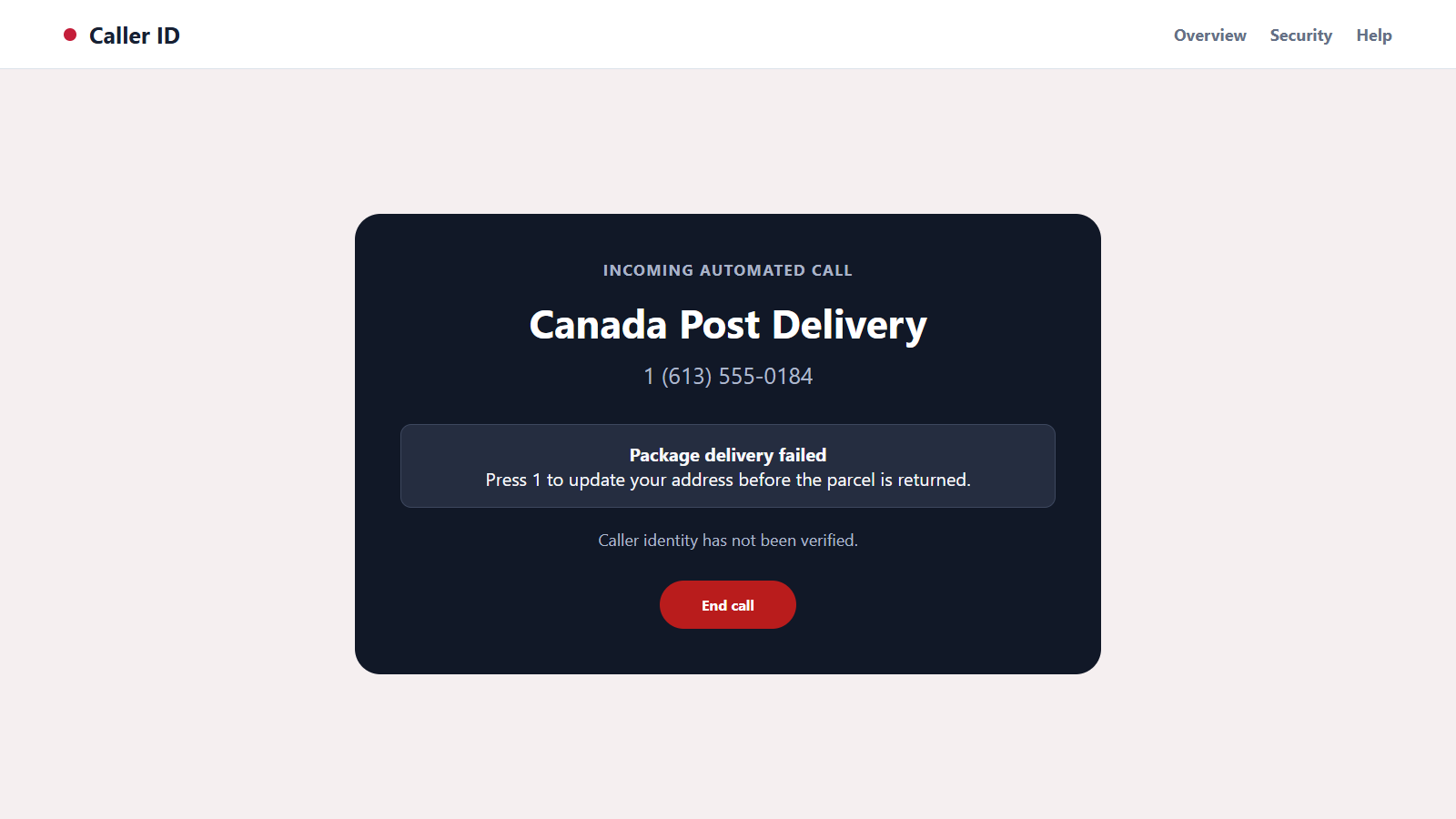
Canada Post scam calls often begin with a recorded voice saying a package is delayed, undeliverable, held at customs, or missing an address. The message asks the listener to press a number or speak with an agent.
That story works because online orders are common and many people are waiting for something. The caller does not need to identify a real parcel if the recipient supplies the missing details during the conversation.
The problem changes once the victim engages
After someone presses a key, the call may transfer to a supposed delivery specialist, customs officer, police employee, or fraud investigator. The new speaker asks questions that sound like routine identity verification.
Some versions demand a small redelivery charge. Others escalate into accusations that a parcel in the victim’s name contains illegal goods, turning a package story into a government impersonation or extortion scam.
The name on caller ID proves very little
Caller ID can be spoofed, and a local number can be rented or falsified. A display that says Canada Post, Delivery Service, or Ottawa does not establish who placed the call.
Common warning signs include:
- An unsolicited recording asks you to press a key about a parcel.
- The caller cannot provide a tracking number you already recognize.
- A tiny redelivery fee must be paid through a link or over the phone.
- You are asked for a card number, banking login, passcode, or Social Insurance Number.
- The story suddenly involves customs, police, immigration, or an arrest.
- Gift cards, cryptocurrency, wire transfer, or a payment app are required.
- The caller discourages you from checking Canada Post independently.
- A countdown or threat makes immediate action sound essential.
The safest response is to end the call and check the delivery through a channel you opened yourself.
What Canada Post May Actually Contact You About
A legitimate delivery notice should connect to a shipment you recognize. The tracking number, sender, destination, and current status should agree with information already available in your order history.
Canada Post does offer tracking notifications, but recipients normally choose or expect those updates. An unsolicited robocall that cannot be matched to a real tracking record deserves caution.
If a delivery attempt fails, the carrier may leave a notice card or update the official tracking page. A stranger’s instruction to keep the call open is not a substitute for that record.
Taxes and duties can be real, yet they should appear through a verifiable shipment process. A caller should not need your online-banking password, one-time code, or remote access to collect a legitimate charge.
Canada Post’s fraud guidance says it will not request credit-card details, banking information, account logins, or delivery payments through unsolicited texts. The same caution applies when a caller tries to move you into an unverified payment flow.
When the status remains unclear, type the official Canada Post address into a fresh browser window or open the official app. Do not use a web address dictated by the caller.
How Canada Post Scam Calls Work
Step 1: A robocall searches for people who will respond
Criminals can place thousands of inexpensive calls with a generic recording. The message claims a parcel needs attention and asks the listener to press 1, call another number, or wait for an agent.
Pressing a key confirms that the number is active and that a delivery story gained attention. Even if no money changes hands, the response can make that number more valuable for future fraud attempts.
Step 2: The supposed agent fills in the missing details
The agent may ask for a name, postal code, address, recent order, or expected sender. These questions are presented as verification, but the answers help the criminal build a more convincing parcel record.
A skilled caller repeats the information back as if it came from a delivery database. The victim may then mistake their own answers for proof that the agent knew about the shipment.
Step 3: A plausible tracking or case number is invented
The caller supplies a long reference number and may send a follow-up text or email. A random string looks official, especially when the recipient has not compared it with the retailer’s order page.
Some scammers copy the format of real tracking numbers. Format alone is not enough; the number must resolve on the independently opened Canada Post website and match the expected parcel.
Step 4: The package problem creates urgency
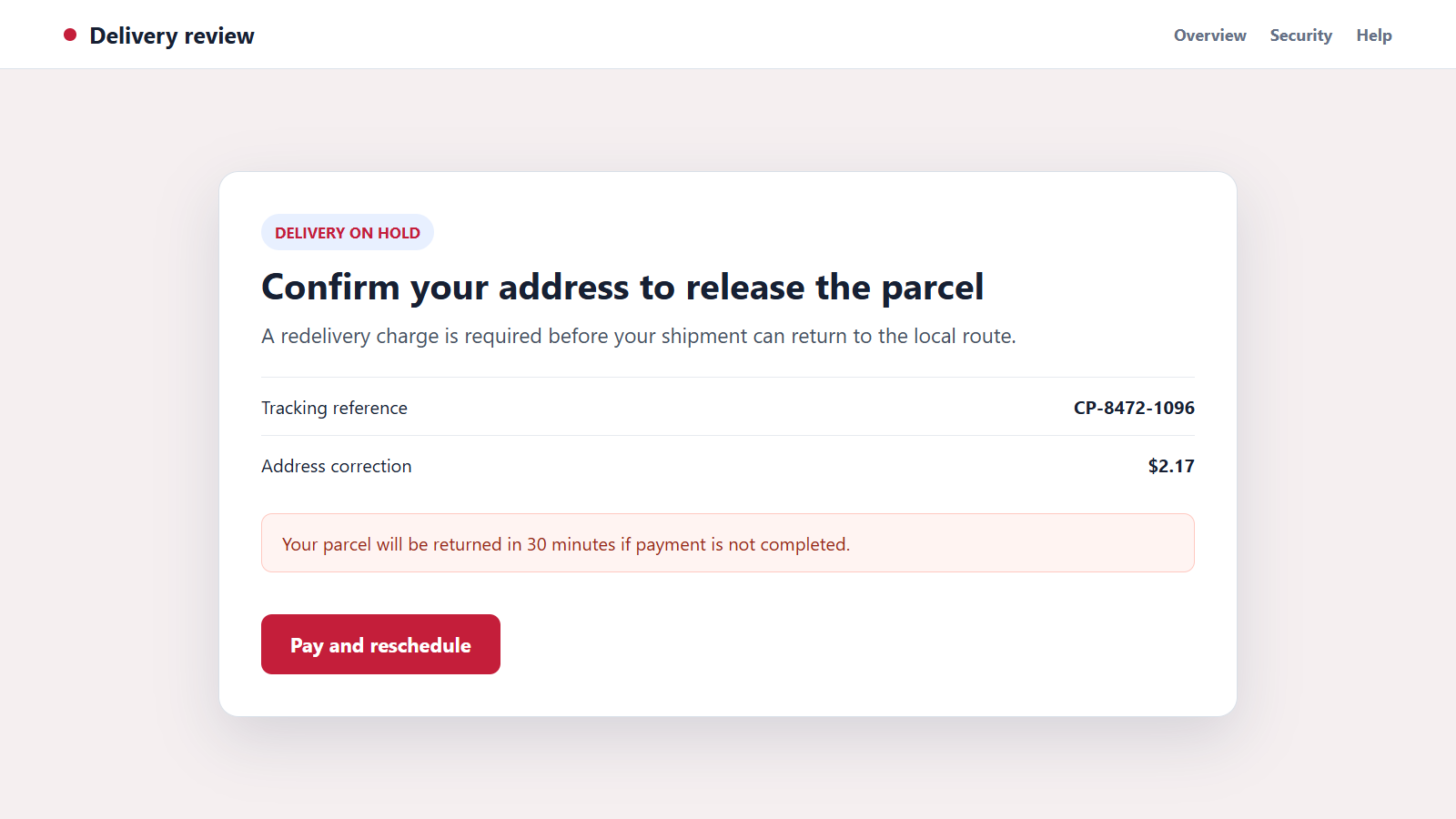
The address is said to be incomplete, a signature is missing, or customs has placed the item on hold. The caller warns that the parcel will be returned, destroyed, or charged storage fees soon.
Urgency narrows the victim’s attention. Instead of asking whether the shipment exists, the person begins solving the problem inside the scammer’s script.
Step 5: A small payment lowers resistance
A fee such as $1.99 or $2.17 can seem too small to justify suspicion. The amount is often only a reason to collect a full card number, expiration date, security code, billing address, and contact information.
The fake page may later submit a larger charge, enroll the card in recurring billing, or pass the details to another criminal. The first visible amount does not define the real risk.
Step 6: A one-time code completes the transaction
When the bank challenges the fraudulent purchase, the victim receives a genuine security code. The caller says the code verifies the address or cancels a duplicate charge.
In reality, reading the code may authorize the attacker’s transaction or add the card to a digital wallet. The text accompanying the code should be read literally, not through the caller’s explanation.
Step 7: The script may escalate into threats
Another variation claims the parcel contains drugs, false identification, or suspicious funds. A supposed police or customs officer joins and demands secrecy, identity documents, or a security payment.
That sharp change is intentional. Fear of arrest can make a recipient obey demands that would look absurd in a normal delivery conversation.
Step 8: Follow-up scammers reuse the collected information
Card details may be used immediately, while names, addresses, and order habits can support later bank, tax, or identity scams. The victim may receive another call claiming to investigate the first incident.
A caller who knows about the original package story is not automatically legitimate. The same group may be attempting a second payment or trying to capture more valuable credentials.
How to Verify a Delivery Without Following the Caller
Start with the merchant or sender. Open the order history from a bookmark or app you already use, then copy the tracking number from that record.
Enter the number on the official Canada Post site. Check the destination city, shipment dates, delivery events, and any notice explaining what must happen next.
If the caller supplied a different number, treat it as unverified until Canada Post confirms it. A screenshot, voicemail, or text from the same caller is not independent evidence.
Call Canada Post using contact information from its official site, not a search advertisement or recent-calls list. Ask whether the tracking number exists and whether any charge or address correction is pending.
For a customs claim, verify through the carrier and the appropriate government agency. Do not let a caller transfer you to a supposed official, because every person on that call may belong to the same operation.
Check card activity if you entered payment information, even if the page showed an error. A fake checkout may collect the details before displaying a failure message.
Finally, remember that no parcel is worth bypassing basic account security. A genuine carrier can explain a delivery issue without asking for your password, banking code, or secrecy.
Company, Address, and Fulfillment Checks
The carrier identity must survive a fresh contact
End the call, find Canada Post independently, and start a new conversation. A legitimate case should still exist when the original caller no longer controls the channel.
Do not accept an internal transfer as verification. It only proves that the first caller can connect you to another participant.
The web address must belong to the official domain
Words such as Canada, Post, parcel, tracking, or secure can appear inside an unrelated domain. Read the actual registered domain from right to left before entering information.
HTTPS shows that the connection is encrypted. It does not show that Canada Post owns the page or approves the payment.
The delivery address must match a real order
A legitimate parcel should trace back to a purchase, sender, or shipment you recognize. The destination and tracking events must make sense without information supplied only by the caller.
If no household member expects the shipment, do not invent a connection because the caller says the name may be hidden for privacy.
The payment and fulfillment path must be traceable
A real fee should appear in the official shipment record and use an established payment process. The recipient should not be an individual, crypto wallet, gift-card code, or unrelated payment account.
After payment, a legitimate system should provide a verifiable receipt and updated tracking event. Promises made only by telephone do not complete this check.
Warning Signs That Make the Call Unsafe
- The recording does not name you or a recognizable shipment.
- You must press a number immediately to prevent a return.
- The agent asks you to confirm more details than the carrier appears to know.
- The fee is small, but the form requests extensive card and identity data.
- A bank code is described as delivery verification.
- The caller threatens police action over a parcel you did not send.
- You are told to withdraw cash, buy gift cards, or use cryptocurrency.
- The representative objects when you offer to call Canada Post yourself.
One warning sign is enough to pause. Several together mean the safest next step is ending the contact and protecting the information already shared.
What to Do if You Have Fallen Victim to This Scam
- End the call and stop every payment. Do not remain connected while checking the story. A scammer can continue applying pressure or coaching you through bank warnings.
- Contact the card issuer or bank immediately. Report the transaction as fraud, block the affected card, and ask whether pending charges or digital-wallet enrollments can be stopped.
- Tell the bank about any code you shared. The code may have approved more than the small delivery charge. Ask which exact action generated it.
- Change exposed passwords from a clean device. Update email, shopping, carrier, and financial accounts if the fake page collected a login. Use a different password for every service.
- Review account recovery details. Remove unknown phone numbers, email addresses, devices, sessions, forwarding rules, and payment methods. Turn on multi-factor authentication where available.
- Check the real parcel separately. Use the merchant’s order record and the official Canada Post tracking page. Do not assume the genuine package was changed by the scammer.
- Preserve evidence. Save the calling number, time, recording, voicemail, messages, web address, receipts, transaction references, and a written summary of what the caller said.
- Report the incident in Canada. The Canadian Anti-Fraud Centre accepts fraud and cybercrime reports. Your local police may also need the evidence when money or identity documents were taken.
- Scan devices that opened files or installed software. Run a full Malwarebytes scan if the caller sent an attachment, app, browser extension, or remote-support tool.
- Block known malicious pages. AdGuard can reduce exposure to known phishing domains, deceptive advertisements, and trackers. It cannot confirm a caller or reverse a payment.
- Watch for identity misuse. Monitor bank and credit activity, and respond quickly to unfamiliar applications, address changes, or mobile-account notices.
- Reject recovery callers. Anyone promising a guaranteed refund for an upfront payment may be continuing the fraud. Work with the bank, carrier, authorities, and a lawyer you selected yourself.
Frequently Asked Questions
Does Canada Post make automated delivery calls?
A legitimate notification should connect to a shipment and preference you recognize. Treat an unsolicited robocall that requests a key press, personal details, or payment as unverified.
Can a scam call display the real Canada Post name or number?
Yes. Caller ID can be spoofed. End the call and use contact information from the official Canada Post site rather than trusting the display.
Is a small redelivery charge safe to pay?
Not through a link or call you did not verify. A small fee can be bait for collecting complete card details and authorizing larger transactions.
What if the tracking number looks genuine?
Enter it yourself on the official tracking site and compare it with the merchant’s order record. A plausible format or copied number does not prove the caller is involved.
Would customs or police demand payment during the call?
Do not pay or share credentials under threat. End the contact and call the relevant agency through a number you independently obtain.
Should I press a key to be removed from the call list?
No. Pressing a key can confirm an active number and transfer you to a scammer. Hang up and use your carrier’s blocking and spam-reporting tools.
The Bottom Line
Canada Post scam calls borrow the anxiety of a delayed parcel, then use a robocall, fake agent, or tiny fee to collect much more valuable information.
Hang up and rebuild the delivery story from your own order record and the official carrier site. If the parcel cannot be verified without the caller’s instructions, do not pay, press a key, or share a code.

Join the discussion
0 commentsShare your experience or ask a question about this article.
Discussion
Start the conversation
Have a question or something useful to share? Add the first comment.