

You’ve likely come across an ad claiming you can turn your home Wi-Fi into a personal ATM with just three simple steps—no tech experience required. Maybe it promised $150, $640, or even $1,400 per day just by using your phone or laptop. The system is called Cash Loophole, and it supposedly uses a “3-Step Wi-Fi Trick” to generate passive income effortlessly.
But is Cash Loophole real? Or is it just another digital scam preying on people in financial distress? In this deep-dive exposé, we unpack exactly how this system works, why it raises multiple red flags, and what you should do if you’ve already signed up. Spoiler: there’s no Wi-Fi magic or 3-step loophole here—just a cleverly disguised scheme.
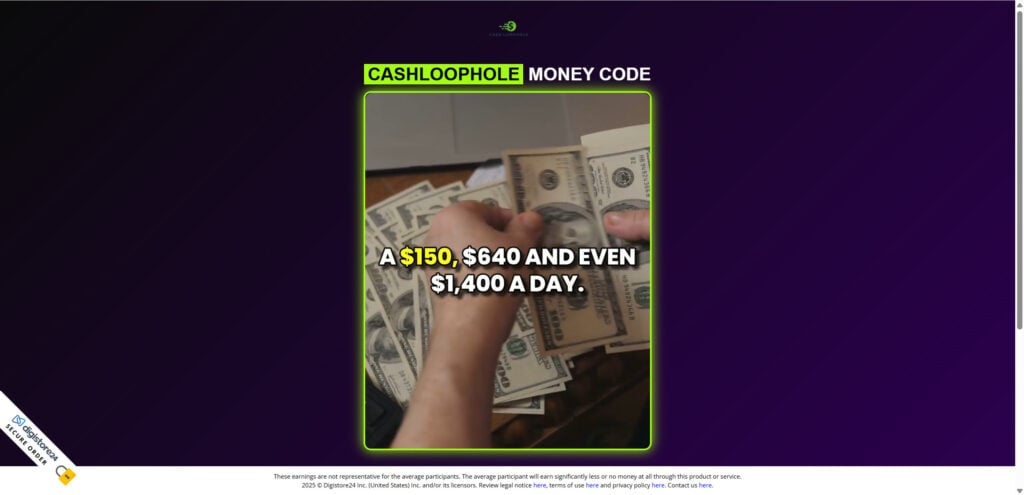
Scam Overview: The Polished Trap Called Cash Loophole
Cash Loophole is promoted through highly targeted ads on social media platforms like Facebook, Instagram, and YouTube. These ads feature animated visuals, AI-generated spokespeople, or even deepfake-style influencers claiming to have cracked a hidden system that lets them make thousands with minimal effort.
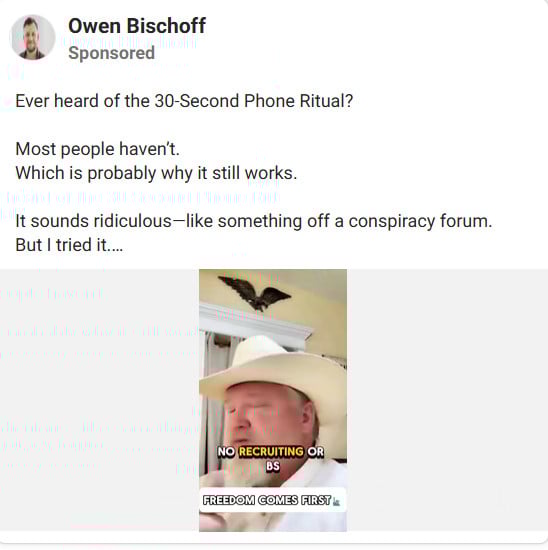
Key Claims from CashLoophole.com
- Earn up to $1,400 a day using just your Wi-Fi
- No selling, no crypto, no calls, no skills needed
- Takes just minutes to set up
- Backed by a “proprietary system”
- Only a few spots left due to “high demand”
These promises sound amazing, but that’s by design. The goal is to create urgency and manipulate viewers into making a quick decision.
The Red Flags
- Vague Language: The video never clearly explains what the system is. Words like “money code,” “Wi-Fi automation,” and “digital hack” are thrown around without context.
- Fabricated Testimonials: Most of the “success stories” appear to be actors or reused footage from other online schemes.
- Fake Scarcity: Messages like “only 2 spots left in your area” or “73 people watching now” are scripted into the website’s code.
- Lack of Business Identity: No verifiable company name, no contact number, no refund policy, and no terms of service that hold legal weight.
- Unrealistic Profits: Claims of earning thousands a day with no work should always trigger skepticism. Legitimate opportunities don’t work like that.
The site resembles dozens of other known scams that cycle through new names but retain the same manipulative formula.
This scam has been also investigated by Jordan Liles on his YouTube channel, where he offers a detailed video on the subject. We recommend watching his content for a comprehensive understanding of the scam.
Next, let’s break down exactly how scammers carry out this scam from start to finish.
How the Cash Loophole Scam Works
Step 1: The Lure via Paid Ads
It begins with enticing ads on platforms like YouTube, TikTok, or Facebook. These ads promise life-changing income from your phone, exploiting emotions like stress, debt, or job dissatisfaction. Sometimes they impersonate trusted public figures or use AI-enhanced images for credibility.
Step 2: The Long-Form Video Trap
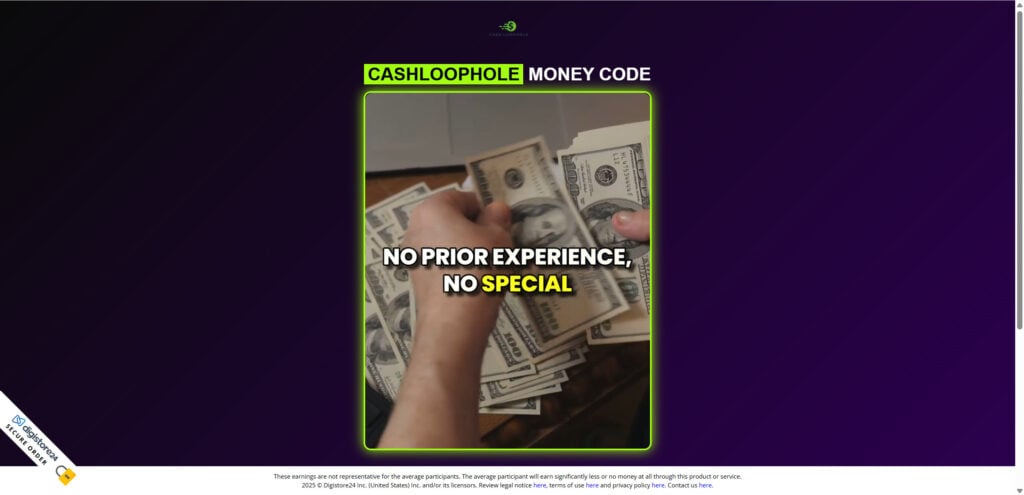
Clicking the ad sends you to CashLoophole.com, where a 20+ minute video begins. The narrator, who often goes unnamed, outlines how they were once broke and discovered this “Wi-Fi loophole” that now earns them thousands weekly. Buzzwords are used heavily, but no actual method is explained.
Step 3: Fake Social Proof
Viewers are shown fake comments, likes, and testimonials. You might see a ticker showing “live” user activity, such as:
- “John from Texas just made $1,298”
- “Only 3 accounts available in your area”
These are dynamic scripts, not real data.
Step 4: Lead Capture & Initial Payment
You’re prompted to enter your name, email, and phone number. Then comes the pitch: “Get started for only $67.” This is the foot-in-the-door. Your payment details are collected under the promise of “immediate access.”
Step 5: Hidden Upsells & Repeat Charges
After the initial fee, you’ll be bombarded with upsells:
- $197 “Premium Package”
- $297 “Elite Access”
- Monthly subscriptions for “exclusive tools”
Worse yet, many users report unauthorized charges they didn’t agree to.
Step 6: Useless Content Delivery
Once inside, the system gives you vague instructions or links to YouTube videos. There’s no real business model, no AI, and no automation tool. You won’t make money—you’ll just be further pressured to buy into the next layer of the scam.
What to Do If You Fell for the Cash Loophole Scam
1. Cancel Your Card or Dispute the Charges
Contact your bank or card provider immediately. Report the charge as fraudulent and request a new card if necessary.
2. File a Chargeback
Most card issuers allow chargebacks within 60-120 days. Use terms like “unauthorized charges” or “false advertising.”
3. Report the Scam
- FTC: reportfraud.ftc.gov
- Better Business Bureau: bbb.org
- Internet Crime Complaint Center (IC3): ic3.gov
Include screenshots, receipts, and email interactions.
4. Monitor for Identity Theft
If you entered personal info, watch your credit report and email for suspicious activity. Use two-factor authentication on all accounts.
5. Warn Others
Post about your experience on Reddit, Trustpilot, or scam-alert forums. Helping others stay informed makes a difference.
FAQ: Cash Loophole Scam
What is the Cash Loophole scam?
Cash Loophole is a deceptive online scheme that falsely claims you can earn hundreds or thousands of dollars per day by using a “3-step Wi-Fi trick.” In reality, it’s a sales funnel designed to lure users into paying for worthless digital content and recurring upsells.
Is the Cash Loophole system real or fake?
It is entirely fake. There is no legitimate system, app, or automation involved. Everything from testimonials to success stories is fabricated or AI-generated.
How do scammers get people to fall for this?
They use targeted ads featuring deepfake videos, fake urgency, emotional storytelling, and promises of instant wealth. These psychological tricks are designed to lower skepticism and push fast action.
Is it legal for them to run these ads?
While deceptive advertising is illegal, many of these scams operate from countries with loose regulations or frequently change their domains, making enforcement difficult.
What happens after you pay?
You’re given access to a dashboard filled with recycled videos and generic PDFs. Soon after, you’re pressured to buy more expensive “modules” or upgrades. Victims also report unauthorized charges on their credit cards.
Can I get my money back if I fell for it?
Yes. Contact your bank or credit card company and request a chargeback. Provide proof that the product was misrepresented or failed to deliver what was promised.
How can I protect myself from similar scams?
Be cautious of any program that:
- Promises huge earnings with no effort
- Doesn’t explain how it works
- Uses fake testimonials or countdown timers
- Requires payment before revealing the details
Who should I report this to?
You can report it to:
- The Federal Trade Commission (FTC)
- The Internet Crime Complaint Center (IC3)
- Better Business Bureau (BBB)
Does Cash Loophole work at all?
No. There is no real technology, system, or process that earns money. The only people making money are the scammers running the site.
Are there real ways to make money online?
Yes, but they require time, effort, and learning—such as freelance work, content creation, or legitimate e-commerce. Be wary of shortcuts that promise fast cash with no skills required.
The Bottom Line
Cash Loophole is not a legitimate opportunity. It’s a predatory system designed to extract money through deception, fake urgency, and empty promises. While the idea of making fast cash from Wi-Fi sounds innovative, there’s no actual product or service involved.
Real income online takes time, skill, and honest effort. Whether it’s freelance work, e-commerce, or affiliate marketing, legitimate paths require transparency and learning. Always research before spending money on vague “systems” that promise too much and explain too little.
Protect your finances, protect your data, and always trust your instincts—especially when a stranger says you can make thousands doing nothing at all.








