


An envelope mentions a health plan you paid for years ago. The name may sound familiar even if you no longer have your membership card.
Before deciding what to do with the check, match it to the right refund round. The earlier payments did not all follow the same rules.
Overview
The FTC is sending another round of real CHBA checks
The FTC’s Consumer Health Benefits Association refunds page lists November 2026 as the third payment round. It is a mailed check program, not a new insurance offer.
The agency says it is sending 6,789 additional checks totaling more than $266,000. The recipients had cashed a previous check and originally paid CHBA more than $899.
Both conditions apply to the November round. Paying more than $899 is not enough on its own, and cashing an earlier check does not mean everyone receives this new one.
The FTC says to cash the check within 90 days. Use the instructions and date information on your actual payment and call the official administrator if something does not match.
The distribution concerns a medical discount plan sold as insurance
Consumer Health Benefits Association, or CHBA, sold medical discount plans. The FTC’s case concerned how the plans were marketed and how cancellations and refunds were handled.
The agency alleged that telemarketers led people looking for affordable insurance to expect acceptance and savings comparable to health insurance. A discount program is not the same thing as coverage.
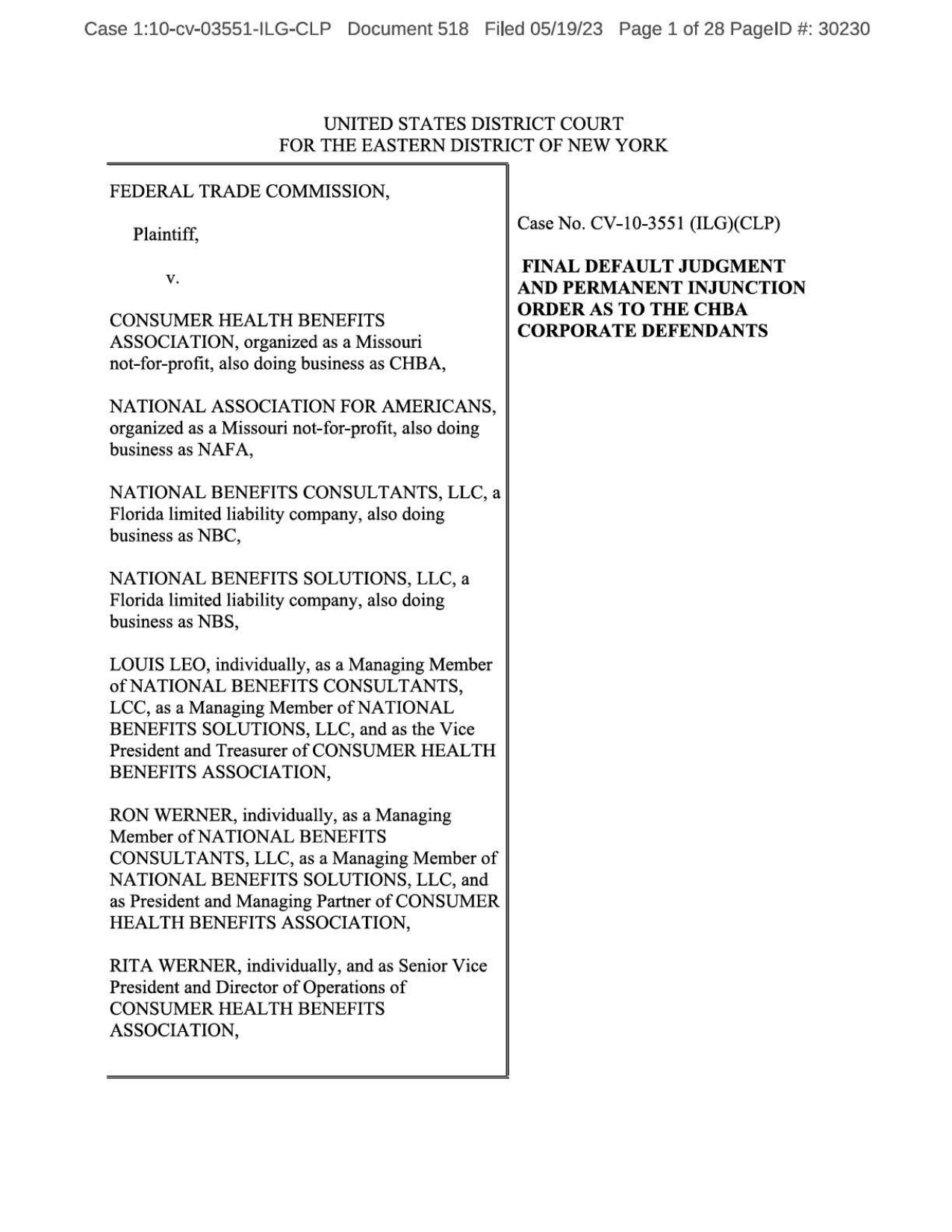
The FTC’s case record lists six final orders involving different defendants, including a default judgment and permanent injunction against the CHBA corporate defendants.
The court document and refund notice serve different purposes. The order addresses the historical case; the current notice describes who received checks from the money still available.
The third round is a supplement to the older distributions
The FTC first sent payments in November 2023 and sent another round in August 2025. It says those two rounds produced more than $6.4 million in refunds.
Old news about the first or second mailing can still turn up in searches. Look for November 2026 before applying an amount or qualification rule to the current round.
- The name on the current government listing is Consumer Health Benefits Association.
- The third round is for recipients who meet the FTC’s stated prior-check and spending conditions.
- The official refund administrator number is 1-888-350-1458.
- The FTC does not require a fee or transfer to deliver this refund.
How to Verify a CHBA Check Without Trusting an Unsolicited Message
Use the program listing to verify the program, not the envelope
Open the FTC refund index yourself. In the active programs, select Consumer Health Benefits Association Refunds and compare the date and administrator number.
This is an independent way to reach the same refund notice. Do not use a QR code or shortened address sent by someone who claims they can increase your payment.
The official listing tells you the program exists and describes the eligible group. It does not give the public an individual list of recipients or validate an unknown check.
If the payment seems plausible but you are unsure about the payee, date or administrator, call the number from the FTC page rather than a number attached to the message.
An old check record answers a different question than the total you paid
A bank statement can show whether you actually deposited a previous program payment. An old envelope or a notice may only show that somebody mailed it.
Check your records for the previous deposit date and add it to your notes. Separately, find what you paid to CHBA if those records are available.
You do not need to guess why your old mailing differed from someone else’s. The agency announced rounds at different times and the current conditions explain the narrower group.
If you used another company that also offered a health membership, do not assume the payment was made to CHBA. Match the plan name on your older receipts or contract.
A legitimate refund is different from a stranger’s explanation of it
A stranger can repeat the name of a current program accurately. They could still be asking you to do something the real administrator never requires.
The real notice describes mailed checks. You do not have to send somebody a payment, buy a gift card or return part of the proceeds to make the check usable.
If you get an unexpected text about delivery or a request to update banking details, use the verified program page and number. A real headline cannot authenticate the message.
After depositing a check through your normal bank, do not treat a temporary balance change as confirmation that a stranger’s follow-up is safe. Check any concern with the bank.
What the Original Medical Discount Case Teaches Shoppers
Find out whether anyone besides you pays a medical bill
Medical insurance and a discount plan can both use words like network or member savings. With a discount plan, you may still owe the provider’s entire discounted price yourself.
For an expensive appointment or prescription, ask who pays the bill, what price applies and which written terms support those answers.
Do not assume the seller’s directory answers what your physician accepts today. Check with the billing office directly, naming the exact plan and the service you expect to use.
A provider might honor one discount arrangement without accepting another. Confirm the arrangement before buying it, especially if you need it for a specific upcoming service.
Match the company on the policy or agreement to its exact role
The historical FTC case names CHBA, as well as other entities. A logo or the word association does not tell you whether there is an insurer underwriting coverage.
If someone offers insurance today, get the name of the insurer and the exact policy. Ask your state insurance department whether the insurer and seller are authorized for that offering.
A discount membership can have a seller, operator and different billing name. Get the actual terms before enrollment and check who could cancel the order or issue a refund.
The FTC’s health insurance scam guidance explains how to distinguish plans and where to look for legitimate coverage. Verify a Marketplace offer independently at the government’s enrollment portal.
Put a new sales pitch through its own checks
Do not accept a replacement plan because a caller says the old CHBA case made you eligible. The refund program is not a recommendation to sign up for anything.
Ask for the total cost and the cancellation terms in writing. Do not give a new seller payment information just so it can explain what the membership would cover.
If you already have insurance, confirm effective dates and coverage with the insurer before making any change. Do not rely on a caller promising an immediate switch.
Ask a salesperson who claims something is covered to explain any restrictions in writing. A percentage discount does not set a maximum bill.
What to Keep if the Old Plan or Payment Records Are Incomplete
You may have kept a membership card and discarded the box of monthly statements. Start with those items you have; you do not need to reconstruct the whole file yourself.
Look for the exact organization name on receipts, emails, welcome letters or statements. Write down the date range and note whether a charge appears under a different billing name.
If your bank no longer displays older statements, ask whether it can supply any for the relevant years. Ask what a copy costs before ordering an entire archive.
If you used a different bank when you cashed the previous refund, specify that in your notes. A missing line in your current account tells you very little.
Do not read out a full account number to an unverified caller looking for your previous payment. A number entered on a real statement can be misused elsewhere.
If you cannot locate any old purchase records, use the verified contact to ask which information would help the administrator identify the payment. Do not hire someone to pull records.
If you are sorting mail for a family member, do not assume you can deposit a check payable to them. Call the administrator and the bank about their requirements.
Keep addresses that applied at different times distinct. A purchase address, an earlier refund address and your current mailing address may not all be the same.
A health care provider’s bill and a membership refund are separate records. Keep each if you need to establish whether the discount arrangement actually helped with the bill.
Store copies of any communications about the check privately. The administrator can tell you which document it needs and how to send it through a legitimate channel.
Write down who you reached, when and what they asked you to do next. If another caller contradicts those instructions, go back to the verified number.
For an unresolved current charge, do not wait for the old refund administrator to resolve it. The seller or payment provider will need the particular newer charge details.
What to Do If You Received a CHBA Check or Refund Message
-
Verify the third-round notice before you deposit or reply.
Open the current FTC listing and check November 2026, the Consumer Health Benefits Association name and the mailed-check format. Keep the envelope and paperwork as received.
Compare the payee with your own records. If you are unsure about any part of the payment, call 1-888-350-1458 using the number on the FTC’s official page.
Do not post an image of the check or give its routing, account or identification numbers to a caller you have not verified.
-
Use your normal bank if the check belongs to you.
The FTC asks recipients to cash the check within 90 days. Use your bank’s normal deposit or cashing process, not a service named in a message you did not request.
Keep a record of when you deposited it and check its status through your bank. If it is rejected or the printed deadline is close, call the official administrator.
-
Contact the administrator, not a paid claim service, if the expected payment is missing.
Gather what you know about a previous payment and your original purchases. Ask the official administrator whether it can confirm the status or explain the rules.
The November listing describes an additional mailing to an eligible group. It does not announce an application that newly eligible customers must pay someone else to file.
If a check went to a former address or is made out incorrectly, ask what the administrator can do. Do not turn it into a handwritten payment to somebody else.
-
Separate a current billing problem from the old refund.
If you still see an unfamiliar health-plan charge, identify the date, entity and amount. Compare them with your own agreement rather than assuming the refund cancels the charge.
Contact the seller through a verified channel if you can identify it and want to cancel. Request written confirmation, then ask your payment provider about applicable deadlines if charges continue.
If you need insurance, verify coverage separately through the state or Marketplace. Do not assume that stopping a particular bill tells you what medical costs are covered.
-
Report anyone exploiting the refund name to ask for money or access.
If you already sent a fee or disclosed payment details, call your bank using its normal fraud contact. Tell it what happened and what accounts or transactions are involved.
Preserve the message and report it at ReportFraud.ftc.gov. Note whether the sender offered a bigger refund, requested payment, or asked you to disclose a code.
Keep your report receipt separate from an eligibility inquiry. Reporting an impersonator does not apply for a CHBA refund or verify a check.
Frequently Asked Questions
Is the November 2026 CHBA refund an actual FTC program?
Yes, the FTC lists a third round of mailed checks for eligible people harmed by the historical medical discount offer. Verify any individual payment with the official administrator.
Who qualifies for this third round?
The FTC describes recipients who cashed a previous check and originally paid CHBA more than $899. Ask the program administrator if your own payment history is not clear.
What if I received a different amount last time?
The November mailing is separate from earlier rounds. If the amount seems wrong, ask the verified administrator rather than paying anyone to change it.
Is an email offering me the refund enough to establish that I qualify?
No, having the correct program name is not proof of an individual payment. Compare the message with the FTC listing and avoid links or instructions that demand money.
How long do I have to cash an authentic check?
The FTC asks people to cash it within 90 days. Check your own payment’s instructions and contact the administrator if it is missing, damaged or already outside that period.
Does receiving a check mean I have health coverage now?
No, the check is redress for an old purchase, not a policy. Verify any current coverage directly before relying on it to pay for care.
The Bottom Line
The CHBA refund is real, but the FTC does not need a payment from you to send it. Verify your check through the official listing and use your normal bank.
If a message asked for money, login information or a code and you already responded, contact your payment provider. Report the message separately from any question about refund eligibility.

Join the discussion
0 commentsShare your experience or ask a question about this article.
Community experiences
Did this happen to you?
Your experience could help someone recognize the same scam. Submit a private report for our team to review.
I experienced this tooReports are reviewed before publication. Sharing publicly is always your choice.
Discussion
Start the conversation
Have a question or something useful to share? Add the first comment.