

The internet has been flooded with yet another wave of shocking wildlife videos. This time, the focus is on tigers. Short clips circulating across TikTok, YouTube Shorts, Facebook Reels, and Instagram claim to show children inside tiger cages at zoos. In some of these videos, a child is seen petting a tiger as if it were a tame house cat. In others, the tiger calmly approaches a child, sits beside them, and even allows cuddling while amazed spectators record the event. Captions often describe these clips as proof of the “gentle side” of predators or the “power of love.”
While millions of viewers find these videos heartwarming or awe-inspiring, the reality is much different. After close examination, it becomes clear that these videos are not real. They are AI-generated creations designed to manipulate emotions and spread virally.
This fact check will explain why the tiger videos are fake, how they were made, and why they present real risks to public understanding of wildlife and digital media.
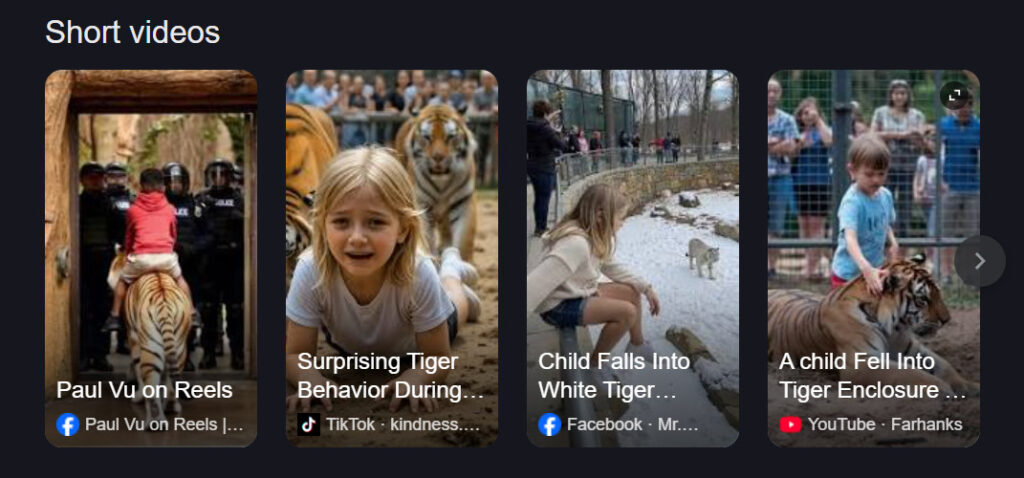
The Viral Tiger Videos: What They Claim to Show
Several different versions of these videos have gone viral, but they all follow a similar pattern. A child, often no older than six or seven, is shown sitting or standing inside a tiger enclosure. A tiger walks in, pauses, and approaches the child without showing aggression. Instead of behaving like a predator, the tiger sits calmly or lies down beside the child. Some clips show the child petting the tiger’s head or scratching its ears, with the tiger appearing to enjoy the interaction.
The camera pans to spectators behind the enclosure who gasp, cheer, or raise their phones to record the moment. Captions and hashtags promote the content as proof that wild animals are capable of tenderness and love toward humans. At first glance, the scenes look like miraculous evidence that even the deadliest predators can act with compassion.
Fact Check: Why the Tiger Videos Are Fake
Despite their realistic look, these clips do not depict real events. They are AI-generated. Here are the reasons why.
No Zoo Would Allow This
Tigers are among the most dangerous predators in the world. No reputable zoo or wildlife facility would ever place a child inside a tiger enclosure. Even professional handlers work with tigers using barriers and safety precautions. Allowing a child to sit with a tiger would violate every international safety standard and almost certainly end in tragedy.
AI Artifacts in the Video
Close inspection of the videos reveals clear signs of artificial generation. The tiger’s fur often looks too smooth, with stripes that blur or warp unnaturally. When children touch the tigers, their hands do not sink into the fur realistically, instead sliding in a way that looks artificial. Background spectators sometimes appear duplicated, with faces or hands that blur together, a common flaw in AI-generated crowds.
Perfectly Staged Scenes
Real animal behavior is unpredictable. Yet in every one of these viral clips, the tiger calmly places itself in the perfect position for the camera. This kind of cinematic staging is a hallmark of scripted AI video prompts rather than spontaneous real-life footage.
Repetition of Themes
The tiger clips resemble earlier viral hoaxes featuring lions, wolves, and bears interacting peacefully with children. The pattern of miraculous animal-human harmony is repeatedly recycled by content creators using AI tools, because it reliably generates emotional reactions and clicks.
Why People Believe the Fake Tiger Videos
There are several reasons why these AI hoaxes spread so widely and convince so many viewers.
Emotional Storytelling
The idea of a deadly predator showing tenderness to a child appeals to universal themes of innocence, love, and harmony with nature. People want to believe such miracles are possible, and the emotional hook lowers their skepticism.
Algorithmic Boost
Social media platforms promote content that shocks, surprises, and emotionally engages viewers. A child cuddling with a tiger is exactly the type of clip that algorithms prioritize, ensuring it reaches millions of feeds.
Increasing Realism of AI
AI tools like Runway, Pika, and Veo can now generate photorealistic animals and environments. To the untrained eye, these videos are indistinguishable from real life, making it easy for viewers to be deceived.
The Risks of Believing Fake Wildlife Content
While the videos may seem harmless at first, they actually present significant dangers.
Encouraging Unsafe Beliefs
By showing tigers as harmless companions, these clips mislead the public into underestimating the very real risks posed by wild predators. This false sense of safety could encourage reckless behavior around wild animals.
Supporting the Exotic Pet Trade
Videos that depict children peacefully playing with predators can encourage demand for dangerous exotic pets. In reality, keeping big cats as pets is both unsafe and deeply harmful to the animals.
Exploiting Viewers Through Scams
Many accounts that post these AI videos use them as bait to build large audiences. Once enough followers are gathered, the accounts can be sold or repurposed for scams, fake investments, or misleading advertisements.
Distracting From Real Conservation Issues
Instead of raising awareness about the genuine threats tigers face, such as habitat loss and poaching, these videos distract audiences with fantasies. They trivialize conservation work by replacing reality with digital illusions.
How To Identify AI-Generated Wildlife Hoaxes
Recognizing AI content is becoming harder, but there are still signs viewers can look for.
- Inspect textures such as fur or skin. AI often produces unnatural smoothness or distortions.
- Watch how humans and animals interact. If the physics of touch look unnatural, it may be fake.
- Study the background. Duplicated faces, blurred hands, or oddly staged crowds are red flags.
- Verify the source. Authentic zoos and conservation groups never release videos of children inside predator cages.
- Conduct a reverse image or video search. Many fake clips are flagged quickly by fact-checking organizations.
The Real Danger of Tigers
To fully appreciate why these videos are impossible, it helps to understand the true nature of tigers.
Adult tigers can weigh between 300 and 600 pounds. They have bite forces capable of crushing bone and claws that can kill with a single strike. Even tigers raised in captivity remain unpredictable predators with instincts that cannot be suppressed. There are numerous documented cases of tigers killing trainers, handlers, and even owners after years of seemingly calm behavior.
Placing a child inside a tiger cage would almost certainly lead to severe injury or death. This is why no legitimate wildlife organization would ever allow such a scenario.
Why These Videos Keep Going Viral
Despite being fake, the tiger videos spread because they are perfectly engineered for virality. They are short, visually striking, emotionally charged, and easy to caption with popular hashtags like #tiger, #zoo, and #love. They stop viewers mid-scroll, encourage sharing, and exploit the human fascination with miraculous animal stories.
The Bigger Picture of AI and Digital Misinformation
The rise of AI-generated wildlife content highlights a larger problem with digital misinformation. As AI tools become more advanced, distinguishing between real and fake footage will only get harder. While the tiger videos may seem like harmless entertainment, the same technology can be weaponized to spread political propaganda, financial scams, or dangerous misinformation. This makes media literacy an essential skill for everyone.
Conclusion: The Truth Behind the Child and Tiger Videos
The viral videos showing children calmly interacting with tigers in zoo enclosures are not real. They are AI-generated hoaxes created to manipulate emotions and rack up views on social media platforms. While entertaining on the surface, they are dangerous because they promote unsafe myths, encourage harmful wildlife practices, and mislead millions of viewers.
Tigers are not oversized house cats. They are apex predators deserving of respect, not digital fantasies. The true way to love and protect tigers is by supporting conservation efforts, preserving habitats, and rejecting viral hoaxes that trivialize the dangers these animals pose.
The next time you encounter a video that seems too perfect or miraculous to be true, remember to ask questions, verify sources, and consider the possibility of AI manipulation. Believing in fantasies may feel good for a moment, but understanding reality is what ultimately helps protect both people and wildlife.

Join the discussion
0 commentsShare your experience or ask a question about this article.
Discussion
Start the conversation
Have a question or something useful to share? Add the first comment.