

The internet never fails to deliver jaw-dropping viral videos. Recently, a clip titled “Even A Wild Lion Needs Love” has taken over TikTok, YouTube Shorts, and Instagram Reels. The short video shows a child sitting inside a lion enclosure at a zoo, while a massive lion calmly approaches. Instead of showing aggression, the lion sits down peacefully and even allows the child to pet its head. Spectators behind the cage gasp in amazement, cheer, and record the surreal moment on their phones.
The video quickly spread with captions suggesting that even the fiercest wild animals crave love and that this child had somehow touched the heart of the king of the jungle. But the truth behind this viral content is very different from what many viewers believe. Here at De-Reviews, we investigated the origins, technical details, and potential risks of such videos. After thorough fact-checking, it is clear: the footage is AI-generated and not real.
This article will break down the evidence, explain why the video is fabricated, explore the dangers of AI-generated wildlife content, and help readers understand why believing such content can have real-world consequences.
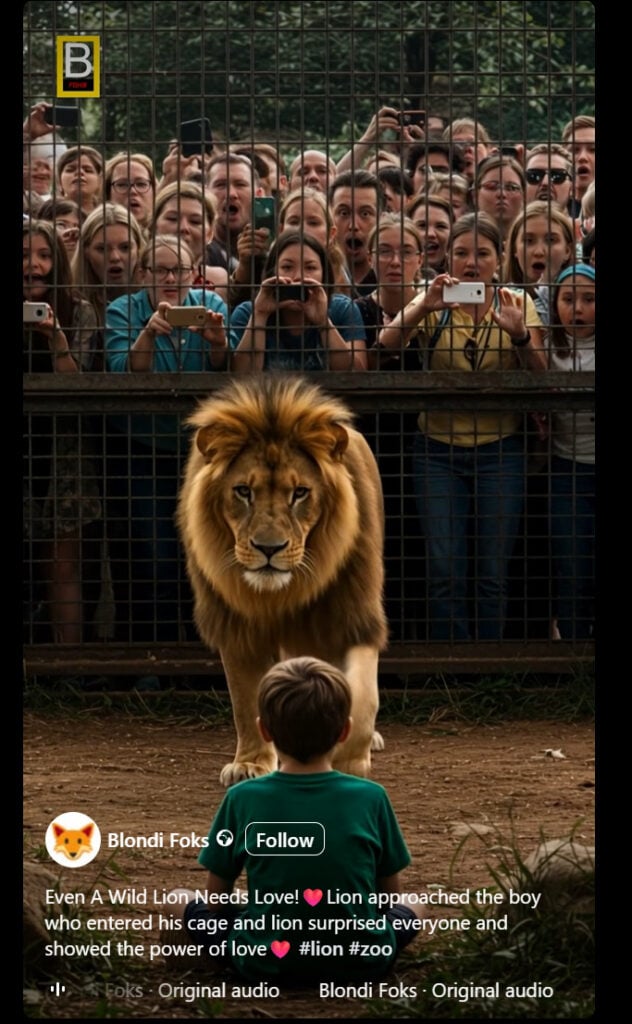
The Viral Clip: What It Shows
The video appears to be filmed in a zoo environment. A young boy, wearing a green shirt, sits directly inside a lion’s cage. From the viewer’s perspective, a full-grown lion emerges, locking eyes with the child. Instead of attacking, the lion calmly approaches, sits down in front of him, and even lowers its head to allow the boy to pat its mane.
Spectators standing behind the cage react with wide eyes, open mouths, and raised smartphones. Their expressions suggest disbelief, as if they are witnessing an extraordinary act of love between predator and human. The captions claim that the video demonstrates the “power of love” and show that “even a wild lion needs affection.”
At face value, the footage gives the impression of a miraculous bond between human and beast. But when we apply closer scrutiny, several glaring red flags appear.
Fact Check: Why The Video Is Fake
Despite its emotional impact, the viral video does not depict real life. It is a carefully crafted AI-generated clip. Here is how we can tell:
1. Unrealistic Zoo Policy
No legitimate zoo in the world would allow a child, or any untrained individual, to enter a lion enclosure. Lions are apex predators capable of killing with a single strike. Even experienced zookeepers avoid direct contact without protective barriers. Zoos follow strict safety regulations, and such a scenario would violate every protocol in existence.
2. AI-Generated Visual Flaws
On closer inspection, the video reveals inconsistencies typical of AI-generated media:
- Lion’s fur texture looks overly smooth and uniform, lacking the natural randomness seen in real footage.
- Hand-lion interaction mismatch: When the child places his hand on the lion’s head, the movement does not sync perfectly. The fur appears to “morph” slightly rather than responding naturally to touch.
- Background crowd reactions appear exaggerated and identical. Several faces show uncanny AI artifacts, like duplicated expressions or oddly blurred features.
3. Too Perfectly Staged
The entire sequence unfolds in a way that feels cinematic rather than spontaneous. The lion walks in slowly, sits directly in front of the child, and lowers its head in a picture-perfect pose. Real animal behavior is unpredictable, and lions rarely act with such choreographed precision.
4. AI Video Tools Make This Easy
With the rapid development of advanced AI models like Google’s Veo, Runway, and other text-to-video platforms, generating realistic wildlife scenes is now simple. Content creators can type prompts like “A lion calmly interacts with a child in a zoo” and receive photorealistic video clips. These tools make it possible to create highly emotional, yet entirely fake, viral moments.
Why People Believe The Video
AI-generated videos are designed to tug at emotions. The creators of such clips know exactly how to capture attention and exploit human psychology. Here are the main reasons why many viewers fall for them:
Emotional Manipulation
The theme of “love conquers all” resonates deeply with audiences. Seeing a dangerous predator showing tenderness toward a child triggers powerful emotions, making people want to believe it is real.
Social Media Amplification
Platforms like TikTok, YouTube Shorts, and Instagram Reels thrive on short, shocking clips. Algorithms push emotionally charged content to wider audiences because it generates likes, comments, and shares. Once a video goes viral, fewer people question its authenticity.
Visual Realism
AI technology has advanced so far that most viewers cannot distinguish generated content from real footage. When combined with dramatic captions and staged crowd reactions, the illusion becomes even stronger.
The Real Dangers of Such Fake Wildlife Videos
At first glance, AI-generated clips like this may seem harmless. After all, they are just digital fantasies. But in reality, these videos pose several dangers.
1. Promoting Unsafe Wildlife Interactions
By showing a child sitting calmly with a lion, the video spreads a dangerous idea that wild animals can be trusted in close contact. This misconception could lead people to underestimate the risks of interacting with predators, potentially inspiring unsafe behavior in zoos, safaris, or even illegal pet ownership.
2. Misleading Public Perception of AI
Many viewers still struggle to differentiate between real footage and AI-generated content. Viral videos like this blur the line further, making it harder for the public to trust authentic footage in the future.
3. Scams and Exploitation
Accounts that post AI-generated animal videos often use them as bait. Once they gather followers and engagement, scammers may hijack the accounts to promote fake investment schemes, questionable products, or even phishing attempts. Viewers who initially followed for “heartwarming content” may end up targeted by fraud.
4. Undermining Conservation Awareness
Real wildlife conservation is about protecting animals in their natural habitats, not staging viral spectacles. Fake videos risk distracting the public from real issues like poaching, habitat loss, and human-wildlife conflict.
How To Spot AI-Generated Wildlife Videos
To protect yourself from being misled, it is important to recognize the signs of AI-generated content. Here are a few practical tips:
Look For Visual Inconsistencies
Pay attention to details like fur, shadows, or hand movements. AI often struggles with realistic texture, perspective, or physical interactions.
Check The Source
Reputable zoos or wildlife organizations never post such risky footage. If a video originates from an unknown TikTok account with little context, it is likely fabricated.
Observe Human Reactions
Crowd reactions in AI videos often look exaggerated, duplicated, or unnatural. If everyone in the background seems perfectly staged, that’s a red flag.
Reverse Image or Video Search
Running a reverse search can reveal whether the content has been flagged as AI-generated elsewhere.
Why This Video Went Viral
The virality of “Even A Wild Lion Needs Love” is no accident. It checks every box for algorithmic success:
- Short runtime for maximum attention.
- Emotional storyline appealing to universal values.
- Shock factor of a child in danger without harm.
- Easy to caption with hashtags like #lion, #zoo, #love.
This formula guarantees that users will stop scrolling, watch, and share. Content creators exploit these psychological hooks, even when the video itself is entirely fabricated.
Real-Life Risks Of Lions
To understand why this video is impossible in reality, we must remember the nature of lions.
Lions Are Apex Predators
A lion can weigh over 400 pounds and has bite forces strong enough to crush bones. Despite being raised in captivity, lions retain wild instincts.
Documented Attacks
History is filled with incidents where lions, even those raised by humans, suddenly attacked caretakers or visitors. In 2018, a lion killed its longtime handler in South Africa despite years of familiarity.
Unpredictable Behavior
Unlike domestic animals, lions cannot be fully trained. Their behavior can change instantly due to stress, hunger, or environmental triggers. A child inside a lion’s cage would almost certainly be at risk.
The Rise of AI-Generated Animal Content
The “Even A Wild Lion Needs Love” video is just one of many AI-generated wildlife clips circulating online. Others show bears hugging people, tigers cuddling with children, or wolves protecting lost hikers. All share the same pattern: highly emotional, seemingly miraculous, and ultimately fake.
These clips are created because they are easy to generate, easy to believe, and extremely viral. As AI tools become more accessible, we can expect a flood of similar videos, making digital literacy even more crucial.
How To Protect Yourself Online
Since AI content is here to stay, viewers must adapt by learning to think critically. Here are a few ways to stay safe:
- Verify Before Sharing – Double-check facts before spreading content.
- Follow Trusted Sources – Stick to verified wildlife organizations for real footage.
- Be Skeptical Of “Too Perfect” Moments – If it looks like a movie scene, it probably is.
- Report Misleading Content – Help platforms identify and remove fake viral videos.
Conclusion: The Truth Behind The Lion Video
The viral clip of a child peacefully sitting with a lion inside a zoo cage may look heartwarming, but it is not real. It is an AI-generated fantasy designed to spark emotional reactions and generate viral traffic. While entertaining on the surface, such content carries hidden dangers. It spreads misinformation about wildlife, promotes unsafe perceptions of predators, and opens the door to scams and exploitation.
As AI technology evolves, spotting fabricated videos will become more difficult. That is why critical thinking and media literacy are essential skills in today’s digital world. The next time you come across a “too good to be true” animal video, remember: reality is rarely that simple, and wild animals are not actors in viral clips.
True love for lions and other wildlife comes not from pretending they are harmless, but from respecting their power, protecting their habitats, and supporting real conservation efforts.

Join the discussion
0 commentsShare your experience or ask a question about this article.
Discussion
Start the conversation
Have a question or something useful to share? Add the first comment.