

The world of cryptocurrency is filled with innovation, opportunity, and, unfortunately, an ever-growing number of scams. One of the most recent threats is the Coinbase withdrawal code text scam. At first glance, it looks like an urgent security alert from Coinbase, warning you about a suspicious withdrawal from your account. But behind the scenes, it’s nothing more than a cleverly disguised attempt to steal your money, personal information, and digital assets.
If you’ve received a message claiming to be from Coinbase that includes a “withdrawal code” and urges you to call a phone number immediately, you may be the target of this scam. This guide will give you everything you need to know, from a detailed breakdown of how the scam works to step-by-step actions to take if you’ve been caught in its net.
Scam Overview
The Coinbase withdrawal code text scam is a form of tech support scam. Unlike traditional phishing emails that direct you to fake websites, this one relies on text messages (SMS) to create urgency and fear. The goal is to trick you into calling a scammer-operated phone line, where they will continue the deception with persuasive, high-pressure tactics.
What the Scam Looks Like
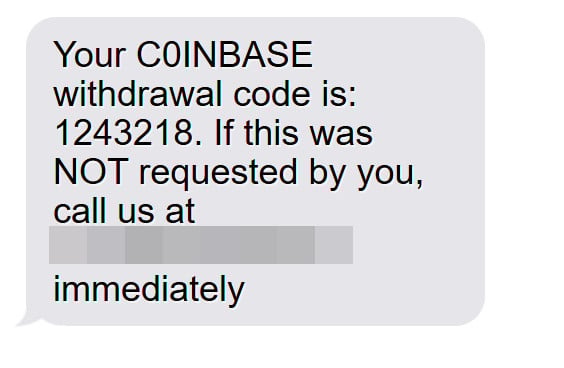
The scam usually starts with a text that reads something like:
“Your C0INBASE withdrawal code is: 1243218. If this was NOT requested by you, call us at +1XXXXXXXXXX immediately.”
At first glance, several details might appear legitimate:
- The text uses the name “Coinbase.”
- It mentions a withdrawal code, which many users know is part of Coinbase’s security verification.
- It warns about unauthorized activity, something every crypto holder fears.
- It provides a “direct” phone number for urgent help.
However, there are clear red flags:
- The letter “O” in “Coinbase” may be replaced with a zero, as in “C0INBASE,” to bypass spam filters and appear unique.
- Coinbase does not send messages that instruct users to call a phone number.
- The withdrawal code is irrelevant unless you are actively performing a withdrawal.
- The provided phone number is not connected to Coinbase customer service.
The Psychological Trick
Scammers rely heavily on social engineering—techniques designed to manipulate human behavior. This scam plays on three emotional triggers:
- Fear – You think your funds are at risk.
- Urgency – You believe you must act now to prevent theft.
- Trust in authority – The message appears to come from a reputable company.
When these three emotions are combined, many people bypass their normal skepticism and follow the instructions without verifying them.
Why This Scam Is Effective
The cryptocurrency space is inherently high-risk, and users are more sensitive to potential theft. Scammers exploit this mindset. They know that a possible unauthorized withdrawal will push users into a “panic mode” where quick reaction overrides logical thinking.
Furthermore, because Coinbase is one of the most recognized cryptocurrency exchanges, using its name lends false legitimacy to the scam. The majority of victims do not question the authenticity until it is too late.
Who the Scammers Target
While anyone can receive the text, scammers often purchase or steal lists of phone numbers associated with cryptocurrency accounts. They may obtain these from:
- Data breaches of unrelated companies.
- Previous phishing attacks.
- Public social media posts where users discuss cryptocurrency.
- Dark web marketplaces.
It’s important to note that you don’t need to have a Coinbase account to receive the text. Scammers send these messages en masse, hoping that some recipients will have accounts and take the bait.
The Goal of the Scam
Ultimately, the Coinbase withdrawal code text scam aims to:
- Steal your cryptocurrency directly.
- Gain access to your bank accounts.
- Obtain personal information for identity theft.
- Trick you into sending untraceable gift card payments.
The scam is multi-layered, meaning even if the first tactic fails (for example, if you refuse to transfer crypto), scammers will switch to other strategies to get something valuable from you.
How the Scam Works
The Coinbase withdrawal code text scam operates through a carefully scripted series of steps designed to gain your trust, create fear, and ultimately separate you from your assets. Here’s how it typically unfolds.
Step 1: The Initial Text Message
You receive a text message stating that there has been a withdrawal request from your Coinbase account and providing a withdrawal code. It includes a phone number to call if you did not make the request. The text often looks legitimate because:
- It mimics Coinbase’s formatting style.
- It includes a code that appears real.
- It contains professional-sounding language.
However, there are subtle clues that it’s fake:
- The “Coinbase” name may be slightly altered.
- The phone number does not match any official Coinbase contact information.
- Coinbase never requests that you call them in response to a code.
Step 2: The Urgent Phone Call
If you call the number, you’re connected to a fake tech support agent. These individuals are often trained in persuasion and may work from scam call centers overseas. They will:
- Thank you for calling.
- Pretend to “verify” your identity.
- Express concern about the security of your account.
- Claim that hackers are trying to withdraw your funds.
Their tone will be urgent but professional, making them seem like legitimate support staff.
Step 3: The Scare Tactics
The scammer will intensify the fear by:
- Claiming your device is hacked.
- Saying they’ve detected “suspicious transactions.”
- Warning that your funds are at immediate risk of being stolen.
They may use technical jargon to make their claims sound credible.
Step 4: The Fake Solution
The scammer will then offer a “solution”:
- Transfer your funds to a secure wallet – This “secure wallet” is controlled by the scammer. Once you send your crypto there, it’s gone forever.
- Allow remote access to your device – They may ask you to install software like AnyDesk, TeamViewer, or similar tools. Once connected, they can:
- Steal your crypto wallet seed phrase.
- Access bank accounts.
- Download sensitive documents.
- Buy gift cards – They may claim this is needed to verify your identity or secure your account. They’ll ask you to send them the codes, which they can redeem immediately.
Step 5: The Extraction Phase
Once they have access to your device or crypto wallets, they will:
- Transfer cryptocurrency to their own wallets.
- Steal personal and financial data.
- Attempt to take control of linked accounts, including email, PayPal, and online banking.
If they are using the gift card scam, they will redeem the codes instantly, leaving no traceable trail.
Step 6: The Aftermath
Victims often realize they’ve been scammed only after:
- Their cryptocurrency is missing.
- Their bank accounts show unauthorized charges.
- They notice new accounts or loans opened in their name.
By this stage, recovering lost funds is nearly impossible. Cryptocurrency transactions are irreversible, and gift card codes cannot be reclaimed once redeemed.
What to Do if You Have Fallen Victim to This Scam
If you’ve already engaged with the scammer, called the number, or given them access to your funds or device, it’s critical to act immediately. Time is of the essence.
1. Disconnect Internet and Power
If you allowed remote access to your device, disconnect it from the internet immediately to cut off their control. Shut down the device completely.
2. Change All Passwords
Use a different device to change passwords for:
- Coinbase account
- Email accounts
- Banking accounts
- Any linked services
Use strong, unique passwords for each.
3. Enable Two-Factor Authentication
If you don’t already have it enabled, add 2FA to your accounts using an authenticator app (not SMS) for better security.
4. Contact Coinbase Directly
Report the scam to Coinbase through their official support channels. Provide details of the message and phone number.
5. Contact Your Bank
If you gave the scammers access to bank information, notify your bank immediately. They may be able to freeze or monitor your account.
6. Report the Scam
Report to:
- The Federal Trade Commission (FTC) at ReportFraud.ftc.gov
- The FBI’s Internet Crime Complaint Center (IC3) at ic3.gov
- Your local police department
7. Scan Your Device
Run a full antivirus and anti-malware scan to detect any malicious software the scammer may have installed.
8. Monitor Your Accounts
Check all accounts regularly for suspicious activity. Consider a credit freeze to prevent identity theft.
9. Do Not Engage Further
If the scammer calls you back or sends more texts, block the number and do not respond.
Is Your Device Infected? Run a Free Malware Scan
Slow performance, constant pop-ups, or strange behavior? These are classic signs of a malware infection. The fastest way to find out is to scan your device with Malwarebytes Free — one of the most trusted malware removal tools available.
The free version detects and removes the most common threats, including:
- Adware — the cause of those annoying pop-ups
- Browser hijackers — unwanted redirects and changed homepages
- Trojans and spyware — hidden programs stealing your data
- Potentially unwanted programs (PUPs) — software you never asked for
👉 Select your device below — Windows, Mac, or Android — then follow the simple steps to download Malwarebytes, scan your system, and remove any threats it finds. The scan usually takes 5 to 20 minutes.
Run a Malware Scan with Malwarebytes for Windows
Malwarebytes is one of the most popular and trusted anti-malware tools for Windows — and it’s completely free for removing infections. It catches threats that many antivirus programs miss, including adware, browser hijackers, and trojans. Follow the steps below to scan and clean your PC in just a few minutes.
Download Malwarebytes
Click the button below to download the latest version of Malwarebytes for Windows from the official source. The free version is all you need — it will scan your computer and remove adware, browser hijackers, and other malicious software at no cost.
Download MalwarebytesOfficial installer for Windows 11 and 10. Your download starts right away.Want real-time protection? See Malwarebytes Premium Malwarebytes Free for WindowsScans and removes malware at no cost
-
Install Malwarebytes
When the download finishes, open your Downloads folder and double-click the MBSetup file. If Windows shows a User Account Control pop-up, click “Yes” to allow the installation.
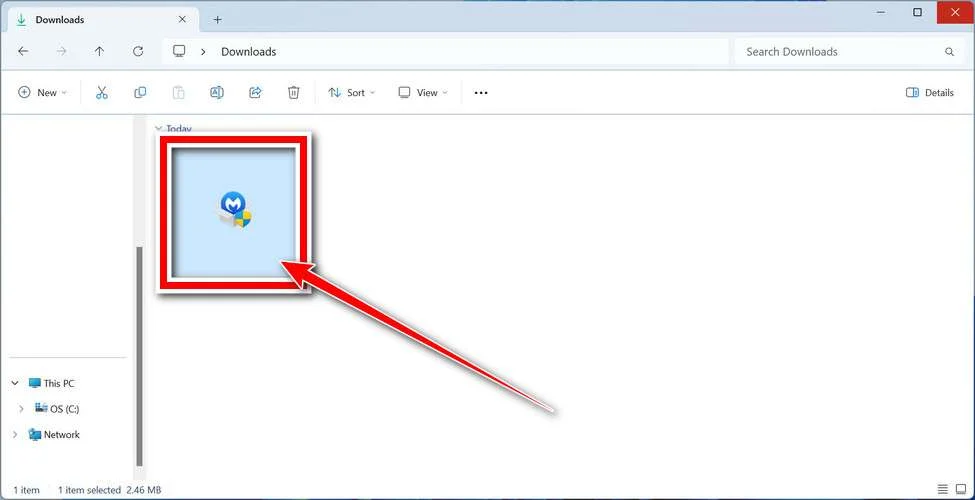
Follow the On-Screen Prompts to Install Malwarebytes
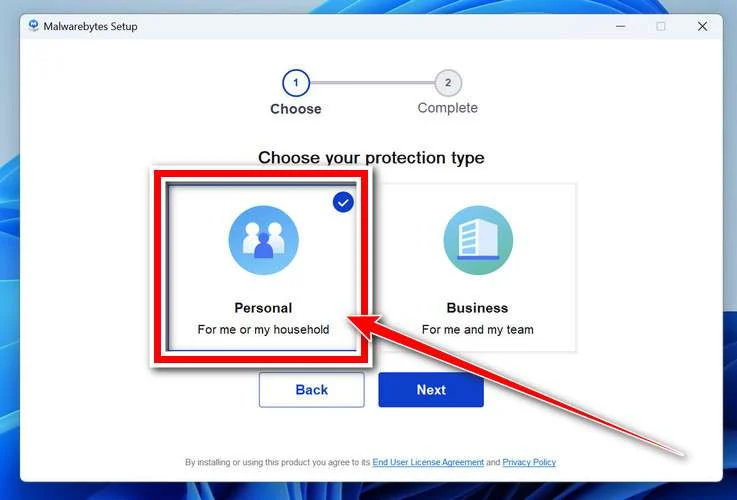
The setup wizard will walk you through a few quick screens:
-
Choose where you’re installing the program — “Personal Computer” or “Work Computer” — then click Next.
-
Malwarebytes will now install on your device. This usually takes under a minute.

-
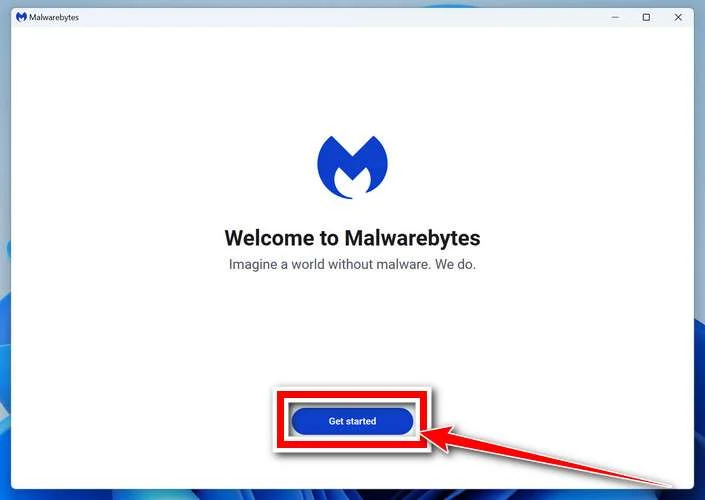
When installation is complete, the “Welcome to Malwarebytes” screen will open automatically.
-
On the final screen, click Open Malwarebytes to launch the program.

-
Enable “Scan for Rootkits”
Before scanning, turn on rootkit detection so Malwarebytes can find even the most hidden threats. Click the Settings gear icon on the left side of the screen.
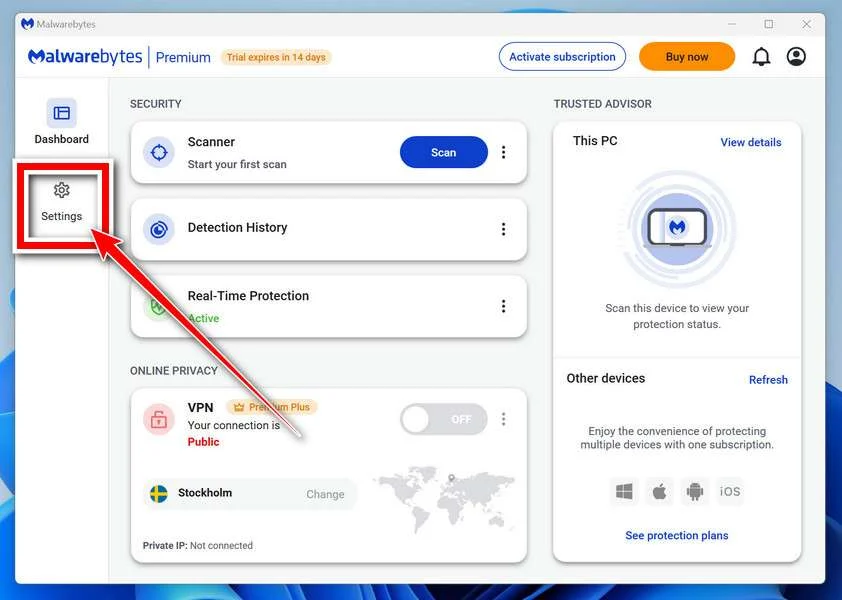
In the settings menu, find “Scan for rootkits” and click the toggle so it turns blue.

Done? Click “Dashboard” in the left pane to return to the main screen.
Start the Scan
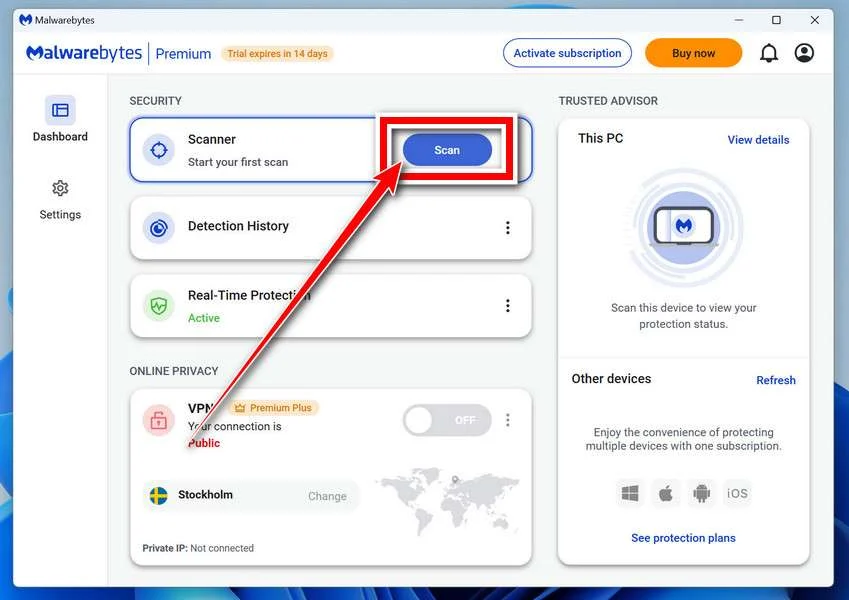
Click the blue Scan button. Malwarebytes will automatically update its virus database and start checking your computer for malware.
-
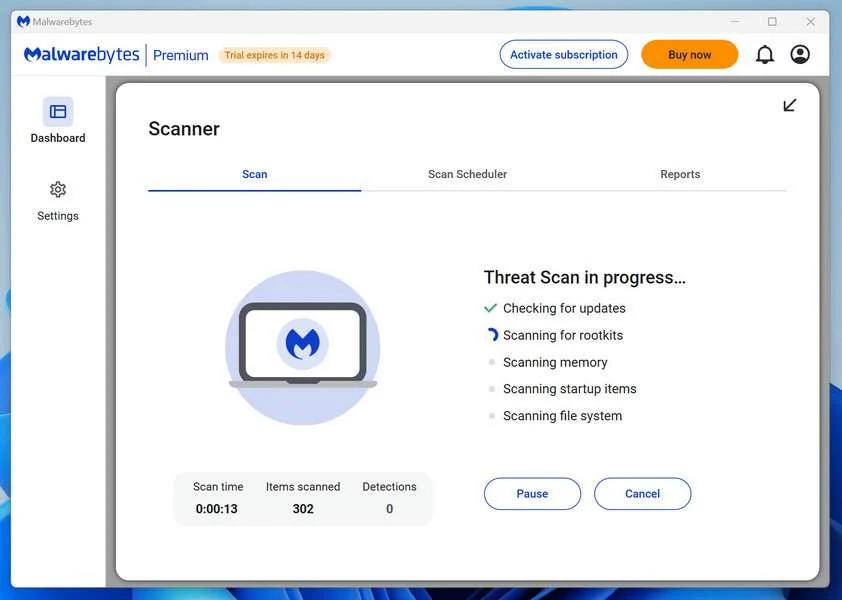
Wait for the Scan to Finish
The scan checks your entire system for browser hijackers and other malicious programs, so it can take 5 to 20 minutes depending on your computer. Feel free to do something else — just check back occasionally to see the progress.
-
Quarantine the Detected Threats
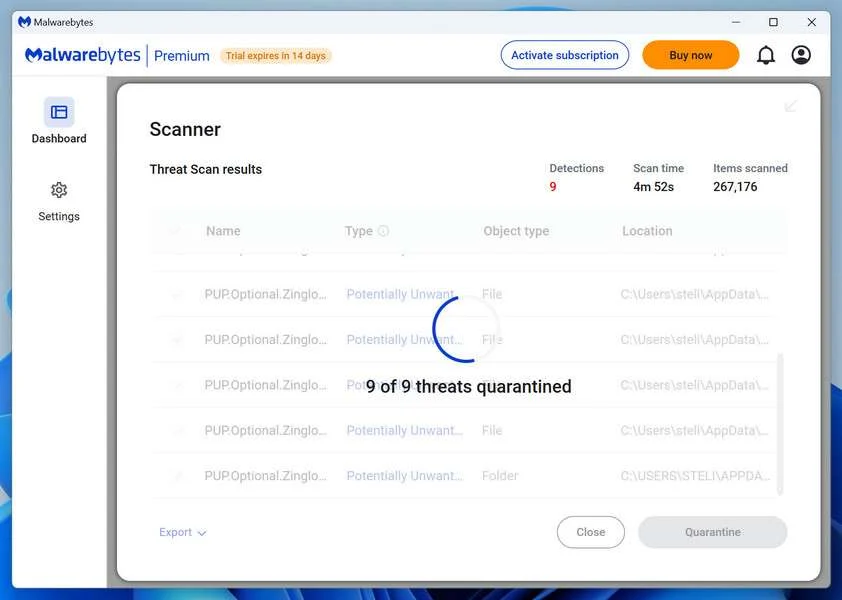
When the scan is done, you’ll see a list of everything Malwarebytes found — malware, adware, and potentially unwanted programs. Click the “Quarantine” button to remove all of them at once.
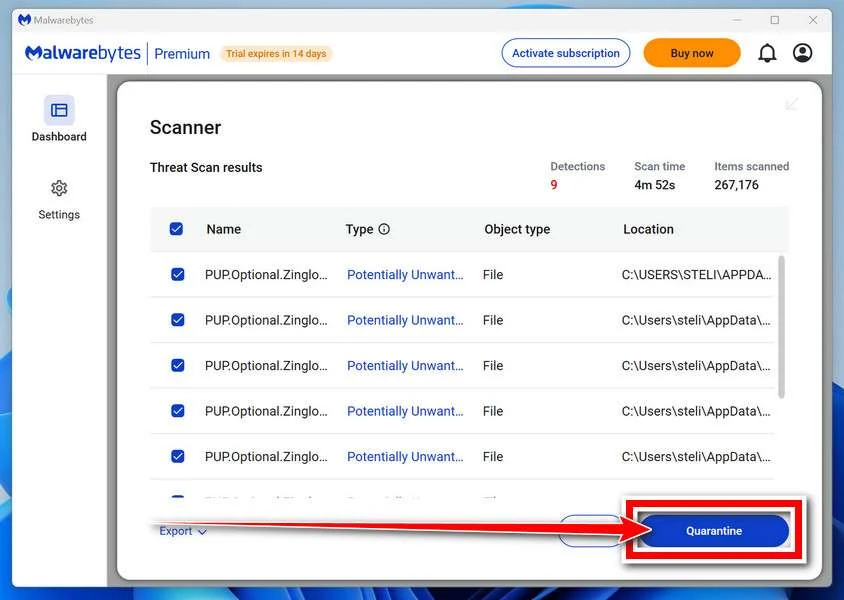
Malwarebytes will now remove the malicious files and registry entries and move them safely into quarantine.
-
Restart Your Computer
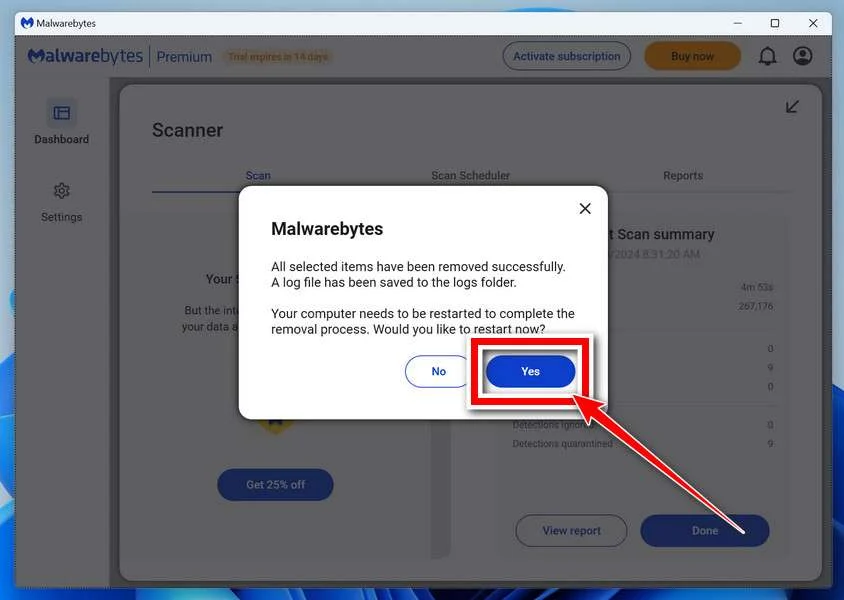
Some threats can only be fully removed after a reboot. If Malwarebytes asks you to restart, click Yes. Once you’re logged back in, Malwarebytes has finished removing the threats it found.
That’s it — your Windows PC is now clean of trojans, adware, and other malware, and should be back to running smoothly.
If you are still having problems with your computer after completing these instructions, then please follow one of the steps:
- Run a computer scan with ESET Online Scanner
- Ask for help in our Windows Malware Removal Help & Support forum.
Run a Malware Scan with Malwarebytes for Mac
Malwarebytes for Mac is a free on-demand scanner that removes the malware other security software tends to miss — adware, browser hijackers, and unwanted programs included. Cleaning an infected Mac with Malwarebytes has always been completely free, and it’s our go-to recommendation. Follow the steps below to scan and clean your Mac in just a few minutes.
-
Download Malwarebytes for Mac
Click the button below to download the latest version of Malwarebytes for Mac.
Download MalwarebytesOfficial installer for macOS. Your download starts right away.Want real-time protection? See Malwarebytes PremiumMalwarebytes Free for MacScans and removes malware at no cost -
Open the Malwarebytes setup file
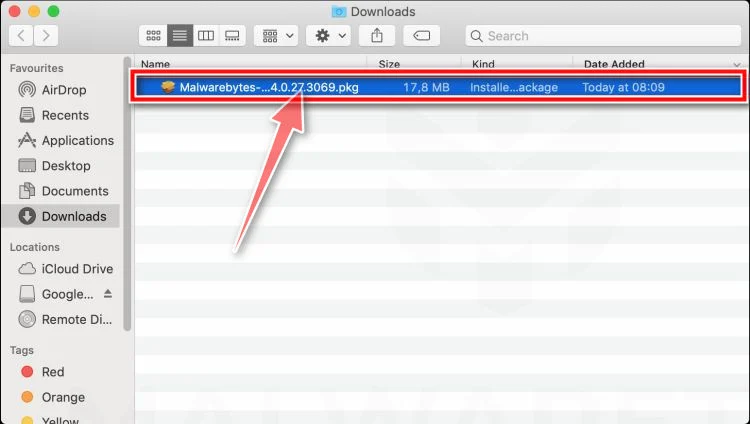
When the download finishes, open your Downloads folder and double-click the setup file to begin the installation.
-
Follow the On-Screen Prompts to Install Malwarebytes
The Malwarebytes for Mac Installer will guide you through a few quick screens. Click “Continue” and keep following the prompts until the installation completes.
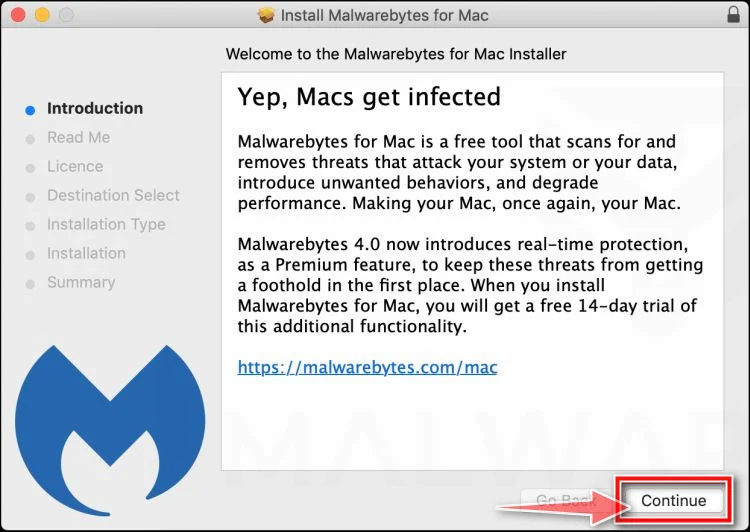
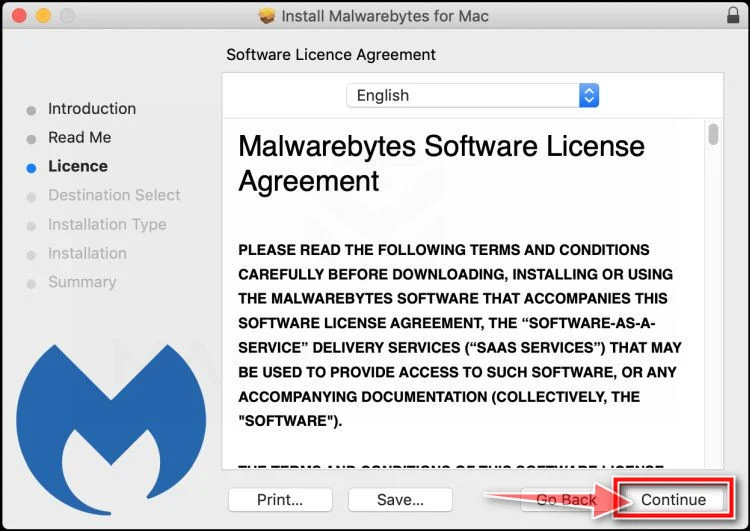
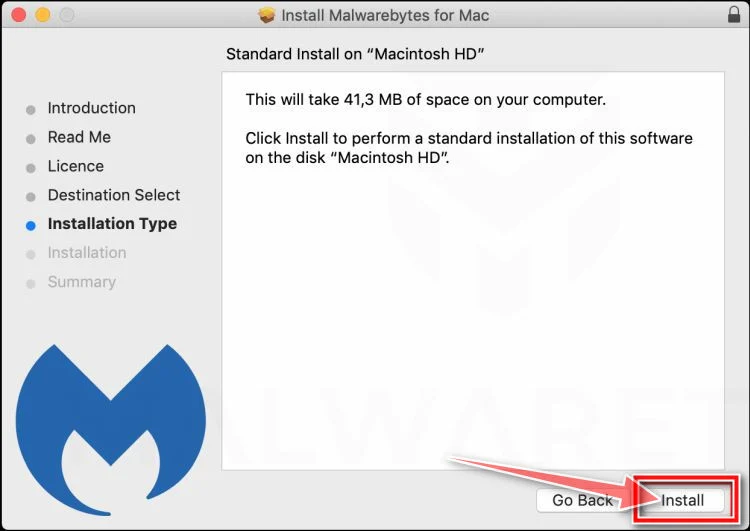
When the installation is complete, Malwarebytes opens to the Welcome to Malwarebytes screen. Click “Get started“.
-
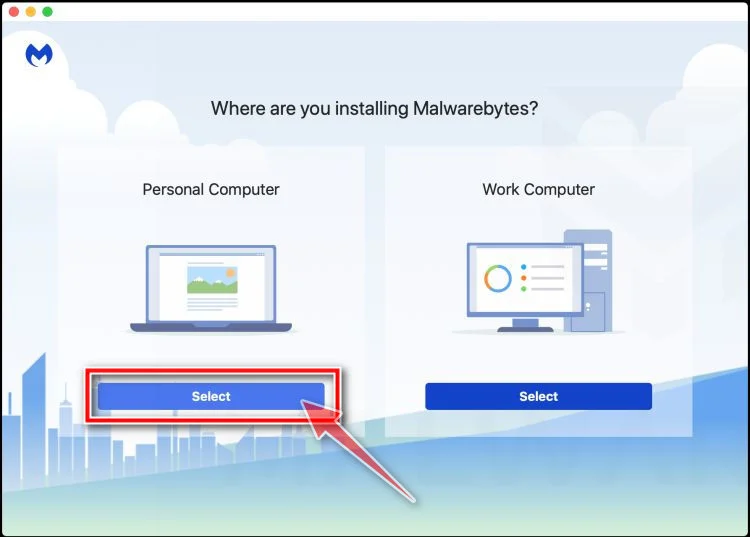
Select “Personal Computer” or “Work Computer”
Malwarebytes will ask what type of computer you’re installing it on. Click either Personal Computer or Work Computer, whichever applies.
-
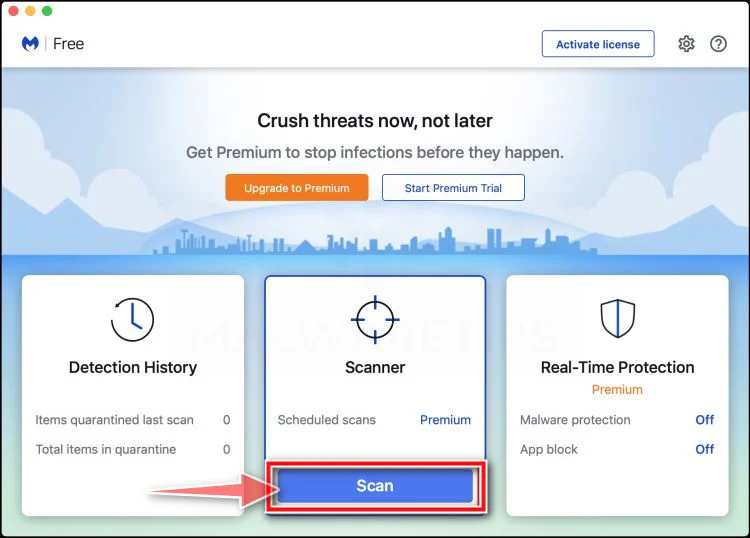
Start the Scan
Click the “Scan” button. Malwarebytes will automatically update its detection database and begin checking your Mac for malware.
-
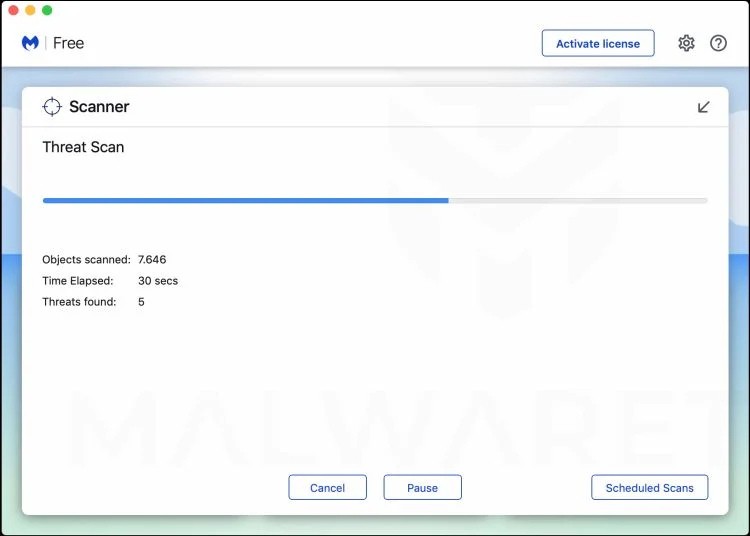
Wait for the Scan to Finish
Malwarebytes will scan your Mac for adware, browser hijackers, and other malicious programs. This can take a few minutes, so feel free to do something else — just check back occasionally to see the progress.
-
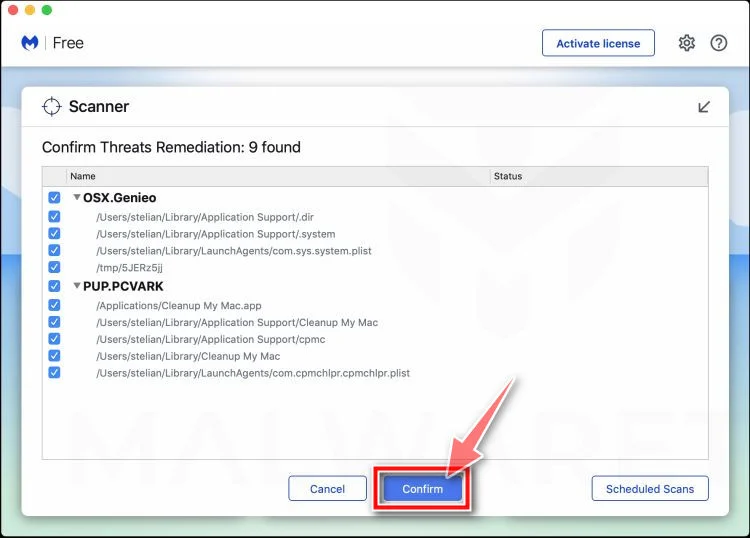
Quarantine the Detected Threats
When the scan is done, you’ll see a list of everything Malwarebytes found. Click the “Quarantine” button to remove all the threats at once.
-
Restart Your Mac
Malwarebytes will now remove all the malicious files it found. Some threats can only be fully removed after a reboot — if Malwarebytes asks you to restart, allow it. Once you’re logged back in, your Mac is clean.
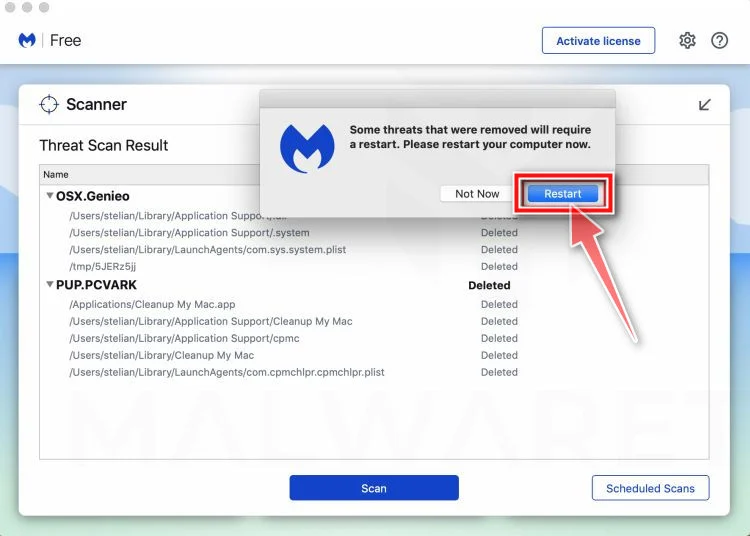
That’s it — your Mac is now free of adware, rogue browser extensions, and other potentially harmful software.
If you are still experiencing problems while trying to remove a malicious program from your computer, please ask for help in our Mac Malware Removal Help & Support forum.
Run a Malware Scan with Malwarebytes for Android
Malwarebytes for Android automatically detects and removes dangerous threats like malware and ransomware so you don’t have to worry about your most-used device being compromised. Aggressive detection of adware and potentially unwanted programs keeps your Android phone or tablet running smooth.
-
Download Malwarebytes for Android.
You can download Malwarebytes for Android by clicking the link below.
Get Malwarebytes for AndroidOpens Google Play in a new tab.Want real-time protection? See Malwarebytes Premium for AndroidMalwarebytes for AndroidScans your phone and removes malware at no cost -
Install Malwarebytes for Android on your phone.
In the Google Play Store, tap “Install” to install Malwarebytes for Android on your device.

When the installation process has finished, tap “Open” to begin using Malwarebytes for Android. You can also open Malwarebytes by tapping on its icon in your phone menu or home screen.

-
Follow the on-screen prompts to complete the setup process
When Malwarebytes will open, you will see the Malwarebytes Setup Wizard which will guide you through a series of permissions and other setup options.
This is the first of two screens that explain the difference between the Premium and Free versions. Swipe this screen to continue.
Tap on “Got it” to proceed to the next step.
Malwarebytes for Android will now ask for a set of permissions that are required to scan your device and protect it from malware. Tap on “Give permission” to continue.
Tap on “Allow” to permit Malwarebytes to access the files on your phone.
-
Update database and run a scan with Malwarebytes for Android
You will now be prompted to update the Malwarebytes database and run a full system scan.

Click on “Update database” to update the Malwarebytes for Android definitions to the latest version, then click on “Run full scan” to perform a system scan.

-
Wait for the Malwarebytes scan to complete.
Malwarebytes will now start scanning your phone for adware and other malicious apps. This process can take a few minutes, so we suggest you do something else and periodically check on the status of the scan to see when it is finished.

-
Click on “Remove Selected”.
When the scan has been completed, you will be presented with a screen showing the malware infections that Malwarebytes for Android has detected. To remove the malicious apps that Malwarebytes has found, tap on the “Remove Selected” button.

-
Restart your phone.
Malwarebytes for Android will now remove all the malicious apps that it has found. To complete the malware removal process, Malwarebytes may ask you to restart your device.
That’s it — your Android phone is now clean — no more malicious apps, adware, or browser redirects.
If you are still having problems with your phone after completing these instructions, then please follow one of the steps:
- Restore your phone to factory settings by going to Settings > General management > Reset > Factory data reset.
- Ask for help in our Mobile Malware Removal Help & Support forum.
Stay Protected: Block Ads and Malicious Sites
Now that your device is clean, keep it that way. Most infections start with a malicious ad or a fake download button — so blocking them at the source is your best defense.
We recommend AdGuard, which blocks malicious ads, phishing pages, and dangerous redirects before they can reach you.
👉 Download AdGuard and browse safely
Frequently Asked Questions About the Coinbase Withdrawal Code Text Scam
1. What is the Coinbase withdrawal code text scam?
The Coinbase withdrawal code text scam is a fraudulent scheme where scammers send you an SMS claiming to be from Coinbase. The message typically says your account is about to process a withdrawal and provides a “withdrawal code.” It then instructs you to call a phone number if you did not request the transaction. The phone number connects you to fake tech support agents who will try to steal your cryptocurrency, personal details, and banking information.
2. How can I tell if a Coinbase text message is fake?
There are several red flags that indicate the message is fake:
- The sender’s name is misspelled, often replacing the “O” in “Coinbase” with a zero (“C0INBASE”).
- The message urges you to call a phone number. Coinbase does not operate this way.
- You receive the code without performing any withdrawal yourself.
- The phone number is not listed on Coinbase’s official support page.
If you notice any of these signs, the message is a scam.
3. Does Coinbase ever send withdrawal codes by text?
Yes, Coinbase does send two-factor authentication codes and withdrawal verification codes, but only when you initiate a transaction. They will never ask you to call a phone number to confirm or cancel a withdrawal. All verification is done directly through the Coinbase website or mobile app.
4. What happens if I call the number in the scam text?
If you call the number, you’ll speak to a scammer posing as Coinbase support. They will claim that your account is at risk or that hackers are trying to steal your funds. From there, they may:
- Ask you to transfer your cryptocurrency to a so-called “secure wallet” (which they control).
- Request remote access to your phone or computer.
- Ask for your wallet’s seed phrase or login credentials.
- Demand payment in the form of gift cards.
Their goal is to extract as much money and personal information from you as possible.
5. How do scammers use remote access in this scam?
When you grant remote access, scammers can:
- View and control your device in real time.
- Open your cryptocurrency wallets and transfer funds.
- Steal stored passwords and personal files.
- Install malicious software for ongoing access.
This is why you should never install remote access tools at the request of an unsolicited caller or texter.
6. Can scammers steal my cryptocurrency without my seed phrase?
Most of the time, scammers need your seed phrase, private keys, or direct account access to steal your crypto. However, if they gain remote access to your device, they can extract this information or directly initiate transactions while logged into your wallet. That’s why device security is just as important as protecting your seed phrase.
7. What should I do if I receive a Coinbase withdrawal code text?
If you receive this type of message:
- Do not reply.
- Do not click any links or call the number.
- Take a screenshot of the message for reporting purposes.
- Report it to Coinbase via their official support channels.
- Delete the message after reporting.
It’s also a good idea to forward the text to your mobile carrier at 7726 (SPAM) to help block the sender.
8. What should I do if I already called the scam number?
If you’ve already called the scam number:
- Hang up immediately.
- If you gave them personal or account information, change your passwords right away.
- Enable two-factor authentication for all important accounts.
- Contact Coinbase through their official site to alert them of the situation.
- If you allowed remote access, disconnect from the internet, run a full malware scan, and consider a professional security check.
- Contact your bank and credit card companies to monitor or freeze accounts.
9. Can I get my money or cryptocurrency back after being scammed?
Unfortunately, cryptocurrency transactions are irreversible, meaning you cannot get your funds back once sent to a scammer’s wallet. Gift card payments are also irreversible once redeemed. You can report the incident to law enforcement and your bank, but recovery is unlikely unless the scammers are caught.
10. How can I protect myself from the Coinbase withdrawal code text scam?
- Verify messages directly through the Coinbase app or official website.
- Never call phone numbers provided in unsolicited messages.
- Enable strong security settings like two-factor authentication with an authenticator app.
- Keep your seed phrase offline and never share it.
- Stay informed by reading updates about common cryptocurrency scams.
11. Why do scammers use the Coinbase brand for this scam?
Coinbase is one of the most recognized and trusted cryptocurrency exchanges in the world, with millions of users. By impersonating Coinbase, scammers instantly gain a level of credibility in the eyes of unsuspecting recipients. Many victims assume that a well-known company would never be impersonated, which is exactly what scammers exploit.
12. Is this the same as a phishing scam?
Yes, but with a twist. Traditional phishing usually involves fake websites or email links. In this scam, the phishing is done over the phone after hooking the victim through SMS. This method is called voice phishing or “vishing,” combined with smishing (SMS phishing).
The Bottom Line
The Coinbase withdrawal code text scam is a dangerous and highly convincing scheme designed to steal your crypto, personal information, and money. By creating fear and urgency, scammers push victims into making quick decisions without verifying the situation.
Remember, Coinbase will never send you a text asking you to call a phone number to verify a code. The safest approach is to ignore and delete any such message, verify your account directly through Coinbase’s website or app, and report suspicious messages to the proper authorities.
Your best defense is awareness. Knowing how this scam works, recognizing the warning signs, and taking immediate action if targeted can protect you from significant financial and personal loss.

Join the discussion
0 commentsShare your experience or ask a question about this article.
Community experiences
Did this happen to you?
Your experience could help someone recognize the same scam. Submit a private report for our team to review.
I experienced this tooReports are reviewed before publication. Sharing publicly is always your choice.
Discussion
Start the conversation
Have a question or something useful to share? Add the first comment.