

An email promising a complimentary Costco Complete Gourmet Thanksgiving Turkey Dinner sounds like a seasonal reward anyone would welcome. The subject line, “Costco Dinner, Latest Information,” is crafted to spark curiosity and urgency. Yet behind this message sits a subscription trap built to quietly drain victims for far more than the supposed shipping fee. Understanding how this scheme works is essential for recognizing the threat before money vanishes and personal data enters the hands of fraudsters.
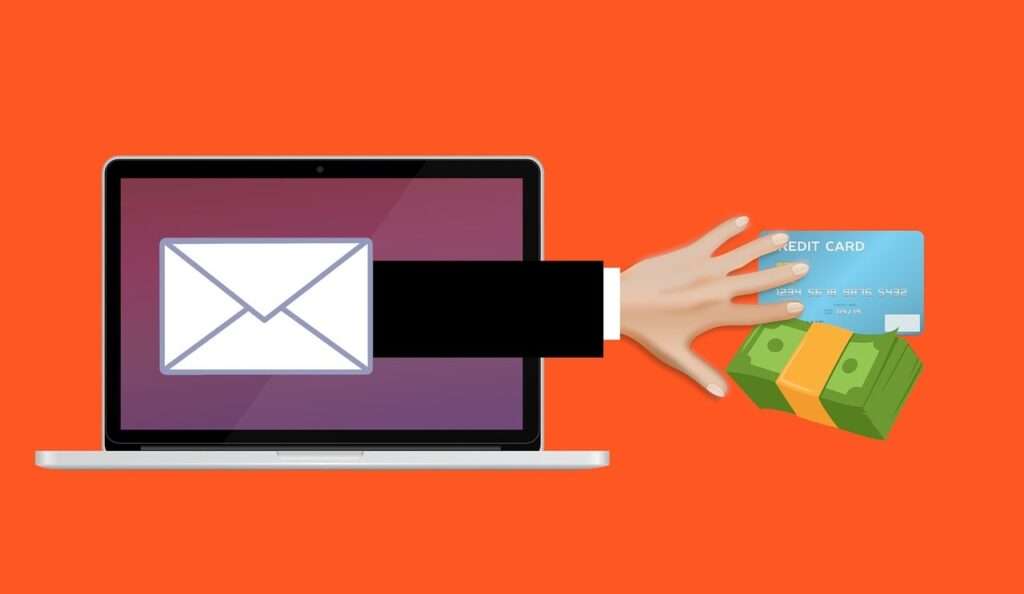
Scam Overview
The Costco Complete Gourmet Thanksgiving Turkey Dinner Scam is a deceptive operation that exploits the trusted Costco brand to trick consumers into a recurring subscription they never intended to join. The email claims that the recipient has been selected for an exclusive opportunity to claim a Complete Gourmet Thanksgiving Turkey Dinner for eight people, weighing a total of 28 lbs. To make the offer appear legitimate, scammers structure the email with the Costco logo, professional typography, and language that mimics the retailer’s real promotional materials.
Victims are told they only need to pay a small shipping cost, usually $9.95 or $9.96, to receive the turkey dinner. What appears to be a simple one-time payment is actually the entry point to a hidden subscription plan. The landing pages often contain buried fine print or deceptive terms designed to make victims overlook what they are signing up for. These pages claim that the offer is limited, exclusive, and expiring soon in order to push users into acting before they stop to analyze the details.
The scheme typically redirects users to a series of interconnected scam websites. These pages use tactics like countdown timers, bold buttons, fake reviews, and urgency messaging that claims the reward will not last long. Often, users cannot go back or exit until they have interacted with the page in some way. The entire design is engineered to speed up the process and prevent rational decision-making.
The subscription component is the core of the fraud. Although the shipping fee appears small, users are automatically enrolled in a recurring membership program that charges $89.95 after five days, followed by $89.95 every thirty days. Victims rarely notice these terms until charges begin appearing on their bank statements. Many who fall prey describe the exact same pattern: the turkey dinner never arrives, the charges continue, and cancellation is intentionally difficult. Customer support numbers listed on the site often do not work, lead to call centers that refuse refunds, or simply loop victims in circles.
This scam relies on brand impersonation. Costco is a well-known retailer, so scammers exploit that trust to disarm skepticism. Costco has repeatedly clarified that it does not send reward emails like this, nor does it offer promotional giveaways requiring small shipping payments. However, the fraudulent messages are convincing because they closely mirror the company’s style and voice.
Another key factor in the success of this scam is the seasonal context. Around Thanksgiving, people are actively purchasing turkey dinners, groceries, and holiday supplies. The idea of receiving a free dinner is appealing, especially when budgets are tight. Scammers know this and time their campaigns to take advantage of increased online activity during the holidays.
The email subject line “Costco Dinner, Latest Information” is intentionally vague but intriguing. Messages of this type bypass skepticism because they appear administrative rather than promotional, encouraging recipients to open them without overthinking the content. Once opened, the email congratulates the user, claiming they have been selected to receive a premium Thanksgiving meal package. The tone of exclusivity adds psychological pressure, implying that failing to act quickly means losing a valuable reward.
The red “GET IT NOW” button plays into this urgency. Clicking it is the gateway to the scam network, where various landing pages guide users through the payment process. These pages often load slowly or change appearance over time as scammers rotate domain names and hosting services to avoid detection and shutdown.
The scam also uses false scarcity. Statements like “This exclusive limited-time reward is available for a short period” or “Only a few turkey dinners remain today” increase the likelihood that victims proceed without fully reviewing terms. Scam operators understand the behavioral effect of scarcity messaging and rely on it heavily.
Fake testimonials are another layer of manipulation. Some pages display fabricated comments from fictional customers claiming they received the turkey dinner on time, praising the quality, and recommending the offer. These comments are intended to legitimize the scam and reduce doubt.
The overarching danger lies not only in the immediate financial loss but also in the collection of personal data. Victims provide their full name, home address, email, phone number, and card details. This information is valuable in secondary scams and can be resold to other malicious operators. Many victims later report additional suspicious charges or unwanted marketing messages from unrelated scam operations.
Ultimately, this scheme is structured to extract recurring payments from unsuspecting users and harvest their personal data. The turkey dinner does not exist, the offer is fraudulent, and the subscription is intentionally concealed to maximize profit. Only by understanding the mechanics and red flags can consumers avoid falling into this trap.
How The Scam Works
The scam follows a predictable yet effective structure designed to move victims from curiosity to recurring charges as smoothly as possible. Each step is strategically crafted to reduce skepticism, shorten reaction time, and conceal the true purpose of the operation. Below is a detailed step-by-step breakdown of how the scam works.
Step 1: The Email Lands in Your Inbox
Everything begins with an unsolicited email designed to look like a genuine Costco communication. The subject line “Costco Dinner, Latest Information” appears harmless and administrative. This strategic choice increases open rates because it does not contain overt marketing language. Many recipients assume the message relates to order updates, member notices, or seasonal promotions from Costco.
The email features Costco’s logo in high resolution, matching colors, and a professional layout. Beneath the header, it claims the recipient has been selected for an “exclusive opportunity.” The wording is intentionally celebratory but vague, allowing recipients to project their own excitement onto the offer.
The central blue banner that reads “Complete Gourmet Thanksgiving Turkey Dinner, Serves 8, 28 lbs Total” mirrors Costco’s real food product descriptions. Scammers rely on credibility through familiarity. The large red button marked “GET IT NOW” is a visual call to action meant to bypass rational thought and drive clicks.
Here is what the email says:
Costco Wholesale
We are giving you an exclusive opportunity to receive:
Complete Gourmet Thanksgiving Turkey Dinner, Serves 8, 28 lbs Total
Congratulations. You have been selected to receive a Complete Gourmet Thanksgiving Turkey Dinner, Serves 8, 28 lbs Total. This exclusive and limited offer may not be available for long. Simply take a few moments to share your feedback and you can claim your reward.
Get it now
Step 2: Redirection to a Fake Reward Website
Once the user clicks the button, they are redirected to a fraudulent site designed to mimic reward surveys commonly used by large retailers. These pages may change frequently as scammers rotate domains to avoid detection. Typical features include:
- A greeting message reinforcing that the user has been selected for a special reward.
- A progress bar indicating that the user must complete simple steps to claim the turkey dinner.
- A fake survey containing generic questions ranging from shopping habits to product preferences.
- A strict focus on speed, urgency, and limited availability.
The goal is to convince users that completing the short survey entitles them to the reward. These surveys provide no real consumer insights but serve as psychological preparation for entering payment details later.
Step 3: The Offer of the Turkey Dinner
After completing the fake survey, the user is told they can claim the turkey dinner for only $9.95 or $9.96 to cover shipping. This small amount seems reasonable, especially considering the dinner supposedly includes a 28 lb turkey and serves eight people. The scammers know that consumers often overlook small charges and may not read the terms when the price appears insignificant.
This step uses classic marketing psychology. Small payments reduce barriers to action. The promise of a luxury meal creates perceived value. The framing of the shipping fee as the only cost helps mask the true nature of the subscription trap.
Step 4: The Hidden Subscription Trap
The fine print, often located in light gray text or hidden beneath multiple scroll points, states that by paying the shipping fee, the user agrees to a subscription. These terms typically include:
- A five-day trial period
- A charge of $89.95 once the trial expires
- Recurring charges of $89.95 every 30 days
Many victims never see this fine print. The design of the page is intended to obscure the terms. Critical information is placed below the fold, in difficult-to-read fonts, or behind expandable sections that users are unlikely to click.
The payment page appears professional and secure. Some scam sites even use SSL certificates and locks to create the illusion of legitimacy. Victims enter their card details believing they are paying a simple shipping fee.
Step 5: The Order Confirmation and Silence
After submitting payment, victims receive a confirmation email stating their order has been processed. However, the email provides no tracking details or delivery information. The turkey dinner is never shipped because it does not exist.
During the next few days, victims usually forget about the transaction because the amount was small. The lack of immediate red flags works to the scammers’ advantage.
Step 6: The First $89.95 Charge
Five days later, the first large charge appears on the victim’s bank statement. This is often the moment when victims realize something is wrong. The charge description may be from an unfamiliar company name completely unrelated to Costco. Attempts to identify the source often lead to dead ends.
Step 7: Continued Monthly Charges
If the victim does not immediately contact their bank or the scam site, the charges continue. Every thirty days, another $89.95 is withdrawn. Some victims report being billed two or three times before noticing the pattern.
Step 8: Attempts to Cancel
Victims attempting to cancel encounter:
- Nonexistent customer service lines
- Email addresses that bounce back
- Representatives who refuse refunds
- Statements that the victim agreed to the terms
The cancellation process is intentionally frustrating and designed to delay action until more charges can be processed.
Step 9: Resale of Personal Data
Personal details collected during the sign-up process are often resold to other fraudulent operators. Victims commonly report receiving additional scam emails, fake giveaways, unsolicited calls, and phishing attempts after falling for this scam.
The scam’s lifecycle continues as long as victims remain unaware. The operators change domain names, email templates, and landing pages regularly to avoid detection.
What To Do If You Have Fallen Victim To This Scam
If you already entered your information and were charged, follow these steps immediately:
1. Contact Your Bank or Card Issuer
Explain that you were enrolled in a deceptive subscription you did not knowingly authorize. Ask for:
- A reversal of charges
- A block on future payments from the merchant
- A replacement card to prevent further unauthorized withdrawals
2. Cancel the Subscription Directly on the Scam Website
If the site offers an account portal:
- Log in using the email you registered with.
- Attempt to cancel the subscription manually.
Do not rely on this step alone. Many scam sites do not honor cancellations, but performing it helps support a refund request with your bank.
3. Document Everything
Take screenshots of:
- The promotional email
- The landing pages
- Charges on your statement
- Any correspondence with the scammer
Documentation strengthens your case when disputing charges.
4. Report the Scam to Costco
Costco regularly updates their fraud department about new impersonation schemes. Reporting helps protect others.
5. Freeze or Monitor Your Credit
If you provided sensitive details like date of birth, address, or phone number, consider:
- Placing a fraud alert
- Monitoring credit reports for suspicious activity
6. Watch for Secondary Scams
Victims often receive additional phishing emails or fake promotions. Stay alert and avoid interacting with suspicious communications.
7. Report to Government and Consumer Agencies
Submit reports to:
- The FTC (for US victims)
- State consumer protection offices
- Anti-phishing organizations
- Your country’s cybercrime division
These reports help investigators track scam networks.
Is Your Device Infected? Run a Free Malware Scan
Slow performance, constant pop-ups, or strange behavior? These are classic signs of a malware infection. The fastest way to find out is to scan your device with Malwarebytes Free — one of the most trusted malware removal tools available.
The free version detects and removes the most common threats, including:
- Adware — the cause of those annoying pop-ups
- Browser hijackers — unwanted redirects and changed homepages
- Trojans and spyware — hidden programs stealing your data
- Potentially unwanted programs (PUPs) — software you never asked for
👉 Select your device below — Windows, Mac, or Android — then follow the simple steps to download Malwarebytes, scan your system, and remove any threats it finds. The scan usually takes 5 to 20 minutes.
Run a Malware Scan with Malwarebytes for Windows
Malwarebytes is one of the most popular and trusted anti-malware tools for Windows — and it’s completely free for removing infections. It catches threats that many antivirus programs miss, including adware, browser hijackers, and trojans. Follow the steps below to scan and clean your PC in just a few minutes.
Download Malwarebytes
Click the button below to download the latest version of Malwarebytes for Windows from the official source. The free version is all you need — it will scan your computer and remove adware, browser hijackers, and other malicious software at no cost.
Download MalwarebytesOfficial installer for Windows 11 and 10. Your download starts right away.Want real-time protection? See Malwarebytes Premium Malwarebytes Free for WindowsScans and removes malware at no cost
-
Install Malwarebytes
When the download finishes, open your Downloads folder and double-click the MBSetup file. If Windows shows a User Account Control pop-up, click “Yes” to allow the installation.
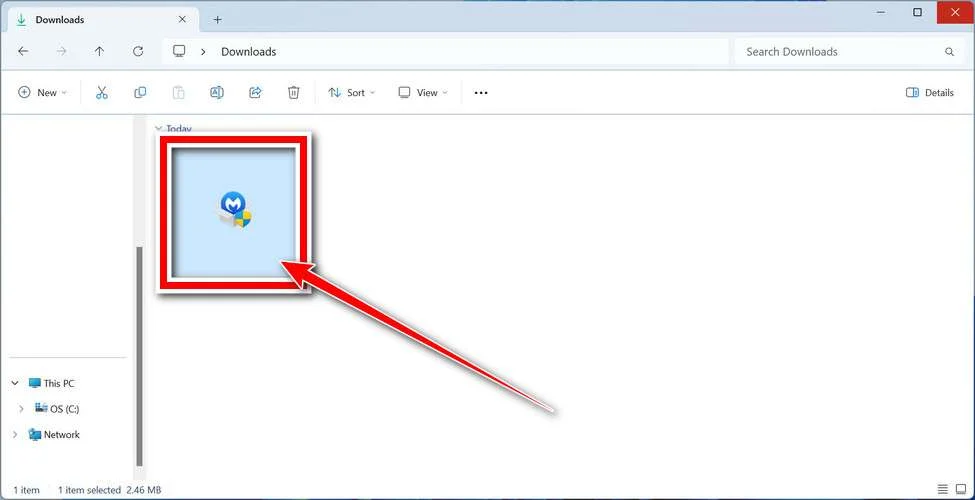
Follow the On-Screen Prompts to Install Malwarebytes
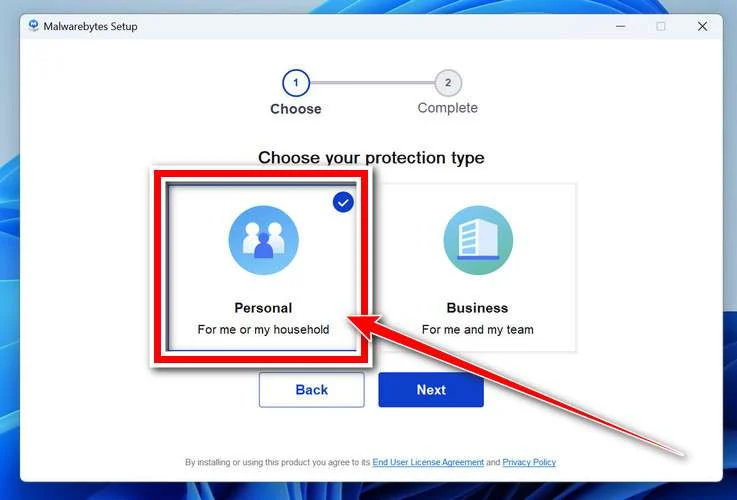
The setup wizard will walk you through a few quick screens:
-
Choose where you’re installing the program — “Personal Computer” or “Work Computer” — then click Next.
-
Malwarebytes will now install on your device. This usually takes under a minute.

-
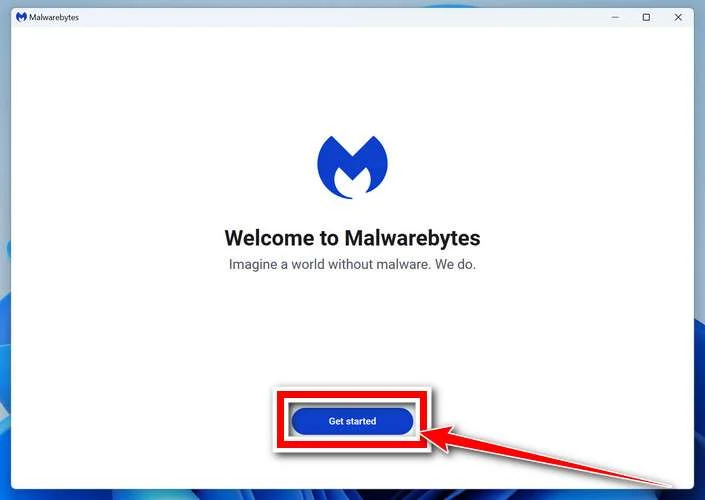
When installation is complete, the “Welcome to Malwarebytes” screen will open automatically.
-
On the final screen, click Open Malwarebytes to launch the program.

-
Enable “Scan for Rootkits”
Before scanning, turn on rootkit detection so Malwarebytes can find even the most hidden threats. Click the Settings gear icon on the left side of the screen.
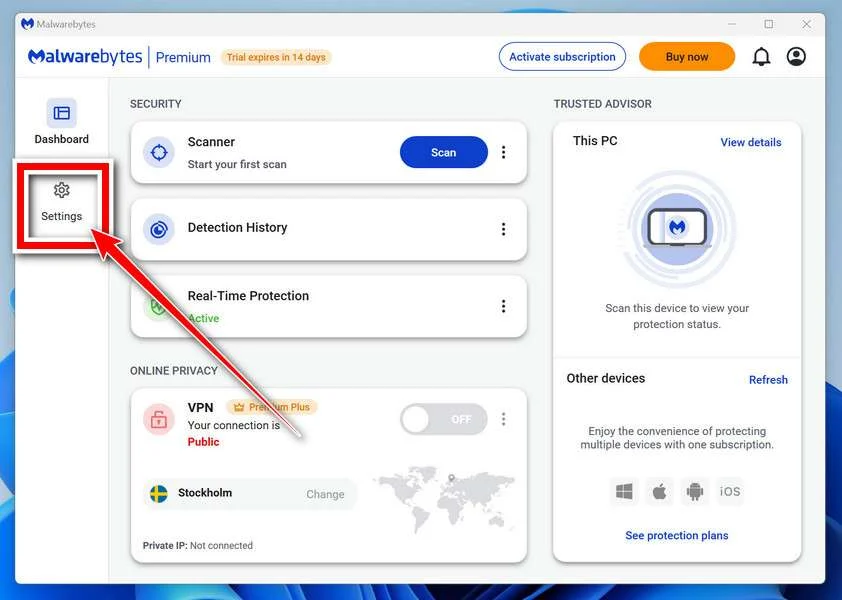
In the settings menu, find “Scan for rootkits” and click the toggle so it turns blue.

Done? Click “Dashboard” in the left pane to return to the main screen.
Start the Scan
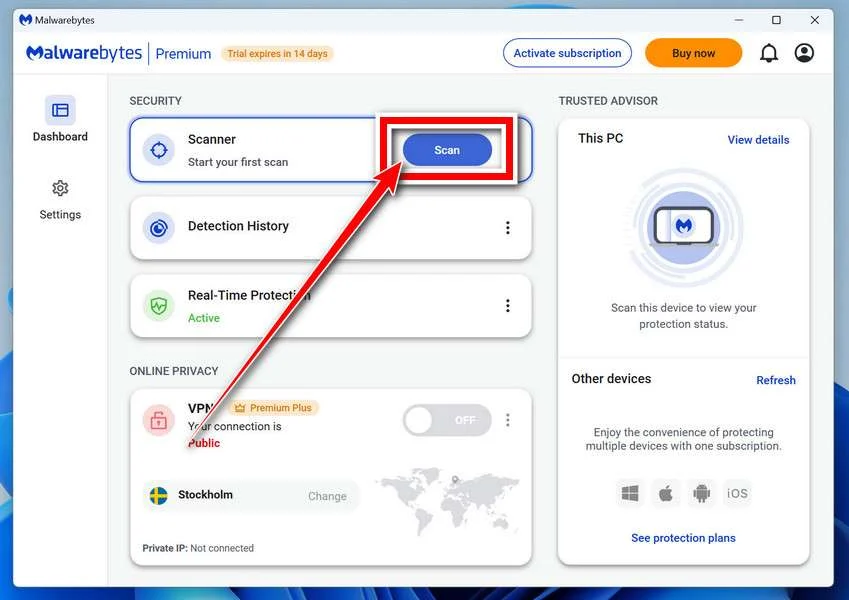
Click the blue Scan button. Malwarebytes will automatically update its virus database and start checking your computer for malware.
-
Wait for the Scan to Finish
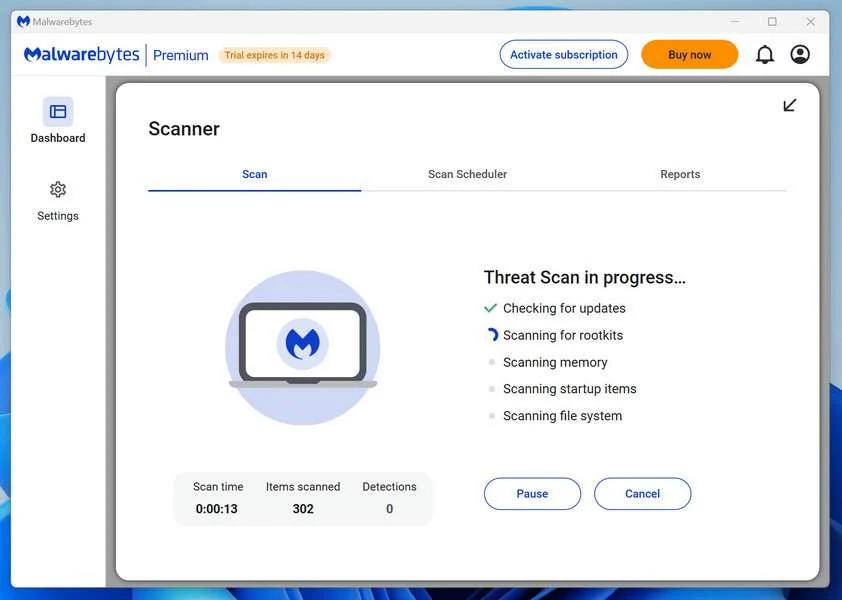
The scan checks your entire system for browser hijackers and other malicious programs, so it can take 5 to 20 minutes depending on your computer. Feel free to do something else — just check back occasionally to see the progress.
-
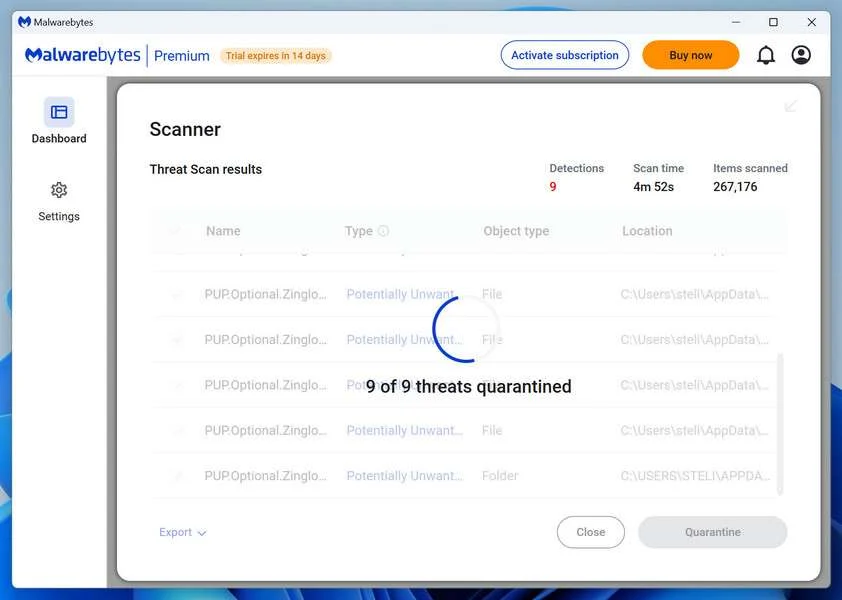
Quarantine the Detected Threats
When the scan is done, you’ll see a list of everything Malwarebytes found — malware, adware, and potentially unwanted programs. Click the “Quarantine” button to remove all of them at once.
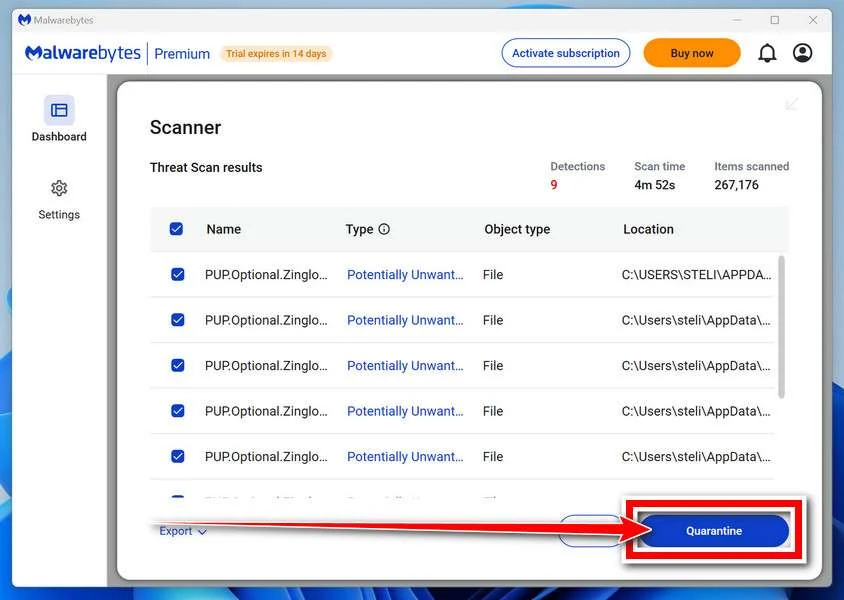
Malwarebytes will now remove the malicious files and registry entries and move them safely into quarantine.
-
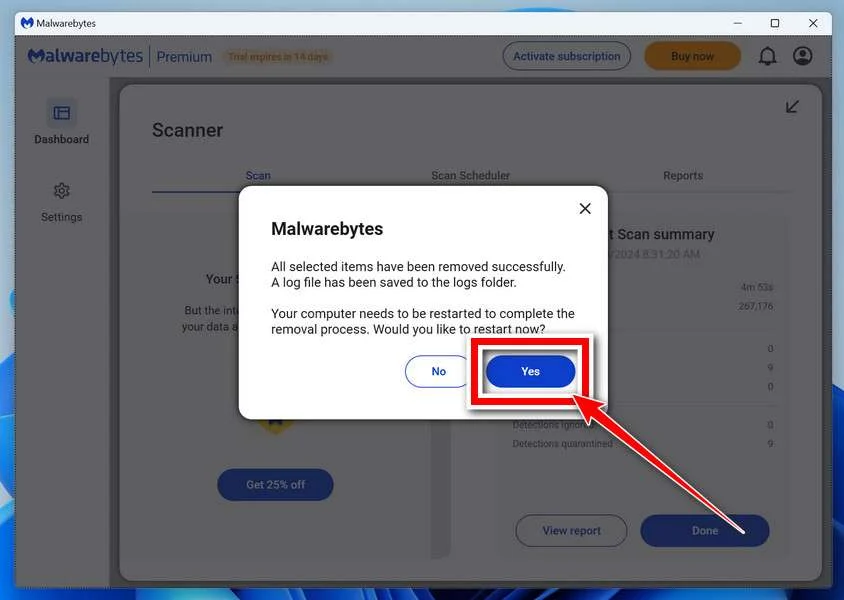
Restart Your Computer
Some threats can only be fully removed after a reboot. If Malwarebytes asks you to restart, click Yes. Once you’re logged back in, Malwarebytes has finished removing the threats it found.
That’s it — your Windows PC is now clean of trojans, adware, and other malware, and should be back to running smoothly.
If you are still having problems with your computer after completing these instructions, then please follow one of the steps:
- Run a computer scan with ESET Online Scanner
- Ask for help in our Windows Malware Removal Help & Support forum.
Run a Malware Scan with Malwarebytes for Mac
Malwarebytes for Mac is a free on-demand scanner that removes the malware other security software tends to miss — adware, browser hijackers, and unwanted programs included. Cleaning an infected Mac with Malwarebytes has always been completely free, and it’s our go-to recommendation. Follow the steps below to scan and clean your Mac in just a few minutes.
-
Download Malwarebytes for Mac
Click the button below to download the latest version of Malwarebytes for Mac.
Download MalwarebytesOfficial installer for macOS. Your download starts right away.Want real-time protection? See Malwarebytes PremiumMalwarebytes Free for MacScans and removes malware at no cost -
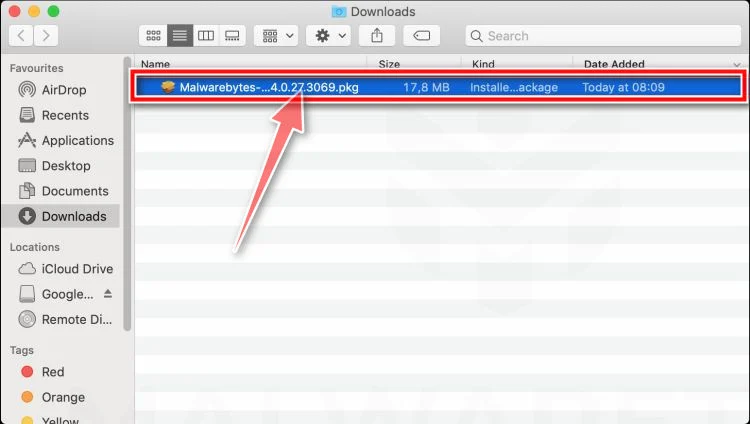
Open the Malwarebytes setup file
When the download finishes, open your Downloads folder and double-click the setup file to begin the installation.
-
Follow the On-Screen Prompts to Install Malwarebytes
The Malwarebytes for Mac Installer will guide you through a few quick screens. Click “Continue” and keep following the prompts until the installation completes.
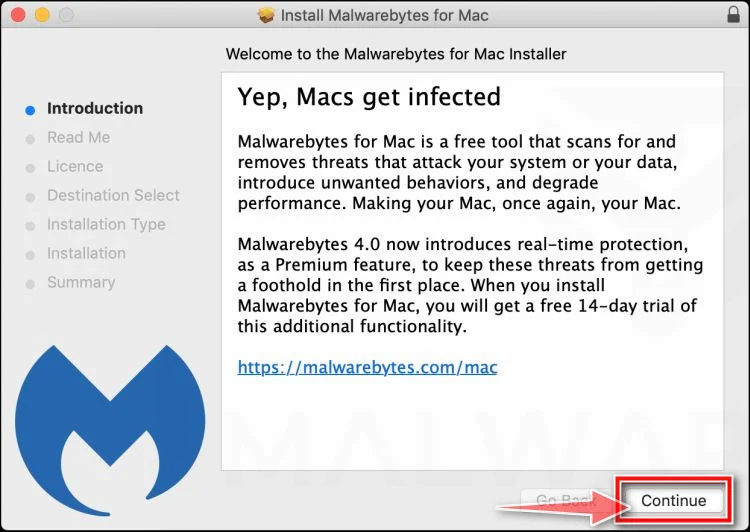
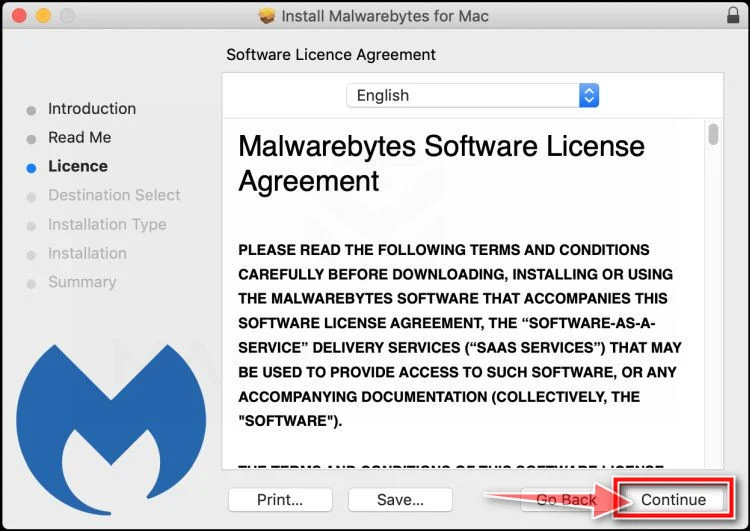
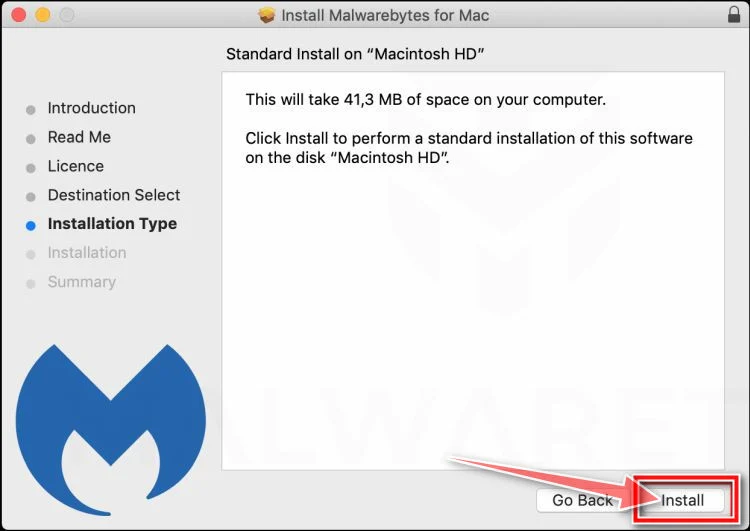
When the installation is complete, Malwarebytes opens to the Welcome to Malwarebytes screen. Click “Get started“.
-
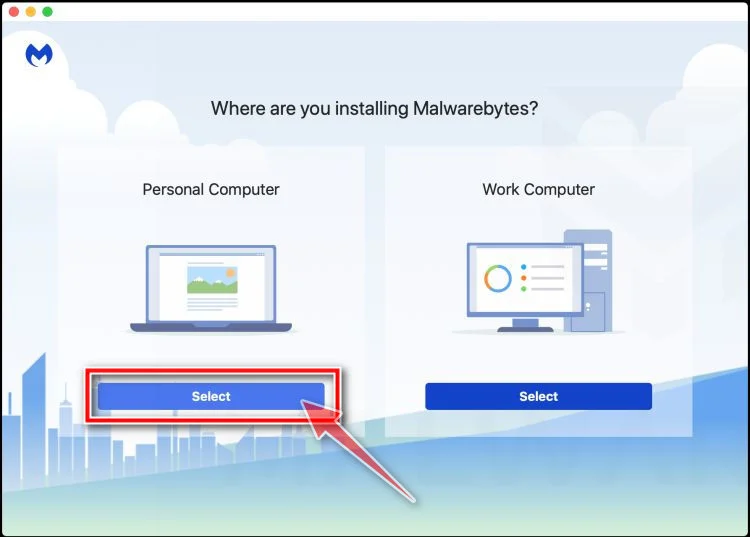
Select “Personal Computer” or “Work Computer”
Malwarebytes will ask what type of computer you’re installing it on. Click either Personal Computer or Work Computer, whichever applies.
-
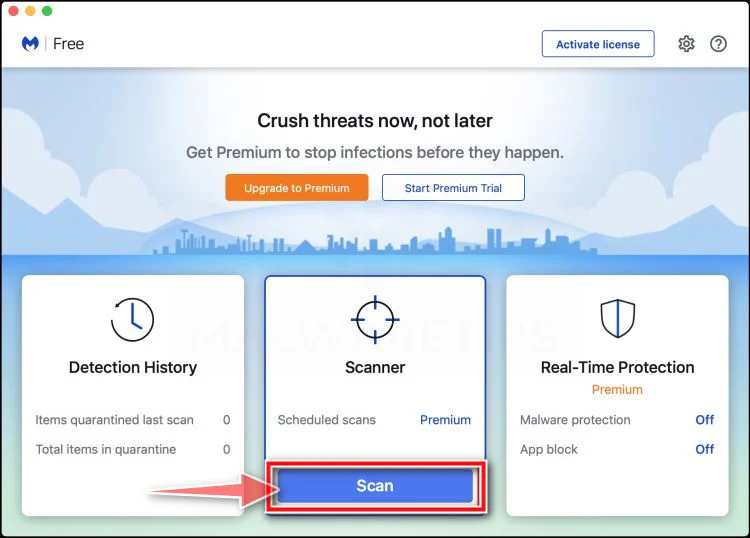
Start the Scan
Click the “Scan” button. Malwarebytes will automatically update its detection database and begin checking your Mac for malware.
-
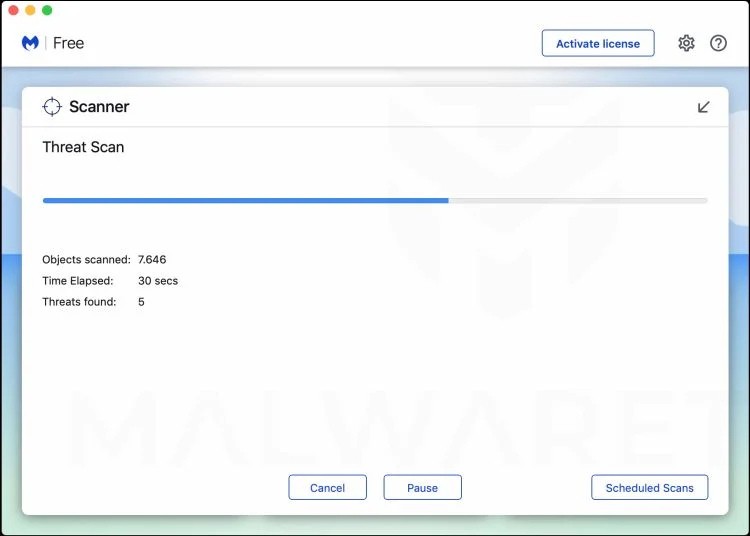
Wait for the Scan to Finish
Malwarebytes will scan your Mac for adware, browser hijackers, and other malicious programs. This can take a few minutes, so feel free to do something else — just check back occasionally to see the progress.
-
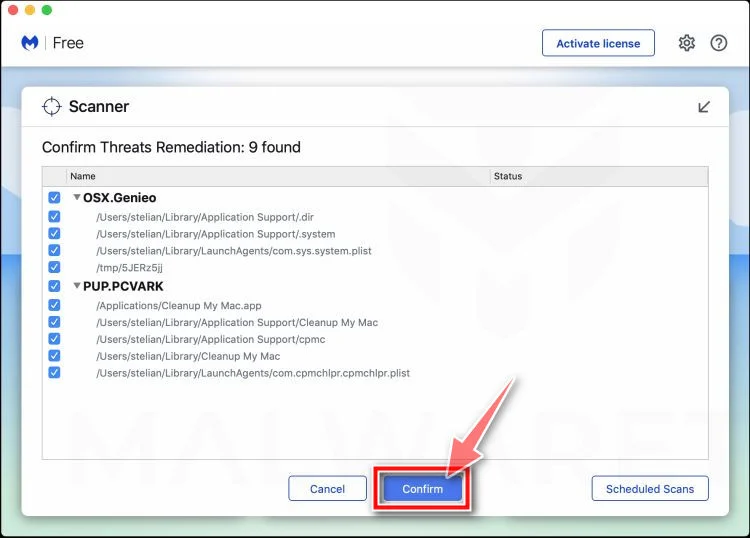
Quarantine the Detected Threats
When the scan is done, you’ll see a list of everything Malwarebytes found. Click the “Quarantine” button to remove all the threats at once.
-
Restart Your Mac
Malwarebytes will now remove all the malicious files it found. Some threats can only be fully removed after a reboot — if Malwarebytes asks you to restart, allow it. Once you’re logged back in, your Mac is clean.
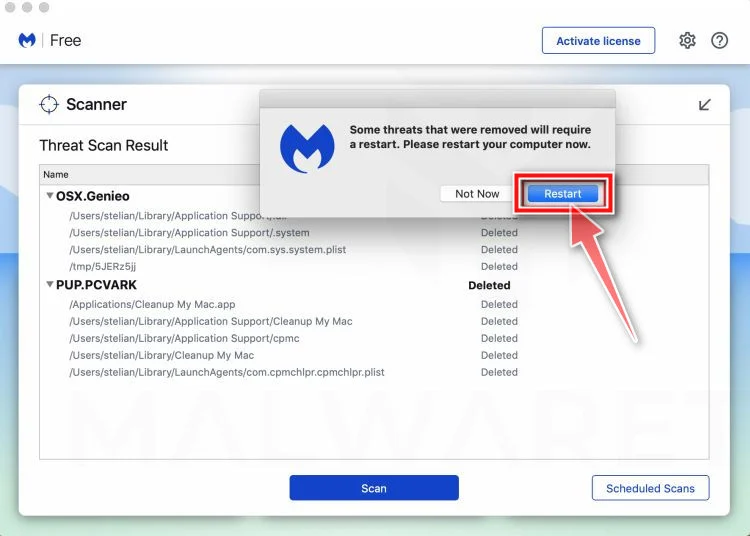
That’s it — your Mac is now free of adware, rogue browser extensions, and other potentially harmful software.
If you are still experiencing problems while trying to remove a malicious program from your computer, please ask for help in our Mac Malware Removal Help & Support forum.
Run a Malware Scan with Malwarebytes for Android
Malwarebytes for Android automatically detects and removes dangerous threats like malware and ransomware so you don’t have to worry about your most-used device being compromised. Aggressive detection of adware and potentially unwanted programs keeps your Android phone or tablet running smooth.
-
Download Malwarebytes for Android.
You can download Malwarebytes for Android by clicking the link below.
Get Malwarebytes for AndroidOpens Google Play in a new tab.Want real-time protection? See Malwarebytes Premium for AndroidMalwarebytes for AndroidScans your phone and removes malware at no cost -
Install Malwarebytes for Android on your phone.
In the Google Play Store, tap “Install” to install Malwarebytes for Android on your device.

When the installation process has finished, tap “Open” to begin using Malwarebytes for Android. You can also open Malwarebytes by tapping on its icon in your phone menu or home screen.

-
Follow the on-screen prompts to complete the setup process
When Malwarebytes will open, you will see the Malwarebytes Setup Wizard which will guide you through a series of permissions and other setup options.
This is the first of two screens that explain the difference between the Premium and Free versions. Swipe this screen to continue.
Tap on “Got it” to proceed to the next step.
Malwarebytes for Android will now ask for a set of permissions that are required to scan your device and protect it from malware. Tap on “Give permission” to continue.
Tap on “Allow” to permit Malwarebytes to access the files on your phone.
-
Update database and run a scan with Malwarebytes for Android
You will now be prompted to update the Malwarebytes database and run a full system scan.

Click on “Update database” to update the Malwarebytes for Android definitions to the latest version, then click on “Run full scan” to perform a system scan.

-
Wait for the Malwarebytes scan to complete.
Malwarebytes will now start scanning your phone for adware and other malicious apps. This process can take a few minutes, so we suggest you do something else and periodically check on the status of the scan to see when it is finished.

-
Click on “Remove Selected”.
When the scan has been completed, you will be presented with a screen showing the malware infections that Malwarebytes for Android has detected. To remove the malicious apps that Malwarebytes has found, tap on the “Remove Selected” button.

-
Restart your phone.
Malwarebytes for Android will now remove all the malicious apps that it has found. To complete the malware removal process, Malwarebytes may ask you to restart your device.
That’s it — your Android phone is now clean — no more malicious apps, adware, or browser redirects.
If you are still having problems with your phone after completing these instructions, then please follow one of the steps:
- Restore your phone to factory settings by going to Settings > General management > Reset > Factory data reset.
- Ask for help in our Mobile Malware Removal Help & Support forum.
Stay Protected: Block Ads and Malicious Sites
Now that your device is clean, keep it that way. Most infections start with a malicious ad or a fake download button — so blocking them at the source is your best defense.
We recommend AdGuard, which blocks malicious ads, phishing pages, and dangerous redirects before they can reach you.
👉 Download AdGuard and browse safely
FAQ: Costco Complete Gourmet Thanksgiving Turkey Dinner Scam
What is the Costco Complete Gourmet Thanksgiving Turkey Dinner Scam?
It is a subscription trap that impersonates Costco to trick users into paying a small shipping fee for a supposed Thanksgiving turkey dinner. Victims are redirected to fake reward websites that enroll them in a hidden trial program. After five days, the program charges $89.95, followed by recurring $89.95 monthly charges. The turkey dinner does not exist, and Costco has no connection to the offer.
Does Costco really give away free Thanksgiving turkey dinners?
No. Costco does not send unsolicited emails offering free turkey dinners, surveys with rewards, or giveaways that require a shipping fee. Any message claiming you have been selected for a “Complete Gourmet Thanksgiving Turkey Dinner” is fraudulent. Costco has publicly stated that it does not run promotions that require users to pay for shipping in order to receive a prize.
What does the fake email look like?
The email often uses the subject line “Costco Dinner, Latest Information” and displays Costco’s logo. The body congratulates the recipient and claims they can receive a Complete Gourmet Thanksgiving Turkey Dinner that serves eight people. A red button marked “Get it now” pushes victims to click through to fraudulent reward pages. The design appears polished to make the message look authentic.
Why do scammers charge $9.95 or $9.96 for shipping?
The small shipping charge is a psychological hook designed to reduce skepticism. It lowers the barrier to action and encourages victims to enter payment information. What is not clearly disclosed is that the payment enrolls the user in an expensive recurring subscription program priced at $89.95 per cycle. The initial fee exists to capture card details.
What charges are victims enrolled in?
Victims are typically enrolled in:
- A five-day trial period
- A charge of $89.95 once the trial ends
- Recurring charges of $89.95 every thirty days
These terms are hidden in fine print or placed far below the checkout button. Scammers intentionally design the page so users will overlook the subscription details.
How do the fake reward websites look?
The fraudulent websites mimic legitimate survey and reward platforms. Common elements include fake progress bars, countdown timers, limited availability messaging, and fabricated customer testimonials. These pages might change frequently as scammers rotate domains to avoid detection. The overall design is meant to appear trustworthy while pushing victims toward the payment form.
Why does the scam use a Thanksgiving-themed offer?
Holiday seasons increase online shopping and promotional activity. Scammers use festive themes because consumers expect deals, giveaways, and seasonal discounts. A free Thanksgiving turkey dinner sounds generous and timely, making victims more willing to believe the offer is real. Seasonal timing also pressures users into acting quickly.
Will the turkey dinner ever arrive?
No. The turkey dinner is not real. Victims who pay the shipping fee will never receive anything. The scammers’ only goal is to capture card information and charge recurring subscription fees. These scams do not ship products, reward packages, or Thanksgiving meals.
How do I know if I entered my information into a scam site?
Signs you interacted with the scam include:
- You paid a shipping fee of $9.95 or $9.96 to claim a dinner
- You received no order confirmation with tracking
- The website had unclear or hard-to-read subscription terms
- Your bank statement shows a charge you do not recognize
- You suddenly see an $89.95 charge after a few days
If any of these apply, you likely fell victim to the scam.
What should I do if I already paid the $9.95 or $9.96?
Take action immediately. Contact your bank or card issuer, report the charge as unauthorized, and request that the subscription be canceled. Ask for a new card number to prevent further withdrawals. Document the email, landing pages, and charge details for your bank dispute.
Can I recover the money that was charged?
In many cases, yes. Banks can often reverse unauthorized subscription charges when you explain that the terms were hidden or misleading. Quick reporting improves your chances of a successful refund. Do not rely on the scam website’s customer service, as these operators rarely provide legitimate assistance.
Will the scammers use my personal information?
It is possible. Many fraudulent reward sites collect names, addresses, phone numbers, and email addresses. This data may be sold to other malicious operators or used in additional phishing campaigns. Victims often report a rise in unwanted promotional emails or scam calls after entering their information.
How can I protect myself from similar scams?
Always check the sender’s address, avoid clicking unsolicited reward emails, and verify promotions directly on Costco’s official website. Be skeptical of free giveaways that require payment. Genuine retailers rarely ask for shipping fees in exchange for high-value rewards.
Can I report the scam to Costco?
Yes. Costco encourages customers to report fraudulent emails that misuse their brand. Submitting the message helps Costco’s security team identify new waves of impersonation and warn other customers.
Why do scammers keep changing domain names?
Scam networks frequently switch domain names to avoid shutdowns. When authorities or hosting providers suspend a domain, scammers move their operations to a new URL. This rotation allows them to continue operating while staying one step ahead of detection.
Is this scam connected to other Thanksgiving or holiday reward offers?
Yes. Many fake holiday promotions operate using the same structure. Whether the offer is a turkey dinner, a gift card, or a holiday basket, the core tactic is identical. Scammers create a fake reward, request a small shipping fee, then enroll victims in a recurring subscription that charges far more.
How can I verify if a Costco promotion is legitimate?
Always go to Costco’s official website or call customer service directly. Real promotions will appear on Costco.com or in official mailers. Costco does not send unsolicited emails offering high-value items for a small shipping fee.
Are these scams targeting specific age groups?
Scammers often target older adults, frequent shoppers, and individuals who may be more trusting of email communications. However, anyone can fall victim because the emails appear professionally designed and use recognizable branding.
Why do countdown timers and limited availability messages appear on scam sites?
These elements are psychological tools designed to trigger impulsive decisions. When people believe a reward is scarce or about to expire, they are more likely to act quickly without reading the fine print. Scammers use urgency to override cautious thinking.
Do the scammers use secure payment pages?
Many scam sites use basic SSL certificates, which allow them to display the lock symbol in the browser. This creates a false sense of security. The presence of a lock does not guarantee legitimacy. It only means data is encrypted during transmission, not that the site is trustworthy.
Is it safe to click the unsubscribe link in the email?
No. Clicking unsubscribe may confirm to the scammers that your email address is active. This can lead to more phishing messages. It is safer to delete the email and mark it as spam in your mail client.
Is this scam part of a larger subscription fraud network?
Yes. Many fraudulent subscription traps share infrastructure, hosting patterns, and payment processors. The turkey dinner offer is likely one of many rotating themes used by the same operators to target different audiences throughout the year.
What should I do if I see this scam circulating online?
Report it to Costco, your email provider, and relevant consumer protection agencies. Sharing warnings on social media or community groups helps others recognize the scam before they fall victim.
The Bottom Line
The Costco Complete Gourmet Thanksgiving Turkey Dinner Scam is a subscription trap disguised as a festive giveaway. Using deceptive emails, fake reward pages, hidden terms, and brand impersonation, scammers lure victims into paying a small shipping fee that escalates into recurring charges of $89.95. The turkey dinner does not exist, and the offer is not connected to Costco in any way.
Understanding how the scam works and recognizing its warning signs is the most effective way to stay protected. For those who already fell for the offer, swift action through card disputes, documentation, and official reporting can minimize damage and prevent continued unauthorized charges.

Join the discussion
0 commentsShare your experience or ask a question about this article.
Community experiences
Did this happen to you?
Your experience could help someone recognize the same scam. Submit a private report for our team to review.
I experienced this tooReports are reviewed before publication. Sharing publicly is always your choice.
Discussion
Start the conversation
Have a question or something useful to share? Add the first comment.