

A tiny patch, a familiar weight-loss buzzword and a promise of easier mornings. CrazyLeaf makes a complicated health decision look like a simple shopping choice.
Searching the name can lead you to BuildLeaf instead. Before comparing boxes, look closely at the treatment those pages are asking you to trust.
Overview
What the CrazyLeaf SMGT-GLP-1 patch promises
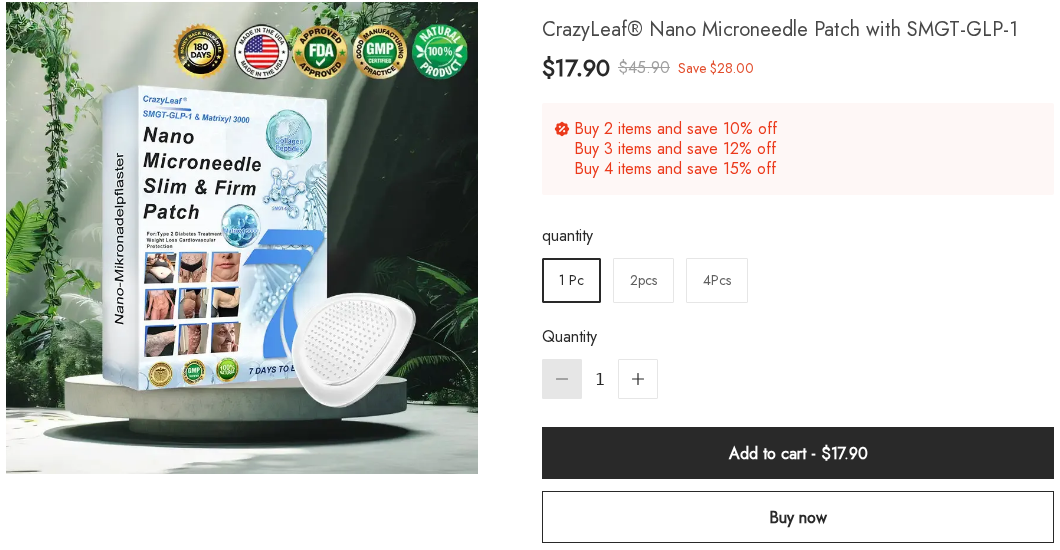
CrazyLeaf is sold as a wearable microneedle patch for weight management, blood sugar control and firmer skin. The pitch goes well beyond ordinary skincare.
Bestdela lists the CrazyLeaf Nano Microneedle Patch with SMGT-GLP-1 for $17.90, with one-, two- and four-piece choices. Its product image carries an FDA approval badge.
The description builds a drug-like story around the patch. Someone hoping to avoid injections could easily mistake that presentation for a new way to receive established treatment.
- The product: a patch, not the similarly named oral drops or ampoules.
- The claim: weight and glucose benefits associated with GLP-1 treatment, combined with skin-firming promises.
- The missing essentials: a verifiable authorization for that treatment, a clear delivered dose and finished-product clinical evidence.
Why BuildLeaf appears in the same searches
Buildleaf.org also sells SMGT-GLP-1 microneedle patches. One listing adds tirzepatide to its title, while another claims FDA clearance for slimming and blood sugar benefits.
The connection is visible in the copy itself. A BuildLeaf tirzepatide-patch page still names CrazyLeaf in a sentence claiming clinical testing by an endocrinologist.
Both names lead into the same kind of medical sales pitch. Switching the brand on the page doesn’t supply the missing treatment evidence.
The buying decision that matters
Keep these patches out of your diabetes or weight-management treatment plan. The sales pitch asks for medical trust without supplying the evidence patients need.
The important risk isn’t simply receiving a disappointing sticker. It’s paying for an apparent treatment, then relying on it while a genuine health problem goes untreated.
If you’ve already ordered, concentrate on stopping use, protecting your existing care plan and addressing the purchase promptly. You don’t need to finish a box first.
Medical Language Is Doing the Selling
A medicine name is not a verified formulation
SMGT-GLP-1 sounds technical, but a technical-looking name doesn’t tell you which active substance is present or how much reaches your body.
A trustworthy explanation would distinguish the ingredient, its amount in each patch and the amount actually delivered. Those are different questions.
The BuildLeaf tirzepatide page makes matters worse by describing tirzepatide as another name for semaglutide inside a testimonial. They are different medicines.
Lilly identifies Mounjaro and Zepbound as tirzepatide medicines. Ozempic’s manufacturer identifies its ingredient as semaglutide.
Confusing those names isn’t a reassuring shortcut for patients comparing treatments. It undermines a page that wants to be trusted with blood sugar and weight management.
FDA language needs an actual authorization behind it
The FDA badge on the CrazyLeaf sales image makes a powerful first impression. BuildLeaf goes further by describing its patch as cleared following regulatory review.
Yet the sales pages don’t supply a matching authorization identifier that lets a buyer connect those assurances to this product and its advertised treatment uses.
The FDA’s microneedling guidance explains that authorized aesthetic uses cover particular scar and wrinkle treatments. It also says microneedling devices aren’t approved to deliver drugs into skin.
That distinction matters. Clearance for a particular cosmetic device wouldn’t establish that an unrelated retail patch treats diabetes or delivers a weight-loss medicine.
A laboratory-registration graphic is another different thing. A building’s registration cannot stand in for evidence that the finished patch is safe and effective for its claimed purpose.
The BuildLeaf clearance page even describes use during pregnancy and breastfeeding as completely safe. That sweeping reassurance shouldn’t replace advice from your maternity care team.
How the CrazyLeaf and BuildLeaf Sales Pitch Works
Step 1: Make the difficult part of treatment disappear
The pitch starts with an appealing trade: leave injections and complicated routines behind, apply a patch and keep the benefits.
That can feel especially convincing if treatment costs, appointments or side effects have already worn you down. The product seems to remove the obstacle, not change the goal.
Bestdela’s description promises “up to 20 times longer-lasting effects” compared with injections. A claim that large needs a specific, credible comparison, not a shopping-page explanation.
Without the tested formulation, dose and study behind it, the comparison gives a confident number without a dependable basis for making a medical decision.
Step 2: Surround the patch with borrowed authority
Doctors’ names, institutional language and official-looking badges make the product feel as though experts have already answered the difficult questions.
The CrazyLeaf listing invokes Louis Aronne and Ralph DeFronzo. A name printed beside promotional text, however, isn’t the same as a statement from that physician.
Before accepting an endorsement, look for the exact product on the physician’s or institution’s own channel. A seller’s page shouldn’t be its own only witness.
The same applies to clinical claims. A reference should lead to a study of the finished patch, with identifiable methods and outcomes, rather than another promotional graphic.
Step 3: Let transformation stories replace consistent instructions
The testimonials describe substantial weight changes and improvements in health conditions. Their emotional detail makes the results feel easier to picture than the missing medical documentation.
But the CrazyLeaf page’s weekly-use FAQ sits alongside a daily-use testimonial. The separate BuildLeaf page recommends a patch every two days while also featuring weekly-use stories.
That leaves a basic question unanswered: which schedule is the customer supposed to trust? A persuasive transformation story cannot settle a dosing inconsistency.
Don’t experiment with extra patches to copy somebody else’s claimed outcome. Conflicting promotional instructions are a reason to stop, not a puzzle patients should solve themselves.
Step 4: Turn the treatment question into a package choice
Once the page has framed the patch as a solution, buying more can feel like committing to better results rather than spending more money.
BuildLeaf’s tirzepatide-patch listing displays an $18.95–$36.95 range with one-, two- and three-piece options. Another BuildLeaf patch page offers one, three or five pieces.
A piece count isn’t necessarily the number of treatment days. Check what each box contains instead of letting a suggested course determine your order.
Separate package selection from the final quantity field. If a bundle contains several boxes, increasing quantity can multiply the entire bundle rather than add one patch.
The sensible question comes before that arithmetic: why pay for any quantity when the central treatment promise hasn’t been adequately substantiated?
Step 5: Discover that testing the promise affects the return
A shopper may expect to try the patch and then ask for money back if the promised results never arrive.
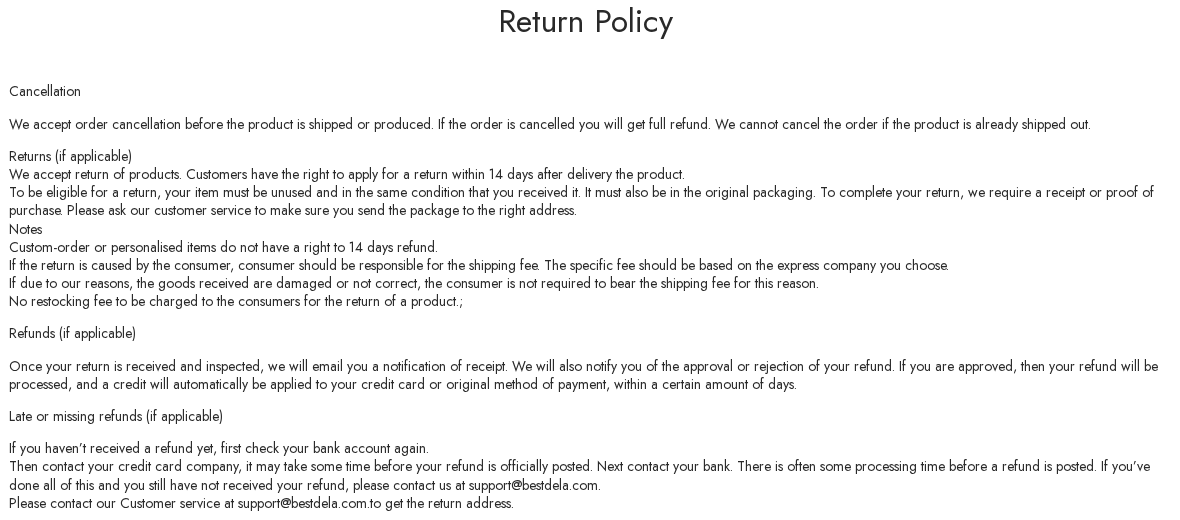
Bestdela’s return policy instead requires unused goods in original packaging and a request within 14 days of delivery. Its cancellation option ends once production or shipping begins.
That is a very different position from an unrestricted treatment trial. Opening the package to find out whether it works can complicate the ordinary return route.
Keep the advertising and policy together. If a product was materially misrepresented, explain that issue specifically rather than allowing the dispute to become only a change-of-mind request.
The Sellers, Support Contacts and Return Conditions
A lighting-store biography doesn’t identify a medical manufacturer
Bestdela’s About Us page describes a business specializing in light strips and spotlights. That is an odd introduction for a retailer promoting a diabetes-related patch.
Its terms identify the operator as Bestdela. Buildleaf.org’s terms name BUILDLEAF.ORG LLC. Neither declaration, on its own, authenticates the factory or the medicine-like contents.
For a product meant to affect your health, a storefront name isn’t enough. The package should let you trace the actual manufacturer, product identity and batch.
Dispatch countries are not a factory inspection
BuildLeaf names China and the US as dispatch locations in its delivery terms. Neither location identifies the actual factory that produced a particular box.
The distinction matters when deciding where a return must go. A domestic-looking delivery label may identify a shipping partner rather than the seller’s return facility.
Don’t send patches to an address copied from an outbound parcel. Obtain written return authorization and the destination for your specific order first.
Different support domains mean different records to keep
Bestdela publishes support@bestdela.com. BuildLeaf’s customer-service page publishes support@bizzoby.com, which uses a different domain from the storefront.
Keep the exact seller address, order number and payment descriptor together. If support redirects you elsewhere, preserve that message rather than starting a disconnected conversation.
A contact listed online is a route to request help, not a guarantee of a response. Send a clear written request and keep proof of submission.
The guarantee changes when you read the conditions
BuildLeaf’s tirzepatide-patch page describes a 180-day replacement or refund for damage or defects. Its delivery policy sets a 14-day return-request window and requires unused products.
The delivery page also contains a seven-day post-purchase guarantee heading. Buyers shouldn’t have to reconcile several clocks after opening a health product.
Bestdela says customers normally pay change-of-mind return postage, but the seller covers shipping for damaged or incorrect goods. It expressly says there is no restocking fee.
Ask which condition applies to your complaint and request the answer in writing. Published restrictions don’t automatically remove any rights you have under applicable consumer law.
What the GLP-1 Laboratory Warning Actually Covers
Australia’s TGA issued a counterfeit-product advisory on March 2, 2026. It lists two BuildLeaf oral products and an HHVB nano microneedle patch.
The reported result for those tested products was no identified GLP-1 or analogues. That is a serious finding about the named products, not a laboratory assay of CrazyLeaf.
Our BuildLeaf oral-product report explains the separate bottle and ampoule findings. Keep that distinction when comparing a patch with drops sold under a similar name.
The TGA notice also names HHVB’s Six In-One oral liquid and moringa drops. Our HHVB drops investigation covers that related warning.
Our separate IFMAGIC oral-solution report shows why a medicines regulator’s exact product and operator details matter. A similar-looking medical pitch doesn’t erase those distinctions.
What to Do If You Ordered These Patches
-
Put your treatment plan first. Don’t replace prescribed medicines with these patches. If you’ve already changed treatment, contact your clinician promptly to arrange appropriate advice.
Keep the patch packaging and tell the clinician what you used and when. Seek urgent care for severe symptoms or a serious reaction.
-
Save the exact offer before it changes. Capture the product name, medical promises, package choice, full amount, guarantee and receipt.
Photograph any delivered box, ingredient information and batch markings. A picture of the product you received is more useful than a generic image from an advertisement.
-
Request cancellation or a specific refund in writing. Contact the seller shown on your receipt, explain the reason and ask for an order-specific response.
For Bestdela, act before production or shipping if possible. For delivered goods, don’t let the 14-day request window pass while waiting to test a promised transformation.
-
Confirm the return arrangement before spending more. Request the authorized address, deadline and postage instructions. Keep tracking and photos if you send anything back.
Describe damaged, incorrect or misrepresented goods accurately. Don’t invent a defect, and don’t label an authorized purchase unauthorized merely because you later regretted it.
-
Ask your payment provider about the appropriate dispute route. If the seller doesn’t resolve a supported complaint, provide the receipt, advertising and correspondence.
Explain whether the issue is non-delivery, incorrect goods or misleading treatment claims. Deadlines and evidence requirements vary, so ask promptly rather than assuming a refund is guaranteed.
-
Report health problems and check later charges. The FDA’s unapproved GLP-1 guidance explains medicine risks and reporting through MedWatch.
Check your statements against the order agreement. If an unexplained repeat charge appears, ask for the consent record and challenge that specific charge with your provider.
Frequently Asked Questions
Do CrazyLeaf SMGT-GLP-1 patches really work?
The sales pages don’t provide adequate finished-product clinical evidence for their weight-loss and blood sugar promises. Do not rely on them as medical treatment.
Is the BuildLeaf SMGT-GLP-1 patch the same as CrazyLeaf?
The offers share medical language, and one BuildLeaf patch listing still names CrazyLeaf in its description. That establishes reused promotion, not identical contents or common ownership.
Are these patches FDA approved or cleared?
The sellers use those assurances without supplying a matching product authorization. FDA guidance on cosmetic microneedling does not validate these weight-loss or diabetes claims.
Did the TGA test the CrazyLeaf or BuildLeaf patch?
Its cited notice names BuildLeaf oral products and an HHVB patch, not these CrazyLeaf or BuildLeaf patches. Don’t transfer another product’s test result.
Can I trust the CrazyLeaf patch reviews?
Seller testimonials aren’t independent medical evidence. Conflicting application schedules further weaken their usefulness. Look for verified experience with the exact product, while keeping treatment decisions with your clinician.
Can I return patches after trying them?
Bestdela’s ordinary policy requires unused goods. BuildLeaf’s policies contain different conditions and clocks. Request written instructions promptly, explaining any misrepresentation rather than assuming an unrestricted trial.
The Bottom Line
Do not buy CrazyLeaf or BuildLeaf GLP-1 patches as diabetes or weight-loss treatment. Medical-sounding names and FDA badges don’t resolve the missing treatment evidence.
If you’ve paid, preserve the offer and request cancellation or a justified refund promptly. If you’ve used the patches, discuss them with your clinician instead of ordering another box.

Join the discussion
0 commentsShare your experience or ask a question about this article.
Discussion
Start the conversation
Have a question or something useful to share? Add the first comment.