


A patch you stick on your skin, sold under the same GLP-1 name as the weight-loss drugs everyone is talking about. Marciatrol’s product titles made it sound that simple.
If you’re looking up Marciatrol GLP-1 reviews after an order, or before one, here’s what the store sold and what happened to marciatrol.com.
Overview
What Marciatrol.com sold
Marciatrol was an online supplement store selling weight-loss patches and related products under GLP-1 branding. Product pages carried names such as GLP-Activate: Holistic GLP-1 Support.
Another listing sold Double Cleanse Bundle Patches as a one-month supply. Video reviews of the store also mention GLP-1 patches and gummies.
Why a GLP-1 label doesn’t make it medicine
There are no FDA-approved GLP-1 patches in the US. Real GLP-1 treatments such as semaglutide and tirzepatide are prescription drugs, given as injections or tablets.
Where marciatrol.com goes now
The store is gone. The domain now forwards visitors through other domains to a Thai-language online gambling page hosted on an unrelated small business’s website.
Its old product links no longer load, so buyers can’t even return to the page to screenshot what they ordered.
If you bought from Marciatrol, these facts matter most:
- A GLP-1 patch from a general store isn’t a GLP-1 medicine.
- The store’s pages, policies and contact details no longer exist.
- Visiting marciatrol.com today leads to a gambling page, so don’t use it to look up an order.
- Your card issuer or PayPal is the only party left that can reverse a charge.
Marciatrol GLP-1 Reviews: What the Store Sold
Marciatrol presented itself as a health and wellness shop. Its product titles leaned on GLP-1 wording without claiming to be a prescription drug outright.
GLP-Activate: Holistic GLP-1 Support suggested a natural way to get GLP-1 effects. Holistic support is marketing language, not a dose, an active drug or a clinical result.
The Double Cleanse Bundle Patches came as a one-month supply. Bundles like this push buyers toward a larger first order before they know whether the product does anything.
Several YouTube videos from 2025 reviewed the store by name, including one about a Marciatrol GLP-1 patch and alpha gummies.
Others asked whether the site was a legitimate supplement store. None of them is a substitute for independent testing of what the patches contain.
There’s no Trustpilot profile for marciatrol.com, so complaints that might have collected there never did.
That leaves a short trail. The store opened in 2025, sold GLP-1-branded patches and closed within about a year, leaving buyers little beyond their order emails.
What GLP-1 Patches Can and Can’t Do
GLP-1 drugs mimic a gut hormone that slows digestion and reduces appetite. The approved versions are large peptide molecules, which is why most are injected.
Getting such a molecule through the skin is the hard part. GoodRx explains that skin is very good at keeping large molecules out, unlike small ones such as nicotine.
GoodRx notes that there are currently no FDA-approved GLP-1 patches in the US. A few companies are researching the idea, but most work remains at an early stage.
It adds that many products sold online as GLP-1 patches don’t contain prescription GLP-1 medicines such as semaglutide or tirzepatide, and that there’s little evidence they help with weight loss.
Patches also bring their own problems. Adhesives can irritate skin, and a patch worn daily for weeks gives any irritation plenty of time to build up.
Our reports on CrazyLeaf and BuildLeaf GLP-1 patches and the NIDDK tirzepatide patch cover other patch brands sold with GLP-1 or drug claims.
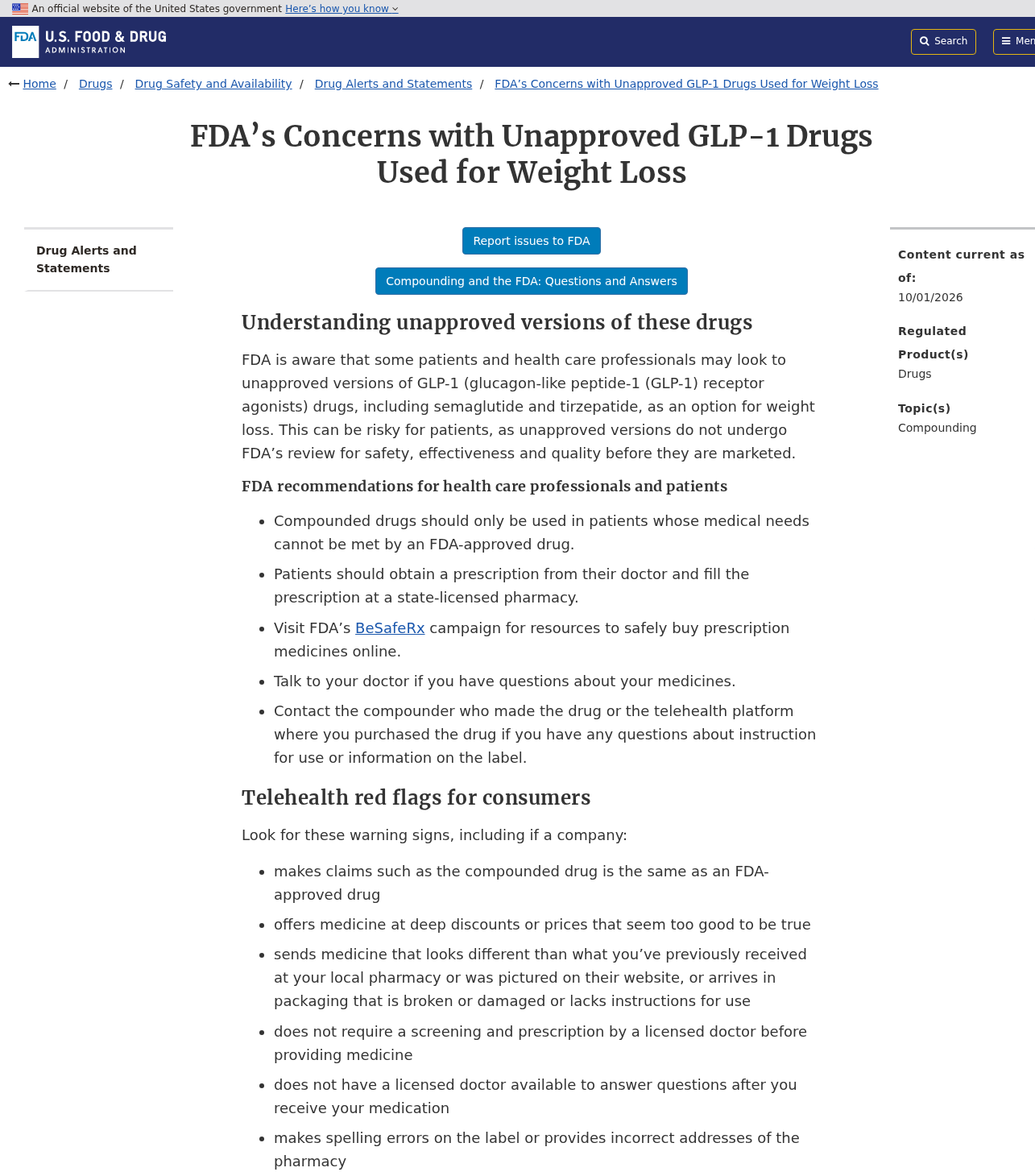
The FDA has also warned about unapproved GLP-1 products more broadly. Its page on unapproved GLP-1 drugs covers compounded and counterfeit versions and doesn’t name Marciatrol or patches.
Among its red flags are sellers offering medicine at deep discounts, products that look different from what was pictured, and no prescription or screening by a licensed doctor.
A real GLP-1 treatment starts with a prescriber who checks your health and history. A sticker in a shopping cart skips every one of those safeguards.
How Real GLP-1 Treatment Works
Approved GLP-1 medicines come in two forms today. Wegovy and Zepbound are injected under the skin, while the Wegovy pill and Foundayo are taken by mouth.
All of them need a prescription. A doctor checks your weight, blood sugar, other medicines and medical history before starting treatment and adjusting the dose.
That supervision matters because these drugs have real side effects, from nausea to more serious problems that need medical attention.
Tablet options also mean people who dislike needles have an approved alternative, so fear of injections is no reason to try an unapproved patch.
The FDA tells patients to get a prescription from their doctor and fill it at a state-licensed pharmacy. Its BeSafeRx campaign explains how to buy prescription medicine online safely.
A store that sells a GLP-1 product with no prescription, pharmacist or doctor isn’t offering a cheaper version of that care.
It’s offering something else under the same name.
If cost is the reason you looked at patches, ask your doctor or pharmacist about coverage and savings programs for approved treatment.
A pharmacist can also check whether a product you already bought could interact with your current medicines.
How Marciatrol Sold Its GLP-1 Patches
Step 1: A drug name on a supplement
The products borrowed the GLP-1 name from prescription weight-loss drugs. That one word does most of the selling, because buyers already know the drugs work.
Words such as holistic, support and activate fill the gap. They suggest a drug effect without naming a drug the seller would have to prove.
Step 2: A store on a brand-new domain
A brand-new domain has no history, no reviews and no complaints yet, which is exactly why new stores look clean at first.
marciatrol.com was registered on July 7, 2025. An archived copy from July 12 shows only a parking page, so the shop opened later in 2025.
Step 3: Month-supply bundles
Bundles sold as a month’s supply raise the first payment. They also hide the price of a single item behind a package deal.
Step 4: The store disappears
By August 2026 the domain ran a WordPress site built on a gambling theme. It now forwards visitors to a Thai-language slots page, leaving buyers no store to contact.
New stores can open just as fast on fresh domains with a new name, often selling the same kind of product to the same audience.
Who Ran Marciatrol.com? Seller Identity and Returns
An anonymous domain
The domain is registered through Namecheap with the owner’s details withheld. No company name, address or phone number survives in any public copy of the site.
The July 2025 parking page said the domain was registered at NameSilo. Its current registrar is Namecheap, so the domain has moved since then, possibly to a new owner.
No policies left to read
No archived copy of Marciatrol’s return policy, shipping terms or contact page exists. Without them, buyers can’t show what the store promised about returns.
What buyers can still use is their own record: the order email, the payment entry and photos of the patch box, including any ingredient list printed on it.
Shared templates from other GLP-1 stores
Several GLP-1 stores we have covered share a return template, a support email at bizzoby.com, or price ladders such as Goombara’s $18.95 to $70.95.
Marciatrol left no policy page or price list to compare, so no tie to those stores can be shown. Our IFMAGIC report shows those price ladders in detail.
From supplement store to gambling redirect
marciatrol.com now sends a permanent redirect to sapork.biz, a domain registered in 2021. That domain forwards again, through another site, to a blog page on an unrelated business’s website.
The redirect is permanent, so old bookmarks and search results now send former Marciatrol customers to that page.
The page shows Thai-language advertising for online slots and casino games. The business hosting it appears to have no connection to Marciatrol and may not know the page is there.
The page offers sign-up, login and live chat buttons for its betting games. Don’t sign up or deposit money there, and don’t follow links from it.
It has nothing to do with your order, and nobody behind it can help with one.
How to Check a GLP-1 Offer Before You Buy
A few questions sort real treatment from GLP-1 branding in under a minute.
- Does the seller ask for a prescription? Real GLP-1 medicine can’t be sold without one.
- Is it a licensed pharmacy? A US pharmacy should name its state license and a pharmacist you can reach.
- Does the product name a drug and a dose, such as semaglutide in milligrams? GLP-1 Support or GLP-1 Blend isn’t a dose.
- Is it a patch? No GLP-1 patch is FDA approved, whatever the box says.
- Is the store new and anonymous? A domain a few weeks old with no company name is a poor place to buy anything you put on your body.
Any one of these is enough to walk away. Marciatrol failed all of them.
If a seller passes every check, compare its price with a licensed pharmacy’s. A price far below that is the last warning sign.
What to Do If You Bought From Marciatrol.com
Start with your health, then your money. These steps don’t depend on the store, which no longer exists. Keep the box and any unused patches while you work through them.
- Stop using the patches. Don’t rely on them for weight loss, blood sugar or appetite, and don’t combine them with any GLP-1 medicine.
- Keep taking your prescribed treatment. If you changed a dose or skipped a medicine because of the product, tell your doctor now.
- Show the package to a pharmacist or doctor. Bring the patch box and any leaflet so they can check what it says it contains.
- Report side effects to FDA MedWatch. Skin reactions, stomach problems or dizziness after using the patches are worth reporting.
- Find your order email. Note the order number, date, items, total and the name that appears on your bank or PayPal statement.
- Watch for repeat charges. Month-supply products are sometimes billed again, so check your statements for new charges under the same name.
How to Spot Fake GLP-1 Supplement Stores
Marciatrol shared warning signs with many short-lived supplement stores, from borrowed drug names to anonymous ownership. The guide below explains how to spot them.
Fraudulent shopping websites often share common patterns that make them easier to detect once you know what to look for. Before entering personal information or making a payment, take a few minutes to check for these warning signs:
- Unrealistic prices and discounts
If a website offers products at prices far below trusted retailers, it’s often a red flag. Many of these sites advertise luxury or high-demand products at massive discounts to create a sense of urgency. A $300 product listed for $49.99 should immediately raise suspicion. - Recently registered or suspicious domain names
Many fraudulent websites operate on newly created domains that disappear after a few weeks. Look for signs like random characters in the URL, misspellings of well-known brands, or hyphenated domains.
You can check a site’s age with a WHOIS lookup, or run it through our free Scam URL Scanner. - Missing or vague company details
Legitimate businesses clearly display their company name, tax information, phone numbers, physical address, and return policies. Fraudulent sites often provide incomplete, fake, or no company details at all. A lack of verifiable contact information is a major warning sign. - No reliable customer service
Real businesses provide clear ways to contact support—email, phone, live chat, or physical return addresses. Fake stores often list nonfunctional contact forms, invalid phone numbers, or reply with generic automated messages. - Poor website quality and structure
Many fake stores are set up quickly with low-effort templates. Look for poor grammar, spelling errors, low-resolution product images, broken links, or missing legal pages (Terms of Service, Privacy Policy, Return Policy). A sloppy website often signals something isn’t right. - Copied product descriptions and images
Fraudulent sites often lift product listings directly from real retailers or marketplaces. If you reverse image search a product photo and find it on multiple unrelated websites, the listing is likely not original. - Lack of credible reviews or suspicious review patterns
A real store will usually have a mix of customer reviews across different platforms. Warning signs include no reviews at all, obviously fake five-star reviews, or multiple identical reviews posted on the same day. Searching “[website name] reviews” or “[website name] scam” on Google often reveals warnings from other consumers. - Unclear or unfair return and refund policies
Fake stores often use vague language around returns and refunds—or avoid the topic entirely. If you can’t easily find clear instructions for how to return an item or get a refund, proceed with caution. - Aggressive urgency and pressure tactics
Fraudulent websites commonly use fake scarcity (e.g., “Only 2 left in stock!”) or countdown timers (“Sale ends in 10 minutes!”) to push you to buy before you think it through. Legitimate stores don’t rely on fabricated urgency to make sales.
Quick Steps to Verify a Website’s Legitimacy
Before entering payment or personal details on a new shopping website, take a few simple precautions:
- Search for the store’s name along with words like “reviews” or “complaints” on Google and Trustpilot.
- Check the website’s domain registration using Whois.com.
- Use trusted tools to scan for malicious or fraudulent links:
- Malwarebytes ScamGuard – detect scams and unsafe links before they reach you on Android and iOS phone.
- Malwarebytes Browser Guard – block dangerous or fake websites on Windows and macOS browsers.
- Verify the business address on Google Maps to ensure it’s a legitimate location.
- Review the store’s accepted payment methods – credit cards and PayPal are traceable and safer than cryptocurrency or bank transfers.
- Trust your instincts; if something feels off, it’s better not to proceed.
How to Spot Similar Scams on Social Media
Many fraudulent shopping websites rely heavily on sponsored social media ads to draw in large numbers of potential buyers. These ads often promise extraordinary discounts—sometimes up to 90% off—and use emotionally charged language to push users into buying immediately.
They frequently appear on Facebook, Instagram, and TikTok, blending in with legitimate content. However, these ads follow predictable patterns that make them easier to identify once you know what to look for.
Spotting Fraudulent Facebook Ads
Facebook’s advertising platform is a favorite tool for fake online stores because of its massive reach. These ads often feature “unbelievable” offers designed to create urgency and bypass critical thinking. Warning signs include:
- Extreme, unrealistic discounts such as “90% OFF,” “Store Closing Sale,” or “Final Liquidation.” Real retailers rarely discount new products this aggressively.
- Poor grammar, awkward phrasing, or inconsistent language throughout the ad or website, indicating low-effort, mass-produced content.
- Generic stock photos or images with watermarks, suggesting the images were taken from legitimate brands or stolen from other sources.
- Recently created Facebook Pages, which is common for temporary fraudulent campaigns. Check the “Page Transparency” section to see when the page was created.
- Limited or no engagement from real customers. Authentic brands usually have reviews, comments, and visible user interaction.
If an ad raises doubts, search for reviews of the website or reverse image search the product photos to see if they’re copied from elsewhere. Never provide payment information until the site is verified.
Spotting Fraudulent Instagram Ads
Instagram is another major platform used to promote fake shopping sites through eye-catching visuals and short-lived “flash sale” captions. Warning signs to look for:
- New or disposable accounts with few posts and followers, often created just weeks or days before launching ads.
- Lack of tagged users in product posts. Legitimate stores often feature real customers, influencers, or product usage.
- Unsecured checkout pages. If the website linked in the bio does not use HTTPS, do not enter payment information.
- Fake or missing customer reviews. Fraudulent stores rarely have authentic purchase feedback.
- Unclear or restrictive return policies, often hidden or written vaguely to make refunds difficult.
When in doubt, search for independent reviews before buying, and only enter payment details on verified, secure websites.
Catching Fake TikTok Ads
TikTok is increasingly used to promote questionable shopping deals through short, persuasive videos. While many ads look polished, the same red flags apply:
- Links to unknown stores that don’t appear in search results or have no external reputation. Many of these sites are temporary and disappear after a short time.
- No verification badge on the TikTok account. While not every legitimate store is verified, the lack of a badge is one more indicator to check further.
- Aggressive countdown timers or “one-day only” promotions designed to rush decision-making.
- Lack of genuine customer reviews or real user content demonstrating the product in actual use.
- Comment sections filled with complaints or warnings from other users. This is often the first place victims speak up.
TikTok scams often rely on impulse buying. Take a moment to verify the website, read independent reviews, and use trusted browser protection before visiting external links.
Escalate an Unresolved Marciatrol Order
- Open a dispute from your payment account. Log in to PayPal or your card app directly and dispute the charge as not as described, or not received if nothing came.
- Explain the GLP-1 claim. Say the product was sold with GLP-1 branding although no GLP-1 patch is approved, and attach your order email.
- Mention that the store has closed. The domain now redirects to an unrelated gambling page, so the seller can’t be reached.
- Check the deadline. PayPal disputes close 180 days after payment, so orders paid before May 2026 are past it. Ask your card issuer about its own window.
- Report the seller. In the US, file a report at ReportFraud.ftc.gov, and report health products sold with drug claims to the FDA.
Frequently Asked Questions
Is Marciatrol legit?
It isn’t a store to trust. It sold supplement patches under the GLP-1 name, named no company and vanished within about a year. Its domain now leads to gambling ads.
A legitimate supplement seller names its company, lists ingredients and doses, and stays reachable after the sale.
Are Marciatrol GLP-1 patches real GLP-1 medicine?
No. No GLP-1 patch is FDA approved, and patches sold in general online stores aren’t prescription GLP-1 drugs such as semaglutide or tirzepatide.
Approved GLP-1 medicines are injections or tablets prescribed by a doctor and dispensed by a licensed pharmacy.
Can I use Marciatrol patches with Ozempic or another GLP-1 drug?
Don’t. Stop using the patches and keep taking the treatment your doctor prescribed. Show the patch box to your pharmacist if you’ve already combined them.
Mixing an unknown product with a drug that affects appetite and digestion makes any side effect harder for your doctor to sort out.
Why does marciatrol.com open a gambling site?
After the store closed, the domain was repurposed. It now forwards through sapork.biz to a Thai-language gambling page on an unrelated website.
Closed shop domains are often reused this way, because their old links still bring visitors.
Where can I find Marciatrol reviews?
There’s no Trustpilot page for the store, and the site’s own pages are gone. Most surviving discussion is in short YouTube videos from 2025 that review the store by name.
If you bought from Marciatrol, describing your experience on an independent review site can warn others who search the name.
Can I get my money back from Marciatrol?
Not from the store, which no longer exists. Your card issuer or PayPal decides whether a dispute succeeds, based on their rules and your evidence.
The Bottom Line
Don’t order GLP-1 patches from Marciatrol or any store like it. No GLP-1 patch is FDA approved, and Marciatrol vanished, leaving a domain that now points to gambling ads.
If you already paid, stop using the patches, keep your prescribed treatment, and open a dispute with your card issuer or PayPal using your order email.
This article is for informational purposes only and should not be relied upon for financial or business decisions. We identify potential scams using research, user experiences, and expert analysis. However, all claims should be independently verified. Mistakes may occur, and legitimate products could be flagged. We strive for accuracy but make no warranties regarding the completeness or reliability of the information.

If you are the owner of the website or product in question and wish to offer clarifications regarding your business or website, please reach out to us via our Contact form.

Join the discussion
0 commentsShare your experience or ask a question about this article.
Discussion
Start the conversation
Have a question or something useful to share? Add the first comment.