


A patch promises a quieter appetite without injections, pills, or another complicated routine. Ledisa wraps that idea in familiar GLP-1 language and a generous-looking guarantee.
The important questions begin after the headline: what the patch actually contains, what evidence supports the promise, and which purchase and return terms apply.
Overview
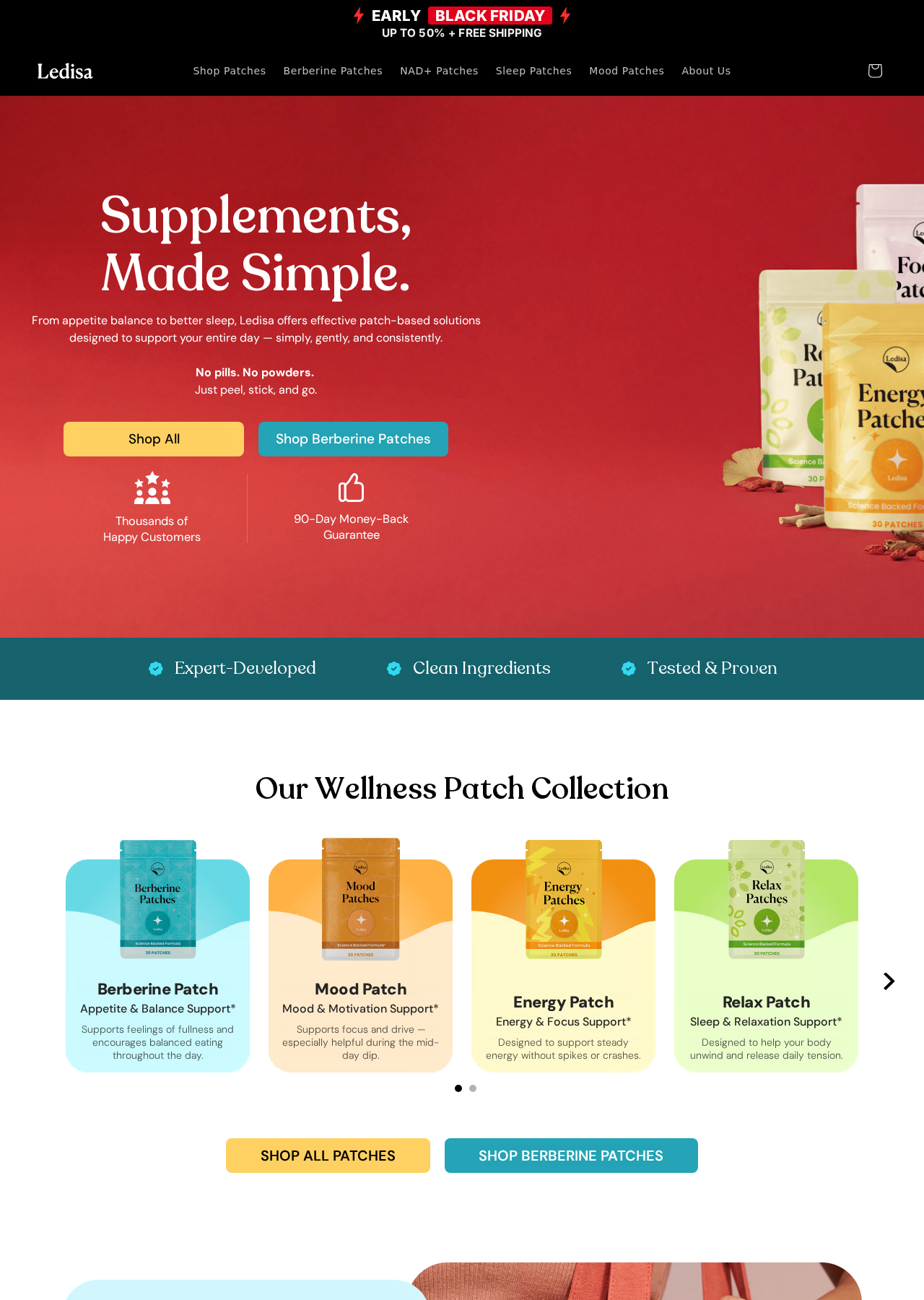
GLP-1 marketing leads to a berberine patch
The current product is presented as Ledisa Berberine Daily Support Patches. Promotional material also places it within the popular category of GLP-1 weight-control patches.
The package artwork lists plant-based ingredients, not a prescription GLP-1 medicine. The seller’s own disclaimer says its patches are not medical equivalents or replacements for treatments.
The current offer separates single purchases from refills
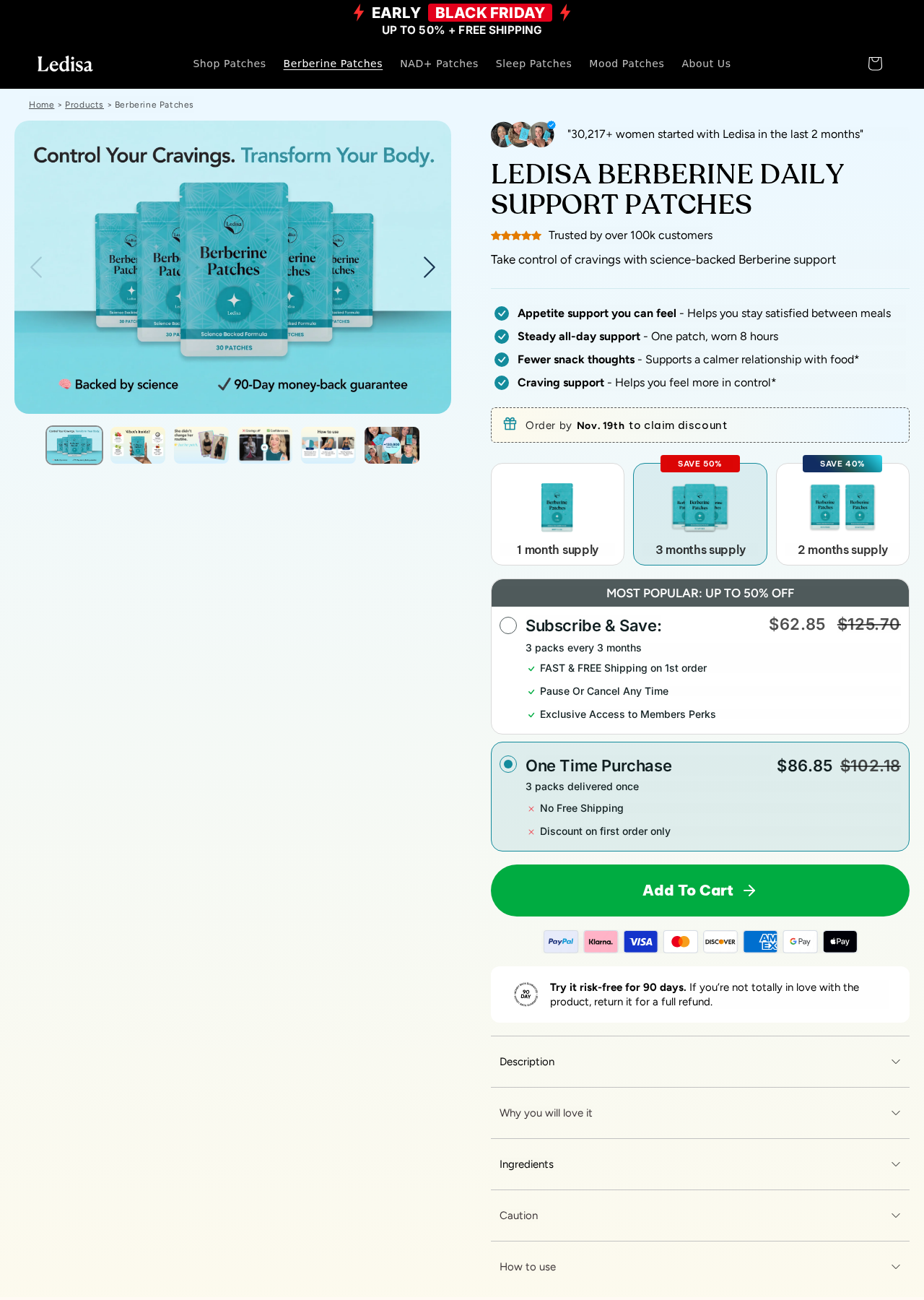
The captured three-pack option showed a selected one-time purchase at $86.85. An optional subscription offered three packs for $62.85 every three months.
That distinction matters: the evidence does not support saying every buyer is automatically subscribed. Buyers still need to check their selected option and the final order summary.
The evidence and guarantee do not match an easy trial
The clinical question is whether this finished patch delivers meaningful weight-loss results through the skin. Ingredient names and attractive before-and-after stories cannot answer that question.
- Studies of swallowed berberine do not establish this patch’s absorption.
- The published return conditions restrict refunds to unopened, unused products.
- Other wording on the same policy requires consistent product use.
- Two public refund pages also display different cancellation-fee schedules.
What You Would Actually Be Buying
Ledisa’s current sales page describes an adhesive patch worn for eight hours to support appetite and cravings. Its illustrated pouch contains 30 patches.
An ingredient graphic names berberine, garcinia cambogia, prebiotics, and apple cider vinegar. That is a description of the marketed formula, not an independent analysis of a delivered pack.
The graphic does not establish how much of each substance reaches the bloodstream. A pictured ingredient and a demonstrated, clinically useful dose are very different things.
The naming can also be confusing. Someone arriving from GLP-1 advertising may expect a medication-like effect, while the current merchant page calls the product berberine support.
Compare the product name in the advertisement with the merchant page and order confirmation. Different wording can change what you expect the patch to do.
The relevant purchase is the named patch shown in your basket and confirmation. Do not interpret the phrase GLP-1 as evidence that prescription medication is inside.
The Review Page Has a Commercial Interest
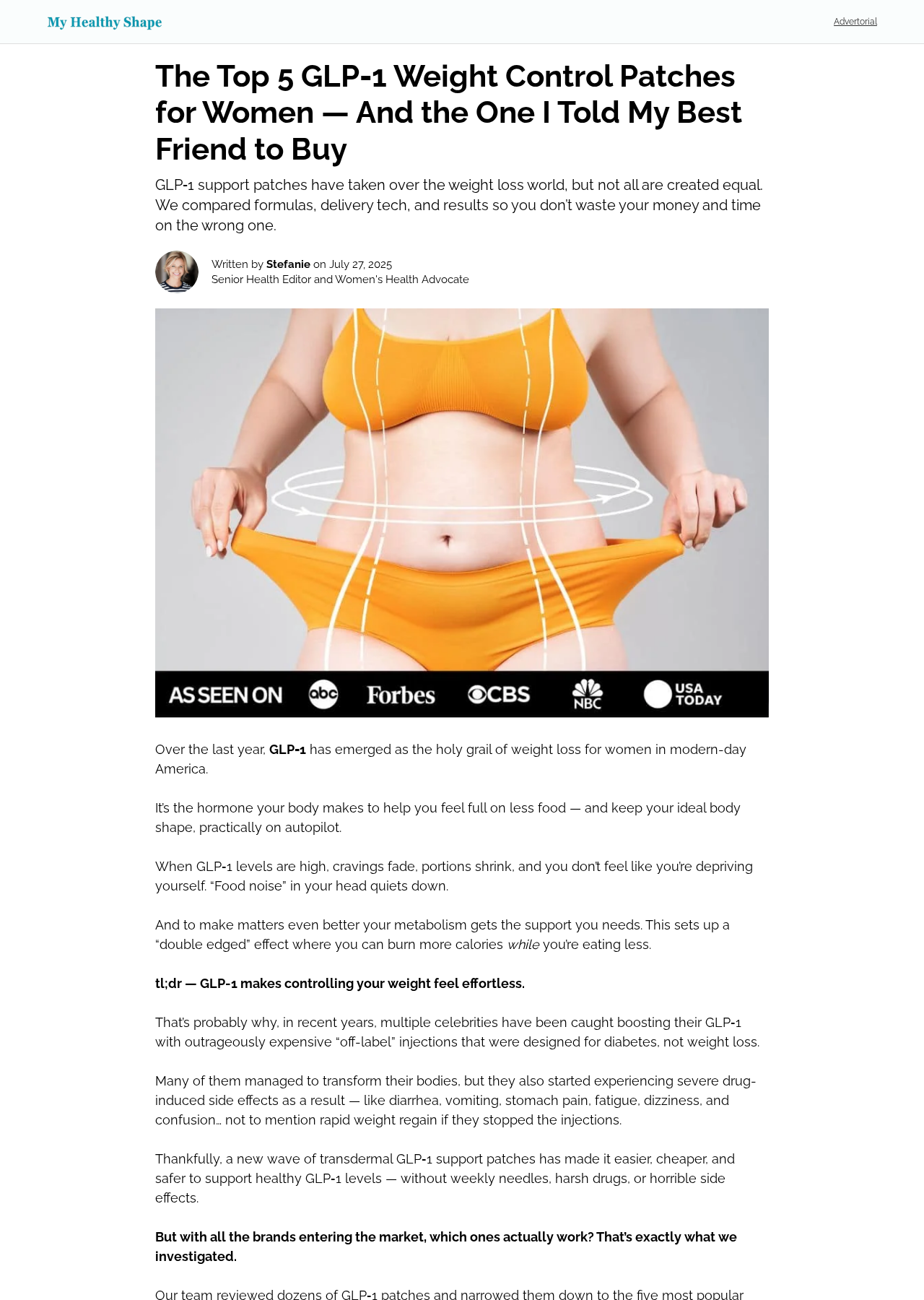
A My Healthy Shape advertorial ranks Ledisa first among five weight-control patches. It uses a byline, a comparison format, and an enthusiastic recommendation resembling editorial advice.
The page describes product testing and awards Ledisa a high score. Those statements are promotional claims; the score is not an independently verified clinical result.
Its footer discloses financial compensation and commissions, and says products or companies may involve financial interests. The page should therefore not be mistaken for disinterested medical guidance.
Read the ranking as part of a sales effort rather than an independent clinical comparison. Its recommendation cannot verify the seller’s claims or refund performance.
The visible media logos and personal recommendation add familiarity, but they do not document a finished-product trial. Neither presentation substitutes for evidence about absorption, dose, or outcomes.
What Independent Medical Guidance Says About the Promise
Cleveland Clinic’s discussion of GLP-1 patches distinguishes these online products from prescription medicines. It also explains why oral berberine findings do not establish effectiveness through skin application.
The crucial missing link is delivery: a substance studied after swallowing cannot simply be assumed to reach a useful amount through an adhesive patch.
The National Center for Complementary and Integrative Health also describes the weight-loss evidence for taking berberine as inconclusive. Study limitations include bias, inconsistent findings, and varying formulations.
That background does not prove that this particular pouch lacks its listed ingredients. It explains why the advertised ingredient cannot carry the entire weight-loss claim.
Ledisa says its patch bypasses digestion and supplies steady absorption. That delivery claim needs evidence for the actual formulation, not merely a general explanation of transdermal products.
Some medicines genuinely use skin delivery, but their existence does not validate every wellness patch. The substance, formulation, absorbed quantity, and intended benefit each matter.
A useful clinical study would identify the finished patch, measure relevant outcomes, and explain its methods. A favorable ingredient reference does not provide those missing product-specific answers.
The sales page also presents a certificate-of-analysis feature while explicitly stating that its certificate is not tied to a specific batch. That limitation matters for a delivered package.
A general certificate cannot authenticate the particular lot in your hands. Even a genuine quality test would answer different questions from a clinical trial demonstrating weight-loss effectiveness.
Quality testing and treatment evidence answer different questions
A report about ingredients does not establish clinically useful absorption or weight loss. Ask which exact product, batch, delivery method, and outcome the evidence actually covers.
How the Ledisa Purchase Path Works
Step 1: The promotional promise creates the comparison
The advertorial positions patches against the expense and inconvenience associated with medication. Its comparison encourages readers to evaluate a simple consumer product through a treatment-related expectation.
That is the point to separate convenience from effectiveness. Being easier to apply does not show that the product can produce the result someone wants.
Step 2: The merchant presents the actual product and bundle
The current product page offers one-, two-, and three-month quantities. Per-pack displays appear alongside purchase-option prices, so the amount near a button needs careful interpretation.
In the clean captured three-pack view, the one-time amount was $86.85 for three packs delivered once. It explicitly did not include free shipping.
Step 3: A lower price comes with a recurring option
The adjacent subscription offered three packs every three months at $62.85 and first-order free shipping. That is a different commitment from the selected one-time option.
A general line elsewhere on the page mentions a 30-day subscription. Your actual selected interval and final confirmation matter more than assuming every displayed line describes your bundle.
Step 4: The checkout and confirmation determine the order
A separate current one-time checkout loaded the three-pack bundle with an $86.85 subtotal. Shipping still required an address, so that subtotal was not the final delivered cost.
The loaded page also displayed a checkout-problem message. No payment was submitted, so this investigation does not establish successful ordering, delivery, or a universal checkout failure.
The advertorial’s tracking route could not be completed without its original context. The current merchant checkout was inspected separately, not presented as a verified continuation of that redirect.
Bundle and refill warning
The captured one-time offer was $86.85 for three packs, before address-dependent charges. Do not confuse a per-pack display with your complete order cost.
The separate $62.85 option supplied three packs every three months. It was optional, not evidence that the selected one-time purchase automatically created refills.
Save the final quantity, billing choice, renewal date, and receipt. Cancel unwanted refills early in writing, and ask your payment provider promptly about applicable dispute deadlines.
The 90-Day Promise Contains Conflicting Conditions
The sales page invites buyers to try the product and return it if dissatisfied. The detailed refund page substantially narrows that reassuring impression.
It says the guarantee covers unopened, unused products only, including single-pack orders. For a multipack purchase, an opened pack is excluded even if unopened packs remain eligible.
The refund instructions ask for a written statement that the product was unused and unopened, plus a photograph showing the sealed product.
Later, the grounds for denial include not completing 30 to 40 days of consistent use and not providing a written attestation of that use.
Those requirements do not fit together neatly. A customer cannot evaluate an opened pack while honestly describing that same pack as unused and unopened.
Before interpreting the guarantee as a risk-free trial, ask which requirement controls. Obtain a written explanation covering the exact packs and circumstances of your order.
The seller’s public pages also disagree about fees deducted from approved post-charge cancellation refunds. The difference is relevant to the displayed three-pack one-time purchase.
The footer-linked return page lists a $25 fee for orders from $71 to $90. The separate refund-policy page lists $30 for $71 to $90.99.
These are not established charges on every return. Both schedules concern approved cancellation refunds after payment has already processed, and their disagreement leaves the applicable deduction unclear.
The policy starts its 90-day clock at delivery and excludes subsequent subscription renewals from that guarantee. Treat renewal cancellation separately from requesting a refund for the original order.
The Seller, Support, and Product Traceability
The published seller name is not a factory identification
The site identifies Ledisa LLC and gives an Aventura, Florida, address. That identifies what the merchant publishes, not the location where the patches were manufactured.
A seller name, ingredient illustration, and generic testing claim do not independently identify your package’s manufacturer or establish its contents. Preserve the actual packaging and lot information.
Different addresses have different stated roles
The terms also contain a Wilmington, Delaware, address for arbitration-related notices and a Hebron, Kentucky, return address. Those are different stated functions, not interchangeable shipping instructions.
A return package needs the authorized return destination, not an arbitration address. Ask support for written authorization and the correct shipping instructions before mailing any product.
Cancel before the earlier published cutoff
The return policy recommends canceling at least 48 hours before renewal, while the terms require three days. Waiting until the shorter interval risks an avoidable dispute.
The site publishes help@tryledisa.com and a subscription-management route. Use your account’s actual renewal details, cancel early, and keep confirmation that future billing stopped.
Ask which shipment, renewal date, and order number the cancellation covers. Stopping future billing does not necessarily cancel an order that has already entered fulfillment.
Batch information matters more than generic assurances
If you already have a package, photograph its complete label, lot identifier, and expiration information. Those details connect any seller explanation to the item actually delivered.
The public certificate disclaimer leaves that batch connection unestablished. Do not interpret it as proof of contamination, but do not treat it as authentication of your lot either.
What to Do If You Ordered Ledisa Patches
-
Save the order confirmation and the actual purchase option. Record the number of packs, full charge, and whether the receipt identifies a subscription or one-time purchase.
Do not infer a refill solely from a generic line elsewhere on the website. If your confirmation is unclear, ask the seller to identify the billing arrangement.
-
Request cancellation immediately if you do not want the order or future shipments. Specify whether you want the current order canceled, future renewals canceled, or both.
The seller says fulfillment can prevent cancellation after processing. Preserve its response, the scheduled renewal date, and written confirmation of whatever action it actually completed.
-
Ask for written clarification before opening packs you may want refunded. Mention the conflict between unopened-product eligibility and the later consistent-use requirement.
Provide truthful information about what you opened or used. Keep photographs and any return authorization rather than assuming every pack in a bundle receives identical treatment.
-
Contact your payment provider promptly if billing was unauthorized or a documented problem remains unresolved. Describe the transaction accurately and ask about your specific options and deadlines.
The seller asks customers to allow a resolution period before disputing. Do not assume that request extends your payment provider’s deadline or guarantees a refund.
-
Do not replace prescribed treatment with these patches. Discuss weight-management options with your clinician, particularly if you take medicines or have a condition requiring ongoing care.
Stop using a patch that causes a skin reaction and seek medical advice. Berberine-related safety concerns also warrant professional guidance during pregnancy, breastfeeding, or medication use.
Frequently Asked Questions
Are Ledisa patches the same as GLP-1 medication?
No, the current product is marketed as berberine support rather than prescription medication. Its own disclaimer says the patches are not medical equivalents or treatment replacements.
Do oral berberine studies prove this patch causes weight loss?
No, research involving swallowed berberine does not establish delivery through this finished patch. Independent medical guidance also describes limitations in the weight-loss evidence for oral berberine.
Does every Ledisa order automatically become a subscription?
The captured page offered separate one-time and subscription choices, with one-time selected. Your actual choice and confirmation determine whether the order includes a recurring commitment.
Does the 90-day guarantee let me use every pack first?
The detailed policy restricts eligibility to unopened, unused products, despite conflicting consistent-use language elsewhere. Obtain written clarification before relying on an unrestricted trial or opening additional packs.
Does the public certificate verify my delivered batch?
The product page explicitly says its certificate is not batch-specific. That does not authenticate your lot or demonstrate weight-loss effectiveness, and it is not proof of contamination.
What should I do about an unwanted renewal?
Cancel future billing promptly and request a written response about the processed charge. Preserve your original consent, renewal notice, cancellation timing, and payment-provider deadlines.
The Bottom Line
Do not buy Ledisa as a proven weight-loss treatment or substitute for GLP-1 medication. The delivery evidence is insufficient, and the return promise contains material conflicts.
If you already ordered, use your actual receipt to establish the billing arrangement. Cancel unwanted refills early, clarify unopened-pack refunds in writing, and protect your payment-provider deadlines.

Join the discussion
0 commentsShare your experience or ask a question about this article.
Community experiences
Did this happen to you?
Your experience could help someone recognize the same scam. Submit a private report for our team to review.
I experienced this tooReports are reviewed before publication. Sharing publicly is always your choice.
Discussion
Start the conversation
Have a question or something useful to share? Add the first comment.