

Crestline Nutrition Glucose Support is being promoted as a “natural” diabetes and blood sugar support supplement, often through news-style pages and long sales videos that promise a simple breakthrough.
The pitch usually follows a familiar pattern: bold claims, heavy “doctor” framing, implied authority, and a fast push to buy before you have time to verify anything.
This article breaks down what Crestline Nutrition Glucose Support-style campaigns typically look like, why the promises are unreliable, how the funnel works step by step, and what to do if you already purchased and now have concerns.
This is not medical advice. If you have diabetes or prediabetes, do not change prescribed treatment without a qualified clinician.
Overview
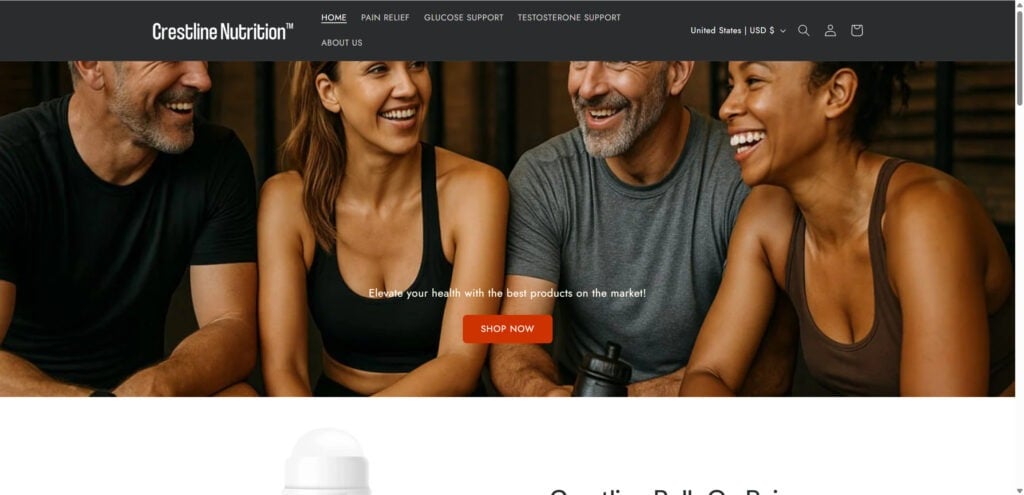
Crestline Nutrition Glucose Support is usually presented as a “natural blood sugar support” supplement, often sold through advertorial pages and long-form sales videos.
At first glance, the pitch can look convincing.
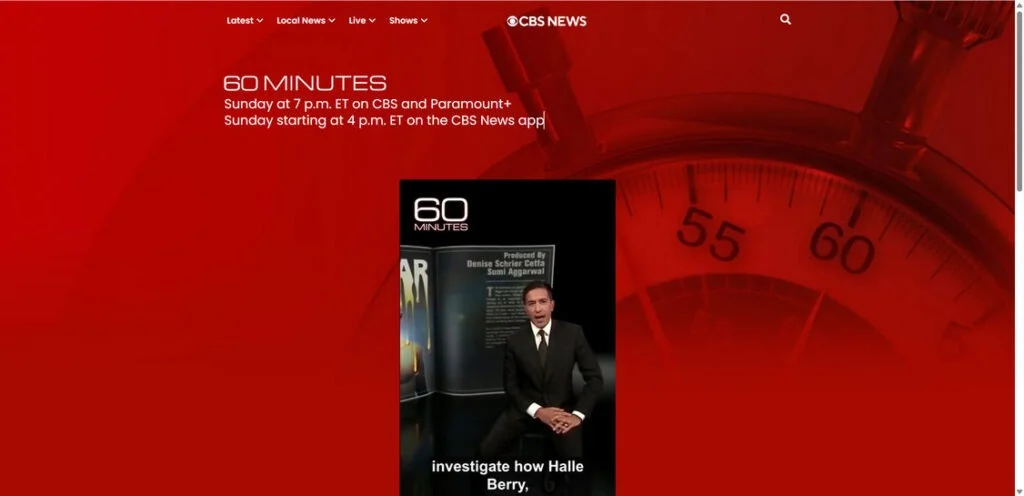
It frequently uses medical language, lab-style graphics, dramatic “reversal” narratives, and recognizable media branding to make the experience feel like a real health report, not an advertisement.
But the core issue is not that people want better blood sugar control.
It is the way Crestline Nutrition Glucose Support is promoted.
Many Crestline Nutrition Glucose Support campaigns follow a templated supplement funnel that has been recycled across multiple “diabetes drops” and “glucose support” products. The name changes. The bottle changes. The “secret method” changes.
The structure stays almost the same.
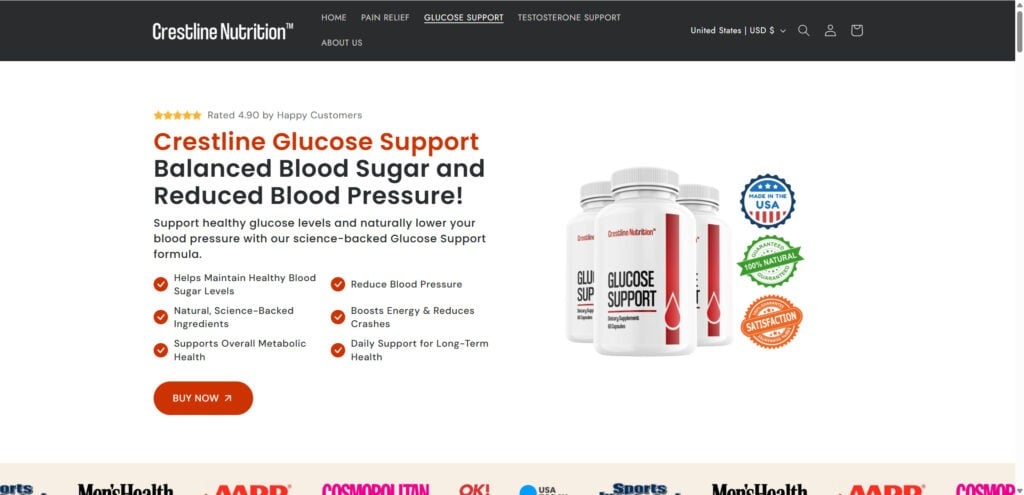
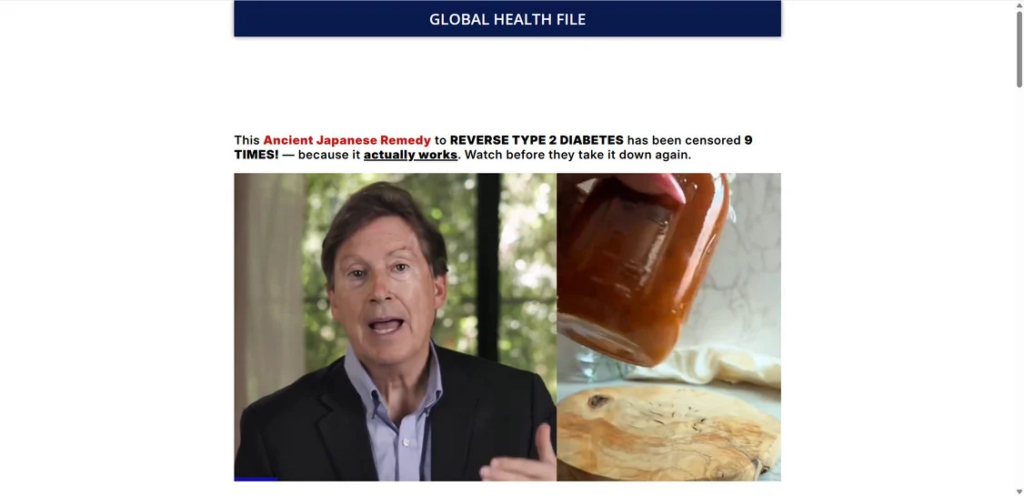
The “diabetes reversal” promise is the hook
Crestline Nutrition Glucose Support-style ads often frame the pitch as a hidden solution, such as:
- a “diabetes reversal ritual”
- a “one-minute blood sugar trick”
- a “pancreas reset” method
- a “simple bedtime routine”
- a “rare plant” or “blue fruit” discovery
- a “doctor silenced by Big Pharma” story
These angles are designed to trigger urgency.
They also make the buyer feel like they are about to access information that most people do not have.
In many cases, the “method” is never shared in a practical, usable way.
Instead, it becomes a bait-and-switch that leads to a product pitch for a dropper bottle.
Diabetes is high stakes, which makes deception more profitable
Diabetes is not a cosmetic problem.
It is a chronic medical condition, and many people are stressed about long-term complications, medication costs, and fear of worsening health.
That makes this category unusually vulnerable to manipulative marketing.
Shady supplement funnels take advantage of that vulnerability by using:
- emotionally loaded language
- “breakthrough” framing
- timeline promises (7 days, 17 days, 30 days)
- fear-based warnings
- claims that mainstream medicine is hiding the truth
The goal is to bypass skepticism and move the reader into a purchase before they can verify anything.
Fake authority builds trust fast
A major red flag in Crestline Nutrition Glucose Support-style funnels is credibility theater.
Credibility theater means the page looks authoritative without providing verifiable proof.
Common tactics include:
- a news-style layout that resembles major networks
- “as seen on” logos that are never linked to real coverage
- a “doctor” in a white coat with no verifiable identity
- claims like “clinically proven” without published studies
- “FDA approved” style language used incorrectly
- “made in the USA” claims without transparent manufacturing details
A page can display a logo.
That does not mean there is an endorsement.
A page can say “clinically tested.”
That does not mean there is independent, peer-reviewed evidence.
Deepfakes and AI content are now part of the formula
Many diabetes supplement ad campaigns increasingly lean on:
- deepfake-style clips of public figures
- AI voiceovers that mimic news narration
- scripted “testimonials” with generic personal details
- stock images used as “real customers”
- “breaking news” style framing
This works because it creates a feeling of legitimacy before the reader asks basic questions, like:
Who sells this?
Where is the company located?
What evidence exists outside the sales page?
The supplement label becomes a smokescreen
Most of these funnels try to sound scientific by listing familiar ingredients or buzzwords.
That does not automatically make the product effective, safe, or appropriate for you.
Even when ingredients have some limited evidence in certain contexts, that is not proof that a specific branded supplement:
- contains what it claims in the stated amounts
- has consistent quality control
- has been tested for interactions with diabetes medications
- produces the dramatic results shown in ads
When a supplement is marketed as a “replacement” for real medical care, that is where the risk becomes serious.
What people commonly report in these funnels
Complaint patterns that frequently show up with diabetes supplement funnels include:
- confusing checkout steps that lead to higher totals than expected
- being billed for multiple bottles when only one was intended
- “free bottle” language that still triggers extra charges
- hidden subscription or recurring billing terms
- difficulty reaching support
- refund processes that look simple but become slow and frustrating
Not every buyer experiences every issue.
But when a product is marketed through these patterns, the risk rises sharply.
The big takeaway
Crestline Nutrition Glucose Support-style marketing is rarely built around transparency.
It is built around persuasion, urgency, and borrowed credibility.
If the product’s “proof” exists only inside its own sales page, that is not independent validation.
It is marketing.
Next, we’ll break down exactly how the operation usually works, step by step, so you can spot the pattern quickly even when the product name changes.
How The Operation Works
Crestline Nutrition Glucose Support is rarely sold through a simple, straightforward product website.
Most buyers are pushed through a multi-step funnel designed to move them from curiosity to purchase quickly, with minimal time to research.
Step 1: The scroll-stopping ad appears
Most people first see Crestline Nutrition Glucose Support through paid ads on social platforms or ad networks.
The ad is built to trigger emotion fast, such as:
- fear about complications
- frustration with “unstable numbers”
- anxiety about medication costs
- worry about long-term damage
- hope for a shortcut
- curiosity about a “secret method”
Many versions are designed to look casual or “user generated” on purpose.
Selfie-style clips blend into the feed and lower suspicion.
Some variants also imply famous names, TV personalities, or “celebrity doctors” to borrow trust, even when no endorsement exists.
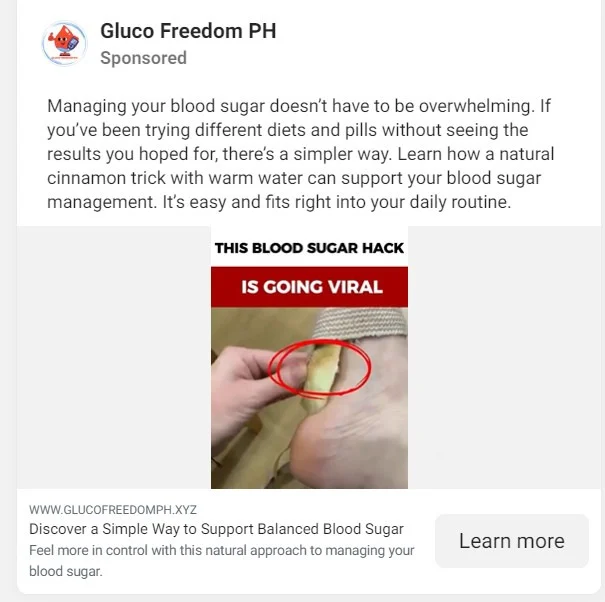
Step 2: The click leads to a “news-style” page
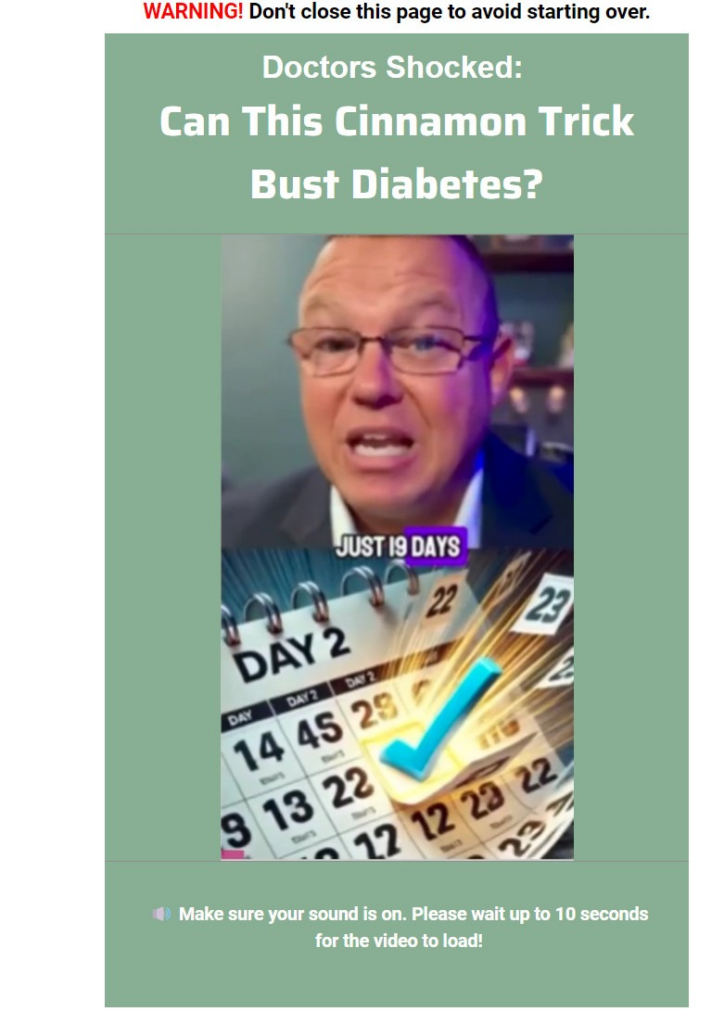
After clicking, you often land on an advertorial.
That is a sales page disguised as an article.
Common signs include:
- urgent headline language
- vague author names
- a date stamp to look current
- layouts that resemble major media outlets
- “as seen on” logos with no proof
- dramatic claims framed as “what doctors won’t tell you”
This stage is designed to create legitimacy before skepticism kicks in.
The goal is to make you feel like you are reading reporting, not advertising.
Step 3: The “secret method” is teased
Next comes the bait.
The page promises a specific solution, like:
- a “diabetes reversal ritual”
- a “blood sugar reset” trick
- a “pancreas switch” method
- a “rare discovery” that “targets the root cause”
The reader thinks, “I just want the method.”
But the method rarely arrives clearly.
Instead, it is stretched into a long story.
Step 4: A long-form video locks in attention
Many Crestline Nutrition Glucose Support funnels rely on a long video that looks like:
- a documentary-style report
- a “special presentation”
- a health segment
- a “doctor reveal”
The video often includes:
- animated organs and bloodstream graphics
- simplified explanations of insulin resistance
- claims about hidden inflammation or toxins
- dramatic “case study” transformations
- repeated reminders to “watch until the end”
The structure is usually predictable:
- explain the problem in scary terms
- claim mainstream medicine ignores the truth
- tease a simple solution
- delay the solution
- position the product as the “real answer”
If the page promises a “method” and never clearly gives it, that is typically intentional.
The missing “free fix” becomes a lever that keeps the viewer engaged until the product feels like the answer.
Step 5: Authority badges and compliance language show up
Once the viewer is invested, the funnel piles on authority signals, like:
- “clinically proven”
- “doctor recommended”
- “FDA approved”
- “GMP certified”
- “made in the USA”
- “scientifically formulated”
For supplements, these phrases are often used in ways that confuse people.
If there is no transparent documentation, no real studies, and no verifiable company identity, treat the badges as marketing.
Step 6: Social proof and urgency pressure you to buy
Then the funnel ramps up pressure using:
- countdown timers
- “limited stock” warnings
- popups showing “recent purchases”
- “X people are watching”
- huge review numbers
- “today only” discounts
These are conversion tools, not proof.
Their job is to make you feel like delaying is risky.
Step 7: Bundles push bigger spending
Offers are typically structured like:
- 1 bottle at a high price
- 3 bottles at a lower per-bottle cost
- 6 bottles as “best value”
- sometimes “extended protocol” bundles
The pricing is designed to make the small option feel like a mistake.
Step 8: Checkout confusion increases billing risk
This is a common failure point.
Checkout flows may include:
- pre-selected quantities
- upsell screens that look mandatory
- “free bottle” language that still increases totals
- fine-print subscription terms
- vague merchant names on bank statements
This is where people often believe they ordered one item, then later discover multiple charges or recurring billing.
Step 9: Support friction makes refunds slow
After purchase, support can be slow or hard to reach.
Common issues include:
- email-only support with long delays
- vague return instructions
- shifting refund requirements
- policies that look generous but are difficult to use
Even when a product arrives, the entire experience can feel engineered to reduce refunds.
Why the same story keeps showing up under new names
Crestline Nutrition Glucose Support is one label.
The funnel template is reusable.
When a brand attracts complaints or ad accounts get flagged, sellers can:
- change the domain
- change the product name
- tweak the narrative
- launch the same funnel again
That is why you keep seeing similar diabetes supplement pitches tied to different “methods” and different bottles.
What To Do If You Have Bought This
If you bought Crestline Nutrition Glucose Support and now feel uncomfortable, focus on practical steps.
1) Save your evidence immediately
Create a folder and save:
- screenshots of the ad (if possible)
- the landing page URL
- the checkout totals
- your confirmation email
- your receipt and order number
- screenshots of your bank or card statement
This helps if you need a dispute.
2) Check for recurring billing or subscriptions
Watch for:
- a second charge days or weeks later
- terms like autoship, membership, monthly, continuity
- emails about “next shipment”
If anything looks recurring, treat it as urgent.
3) Contact your bank or card provider
Ask:
- whether you can dispute the charge
- how to block future charges from the same merchant
- whether a card replacement is recommended
If you see unauthorized repeat charges, a replacement card can stop future billing.
4) Email the seller to cancel and document it
Send a direct email with:
- your full name
- the email used for purchase
- your order number
- a clear request: cancel any subscription and do not charge me again
- request written confirmation
Save their reply, or the lack of reply.
5) Monitor statements for at least 60 days
Look for:
- new charges from unfamiliar merchant names
- repeat billing around the same date each month
- shipping fees you did not approve
6) Do not stop diabetes medication because of an ad
This matters.
If you have diabetes, do not change or stop prescribed medication based on supplement marketing.
If you feel pressured by the sales page to “ditch meds,” treat that as a serious red flag.
If you have side effects or feel unwell after taking a supplement, stop using it and contact a qualified healthcare professional.
7) Report the ad where you saw it
Reporting helps platforms identify patterns.
Report it on:
- Facebook or Instagram
- YouTube
- TikTok
- the ad network that served it
Use categories like misleading content, fake endorsements, or scams.
8) If your info was shared, tighten account security
If you entered personal info on a suspicious checkout, consider:
- changing passwords on accounts that share the same password
- monitoring email for phishing attempts
- watching for “support” messages asking for more data
The Bottom Line
Crestline Nutrition Glucose Support is commonly promoted through a scam-style diabetes supplement funnel that relies on big promises, borrowed credibility, and high-pressure tactics.
The “reversal ritual” and “secret method” angles are usually hooks designed to sell a bottle, not transparent health guidance backed by reputable evidence.
If you already bought it, focus on protection: document everything, watch for subscriptions, contact your bank if needed, and request cancellation in writing.
The most useful outcome is learning the pattern, so the next time a new “miracle diabetes drops” name appears, you recognize the funnel immediately.
FAQ
What is Crestline Nutrition Glucose Support?
Crestline Nutrition Glucose Support is typically marketed as a “natural blood sugar support” supplement, often sold through advertorial pages and long-form videos. The claims vary by seller and domain.
Is Crestline Nutrition Glucose Support a cure for diabetes?
A supplement should not be treated as a cure. If an ad suggests “reversal,” “permanent fix,” or “no more meds,” treat that as a major red flag.
Can Crestline Nutrition Glucose Support replace metformin, insulin, or other diabetes medication?
No. Do not stop or change prescribed medication based on a sales page. If you want to adjust treatment, do it with a qualified clinician.
Is Crestline Nutrition Glucose Support FDA approved?
Dietary supplements are not “FDA approved” like prescription drugs. If Crestline Nutrition Glucose Support is marketed as “FDA approved,” assume that wording is being used to create trust, not to describe a real approval process.
Are the celebrity or “TV doctor” endorsements in the ads real?
Often, these funnels imply endorsements through lookalike footage, deepfake-style clips, or vague “as seen on” branding. If you cannot verify an endorsement outside the sales page, treat it as advertising, not proof.
What are the biggest red flags for a diabetes supplement funnel?
News-style layouts, dramatic “breakthrough” language, missing company details, unverifiable clinical claims, countdown timers, and pressure to buy bundles are common warning signs.
Why do people report being charged for multiple bottles or a subscription?
Checkout flows can include pre-selected quantities, upsells that look like required steps, and fine-print continuity terms. That is why buyers sometimes think they ordered one bottle but see more charges.
How do I check if I agreed to recurring billing?
Review your confirmation email, the final checkout screen (if you saved it), and your bank statement for repeat charges. Look for terms like autoship, membership, monthly, or continuity.
What should I do if I see a second charge I did not approve?
Document everything, email the seller to cancel and demand written confirmation, and contact your bank or card issuer to block future charges and dispute unauthorized billing.
What if I already took Crestline Nutrition Glucose Support and feel unwell?
Stop using it and seek medical guidance promptly, especially if you take diabetes medications. Do not “push through” symptoms because an ad promised quick results.
Can supplements like this interfere with diabetes medications?
They can. Diabetes medications are high impact, and adding unverified supplements can increase risk of side effects or unstable glucose. Discuss any supplement with a clinician or pharmacist.
The seller is ignoring me. What are my options?
Keep all evidence, follow up in writing, and escalate through your payment method. If the merchant is unresponsive and billing looks deceptive, a dispute is often the practical route.
Where can I report misleading diabetes supplement ads?
You can report the ad on the platform where you saw it, and you can also submit a complaint to Federal Trade Commission and review safety alerts from U.S. Food and Drug Administration.
How can I avoid similar products in the future?
Slow down at the ad stage, search the product name plus “reviews” and “complaints,” screenshot checkout totals, and avoid any offer that relies on secrets, urgency, and unverifiable endorsements.

Join the discussion
4 commentsShare your experience or ask a question about this article.
Discussion
We have tried many times to stop these pills from coming. We are putting a stop payment to our credit card for this bogus company. We have returned packages, if this continues after this, we will contact any agencies that we need to.
In reply to Alec Moore
A stop payment is the right instinct, but ask for something stronger: these merchants re-present charges under slightly different descriptors, and updated card numbers often roll over automatically to the new card. Tell the issuer explicitly to block the merchant and to reissue the card rather than just stopping the next payment, and dispute the shipments you already returned – keep those postage receipts, since proof of return is what wins it. Worth reporting at reportfraud.ftc.gov and to your state Attorney General now rather than later; complaint volume is what moves these cases.
Stop sending this right now I didnt order in the first place
In reply to Margaret
Hi Margaret, I understand the frustration.
If you did not knowingly order this, it may be part of a subscription or unauthorized charge. I would recommend contacting your bank or card provider immediately, explaining the situation, and asking them to block further charges and investigate.
Also avoid contacting any number or link included with the product itself if it seems suspicious.