

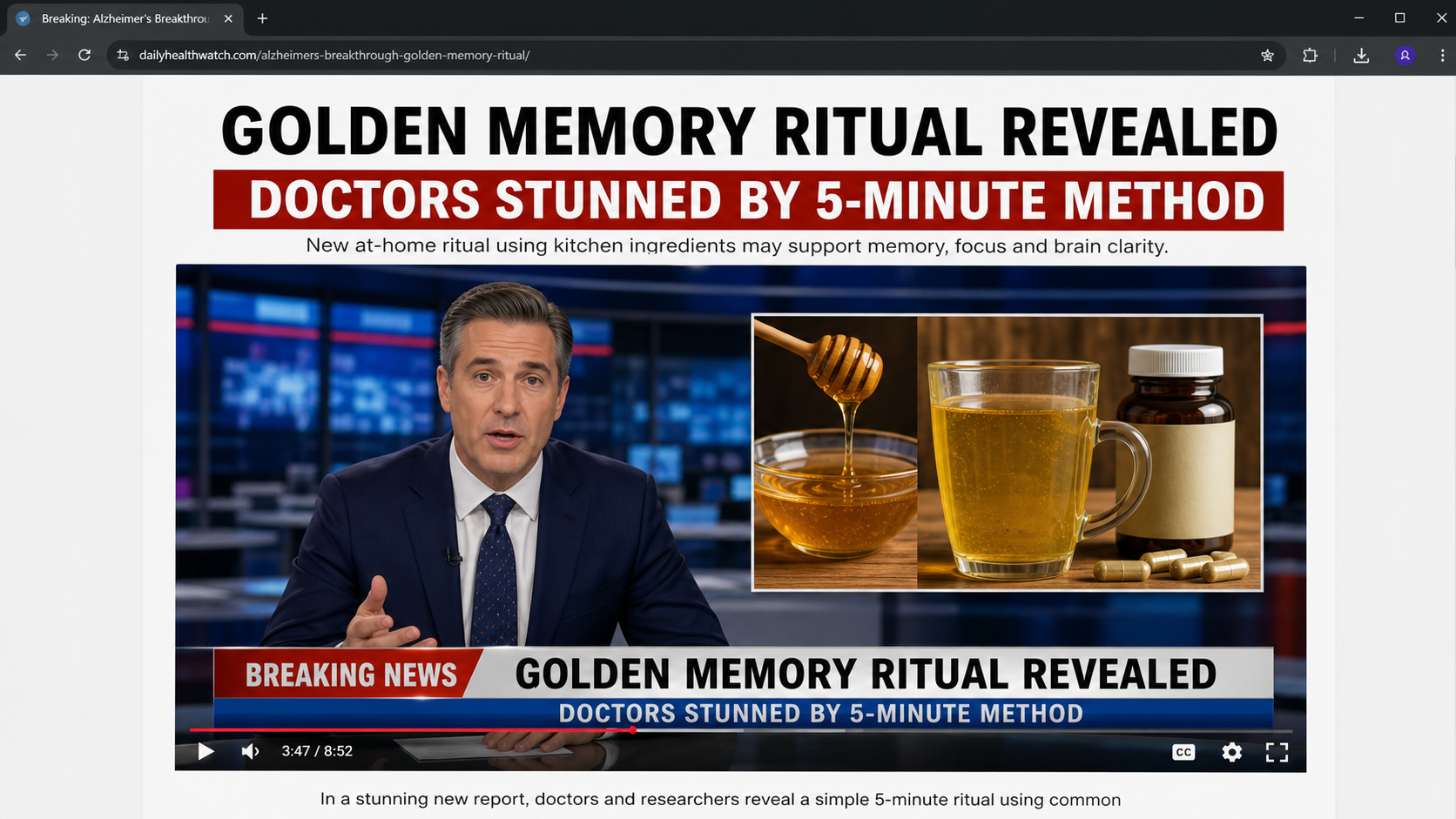
A breaking-news anchor looks into the camera and announces new hope for families facing Alzheimer’s disease. The report says a cheap coffee-and-honey ritual can restore memory, and powerful institutions have finally allowed the secret to be shown.
The urgency is manufactured. The David Muir “golden memory ritual” scam is not a medical news report. It is a counterfeit broadcast built to carry viewers from an emotional promise to a supplement order form.
Overview
The Story Presented as Breaking News
The clip appears to show David Muir introducing a major Alzheimer’s breakthrough. Viewers hear that a “golden memory ritual” involving coffee and honey has helped thousands of people regain clarity without drugs or invasive treatment.
Later scenes may feature actors, television personalities, Bill Gates, or a supposed brain expert. The presentation claims a hidden foundation funded the research and mainstream medicine ignored the result.
What Is Actually Verified
There is no verified evidence that David Muir or ABC News aired this report or endorsed the remedy sold through it. The anchor’s appearance can be assembled from copied footage, manipulated mouth movement, cloned audio, or a fully generated sequence.
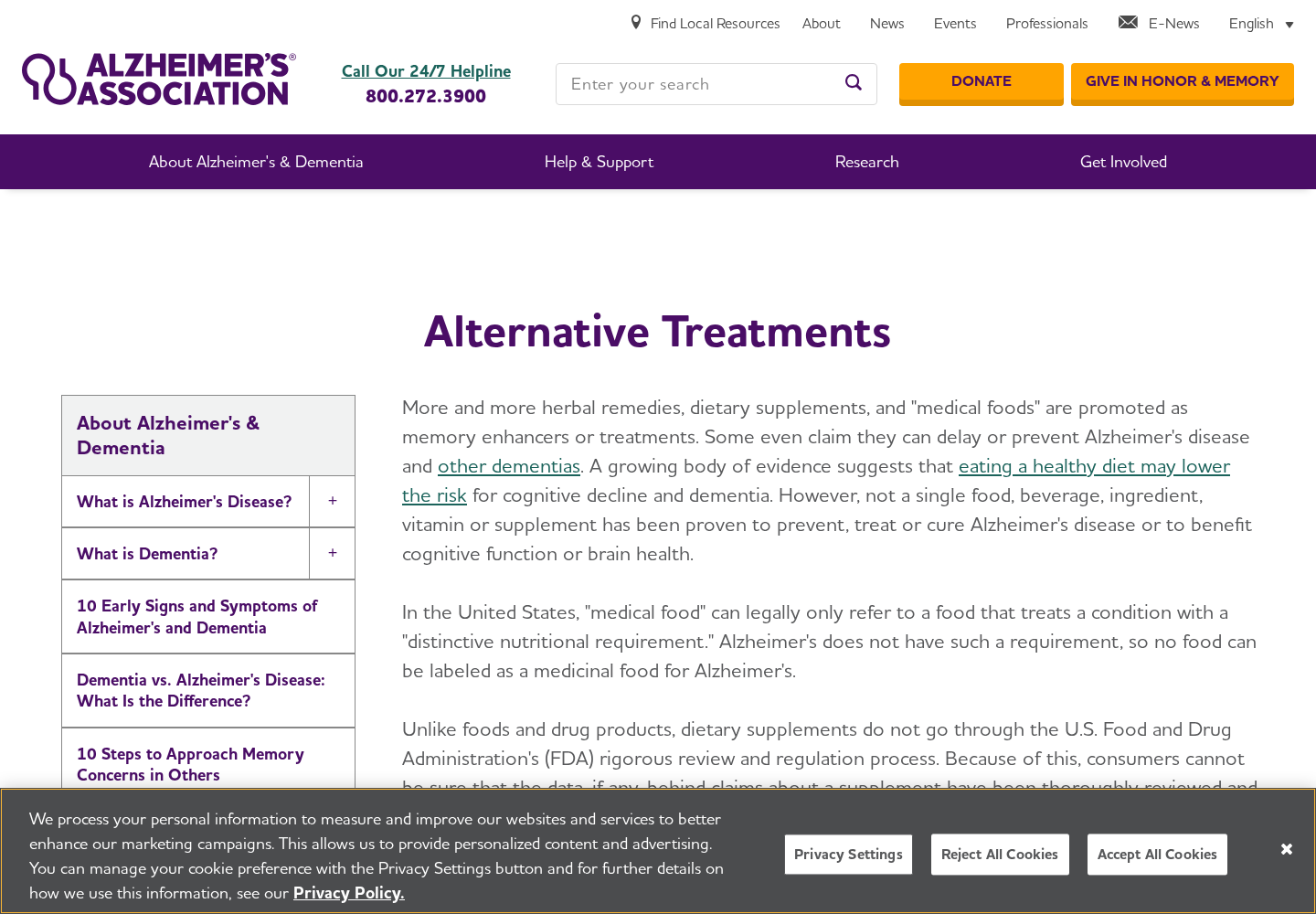
The Alzheimer’s Association states that no food, beverage, ingredient, vitamin, or supplement has been proven to prevent, treat, or cure Alzheimer’s. Coffee and honey do not become a cure because a fake newsreader says they do.
- The supposed report cannot be found in the broadcaster’s genuine archive.
- The page uses a news identity on a domain unrelated to the named network.
- The “golden memory ritual” is a marketing phrase, not a recognized treatment.
- Famous people are shown making claims they did not verifiably make.
- A promised pantry recipe eventually becomes a supplement pitch.
- Large bundles or automatic refills may be hidden behind a low advertised price.
Brain Vex Is a Rotating Product Example
Brain Vex capsules appeared at the end of one observed campaign. Another advertiser can preserve the David Muir opening, change a few product shots, and send viewers to an entirely different bottle.
The most important link is the funnel, not the label. MalwareTips has covered related memory stories, including the fake Steve Martin and Bill Gates dementia recipe. The same invented ritual can be recycled across several celebrity combinations.
Why a Fake David Muir Report Feels Convincing
News anchors build familiarity through years of appearing in viewers’ homes. Their voices and mannerisms become associated with urgent, carefully verified information. The scam borrows that relationship without permission.
A short social video does not need to survive close inspection. It needs to feel real for long enough to earn a click. A breaking-news banner, newsroom background, network-like colors, and dramatic lower-third graphic often accomplish that.
AI voice tools can imitate the cadence of a broadcaster, while face-animation software can alter an existing clip. Captions cover the mouth, quick cuts hide glitches, and background music makes unnatural speech less obvious.
The video may still contain clues. Names can be mispronounced, facial expressions may not match the words, or the voice may sound emotionally flat. Yet even a flawless deepfake would remain false if no authentic broadcast exists.
Verify the story outside the ad. Search the network’s real site, the anchor’s official channels, and reputable reporting. If the alleged medical exclusive exists only on a sales domain, it is not a legitimate exclusive.
The “Golden Memory Ritual” Is a Bait-and-Switch
Coffee and honey are familiar, affordable, and available in most kitchens. That makes them ideal bait. A person worried about memory loss may keep watching because trying a simple drink seems harmless.
The recipe is rarely delivered promptly. The narrator promises that the exact ingredient or measurement is coming soon, then inserts personal stories, conspiracy claims, and repeated warnings not to close the page.
Near the end, the script changes. Viewers are told that grocery-store ingredients are too weak, the exact compound is difficult to source, or preparation destroys the active component.
A branded supplement is introduced as the reliable version of the supposedly free ritual. In one campaign it was Brain Vex. In another, the same transition could lead to MemoPryl, Neuro Mind Pro, or a newly created name.
This is why debating the recipe misses the commercial design. The pantry story holds attention. The bottle creates the sale.
Fake Foundations, Invented Numbers, and Misused Science
The story may refer to a “Bill Gates Alzheimer’s Foundation,” a massive research investment, or tens of thousands of recovered patients. A formal-sounding name and a large number can feel authoritative even when neither is documented.
Legitimate clinical research identifies who performed the study, where it was published, how many people participated, what treatment they received, what outcomes were measured, and what limitations remained.
The scam presentation offers none of that in a form a viewer can verify. It flashes laboratory imagery, cites impressive percentages, and moves quickly to testimonials.
Some versions describe Alzheimer’s as “type 3 diabetes” and claim one drink fixes insulin resistance in the brain. Researchers may study relationships between metabolism and cognitive disease, but that does not validate a commercial honey supplement.
A scientific concept is not a product endorsement. The finished formula must be evaluated, and the exact claim must be supported. Marketing cannot fill the gap with a famous face and a dramatic brain animation.
What Real Guidance Says About Memory Supplements
The Alzheimer’s Association warns that alternative products may be promoted with claims that are not supported by strong evidence. “Natural” is not the same as safe, and supplements can interact with prescribed medicine.
The FDA has also warned sellers about products claiming to prevent, treat, or cure Alzheimer’s disease. Unproven products can cost families money and delay medical evaluation.
Memory changes can arise from many causes. A clinician may review medications, sleep, mood, nutrition, neurological symptoms, and other health conditions before recommending next steps.
That careful process is the opposite of the ad’s one-cause, one-cure story. No responsible professional can diagnose every viewer or guarantee a reversal through a recorded sales presentation.
How the David Muir “Golden Memory Ritual” Scam Works
Step 1: A Fake Breaking-News Video Stops the Scroll
A sponsored post appears on Facebook, Instagram, TikTok, YouTube, or a content site. David Muir seems to announce a discovery that could change how Alzheimer’s disease is treated.
The video uses urgency and compassion. It targets viewers who are worried about their own memory or caring for someone they love.
Step 2: The Ad Opens a Counterfeit News Article
The click leads to a page styled like ABC News, CNN, Fox News, or another trusted outlet. A logo, menu, author name, date, and comment section create the appearance of journalism.
Check the address bar. The domain usually has no connection to the outlet. Navigation links may be fake, and every call-to-action moves the visitor deeper into the sales funnel.
Step 3: A Long Video Builds the Honey Story
The presentation claims that coffee, honey, or another kitchen ingredient targets the hidden cause of memory loss. Viewers are repeatedly told that the recipe will be revealed in a few minutes.
Each delay gives the script more time to weaken skepticism. It adds patient stories, brain graphics, fake statistics, and accusations that conventional medicine suppressed the cure.
Step 4: Deepfake Guests Supply Social Proof
Famous actors, hosts, doctors, or philanthropists appear to confirm the results. One tells a personal recovery story, another explains the science, and a third supposedly funded the work.
These clips may be manipulated or entirely generated. The campaign does not provide a verifiable original interview, consent, or genuine endorsement.
Step 5: The Ritual Becomes a Commercial Supplement
After a long wait, the promised home recipe is declared impractical. The seller introduces Brain Vex or another bottle as the exact, concentrated version of the discovery.
The transition happens quickly. A story presented as public-interest news becomes an order page controlled by the people making the claims.
Step 6: Pricing Tricks Push a Large Order
A low per-bottle or per-day figure is displayed in large type. The total charge for a multi-bottle bundle may be less prominent, and the page suggests a larger supply is necessary for results.
Countdown clocks, disappearing discounts, limited inventory, and bonus bottles discourage the buyer from reading the full terms.
Step 7: Recurring Billing and Cancellation Problems Follow
Some funnels enroll customers in automatic refills. The disclosure can appear in small print or inside a separate terms page that few mobile buyers open.
When buyers seek a refund, they may face unanswered email, outsourced support, return shipping costs, or a merchant name they do not recognize. The ad can disappear while the charges continue.
Red Flags in the Fake Broadcast
- A medical breakthrough appears only in a sponsored social video.
- The network logo does not match the website domain.
- The anchor promises a cure, which legitimate news reporting would treat with extreme care.
- The video says the information will be deleted or banned.
- A pantry recipe is postponed for most of the presentation.
- Famous guests cannot be traced to original interviews.
- Statistics appear without a named, accessible study.
- The final page hides the legal seller or total bundle cost.
Do not click deeper simply to learn the “secret.” Closing the page costs nothing. Entering your card can start a much harder problem.
Company, Address, and Fulfillment Checks
The Brand May Not Identify the Merchant
The bottle name can be disposable. Check the terms, privacy policy, checkout, receipt, and card descriptor for the legal company that actually accepts payment.
Different names across those documents are a serious warning. You should not have to investigate who sold you a health product after the charge appears.
The Address May Be a Front
Search the listed address. It may resolve to a virtual mailbox, shared office, unrelated business, residence, or fulfillment warehouse.
A returns center can ship generic bottles for many sellers. It is not proof that the product was developed, tested, or manufactured there.
Support May Be Designed to Exhaust You
Call before ordering and ask about the exact product, full price, refill schedule, and return conditions. A legitimate seller should answer clearly.
Disconnected numbers, endless hold music, generic agents, and unanswered email are common in unstable funnels. If support fails before payment, expect worse afterward.
The Supply Chain May Be Opaque
Look for complete ingredient amounts, warnings, lot information, and an accountable manufacturer or distributor. Marketing badges and phrases such as “clinically inspired” do not provide traceability.
Some private-label supplements are mass produced overseas, including in China, then sold under rotating names. Importing alone does not prove harm, but a hidden supply chain prevents buyers from checking quality controls, ingredient accuracy, or adverse-event responsibility.
What to Do if You Have Fallen Victim to This Scam
- Send a written cancellation. Cancel the order and any subscription. Ask for a confirmation number, refund amount, return authorization, and clear statement that future billing has stopped.
- Contact the bank or card issuer. Describe any misleading price, undisclosed recurring plan, or unauthorized charge. Ask about disputes and blocking future attempts by the merchant.
- Preserve the sales trail. Save the ad, video, URL, fake news page, checkout, terms, receipt, emails, package, and statement descriptor. Take screenshots before pages vanish.
- Pause before taking the product. Show the label to a pharmacist or physician. Supplements can interact with medication, and an untraceable bottle deserves extra caution.
- Secure accounts and payment details. Replace reused passwords, enable multi-factor authentication, and monitor statements for unfamiliar merchants or small test charges.
- Check the device. If the page downloaded anything or requested an extension, scan the computer or phone with Malwarebytes.
- Reduce malicious advertising. AdGuard can block many known scam ads and tracking links. It is an extra layer, not a substitute for verifying the seller.
- Report the fraud. Report the ad to the platform and file a report at ReportFraud.ftc.gov. Include the domains, phone numbers, merchant descriptor, and amounts.
- Seek appropriate medical help. Arrange a professional evaluation for memory concerns. Do not abandon prescribed care because a fake broadcast presents medicine as the enemy.
- Reject paid recovery promises. A caller who claims to know about your loss and asks for an upfront recovery fee may be targeting you again. Deal only with institutions or professionals you contact and verify yourself.
Frequently Asked Questions
Did David Muir Report on a Golden Memory Ritual?
We found no verified evidence that David Muir or ABC News reported or endorsed this coffee-and-honey Alzheimer’s cure. The campaign uses a counterfeit broadcast appearance.
Is the Golden Memory Ritual Real?
No reliable medical evidence supports the advertised ritual as a treatment or cure for Alzheimer’s disease. The phrase is a sales hook designed to lead to a supplement.
Can Coffee and Honey Reverse Dementia?
No. Coffee and honey are foods, not proven dementia cures. Anyone experiencing memory changes should receive an appropriate medical evaluation.
Is Brain Vex the Only Product in the Funnel?
No. Brain Vex is one observed example. The same video and advertorial structure can be redirected to another memory supplement at any time.
How Can I Tell a Fake News Page From a Real One?
Compare the domain with the official publisher, test navigation, search for the story independently, and look for an accountable author and original broadcast. A copied logo proves nothing.
What if I Already Authorized Automatic Refills?
Cancel in writing and keep proof. Contact the card issuer if the seller does not confirm cancellation or if the billing terms were not clearly disclosed before payment.
The Bottom Line
The David Muir “golden memory ritual” scam dresses a supplement pitch as breaking news. The anchor, honey recipe, famous guests, and research claims are tools for building trust before the order page appears.
Ignore the urgency. Verify the broadcast, examine the actual domain and merchant, read the full billing terms, and rely on qualified medical care for memory concerns.

Join the discussion
0 commentsShare your experience or ask a question about this article.
Discussion
Start the conversation
Have a question or something useful to share? Add the first comment.