

You see a dramatic social media ad. It hints at a hidden “shield,” a biblical warning, or a coming blackout.
You click, and suddenly you are in a long, cinematic sales video that talks about EMPs, AI control, and “the Beast.”
If that path led you through redirects to pages like blackoutusa.com, you’re not alone.
This is a familiar style of online funnel that sells a digital “survival system” using fear-based storytelling, heavy emotional manipulation, and big claims that do not hold up in the real world.
This article breaks down what “David’s Shield” is, what it promises, how the marketing works, what buyers typically receive, and why the claims are a major red flag.
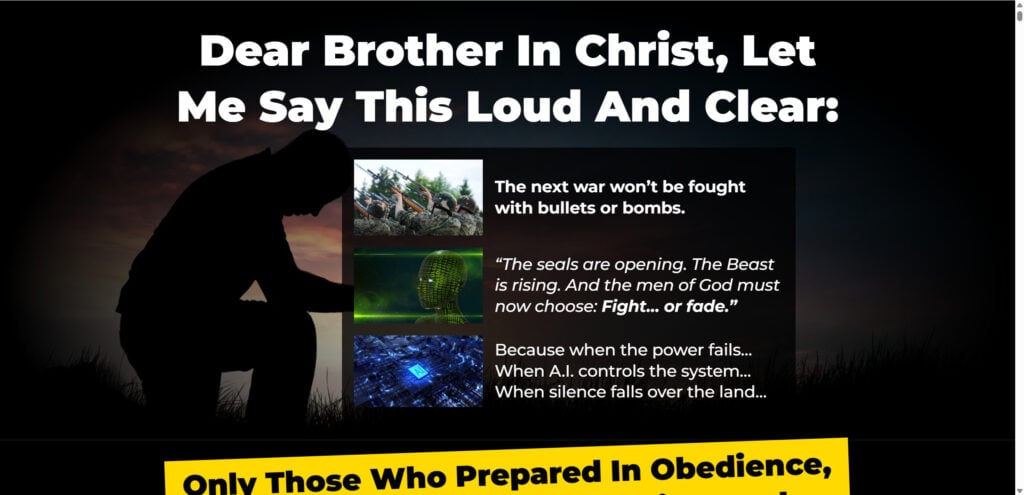
What is “David’s Shield”?
In the funnel screenshots, the product is presented as part of a branded survival system, often framed like:
- A “shield” for your home and family
- A biblical call to prepare, obey, and “stand”
- A solution for blackouts and EMPs
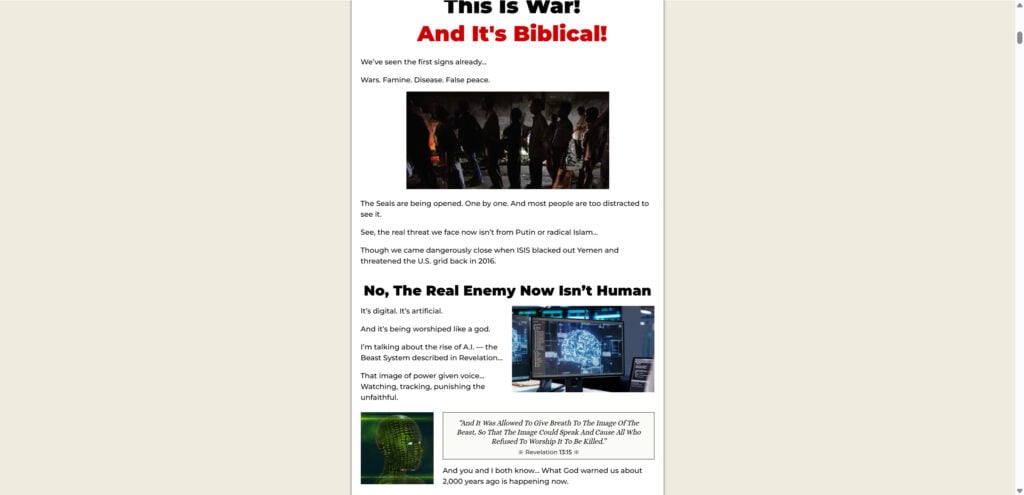
- A defense against “AI control” or “the Beast”
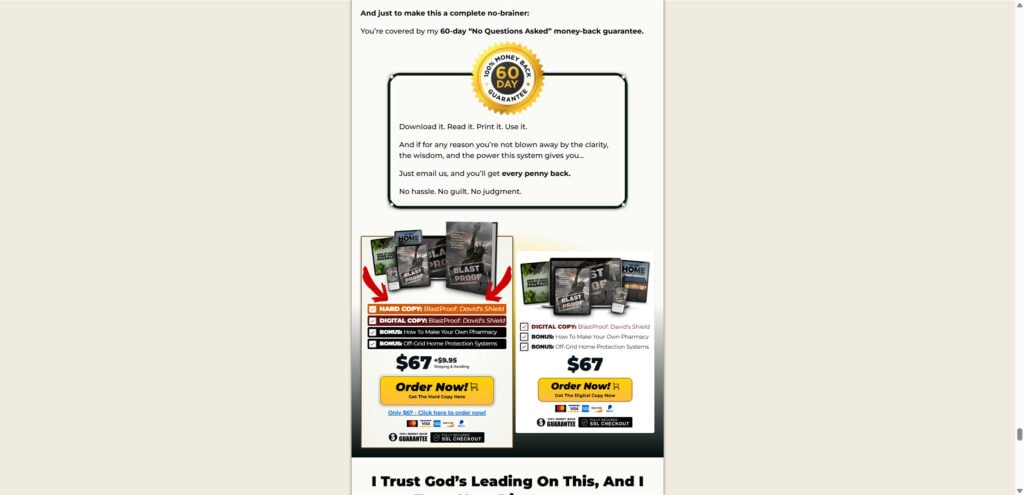
The branding shown also ties into “BlastProof: David’s Shield,” with a package of digital guides and “bonuses,” and an optional physical shipment.
At checkout, the price shown is around $67 for the digital version, and the “hard copy” option is priced similarly with additional shipping and handling.
How the ads and landing pages pull people in
This campaign follows a common pattern used in many viral, low-trust direct response funnels:
1) Social media ads built around shock and urgency
The ads typically push one or more hooks:
- A “secret” or “blueprint” that “they” do not want you to know
- A looming blackout or EMP threat
- A dramatic hero story (David vs. Goliath style framing)
- A warning about AI controlling systems and society
- A religious or prophetic tone meant to intensify fear and commitment
The goal is not to inform. It’s to trigger a fast emotional click.
2) Redirects to a long-form VSL page
Instead of a normal product page with clear specs, you land on a video-first page.
It’s built to keep you watching, not to help you evaluate.
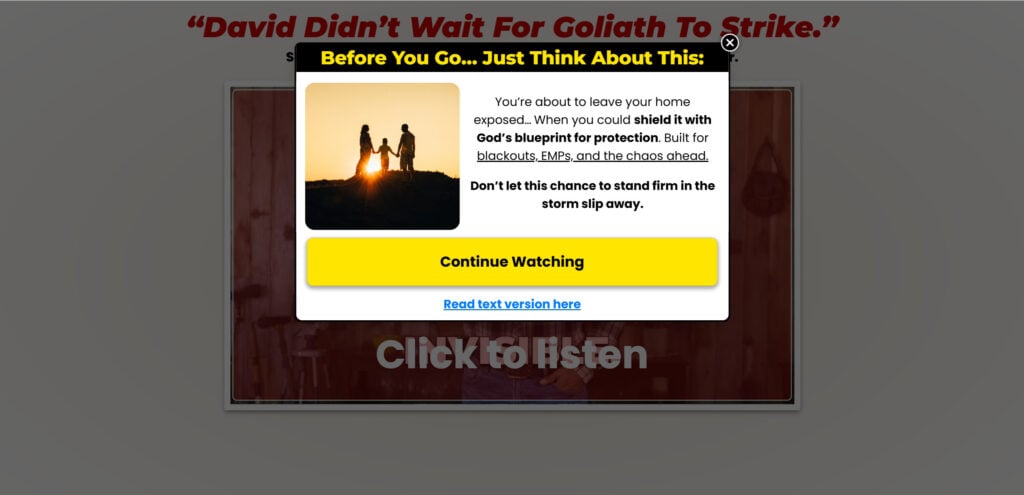
3) Exit-intent popups and “don’t leave yet” guilt framing
One screenshot shows a popup that appears when a visitor tries to close the page. It warns that you’re about to “leave your home exposed,” and encourages you to “continue watching.”
This is a classic retention trick: turn leaving into a fear-based decision.
4) Religious language used as a persuasion tool
Multiple page sections frame the purchase like a spiritual duty or identity choice, not a consumer decision.
This is a big red flag.
Faith should never be used as a conversion tactic to sell high-pressure digital products.
What the funnel promises
The “Inside BlastProof: David’s Shield” section lists a bundle of outcomes that sound powerful, cheap, and fast. Examples shown include:
“Build an EMP-proof Faraday Shield” from junk drawer parts
It implies you can assemble real EMP protection without specialized materials, and that paid solutions are overpriced.
“Keep food and medicine safe,” including insulin claims
It references an “Amish method” for preserving insulin without refrigeration.
“Keep looters away without firing a shot”
It implies you can control serious real-world threats with layout tricks and “under-the-radar” principles.
“Make your car EMP-resilient”
It suggests you can meaningfully protect modern vehicles “even if it’s newer and packed with circuits.”
“The biblical mindset” and “spiritual warfare” framing
It blends practical survival concepts with high-intensity religious messaging to deepen emotional buy-in.
These claims are designed to create the impression that you are buying a practical, high-stakes protection system.
But when you strip away the theatrical language, the offer is basically informational content.
Why these claims don’t hold up
Preparedness is real. Power outages happen. Having supplies and a plan is smart.
But the marketing here mixes real concerns with unrealistic promises.
EMP reality vs. EMP marketing
An EMP is not a casual problem you “solve” with a cheap trick.
Real electromagnetic shielding requires careful design: continuous conductive enclosure, proper seams, correct grounding considerations (depending on scenario), and tested construction.
A PDF can teach basic concepts, but it cannot turn junk drawer scraps into reliable EMP protection for a home or a vehicle.
If a sales page implies “simple” and “cheap” equals “EMP-proof,” that’s not education. That’s a pitch.
The “AI Beast” angle is a manipulation lever
The funnel connects modern technology fears to apocalyptic religious framing, then positions the product as the safe path.
That is not a technical claim. It is an emotional trigger.
It also creates a dangerous psychological trap:
If you doubt the product, the copy suggests you are “choosing to fade,” not just deciding not to buy.
That is manipulation, not guidance.
Insulin without refrigeration is especially concerning
Insulin storage is a serious medical topic.
Any product implying a simple, non-refrigeration method should be treated with extreme caution.
Even if the PDF includes generic “survival” ideas, that does not make them medically safe or appropriate.
If someone follows bad advice here, the consequences can be severe.
“Keep looters away without firing a shot” is classic fantasy marketing
Safety and security are complex. There is no universal trick that reliably deters violent threats.
When a sales page suggests there is, it’s usually selling a feeling, not a solution.
What customers typically receive
From the funnel itself, the deliverables are positioned as:
- Digital access to the program (PDFs and downloadable content)
- Bonus reports (more PDFs)
- Possibly access to a “members area” or support channel
- Optional printed copy for an extra fee and shipping
The problem is not “selling PDFs.” Plenty of legitimate creators sell guides.
The problem is the gap between what the advertising implies and what is delivered.
When the ad and VSL frame the product like an urgent protective “shield” for blackouts, EMPs, and AI control, many buyers expect something far more concrete than generic survival reading.
Red flags that strongly suggest a scam-style operation
This funnel checks many of the most common boxes seen in recurring “rebranded survival blueprint” schemes:
Heavy use of fear, urgency, and guilt
The content is engineered to keep you watching and buying, not calmly evaluating.
Identity-based persuasion
You are told you are not just buying a product. You are “becoming” someone.
That’s conversion psychology, not consumer education.
Vague authority figures and story-first credibility
Instead of verifiable credentials and transparent sourcing, you get dramatic narration, stock visuals, and grand claims.
“Simple secret they don’t want you to know”
This is a core scam trope. It signals that persuasion is doing the heavy lifting.
AI-generated content and synthetic storytelling
Many of these funnels lean on AI narration, AI-written scripts, and generic stock assets.
That lowers cost, increases volume, and makes it easy to relaunch under new names.
Rebranding and name swapping
You mentioned a close cousin: “Thomas Edison’s Secret Blueprints” and similar “lost generator” style pitches.
That matters because it suggests a repeatable template:
New name, new theme, same structure, same delivery, same disappointing result.
“But they offer a money-back guarantee”
A refund promise on the page does not equal trustworthiness.
Scam-adjacent funnels often include guarantees because:
- It lowers purchase resistance
- Many buyers never request a refund
- Some refund processes are slow, confusing, or routed through intermediaries
- The seller may change domains and branding frequently
A guarantee is only meaningful when the business is transparent, reachable, and consistent.
How to tell if you’re looking at the same funnel (even under a different name)
Even if “David’s Shield” disappears, the next version often looks nearly identical. Watch for:
- Long video-first pages with doom-style narration
- Popups that appear when you try to leave
- “Read text version” links that still push the sale
- “Secret blueprint” language
- Big claims around blackouts, EMPs, grid failure
- Premium pricing for basic digital content
- A stack of “bonuses” that are just more PDFs
- Religious identity framing to pressure commitment
What to do if you bought David’s Shield
If you already paid, focus on damage control. Don’t waste time debating with the funnel.
1) Save proof immediately
- Screenshot the checkout page, order confirmation, and any upsells
- Save emails, receipts, and transaction IDs
- If you can, download what you received (for documentation), but don’t rely on it
2) Request a refund in writing
Keep it short and firm:
- You purchased based on misleading advertising
- The delivered content does not match the claims
- You want a full refund
Don’t argue theology, geopolitics, or EMP theory. Keep it transactional.
3) If they stall, dispute the charge
If the seller delays, refuses, or ignores you:
- File a dispute with your card provider or payment service
- Use the phrase “misleading advertising” and “product not as described”
- Include your screenshots
4) Watch for subscriptions or recurring billing
Some funnels add continuity offers. Check:
- Bank statement lines for repeat charges
- PayPal subscriptions
- Any “members area” billing terms
Cancel anything you didn’t clearly agree to.
5) Reduce future targeting
If you clicked the ad, you may get retargeted heavily:
- Hide the ad and report it on the platform
- Clear cookies or use separate browser profiles for research
- Be cautious with “preparedness” content promoted via dramatic reels
Safer alternatives if you want real preparedness
If your goal is to be ready for outages and emergencies, skip fear funnels and use proven resources:
- Local government emergency preparedness guides
- Practical, widely reviewed books from credible authors
- Checklists for water, food, first aid, lighting, power backup, and communication
- Basic home security planning without fantasy promises
Real preparedness is boring on purpose. It’s measurable, testable, and grounded.
FAQ
Is David’s Shield legit?
The marketing shown strongly suggests it’s not a trustworthy “protection system.” It looks like an overpriced digital bundle sold through exaggerated claims and emotional manipulation.
Is blackoutusa.com safe?
A domain can load safely in your browser and still be part of a misleading marketing funnel. The bigger risk here is financial loss and being pulled into additional upsells and retargeting.
Does it actually protect you from an EMP?
No digital download can “shield” your home. EMP protection requires real-world design, materials, and testing. A PDF can explain theory, but the funnel language implies far more than informational content.
What do you get after paying?
The funnel indicates digital access to guides and bonus files, plus optional printed materials for extra cost and shipping.
Why do they talk about AI and “the Beast”?
It’s a persuasion strategy: combine fear of modern technology with spiritual urgency, then frame purchase as the righteous or safe choice.
What about the insulin claim?
Treat any survival product making insulin-storage claims without refrigeration as high risk. Medical storage guidance should come from qualified medical sources, not marketing PDFs.
Why does it feel similar to other “secret blueprint” products?
Because these campaigns are often templated and rebranded. Same funnel structure, same emotional hooks, new theme and name.
Can I get my money back?
Possibly, but don’t rely on the promise alone. Document everything and be ready to dispute the charge if the seller delays or refuses.
The bottom line
David’s Shield is marketed like an urgent, life-saving shield against EMPs, blackouts, and AI control.
What it appears to deliver is a digital information bundle wrapped in a high-pressure, story-driven sales machine.
If you want real preparedness, invest in grounded guidance and practical supplies, not fear-based funnels that sell certainty and identity.
FAQ
What is David’s Shield?
David’s Shield is a digital “preparedness” offer promoted through social media ads and a long sales video. It’s pitched as a way to protect your home during blackouts, EMP events, and a supposed AI-driven collapse, but the deliverable is mainly downloadable files like PDFs and “bonus” guides.
Is David’s Shield legit or a scam?
Based on how it’s marketed, it fits the pattern of a misleading funnel: dramatic claims, fear-driven storytelling, and vague promises that don’t match what customers receive. It’s not “legit” in the way the ads imply.
What do you actually get after buying?
Most buyers report getting a digital bundle (PDFs, downloads, and sometimes a members area). Some versions push an add-on “hard copy” option with extra shipping and handling.
Does it really protect your home from an EMP?
No download can “EMP-proof” a home. Real EMP protection involves real-world engineering, materials, and testing. If a sales page implies simple DIY steps will make your home “shielded,” that’s marketing, not reality.
Does it help with blackouts at least?
Some PDFs may include generic blackout tips (water, batteries, radios), but those are widely available from credible sources for free. Paying premium pricing only makes sense if the content is original, verifiable, and specific, which these funnels usually are not.
What’s the deal with the “AI Beast” angle?
That’s persuasion. It blends fear of technology with spiritual framing to create urgency and emotional commitment, then positions the product as the safe choice.
Why does it redirect through sites like blackoutusa.com?
Redirects are commonly used in ad funnels to test different pages, track clicks, and rotate domains. It also makes it easier to rebrand the same campaign under new names.
Was this sold under other names before?
Many campaigns like this get relaunched with new branding while keeping the same structure: viral ads, a long sales video, a pricey digital bundle, and big promises. The “Thomas Edison’s Secret Blueprints” style of pitch is a well-known cousin of this format.
Are the stories and testimonials real?
Often they are unverifiable, heavily edited, or built from stock imagery and scripted narration. If you can’t independently confirm names, sources, or evidence, treat them as marketing, not proof.
What are the biggest red flags to watch for?
- “Secret blueprint” language and dramatic claims
- Fear-based urgency (blackouts, EMP, collapse)
- Guilt framing when you try to leave the page
- Vague credentials, no clear sourcing
- Lots of “bonuses” that are just more PDFs
- Signs of AI-written copy or AI narration
- Frequent domain changes or rebranding
What should I do if I already bought it?
- Save screenshots of the sales page, checkout, and receipt
- Request a refund in writing and keep it short
- If they stall, dispute the charge as “not as described”
- Check for subscriptions or extra add-ons you didn’t mean to accept
How can I avoid these funnels in the future?
Be cautious with any ad that:
- forces a long video before showing details
- claims you can “shield” your home with simple tricks
- uses fear, faith, or panic to push a purchase
- won’t clearly show what you get, who made it, and why it’s credible








