

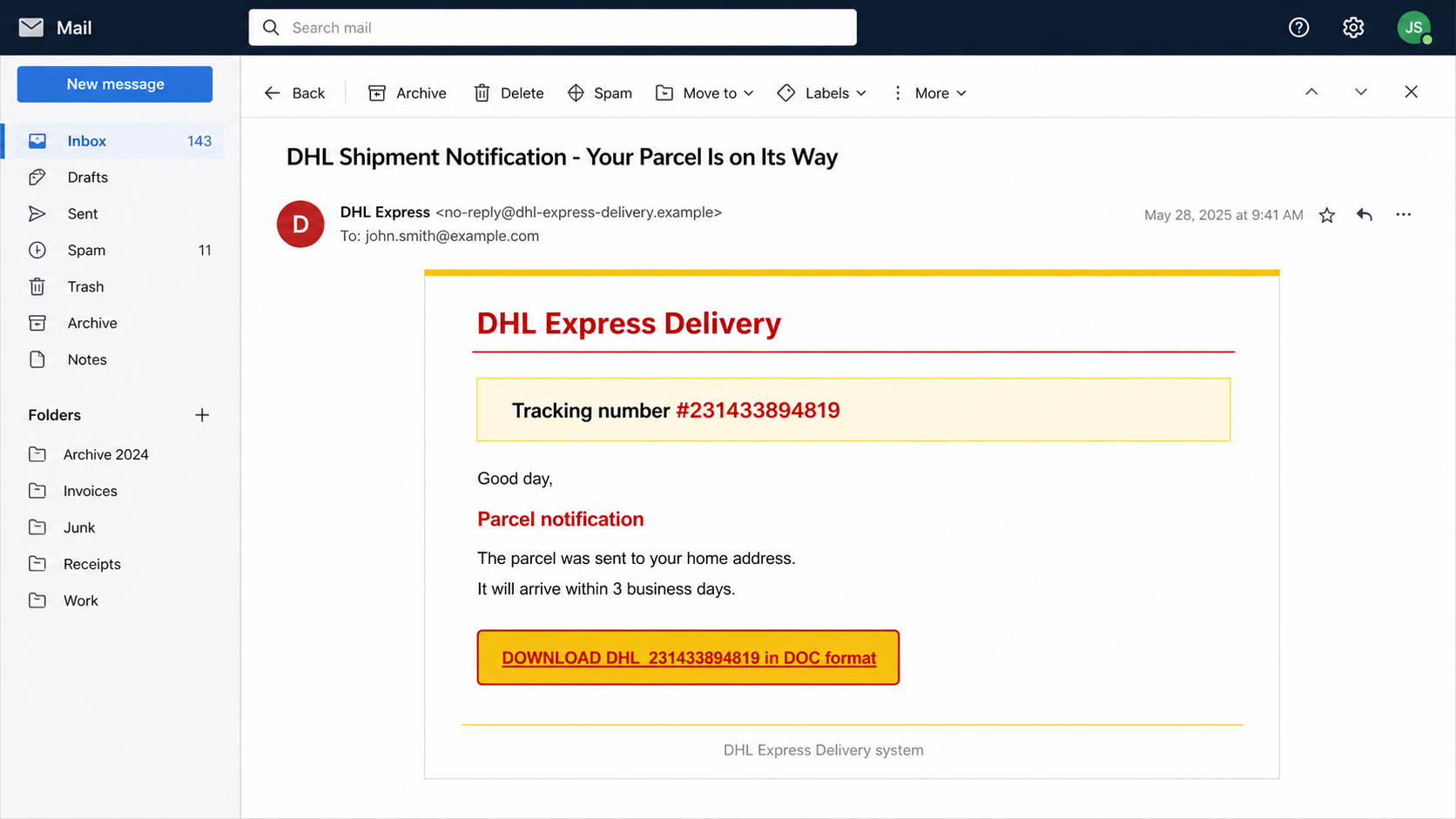
A delivery email says a DHL parcel has been sent to your home and will arrive within three business days. It includes tracking number 231433894819 and offers a document download with shipment details.
The message arrives when online orders are common enough that an unexpected parcel may not feel unusual. The tracking number and familiar delivery colors encourage a quick click.
The DHL Parcel Sent to Your Home email scam is not a shipping update. Its download link opens a fake MyDHL-style login page that collects email addresses and passwords.
Overview
The email announces a parcel that may not exist
The message claims to come from “DHL Express Delivery” and says a parcel was sent to the recipient’s home address. It predicts arrival within three business days and displays tracking number 231433894819.
Instead of offering a normal tracking button, the email tells the recipient to download a document in DOC format. The shipment is kept deliberately vague, with no sender, origin, destination, weight, service level, or recipient name.
That missing information encourages curiosity. A person may follow the link simply to learn who sent the package or whether the notification relates to a recent order.
The “document” link opens a copied login portal
The observed link did not deliver a Word document. It redirected to an unrelated website designed to resemble the MyDHL+ login area and requested an email address and password.
The page was not hosted on a DHL-controlled domain. Its familiar colors and shipment language were visual decoration around a credential-collection form.
DHL states that its genuine links use official DHL or DHL Group domains and warns customers not to open unfamiliar attachments or URLs. The company is being impersonated and is not responsible for this campaign.
The stolen login can expose deliveries and other accounts
Criminals may try captured credentials against DHL services, the victim’s email account, and other websites. Password reuse determines how far one submission can travel.
Potentially exposed information includes:
- Saved delivery and billing addresses
- Shipment histories and recipient details
- Contact information and account profiles
- Payment methods or business shipping data available in the account
- Email, shopping, or cloud accounts using the same password
- Contacts who may trust messages sent from a compromised inbox
The email does not prove that a parcel is in transit or that criminals know the home address. It uses a broad delivery claim because many recipients are waiting for something.
Why Delivery Notifications Make Effective Phishing Lures
Online shopping creates a large pool of plausible targets
A scammer does not need access to an order database when millions of people routinely receive packages. A mass email will naturally reach some recipients who placed an order recently.
That coincidence can feel like confirmation. The recipient may connect the vague notice with the first retailer or family shipment that comes to mind.
A tracking number looks unique even when it is reused
A long numeric reference gives the email the appearance of a logistics record. The same number can be placed in every copy of the campaign, and its presence does not show that the parcel belongs to the recipient.
Verify a number by typing the official DHL address or using the genuine app. Do not rely on a tracking field opened through the email itself.
The file-download wording creates a second layer of confusion
Recipients may expect that selecting a DOC download will save a shipping document. When a login page appears instead, the request can be mistaken for a security step needed to access the file.
A surprise shift from download to authentication is a warning sign. Legitimate tracking information is normally displayed through the carrier’s known website or app without requiring an email password.
How the DHL Parcel Sent to Your Home Email Scam Works
Step 1: Attackers distribute a generic shipment notification
The message is sent to addresses gathered from breaches, public sources, marketing lists, or other criminal datasets. It can reach personal accounts and businesses that receive deliveries every day.
No actual shipment information is required. The email supplies enough familiar language to let recipients create their own explanation for the parcel.
Step 2: DHL branding and a tracking number create recognition
The sender name, red-and-yellow styling, and words “Express Delivery” evoke a well-known carrier. The tracking number adds a precise-looking reference that is difficult to evaluate at a glance.
Display names and colors are not authenticated identity. Any sender can place them in an HTML email without gaining access to DHL systems.
Step 3: The three-business-day promise makes the parcel feel active
The campaign states that delivery is already underway and will occur soon. That timeline encourages the recipient to resolve uncertainty before the parcel supposedly reaches the home.
The message does not ask whether the recipient placed an order. It assumes the shipment is real and moves directly to the document link.
Step 4: The DOC download label hides a web redirect
The visible instruction promises a file named for tracking number 231433894819. Selecting it takes the browser to an external website instead of delivering a genuine carrier document.
Links can be labeled with any filename. A button saying DOC, PDF, invoice, or tracking report does not guarantee that the destination serves that type of file.
Step 5: The landing page imitates MyDHL+
The phishing page copies the structure and visual language of a DHL account portal. It requests an email address and password before showing the supposed shipment.
The complete domain reveals the deception. In the analyzed campaign, it was unrelated to official DHL domains, even though the content inside the page used the company’s name.
Step 6: The form sends credentials to the campaign operator
Information entered into the fake form is collected by criminals. The page may display a loading message, claim the password is incorrect, or forward the visitor to a legitimate DHL page after submission.
A later redirect does not undo the theft. It can make the original login appear to have been a normal, temporary error.
Step 7: Attackers test DHL, email, and reused accounts
The credentials may first be tried on a DHL account. If the form asked for an email password or the same password is reused, attackers can target the mailbox and other popular services.
Unexpected password-reset messages or multi-factor prompts may follow. Never approve a request that you did not start, even if a caller claims it is needed to release a package.
Step 8: Captured information supports further fraud
An account may reveal delivery addresses, business contacts, shipment timing, or saved information. A compromised inbox can expose receipts and retailer accounts that make later impersonation more convincing.
Victims may then receive fake customs charges, redelivery fees, address-verification requests, or calls referencing the original tracking story. Each follow-up is another attempt to collect money or information.
How to Verify a DHL Shipment Without Using the Email
Open DHL through its official website or app
Type the known DHL address directly or use the installed app. Enter the tracking number there, and compare the result with the order confirmation from the sender or retailer.
Check the full sender and destination addresses
DHL publishes guidance about domains used for official communications. A display name is not enough, and even a plausible sender should not excuse an unfamiliar or unrelated destination link.
Match the notice to a real order
Look for the merchant, order number, delivery address, and shipment confirmation in the retailer’s account. A genuine carrier update should fit an existing transaction.
Contact the sender or DHL independently
If someone may have sent a surprise parcel, ask that person through a known channel. For carrier assistance, use contact details found on the official DHL website, not numbers in the suspicious email.
Follow-Up Scams That May Use the Same Parcel Story
A small redelivery or address fee
After the first click, a new page or message may claim the delivery needs a modest payment. Small charges reduce hesitation, but the form can collect complete card details and enable larger unauthorized transactions.
A fake customs or import demand
The story may evolve into taxes, customs clearance, insurance, or warehouse fees. A deadline and threat of returning the parcel create pressure, even though no verified shipment record connects the demand to the recipient.
A telephone call from supposed delivery support
Information submitted on the page can support a follow-up call. The caller may know the email address or tracking number and ask for a one-time code, card payment, or remote access to the device.
Another credential page for email or shopping accounts
If the first password fails, the campaign may ask the victim to sign in with a different provider or retailer. Each additional form expands the number of accounts the criminals can test.
A real shipment should remain visible through the independently opened carrier or merchant account. Changing explanations and payment demands are reasons to end contact and report the campaign.
Keep in mind that a legitimate carrier may contact customers about real delivery problems. The safe distinction is not whether the story is possible, but whether the shipment can be confirmed through an order record and an independently opened official tracking service.
Warning Signs in the Fake DHL Parcel Email
- The greeting is generic and the recipient is not identified by name.
- No shipper, merchant, origin, address, package weight, or order number is shown.
- The email promises a DOC download instead of normal tracking details.
- The link opens a login form rather than a shipment record.
- The destination domain is not controlled by DHL.
- The message contains awkward wording or spelling despite polished branding.
- The page requests credentials before explaining the parcel.
DHL warns that fraudulent messages may use urgent language, grammatical errors, unfamiliar URLs, and suspicious attachments. Check all of these elements together and use the carrier’s official site for confirmation.
What to Do if You Have Fallen Victim to This Scam
- Close the fake delivery page. Do not attempt another login, download the promised file, or respond to follow-up requests about delivery fees or account verification.
- Change the submitted password at the real service. If you entered DHL credentials, open the official DHL site directly. If you entered an email password, secure that mailbox first because it can reset other accounts.
- Change every reused password. Prioritize shopping, payment, cloud, and work services. Use unique credentials and enable multi-factor authentication without approving unexpected prompts.
- Review account information and sessions. Inspect recent logins, saved addresses, shipments, payment data, connected apps, mailbox rules, and recovery settings. Remove changes you did not authorize.
- Contact DHL through official support if the account was affected. DHL asks users to report suspicious emails to its anti-abuse channel with complete headers when possible. Do not expect a personal shipment response from the phishing-report mailbox.
- Notify banks or card issuers about exposed payment information. If money was sent or card data was submitted, explain that it resulted from phishing and ask about blocking, replacing, or disputing affected transactions.
- Scan the device after downloads. If the link saved a document, extension, archive, or installer, disconnect from sensitive accounts and run a full Malwarebytes scan. Remove detected threats before changing more passwords on that device.
- Reduce future exposure. AdGuard can block many known phishing pages, malicious ads, and deceptive tracking requests. It should support, not replace, direct verification of shipment notifications.
- Preserve evidence and watch for follow-ups. Save screenshots, headers, URLs, login alerts, and payment records. Be skeptical of anyone offering guaranteed recovery or package release for an upfront charge.
Is Your Device Infected? Run a Free Malware Scan
Slow performance, constant pop-ups, or strange behavior? These are classic signs of a malware infection. The fastest way to find out is to scan your device with Malwarebytes Free — one of the most trusted malware removal tools available.
The free version detects and removes the most common threats, including:
- Adware — the cause of those annoying pop-ups
- Browser hijackers — unwanted redirects and changed homepages
- Trojans and spyware — hidden programs stealing your data
- Potentially unwanted programs (PUPs) — software you never asked for
👉 Select your device below — Windows, Mac, or Android — then follow the simple steps to download Malwarebytes, scan your system, and remove any threats it finds. The scan usually takes 5 to 20 minutes.
Run a Malware Scan with Malwarebytes for Windows
Malwarebytes is one of the most popular and trusted anti-malware tools for Windows — and it’s completely free for removing infections. It catches threats that many antivirus programs miss, including adware, browser hijackers, and trojans. Follow the steps below to scan and clean your PC in just a few minutes.
Download Malwarebytes
Click the button below to download the latest version of Malwarebytes for Windows from the official source. The free version is all you need — it will scan your computer and remove adware, browser hijackers, and other malicious software at no cost.
Download MalwarebytesOfficial installer for Windows 11 and 10. Your download starts right away.Want real-time protection? See Malwarebytes Premium Malwarebytes Free for WindowsScans and removes malware at no cost
-
Install Malwarebytes
When the download finishes, open your Downloads folder and double-click the MBSetup file. If Windows shows a User Account Control pop-up, click “Yes” to allow the installation.
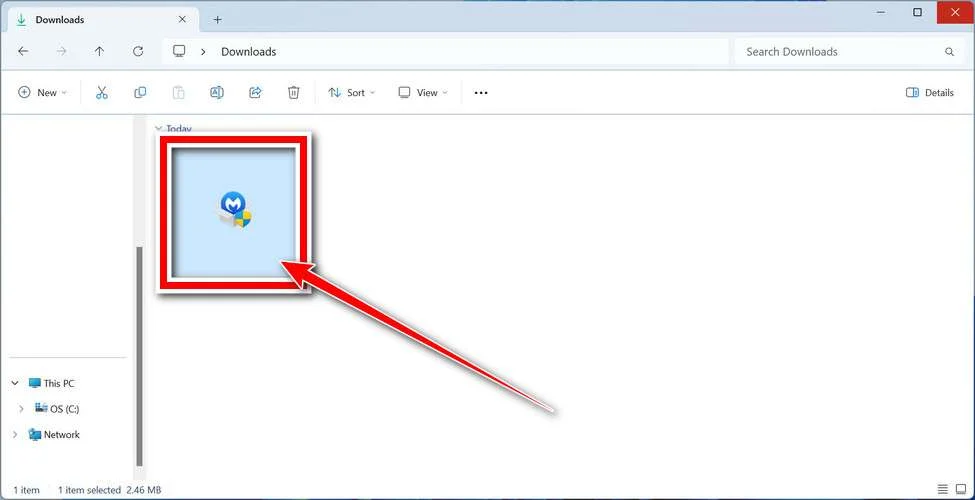
Follow the On-Screen Prompts to Install Malwarebytes
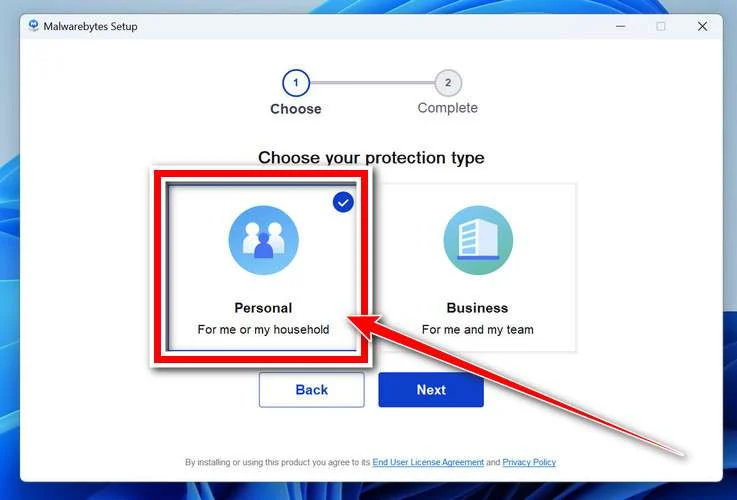
The setup wizard will walk you through a few quick screens:
-
Choose where you’re installing the program — “Personal Computer” or “Work Computer” — then click Next.
-
Malwarebytes will now install on your device. This usually takes under a minute.

-
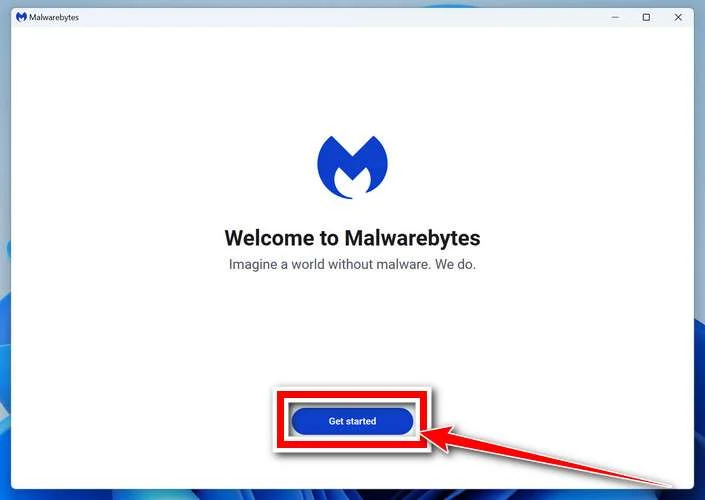
When installation is complete, the “Welcome to Malwarebytes” screen will open automatically.
-
On the final screen, click Open Malwarebytes to launch the program.

-
Enable “Scan for Rootkits”
Before scanning, turn on rootkit detection so Malwarebytes can find even the most hidden threats. Click the Settings gear icon on the left side of the screen.
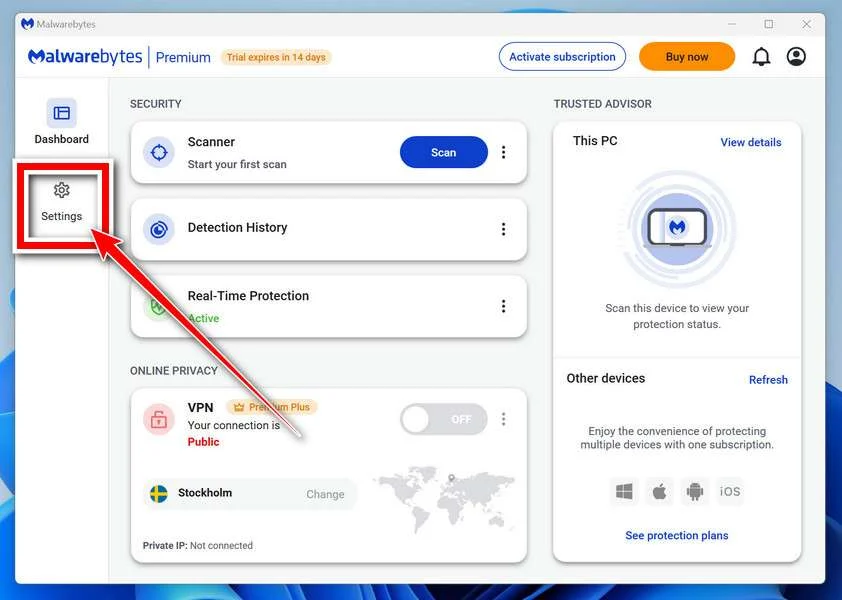
In the settings menu, find “Scan for rootkits” and click the toggle so it turns blue.

Done? Click “Dashboard” in the left pane to return to the main screen.
Start the Scan
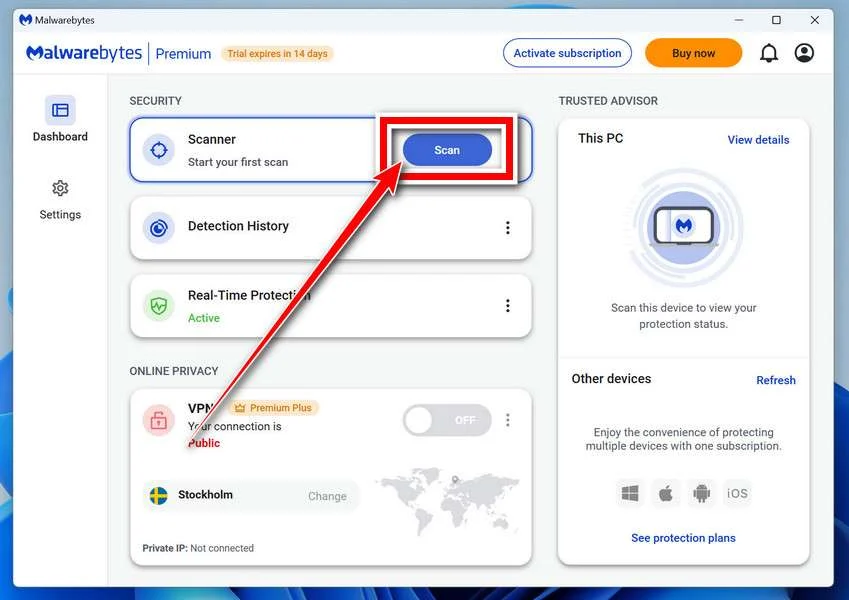
Click the blue Scan button. Malwarebytes will automatically update its virus database and start checking your computer for malware.
-
Wait for the Scan to Finish
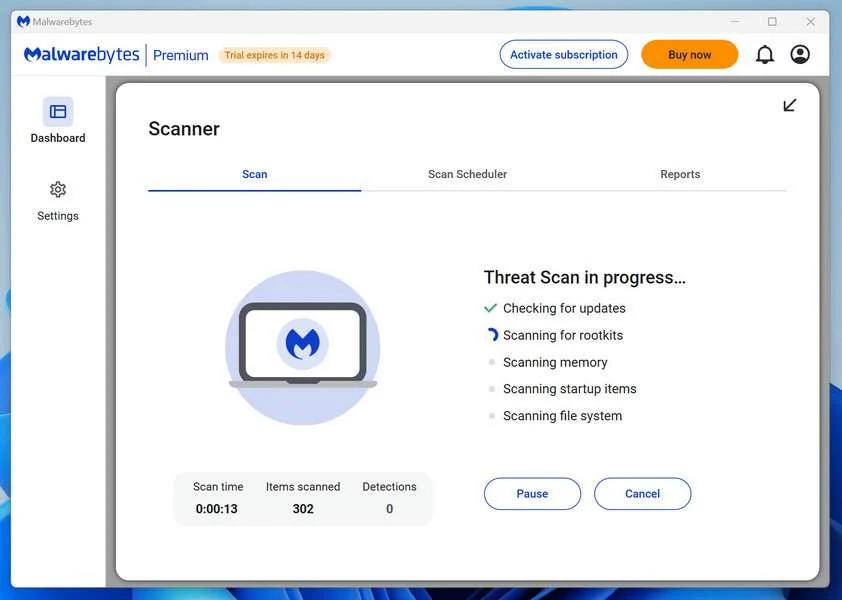
The scan checks your entire system for browser hijackers and other malicious programs, so it can take 5 to 20 minutes depending on your computer. Feel free to do something else — just check back occasionally to see the progress.
-
Quarantine the Detected Threats
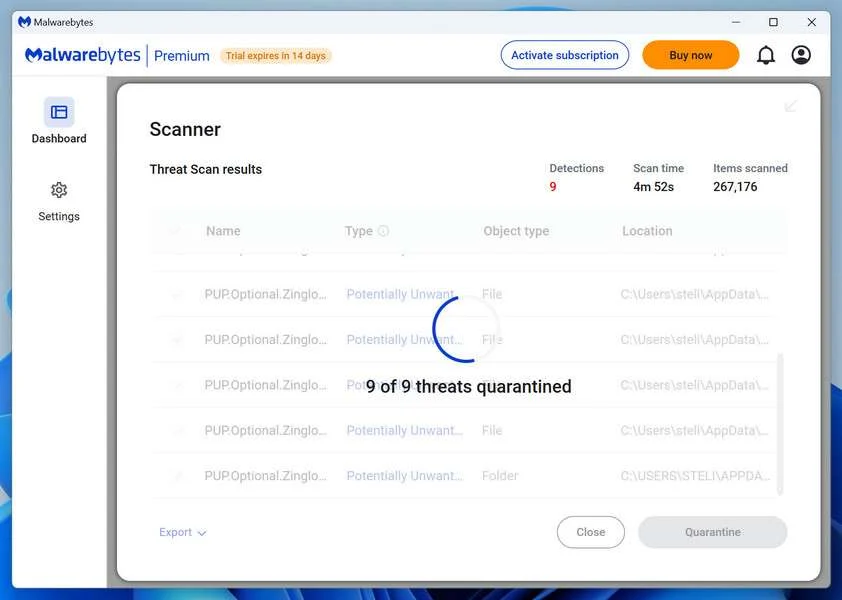
When the scan is done, you’ll see a list of everything Malwarebytes found — malware, adware, and potentially unwanted programs. Click the “Quarantine” button to remove all of them at once.
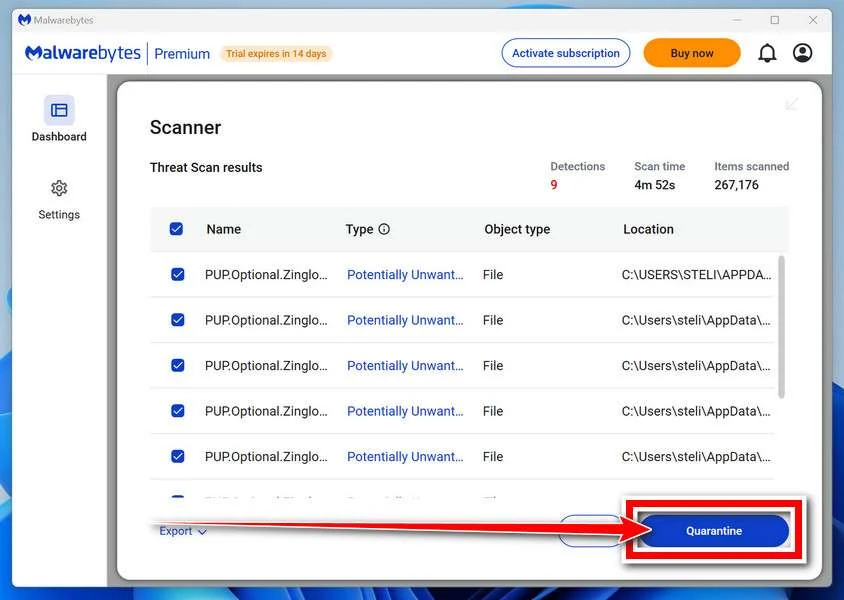
Malwarebytes will now remove the malicious files and registry entries and move them safely into quarantine.
-
Restart Your Computer
Some threats can only be fully removed after a reboot. If Malwarebytes asks you to restart, click Yes. Once you’re logged back in, Malwarebytes has finished removing the threats it found.
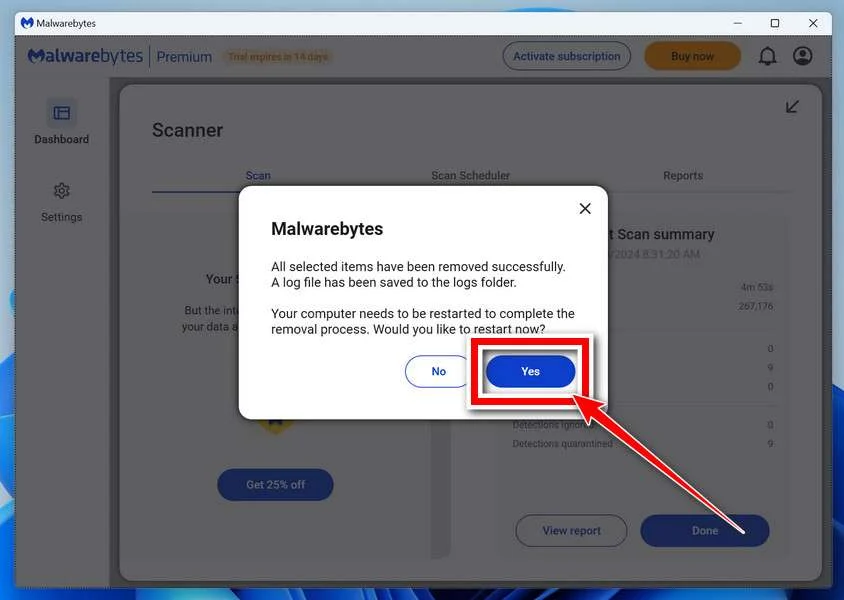
That’s it — your Windows PC is now clean of trojans, adware, and other malware, and should be back to running smoothly.
If you are still having problems with your computer after completing these instructions, then please follow one of the steps:
- Run a computer scan with ESET Online Scanner
- Ask for help in our Windows Malware Removal Help & Support forum.
Run a Malware Scan with Malwarebytes for Mac
Malwarebytes for Mac is a free on-demand scanner that removes the malware other security software tends to miss — adware, browser hijackers, and unwanted programs included. Cleaning an infected Mac with Malwarebytes has always been completely free, and it’s our go-to recommendation. Follow the steps below to scan and clean your Mac in just a few minutes.
-
Download Malwarebytes for Mac
Click the button below to download the latest version of Malwarebytes for Mac.
Download MalwarebytesOfficial installer for macOS. Your download starts right away.Want real-time protection? See Malwarebytes PremiumMalwarebytes Free for MacScans and removes malware at no cost -
Open the Malwarebytes setup file
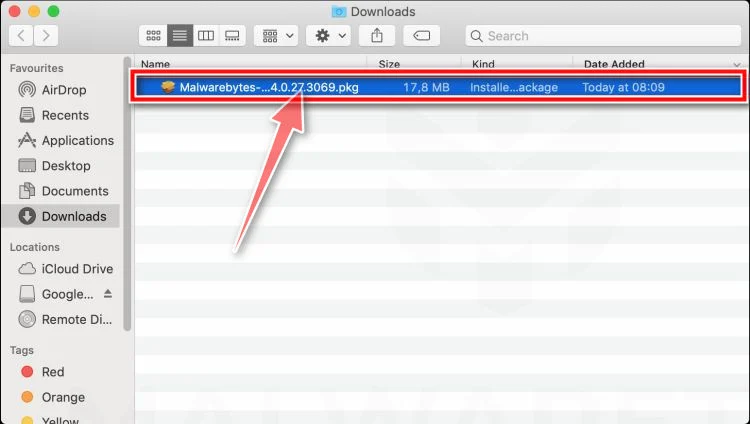
When the download finishes, open your Downloads folder and double-click the setup file to begin the installation.
-
Follow the On-Screen Prompts to Install Malwarebytes
The Malwarebytes for Mac Installer will guide you through a few quick screens. Click “Continue” and keep following the prompts until the installation completes.
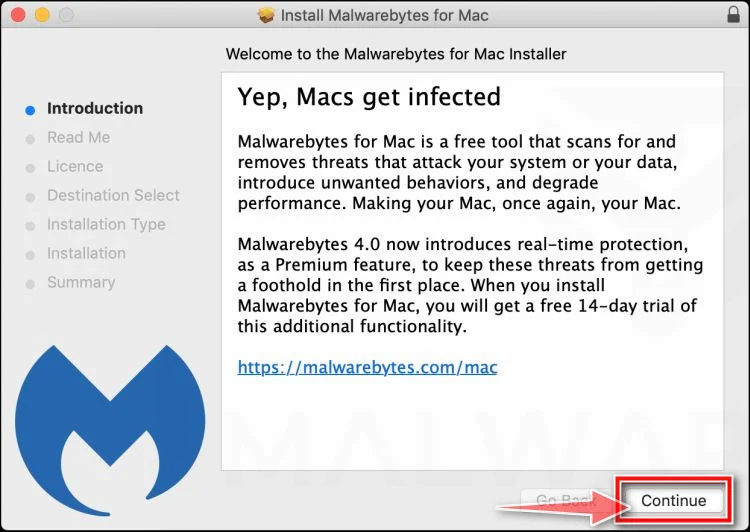
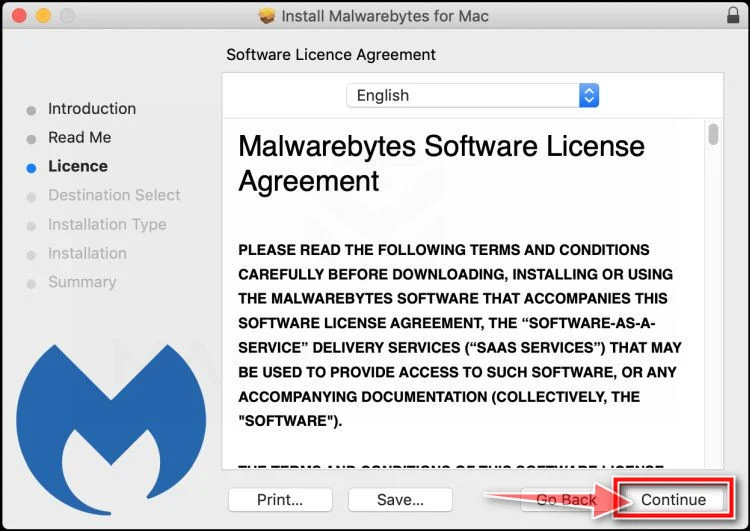
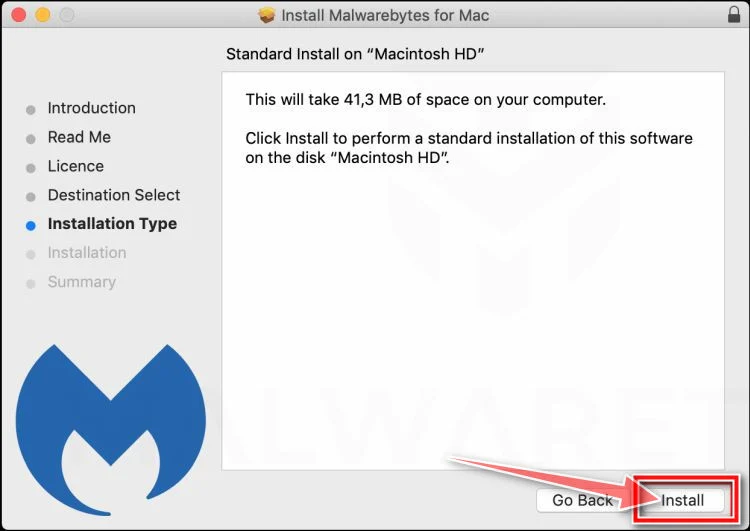
When the installation is complete, Malwarebytes opens to the Welcome to Malwarebytes screen. Click “Get started“.
-
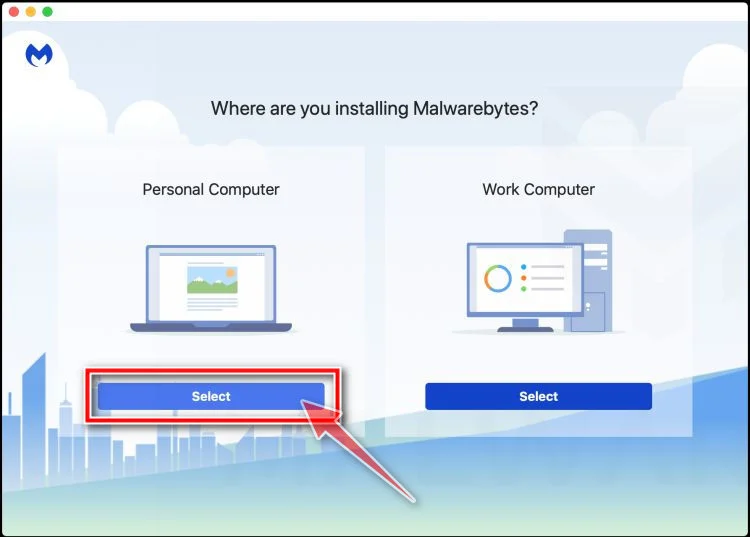
Select “Personal Computer” or “Work Computer”
Malwarebytes will ask what type of computer you’re installing it on. Click either Personal Computer or Work Computer, whichever applies.
-
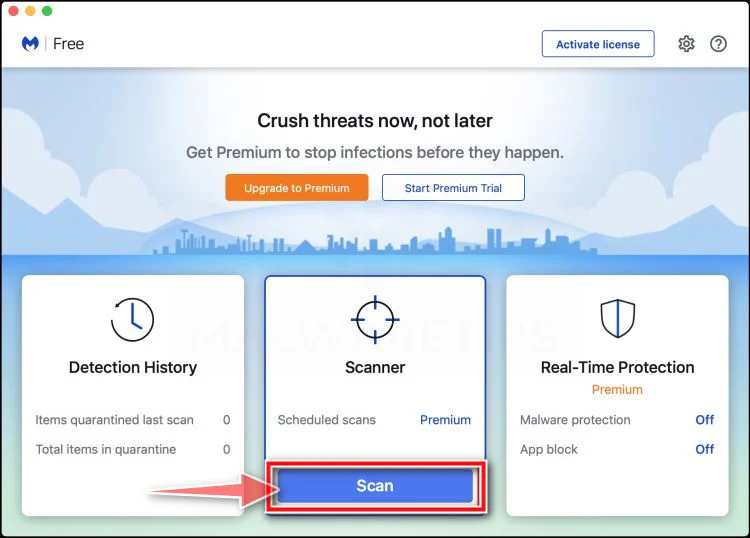
Start the Scan
Click the “Scan” button. Malwarebytes will automatically update its detection database and begin checking your Mac for malware.
-
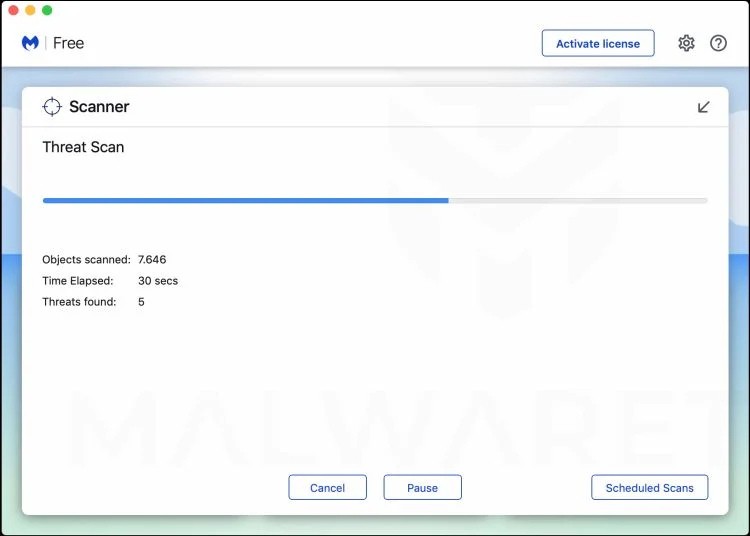
Wait for the Scan to Finish
Malwarebytes will scan your Mac for adware, browser hijackers, and other malicious programs. This can take a few minutes, so feel free to do something else — just check back occasionally to see the progress.
-
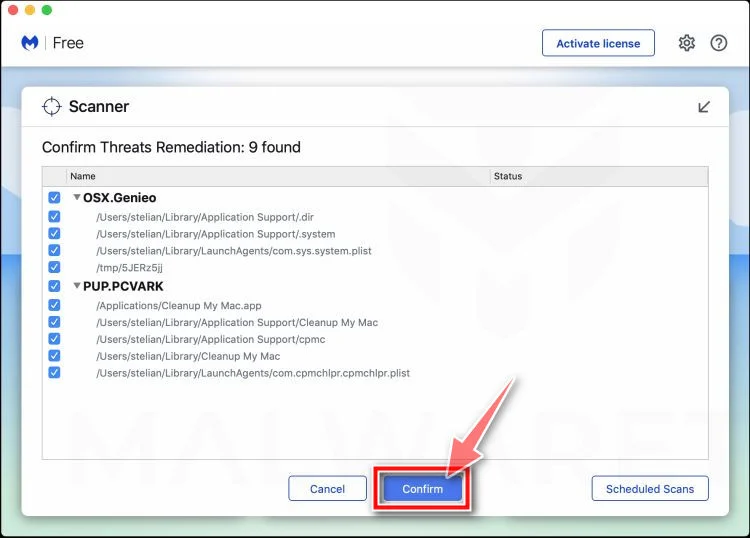
Quarantine the Detected Threats
When the scan is done, you’ll see a list of everything Malwarebytes found. Click the “Quarantine” button to remove all the threats at once.
-
Restart Your Mac
Malwarebytes will now remove all the malicious files it found. Some threats can only be fully removed after a reboot — if Malwarebytes asks you to restart, allow it. Once you’re logged back in, your Mac is clean.
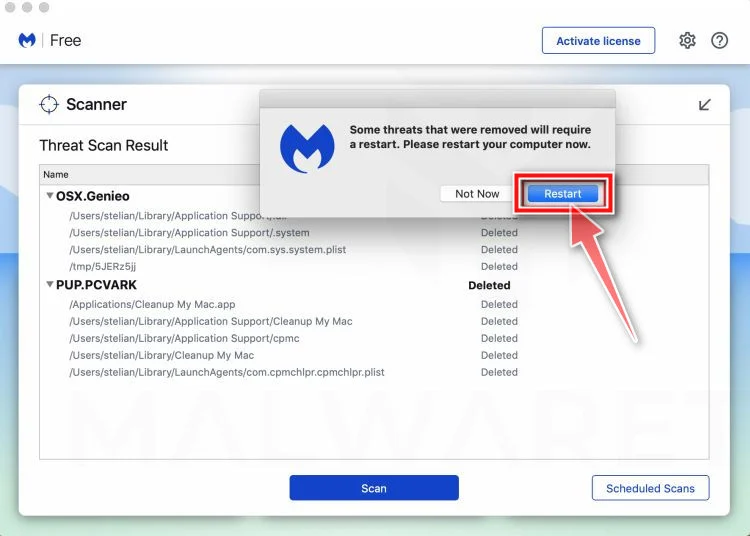
That’s it — your Mac is now free of adware, rogue browser extensions, and other potentially harmful software.
If you are still experiencing problems while trying to remove a malicious program from your computer, please ask for help in our Mac Malware Removal Help & Support forum.
Run a Malware Scan with Malwarebytes for Android
Malwarebytes for Android automatically detects and removes dangerous threats like malware and ransomware so you don’t have to worry about your most-used device being compromised. Aggressive detection of adware and potentially unwanted programs keeps your Android phone or tablet running smooth.
-
Download Malwarebytes for Android.
You can download Malwarebytes for Android by clicking the link below.
Get Malwarebytes for AndroidOpens Google Play in a new tab.Want real-time protection? See Malwarebytes Premium for AndroidMalwarebytes for AndroidScans your phone and removes malware at no cost -
Install Malwarebytes for Android on your phone.
In the Google Play Store, tap “Install” to install Malwarebytes for Android on your device.

When the installation process has finished, tap “Open” to begin using Malwarebytes for Android. You can also open Malwarebytes by tapping on its icon in your phone menu or home screen.

-
Follow the on-screen prompts to complete the setup process
When Malwarebytes will open, you will see the Malwarebytes Setup Wizard which will guide you through a series of permissions and other setup options.
This is the first of two screens that explain the difference between the Premium and Free versions. Swipe this screen to continue.
Tap on “Got it” to proceed to the next step.
Malwarebytes for Android will now ask for a set of permissions that are required to scan your device and protect it from malware. Tap on “Give permission” to continue.
Tap on “Allow” to permit Malwarebytes to access the files on your phone.
-
Update database and run a scan with Malwarebytes for Android
You will now be prompted to update the Malwarebytes database and run a full system scan.

Click on “Update database” to update the Malwarebytes for Android definitions to the latest version, then click on “Run full scan” to perform a system scan.

-
Wait for the Malwarebytes scan to complete.
Malwarebytes will now start scanning your phone for adware and other malicious apps. This process can take a few minutes, so we suggest you do something else and periodically check on the status of the scan to see when it is finished.

-
Click on “Remove Selected”.
When the scan has been completed, you will be presented with a screen showing the malware infections that Malwarebytes for Android has detected. To remove the malicious apps that Malwarebytes has found, tap on the “Remove Selected” button.

-
Restart your phone.
Malwarebytes for Android will now remove all the malicious apps that it has found. To complete the malware removal process, Malwarebytes may ask you to restart your device.
That’s it — your Android phone is now clean — no more malicious apps, adware, or browser redirects.
If you are still having problems with your phone after completing these instructions, then please follow one of the steps:
- Restore your phone to factory settings by going to Settings > General management > Reset > Factory data reset.
- Ask for help in our Mobile Malware Removal Help & Support forum.
Stay Protected: Block Ads and Malicious Sites
Now that your device is clean, keep it that way. Most infections start with a malicious ad or a fake download button — so blocking them at the source is your best defense.
We recommend AdGuard, which blocks malicious ads, phishing pages, and dangerous redirects before they can reach you.
👉 Download AdGuard and browse safely
Frequently Asked Questions
Is tracking number 231433894819 connected to my parcel?
The email does not establish that it is. Check the number through the official DHL website and compare it with a genuine merchant or sender confirmation.
Does DHL send tracking documents in DOC format?
This campaign uses the DOC label as a lure, then opens a fake login page. Access shipment details through DHL’s official tracking tools rather than an unexpected file link.
Did the scammers obtain my home address?
Not necessarily. The phrase “your home address” is generic and can be sent to everyone. Do not assume the criminals know an address unless they display accurate details.
What if the DHL login page looked authentic?
Copied branding is not proof. Examine the full domain and start a new session from DHL’s official website instead of trusting the page opened by the email.
Am I safe if I clicked but entered nothing?
The greatest immediate risk is credential submission. Close the page and scan the device if anything downloaded, installed, or asked for additional permissions.
Where should a suspicious DHL email be reported?
DHL’s official fraud-awareness page provides current reporting instructions, including its anti-abuse email address and a request for complete message headers where possible.
The Bottom Line
The DHL Parcel Sent to Your Home email scam uses tracking number 231433894819 and a fake DOC download to lead recipients into a copied account portal.
Do not sign in through the message. Match the shipment to a real order and track it from the official DHL site. If credentials were submitted, change them promptly, review affected accounts, and prepare for follow-up delivery or payment lures.

Join the discussion
0 commentsShare your experience or ask a question about this article.
Discussion
Start the conversation
Have a question or something useful to share? Add the first comment.