

The popularity of Douglas, Europe’s well-known beauty and fragrance retailer, has made it a prime target for online scammers. Over the last months, dozens of websites have appeared pretending to be Douglas “outlet stores,” “closing sales,” “online clearance events,” or “90% off mega sales.” These websites look sophisticated, mimic Douglas branding, copy the design and layout of the real Douglas platforms, and advertise stunning discounts that seem impossible to ignore.
On social media platforms like Facebook, Instagram, TikTok, and even Google search ads, scammers aggressively promote these fake stores to lure bargain hunters. The result? Thousands of people have already paid for products they will never receive.
This article exposes how the Douglas 90% Off Sale Scam works, how these fake stores trick victims, the psychological tactics used by scammers, and most importantly—what to do if you’ve been targeted or lost money. Everything here has been researched, structured, and optimized to help readers stay safe and to rank high in Google search so more people can avoid the scam.
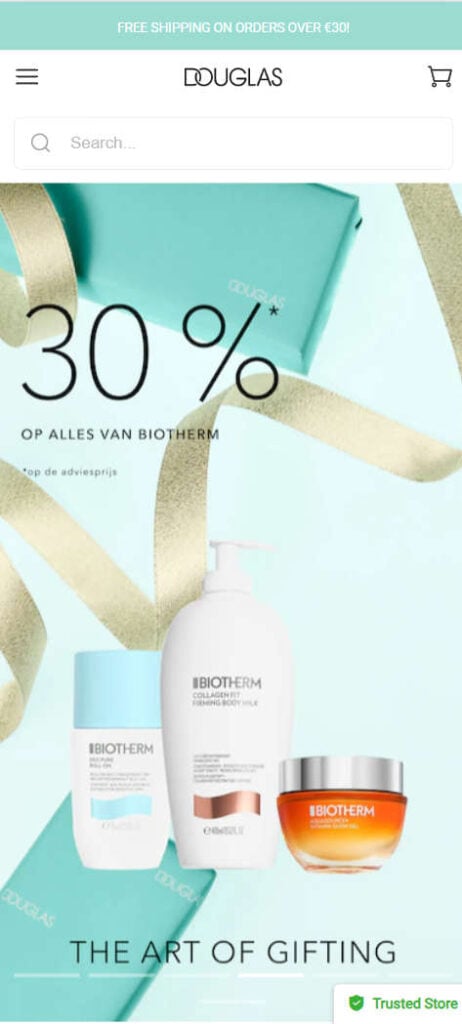
Scam Overview
The Douglas 90% Off Sale Scam is a growing network of fraudulent online shops masquerading as official Douglas stores. Websites like douglas.eu-onsale.shop, douglas.eur-online.shop, douglas-sale.shop, and countless similar variations claim to offer massive discounts on premium beauty products such as Dior, Chanel, MAC, Estée Lauder, Lancôme, Burberry, Sol de Janeiro, and others.
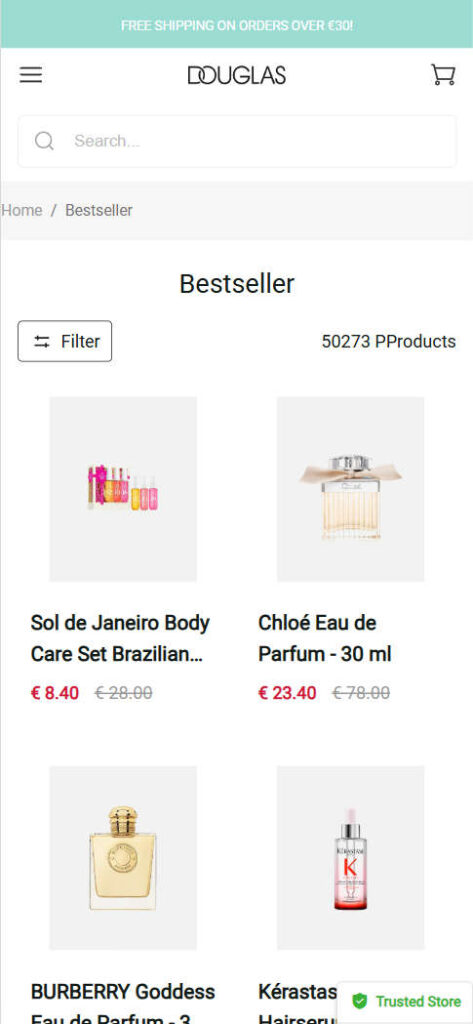
These websites are not affiliated with Douglas in any way. They are built by cybercriminal groups that specialize in creating convincing fake storefronts to harvest payments, steal personal information, and defraud unsuspecting customers. The scam escalated rapidly because the criminals behind it follow a formula that works:
- They clone the look and feel of Douglas’ real website.
- They promote unbelievable discounts—up to 70%, 80%, or even 90% off.
- They run time-limited countdown timers.
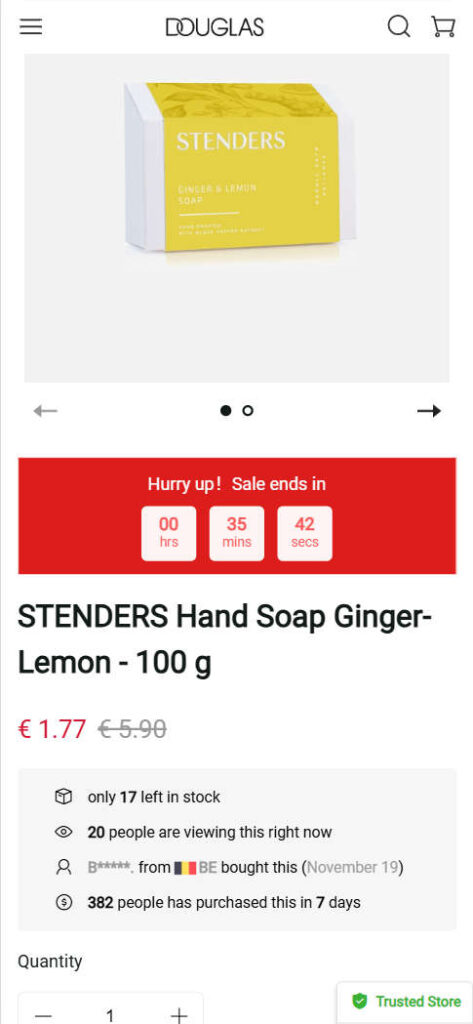
- They use fake social proof (“382 people have purchased this in 7 days”).
- They show stock scarcity (“Only 17 left in stock”).
- They offer fake trust badges (“Trusted Store,” “Safe Checkout,” “30-Day Guarantee”).
- They disappear with the money after the purchase is completed.
These scam stores are surprisingly sophisticated. They use clean design, modern fonts, HD product images, and marketing elements that seem professional. To an untrained eye, they look legitimate—especially when discovered via paid ads on Facebook or Instagram.
Fake Douglas Sites Often Include:
- An exact copy of the Douglas logo.
- A professional navigation menu (Perfume, Makeup, Haircare, Bodycare, Gifts, Bestseller, Collections).
- Fake promotional banners like:
- “90% OFF MEGA SALE”
- “FREE SHIPPING ON ORDERS OVER €30!”
- “HOLIDAY CLEARANCE EVENT”
- “BLACK FRIDAY OUTLET”
- Countdown timers urging users to “Hurry up! Sale ends in 00:35:42.”
- Social proof widgets claiming thousands of purchases.
- Fake “Trusted Store” badges in the bottom right corner.
The product pages also appear highly convincing. The images are stolen from Douglas or brand websites. The prices are intentionally slashed from €79.99 to €24, or from €28 to €8.40. Inventory counters simulate urgency. Payment methods are intentionally limited to credit cards—never PayPal—because scammers want irreversible transactions.
These fraudulent websites are extremely dangerous, not only because people lose money but because victims unknowingly provide sensitive data:
- Full name
- Email address
- Phone number
- Home address
- Full credit card number
- CVV security code
All this information can be abused, resold, or used for future fraud attempts.
Social Media Involvement
The success of these scams is largely due to paid advertising campaigns on:
- TikTok
- Google Display Network
Scammers spend money to promote these fake Douglas stores using sensational phrases:
- “Douglas Warehouse Outlet: Everything Must Go!”
- “Douglas Closing Down Sale – 90% Off!”
- “European Warehouse Liquidation – Last Chance!”
- “Douglas Mega Beauty Sale!”
Because the ads contain real product images and the Douglas logo, many shoppers assume the sale is official. Once they click, they land on a fake website designed to close the deal fast.
Recently Created Domains and Hidden Ownership
Investigating scam domains like douglas.eu-onsale.shop or douglas.eur-online.shop reveals glaring red flags:
- Domain registered days or weeks ago
- Hidden WHOIS records
- Hosted on low-cost offshore servers
- No connection to Douglas GmbH
- No company registration number
- Fake or empty “About Us” pages
- Invalid contact information
These clues confirm that the sites are fraudulent.
Stolen Product Catalogs
All product images are scraped from:
- Douglas.de
- Douglas.at
- Douglas.nl
- Brand websites (e.g., Dior, MAC, Clinique)
Not only does this violate copyright law; it proves the site has no real merchandise.
Victim Reports Show the Same Pattern
Victims often describe identical experiences:
- They place an order but receive no confirmation email.
- Tracking numbers lead to nonexistent shipping companies.
- Some receive a random cheap item (bracelet, ring, or hair tie).
- Customer support email addresses bounce or go unanswered.
- The domain disappears within weeks.
All this confirms a coordinated fraud operation.
How the Douglas 90% Off Sale Scam Works
To understand how victims are tricked, it’s important to analyze the entire scam mechanism. This section breaks down the scam in detail, step-by-step, from the initial ad to the final outcome.
Step 1: Scammers Create a Fake Douglas Website
Criminals build a website using cheap templates purchased from platforms like Shopify, WooCommerce, or template marketplaces. They add:
- Stolen Douglas branding
- Fake banners
- Copied product catalogs
- False reviews
- Fake trust badges
Scammers often create dozens of these sites, each with a slightly different domain name to avoid detection.
Examples include:
- douglas.eu-onsale.shop
- douglas.eur-online.shop
- douglas-superdiscount.shop
- douglas-outlet.store
- douglas-bestseller.shop
- douglas-sale-clearance.shop
The design closely mirrors the real Douglas website, making the scam harder to spot.
Step 2: They Buy Social Media Ads Targeting Europe
The scammers invest in paid ads aimed at:
- Germany
- Austria
- Belgium
- France
- Netherlands
- Italy
- Spain
- Portugal
Their ads promote huge discounts on luxury beauty products. They use real Douglas images and create false narratives such as:
- “Warehouse liquidation after restructuring.”
- “Black Friday extended!”
- “Douglas leaving the EU market – everything must go!”
- “Exclusive online sale only this weekend.”
Since social media platforms cannot automatically detect brand impersonation, these ads run freely.
Step 3: The Ads Link to the Fake Store
Once a user clicks the ad, they land on a polished webpage. The homepage may feature:
- Models applying makeup
- Perfume bottles elegantly displayed
- Christmas gifting themes
- Countdown timers
- Flash sale warnings
Everything is engineered to push the visitor into buying immediately.
Step 4: Fake Discounts Trigger Impulse Purchases
The scam relies heavily on emotional manipulation:
Scarcity
- “Only 17 left in stock.”
- “20 people are viewing this right now.”
Urgency
- “Sale ends in 00:30:42.”
- “Limited-time offer.”
Social Proof
- “382 people purchased this in the last week.”
- “B***** from Belgium bought this 10 minutes ago.”
Trust Badges
Fake badges reassure shoppers:
- “SSL Protected”
- “Secure Checkout”
- “Trusted Store”
None of these are real.
Step 5: Payment Is Collected Through an Unsecured Gateway
The checkout phase is where the real danger lies.
Victims enter:
- Full card number
- Expiration date
- CVV code
- Full name and address
Because the scammers do not offer PayPal (which allows chargebacks), victims must pay by credit card.
Once the payment is made, the victim receives:
- A fake confirmation page
- Sometimes a fake tracking number
- Often nothing at all
Step 6: Products Never Arrive
In most cases, victims receive nothing. The order status remains “Processing” forever. If a tracking number is provided, it belongs to a random unrelated package or nonexistent courier.
Some victims receive a cheap low-value item like:
- A hair tie
- A coin purse
- A plastic ring
- A random soap
This tactic is used so that scammers can claim “proof of delivery.”
Step 7: The Website Disappears
After a few weeks:
- The website goes offline
- The domain becomes parked
- Customer service email bounces
- Social media ads disappear
But scammers simply open another domain and start again.
This is why you may see dozens of fake Douglas outlets—all part of the same group.
What To Do If You Have Fallen Victim to This Scam
If you placed an order on a fake Douglas website, there is still time to recover your money. Follow this checklist step-by-step.
1. Immediately Contact Your Bank
Tell them:
- You paid on a fraudulent website.
- The merchant is impersonating Douglas.
- No goods were delivered.
- You want to file a chargeback.
Banks take impersonation fraud seriously.
2. Request a Chargeback (Credit or Debit Card)
Provide your bank with:
- Screenshots of the website
- Your order confirmation (if any)
- Proof of no delivery
- Website URL
- Your correspondence attempts
Most banks refund victims if the scam is clear.
3. Freeze or Replace Your Card
Scammers now have your:
- Card number
- CVV
- Expiry date
Your card could be used again at any time.
4. Change Your Email Password
If you created an account on the fake store, your password may be compromised.
Use a unique strong password.
5. Monitor Your Bank Statements Carefully
Watch for:
- Random charges
- Subscription attempts
- Small “test charges”
- International transactions
Any suspicious charge should be reported immediately.
6. Report the Website
Report the fraudulent site to:
- Google Safe Browsing
- Meta (Facebook/Instagram)
- TikTok
- Your country’s cybercrime authority
- Douglas customer service
Douglas actively works to remove impersonating websites.
7. Warn Your Friends and Family
Scammers rely on silence. The more people know, the harder it becomes for criminals to succeed.
FAQ: Douglas 90% Off Sale Scam Sites
1. Are Douglas 90% Off sale websites real?
No. Any website claiming to offer 70%, 80%, or 90% off Douglas products is fraudulent. Douglas does not operate outlet shops, clearance sale sites, or “warehouse liquidation” stores. These websites use the Douglas logo and branding to trick customers into believing the sale is legitimate, but they are operated by scammers who take payments and never deliver orders.
2. What are examples of fake Douglas scam websites?
Scam websites often use domains that imitate the real brand, such as:
- douglas.eu-onsale.shop
- douglas.eur-online.shop
- douglas-outlet.store
- douglas-sale.shop
- douglas-superdiscount.shop
- douglas-clearance.shop
These domains are newly registered, have no connection to Douglas GmbH, and exist only to commit fraud.
3. How can I tell if a Douglas website is fake?
There are several warning signs:
- Unbelievably low prices (70–90% off).
- Recently created domain names.
- URLs that include “sale,” “shop,” “clearance,” “eu,” “onsale,” “outlet,” or random words.
- Missing company registration details.
- Fake “Trusted Store” badges.
- No PayPal payment option.
- Stock counters, timers, and pop-ups showing fake purchases.
- Stolen product images copied from douglas.de or brand websites.
If the website looks too good to be true, it is almost certainly fake.
4. Why do scammers target the Douglas brand?
Douglas is one of Europe’s most trusted retailers for perfumes, makeup, and skincare. The brand is recognizable across the EU, and high demand for beauty products makes it easy for scammers to lure shoppers with fake discounts. Many victims assume the sale is legitimate because they see real Douglas logos, real product photos, and paid ads on Facebook or Instagram.
5. Are the discounts on these scam sites realistic?
No. Premium beauty brands like Dior, Chanel, Lancôme, Estée Lauder, and MAC rarely discount more than 20–30%, and Douglas never runs full-site 80% or 90% off sales. Any website offering huge discounts on luxury beauty products is fraudulent.
6. What happens if I buy from a fake Douglas website?
Victims report the same outcome:
- Orders are marked “Processing” indefinitely.
- No shipping information arrives.
- Tracking numbers, if provided, lead nowhere.
- Customer service emails do not respond.
- The website disappears within weeks.
- Some receive a random cheap item instead of what they purchased.
In all cases, the victim’s payment information is compromised and no authentic Douglas products are delivered.
7. Why do fake Douglas sites show “Trusted Store” and “SSL Checkout” badges?
These badges are fake visual elements used to create a false sense of security. They do not verify anything. Scammers place them on the page to reassure buyers and reduce hesitation. They have no real meaning and should not be trusted.
8. Are the products shown on scam sites real Douglas products?
The products shown in images are real—but stolen from Douglas’ actual website. Scammers scrape photos, descriptions, and product SKUs directly from Douglas’ product pages. They do not own or ship the products they advertise.
9. Why do fake Douglas websites have thousands of products?
Scammers import the entire Douglas product catalog automatically using scripts. They populate their fake storefronts with thousands of items to look legitimate. This gives the illusion of a professional retailer, but they have no inventory of any kind.
10. Why do fake Douglas sites have fake reviews and social proof pop-ups?
Scammers use automated widgets to display fake messages such as:
- “20 people are viewing this product.”
- “382 purchased in the last 7 days.”
- “B****** from Belgium just bought this.”
These pop-ups are designed to pressure shoppers into buying quickly. None of these signals reflect real activity.
The Bottom Line
The Douglas 90% Off Sale Scam is part of a growing wave of fraudulent online stores impersonating popular European retailers. These websites are designed solely to steal payments and personal information. They use polished designs, stolen images, aggressive discounts, and targeted social media ads to fool thousands of shoppers.
Always remember:
- Douglas does not offer 80%–90% discounts.
- Douglas does not operate outlet or liquidation sites.
- Real Douglas websites have verified domains like douglas.de, douglas.nl, douglas.at, douglas.it, etc.
- Any unfamiliar Douglas domain offering massive discounts is a scam.
To stay safe:
- Double-check URLs.
- Be skeptical of unreal discounts.
- Avoid paying on new or obscure websites.
- Prefer PayPal over direct card payments.
- Verify retailers through official channels.
By recognizing the red flags and sharing this information, you help protect other shoppers from falling into the same trap.

Join the discussion
0 commentsShare your experience or ask a question about this article.
Discussion
Start the conversation
Have a question or something useful to share? Add the first comment.