


Ellineia.com sold self-fitting dentures in 2025 with an ADA logo and a promise of results without a dentist. The same address now sells skin products as Selyne.
Every Trustpilot review of the store gives it one star. Here is what Ellineia sold, how the site changed, what buyers report, and what the Afinia searches are about.
Overview
Self-fitting dentures sold with an ADA logo
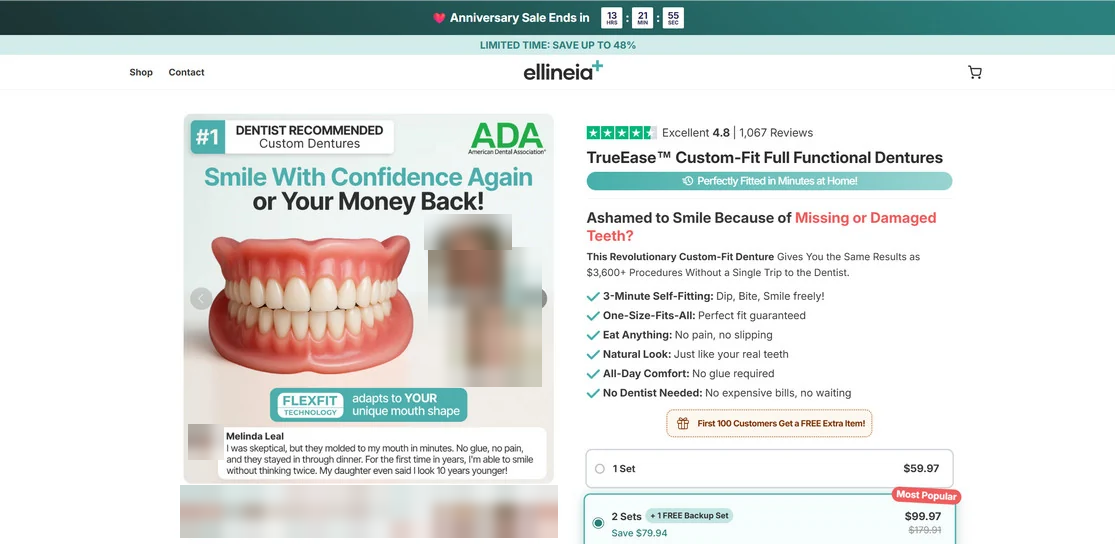
The 2025 product page sold TrueEase Custom-Fit Full Functional Dentures for $59.97 a set, under an ADA logo, a #1 Dentist Recommended badge and No Dentist Needed.
The same address now sells Selyne skin products
By April 2026, ellineia.com showed a store called Selyne. Today its bestsellers include a skin tag and wart removal spray, a stem cell scar gel and self-fitting dentures.
Seventeen reviews, all one star
Trustpilot lists 17 reviews of ellineia.com and 5 of selynelab.com, every one rated one star. Buyers describe bead kits instead of dentures, missing parcels and refused refunds.
- Don’t order dentures, skin tag removers or other health products from ellineia.com or its sister addresses.
- If you received a denture kit or skin product, stop using it and show it to a dentist or doctor.
- Check your card for repeat charges, since two Selyne reviewers describe subscriptions they couldn’t stop.
- Dispute charges with your card issuer, and ignore paid offers to recover your money.
Is Ellineia.com Legit?
No.
Ellineia sold a dental appliance under the ADA’s logo with no sign of any ADA review, claimed results matching procedures that cost thousands, and named no business on its site.
Its terms of service name no business, address or phone number. Their only identity details are Shopify hosting, US governing law and an email address.
The store’s only contact in 2025 was info@ellineia.com. Today its pages list info@selynelab.com. The refund policy and terms use info@tryphorm.com, and the privacy policy a Gmail address.
A business that changes names this often, while keeping the same customer count, gives buyers no stable seller to hold to its promises.
What Ellineia Sold in 2025
Archived copies of ellineia.com from July to November 2025 show a single product focus: dentures you fit yourself at home in minutes.
The product page called them TrueEase Custom-Fit Full Functional Dentures. It promised 3-Minute Self-Fitting, a one-size-fits-all perfect fit and comfort all day without glue.
It claimed the dentures gave the same results as procedures costing $3,600 or more, without a single trip to the dentist.
One set cost $59.97, and two sets cost $99.97.
A line of five green stars read Excellent 4.8 and 1,067 Reviews, styled to resemble a review site’s badge.
A banner offered a free extra item to the first 100 customers.
The buy box arrived with the two-set bundle already selected and labeled Most Popular, so the default order was $99.97 rather than $59.97.
The homepage claimed Over 100,000 Smiles Transformed From Home in mid-July 2025.
By late August, the same line read Over 230,000, an increase of 130,000 in about five weeks.
An ADA Logo With Nothing Behind It
The main product image placed the American Dental Association logo beside a #1 Dentist Recommended badge. Nothing on the page explained what the logo referred to.
The ADA’s own Seal of Acceptance page says its Seal is awarded by the ADA Council on Scientific Affairs after careful evaluation of scientific evidence.
Products must pass independent laboratory or clinical testing to earn it.
A logo pasted onto a sales image is not the Seal, and it doesn’t mean the ADA reviewed the product.
A real Seal comes with an approved statement naming the product benefits the ADA evaluated. Ellineia’s logo carried no such statement.
What a Real Denture Fitting Involves
The ADA’s patient site, MouthHealthy, calls dentures removable appliances and says your dentist takes measurements and makes models of your jaw at a preliminary visit.
It says new dentures may feel loose at first and can cause minor irritation or soreness while the mouth adjusts.
Follow-up appointments are generally needed so the dentist can check and adjust the fit. If irritation or soreness persists, the ADA advises seeing your dentist.
A one-size kit sold with No Dentist Needed skips every one of those steps. That is the gap between Ellineia’s promise and real dental care.
A Sale That Never Ended
Every archived Ellineia homepage carried a countdown timer. Its script restarted the clock on every visit, because the cookie meant to remember it was set for a different domain.
The sale’s name kept changing.
It was a Summer Sale in July, an Anniversary Sale in August, a Labor Day Sale in September and a Black Friday VIP Access sale by October 12.
A clock that resets on every visit pushes buyers to order before they check the seller. It is a common pressure tactic on short-lived stores.
How Ellineia Turned Into Selyne
An archived copy from April 26, 2026 shows ellineia.com under a new name, Selyne, with a Mother’s Day sale and the headline 230,000+ Results Without the Clinic.
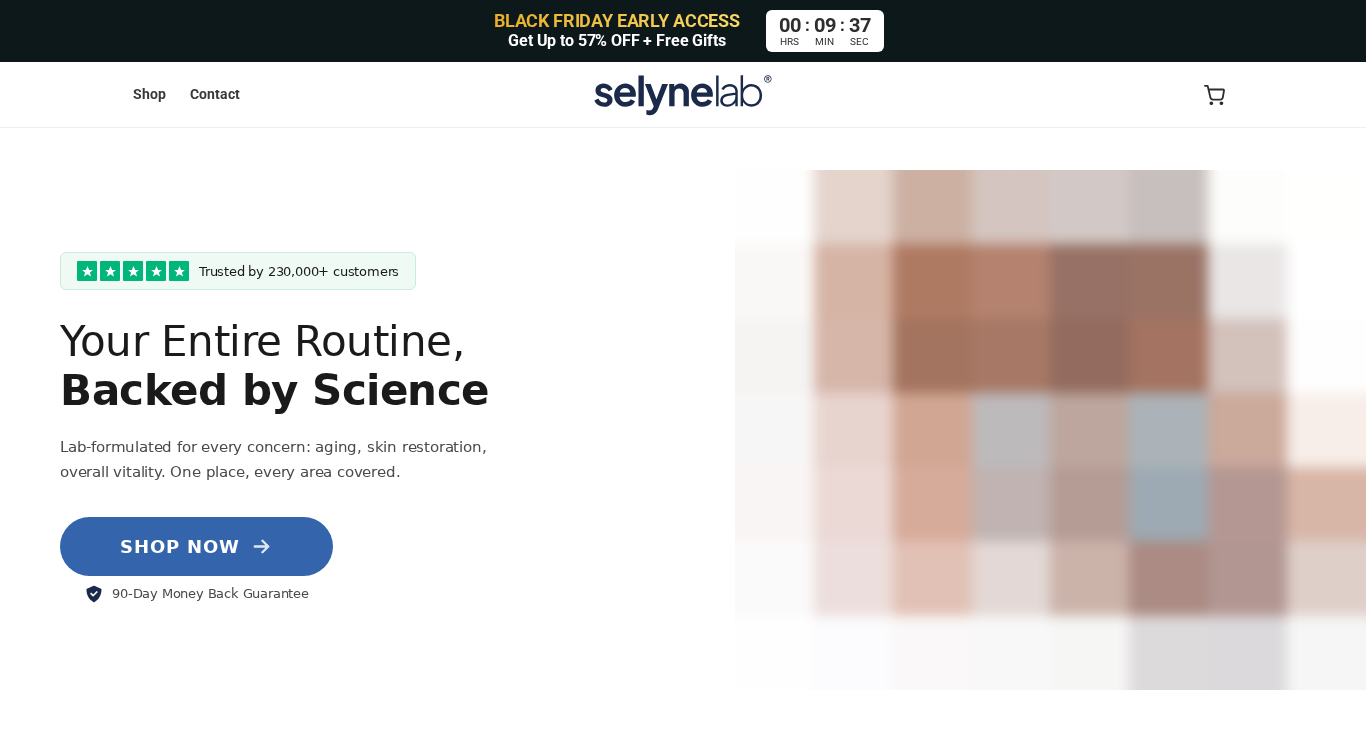
In November 2026, the store reads Trusted by 230,000+ customers. The same figure once counted Ellineia’s denture buyers, and now also covers skin products and a diffuser.
Two newer addresses lead to the identical Selyne storefront. Tryphorm.com was registered in November 2025, and selynelab.com in January 2026.
All three addresses run on the same Shopify store account that sold Ellineia’s dentures in 2025.
The About page on ellineia.com still describes phorm, a self-fitting denture it says was developed by dentists and lab technicians with 90+ years of dental expertise.
Our TryPhorm.com report from December 2025 covers that earlier brand, which now shares this storefront.
What the Selyne Store Sells Now
The current bestsellers are the ChillErase Precision Skin Tag and Wart Removal Spray, DermalRebuild Skin Renewal Gel, ReGenScar Stem Cell Scar Gel and a LungCare mullein diffuser.
Each is listed at $29.97 against a regular price of $60.00. A Lab Quality Self-Fitting Full Custom Dentures listing sells for $49.97 instead of $80.00.
The page calls the range lab-formulated, medical-grade and independently tested, without naming a lab, a test or a regulator.
In a 2022 warning letter, the FDA stated that no over-the-counter drugs can be legally sold for mole or skin tag removal.
An FDA consumer update on these removers listed skin injuries, infections needing antibiotics, scarring and delayed skin cancer diagnosis among their risks.
Our skin tag remover scams report covers how these products are usually marketed.
A Subscription Option Hidden in the Page Code
The skin tag spray, both skin gels and the diffuser carry a monthly plan, Save 57% With Automatic Refills, subtitled Zero Commitment, Cancel Anytime. The dentures listing has none.
The store’s code preselects the plan, and the spray page makes it the default. Custom styling hides the plan’s details and price.
The code alone doesn’t show whether checkout keeps the plan selected. Neither the refund policy nor the terms of service mentions a subscription, its billing or how to cancel.
Two Selyne reviewers describe repeat card charges they couldn’t stop, one after a single order. Before paying on any store, check whether a refill or subscription box is ticked.
Ellineia Reviews and Complaints
Trustpilot lists 17 reviews of ellineia.com. All 17 give one star, and most were posted between September and November 2025.
One buyer expected dentures and received two strips of fake teeth and a bag of beads.
Another received boxes labeled as a silicone denture kit from China, with plastic pieces and white beads to heat.
That buyer ordered through Facebook and paid CA$128. Another said a parcel never came, and the store refused a refund, saying it was delivered.
Other reviews describe a refund refused on the claim that the item arrived as advertised, emails that went unanswered, and no phone number to call.
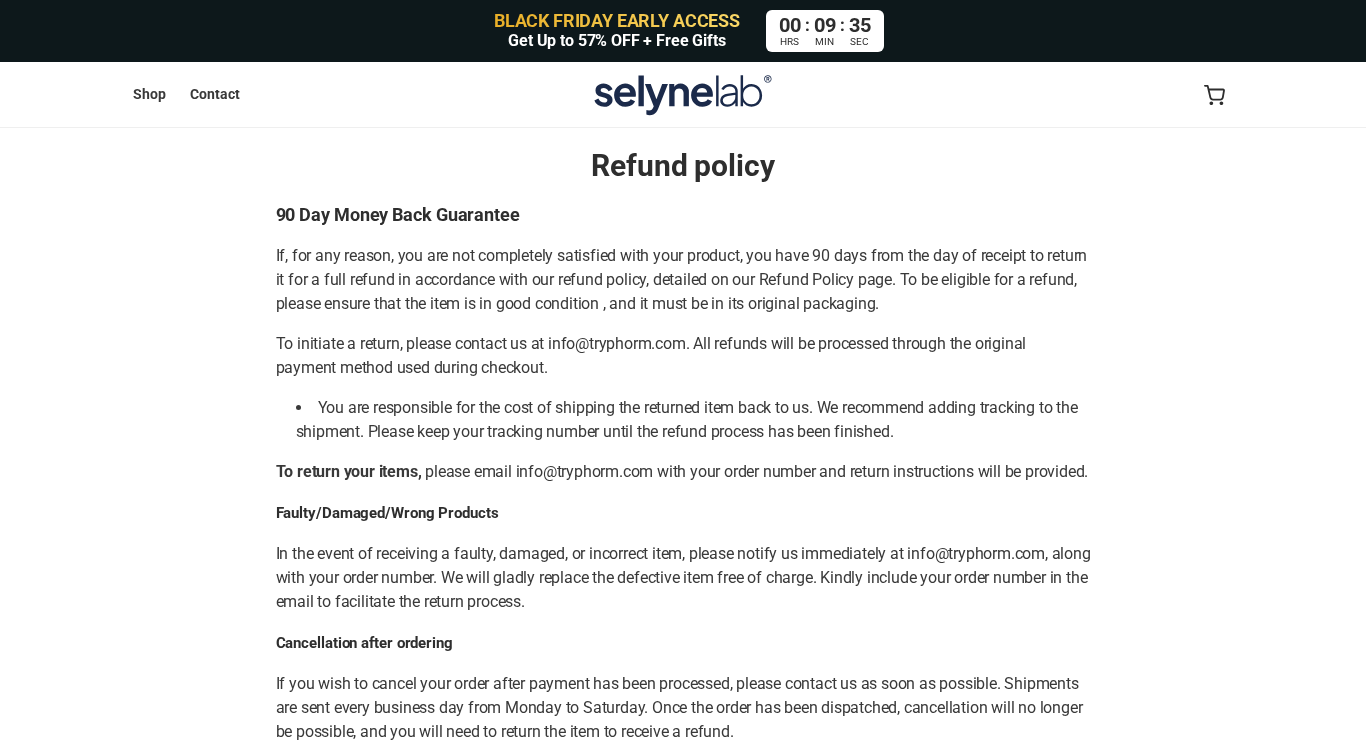
The refund policy on ellineia.com today still sends return requests to a Tryphorm address, and it makes buyers pay the return postage.
It promises a full refund for items returned within 90 days of receipt in good condition and original packaging, and free replacement of faulty or wrong items reported immediately.
Orders can be canceled only before dispatch. The policy says shipments go out every business day, Monday to Saturday.
If tracking shows a parcel delivered that never arrived, the policy allows one week to report it and decides refunds case by case.
Reviewer profiles on the Ellineia page show buyers in the United States and Canada, and the Selyne reviews add one from Australia.
Selynelab.com has 5 reviews on Trustpilot, all one star and all from 2026. Buyers describe tracking from China, no return label and denture brands and prices that keep changing.
An Australian buyer called the product vinegar in a pump spray bottle. Another said parcels kept coming after asking the store to stop. Tryphorm.com has no Trustpilot page.
Is Ellineia Linked to Afinia Spam?
Nothing connects them. Afinia isn’t mentioned on ellineia.com, in its policies or on archived Ellineia homepages from 2025 and 2026.
Afinia is the brand of Caribemar de la Costa, a Grupo EPM company that sells and distributes electricity in Colombia’s Caribbean region.
Scammers do use Afinia’s name. In May 2024, Afinia warned customers about text messages promising fake discounts, with links to fraudulent payment pages.
Delete and report such messages without clicking. Afinia named its official payment channels as its virtual office at afinia.com.co, the Afiniapp app, its offices and official payment points.
If You Used the Dentures or the Skin Spray
Stop wearing a self-fit denture kit from this store, even if it seems comfortable. Keep using any denture, appliance or treatment your dentist prescribed.
Take the kit and its packaging to a dentist, who can check for damage to your gums and tell you what a proper fitting involves.
Stop using the skin tag and wart spray and the store’s skin gels. Show the bottles to a pharmacist or doctor, especially if the skin burns, blisters or changes.
Stop using the LungCare diffuser too, and keep using any inhaler or lung medicine your doctor prescribed.
The FDA update advised medical care for any mole or skin tag that is growing, changing, bleeding or painful. Call 911 for trouble breathing, facial swelling or severe reactions.
How the Ellineia Store Worked
Step 1: A social media ad promises a new smile
Two reviewers say the dentures were bought through Facebook. The product page itself used before-and-after photos and promised a fit without a dentist.
Step 2: The product page borrows authority
An ADA logo, a #1 Dentist Recommended badge and a star rating made a mail-order kit look clinically approved.
Step 3: A timer and a bundle push a bigger order
A countdown that restarted on every visit and a preselected two-set bundle with a free backup set nudged buyers toward a $99.97 order.
Step 4: A different product arrives, or nothing does
Buyers report bead-and-tray kits from China, a parcel marked delivered that never came, and refund requests answered with a refusal or silence.
Step 5: The store changes its name and keeps selling
The store switched from the Ellineia name to Selyne, held on to phorm text and a Tryphorm email, kept its 230,000 customer claim, and added skin products.
How to Spot Fake Dental and Skin Care Stores
Fraudulent shopping websites often share common patterns that make them easier to detect once you know what to look for. Before entering personal information or making a payment, take a few minutes to check for these warning signs:
- Unrealistic prices and discounts
If a website offers products at prices far below trusted retailers, it’s often a red flag. Many of these sites advertise luxury or high-demand products at massive discounts to create a sense of urgency. A $300 product listed for $49.99 should immediately raise suspicion. - Recently registered or suspicious domain names
Many fraudulent websites operate on newly created domains that disappear after a few weeks. Look for signs like random characters in the URL, misspellings of well-known brands, or hyphenated domains.
You can check a site’s age with a WHOIS lookup, or run it through our free Scam URL Scanner. - Missing or vague company details
Legitimate businesses clearly display their company name, tax information, phone numbers, physical address, and return policies. Fraudulent sites often provide incomplete, fake, or no company details at all. A lack of verifiable contact information is a major warning sign. - No reliable customer service
Real businesses provide clear ways to contact support—email, phone, live chat, or physical return addresses. Fake stores often list nonfunctional contact forms, invalid phone numbers, or reply with generic automated messages. - Poor website quality and structure
Many fake stores are set up quickly with low-effort templates. Look for poor grammar, spelling errors, low-resolution product images, broken links, or missing legal pages (Terms of Service, Privacy Policy, Return Policy). A sloppy website often signals something isn’t right. - Copied product descriptions and images
Fraudulent sites often lift product listings directly from real retailers or marketplaces. If you reverse image search a product photo and find it on multiple unrelated websites, the listing is likely not original. - Lack of credible reviews or suspicious review patterns
A real store will usually have a mix of customer reviews across different platforms. Warning signs include no reviews at all, obviously fake five-star reviews, or multiple identical reviews posted on the same day. Searching “[website name] reviews” or “[website name] scam” on Google often reveals warnings from other consumers. - Unclear or unfair return and refund policies
Fake stores often use vague language around returns and refunds—or avoid the topic entirely. If you can’t easily find clear instructions for how to return an item or get a refund, proceed with caution. - Aggressive urgency and pressure tactics
Fraudulent websites commonly use fake scarcity (e.g., “Only 2 left in stock!”) or countdown timers (“Sale ends in 10 minutes!”) to push you to buy before you think it through. Legitimate stores don’t rely on fabricated urgency to make sales.
Quick Steps to Verify a Website’s Legitimacy
Before entering payment or personal details on a new shopping website, take a few simple precautions:
- Search for the store’s name along with words like “reviews” or “complaints” on Google and Trustpilot.
- Check the website’s domain registration using Whois.com.
- Use trusted tools to scan for malicious or fraudulent links:
- Malwarebytes ScamGuard – detect scams and unsafe links before they reach you on Android and iOS phone.
- Malwarebytes Browser Guard – block dangerous or fake websites on Windows and macOS browsers.
- Verify the business address on Google Maps to ensure it’s a legitimate location.
- Review the store’s accepted payment methods – credit cards and PayPal are traceable and safer than cryptocurrency or bank transfers.
- Trust your instincts; if something feels off, it’s better not to proceed.
How to Spot Similar Scams on Social Media
Many fraudulent shopping websites rely heavily on sponsored social media ads to draw in large numbers of potential buyers. These ads often promise extraordinary discounts—sometimes up to 90% off—and use emotionally charged language to push users into buying immediately.
They frequently appear on Facebook, Instagram, and TikTok, blending in with legitimate content. However, these ads follow predictable patterns that make them easier to identify once you know what to look for.
Spotting Fraudulent Facebook Ads
Facebook’s advertising platform is a favorite tool for fake online stores because of its massive reach. These ads often feature “unbelievable” offers designed to create urgency and bypass critical thinking. Warning signs include:
- Extreme, unrealistic discounts such as “90% OFF,” “Store Closing Sale,” or “Final Liquidation.” Real retailers rarely discount new products this aggressively.
- Poor grammar, awkward phrasing, or inconsistent language throughout the ad or website, indicating low-effort, mass-produced content.
- Generic stock photos or images with watermarks, suggesting the images were taken from legitimate brands or stolen from other sources.
- Recently created Facebook Pages, which is common for temporary fraudulent campaigns. Check the “Page Transparency” section to see when the page was created.
- Limited or no engagement from real customers. Authentic brands usually have reviews, comments, and visible user interaction.
If an ad raises doubts, search for reviews of the website or reverse image search the product photos to see if they’re copied from elsewhere. Never provide payment information until the site is verified.
Spotting Fraudulent Instagram Ads
Instagram is another major platform used to promote fake shopping sites through eye-catching visuals and short-lived “flash sale” captions. Warning signs to look for:
- New or disposable accounts with few posts and followers, often created just weeks or days before launching ads.
- Lack of tagged users in product posts. Legitimate stores often feature real customers, influencers, or product usage.
- Unsecured checkout pages. If the website linked in the bio does not use HTTPS, do not enter payment information.
- Fake or missing customer reviews. Fraudulent stores rarely have authentic purchase feedback.
- Unclear or restrictive return policies, often hidden or written vaguely to make refunds difficult.
When in doubt, search for independent reviews before buying, and only enter payment details on verified, secure websites.
Catching Fake TikTok Ads
TikTok is increasingly used to promote questionable shopping deals through short, persuasive videos. While many ads look polished, the same red flags apply:
- Links to unknown stores that don’t appear in search results or have no external reputation. Many of these sites are temporary and disappear after a short time.
- No verification badge on the TikTok account. While not every legitimate store is verified, the lack of a badge is one more indicator to check further.
- Aggressive countdown timers or “one-day only” promotions designed to rush decision-making.
- Lack of genuine customer reviews or real user content demonstrating the product in actual use.
- Comment sections filled with complaints or warnings from other users. This is often the first place victims speak up.
TikTok scams often rely on impulse buying. Take a moment to verify the website, read independent reviews, and use trusted browser protection before visiting external links.
What to Do If You Ordered From Ellineia or Selyne
- Find the name on your statement.
The charge may say Ellineia, phorm, Tryphorm or Selyne. Note every charge from any of them, including repeat charges you didn’t order.
- Stop unwanted repeat orders.
Email the store once to cancel any subscription, then ask your card issuer to block future charges from that merchant.
- Dispute what doesn’t match.
Card issuers often allow about 120 days, so 2025 orders are likely too old. Explain that a kit of beads and trays isn’t the custom denture advertised.
- Check PayPal timing.
PayPal cases must be opened within 180 days of payment. That limit has passed for 2025 orders, but 2026 Selyne orders may still qualify.
- Don’t pay to ship a return abroad.
The refund policy makes buyers pay return postage. Ask your card issuer first, because a costly international return may not recover anything.
- Keep photos and messages.
Photograph what arrived next to the product page or ad, and save every email, order number and tracking page.
- Report the store.
US buyers can report it at ReportFraud.ftc.gov, Canadians to the Canadian Anti-Fraud Centre and Australians to Scamwatch. Report the Facebook ad too.
Anyone who contacts you offering to recover the money for a fee is running a second scam. Legitimate disputes go through your own bank or card issuer, at no charge.
Our Veysole dentures report covers another denture store that leaned on ADA-style claims.
Frequently Asked Questions
Is Ellineia legit?
No. It sold self-fit dentures under an ADA logo with no sign of ADA review, named no company, and all 17 of its Trustpilot reviews are one star.
What did Ellineia sell?
In 2025 it sold TrueEase self-fitting dentures for $59.97 a set. In 2026 the same address sells Selyne skin products and another self-fitting denture.
What are Ellineia’s reviews and complaints?
Buyers report bead-and-tray kits instead of dentures, missing parcels, refused refunds and unanswered emails.
Is Ellineia connected to Afinia?
No evidence links them. Afinia is a Colombian electricity distributor, and nothing on Ellineia’s live or archived pages mentions it.
Are Selyne and Tryphorm the same store as Ellineia?
They share one storefront. Ellineia.com, tryphorm.com and selynelab.com all show the same Selyne store, and its refund policy still uses a Tryphorm email address.
Is it safe to use the ChillErase skin tag spray?
No. The FDA has stated that no over-the-counter drug can be legally sold for skin tag removal. Stop using the spray, and see a doctor about any skin growth.
The Bottom Line
Ellineia was a denture store that borrowed the ADA’s logo and promised dentist-free results. It now sells skin products under the Selyne name, with the same customer claim.
Don’t buy from ellineia.com, tryphorm.com or selynelab.com. If you did, stop using the product, see a dentist or doctor, check for repeat charges and dispute recent ones.
This article is for informational purposes only and should not be relied upon for financial or business decisions. We identify potential scams using research, user experiences, and expert analysis. However, all claims should be independently verified. Mistakes may occur, and legitimate products could be flagged. We strive for accuracy but make no warranties regarding the completeness or reliability of the information.

If you are the owner of the website or product in question and wish to offer clarifications regarding your business or website, please reach out to us via our Contact form.

Join the discussion
0 commentsShare your experience or ask a question about this article.
Discussion
Start the conversation
Have a question or something useful to share? Add the first comment.