

DIYSTAR Moldable Dentures are being aggressively marketed online as an affordable, instant solution for people with missing, damaged, or crooked teeth. Ads promote it as a game-changing product: custom-fitted, durable, natural-looking, and inexpensive. But behind the polished branding and scripted reviews lies another classic dropshipping scam. This article exposes the full truth behind the DIYSTAR scam, how it works, and what to do if you’ve already ordered.
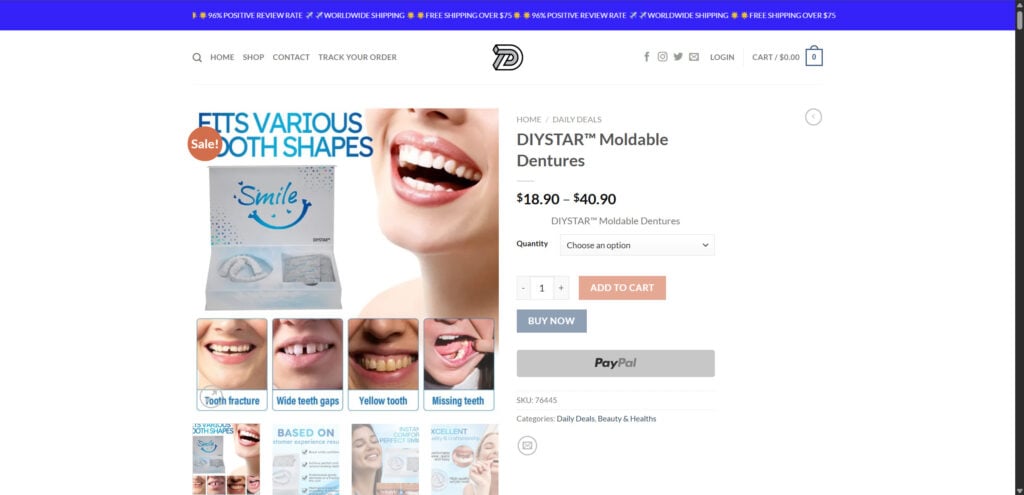
Scam Overview
The DIYSTAR Moldable Denture is just another rebranded product in a series of denture-related dropshipping scams, previously seen with names like Smileasego, Seurico, and Furzero. These scams follow the same deceptive model:
- Fake product benefits: Instant comfort, perfect fit, dentist-quality performance for $18 to $40.
- Manipulative marketing: “Buy 2 get 1 free,” exaggerated discount rates, and limited-time offers.
- Unverified testimonials: Names like “Maria Clarke” and “David Jackson” are commonly recycled across other scams.
- No company transparency: No physical address, no medical certifications, no business registration details.
- Zero refund reliability: Fake guarantees like “180-day warranty” or “loss protection plans” are just hollow marketing.
In reality, customers receive a flimsy plastic shell that doesn’t fit, looks fake, causes discomfort, and offers no actual value.
How the Scam Works
Step 1: Aggressive Advertising
DIYSTAR runs large-scale ad campaigns on social media, targeting people with dental issues and financial limitations. Ads claim that for under $40, you can “smile with confidence” again — all without a dentist.
Step 2: Emotional Manipulation
The ads use emotionally charged language like:
- “A confident smile changes everything”
- “Say goodbye to embarrassment”
- “You deserve happiness and comfort”
Combined with staged images and dramatic before-after photos, this builds instant trust and urgency.
Step 3: Fake Scarcity & Deals
They use scarcity tactics: limited-time offers, countdown timers, fake “high review scores,” and package deals like “Buy 3 get 2 free.”
Step 4: Order & Payment
The checkout page usually accepts credit/debit cards only, with minimal security layers. Buyers are led to believe they’re buying a premium product from a real dental brand.
Step 5: Long Shipping Delay
After payment, customers receive no real shipping updates. The product often takes 2–3 weeks to arrive — shipped directly from a Chinese warehouse.
Step 6: Low-Quality Product
The item received is vastly different from what was advertised:
- Cheap-looking, off-color plastic
- Doesn’t mold properly
- Doesn’t stay in place
- Feels bulky, hard, and fake
Worse, it’s not FDA-approved, not biocompatible, and potentially unsafe for extended oral use.
Step 7: Fake Refund Policies
Buyers trying to get a refund are ignored or told they must ship the product back to China at their own expense. Some are told to wait until a “warranty team” reviews the case, which never happens.
Step 8: Brand Vanishing Act
As negative reviews build, DIYSTAR will eventually:
- Shut down the site
- Rebrand under a new name
- Start the scam cycle over again
Why DIYSTAR Is Not a Legitimate Dental Product
- No dentist would recommend this product.
- No regulatory approvals (FDA, CE, etc.) are listed.
- No dental-grade materials are used.
- No scientific studies or safety tests are cited.
- No legitimate customer service exists.
DIYSTAR is not associated with any dental professionals, labs, or manufacturers. It is a cheap cosmetic shell made from generic plastic with zero functional value.
Fake Testimonials Breakdown
Example 1: “Maria Clarke”
Used in multiple scam sites, this name appears alongside a copy-paste review:
“Saved me from expensive implants… fits perfectly… I’m confident again!”
Example 2: “David Jackson”
Another generic identity with recycled praise:
“No more sore spots, no more slipping… it’s perfect.”
These testimonials are not linked to verified purchases and often use AI-generated or stock photos.
What To Do If You Bought DIYSTAR Moldable Dentures
Step 1: Stop Using the Product
If you received the item, do not wear it. The materials are unverified, and prolonged use may cause irritation or oral injury.
Step 2: Contact Your Payment Provider
Request a chargeback for fraud or goods not as described. Credit card companies usually support consumers in scam disputes.
Step 3: Gather Evidence
Take screenshots of:
- The product page and ads
- Your order receipt
- Any emails or messages
This will help support your case with your bank or consumer protection agency.
Step 4: Report the Scam
- FTC.gov (USA)
- ActionFraud (UK)
- Better Business Bureau (BBB)
- IC3.gov (for internet crime)
Step 5: Leave Honest Reviews
Help others avoid the scam by posting reviews on:
- Trustpilot
- Facebook scam alert groups
Step 6: Monitor for Other Scam Names
Keep an eye out for similar products under new names. These scams often recycle the same listing with a different brand name.
Final Warning: Avoid DIYSTAR Moldable Dentures
DIYSTAR Moldable Dentures are part of a global dental scam operation. The product is not medical-grade, not dentist-approved, and not safe. It is marketed with fake reviews, false promises, and deceptive pricing to lure desperate consumers.
Always consult a licensed dental professional before using any oral appliance.
FAQ
Is DIYSTAR FDA-approved?
No. There is no FDA listing or approval for this product.
Can I get a refund?
Highly unlikely. Customers report no response or are required to pay expensive international return shipping.
Are the testimonials real?
No. All testimonials are fake or AI-generated. Photos are stock images.
Where is DIYSTAR based?
There is no physical business address. Most shipments come from China.
What are better alternatives?
Consult a licensed dentist. Many clinics offer legitimate denture solutions, including payment plans for affordability.
How do I know a denture product is real?
Look for FDA/CE approvals, real company info, verified reviews, and clear return policies.
The Bottom Line
The DIYSTAR Moldable Dentures scam preys on vulnerable individuals who can’t afford professional dental care. It offers false hope, delivers low-quality products, and leaves victims without recourse.
Avoid DIYSTAR. Avoid dental scams. Choose professional care.

Join the discussion
2 commentsShare your experience or ask a question about this article.
Discussion
Bardzo ważne informacje .DZIĘKUJĘ za wspaniałą pracę która na pewno zaoszczędziła wiele nerwów i pieniędzy zwłaszcza SENIOROM
Z poważaniem życzę samych sukcesów . J.P
In reply to Józef
Dziękujemy za mile słowa – i ma Pan/Pani racje, ze seniorzy sa tu glownym celem tych reklam. Jesli ktos z rodziny juz zamowil taki produkt, najskuteczniejsza droga jest kontakt z bankiem i zablokowanie platnosci cyklicznych oraz reklamacja transakcji. Pozdrawiamy serdecznie.