


After losing a home, you hear that a government program might return some of the money. The person explaining it says they can handle the paperwork for you.
Before handing over a fee or a tax document, get the program’s name and find out who actually runs it.
Overview
The supposed IRS foreclosure refund program did not exist
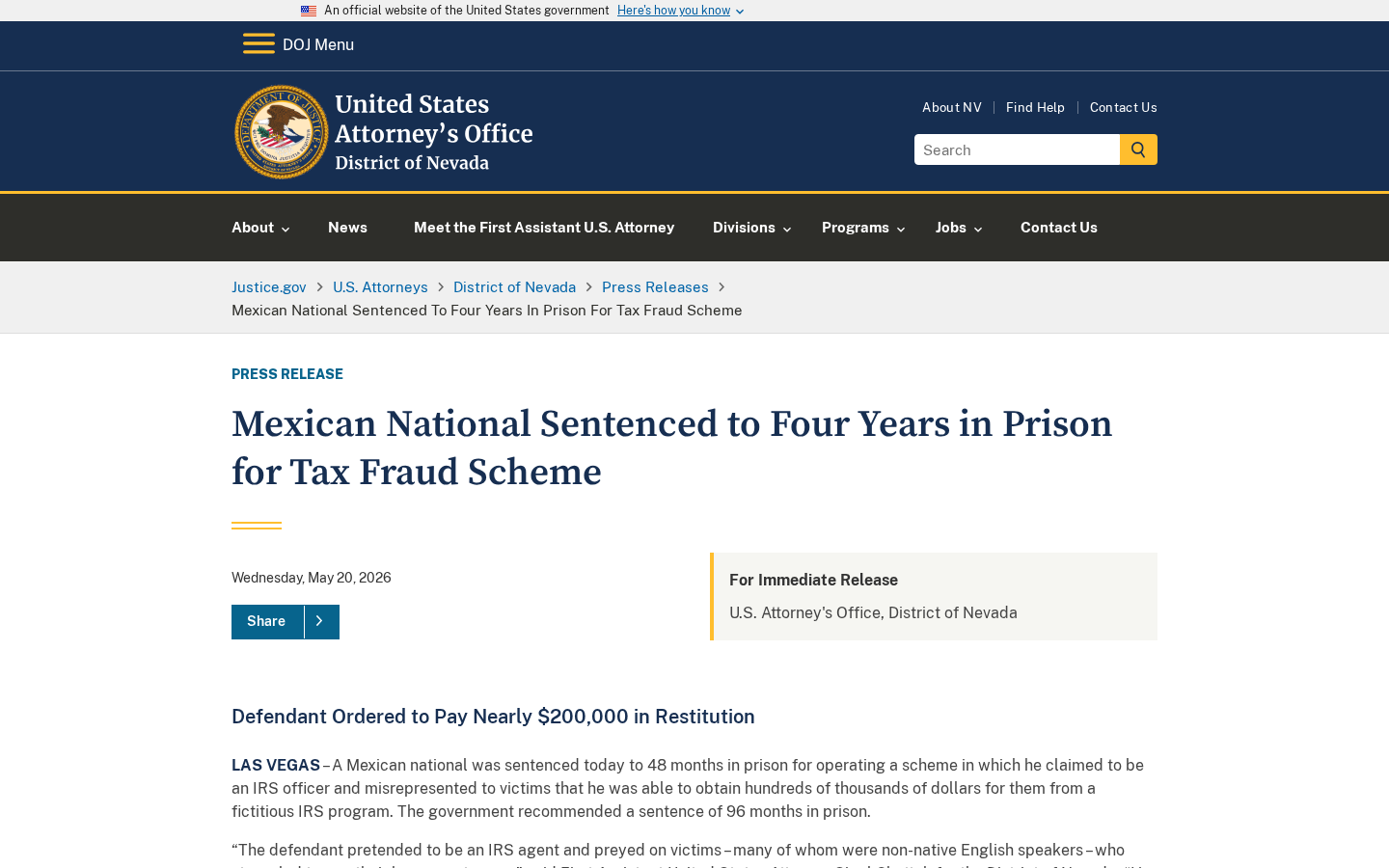
Federal prosecutors in Nevada say Francisco Ivan Velazquez posed as an IRS employee and promised people money through an invented program for former homeowners who had lost a home.
He charged fees for supposed applications. In some cases he helped submit false tax returns, creating another problem for people who thought they were seeking housing-related funds.
The distinction is important: the false program was not an IRS benefit. Questions about an actual foreclosure, a mortgage and your federal tax account are separate matters.
The court found specific criminal conduct
The May 20, 2026 sentencing announcement reports convictions for three wire fraud counts, aiding the presentation of a false return and two counts of impersonating an IRS officer.
The court sentenced Velazquez to 48 months and ordered approximately $199,198.52 in restitution. The jury did not return a verdict on four other counts of aiding preparation.
The DOJ says the scheme sought at least $1.8 million from the IRS. That was money sought through the scheme, not an amount paid to former homeowners.
Answer three questions separately before sending anything
- Find out which organization actually has a record of the mortgage or foreclosure.
- Ask whether a payment someone described exists, using the court, servicer or agency independently.
- Confirm what the person is asking you to sign and whether it will be filed as a tax return.
- Do not pay someone who claims an upfront fee can unlock a special IRS refund.
The district cited the case again in its November 25 enforcement update. That is a new reference to the existing sentence, not the opening of a refund program.
How the Fake IRS Foreclosure Refund Scam Worked
Step 1: A real loss made the offer feel relevant
Velazquez made his pitch to people dealing with mortgage problems. The story appealed to people who had already lost a home and hoped there was money left to claim.
Someone who understands the background of your foreclosure has information about your situation. That does not mean they handle a claim or have authority over a payment.
Ask for a case number, the supposed program’s full name and the agency responsible. Independently look up the organization before replying with personal information.
Step 2: The promoter claimed IRS authority
Prosecutors say Velazquez presented himself as an IRS employee who could obtain large payments for victims. The badge or title is not what makes a government program real.
An official program should have instructions you can obtain without using a private agent. Do not use the person’s number or the address they provide as your only source.
If you get a letter that looks genuine, keep it and contact the agency from an independent starting point. Ask what it sent and whether you need to respond.
A real notice and a fake pitch can arrive together. Identify the office that sent the notice without relying on the callback number given by the promoter.
It helps to write down what each person claims to represent. A promoter may promise money, but only the issuing agency can confirm its own notice or program.
Step 3: Fees were sold as part of a supposed application
Velazquez advised victims that he would apply on their behalf for a fee. His promise depended on a program that did not exist, according to the case.
A genuine tax professional may charge for lawful work. That does not make a claim valid when the supposed benefit cannot be verified, or when the preparer misrepresents their role.
Read each form before signing it. If the person says it is a house-related application but the document is a tax return, stop and get independent help.
Step 4: Some people were drawn into false tax filings
Prosecutors say some filings falsely claimed federal tax withholdings. A tax return can disclose sensitive information or put something on your record that has nothing to do with the foreclosure.
Do not sign a blank or unfamiliar return because someone promises they will complete it later. Ask for a full copy and verify the preparer through a separate route.
Keep a copy of any unfamiliar return on file. Contact the IRS instead of asking the promoter who supplied the form to fix it.
Where to Check a Foreclosure Claim Without the Person Selling It
Start with the actual mortgage and sale documents
Find the latest statement or notice from the servicer you already know. Identify your mortgage, sale date if applicable, property and the organization that handled the sale.
Call the servicer from a verified number and ask who maintained the transaction records. If there were court proceedings, use the court’s independently listed contact for the case.
The CFPB’s foreclosure overview explains why the procedure differs by state. Not every sale goes through a court, so do not assume one national process handles the question.
Ask for the itemized record and any official instructions for resolving questions about proceeds. A written notice should identify who issued it and how you can reach that organization.
Start a folder for the notices you received before the offer arrived. That gives you something to compare with the paperwork sent by a person asking to be paid.
Write down the date of the sale and the name of the party listed on the official record. Ask whether there is a deadline or an existing claim.
Do not decide from the amount on a flyer. Any possible proceeds depend on the actual sale, the amounts owed and the rules governing that property.
It is also possible for a real property question to sit alongside a fake offer. A court or servicer can explain its own records without endorsing a private company.
Do not mix up a housing question and a federal tax account
A tax account shows what the IRS has for that taxpayer. It cannot tell you whether a promoter has the right to claim funds from a foreclosure sale.
Find which authority is named in the real property paperwork. A bill from a private company, a court notice and an IRS letter are not interchangeable.
A copy of a federal form does not show that the government approved payment. Ask what the form does and keep a complete copy before any filing you authorize.
Open the IRS online account page directly. The account can show certain notices and tax records, and it offers access to transcripts for past years.
Find the tax year the person claimed to be working on. Compare what you see with the returns you knowingly filed and copies from a preparer you already trust.
If you need a different record, use the IRS’s tax transcript page. It distinguishes among transcript types and explains how to request them if you cannot sign in.
A transcript is not always a complete copy of the return. Ask the IRS what record you need to identify an unfamiliar filing and whether it has processed it.
Record what you do and do not see, rather than marking something resolved. An unprocessed submission or a recent change need not be visible in the record you opened.
Get help that does not depend on the promoter
If you are still facing foreclosure, the CFPB’s mortgage help page can point you to housing counseling. Contact the servicer directly instead of waiting for a promised refund.
Have your notices and deadlines handy when you call. Explain what stage the process has reached and whether someone is offering to charge you for a separate application.
If the seller recommends a preparer or attorney, verify that professional independently. If they will not review the source documents or explain their own fee, do not authorize the work.
Ask a tax professional to point to the applicable rule and explain it in ordinary language. The answer should make sense without a secret filing route or privileged agency contact.
Compare the service described on the invoice with the document they want you to sign. A consultant who changes the purpose halfway through has not answered your original question.
If the person offers to keep a portion of a supposed refund, ask independently whether there is anything to recover. Do that before signing over payment or granting authority.
Work out which version of the problem you have
If you only received a pitch, save it and verify the claim separately. You need not give your Social Security number to ask if a program exists.
If you paid but shared no tax documents, start with the payment trail. Find out how the bank recorded the charge and whether the invoice describes a service never delivered.
If someone took your tax information or submitted a return without your permission, give the IRS that specific history. Do not assume both situations require the same form.
If you knowingly authorized a return because a preparer misrepresented what it did, say so. The IRS separates suspected preparer misconduct from a filing done without an individual’s permission.
If a preparer still holds records you need, request copies in writing. Keep the request and any reply, including a refusal or a new fee demand.
Tell the agency whether you received money, were asked to forward it or only saw a claim it was approved. This affects which department may help you.
Tell your housing adviser about the pitch without forwarding tax documents they do not need. Keep the records about your home and taxes separately.
Do not send an amended return on someone’s verbal advice just to clear a suspicious filing. Ask the IRS or an independent tax professional what response fits the actual record.
What to Do If You Paid or Shared Tax Documents
-
Stop payments and preserve what you received. Keep the phone record, email, fee invoice, forms and payment confirmation. Identify which documents you signed and which were only shown.
Use your bank’s verified contact to explain the payment. Ask what it can stop or dispute and what records it needs, without assuming a refund is guaranteed.
-
Check your IRS account independently if tax data was involved. Open IRS.gov yourself and use its individual account or official contact options rather than a link in the offer.
Write down the tax year and which form someone discussed. If you see an unfamiliar return, notice or refund record, ask the IRS how to resolve that specific issue.
Tell the IRS whether you authorized a preparer, signed anything or believe someone used your details without permission. That can change the advice it gives you.
-
Use the reporting option that matches what happened. The IRS’s guidance for people who were scammed separates identity theft, tax preparer problems and reporting the solicitation.
If the IRS directs you to submit a tax identity theft affidavit, use its official Form 14039 route. Do not submit another copy for the same incident without a reason.
Keep any notice, filing rejection and case references. If you received a genuine IRS deadline, respond through the verified channel listed for that notice.
-
Protect your eligibility and housing records separately. Check with the actual servicer or appropriate court about the foreclosure. Do not assume the fraud report pauses housing or legal deadlines.
Keep copies of both the real foreclosure documents and the material supplied by the promoter. The difference can explain where you first saw the false claim.
-
Do not buy a second promise to recover the fee. If someone invokes the federal case or offers to release restitution, find the actual office independently and verify the claim.
Report any new fee demand and save the message. Do not hand the person the tax records you have just secured.
Frequently Asked Questions
Was the advertised IRS foreclosure refund real?
The case describes an invented IRS program. The promoter could not deliver the benefit he sold, and prosecutors documented false filings in some instances.
Can the IRS tell me who handled my foreclosure?
The property and mortgage records are the better starting point. Contact the verified servicer, court or sale authority responsible for the actual transaction.
What if I paid a fee but no return was filed?
Contact the bank or payment provider about the fee and save the offer. Tell the IRS if the person claimed agency authority or obtained tax information.
What if I signed what I thought was a housing application?
Get the actual document and find out whether a tax return was submitted. Contact the IRS through its own site if the filing is unfamiliar.
Does ordered restitution mean victims have all been paid?
The sentencing announcement states what the court ordered. It does not tell you that funds were collected and sent to every person affected.
Can someone take a fee to put me on a government refund list?
Do not pay a contact who claims to unlock a special benefit. Verify any actual case instructions through the government office responsible for the matter.
The Bottom Line
Do not pay for a supposed IRS foreclosure refund. Check an actual housing claim with the authority responsible for the sale and verify tax questions through IRS.gov.
If you already paid or signed something, save the payment and filing records. Contact the bank and the IRS separately so neither problem is overlooked.

Join the discussion
0 commentsShare your experience or ask a question about this article.
Community experiences
Did this happen to you?
Your experience could help someone recognize the same scam. Submit a private report for our team to review.
I experienced this tooReports are reviewed before publication. Sharing publicly is always your choice.
Discussion
Start the conversation
Have a question or something useful to share? Add the first comment.