


You find a holiday you could actually afford, and the price only holds until tonight. The site shows a hotel, flight times and an ATOL number.
Give yourself time to check whether the people behind the offer can really book that trip.
Overview
A holiday deal can look real before you know who is selling it
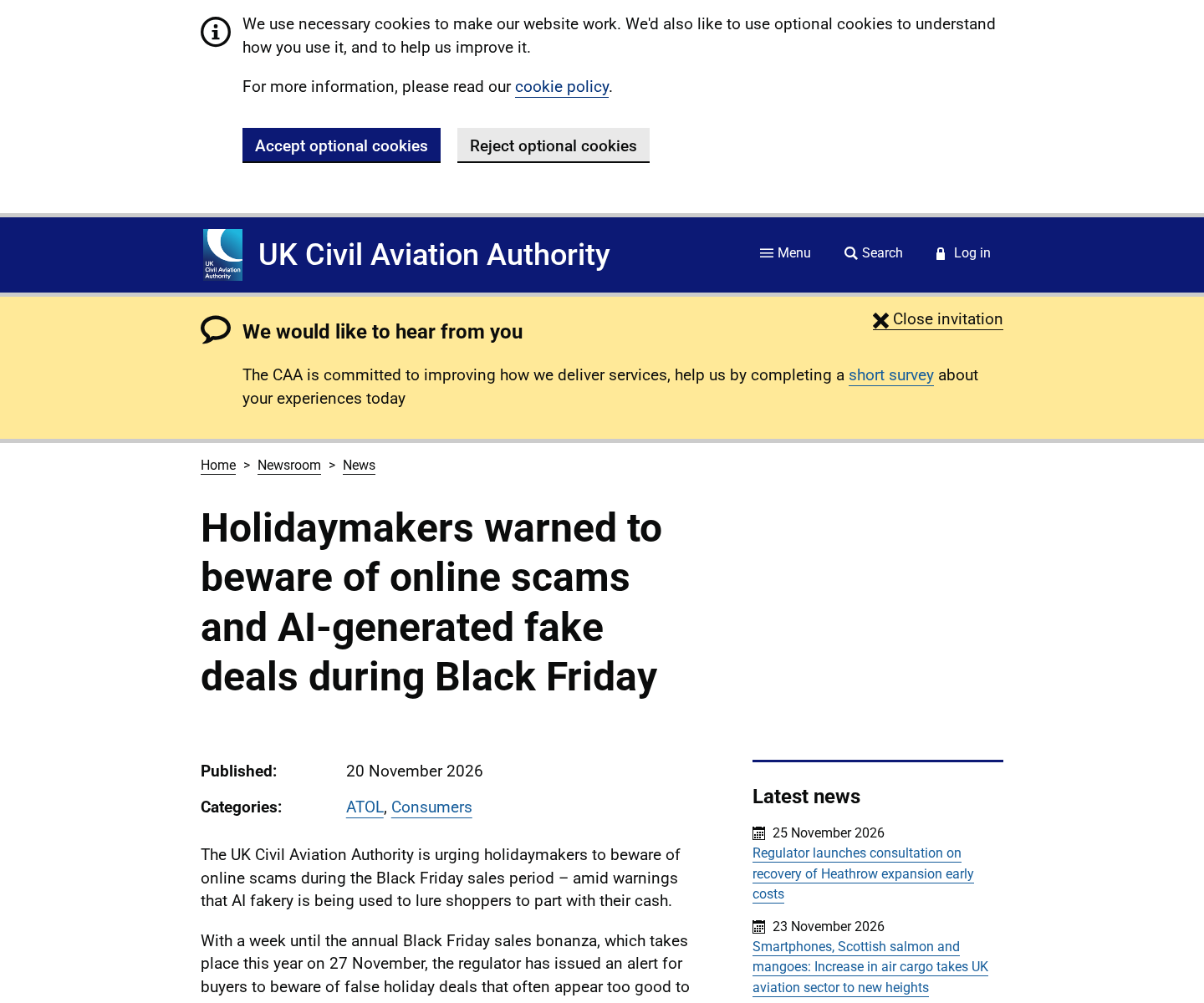
The UK Civil Aviation Authority’s November 20, 2026 warning covers fake holiday offers during Black Friday and Travel Tuesday. It describes websites, ads and social posts that appear genuine.
The regulator cites City of London Police warnings about realistic promotions, sometimes enhanced by AI. You could pay for a flight or room that was never booked.
The warning describes a type of fraud, not one campaign run by the same people. A genuine trip and a fake might advertise similar savings.
An ATOL logo is not the same as protection for this booking
ATOL is a UK financial protection scheme associated with eligible travel bookings, especially flight-inclusive packages. It protects eligible customers when an ATOL holder stops trading.
A scam page can copy someone else’s logo, name or licence number. Finding a real company in the database only matters if that company is actually behind your booking.
You also need to know what the protection covers. A hotel on its own is not made ATOL protected just because you saw the logo near the price.
Check the seller, the exact trip and the payment destination
- Look up the company or licence number on ATOL’s own site.
- Confirm the seller’s website and contact details through the licensed company’s verified channel.
- Find out which parts of this booking are protected and who will issue the certificate.
- Compare the payment recipient with the person or company independently confirmed as the seller.
If you cannot match those details, stop before you pay. A countdown is not a reason to resolve a discrepancy after transferring the money.
How Fake Black Friday Holiday Deals Usually Work
Step 1: The ad shows a trip worth clicking on
A resort photo and a price that fits your budget can make an offer feel like a finding, not a sales pitch. Fake promotions borrow that same feeling.
Compare the exact dates, airport, number of travelers and room type against a few independent options. Small differences in those details can make a quote much cheaper without proving fraud.
Check that luggage, transfers, taxes and the cancellation policy are comparable. A package result and a price for a room alone are not the same offer.
Step 2: The site supplies reasons to trust the offer
A page may show a travel company name you know or a real licence number it did not obtain. Either can be copied without the real firm’s permission.
Look at the actual address of the site and open the company separately. Secure browser encryption protects a connection but does not tell you who will fulfill the booking.
If the ad gives a company name that does not match the seller in the terms, ask which legal business takes your money. Check the answer through an independent contact.
Step 3: Someone tries to make you pay before you check
Pressure can come as a reservation deadline or a message saying a room will go to somebody else. It may be paired with a request to send a bank transfer.
Do not use account details sent in a last-minute message without confirming them through the seller’s established contact. A change can put your payment in the wrong hands.
If someone asks you to pay a personal account for a company booking, stop. Find out whether the real provider knows about the quote before you respond.
Step 4: A confirmation can delay the discovery
A receipt or itinerary can look convincing even if the seller never booked anything. It tells you what the writer put on a page, not what the airline holds.
For a real package, find out when you should receive booking references from the provider. If you receive a reference, check it through the airline or hotel’s official route.
Do not send another fee to activate a reservation you cannot verify. Contact your payment provider if you have paid for a trip and the seller cannot confirm it.
How to Check a UK Travel Seller Before You Pay
Search the official ATOL register yourself
Open Check for ATOL from the protection scheme’s own website. Use the name given in the seller’s terms or the licence number it claims.
Enter one search value; the checker says that a partial name is accepted. Review the result for the holder’s full name and the number you were given.
If the name is common or several results appear, check the specific licence number. Do not choose a similar match simply because the offer uses that city or address.
Where the results leave you unsure, use the verification contact shown by the protection scheme or licence holder. Do not take another screenshot from the salesperson as confirmation.
Find out whether the licensed business authorized the sale
Use the provider’s independently found contact to confirm the website, quote and any agent selling it. Ask for the name in which the package booking will be made.
An agent may legitimately sell a package arranged by another business. The question is which ATOL holder is responsible and whether it confirms this agent and the proposed booking.
If the person cannot identify the holder or the holder cannot confirm the seller, do not pay. Neither a real logo nor a record in the register closes that gap.
ATOL maintains a list of sites that falsely claimed protection. Use it as an extra check, not an all-clear for websites that are not listed.
Pay attention to the exact domain when comparing the offer to the official site. A familiar name on a social page does not establish who runs its booking form.
For a quote sent in a chat, ask the licensed company to retrieve it using its own channels. That is more useful than asking a salesperson whether they are legitimate.
Match the certificate to the trip you actually purchased
The ATOL certificate guidance explains the document you should receive when you pay for a protected booking. It sets out which arrangements are protected.
Check the named holder, booking details and protected arrangements against your quote. Save the certificate in a place you can reach during travel, along with your actual receipts.
If what you receive lists different dates, flights or passengers, ask the verified travel provider to check it. Do not accept a correction sent by a contact you never authorized.
Where a party issues separate references for a flight and a hotel, record which number belongs to which supplier. You may need both even if you paid one price.
Ask when you should see each reference and whether each part can be amended or canceled. Selling the arrangements together does not give them identical terms.
If no flight is included, ask which protections the seller is actually offering. The answer may differ from what you would see for a protected flight-inclusive package.
Check the contracting party and the payment terms
Read the cancellation terms and final itemized price before paying. Ask when the flights are ticketed, whether the room is refundable and who handles changes.
Check the payee details at checkout against the verified supplier. If the details differ, ask the company why and wait for a clear answer from its established support route.
For UK credit cards, check MoneyHelper’s Section 75 guidance for the price limits and purchase conditions. Whether the protection applies can depend on the payment arrangement.
Ask the issuer whether your payment arrangement qualifies, especially if an intermediary is involved. Insurance and card protection have different terms and neither authenticates the seller.
Compare the Offer You Can Actually Book, Not the Advertised Saving
Write out the total cost for your party and the first amount due. Check whether a deposit commits you to remaining payments and whether the final date fits your plans.
For a hotel offer, compare the actual room category, cancellation terms and board basis. The same property photo can accompany very different accommodation and price conditions.
For a flight, compare the airports, departure time and included baggage. A genuine low fare may omit extras; a fabricated quote may promise everything without a verified seller.
Ask what happens if one traveler drops out or the offer changes after payment. A company should be able to point you to terms that cover those ordinary questions.
Save the quote as it appears before checkout. If you later need to challenge a different total or booking, you will have a record of what you were originally shown.
If you are comparing live prices, make sure both quotes use the same currency and include compulsory charges. Ask for the payable amount before entering your card information.
Make the comparison away from the countdown. If you are arranging a group trip, show another traveler the verified seller and the total rather than forwarding only the advert.
For a group booking, check that names, baggage and room occupancy in the final quote are correct. A genuine discount is only useful if it buys the trip you need.
If the package is priced per person, check the price for your actual party at checkout. Do not assume the headline number survives when you change rooms or travel dates.
What to Do If You Paid for a Holiday You Cannot Confirm
-
Save the original offer and the booking record. Keep the advertised URL, dates, price, seller name, receipt, any certificate and the reference number the seller supplied.
Make a short timeline showing when you booked and when the seller contacted you. Keep the messages that identify where the money was sent.
-
Ask the real travel provider what it can verify. For a flight, go to the airline’s own site or app and find its manage booking or support area.
Use the booking reference and traveler details only on the genuine service. If the reservation does not appear, ask the airline whether the reference was issued and whether tickets exist.
For accommodation, find the property’s phone or booking channel independently. Tell it the stay dates and ask whether it has the reservation, rather than sending payment details.
-
Call your payment provider through a number you already trust. Explain whether you paid a travel seller that cannot verify a booking or spotted a transaction you did not authorize.
For a transfer, tell the bank when the money went out and ask it to start its fraud process. For a card payment, ask about dispute options.
Ask for the case number, deadline and records required. Keep confirmation of any temporary credit so you do not mistake it for a final refund.
-
Report the suspected fraud through the correct UK route. In England, Wales or Northern Ireland, start at Report Fraud and select the official reporting link.
The agency lists 0300 123 2040 if you need its phone route. If you live in Scotland, the CAA advises contacting Police Scotland on 101.
Give the report the payment recipient and date alongside the seller’s claimed identity. A fraud report does not automatically open a bank dispute, so keep both references.
-
Refuse any payment to repair a booking you cannot verify. If someone offers a replacement flight or a recovered refund for a new fee, contact the genuine provider first.
If you reused a password on the fake site, change the affected password through the real account and check for unfamiliar sign-ins. Do not give anyone a one-time code.
Frequently Asked Questions
Are all Black Friday travel deals fake?
Genuine providers do discount travel during the sales period. Check who is offering the trip, which arrangements are included and what you will pay before deciding.
Does a real ATOL number make a booking genuine?
A valid number identifies a licence holder, not the person who copied it. Contact the actual company through a verified route to confirm the offer and seller.
When should I get my ATOL certificate?
The scheme says a certificate should be issued when you pay for a protected booking. Ask which holder issues it and check the protected arrangements it lists.
Does ATOL cover every hotel booking or scam payment?
ATOL protects eligible bookings when a licensed operator fails. It does not make a stand-alone hotel booking protected or automatically repay money sent to an unrelated fraudster.
Can I prove a flight reservation exists from the seller’s PDF?
A PDF may list the itinerary, but the airline can check the reference independently. Ask about the ticket status when the booking record alone leaves you unsure.
Should I wait until my travel date to report a problem?
If the seller and real travel provider cannot confirm the trip, contact your payment provider promptly. Save the records and ask about deadlines instead of waiting to see what happens.
The Bottom Line
Do not pay for a Black Friday holiday if you cannot verify the seller, booking and payment recipient. A copied ATOL number does not protect the transfer.
If you already paid, confirm the booking independently and contact your bank or card issuer if it cannot be verified. Report the fraud separately and keep both records.

Join the discussion
0 commentsShare your experience or ask a question about this article.
Community experiences
Did this happen to you?
Your experience could help someone recognize the same scam. Submit a private report for our team to review.
I experienced this tooReports are reviewed before publication. Sharing publicly is always your choice.
Discussion
Start the conversation
Have a question or something useful to share? Add the first comment.