

The artist’s videos look excellent. The studio address is real. Even the booking deposit sounds normal for custom tattoo work.
That combination can make a social media profile feel safer than it is, especially when the next available appointment appears to be disappearing fast.
Overview
The appointment exists only in the chat
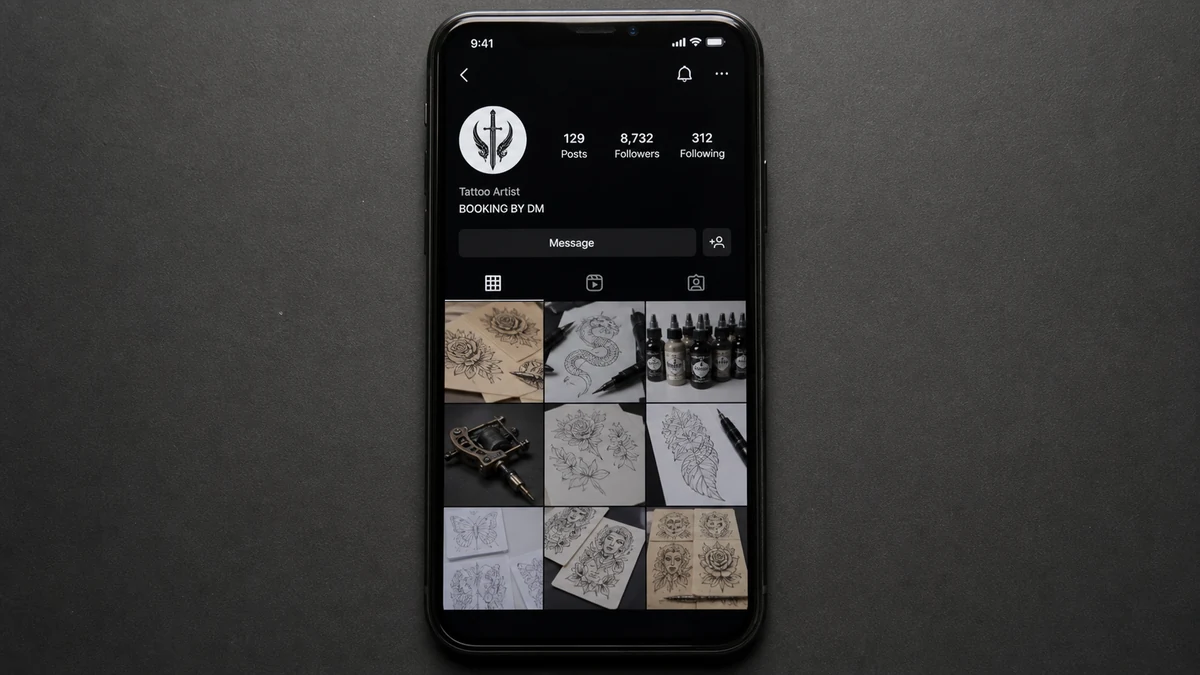
This scam starts with an account that looks like a working tattoo artist’s portfolio. It may contain healed tattoos, studio clips, design sketches, and customer reactions copied from several genuine artists.
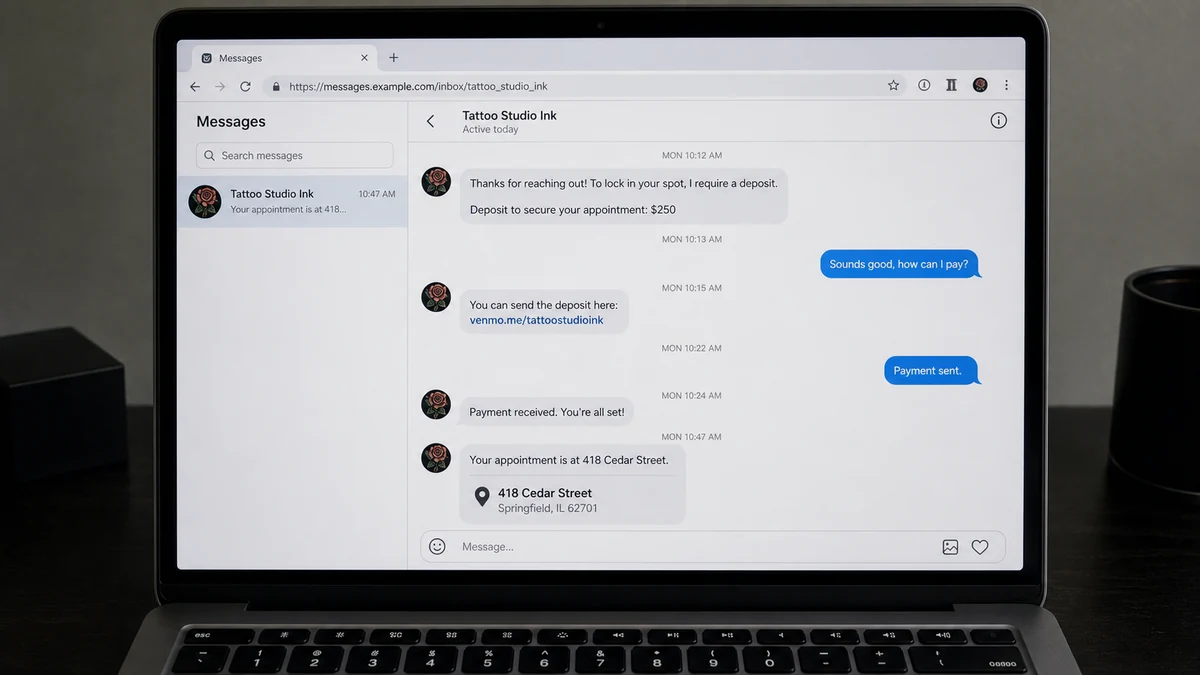
When someone asks about a booking, the person behind the account responds like an artist would. They discuss placement, size, style, and dates. Then they request a deposit, often through a payment method that treats the transfer like cash.
The victim receives an address for a real tattoo studio and may even get a polished appointment confirmation. The deception usually becomes clear only when the studio says it has never heard of the artist or the booking.
A real studio address is being used as borrowed proof
The address is one of the scam’s strongest props. A quick search shows a legitimate business, photographs, reviews, and opening hours. Everything appears to check out, but none of it connects the social media account to that studio.
In one reported version, customers were sent to a real Colorado tattoo shop after paying deposits to a supposed artist found on TikTok. The shop had not employed or authorized that person. It was left to explain the fraud to people arriving for appointments that did not exist.
The portfolio can be genuine while the seller is fake
Good artwork is not proof that the account displaying it created it. Short-form video makes copying especially easy because a scammer can repost clips from different artists until the profile looks busy and established.
Look for the whole pattern, not one impressive post:
- The account pushes bookings into private messages.
- The artist is missing from the studio’s own website and social pages.
- The payment recipient has a different name with no clear explanation.
- The deposit must be sent through Zelle, Cash App, Apple Cash, cryptocurrency, or another hard-to-reverse method.
- The artist avoids a quick phone call with the studio.
- Comments are limited, repetitive, or filled with people asking about refunds.
- The profile has plenty of finished work but little evidence showing the same artist inside the named shop.
None of these signs alone proves fraud. Together, they are a good reason to stop before paying and verify the booking outside the conversation.
How the Fake Tattoo Artist Scam Works
Step 1: The scammer builds a portfolio from stolen work
The account may copy videos from TikTok, Instagram, Pinterest, or artists’ websites. Cropping removes watermarks, while new captions make the work appear local. Mixing material from several sources makes reverse-image searches less obvious and creates the illusion of a long career.
Some profiles also copy an artist’s name or use a slightly altered version of it. Others invent a completely new identity and rely on the artwork to carry the story.
Step 2: A friendly consultation moves into direct messages
The operator asks believable questions about the tattoo. This is not wasted conversation. Every question makes the exchange feel personal and gives the victim the sense that real design work has already begun.
The scammer may send a rough quote, offer several dates, or say a cancellation has created a rare opening. The pressure is gentle at first: pay now or lose the slot.
Step 3: The deposit is presented as normal studio policy
Real tattoo artists commonly take deposits because they reserve time and prepare custom artwork. The scammer borrows that legitimate practice, often asking for an amount large enough to be worthwhile but small enough to avoid a long dispute.
The important question is not whether deposits are normal. It is whether this particular artist, payment account, and appointment have been independently verified.
Step 4: A real studio completes the illusion
Once payment arrives, the victim receives a street address. The business appears on maps, may have strong reviews, and may be close enough to visit. That is exactly why it was selected.
The scammer is counting on the victim checking that the shop exists, but not calling the shop to ask whether the artist works there.
Step 5: The victim receives a convincing confirmation
A message may list the date, time, tattoo description, deposit, and studio location. It looks official because the scammer has repeated details supplied by the victim. A calendar invite or confirmation graphic is still only something the sender created.
If the victim asks for a receipt, the operator may send one. What is usually missing is a booking that the studio itself can find.
Step 6: The account stalls, disappears, or asks for more money
Some victims discover the fraud when they arrive at the shop. Others become suspicious when the artist requests a second fee for supplies, design changes, insurance, or a refundable security hold.
After questions become difficult, the profile blocks the victim or changes its username. The same stolen portfolio can then reappear under another name and point customers toward a different real studio.
How to Verify a Tattoo Artist Before You Pay
Start with the studio, not the social profile. Find the shop’s phone number on its official website or verified map listing and call it yourself. Ask whether the artist works there, whether the proposed date is in the booking system, and whether the payment instructions match studio policy.
Check the studio’s own artist directory and social accounts. A guest artist may not appear on a permanent staff page, but the shop should still be able to confirm the visit. Do not accept a phone number supplied only by the person asking for money.
Look closely at the portfolio. Search a few distinctive screenshots with Google Lens or another reverse-image tool. Compare styles, hands, studio backgrounds, and watermarks. An account that moves between unrelated styles with no explanation may be collecting work from different people.
Ask for a short live video call or a custom proof that is difficult to recycle, such as the artist showing today’s date beside the sketch. This does not replace studio verification, but resistance to any real-time contact is revealing.
Review the payment name before sending anything. A business may use a legal company name or receptionist’s account, but it should explain the connection clearly and the studio should confirm it. “My assistant handles deposits” is not verification.
Use a payment method with meaningful purchase protection when possible and insist on written terms covering the appointment, cancellation, and refund policy. A legitimate deposit may be nonrefundable if the customer cancels, but that does not excuse an invented appointment.
What a Legitimate Tattoo Deposit Looks Like
A genuine deposit is tied to a specific artist, appointment, and cancellation policy. The customer knows which business is receiving the money and gets terms that can be confirmed with the studio. The transaction does not depend on keeping the shop out of the conversation.
The amount should make sense for the artist’s normal policy. A scammer may copy a realistic amount, so price alone proves little. What matters is whether the shop recognizes the artist and payment account.
Real artists may book through direct messages, especially independent and traveling artists. They should still have a consistent public history: tagged clients, healed work, convention appearances, studio posts, and people who can confirm actual appointments.
A legitimate artist also has a way to resolve a problem. You can reach the studio, identify the business taking the deposit, and receive an answer that does not vanish with one social account.
Do not let a “last opening” rush the verification. An artist worth trusting will understand a customer calling the studio before transferring money to a new account.
Keep the confirmation after paying. It should identify the artist, studio, appointment time, amount received, and remaining balance. If a receptionist cannot match that information to the studio’s calendar, address the problem before traveling or sending another fee.
For a guest artist, ask the host shop to confirm the visit publicly or by phone. A screenshot of a private exchange between the seller and an unknown contact is not the same confirmation.
Company, Address, and Fulfillment Checks
The profile name is not an identity check
Usernames can be changed in seconds. Compare the account with the artist’s established website, older tagged posts, licensing records where applicable, and the studio’s staff page. A new profile claiming years of experience should be able to explain where that history can be verified.
The studio may be another victim
Do not assume the shop named in the confirmation participated in the scam. Its public address may have been copied without its knowledge. Contact the studio before posting a negative review and give it the profile name, screenshots, dates, and payment details so it can warn others.
The payment recipient matters more than the display name
Save the exact recipient name, username, telephone number, email address, and transaction reference. A display label such as “booking desk” can be invented. The underlying account information is what the payment provider will need when investigating the transfer.
A real appointment leaves traces outside the chat
The studio should be able to locate the booking. The artist should be reachable through an established channel. The deposit should connect to a person or business the shop recognizes. If every piece of proof comes from the same private conversation, nothing has been independently confirmed.
What to Do if You Have Fallen Victim to This Scam
- Contact the payment provider immediately. Report the transfer as fraud and ask whether it can be stopped, recalled, or disputed. Do not describe it as an ordinary disagreement with an artist.
- Call your bank if a card or bank account was involved. Ask it to secure the account, review recent activity, and explain the correct dispute process for the payment method used.
- Preserve the complete conversation. Save the profile URL, username history, portfolio posts, messages, confirmation, phone number, payment recipient, transaction ID, and studio address. Take screenshots before the account disappears.
- Warn the real studio. Use contact details you find independently. The shop may be able to confirm the impersonation, alert other customers, and report the account from its business profile.
- Report the account to TikTok. TikTok provides routes for reporting impersonation and copyright violations. The artists whose work was stolen may need to submit the copyright reports themselves.
- Report the financial fraud. In the United States, file a report with the FBI’s Internet Crime Complaint Center and follow the FTC’s recovery guidance. Report locally if you live elsewhere.
- Secure any information you shared. Change reused passwords, enable multi-factor authentication, and watch for targeted messages if you supplied an address, ID image, birth date, or account login.
- Check any file or link you opened. Run a Malwarebytes scan if the account sent downloads or directed you to install anything. The basic deposit scam normally needs no software.
- Reduce exposure to malicious pages. AdGuard can block many known scam and advertising domains, but it cannot verify an artist or reverse a payment.
- Ignore recovery offers. Anyone promising to retrieve the deposit for an upfront fee may be using information from the first scam to take a second payment.
Frequently Asked Questions
Are tattoo deposits always suspicious?
No. Deposits are common because artists reserve time and may draw custom work before the appointment. Verify the artist through the studio and confirm where the payment should go before sending it.
Does a real shop address make the artist legitimate?
No. Business addresses are public and easy to copy. Call the shop through a number you find independently and ask whether the artist and appointment are real.
Can an entire tattoo portfolio be stolen?
Yes. A scammer can copy years of public posts in an afternoon or combine work from several artists. Reverse-search distinctive frames and check whether the same work appears first on older accounts.
What if the payment name is different from the artist’s name?
Pause the payment. There may be a legitimate business explanation, but both the artist and studio should confirm it through established channels. Do not rely on an explanation given only in the payment chat.
Should I post a bad review of the studio?
Not until you know the studio was involved. A scammer may have used its address without permission. Contact the business first and focus reports on the impersonating account and payment recipient.
Can I get a tattoo deposit back after a scam?
It depends on the payment method and how quickly the fraud is reported. Contact the payment service and bank immediately. Cash-like transfers are difficult to reverse, but prompt reporting still matters.
The Bottom Line
This scam works because every individual detail feels ordinary: artists post portfolios, studios have public addresses, and tattoo bookings require deposits. The fraud is hidden in the missing connection between those details.
Before paying, make one independent call to the studio. Confirm the artist, appointment, and payment recipient. That brief check can expose a beautiful portfolio that was never connected to the person selling the booking.








