

An unexpected text offers generous pay for liking videos. The recruiter says a major video platform or movie studio noticed your résumé.
The fake YouTube job text scam begins with a surprisingly easy opportunity. Its most expensive instruction usually appears only after some “work” is done.
Overview
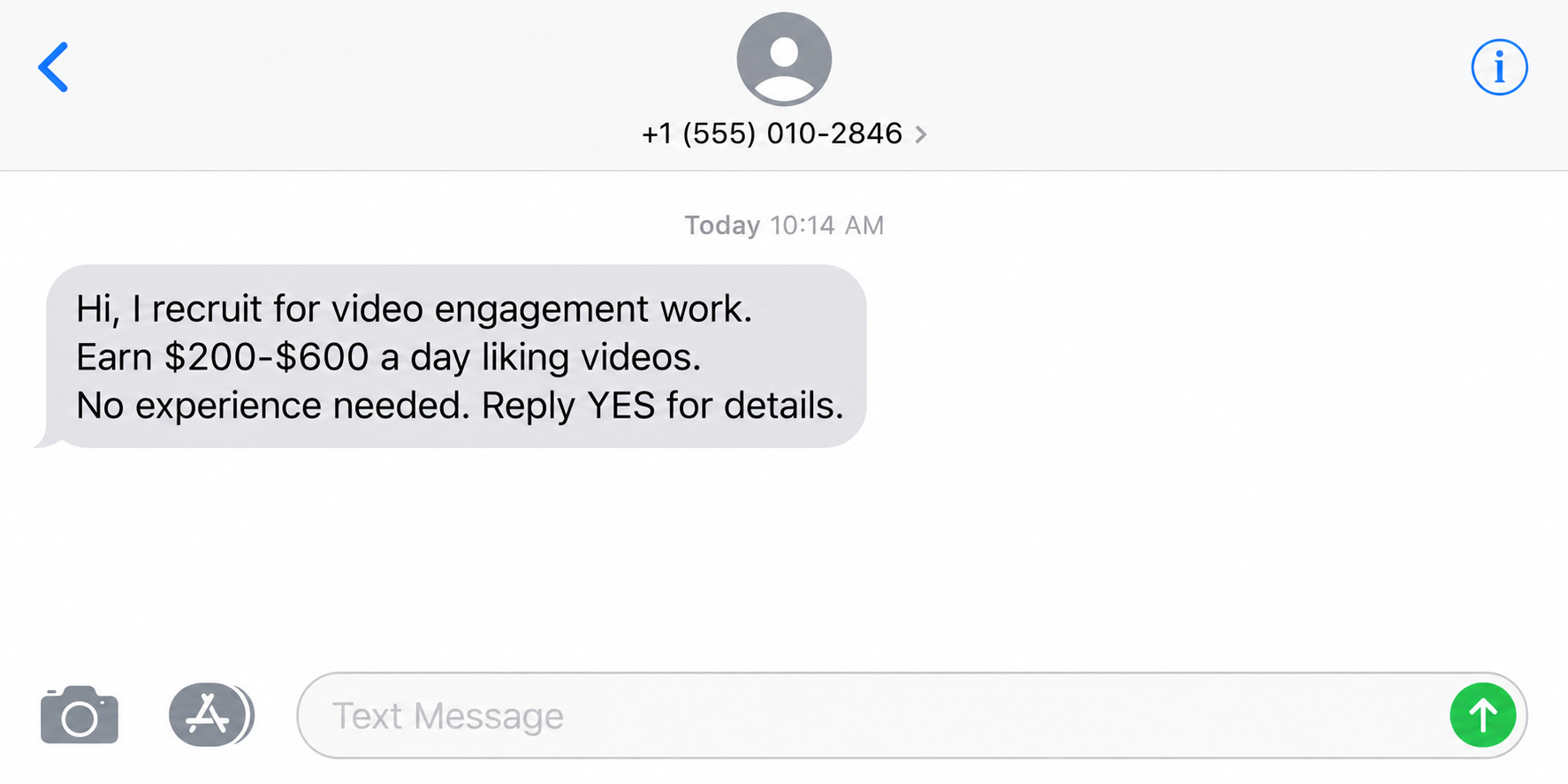
The recruiter borrows a famous entertainment name
BBB documented recruiting texts that claim to represent YouTube or major movie studios. The messages offer remote pay for liking, promoting, or rating online content.
These companies are real; the unsolicited recruiters in the documented scams are impersonators. A text using a studio name is not an official hiring notice.
The example above is a fictional editorial reconstruction of the lure, not one of the exact messages collected by BBB.
Names, numbers, and claimed employers change. The repeated promise is simple work with unusually generous pay and little screening.
The pattern appears in a broad body of reports
BBB’s 2026 employment-scam study describes a sharp rise in text-based job approaches and documents the task-scam path behind many.
In 2025, half of more than 23,000 employment-scam reports listed text messages as the delivery method. That is all reported employment scams, not this exact text.
Nearly 680 reports that year appeared task-based. BBB’s median reported loss for task scams was $2,300, reflecting losses among reporters, not all recipients.
BBB also reproduced messages impersonating YouTube and Warner Bros. Discovery and described how victims were led to fake earning dashboards.
Those converging reports support calling the mechanism a scam. They do not prove that every text is sent by one criminal organization.
The money flows in the wrong direction
The supposed worker may receive a small payment early. That can make the job feel more credible than a simple promise.
Later, the dashboard shows larger earnings but says the worker must deposit money to unlock tasks, clear a negative balance, or withdraw.
- An unknown recruiter claims a real platform or studio connection.
- The conversation moves to WhatsApp, Telegram, or a similar channel.
- A simple task earns a small, sometimes real, initial payment.
- A private dashboard displays earnings the worker cannot freely withdraw.
- A deposit or crypto payment becomes the condition for continuing or cashing out.
That required payment is the decisive reversal. The person seeking wages is being asked to fund the “employer.”
Why the Text Can Sound Like a Real Opportunity
People do get recruited online. Short remote contracts exist, and video platforms do pay creators and advertisers through legitimate programs.
The scam borrows those ideas while stripping out ordinary hiring steps. A stranger says your résumé was recommended, yet cannot explain by whom.
Some messages offer $200 to $600 a day for liking videos. The amount is chosen to make ordinary skepticism feel like missed income.
The task itself sounds harmless. Watching or liking a video does not feel like a financial decision, so the reader may agree to try.
A famous studio name helps bridge the gap. The text borrows a recognizable employer without using that employer’s official career channel.
BBB saw messages invoke YouTube and studios such as Warner Bros. Discovery, Disney, and Universal Pictures. The cited brands differ across reports.
The person may be told they can choose their hours. Flexible scheduling sounds plausible for remote work, especially to someone seeking extra income.
None of those details establishes a real job. Verify vacancies through the company’s own careers site and ask how the recruiter obtained your information.
The text may use a friendly individual name and polished grammar. Neither a name nor good writing proves an employment relationship.
The real signal appears when a recruiter avoids conventional hiring channels and moves quickly to a private messaging app and task website.
How the Fake YouTube Job Text Scam Works
Step 1: A mass text makes a personal-sounding offer
The sender claims to represent a video platform, studio, or recruitment partner. The message suggests that your background has already impressed someone.
BBB’s examples include high-paying video engagement roles and references to résumés supposedly found on recruitment platforms.
That personal language can be sent to many numbers. It does not show the recruiter reviewed your actual résumé.
If you never applied, ask how a credible employer would know you want that work or why it would hire through a cold text.
Step 2: The conversation leaves ordinary SMS
Responding often leads to WhatsApp or Telegram. The recruiter may say the move is needed for onboarding or fast communication.
Private chats allow the operator to send links, screenshots, and encouraging messages while keeping the conversation away from an employer’s official systems.
There may be no meaningful interview. The worker is accepted quickly, sometimes after a rehearsed question or two.
A real employer can use messaging, but it should still be possible to verify the person and role through the company’s established hiring process.
Step 3: Easy tasks create a feeling of progress
The new “employee” may be asked to like videos, rate products, or complete batches of digital actions. The tasks are deliberately simple.
Some operations pay a small amount at the start. A real transfer can make the later fictional dashboard balance seem believable.
The early payout is not proof of a legitimate employer. It can be a small investment in persuading someone to send much more later.
BBB described task portals that display levels, balances, and progress. These screens can feel like a work management system.
Step 4: The dashboard turns work into an apparent balance
As tasks accumulate, the portal shows earnings and special assignments. The numbers may grow faster than any realistic pay schedule.
The screenshot below comes from BBB’s study. It shows a gamified task interface with a balance and a daily-profit display.
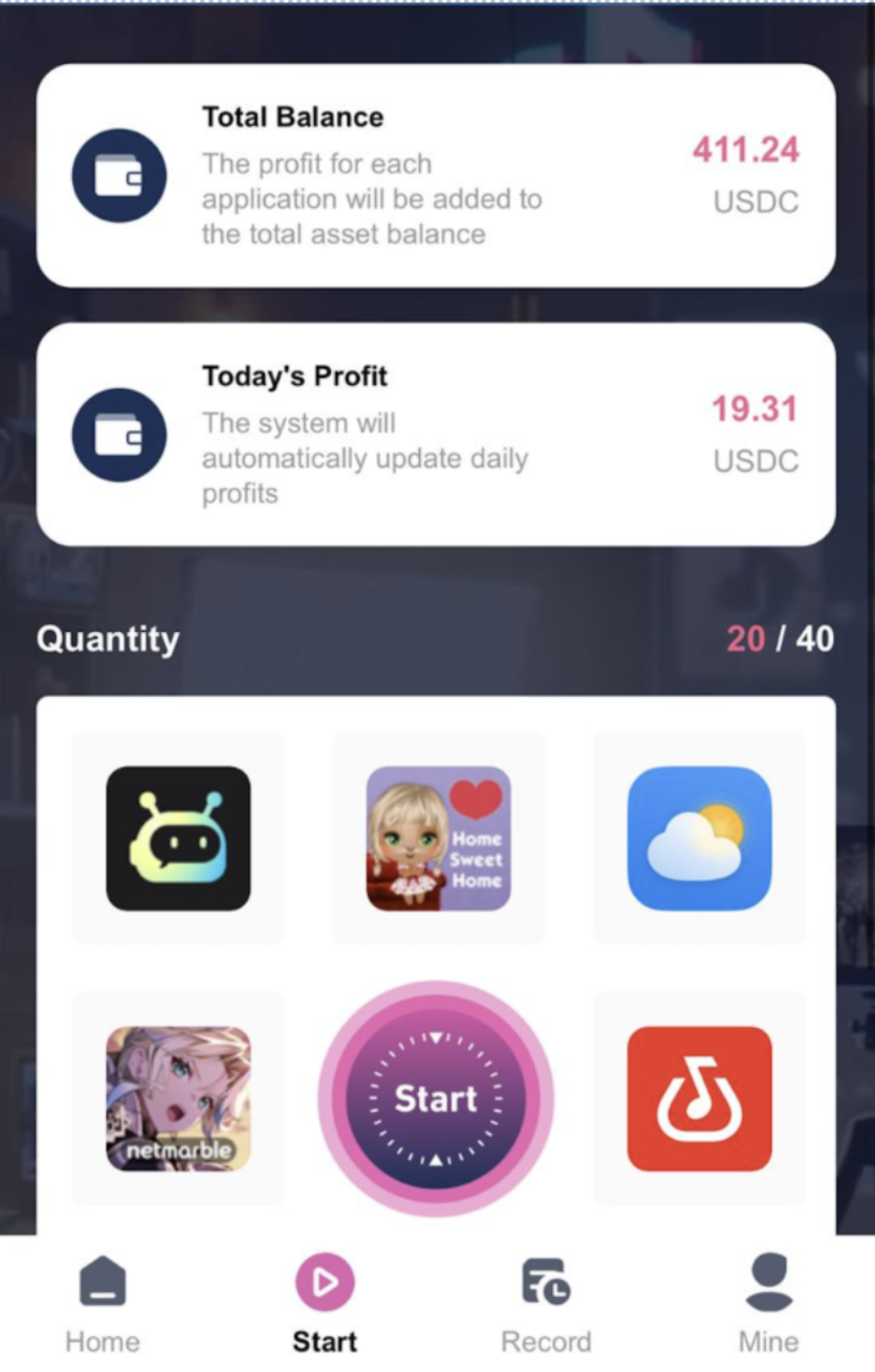
A number on a dashboard is not money you control. The real test is whether wages can be withdrawn without a new payment.
Some victims are told a special task created a negative balance. The operator presents this as a good sign or a step toward higher earnings.
Step 5: A deposit becomes the price of getting paid
The operator says the worker must top up the account, unlock a set, or cover a temporary deficit before withdrawing.
Payment may be requested in cryptocurrency. That route can be difficult to reverse and makes the “job” less accountable.
Once the person pays, another obstacle may appear: a tax, upgraded level, remaining task batch, or larger negative balance.
BBB documented substantial individual losses. Those examples illustrate the danger but are not a prediction of what every person will lose.
Step 6: The promised cash-out never becomes ordinary wages
A legitimate job pays for completed work under identifiable terms. It does not require the worker to buy access to already-earned compensation.
In this scam, the displayed balance is leverage. The operator uses the fear of abandoning it to ask for another payment.
Leaving can feel painful after time, effort, and initial deposits. That emotional pressure is part of how the scheme keeps people paying.
Stop sending money even if the portal says one more deposit will release everything. The displayed amount is not proof that cash exists.
What Makes This a Scam, Not a Bad Job Offer
Low pay, vague duties, or a poor manager do not automatically make a company fraudulent. This pattern includes a specific deceptive payment mechanism.
The recruiter impersonates a respected brand, provides a private dashboard, and makes the worker deposit funds to obtain supposed earnings.
The original brand name helps the operator gain trust. It does not make the real platform or studio responsible for the dashboard.
BBB’s evidence comes from numerous reports and documented message examples. This is not based on one dissatisfied contractor’s opinion.
Some reported victims received initial payments, which can confuse the assessment. A small payment is compatible with a larger fraud.
The key question is whether compensation flows from employer to worker without requiring a personal deposit. Here, the direction reverses.
If a real recruiter contacts you, they should be willing to identify the company, role, pay arrangement, and an official application channel.
A screenshot of a contract or logo inside a chat does not substitute for an independently verified company contact.
How to Check an Unexpected Recruiting Text
Start with the company’s official careers site. Search for the exact role, location, and requirements rather than following a link in the text.
If the person names a studio or platform, contact its recruitment team through a published channel and ask whether the recruiter is authorized.
Be cautious if the offered work consists only of artificial engagement. Genuine marketing roles have accountable employers, contracts, and lawful duties.
Ask why a job paying hundreds per day requires no screening and why the purported employer needs you to move to Telegram.
Do not install an unfamiliar task app simply because the recruiter calls it onboarding. Examine its publisher, permissions, and official distribution.
Do not send a deposit, crypto, or card payment to activate a work account. An employer’s payroll should not depend on your personal transfer.
Even if a small early payment arrives, look at the entire arrangement. The payment may be bait for a larger deposit.
If a dashboard says you have a negative balance, ask what real invoice and legal agreement created it. A fictional task screen is not a debt.
Talk to someone you trust before paying. A second opinion can interrupt the pressure of a chat coach pushing you to complete a level.
If the recruiter claims a studio partnership, ask for a verifiable corporate address and a job posting on that studio’s actual career site.
Do not treat a public social profile as sufficient proof. Impersonators can create profiles that look active and professional within minutes.
A legitimate hiring process should explain tax paperwork, payment terms, and who is legally employing you before assigning paid work.
Be skeptical of claims that a temporary negative balance is normal training. Workers do not usually finance an employer’s product ratings.
Remember the operator may change the task portal’s name overnight. The deposit demand matters more than the site’s current branding.
What to Do if You Have Fallen Victim to This Scam
- Stop payments and stop the task cycle.
Do not deposit more to unlock the displayed balance. Preserve the dashboard and messages, but do not accept another “special task.”
A claimed final fee is still a new payment to the operator. Leaving the portal is not forfeiting real wages already under your control.
- Contact the payment service quickly.
Tell your bank, card issuer, or crypto platform what you sent, when, and to whom. Ask what reversal or fraud-report options exist.
Crypto transfers may be difficult to recover, but prompt reporting can help identify addresses and prevent further losses.
- Secure accounts and documents you shared.
If you provided a password, change it through the real service. End unfamiliar sessions and replace reused passwords elsewhere.
If you uploaded identity documents, ask the relevant institutions about monitoring and protective measures in your jurisdiction.
- Check any app or file the recruiter made you install.
Remove unfamiliar software after preserving evidence. A reputable scan such as Malwarebytes is relevant if you installed an untrusted task app or file.
A scan does not recover deposits. Financial reporting and account protection remain separate steps.
- Report the impersonation and keep the record.
Save the original SMS, chat handle, task site, payment receipts, wallet addresses, and screenshots of withdrawal demands.
Report the profile to the messaging platform, the impersonated company’s abuse team, BBB Scam Tracker, and your local fraud authority.
- Reject paid recovery offers.
People who promise to retrieve lost crypto or unlock dashboard earnings for a fee may be targeting the same victim again.
Verify any recovery service independently. Never provide another code, private key, or wallet approval to someone who found you through the scam.
Frequently Asked Questions
Does YouTube hire people by random text to like videos?
The unsolicited texts in BBB’s study impersonated YouTube. Check any genuine role through the platform’s official careers process, not a stranger’s chat.
Why did the scammer pay me a small amount first?
An early payment can build trust and make later dashboard earnings seem real. It does not justify depositing your own money.
Is the balance shown in the task portal withdrawable?
Do not assume so. The documented scam uses displayed balances and new payment demands; an on-screen number is not proof of accessible wages.
Did BBB say all 23,000 employment reports were this scam?
No. That figure covers broad 2025 employment-scam reports. Nearly 680 reports appeared task-based, a narrower category.
What if I replied to the recruiter but paid nothing?
Stop contact, block the sender, and avoid their links. A reply alone does not mean an account or card was taken.
Should I finish the last task to recover my deposit?
No. The demand for another deposit is part of the pattern. Contact your payment provider and report the case instead.
The Bottom Line
The fake YouTube job text scam sells effortless income, then turns a worker’s apparent earnings into a reason to send money.
A real employer does not make you pay to collect wages. Verify recruiters through official channels and leave the task portal when deposits enter the conversation.

Join the discussion
0 commentsShare your experience or ask a question about this article.
Discussion
Start the conversation
Have a question or something useful to share? Add the first comment.