


You’ve finished filling the tank and someone offers to put the nozzle back. Before you get back on the road, take one more look at the display.
Did the dispenser close your sale, or did you only stop pumping? Those two things aren’t always the same.
Overview
The scam targets an unfinished fuel purchase
The gas pump switching scam doesn’t require a fake website or a stolen card.
It relies on the driver walking away from a fuel purchase that hasn’t finished. Subsequent fuel can be added to the sale the driver started.
Online Threat Alerts described the approach in May 2026.
Earlier, CBS Philadelphia reported a Lower Merion Police warning about strangers insisting on handling the nozzle and leaving the driver’s transaction active.
NBC10 Philadelphia interviewed a driver in March 2026 who said her $28 purchase ended up costing $150. She’d turned down help filling up, but let the person return the nozzle.
The incident illustrates why the end of the sale matters even when you paid and pumped for yourself. The report doesn’t say the station participated in the scheme.
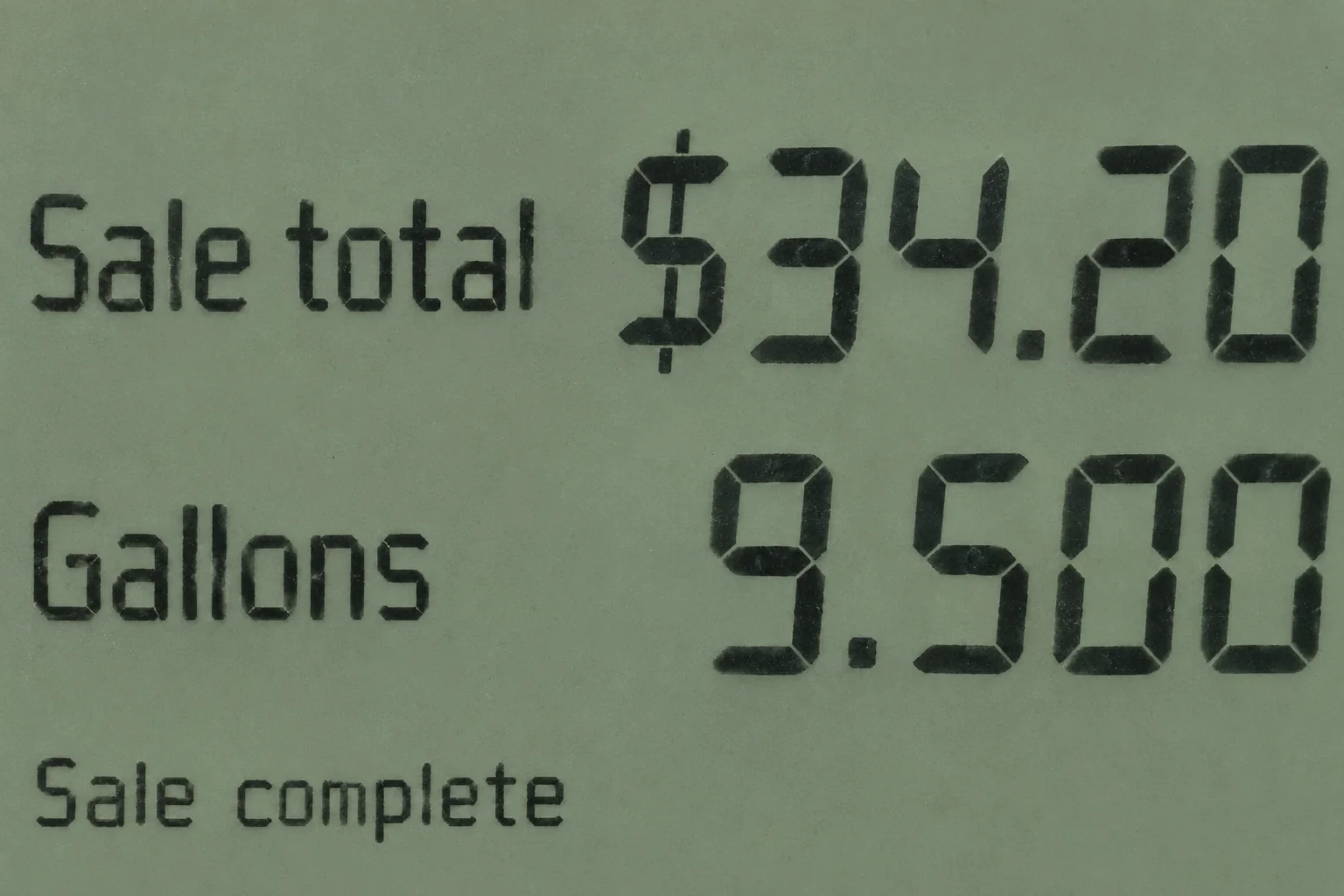
The example uses a rendered dispenser display to show what a completed sale might look like.
It’s not an image of a real transaction or a promise that your dispenser will use the same words.
This is different from a skimmer or a card hold
A skimmer is intended to collect card data. The issue here is an open sale, not proof that anyone copied the card.
Both possibilities can matter if you see unexplained charges, but the evidence you collect will be different.
A temporary authorization hold is also different. Visa explains that a fuel purchase may temporarily place a hold on funds.
A large pending figure alone doesn’t tell you how much fuel was actually charged.
Start with the pump, the receipt and the final card charge.
If the bank’s record doesn’t match the sale, ask it to check both the temporary authorization and the final amount.
What a driver should check before leaving
- Keep control of your payment and the nozzle. If you want assistance, ask the station attendant or another person you know.
- Return the nozzle according to the dispenser’s own instructions and look for a clear sign that fueling and the sale have ended.
- Keep a receipt when one is available, or ask station staff for one. Note the pump number and the total you actually saw.
- If someone becomes aggressive, step away and alert station staff from safety. Don’t argue or try to physically stop another person at the dispenser.
Don’t let a stranger’s reassurance replace the pump’s own indication. If the display is confusing, ask the cashier about the specific dispenser instead of trying to fix the equipment.
How the Gas Pump Switching Scam Works
Step 1: A stranger offers help at the end of an ordinary stop
The offer can be as simple as someone saying they’ll return the nozzle for you.
In the documented warnings, it sounds like a favor rather than a request for money or financial information.
You don’t owe a reason for declining. If you need help putting the nozzle away or reading the display, ask station staff.
If you aren’t sure who works there, check with the cashier.
The issue isn’t that all help is suspicious. It’s that someone you haven’t chosen is trying to take over the last part of a transaction tied to your card.
Step 2: Fueling stops, but the sale doesn’t close
When gas stops flowing, a driver may assume the payment is settled.
The visible clue to look for is whether the dispenser has actually ended the sale or moved to its normal checkout screen.
Follow the instructions printed on the pump. It may still display the last total even after it has ended the sale.
The important question is whether the same sale can still continue.
If you can’t establish that the sale has closed, ask the attendant to check. Don’t touch suspicious hardware or try to see if the pump will keep dispensing fuel.
Step 3: Fuel you didn’t buy gets added to the transaction
After the driver has gone, someone else can use the unfinished purchase to obtain more fuel.
The extra amount can end up combined with the driver’s original purchase rather than showing as a second purchase.
That’s why searching only for a second gas station entry in your bank app can miss the problem.
Compare the station’s posted charge with the total on your receipt or the amount you remember seeing.
If you paid inside for a fixed amount, save that receipt too. It helps the cashier locate the transaction and distinguish what you requested from what the station ultimately recorded.
Step 4: The driver notices a difference after leaving
Some drivers see only a pending authorization until the final charge appears. Others notice a larger transaction soon afterward.
Don’t guess which it is based on the number or how quickly the notification arrived.
Write down where you stopped, which pump you used and how much fuel you bought.
Extra details help if the receipt printer was out of paper or if the merchant name on the statement is unfamiliar.
Once you have the record, ask the station and card issuer what each can verify.
The cashier can try to identify the pump sale. Your issuer can check the charge on your account.
What to Do if You Have Fallen Victim to This Scam
Get away from anyone making you feel unsafe.
If there’s a threat or someone is trying to take over the pump, don’t argue or stand in the way of a vehicle.
Move to an occupied place and contact the attendant.
Call local emergency services if you’re in immediate danger. Let staff handle a pump that may still be running or a dispenser that isn’t working as expected.
Write down the station, time and pump number.
Save the receipt, if you received one.
Note the sale total you saw, the fuel quantity if available and whether you paid by card at the pump or inside the store.
If you don’t have a receipt, keep details such as the street address and approximate time.
That can help the station search its records without relying on what the bank calls the merchant.
Ask the station to verify the specific sale.
Use the station’s number or speak to staff at the counter.
Give the pump number, time and the amount of your own purchase. Ask whether the sale is closed and what amount was recorded.
If you’ve already left, ask for a copy or transaction reference.
Tell the station if you believe another person used the pump after you. Let staff decide how to preserve records.
Contact your card issuer through its usual number or app.
Describe the original fuel purchase honestly and explain that you think the amount includes fuel you did not buy. Compare your receipt or recollection with the pending and final charge.
Ask whether the issuer wants anything in writing and what deadline applies. For credit cards in the United States, the CFPB explains how to dispute a billing error.
If it was a debit card or other bank transfer, see the CFPB’s separate guidance on promptly reporting an unauthorized transaction.
Explain whether you still have the card and what other charges you see.
Check for other charges without assuming your card was copied.
Compare subsequent entries against your own purchases. If you see a separate unfamiliar transaction, report it separately from the original fuel charge. That helps the issuer assess both problems.
If you handed the card to a stranger or lost sight of it, say so.
Ask the issuer whether locking or replacing the card is appropriate in addition to disputing the amount.
Report suspected fraud if someone used the pump after you.
If you believe a crime occurred, contact local police using their non-emergency route unless there’s an immediate threat. Give them the station details and the records you can provide.
Keep the police, station and bank references together. A report doesn’t automatically refund the charge, but the references help you follow up without explaining the whole event from scratch.
A Pending Hold Is Not the Same as a Posted Overcharge
Read the status before you read the amount
If the bank app shows a large pending entry, open its details and look for the transaction’s status.
Save the screen and note when the entry first appeared. Compare it with the station’s receipt.
A temporary hold may show more than you just pumped.
Ask the bank whether the entry is a hold and when it expects the final charge. Don’t treat a bank notification as a pump receipt.
A final charge that’s still higher than your purchase calls for a different conversation.
Tell the bank what’s wrong with the amount, and bring any station receipt or transaction record that supports it.
Pay inside if you’re not comfortable using that pump
When a dispenser looks damaged, behaves unexpectedly or someone is pressuring you, you can choose another pump or pay inside.
Ask staff what they can do to set and confirm a fixed amount.
Prepaying isn’t the same as having a receipt that proves what happened.
Keep evidence of what you requested and what you received, especially if the pump stopped earlier than you expected.
If the printer fails, don’t keep entering your card to force a receipt.
Ask the cashier if it can provide a copy. Verify any retry or refund separately rather than taking an unsolicited call.
Don’t let a shared car obscure who paid
A driver may use a family card or a work card, meaning someone else will see the bank alert.
Tell that person which station you stopped at and what was unusual about the sale.
If you manage a company’s fuel expenses, compare a disputed posting with the driver’s receipt before deciding how to report it.
An accounting mismatch isn’t itself proof of fraud, and it still deserves a check.
What to Look for on the Station’s Record
A useful station receipt can show the amount sold, the fuel quantity and the time.
Compare those fields with the card entry, rather than relying only on how much you expected a tank to cost.
If you paid inside and bought something else, check whether that purchase was on a separate receipt.
Don’t treat a second charge as evidence of pump switching until you’ve ruled out your own purchases.
If you remember the quantity but not the final amount, give the station both the quantity and the grade you bought.
Ask whether its record reflects those details or just the final payment.
If you ask for a copy, don’t email a full card number.
The station may use the approximate time, pump number and a limited identifier to locate the receipt. Ask what information the station really needs.
When station staff normally provide the help
Procedures vary by station and location. When an employee ordinarily handles the pump, ask them to tell you the final amount and provide a receipt.
You don’t need to insist on handling equipment yourself.
If you’re unsure whether a person is an employee, verify at the counter first.
A uniform or a confident manner alone isn’t a good way to distinguish a worker from a stranger.
If the dispenser stops or shows an error, don’t hand over your card to someone you didn’t ask to help. Use the station’s normal payment process or choose another pump.
Frequently Asked Questions
Does a larger pending amount mean someone stole gas on my card?
Not on its own, because gas purchases may show a temporary hold. Compare the final posted charge with the station’s receipt.
If you know the sale stayed open or the numbers differ, contact the issuer.
Do I have to see zero on the display before driving away?
Not every dispenser uses the same display. Some may still show the last total after a sale finishes.
Look for the dispenser’s own sign of completion or ask the station attendant if you’re unsure.
Do I need a paper receipt to report a problem?
A receipt is helpful, but you can still report without one.
Give the station location, pump number, approximate time and amount. Ask the station for another record and follow the issuer’s instructions.
Is pump switching the same as card skimming?
No, pump switching can add fuel to a purchase you already started without copying your card.
If you see other unfamiliar charges, report those too. The issuer can decide whether to secure or replace the card.
What if I stopped pumping and someone else said they would finish up?
If it is safe, check the dispenser and ask the attendant to confirm it ended.
Don’t go back to argue with the person. If you notice a wrong charge later, contact the station and issuer.
When should I stop dealing with the station and call the card issuer?
Contact the issuer promptly if you suspect an incorrect or unauthorized charge.
You don’t need to finish investigating with the station before asking the issuer how to document the problem and protect your account.
The Bottom Line
End the sale yourself and look for the dispenser’s confirmation before leaving. If you can’t check safely, move away and ask station staff for help.
If the amount looks wrong, keep the evidence and call your issuer. Ask whether you’re seeing a temporary hold or a final charge you need to dispute.

Join the discussion
0 commentsShare your experience or ask a question about this article.
Community experiences
Did this happen to you?
Your experience could help someone recognize the same scam. Submit a private report for our team to review.
I experienced this tooReports are reviewed before publication. Sharing publicly is always your choice.
Discussion
Start the conversation
Have a question or something useful to share? Add the first comment.