


A Honda fuel pump settlement notice can look convincing and still leave you wondering whether it came from the right place.
The car may have changed hands years ago. Before you dig through service records or click the notice, there’s a simpler place to start.
Overview
The Honda fuel pump settlement is real, but the notice is not a check
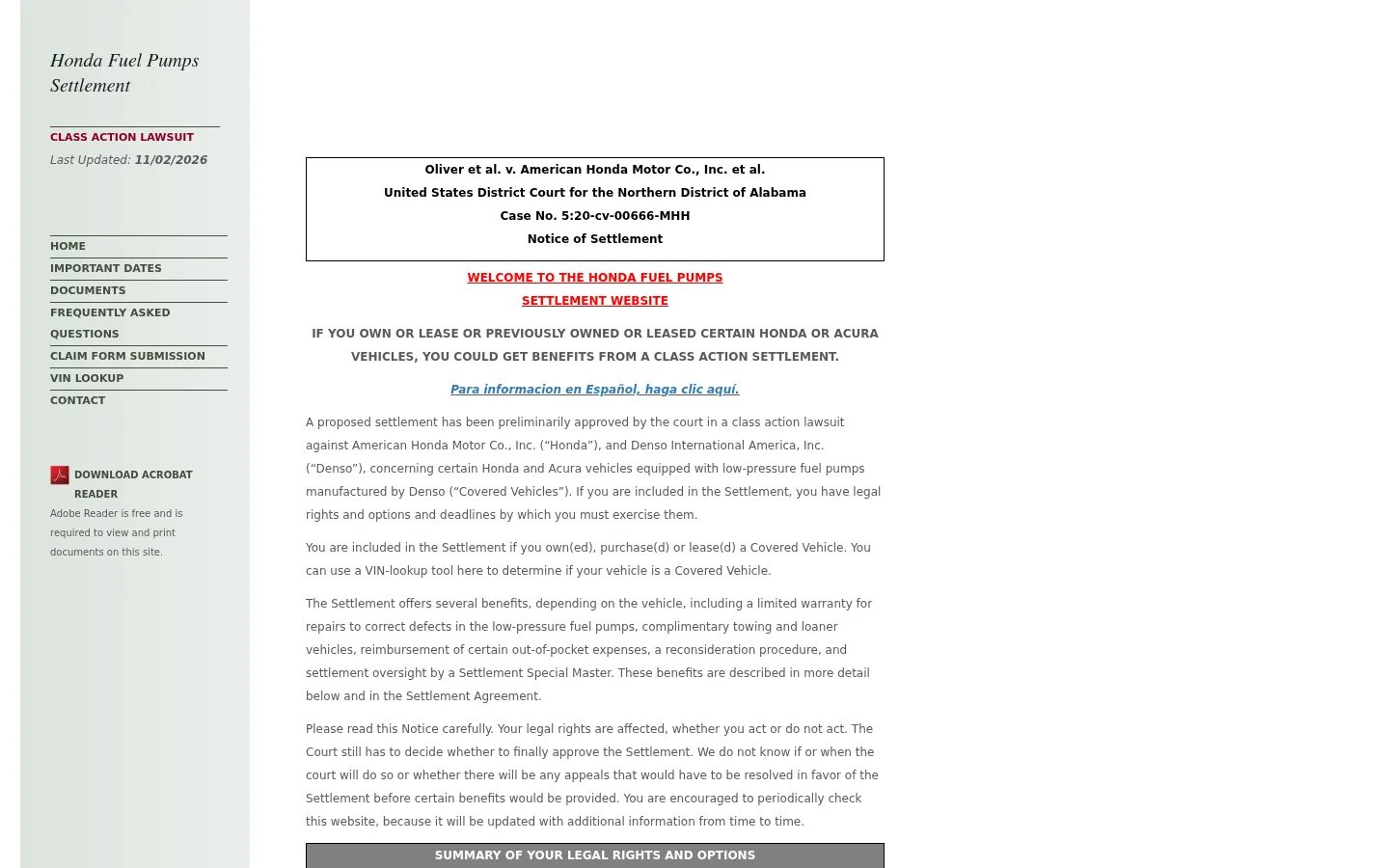
A federal court in Alabama preliminarily approved a proposed settlement in Oliver v. American Honda Motor Co., case 5:20-cv-00666-MHH. The case also names Denso International America.
It concerns certain low-pressure fuel pumps made by Denso and installed in Honda and Acura vehicles. It does not cover every fuel system problem those brands have recalled.
The court authorized notices before deciding whether to grant final approval. That is why an email can be legitimate even though a reimbursement has not been awarded.
The proposal would resolve disputed claims without a finding against Honda or Denso. People who receive the notice are not being sued themselves.
Your VIN matters more than the model name
The settlement includes vehicles from certain Honda recalls and some that were never recalled. A model year on a social media graphic cannot tell you whether your car qualifies.
Use the 17-character vehicle identification number, or VIN, from the vehicle itself or a record such as the registration. For a car you sold, look for the old paperwork.
The class definition can include current and former owners, purchasers and lessees of covered vehicles. It applies to eligible vehicles in the 50 states, Washington, D.C., and Puerto Rico.
Whether the VIN is covered and whether you personally have a reimbursable expense are separate questions. The lookup is the starting point, not the end of the claim.
- The settlement lookup checks whether the vehicle is covered in the Oliver case.
- A recall lookup checks the vehicle for open recalls and can produce a different result.
- A reimbursement claim asks whether you paid eligible expenses tied to the covered pump.
There are three different benefits to look at
The proposal includes a limited pump warranty, loaner or towing assistance in specified circumstances, and a process for claiming eligible costs you already paid.
Only the reimbursement route uses the claim form. Filling it out is not how you arrange a future warranty repair, ask for a loaner or check an open recall.
There is no flat payment simply for owning a Honda or Acura. The cash claim concerns qualifying expenses you can document and have not already been reimbursed for.
Think back to the actual repair. A paid bill for diagnosis and replacement is a better lead than a service reminder showing the vehicle was once called in.
How to Check a Honda Fuel Pump Settlement Notice
Start with the case, not the sender name
Open the Honda settlement case page independently. Its notice identifies the defendants, federal court and exact case number.
Compare case 5:20-cv-00666-MHH, the Northern District of Alabama and the defendants. The match identifies the case; it does not authenticate the sender.
Someone forwarding a notice can put the correct case number above a different link. You can use the court documents and claim menu without touching the links you received.
To confirm a message, use the number in the court-authorized notice. It lists (888) 888-3082 for settlement questions, not the judge’s chambers.
A long address and an old-fashioned layout can seem strange together. The official Honda page links to the court notice, vehicle lookup and claim documents.
Look up the vehicle on the settlement site
Choose VIN Lookup from the left menu, then follow the lookup link on that page. Use the number from your registration, insurance record or dashboard.
Enter the VIN on the lookup reached through the official menu. If the result says the vehicle is covered, keep a copy and collect records for that specific VIN.
If the search shows no match, check the characters against a second record before assuming the model is excluded. Ask the administrator if the corrected lookup still leaves you unsure.
A seller’s listing, an old auto shop estimate or a notice for a second car can easily contain the wrong VIN. Match the number before uploading anything.
Not having the notice handy does not erase the underlying vehicle eligibility question. Ask the administrator what to do if you are missing the postcard, an email reference or documentation.
Run a separate recall check if you have a safety concern
Go to the NHTSA recall lookup, choose the VIN search and use the same vehicle number. Check for an open recall, then confirm any next step with a dealer.
A recall that was already repaired may not appear as open. An empty result does not tell you whether you can claim a paid expense in the settlement.
The notice names recalls 20V-314, 21V-215 and 23V-858 among the covered groups. The other vehicles in the settlement are another reason to check the VIN separately.
If the car has an open recall, arrange service with an authorized dealer rather than waiting for a hearing. The recall and civil claim serve different purposes.
The settlement concerns the low-pressure Denso pump. If the invoice says high-pressure pump, ask the dealer to identify the part before assuming it qualifies.
What the Honda Fuel Pump Settlement Would Cover
A limited warranty that follows the covered vehicle
The proposed warranty runs for 15 years from the vehicle’s in-service date or 150,000 total miles, whichever comes first. Receiving the notice does not restart either limit.
It applies to covered low-pressure Denso fuel pumps, including ones installed through a recall. If you buy the vehicle secondhand, the warranty rights can transfer with it.
For a covered vehicle already beyond either limit on the settlement’s effective date, the proposed terms provide a 90-day window starting on that effective date.
That window is different from the reimbursement filing deadline. A pump installed during it is also covered by Honda’s separate one-year genuine replacement parts warranty under the proposed terms.
The warranty excludes certain vehicles, including those with flood-damaged titles. If your car has a salvage history or won’t start, ask the dealer how the exclusions apply.
Loaners and towing are tied to qualifying work
If a dealer will repair the pump under the proposed warranty, ask for a complimentary loaner when scheduling. The terms require you to give reasonable notice.
A complimentary tow may apply when the vehicle cannot be driven or presents a dangerous condition related to the pump covered under the warranty. Contact a dealer to arrange it.
The settlement is not a general roadside assistance plan. If the dealer says the problem falls outside the pump warranty, ask for the diagnosis and the reason for its decision.
The notice allows a qualifying owner or lessee to seek a second dealership’s assessment after a denial of warranty service. Keep the first shop’s repair order before trying another location.
Reimbursement depends on what you actually paid
The claim can include reasonable costs related to repairing or replacing the covered pump, such as parts, labor and diagnosis, plus qualifying towing or rental charges.
Look for an invoice tying those costs to the vehicle and pump. If the invoice shows the charge but not your payment, add a receipt or other proof of payment.
A free recall repair gives you no repair bill to claim. It does not automatically rule out a separate qualifying cost you actually paid and were not reimbursed for.
If an insurer or dealer already covered the expense, don’t claim it again. Ask about partial payments before submitting an amount you are unsure of.
If you receive a denial, keep the notice and check the instructions for requesting reconsideration. A request for missing records is not the same as a final denial.
The Hearing, the Claim Deadline and the Opt-Out Date
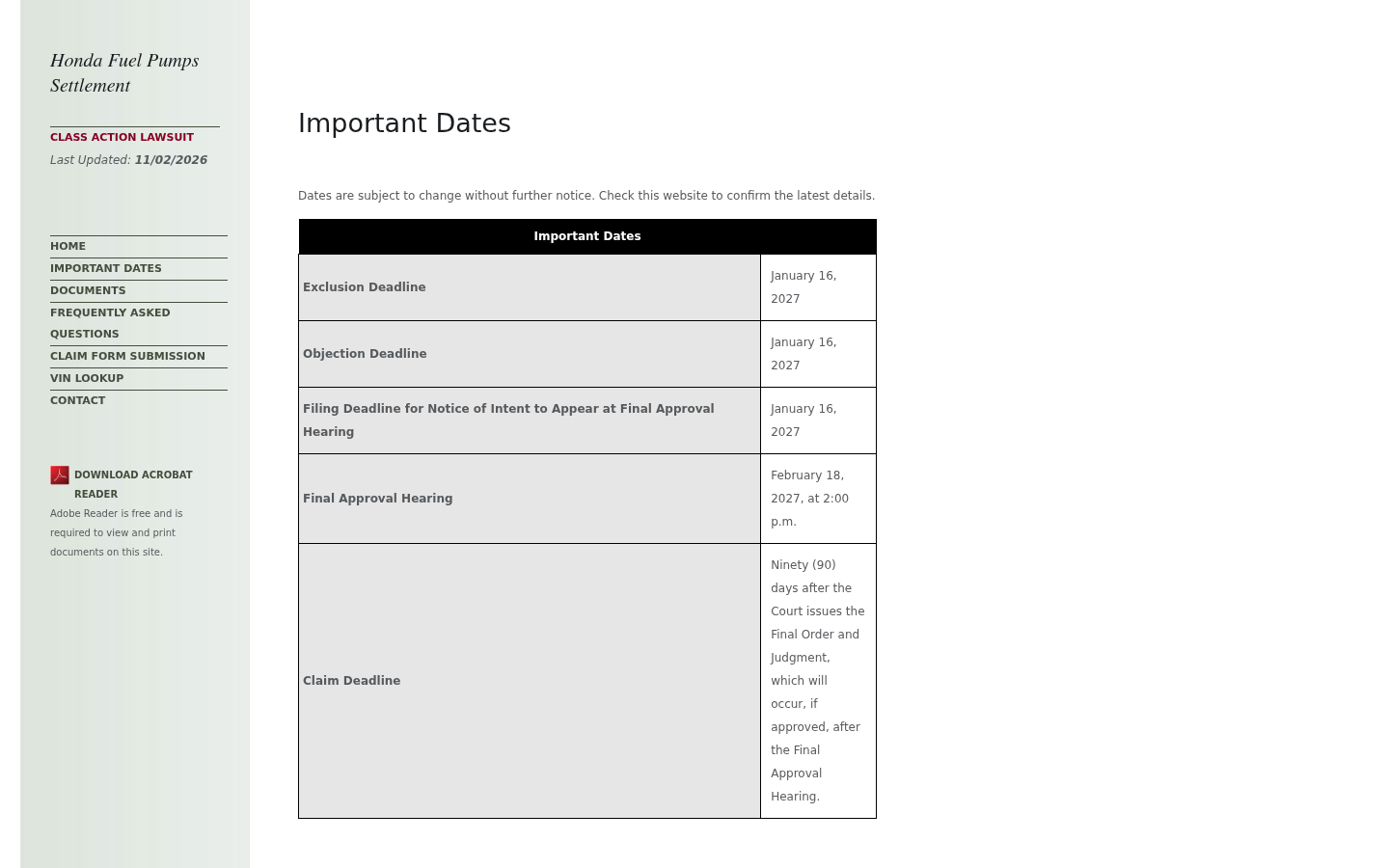
The official Important Dates page lists January 16, 2027, for exclusions and objections. It also lists that date for filing notice that you intend to appear.
The final approval hearing is set for February 18, 2027, at 2 p.m. Older documents may show another date because the court rescheduled it.
Reimbursement claims are due 90 days after entry of the Final Order and Judgment if approved. That countdown is not tied to your email date or automatically to the hearing.
The proposed warranty has its own timing tied to the settlement’s final effective date. Do not borrow the 90-day claim deadline when working out your repair eligibility.
Excluding yourself and objecting are different decisions. Exclusion means giving up settlement benefits while preserving the ability to pursue your own claims over the issues addressed.
An objection explains your disagreement while leaving you in the class. If the court approves the settlement, staying in the class can release claims under the agreement.
The notice describes exceptions for certain claims, including personal injury, wrongful death and most physical property damage. Get legal advice if you have a separate loss or a pending case.
Doing nothing does not submit a reimbursement claim. Nor does ignoring an email count as an opt-out, which requires a signed written request under the court’s instructions.
What to Do If You Received a Notice or Paid for a Repair
-
Verify the notice before responding to it. Open the settlement page yourself, compare the case number and call the notice’s published number if the sender’s request seems unusual.
Do not provide a card number, payment or bank login to unlock a claim. A genuine case can be named in a misleading message without making that message genuine.
-
Find the VIN and record the result. Save the coverage check and a document tying you to the vehicle, especially if you no longer have the car.
Use the separate NHTSA search or contact the dealership if you are also trying to find out whether the car needs recall service now.
-
Put the paperwork in one place. Ask the shop for a duplicate repair order if necessary. Look for the vehicle, repair provider, repair date, amount and pump work.
Keep payment evidence and any towing or rental invoices with it. If the shop diagnosed several issues, ask for an itemized copy so the pump-related costs are clear.
-
Use the reimbursement form for costs already paid. Open the official claim form and print it if you need the paper route.
Complete one form per vehicle and attach copies of receipts and repair records. Check that your current contact information matches what you want the administrator to use.
If mailing, use Claims Settlement Administrator, P.O. Box 2718, Torrance, CA 90509. Retain the signed form, attachments and mailing proof; keep original documents at home.
The settlement website lists an online route, but its submission link did not load. If that happens to you, use the paper form or confirm the route with the administrator.
If your browser warns that the connection isn’t secure, stop before uploading anything. A certificate warning is not a reason to enter your details somewhere a caller suggests.
-
Keep the legal dates and repair dates separate. Check Important Dates and Documents for an updated hearing or final order. The reimbursement deadline will be posted if approved.
If opting out or objecting could affect an existing dispute, read the instructions in the long-form notice early enough to get advice before the January deadline.
-
Act quickly if you paid a suspicious sender. Contact your card issuer through its app or the number on the card and describe exactly what you authorized.
Save the message and transaction, then ask about stopping further charges and disputing the payment. If you gave out a password, change it from the affected service’s real site.
Frequently Asked Questions
Is the Honda fuel pump settlement email legitimate?
The court approved sending notices about a real proposed settlement. Check the individual message separately, and go to the official site instead of trusting a link in the email.
Will everyone with a covered VIN receive a payment?
There is no automatic cash award for each vehicle. Reimbursement depends on documented, eligible costs tied to the covered pump and submission of a claim by the deadline.
Can I claim a repair for a Honda I sold?
A former owner or lessee can be within the proposed class. Keep records that tie you and your payment to the vehicle, then check the VIN and claim rules.
Does a completed recall rule out a reimbursement claim?
It does not automatically do so. Other qualifying expenses may exist, but you cannot claim the price of a repair that you did not personally pay for.
Do I need to file for the pump warranty?
The notice says no reimbursement form is required for the limited warranty, loaner or covered tow. Talk to the dealer about those benefits rather than sending a cash claim.
Is January 16, 2027, the deadline to claim money?
No, the claim deadline is different from the opt-out date. Under the proposal, it is 90 days after the court issues the Final Order and Judgment if approved.
The Bottom Line
The Honda fuel pump settlement notice refers to a real case. Skip links and payment requests in surprise messages, then verify the VIN through the official notice page.
If you already paid for qualifying pump work, gather your invoices and receipts and use the official reimbursement route. Do not wait on the settlement to arrange open-recall service.

Join the discussion
0 commentsShare your experience or ask a question about this article.
Community experiences
Did this happen to you?
Your experience could help someone recognize the same scam. Submit a private report for our team to review.
I experienced this tooReports are reviewed before publication. Sharing publicly is always your choice.
Discussion
Start the conversation
Have a question or something useful to share? Add the first comment.