


The phone rings while you are making dinner. The caller says your Georgia Power account is overdue and gives you a short window to deal with it.
You might remember putting the bill aside that week. What you need now is a way to check without relying on the person who called.
Overview
The threat is about your electricity, but the decision is about the payment
The Georgia Power scam call impersonates the utility and uses the prospect of disconnection to hurry you into paying. Georgia Power is the company being impersonated.
The caller might blame a missing payment, a past-due balance or a crew that is already on its way. Check the actual account before accepting any claim.
A real overdue bill would not make the caller genuine. You can verify an actual balance and pay it through the account you already use.
Do not let a familiar name choose the payment method
Georgia Power’s fraud guidance warns customers about unsolicited calls and requests for payment through channels it does not use. That is useful even if the caller sounds convincing.
The company does not accept Cash App or cryptocurrency as payment for your electric bill. A display name in an app cannot change the utility’s payment rules.
That is also true of a gift card. If someone claims you need to read a card number to prevent a shutoff, end the call.
Give yourself a way to verify the account independently
The safest response is to use the contact information from a bill you already trust, the actual Georgia Power website or the app you use to manage the account.
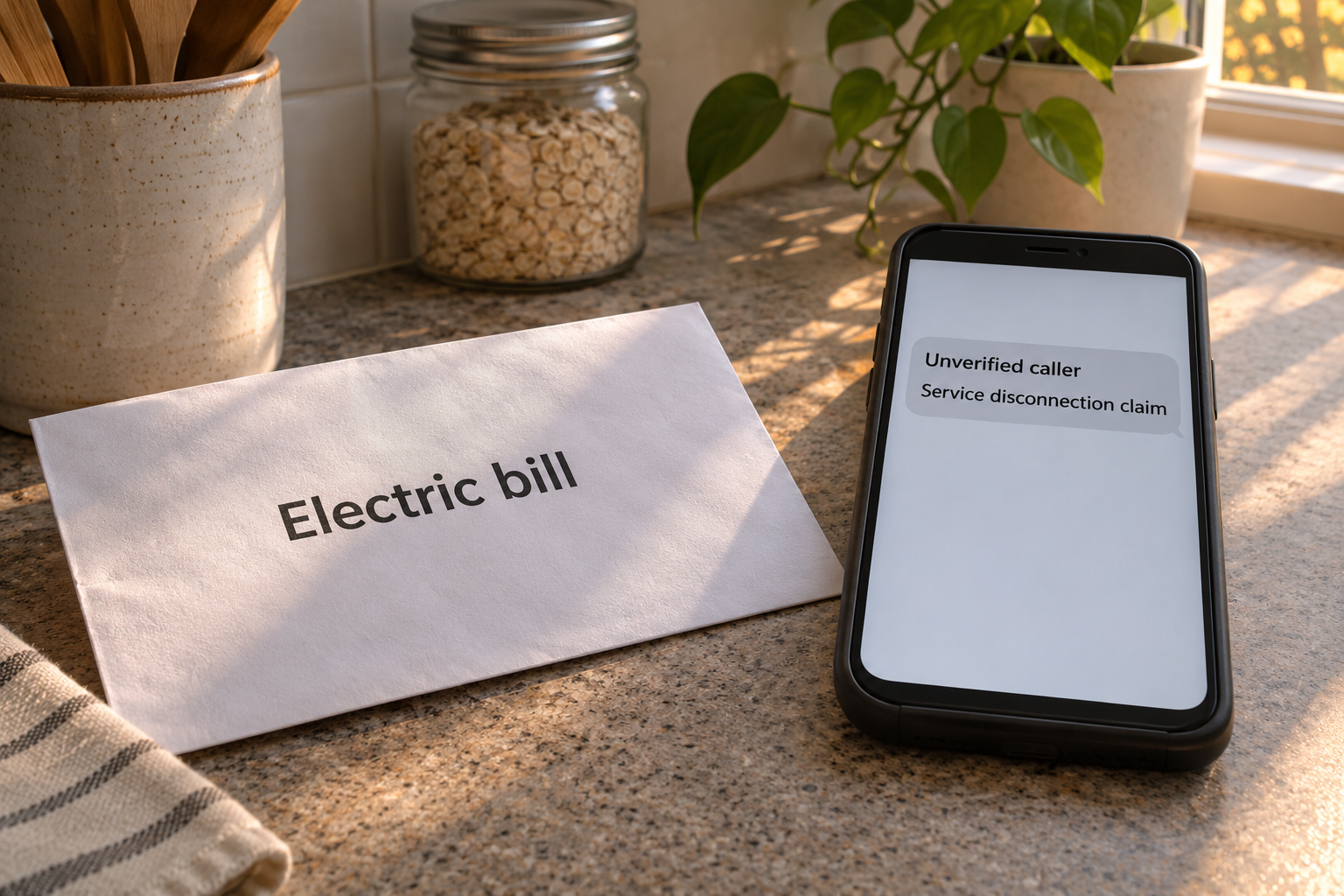
The image above illustrates the situation; it is not a screenshot of a real warning. Authentic-looking screens and phone labels are not evidence of an unpaid balance.
- Check the balance and due date tied to the correct address and account.
- Find the status of any payment you already made before trying to pay again.
- Ask the company whether it actually sent a notice or scheduled an action.
- If you do owe money, use one of the company’s verified payment options.
How the Georgia Power Shutoff Scam Works
Step 1: The caller borrows the utility’s name
The contact may come through a live call, a recording or a message. In this version, the caller says they are following up about your Georgia Power account.
A phone showing a familiar name can make answering feel routine. The FTC’s utility scam guidance warns that a caller can make that display misleading.
Pay attention to the difference between the person who reached you and the company you actually pay. Ending an unsolicited call does not make an existing bill disappear.
If you are not sure which utility serves your home, start with a bill or tenancy record. Do not assume the caller identified your provider correctly.
Step 2: The payment sounds too urgent to check
A threat of losing service can interrupt an ordinary evening. People who work from home, care for someone or keep refrigerated medication may feel pressure to act immediately.
The caller may ask you to stay on the line during payment. That keeps you from doing the one thing that would settle the question: contacting the actual utility.
Do not ask the caller to transfer you to a different department. A voice on the same call is not an independent source of information.
If there is a genuine warning, ask the utility to explain it through a known channel. Do not let the deadline in the unexpected message decide whom you trust.
Step 3: The money is directed somewhere other than your verified account
Georgia Power warns about scammers asking for payment through Cash App, prepaid cards and other methods that are not how the company collects an electric bill.
A gift card seller may be legitimate and the card may work. What makes the payment suspect is the demand to hand over its code to the caller.
Even if a caller asks for an ordinary card payment, do not provide the card details on an unexpected inbound call. Open the payment page yourself instead.
Georgia Power publishes authorized payment options. Use that list to verify a store, app or channel before sending anything outside your usual account.
The official payment page names BillMatrix in its card-payment instructions. That is an example of why a different name alone is not proof that a billing service is fake.
The useful check is whether Georgia Power itself sends you there. Start with its site or verified phone route before you trust a payment page with a different name.
Step 4: The scam can continue after the phone call ends
Georgia Power also warns about fake payment websites and fraudulent phone numbers. Searching for the company can send you to a different imitation instead of the actual payment page.
Do not use a sponsored result if you cannot verify it. Start from a saved statement or the app that has your established account, not a new payment link.
If you already sent money, look for the transaction in your bank or payment account. Then separately ask the utility whether anything was applied to your balance.
A payment app receipt tells you that a transfer happened. It does not show that Georgia Power received it or that your electric bill has been paid.
How to Check an Overdue Bill or an Actual Outage
If your power is still on, check your account first
Use an independent contact to check the amount due before opening any document supplied by the sender. Compare it with the same address and billing period on your records.
Check whether the balance includes a recent payment or an older charge. If you paid by check or bank bill pay, look for the reference and the posting date.
Ask about payment arrangements if the official account shows a balance you cannot cover. Discuss options with the utility itself, not with someone who demands an immediate transfer.
If the lights are already off, establish what happened
An outage and a billing disconnection can look the same from inside the house. A caller who appears during an outage has not proved that they can restore service.
Check the utility’s official outage information through a trusted route. Ask the utility whether your account has a service interruption that is separate from a neighborhood outage.
Do not pay someone who says they will move your address up the repair queue. Confirm any real instruction through the company that provides service.
If someone else manages the account, bring them in
An adult child, tenant or employee might answer the phone without seeing the utility account. Contact the account holder using a number you already know.
For a business, compare the service address with the invoice your bookkeeper has. Ask whoever approves payments to check the established account before authorizing an exception.
A tenant whose electricity is included in rent should check with their landlord through the usual contact. Do not let a caller invent a new billing arrangement for the unit.
Do not send a copy of your statement to the caller. It can reveal the actual balance, address and account number if the original contact was a guess.
What to Do If You Responded to a Georgia Power Scam Call
-
Stop the call and keep the evidence. Save the notice, the displayed number, any callback number and the time. Keep images of payment instructions for a private report.
Do not make another payment to get a receipt or refund. If you already have a transaction ID, that is enough to start a conversation with your provider.
-
Contact your bank or payment provider first if money moved. Use the official app or the number on your card and give the amount, time and recipient.
Explain accurately whether you authorized a transfer after being deceived or found a transaction you never made. Ask what the provider can still stop, restrict or investigate.
-
Keep the cards and receipts for a gift card payment. Contact the actual card issuer promptly and ask whether the money can be frozen or recovered.
Even if a caller already has the codes, keep the purchase receipt. The card issuer may ask for it, but you should not send it to an unfamiliar recovery service.
-
Secure any login or banking information you gave away. Change a compromised utility password through the official site. Replace reused copies on other accounts where appropriate.
Tell your bank if you handed over a card number or bank details. Ask what safeguards it recommends and review recent activity while it handles the case.
-
Report the contact to Georgia Power separately. Use the company’s official scam reporting page. Include how the caller approached you and where they wanted payment sent.
Ask the utility to confirm the actual bill status separately from the fraud report. If service really is at risk, deal with the verified balance through authorized channels.
-
Expect the possibility of a second call. Someone may say a payment failed or offer to get it back. Do not give out new codes or send money again.
Keep your bank’s case number and the utility’s response. If another caller cites a reference, look it up through the institution that actually gave it to you.
What to Compare When You Already Tried to Pay
Check where the money went, not just whether it left
Open the payment app or bank account you normally use. Record the payee, amount, date and whether the transaction is pending or completed.
If you paid someone by transfer, capture the actual destination from your receipt. A profile picture or display name can change after the money is gone.
For a card payment, ask your issuer which transactions it sees and whether there are any later attempts. Do not ask the original caller to explain the charges.
Check what your utility account says you still owe
Look at the utility’s own record for the same service address. If the payment is not there, ask how a real payment made your usual way would appear.
If a provider says it reversed a transfer, retain the written confirmation. Reversal of the suspicious transfer does not apply money to your electric bill.
If both a genuine bill and a suspicious charge are pending, handle them as two records. The utility can help with the first; the payment provider handles the second.
If a card issuer replaces your card, review legitimate automatic payments separately. Ask the utility whether it still has an authorized payment method from you.
Check whether another household member has already paid the current balance. Keep their receipt and the transaction you are disputing in separate folders to avoid confusing them.
Make the Next Bill Easier to Check Under Pressure
Keep one recent statement where the household can find it. Save the utility’s real contact route nearby so no one has to search while a caller is waiting.
Agree that an unexpected call will not change where the household pays. That helps when someone else answers and feels responsible for keeping the power on.
Write down what to ask the utility by phone: the address, balance and whether it sent a notice. Keep passwords out of the shared instructions.
If you are accustomed to paying in person, confirm the authorized payment location before you leave. The cashier may have no connection to someone who sent you a barcode.
If you have scheduled a real payment, save the date it was supposed to post. An independently verified utility agent can check that detail without starting a new payment.
Finally, keep records of recent payments until the balance updates. It is easier to check whether your money posted when you have a date and receipt in front of you.
Frequently Asked Questions
Can Georgia Power’s name on caller ID prove who called?
The name on the screen cannot authenticate the person calling. End the call and reach the utility through your account, a trusted bill or its official website.
Does Georgia Power accept Cash App for bills?
Georgia Power says it does not accept Cash App. Do not send an electric bill payment to an app account just because its name includes the utility.
What if the caller correctly knew the balance?
You still have to check who asked for payment. Use your real account to confirm the balance and follow only the payment instructions the utility verifies.
Should I pay twice if the caller says the first payment failed?
Do not pay a second time on the strength of a phone call. Check the original payment with your provider and ask the utility whether it actually posted.
Will a fraud report prevent a real disconnection?
Reporting a scam is separate from handling a genuine unpaid bill. Speak to Georgia Power directly about your account status and any authorized payment or arrangement.
What if I listened but did not share details?
Hearing the call does not by itself show that your account or device was compromised. Save what is useful for a report and ignore any instructions it gave.
The Bottom Line
Hang up on unsolicited Georgia Power shutoff demands and check your real account. If the balance is due, pay only through a method the company independently verifies.
If you already sent money or shared financial details, call your payment provider now. Then contact Georgia Power separately to report the scam and verify your bill.

Join the discussion
0 commentsShare your experience or ask a question about this article.
Community experiences
Did this happen to you?
Your experience could help someone recognize the same scam. Submit a private report for our team to review.
I experienced this tooReports are reviewed before publication. Sharing publicly is always your choice.
Discussion
Start the conversation
Have a question or something useful to share? Add the first comment.