

GetDumbMoney.com promises a simple, no-hassle way to earn money online using just your phone and Wi-Fi. With bold claims of “no experience required,” “zero setup,” and “just 30-second tasks,” the site positions itself as the perfect side hustle for anyone who wants financial freedom—fast.
But as you’ll discover in this investigation, there is no “magic system.” What GetDumbMoney.com actually offers is a repackaged scam designed to sell generic, low-value digital content for $67. Behind the friendly branding is a deceptive funnel targeting vulnerable users with emotional marketing, misleading guarantees, and zero actual value.
This article will break down exactly how the Dumb Money scam works, what red flags to watch for, and what you can do if you’ve already fallen victim.
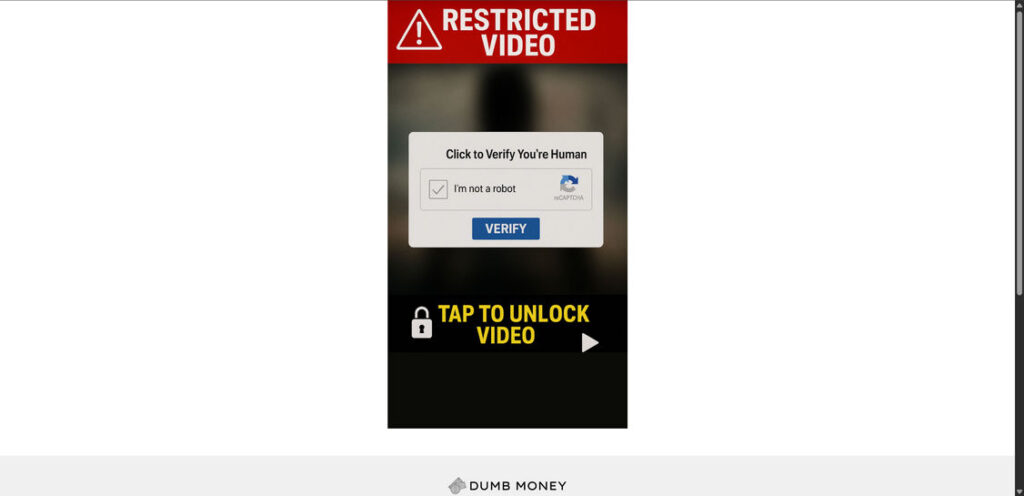
Scam Overview: What Is GetDumbMoney.com Really Selling?
GetDumbMoney.com markets a product called “Dumb Money,” presenting it as a digital course that teaches users how to earn online by completing “ultra-simple” tasks that take just seconds. The system is presented as:
- Beginner-friendly
- Completely passive
- Flexible for any schedule
- Free of sales, inventory, or technical skills
It uses a clean website, subtle trust signals, and marketing buzzwords to appear legitimate.
However, when you examine the structure, tactics, and product, it’s clear that GetDumbMoney.com is not a revolutionary side hustle—it’s a deceptive digital sales funnel.
What They Promise:
- Make money online using just your phone
- Only 30 seconds a day required
- No selling, no recruiting, no website needed
- “Set it up once, get paid weekly”
- 60-day risk-free money-back guarantee
What You Actually Get:
- A $67 fee
- Access to basic, outdated videos on affiliate marketing
- Referral links and general templates you could find for free
- Generic advice about platforms like ClickBank or Amazon Associates
- Constant upsells to additional “premium tools”
There is no actual system, automation, or income engine—only recycled content dressed up in hype.
How the Scam Works
The scam plays out in a predictable funnel. Here’s how they hook you in, convert your curiosity into a sale, and then disappear once your money is gone.
Step 1: Emotional Ads and Viral Stories
You’ll likely encounter Dumb Money through:
- Sponsored Facebook or Instagram ads
- Dramatic short videos featuring struggling moms or kind strangers
- Stories of someone paying for groceries, then revealing they used a “Dumb Money trick”
- Claims that someone is making $300–$500/day using only their phone
These ads are emotional, scripted, and designed to gain your trust fast.
Step 2: Sales Page with Fake Simplicity
You land on GetDumbMoney.com or a clone domain. The site uses:
- Phrases like “No confusion, just results”
- Checklists suggesting flexibility, ease, and passive income
- Fake credibility through clean design and “Super Marketing Bros” branding
But there’s no mention of what the tasks are, how money is made, or what tools are used.
Step 3: Purchase Page on Digistore24
You’re told to “get started now” for just $67, a price framed as a discount or one-time offer. The purchase is handled by Digistore24, a legitimate platform used by both real businesses and scammers.
Optional upsells may include:
- Done-for-you templates
- Exclusive “AI tools”
- Coaching programs
None of these add real value.
Step 4: Delivery of Generic Content
Once inside the members area, users report receiving:
- Basic video tutorials on affiliate marketing
- PDFs with vague steps and outdated advice
- Suggestions to sign up for free platforms like Canva or ChatGPT
- No walkthrough, no proprietary system, no automation
This is not a secret income method. It’s free content you could find on YouTube in 10 minutes.
Step 5: Vanishing Support and No Refunds
Despite the advertised “60-day refund policy,” users often encounter:
- Unanswered emails
- Bouncebacks from support@dumbmoneyworks.com
- Denials of refunds due to vague “terms not met”
By the time the user realizes the scam, the money is gone and so is support.
What To Do If You’ve Fallen Victim to the Dumb Money Scam
1. Request a Refund via Digistore24
- Visit: https://www.digistore24.com/en/home/support
- Choose the customer support option
- Include your order number and explain that you were misled
- Request a refund under the “money-back guarantee”
Be clear, firm, and attach evidence like screenshots of ads or misleading copy.
2. Dispute the Charge with Your Bank
If Digistore24 refuses or delays:
- Call your credit card company or bank
- Explain the charge was for a deceptive product
- File a chargeback under “fraud” or “misrepresentation”
- Include documentation of the purchase and your attempts at contact
Most banks allow disputes within 60–120 days.
3. Report the Scam
Help get this operation shut down by reporting it to:
- FTC (USA): https://reportfraud.ftc.gov
- BBB: https://bbb.org
- IC3 (FBI Internet Crime): https://www.ic3.gov
- Trustpilot or ScamAdviser: Leave an honest review
Also report the original ad if it was on social media.
4. Secure Your Info
If you shared any personal details:
- Run a malware/antivirus scan on your device
- Change your passwords, especially for email and banking
- Enable two-factor authentication on important accounts
- Watch for phishing emails
5. Warn Others
Use your experience to protect others:
- Post your story on Reddit (r/Scams), forums, and social media
- Leave reviews on Google, BBB, and scam review sites
- Use search terms like “GetDumbMoney.com scam” and “Dumb Money course review” for visibility
Frequently Asked Questions About the GetDumbMoney.com Scam
What is GetDumbMoney.com?
GetDumbMoney.com is a website that promotes a so-called “Dumb Money” system, which claims to help users make money online by completing ultra-simple tasks using just a phone or laptop. In reality, it is a misleading sales funnel that charges users $67 for generic, low-value training material that offers no actual income-generating tools.
Is Dumb Money a legitimate way to make money online?
No, Dumb Money is not a legitimate income system. It offers basic affiliate marketing tips and vague online earning advice that can be found for free. There is no automation, no secret strategy, and no evidence that anyone has earned money using the system.
How does GetDumbMoney.com scam people?
The site uses emotional ads, vague promises, and fake urgency to lure people into paying $67 for access to a “system.” After payment, users receive outdated content and are pressured into buying upsells. The refund process is often ignored, and customer support is unresponsive or nonexistent.
Who is behind Dumb Money?
There is no verified creator or company associated with GetDumbMoney.com. The site does not list any real contact information, company registration, or team members. This anonymity is a common sign of scam operations.
What do you actually get after buying?
After paying, you receive access to:
- Generic video tutorials on affiliate marketing
- PDF guides with basic steps
- Links to free tools like Canva or ChatGPT
- No real system, no support, and no guaranteed earnings
Can I get a refund from GetDumbMoney.com?
Although the website claims to offer a 60-day money-back guarantee, many users report that refund requests are ignored. Your best chance at a refund is by contacting Digistore24, the platform that processes the payment.
What should I do if I bought the Dumb Money system?
You should:
- Request a refund through Digistore24
- Dispute the charge with your bank or credit card company
- Report the scam to the FTC, BBB, or similar agencies
- Change your passwords and monitor your accounts
- Leave honest reviews online to warn others
Are there other scams like Dumb Money?
Yes. GetDumbMoney.com is one of many rebranded scams. Similar sites include:
- PushButtonSystem.net
- WiFi Profits
- Net Boost Trick
They all use the same formula of fake testimonials, inflated earnings, and hidden sales funnels.
How can I avoid scams like this in the future?
- Always research the website and reviews before buying
- Be skeptical of earnings claims without proof
- Look for real contact information and creator transparency
- Trust your instincts—if it sounds too good to be true, it usually is
The Bottom Line
GetDumbMoney.com is not a legitimate online income opportunity. It is a misleading, emotion-driven scam designed to sell outdated digital content for $67 using vague promises and fake simplicity.
Let’s recap:
- There’s no real 30-second task that earns income
- There’s no automation or exclusive system
- The content is not worth the price—and it’s often freely available online
- The refund guarantee is mostly for show
- The creators hide behind fake branding and ghost domains
This is not about helping you earn. It’s about getting your money using convincing ads and false promises.
Final Advice:
Always do your research before paying for an online system. Look for transparency, real reviews, verifiable proof of income, and customer support. If the only person making money is the one selling the system—it’s a scam.
Stay alert. Stay informed. And avoid the Dumb Money trap.

Reviews & discussion
0 commentsShare a firsthand experience, or ask a question.
Community reviews
getdumbmoney.com
Moderated reader experiences, not an editorial verdict.
Start the conversation
Have a question or something useful to share? Add the first comment.