

A small online research gig pays on time, every link opens a genuine Google Business page, and no password is requested. The transaction can look cleaner than the average internet job offer.
The Google Review Research Gig raises a harder question than whether the transfer arrives: what exactly was the participant paid to put online?
Overview
The reported participant was paid, but the reviews were still the problem
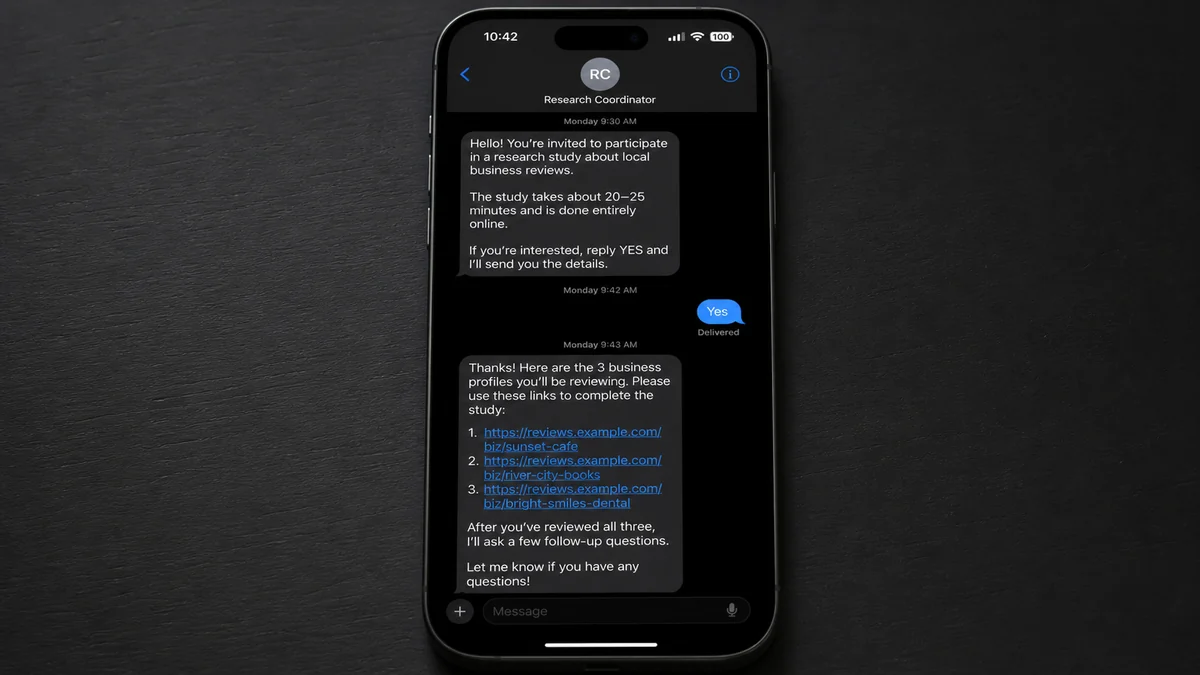
A recent online-gig report describes being recruited to post Google reviews as part of supposed research into fake reviews. The participant followed links to genuine Google Business profiles and received a Zelle payment after completing the work.
The person then noticed a second, nearly identical Reddit recruitment post from a different account and phone number. That repetition raised the question that matters most: why would research into fake reviews require participants to publish reviews on real businesses?
The payment does not answer that question. A small payment can compensate someone for manipulation, establish trust for a later task scam, or both.
Google prohibits reviews that do not reflect a genuine experience
Google’s Maps user-contributed content policy says contributions should reflect a genuine experience and prohibits fake engagement, paid reviews, rating manipulation, and incentives offered in exchange for reviews.
A genuine Google domain proves only that the review is being submitted to Google. It does not make the recruiter’s instructions authorized, nor does it turn an invented experience into valid customer feedback.
The account posting the review takes the visible risk. Reviews may be removed, profile privileges can be restricted, and a history of unrelated promotional reviews can damage the account’s credibility.
A legitimate research study would not hide its institution and method
Responsible research normally identifies the university, company, principal investigator, consent process, data handling, participant risks, and contact for questions. It does not need participants to deceive businesses and future customers.
There are lawful ways to study review fraud: surveys, simulated environments, anonymized data, platform partnerships, or clearly disclosed experiments. Publishing made-up experiences under participants’ personal accounts creates real-world harm.
Check every “review research” offer for these signs:
- Does it require reviews for businesses you never used?
- Are you told which rating or wording to post?
- Is payment tied to a screenshot of the published review?
- Does the recruiter use rotating Reddit accounts or phone numbers?
- Is the sponsoring institution unnamed or unverifiable?
- Is there no consent form or ethics contact?
- Are the business links unrelated to one another?
- Must you use your personal Google account?
- Are you discouraged from disclosing compensation?
- Does the next task promise more money for more reviews?
- Are you eventually asked to deposit money to unlock work?
- Is the explanation about detecting fake reviews logically backwards?
A study label does not override platform rules. Judge what you are being asked to publish and whether it is true.
Why the Genuine Google Links Make the Gig More Convincing
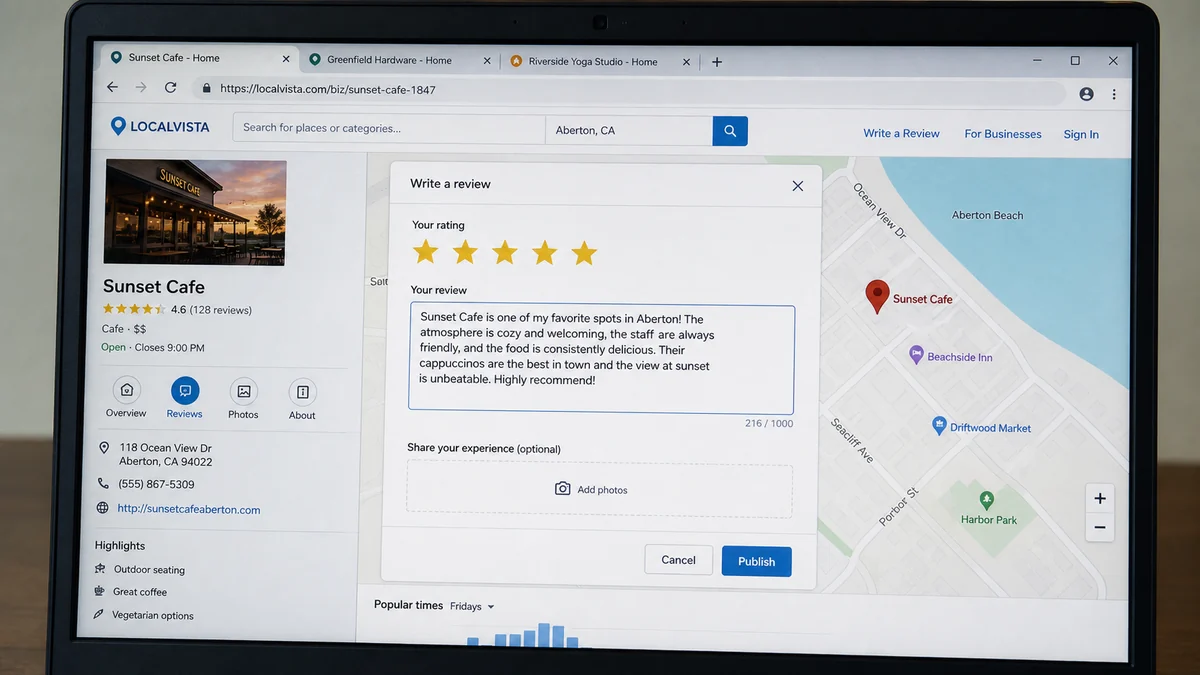
Many scam warnings teach users to inspect the destination domain. That advice is useful for phishing, but this scheme can send the participant to the real Google Maps site because the goal is to misuse a legitimate feature.
The recruiter does not need the Google password. The participant is already logged in and performs the action personally. That reduces technical warning signs while transferring the policy violation to the participant’s account.
Each assigned business may be real. It may even have genuine reviews and a working website. The manipulation lies in adding a review from someone who had no customer experience.
A screenshot of the published review gives the organizer proof of completion. It can also reveal the participant’s Google profile name and other public activity.
The result looks organic to shoppers. Multiple accounts, different wording, and ordinary posting intervals can make coordinated reviews harder to recognize than a burst from one operator.
The businesses may have paid an intermediary for reputation management without knowing how reviews are sourced. Alternatively, the organizer may be testing accounts before a more direct task scam. The public report alone does not establish which party funded the work.
That uncertainty is a reason for careful wording, not a reason to continue. The participant already knows the requested review is not based on personal experience.
A link being safe to open and an instruction being safe to follow are different questions. This job exploits that distinction.
How the Google Review Research Gig Works
Step 1: A Reddit post recruits ordinary account holders
The offer appears as a small gig or research opportunity rather than an obvious marketing campaign. Ordinary personal accounts are valuable because their history looks more credible than newly created reviewer profiles.
The recruiter may use several Reddit accounts and phone numbers to reach more participants or keep one identity from accumulating reports.
Step 2: The “research” explanation lowers ethical resistance
Participants are told that the project studies or detects fake reviews. That framing lets them imagine they are helping research even while they publish content that does not reflect a real experience.
The contradiction can be hidden behind a test, survey, debrief promise, or instruction not to discuss the method.
Step 3: Genuine business links reduce phishing suspicion
The links open real Google Business profiles, and the participant remains logged in. No password page, unusual domain, or download appears.
This makes common anti-phishing checks pass, although the requested action still violates Google’s contribution rules.
Step 4: The organizer controls rating and content
The participant may receive exact wording, required themes, a star rating, or facts to mention. Even when wording is left open, payment depends on reviewing a business the participant did not use.
A completion screenshot lets the organizer confirm that the review is public.
Step 5: A small Zelle payment builds confidence
Paying the first assignment makes the gig feel proven. The participant can truthfully say, “I got paid,” which may attract others and reduce concern about the next request.
Early payment is common in task-scam funnels, but it does not prove that every review gig will progress that way.
Step 6: The account accumulates policy and reputation risk
Google can remove coordinated or incentivized content. The participant’s reviews, profile history, photographs, and real name may remain visible long enough for businesses or investigators to connect the activity.
A personal account built over years is worth more than the small review payment.
Step 7: A second-stage money demand may appear
Some task scams begin with a real small payout, then claim the worker must deposit money to unlock premium tasks, repair a negative balance, pay tax, or withdraw larger earnings.
The FTC warns that task scams can pay for simple rating or liking activity before demanding deposits. If any pay-to-work step appears, stop immediately.
The Zelle Payment Does Not Settle Whether the Gig Is Safe
A processed payment proves that money reached the recipient at that moment. It does not identify the ultimate sender, establish a lawful employment relationship, or approve the reviews.
The funds could come from the organizer, a client, a compromised account, or another victim. The Reddit report does not provide enough evidence to choose among those possibilities.
Do not forward part of the payment, buy gift cards, return an “overpayment,” or send money to a different participant. Any request to relay funds changes the risk immediately.
Do not assume that every electronic payment is impossible to reverse under every circumstance. Contact Zelle and the enrolled bank through official channels if the payment is unexpected or the sender later claims an error.
A scammer can use a small successful payout as marketing. Screenshots of paid participants may appear in later recruitment posts or private groups.
The participant should separate the payment question from the review question. Even if the money is retained without incident, Google still requires reviews to represent genuine experiences.
Likewise, the absence of a later deposit request does not make coordinated fake reviews harmless. Shoppers may spend money based on fabricated reputation, and honest competitors can be displaced.
Stop before the account is used again. A recruiter who controls what you say publicly has already crossed a line that a legitimate study should explain openly.
Paid Reviews, FTC Rules, and an Important Distinction
The FTC’s Consumer Reviews and Testimonials Rule targets fake reviews and testimonials, including reviews attributed to people who did not have the claimed experience.
The agency’s questions and answers explain important limits and definitions. Not every compensated, honest review is automatically the same as a fake review under the rule.
That nuance does not rescue this reported arrangement. A person who never used a business cannot honestly describe a customer experience there. If the organizer supplies a rating or text, the manipulation becomes even clearer.
Google’s own policy is also stricter about incentives. It prohibits content posted because of payment, discounts, free goods, or other incentives and bars rating manipulation.
Participants should not try to solve the issue by adding “paid review” at the end unless the platform and actual experience permit it. Disclosure cannot make a nonexistent experience genuine.
Businesses should not outsource reputation work without auditing how reviews are obtained. A contractor’s promise of “real accounts” may mean recruited people who were never customers.
Researchers should use institutional review processes and simulated or consented methods that do not deceive the public. If publication on live business profiles is necessary, the study should be able to explain its authorization before recruitment.
When in doubt, do not publish. A small gig is not worth turning a personal account into evidence of an experience that never happened.
How to Check a Review Research Offer
Ask for the full legal name of the sponsor, institution, principal investigator, and ethics or compliance contact. Verify them through an independently found website.
Request the consent document. It should explain the study purpose, tasks, compensation, data use, risks, withdrawal process, and contact for complaints.
Ask why live public reviews are necessary and whether Google and the affected businesses authorized the method. Vague claims of confidentiality do not answer that.
Check the recruiter’s email domain. A university study should not rely solely on rotating Reddit accounts, text messages, and personal payment profiles.
Read Google’s policy yourself. Do not accept the organizer’s claim that research status creates an exception.
Refuse exact wording or rating instructions. If the business was never used, refuse the review entirely.
Do not give the recruiter access to the Google account, recovery email, phone number, one-time codes, or cookies.
Do not install a browser extension that promises to track task completion. A screenshot is already privacy-sensitive; an extension can see far more.
Keep payment separate. Never deposit money, upgrade a worker tier, or top up a task wallet to receive earnings.
Search the recruitment wording, phone number, and organizer name. Multiple identical posts from unrelated accounts are a serious credibility problem.
How Fabricated Reviews Harm Shoppers and Honest Businesses
A five-star review is not just a line of text. It can affect which restaurant a family chooses, which contractor enters a home, which clinic receives a call, or which repair shop is trusted with an expensive vehicle.
When paid participants describe experiences they never had, shoppers lose the signal they expected from independent customers. A detailed invented review can be more persuasive than obvious spam because it looks specific and personal.
Honest businesses are harmed in two directions. A competitor can gain an artificial reputation, while a targeted business can receive fabricated negative reviews. Owners may spend time documenting and disputing activity instead of serving customers.
The participant is also placed in a vulnerable position. A public Google profile can reveal a real name, past photographs, travel history, local interests, and other reviews. The organizer learns which account completed the task and may use that information for pressure or further recruitment.
Deleting the review later reduces harm, but it does not guarantee that screenshots, business notifications, or platform records disappear. That is why the right stopping point is before publication, not after the recruiter changes the assignment.
Businesses that purchased reputation services should audit the provider, request the source and consent basis for reviews, and stop campaigns built on noncustomers. A contract promising “verified human reviews” does not prove that those humans had genuine experiences.
Consumers can respond by reading across many reviews, checking dates and specificity, and treating bursts of similar language with caution. Still, the primary responsibility belongs to the people organizing and buying manipulation, not to shoppers who fail to detect it.
Company, Address, and Fulfillment Checks
Identify the actual research sponsor
A legitimate study should name the institution and responsible researcher. Verify both through a known university or company directory.
Do not rely on a name supplied only in a private message.
Verify the ethics and consent process
Ask for the oversight body, consent form, participant contact, and complaint route. Research secrecy should not erase basic accountability.
If the study affects public businesses, ask how that impact was approved.
Check the payment entity and account
The Zelle sender should match the named sponsor or an explained payment processor. A random personal name needs a documented reason.
Never return or relay funds to a different person.
Examine what the job actually delivers
The deliverable is a public review under your identity. If it describes an experience you did not have, the job is asking you to mislead shoppers regardless of its label.
Do not let compensation or a genuine Google link obscure that outcome.
What to Do if You Have Fallen Victim to This Scam
- Stop taking assignments. Do not publish more reviews or join a premium task tier.
- Remove false reviews. Delete content that does not reflect a genuine experience and save evidence first.
- Preserve recruitment records. Keep Reddit posts, usernames, phone numbers, messages, business links, screenshots, and payment details.
- Secure the Google account. Review signed-in devices, third-party access, recovery details, and recent security activity.
- Change exposed credentials. If any password or code was shared, change it immediately and enable strong multifactor authentication.
- Contact the bank about suspicious payment activity. Use the official bank or Zelle route if the sender is unknown, requests a return, or claims an error.
- Report the recruiter. Use Reddit’s reporting tools and report rotating accounts that repeat the same offer.
- Report manipulation to Google. Use the platform’s review and profile reporting options.
- Report a deposit-demand task scam. If the gig asks you to pay to work or withdraw, file at ReportFraud.ftc.gov.
- Run Malwarebytes. Scan the device if you installed a task app, extension, remote-access tool, or attachment.
- Use AdGuard as a supporting layer. It can reduce malicious-ad and tracking exposure, but it cannot decide whether a review is truthful.
- Ignore recovery offers. Do not pay anyone promising to restore an account, reverse Zelle, or erase review history.
Frequently Asked Questions
Is it safe because every link opens Google?
No. The organizer may want you to misuse a legitimate Google feature. A real domain prevents one kind of phishing but does not validate the requested review.
Does getting paid by Zelle prove the gig is legitimate?
No. It proves a payment arrived, not that the work complies with platform rules or that no later task-scam stage will appear.
Can I review a business I never used if it is for research?
Google requires reviews to reflect genuine experiences. An unnamed recruiter’s research claim is not authorization to publish a fabricated customer account.
Could Google suspend my account?
Google can remove prohibited content and restrict contribution features. The exact action depends on its systems and the account’s activity.
Should I return the Zelle payment?
Do not send a separate payment to a stranger. Contact your bank and Zelle through official channels for guidance if the sender or source is suspicious.
What if the recruiter never asks me to deposit money?
The reviews can still violate Google policy and mislead consumers. A later deposit demand is one possible escalation, not the only reason to stop.
Bottom Line
The clever part of this gig is that several pieces can be real: the Google pages, the businesses, and even the first Zelle payment. The false element is the customer experience being published under the participant’s account.
Do not trade a trusted personal profile for a small payment. A legitimate study can identify its sponsor, explain its ethics review, and avoid deceiving shoppers. If the task requires a review for a business you never used, the safest answer is no.








